DD
MM
YYYY

PAGES

DD
MM
YYYY

spot_img

PAGES

Home Blog Page 1541

Implications of Tether Launching a U.S. Focused Stablecoin

0

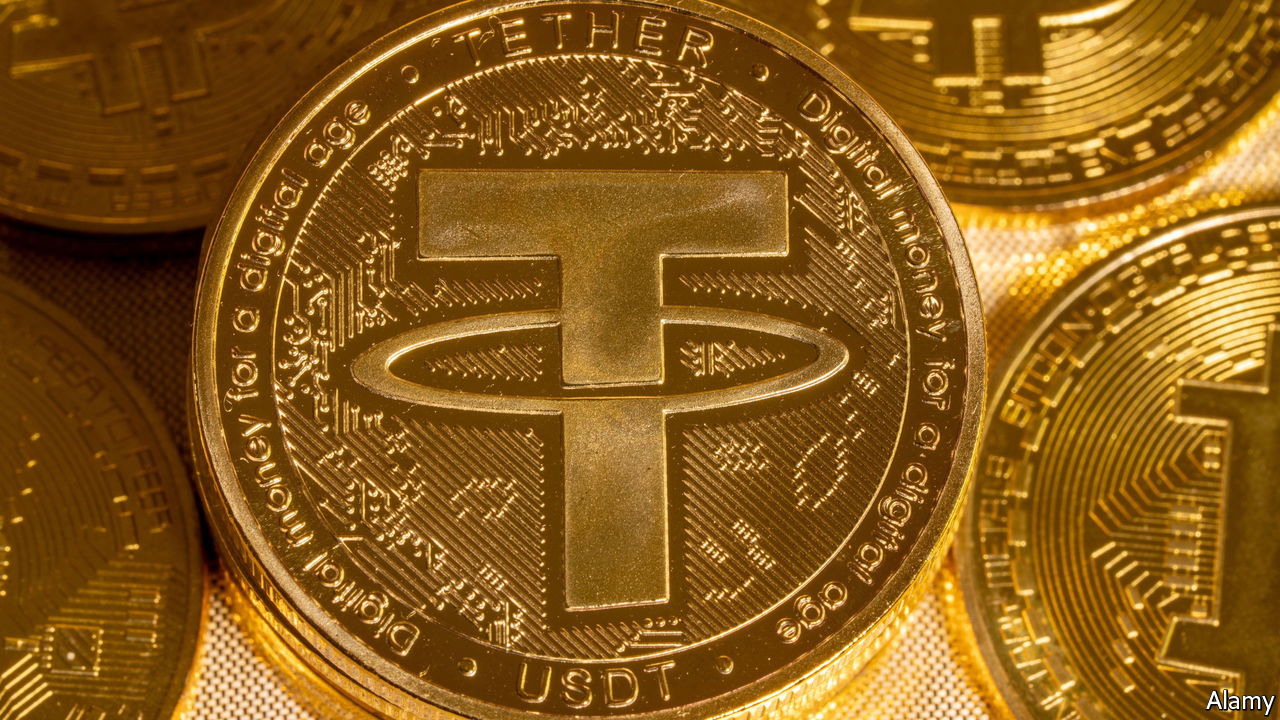
Tether has indeed signaled its intent to launch a new stablecoin tailored for the U.S. market. This move comes as a strategic response to evolving regulatory pressures in the United States, where lawmakers are advancing legislation to impose stricter oversight on stablecoins, such as requirements for regular audits and greater transparency regarding reserves. Tether’s CEO, Paolo Ardoino, has indicated that the company is prepared to adapt by creating a new U.S.-domiciled stablecoin that complies with these emerging laws, distinct from its flagship USDT, which dominates the global stablecoin market with a market capitalization exceeding $144 billion as of early 2025.

The new stablecoin aims to address concerns raised by U.S. regulators while maintaining Tether’s foothold in the American market, though specific details like a launch date or blockchain platform remain undisclosed. This development reflects Tether’s broader strategy to navigate regulatory challenges while continuing to serve its vast user base, particularly in regions where USDT remains a key financial tool.

The implications of Tether launching a new stablecoin for the U.S. market are multifaceted, touching on regulatory, economic, and competitive dynamics. A U.S.-specific stablecoin suggests Tether is proactively aligning with anticipated regulations, such as those in the works from Congress and the Treasury Department. This could involve maintaining dollar reserves in U.S. banks, submitting to regular audits, and adhering to anti-money laundering (AML) and know-your-customer (KYC) rules. It’s a bid to appease regulators who’ve criticized USDT’s opaque reserve practices.

By tailoring a product to U.S. standards, Tether might shed some of the skepticism that has dogged USDT, potentially gaining favor with institutional investors and traditional financial players wary of its past controversies. Success here could pressure other stablecoin issuers—like Circle (USDC)—to further refine their compliance strategies, accelerating the mainstream adoption of regulated digital assets. A fully compliant U.S. stablecoin could reduce volatility risks tied to USDT’s dominance, especially if it reassures markets about reserve backing. This might stabilize crypto trading pairs and DeFi ecosystems heavily reliant on Tether. It reinforces the U.S. dollar’s role in crypto markets, potentially countering efforts by other nations e.g., China with its digital yuan to challenge dollar hegemony in digital finance.

If the new stablecoin gains traction, it could attract more U.S.-based capital into crypto, though strict regulations might limit its appeal for users seeking the pseudonymity USDT often provides offshore. Circle’s USDC, already a darling of U.S. regulators, might face stiffer competition. Tether’s brand recognition and global liquidity could give its new stablecoin an edge, especially if it offers lower fees or broader integration. Introducing a separate U.S. stablecoin might split Tether’s liquidity between USDT and the new asset, potentially weakening its global position unless both coexist seamlessly. This could spark a wave of innovation among stablecoin providers, pushing advancements in transparency, interoperability, or yield-generating features to win over users.

A regulated Tether product might bridge crypto and traditional finance further, drawing in hesitant U.S. businesses and consumers. However, overregulation could alienate the crypto-libertarian crowd that values decentralization. By bowing to U.S. rules, Tether might strain its appeal in markets hostile to American oversight, like Russia or parts of Asia, where USDT thrives as a dollar proxy. In short, Tether’s move could solidify its U.S. presence and influence stablecoin norms, but it’s a high-stakes gamble balancing compliance, market share, and user trust. The crypto community—and regulators—will be watching closely to see if it pays off or backfires.

Visa Makes $100m Bid to Replace Mastercard as the Payment Network for the Apple Credit Card

0

Visa has offered Apple Inc. approximately $100 million to replace Mastercard Inc. as the payment network for the Apple Credit Card, the Wall Street Journal reported.

This bid is part of a broader competition among major payment networks, including American Express, to secure a partnership with Apple as Goldman Sachs, the current issuer, exits its consumer lending business. The Apple Credit Card, launched in 2019 with Mastercard as its network and Goldman Sachs as its issuer, represents a significant opportunity due to its $20 billion in customer balances and over 12 million users in the United States.

Background

The Apple Credit Card was a collaboration between Apple, Goldman Sachs, and Mastercard. It aimed to deepen customer loyalty and generate revenue through transaction fees and high-yield savings accounts. However, Goldman Sachs’ foray into consumer lending has proven unprofitable, with its platform solutions unit, which includes the Apple Card, reporting an $859 million net loss in 2024.

This financial strain, coupled with operational challenges, such as an $89 million fine from the Consumer Financial Protection Bureau in late 2024 for poor customer service and unclear terms, prompted Goldman Sachs to seek an exit from the partnership, originally set to run until 2030.

As Goldman Sachs withdraws, Apple is seeking both a new issuer and a payment network. Major banks like JPMorgan Chase, Synchrony Financial, and Barclays have been in talks to replace Goldman Sachs, while Visa, Mastercard, and American Express vie for the network role. Apple is expected to select a network before finalizing an issuer, amplifying the stakes in this contest.

Visa’s $100 Million Bid

Visa, the world’s largest payment network, has made an aggressive move by offering Apple $100 million upfront to switch the Apple Card from Mastercard. This payment is atypical for payment networks, which typically earn revenue through transaction fees rather than large initial payouts.

However, the Apple Card’s scale, $35 billion in annual transaction volume, and $20 billion in balances make it a lucrative prize. Visa’s bid reflects its strategy to secure a foothold in Apple’s ecosystem, particularly given Apple Pay’s prominence and the potential for future payment innovations.

Visa’s strategic implications include winning the Apple Card to bolster its transaction volume and strengthen its relationship with Apple, a key player in mobile payments. Visa’s advanced tokenization technology and extensive issuer partnerships give it a competitive edge over rivals like American Express, which operates as both a network and issuer but has less universal acceptance.

In terms of stock performance context, as of April 7, 2025, Visa’s stock price stands at $301.282, down 14% from $350.0 on March 27. This decline may reflect market uncertainty about the bid’s outcome or broader economic pressures, but a successful deal could reverse this trend by signaling growth potential.

Mastercard’s Position

Mastercard, the incumbent network, is “fiercely” defending its role, according to The WSJ. With the Apple Card currently processing transactions over its rails, Mastercard benefits from its $35 billion annual volume. Losing this partnership with Visa or American Express would dent its market share and prestige, particularly in the high-profile fintech space.

The financial stakes for Mastercard show its stock has fallen 15% from $557.57 on March 27 to $473.18 on April 7, 2025. The potential loss of the Apple Card could exacerbate this decline, though Mastercard’s global dominance and diversified revenue streams provide resilience. Retention efforts remain undisclosed in specifics, but Mastercard’s actions likely include competitive fee structures or enhanced technological offerings to retain Apple’s business.

American Express Dual Bid

American Express is pursuing an ambitious strategy by seeking to serve as both the payment network and issuer for the Apple Card. This dual role leverages Amex’s integrated business model, distinguishing it from Visa and Mastercard, which rely on third-party issuers. Amex previously explored taking over the card from Goldman Sachs in 2023, indicating long-term interest.

Advantages and challenges for Amex include its premium brand and rewards programs aligning with Apple’s customer base, but its smaller network, less widely accepted globally than Visa or Mastercard—could limit its appeal. A shift to Amex might also disrupt the card’s seamless integration with Apple Pay, a critical feature for users. Market impact shows Amex’s stock has dropped 16% from $270.8995 on March 27 to $226.325 on April 7, 2025.

Securing the Apple Card could boost its valuation, though the upfront costs of replacing Goldman Sachs (estimated to be significant due to the portfolio’s $20 billion in balances) pose a risk.

Goldman Sachs’ Exit and Investor Pushback

Goldman Sachs’ decision to exit consumer lending stems from mounting losses and strategic missteps. CEO David Solomon noted that the Apple Card reduced the bank’s equity return by 75 to 100 basis points in 2024, though he anticipates improvement in 2025 and 2026 as the unwind progresses. JPMorgan Chase is a leading contender to replace Goldman Sachs as the issuer, having been in talks with Apple since 2024.

Shareholder concerns are evident as Institutional Shareholder Services (ISS) and another proxy advisor have urged Goldman Sachs investors to reject a proposed $160 million stock award for Solomon and COO John Waldron, citing its lack of performance-based criteria.

Solomon’s 2024 compensation of $39 million and an $80 million retention bonus (vesting over five years) have fueled criticism, especially given the consumer banking setbacks. Stock movement for JPMorgan Chase has declined 18% from $248.12 on March 27 to $202.263 on April 7, 2025, reflecting broader sector pressures.

JPMorgan CEO Dimon Breaks Silence on Trump’s Tariff Policy, Warns of Inflation and Slowdown as Markets Reel

0
JP Morgan Chase puts contents through its CEO account, it goes viral. But the same content via JPMC account, no one cares (WSJ)

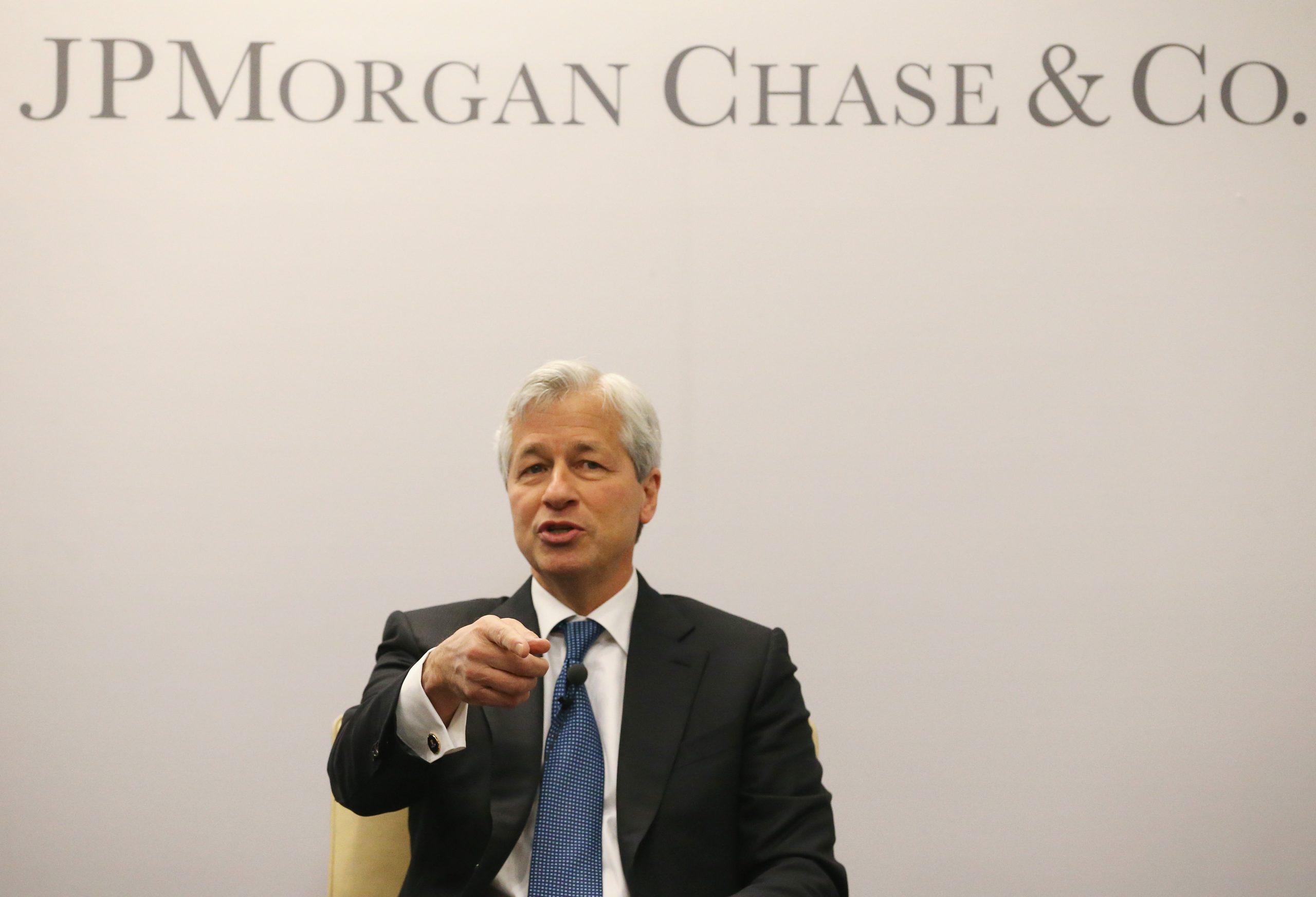
JPMorgan Chase CEO Jamie Dimon has warned that the sweeping tariff measures introduced by President Donald Trump will likely trigger inflation and further slow down an already weakening U.S. economy.

In his annual shareholder letter released Monday, Dimon struck a cautionary tone, outlining several economic risks he believes are converging at a time of increasing global instability.

The remarks mark the first time a major Wall Street CEO is publicly weighing in on Trump’s April 2 tariff announcement, which sent global financial markets into a tailspin, triggering the worst week for U.S. equities since the early days of the Covid-19 pandemic.

“Whatever you think of the legitimate reasons for the newly announced tariffs – and, of course, there are some – or the long-term effect, good or bad, there are likely to be important short-term effects,” Dimon wrote. “We are likely to see inflationary outcomes, not only on imported goods but on domestic prices, as input costs rise and demand increases on domestic products.”

He cautioned that while it remains to be seen whether the tariff package will cause a full-blown recession, it will certainly act as a drag on growth.

Dimon’s tone marks a notable shift from his position in January when he dismissed tariff concerns, saying they were justified for national security. At the time, discussions were centered around far milder tariff levels. Trump’s latest round of tariffs, which cover hundreds of billions of dollars in goods, appears to have caught markets and business leaders off guard.

“The quicker this issue is resolved, the better,” Dimon said, adding that prolonged uncertainty would make the economic impact harder to reverse. “In the short run, I see this as one large additional straw on the camel’s back.”

The 69-year-old banker said the U.S. economy had already begun to weaken in recent weeks, even before the tariff bombshell. Fueled by nearly $11 trillion in government borrowing and pandemic-era spending, the American economy had managed to stay buoyant, but the momentum is now showing cracks.

Inflation, he said, is proving more stubborn than many have assumed, and this could keep interest rates elevated even as growth falters, a scenario few investors appear to be pricing in.

“Markets still seem to be pricing assets with the assumption that we will continue to have a fairly soft landing,” Dimon warned. “I am not so sure.”

Quiet Critique of Trump’s Approach

Though Dimon’s 59-page letter never mentions Trump by name, the subtext was unmistakable. He appeared to support the idea of addressing trade imbalances and the need for stronger immigration policy, two pillars of Trump’s economic platform but challenged the president’s method of reshaping the global order.

Instead of retreating into protectionism, Dimon made a case for deepening America’s role in the global system it helped build after World War II, a system he says has underpinned decades of global peace and prosperity.

“If given the opportunity, that is exactly what our adversaries want to happen: Tear asunder the extensive military and economic alliances that America and its allies have forged,” he said. “In the multipolar world that follows, it will be every nation for itself – giving our adversaries the opportunity to set the rules.”

He also warned that global capital flows, the strength of the U.S. dollar, and corporate profits could all be impacted as countries respond to Washington’s increasingly unilateral approach to trade.

Stark Prescription for American Renewal

Dimon’s shareholder letter often serves as a state-of-the-nation essay as much as a bank report, and this year’s version is no different. He painted a picture of a country at a “critical crossroads,” simultaneously juggling high asset prices, sticky inflation, large fiscal deficits, geopolitical tension, and market volatility.

Still, he struck a note of patriotism, arguing that the challenges facing the United States can be met with pragmatic reform, not isolation. He emphasized restoring civic pride, maintaining a strong military “at whatever cost,” and tackling issues like immigration and trade with “common sense.”

“Economics is the longtime glue, and America First is fine,” Dimon said, “as long as it doesn’t end up being America alone.”

A Nervous Market Watches Closely

Under Dimon’s leadership, JPMorgan has become the country’s largest bank by assets and market value, and 2024 marked its seventh straight year of record revenue. But the tone of this year’s letter stands in contrast to previous years, with the CEO sounding less certain about the durability of the American growth story.

His concerns land at a time when investors, already rattled by rising borrowing costs and signs of weakness in the labor market, are bracing for what comes next. Dimon, known for his prescient warnings, including before the 2008 crisis, is once again telling markets not to underestimate the risks.

Whether the White House intends to make any revisions to its tariff plan remains unclear. But with Dimon adding his voice to the growing list of business leaders expressing concern, pressure is mounting on the administration to make amends before more damage is done.

Shopify CEO Tobi Lütke Tells Staff: Prove AI Can’t Be Used Before Hiring, Asking for More Resources

0

In a blunt internal memo, Shopify CEO Tobi Lütke has told employees that before they request additional headcount or resources, they must first demonstrate why their goals cannot be achieved using artificial intelligence.

The message, shared internally late last month and later posted by Lütke on X, marks a decisive shift in how the e-commerce giant expects its workforce to operate in the age of AI.

“What would this area look like if autonomous AI agents were already part of the team?” Lütke asked in the memo, describing the question as a springboard for “really fun discussions and projects.” However, the underlying message was unmistakably serious: using AI is no longer optional; it’s a baseline requirement at Shopify.

The broader message, first reported by CNBC, underscores what Lütke called “reflexive AI usage,” a cultural shift he says must be embedded across all teams and roles.

“Using AI well is a skill that needs to be carefully learned by… using it a lot,” Lütke wrote. “It is now a fundamental expectation of everyone at Shopify.”

Lütke, who has led Shopify since its founding in 2006, called the rapid adoption of AI “the most rapid shift to how work is done that I’ve seen in my career.” His comments reflect a growing trend among tech leaders who are moving to reshape their companies around artificial intelligence, not just as a tool, but as a core competency.

To enforce this new standard, Lütke revealed that AI usage will now be evaluated as part of employee performance and peer reviews. The implication is clear that those who don’t learn how to integrate AI into their work may find themselves left behind.

“What we need to succeed,” Lütke wrote, “is our collective sum total skill and ambition at applying our craft, multiplied by AI, for the benefit of our merchants.”

From Efficiency to Expectation

The shift comes as companies across the tech world are tightening budgets, streamlining teams, and using automation to cut costs. However, Shopify’s move stands out for the way it institutionalizes AI adoption, not as a support tool, but as a default mode of operation. The company is effectively putting AI at the center of internal decision-making by requiring teams to justify resource requests in the context of AI capabilities.

This approach may be driven as much by necessity as it is by vision. Shopify has undergone several rounds of layoffs since 2022, cutting thousands of jobs and offloading ancillary businesses like logistics. Embracing AI allows the company to push for higher productivity without increasing headcount, a calculation that appears to now underpin its leadership philosophy.

Cultural Shift or Pressure Tactic?

While Lütke frames the memo as an invitation to innovate and experiment, the directive also places pressure on employees to continually adapt or risk falling short of expectations. Requiring every project to first pass an “AI or not” test before securing new hires could discourage certain types of work or create internal tension about what qualifies as “AI-enhanced.”

Still, the Shopify boss seems to believe this is a necessary evolution. “Autonomous AI agents are here,” Lütke wrote. “They’re good. Let’s get good at using them.”

As the AI boom reshapes industries, Shopify’s bet is that teams willing to treat AI as a colleague, not just a tool—will deliver better results, faster, and with fewer people. Time will tell whether more companies are going to embrace this approach – automating the future of work.

As Trump’s Global Tariff Blitz Sends Markets Crashing—One Wall Street Firm Finds a Silver Lining

0
USC experts talk about the importance of U.S.-China trade and how it affects the economy. (Illustration/iStock)

A week after President Donald Trump launched a sweeping wave of tariffs targeting nearly every major trade partner, global markets remain shaken. Tech stocks are in a downward spiral. U.S. indices are posting their worst losses since 2020. And companies are scrambling to adjust strategies amid a deepening trade war. But while most analysts and economists are raising red flags over the potential for recession, one Wall Street firm, Jefferies, has dared to suggest there’s an upside to the chaos.

In a Sunday research note, analysts at Jefferies described the volatile economic landscape as a “free hall pass” for companies to reset expectations, lower performance targets, and recalibrate for a tougher business climate. The analysts argued that the uncertainty brought on by tariffs gives corporate leaders a unique opportunity to revise guidance downward without the usual backlash from investors.

“Lower estimates that are more achievable tend to improve investor sentiment and, ultimately, lead to better share performance,” the note read. The report was led by Brent Thill and focused on 29 tech firms, including heavyweights like Meta, Microsoft, Google, and Amazon.

While their argument reflects a contrarian view on the fallout from Trump’s latest trade salvo, Jefferies stands virtually alone in seeing any potential benefit from the tariffs. The prevailing mood among analysts, economists, and corporate leaders is one of concern—and in many cases, alarm.

Slashing Tech Targets

Among the companies hardest hit by Jefferies’ revised expectations is Meta. In the space of ten days, the firm has cut Meta’s price target twice, most recently by 17%, bringing it down from $725 to $600. The analysts also slashed Meta’s 2025 earnings-per-share (EPS) forecast by 13%, citing macroeconomic headwinds and advertising pullbacks linked to Chinese clients.

Meta’s stock has fallen by 10% over the last five trading days and now sits at $504. Microsoft’s target was cut by 5%, from $500 to $475, with shares down 3.5% over the same period. Google and Amazon fared slightly better in the analysis, with EPS estimates for 2025 reduced by 2% and 1%, respectively—though Jefferies held their price targets steady.

Analysts noted that Meta and Amazon, in particular, are vulnerable due to their exposure to Chinese advertisers, many of whom are now pausing their U.S.-oriented campaigns as a direct response to Trump’s aggressive tariff policy. “If you can’t sell, why advertise?” one marketing expert told Business Insider, underlining the abrupt shift in sentiment among Chinese brands that traditionally target American consumers.

Trade War Panic Spreads

The broader picture is far from optimistic. Last week, President Trump unveiled a barrage of new tariffs, including a 34% duty on imports from China, 46% on Vietnam, 26% on India, and 32% on Indonesia. On Friday, China fired back, imposing a retaliatory 34% tariff on all U.S. imports, effective April 10.

The tit-for-tat measures have rattled investors. The S&P 500 dropped 6%, the Dow Jones fell 5.5%, and the Nasdaq tumbled 5.8%—all recording their steepest single-day losses since the COVID-19 lockdown crash of 2020. Dow futures dipped another 2.5% on Sunday night, indicating that the carnage may extend into this week.

Asian markets opened deep in the red on Monday. Japan’s Nikkei index fell 6.5%, South Korea’s Kospi lost 4.5%, and Hong Kong’s Hang Seng dropped nearly 10%, the worst showing in years.

Amid the panic, former Treasury Secretary Larry Summers, like many others, said the tariff will only yield economic pain.

“Never before has an hour of Presidential rhetoric cost so many people so much,” he wrote on X. “The best estimate of the loss from tariff policy is now closer to $30 trillion.”

Alone in Seeing Upside

While the scale of the market reaction has prompted widespread concern, Jefferies’ note stands out for suggesting that companies might benefit from the downturn, at least in how they manage expectations. This view, however, has not found support from most analysts or economic experts, who warn that the mounting tariffs could trigger a global recession.

JPMorgan Chase CEO Jamie Dimon echoed the warning in his annual shareholder letter. Although he acknowledged the need for a firmer stance on trade, Dimon cautioned that the current tariff barrage could have damaging ripple effects across the economy.

“These actions are inflationary and disruptive,” he wrote. “Whether or not the menu of tariffs causes a recession remains in question, but it will slow down growth.” Dimon warned that the markets were pricing in a soft landing, perhaps too optimistically. “I am not so sure,” he added.

His note was a pointed, if carefully worded, rebuke of Trump’s latest trade actions. While Dimon agreed that the U.S. must address unfair trade practices, particularly with China, he warned that the current approach could backfire by undermining the post-World War II trade system that the U.S. helped create.

“America First is fine,” Dimon said, “so long as it doesn’t become America Alone.”

Strategic Reset or Recession Risk?

Despite Jefferies’ argument that lowered expectations might boost investor confidence in the long run, the mood across most of corporate America is grim. Companies from Target to Best Buy and even Ferrari have announced plans to raise prices in response to new import costs. Manufacturers warn of supply chain disruptions, and tech firms are reassessing hiring and expansion plans.

Jefferies’ optimism is framed around the idea that the second quarter of 2025, beginning this April—will mark the peak of tariff-induced uncertainty. By the second half of the year, the firm expects conditions to stabilize, allowing for a potential rebound in the fourth quarter. That recovery, however, hinges on two critical assumptions: that the trade war does not escalate further, and that companies succeed in lowering investor expectations without spooking markets further.

But if markets continue to tank and retaliatory tariffs escalate, as they did last week, those assumptions may not hold.