DD
MM
YYYY

PAGES

DD
MM
YYYY

spot_img

PAGES

Home Blog Page 1543

How to Choose the Right AP Prep Online Practice Test for Your Needs

0

The Advanced Placement (AP) exams are a crucial part of the academic journey for high school students aiming to earn college credits. Preparing for these exams can be tough, but with the right resources and tools, students can boost their chances of success. One of the most effective ways to prepare for the AP exams is by using ap prep online practice test, which allow students to simulate the exam environment and assess their readiness. But how do you choose the best one for your needs? This article will guide you through the process and help you make an informed decision.

  1. Understand Your Goals

Before exploring AP prep online practice tests, it’s important to understand what you’re hoping to achieve. Are you aiming for a specific score on the AP exam? Are you looking for a resource that will help you focus on weak areas, or do you need a comprehensive review of all the content? Identifying your goals will help you narrow down your choices.

If your primary objective is to get a high score, you should focus on practice tests that mimic the actual exam format. On the other hand, if you need to improve in certain subjects or topics, look for practice tests that offer targeted feedback on your performance.

  1. Look for Realistic Practice Tests

The best way to prepare for the AP exam is by taking practice tests that are as close to the real exam as possible. Look for AP prep online practice tests that provide an accurate representation of the exam’s structure, timing, and difficulty level. This means the questions should cover the same topics as the actual exam, and the format should be identical. Some test providers even offer full-length tests, so you can simulate the experience of taking the exam from start to finish.

One example of a provider that offers realistic and high-quality AP prep tests is Turito. They offer comprehensive AP prep online practice tests designed to simulate the real exam environment, helping students feel more confident on test day.

  1. Evaluate the AP Prep Cost

When choosing the right AP prep online practice test, the cost is an important factor to consider. Different platforms offer varying price points for their practice tests, so it’s essential to assess what you’re getting for the price.

While it may be tempting to go for a free test, these options are often limited in scope and quality. On the other hand, paid practice tests typically offer more in-depth analysis, detailed feedback, and additional resources to help you improve. When evaluating AP prep cost, consider factors like:

  • Number of practice tests available
  • Access to study materials or video tutorials
  • Feedback and explanations for answers
  • Customer support and additional resources

Turito, for example, offers a variety of affordable packages that give students access to a wide range of practice tests and personalized guidance.

  1. Check for Progress Tracking and Feedback

Effective preparation involves more than just taking practice tests; it also requires evaluating your performance and making improvements. Look for AP prep online practice tests that offer detailed feedback on your answers, along with suggestions for improvement. Progress tracking can also help you stay motivated and focused as you see your scores improve over time.

Some platforms provide real-time analytics that break down your performance in specific areas, allowing you to target your weak spots. This kind of feedback can be invaluable as you move forward in your study plan. Turito provides detailed progress tracking, allowing students to monitor their improvement and identify areas where they need to focus more attention.

  1. Review the Content and Resources Available

Another essential factor when choosing an AP prep online practice test is the quality and variety of content available. Does the platform provide additional study materials, such as video lessons, explanations for answers, or practice questions? If so, how comprehensive are these resources?

A good practice test platform should provide a wide range of questions that cover all the key topics of the AP exam. In addition, it should offer explanations for correct and incorrect answers, helping you understand why an answer is right or wrong. The more resources you have at your disposal, the better your preparation will be.

Turito excels in this area by offering not only practice tests but also curated study materials, video lessons, and live doubt-solving sessions to help students gain a deeper understanding of the topics.

  1. Consider the Platform’s User Experience

When selecting an AP prep online practice test, it’s important to consider the user experience. The platform should be easy to navigate and visually appealing. After all, you’ll be spending a lot of time on the site or app, so the experience should be seamless and user-friendly.

Look for a platform that offers an intuitive interface, easy access to tests, and clear instructions. The ability to easily review your answers and track your progress will make your study sessions more efficient. Turito’s platform is known for its user-friendly design and intuitive navigation, ensuring that students can focus on their studies without getting distracted by technical issues.

  1. Read Reviews and Testimonials

Before committing to a specific AP prep online practice test, it’s always a good idea to check reviews and testimonials from other students. What are people saying about the platform? Are there any common complaints or praises? Reviews can provide valuable insights into the effectiveness of the practice tests and the quality of the platform.

Look for reviews on third-party sites, or ask for recommendations from teachers, tutors, or fellow students. Turito, for instance, has garnered positive feedback from students who appreciate the platform’s comprehensive resources, personalized guidance, and real-time progress tracking.

  1. Test the Platform Before Committing

Many AP prep online practice test providers offer free trials or demo tests. Take advantage of these to get a feel for the platform and see if it meets your needs. A free trial will allow you to test out the practice tests, explore the user interface, and evaluate the quality of feedback and progress tracking. This is a great way to ensure the platform is a good fit before committing to a paid plan.

Conclusion

Choosing the right AP prep online practice test for your needs is crucial for success on the AP exams. By considering factors such as your goals, the test’s realism, the AP prep cost, the availability of feedback and progress tracking, and the platform’s user experience, you can make an informed decision.

Turito is a great option for students looking for comprehensive AP test prep resources. With affordable plans, realistic practice tests, and a variety of study materials, Turito is an excellent choice for students aiming to excel in their AP exams.


Tyme Bank Reports 7% Growth in Customer Base, Reaches 10.7 Million Users in December 2024

0

Tyme Bank, a South African digital bank aimed at the lower-income market, has reported a 7% growth in its customer base, reaching 10.7 million users by the end of December 2023.

The bank, which is the first digital bank in Africa to reach profitability, saw its total deposits substantially increase from $347.1 million in June 2024 to $380.2 million in December.

Net advances also grew from $104.6 million to $127.7 million, highlighting the bank’s expanding financial footprint. Deposits in local currency now stand at nearly R7 billion.

“TymeBank is a leading digital bank that has shown consistently higher growth in customer onboarding compared to international peers. The bank also maintains one of the highest net promoter scores in the industry, reflecting strong customer satisfaction,” ARC states.

The ARC report acknowledged a decline in the group’s valuation following an investment by Sanlam, with its fair value dropping from $215.8 million in June 2024 to $189.9 million in December. However, the bank reported a net fair value gain of $1.4 million for the period under review.

Despite short-term profitability pressures, Tyme Bank continues to invest in cutting-edge technologies, including artificial intelligence and advanced data analytics, to enhance customer engagement and drive long-term growth. The bank uses AI tools to enhance its service offerings, particularly in assessing customers’ creditworthiness. By analyzing consumer behavior, such as grocery spending patterns, it provides more accurate and inclusive lending services, further driving financial inclusion in underserved communities.

Leveraging technology to drive growth and operational efficiency, the bank is making rapid progress toward sustainable monthly profitability.  Notably, following the successful completion of its Series D capital raise in December 2024, the bank remains focused on expanding its lending portfolio to further strengthen its revenue-generating capabilities. Recall that in December last year, the digital bank officially joined Africa’s prestigious unicorn club following its successful $250 million Series D funding round, which valued the company at $1.5 billion.

Founded in 2019, Tyme Bank aimed to disrupt South Africa’s traditional banking landscape by focusing on the underbanked segment. The Neobank operates a unique hybrid digital banking model, integrating online services with physical service points. Its primary focus is on building digital banks in emerging markets, providing products such as checking and savings accounts, debit cards, buy now, pay later services and cash advances. The company currently serves 15 million customers across South Africa and the Philippines.

Since its launch, it has established a substantial physical presence through over 1,000 kiosks and 15,000 retail points across the country, helping expand its customer base by offering accessible and affordable banking services. In addition to this physical footprint, the bank has prioritized small business financing as a key growth driver.

TymeBank ascribes its achievement to its unique hybrid approach of combining digital channels with its, walk-in kiosks, made possible by long-standing, strategic partnerships with retailers, such as Pick n Pay, Boxer, and TFG, and loyal customers.

Despite reaching unicorn status last year, the back is not showing signs of slowing down, as it continues to strengthen its position in South Africa’s banking landscape. Interestingly, CEO Karl Westvig had earlier revealed that the bank has succeeded in offering its services that cater to the poorest communities in South Africa while maintaining financial sustainability.

Looking ahead, the company is targeting a New York Stock Exchange listing by 2028, with plans for a secondary listing in South Africa, cementing its position as a leader in emerging market fintech innovation.

The Thrill of the Ice: Short Track vs. Traditional Speed Skating

0

When skaters are executing speed skating as a sport, it’s hard to ignore their overridden importance in gliding elegantly and astonishingly across the ice. It’s spectacular to look at. But what not many people know is that there are two forms of speed skating. This article will look at the differences between Short Track and traditional speed skating, focusing on their race types and level of difficulty. Get ready for a deep dive into the world of ice skating!

What are Short Track and Traditional Speed Skating?

Traditional and Short Track Speed Skating are two exciting types of ice skating that have some major differences in their style, format, and even competition strategy. Short Track Speed Skating takes place in a smaller rink and requires greater focus on speed, quickness, and closeness to fierce competitors as the races are very competitive. Traditional Speed Skating occurs in a larger arena, which places more focus on smooth and fast gliding over longer distances in Traditional Speed Skating. It goes without saying that both forms display excellent skill and physical ability, but they are different in their own way.

And before we tell you about the most important differences, we would like to remind you that sometimes you need to take a break from physical activity. So, you can relax your body and soul in Canada or any other country by playing Plinko: https://melbet-ca.com/en/allgamesentrance/plinko! This is an exciting game in which players roll balls along a vertical field, hoping for a successful landing in sectors with different multipliers. Each throw is full of tension since the final result depends on the random deviations of the ball. The essence of the game is to predict which sector the ball will fall into, which makes it simple and exciting at the same time!

Key Differences in Race Format

The way races are set up for each category differs quite a bit, which changes not only the degree of difficulty but the skillset needed as well:

  • Short Race Distances: The races in the Short Track competition are shorter than in Traditional Speed Skating, which ranges from 1,000 meters to 10,000 meters. Short Track races are usually between 500 – 1,000 meters.
  • Multiple Competitors in One Race: Short Track events are typically more exciting as they feature 6 – 8 competitors per heat. In Traditional Speed Skating, the two-contestant format is the standard, and races are done against the clock for the best time.
  • Course Turns: The 111-meter oval used in short-track racing is much tighter than the 400-meter course used in Traditional Speed Skating, which has wider and easier turns.
  • Qualification Rounds: In Short Track events, skaters need to advance through multiple heats to get a chance at the finals. The advanced process in Traditional Speed Skating is much simpler – it consists of several time trials, with the fastest time winning the next round.

These differences offer each discipline its special character and require particular strategies. However, strategies are also required in betting. So, by visiting Canada UFC betting, you will be able to make your predictions even more accurately using historical statistics. This will help you implement your most accurate strategies and win more often, so join us!

Start and Finish Differences

The starts and finishes in Short Track and Traditional Speed Skating differ in terms of strategy and execution. In Short Track, the start is energetic and sometimes wild. All the skaters are set to go off in a bunch, and there can easily be a fight for position in the first few seconds of the race. The way Short Track athletes finish is very remarkable as well since skaters rush to the edge of the rink. Skaters can often find themselves crossing the finishing line within seconds of each other, creating an element of drama and suspense.

On the other hand, in traditional speed skating, there is a set start for each athlete, who is parted by a certain time frame, so starts are more measured. This strategy limits the possibility of crashes, yet it shifts a lot of trust in the single skater so that they do not slow down their pace during the entire race. Finishes tend to require more endurance, and a skater has to go through fatigue to improve on their time.

Training and Physical Demands for Athletes

Physical preparations for athletes in Short Track or Traditional Speed Skating differ greatly. Let’s take a brief look at the primary requirements for each sport:

  1. Endurance: Traditional Speed Skating athletes prepare for lengthy endurance races that require aerobic conditioning to last several kilometers at top speed.
  2. Speed and Agility: Short Track focuses on an athlete’s acceleration capacity, rapid speed, and agility to maneuver tight corners and compete with many skaters at the same time.
  3. Strength and Power: Leg muscle power is essential in both disciplines. However, Short Track skaters require power for rapid acceleration, whereas Traditional skaters need muscle strength to sustain their speed.
  4. Mental Focus: Both sports demand considerable mental endurance, unlike other sports. Short-track skaters have to focus on not colliding, and Traditional skaters have to focus on completing a distance.

These various physical aspects make sure that the athlete has to concentrate and train hard on a specific discipline.

The Ice Awakens: A Final Lap

Last but not least, it does not matter if you prefer the action-packed Short Track or the strategy-rich Traditional Speed Skating because both sports have their own unique appeal. Each sport tests an athlete’s physical and mental abilities to the extreme and, in the end, displays the strength, accuracy, and love of skating. Subsequently, when observing a skater on the ice, recognize that so much more is occurring than what is depicted. This sport is beyond just feeling the speed and adrenaline rush. It is a sport that sets your heart on fire!

First Solana Futures ETFs Goes Live Today in the USA

0

Today, March 20, 2025, marks the launch of the first Solana Futures ETFs in the United States. Volatility Shares LLC is introducing two exchange-traded funds (ETFs) tracking Solana (SOL) futures: the Volatility Shares Solana ETF (ticker: SOLZ), which follows Solana futures, and the Volatility Shares 2X Solana ETF (ticker: SOLT), which offers leveraged 2x exposure. This debut follows the Chicago Mercantile Exchange (CME) Group’s introduction of Solana futures trading on March 17, 2025, and is seen as a significant step toward mainstream adoption of Solana in traditional finance.

Solana futures are financial contracts that allow investors to speculate on or hedge against the future price of Solana (SOL), a popular cryptocurrency known for its high-speed blockchain. These are derivative products, meaning their value is derived from the underlying asset—in this case, SOL—without requiring ownership of the actual cryptocurrency. A futures contract is an agreement to buy or sell an asset (like SOL) at a predetermined price on a specific date in the future. Solana futures, traders commit to either purchasing or selling SOL at that set price when the contract expires.

Futures often allow traders to use leverage, meaning they can control a large position with a relatively small amount of capital (e.g., 2x or more). For example, the Volatility Shares 2X Solana ETF (SOLT) aims to deliver twice the daily price movement of SOL futures. Futures can be cash-settled (where no actual SOL changes hands, just the difference in price) or physically settled (where SOL is delivered). Most crypto futures ETFs, like those launched today, are cash-settled based on a reference index of SOL’s price.

Contracts have a set expiration date (e.g., monthly or quarterly). At expiration, the contract settles based on SOL’s price. However, traders can roll over contracts to a new expiration date to maintain their position. With the CME Group launching SOL futures on March 17, 2025, these contracts trade on a regulated exchange, offering transparency and oversight, unlike some decentralized crypto platforms. If you expect SOL’s price to rise, you “go long” by buying a futures contract.

If SOL’s price increases by expiration, you profit from the difference between the contract price and the higher market price. If you predict a price drop, you “go short” by selling a futures contract. If SOL’s price falls, you profit by buying it back at a lower price. Investors holding SOL can use futures to protect against price drops. For example, if you own SOL and fear a decline, you short a futures contract to offset potential losses.

The ETFs launched today—Volatility Shares Solana ETF (SOLZ) and 2X Solana ETF (SOLT)—track the performance of these futures contracts rather than SOL’s spot price. SOLZ aims to mirror the daily performance of SOL futures, while SOLT seeks 2x the daily return, amplifying both gains and losses. These ETFs don’t hold SOL directly; instead, they invest in futures contracts listed on exchanges like the CME, making them accessible via traditional brokerage accounts.

They allow traditional investors to gain exposure to SOL without navigating crypto wallets or exchanges. Trading on the CME and being offered as ETFs brings Solana into a regulated financial framework, boosting credibility. Futures cater to both speculators betting on price swings and institutions managing crypto exposure. Solana futures are a bridge between the crypto world and traditional finance, offering a way to bet on or protect against SOL’s price movements in a structured, regulated environment. Today’s ETF launch is a milestone in that integration.

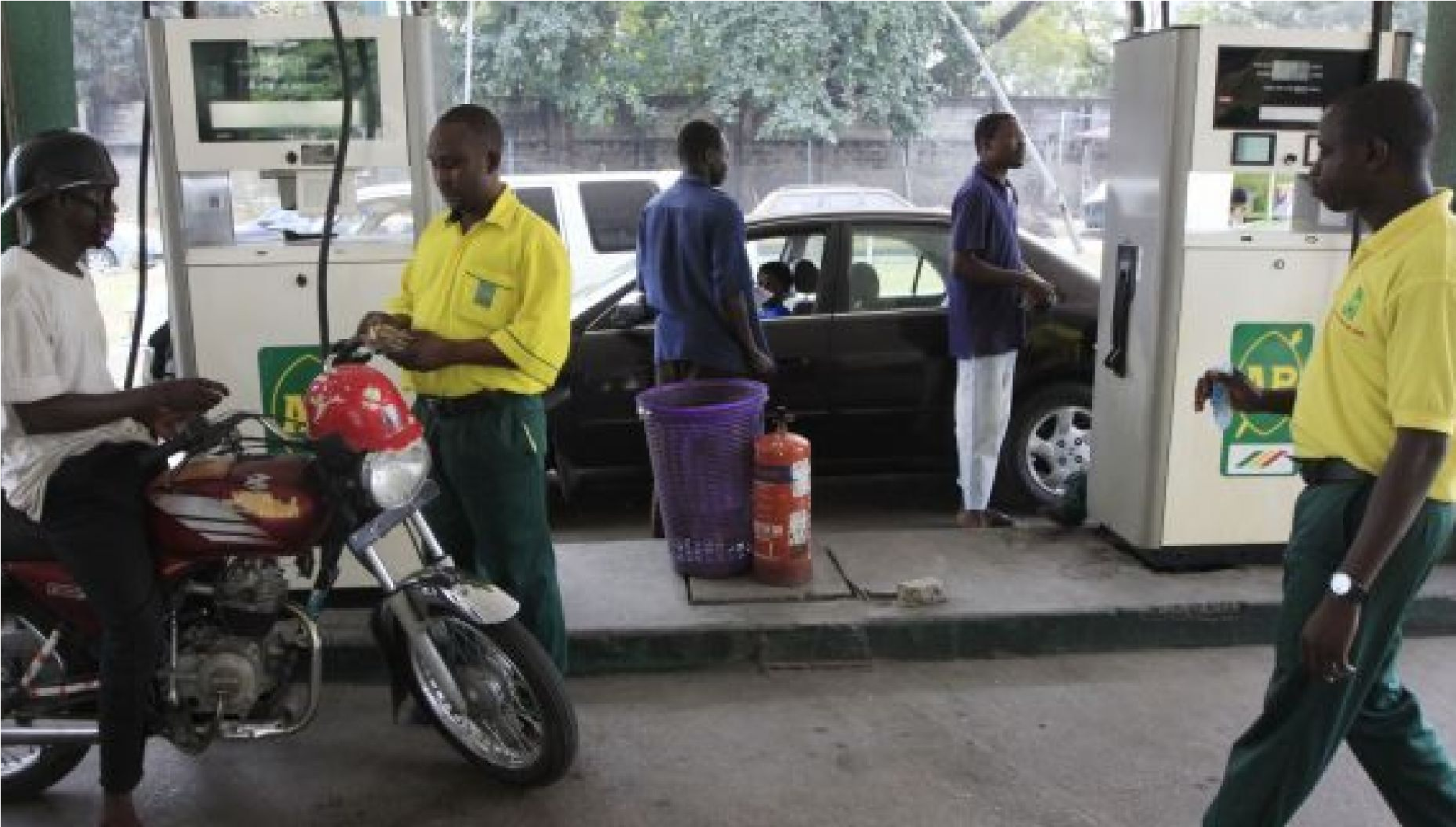
Nigerians Braces for A Fresh Surge in Fuel Prices As Dangote Refinery Halts Sale of Fuel in Naira

0

Nigeria is bracing for a fresh surge in fuel prices following Dangote Petroleum Refinery’s decision to halt the sale of petroleum products in Naira, a move that industry experts say could compound the country’s economic hardship and intensify pressure on foreign exchange.

In a statement released on Wednesday, Dangote Petroleum Refinery, Africa’s largest refinery, explained that the temporary halt in Naira transactions was necessitated by a misalignment between its revenue streams and crude oil procurement obligations, which are settled in US dollars.

“This decision is necessary to avoid a mismatch between our sales proceeds and our crude oil purchase obligations, which are currently denominated in US dollars,” the company stated.

According to the $20 billion refinery based in Lagos, the volume of petroleum products it has sold in Naira now surpasses the amount of Naira-denominated crude oil it has received from the Nigerian National Petroleum Company Limited (NNPCL). The company maintains that once it secures new crude oil supplies in Naira, it will promptly resume local currency sales.

The move follows the expiration of the crude-for-Naira agreement between Dangote Refinery and the NNPCL on March 1, 2025. The government introduced the arrangement in mid-2024 as a measure to ease pressure on the US dollar and ensure price stability in the downstream oil sector. Under the six-month agreement, Dangote Refinery and other local refineries received crude oil from NNPCL in Naira rather than US dollars.

However, with the expiry of the arrangement, Dangote Refinery is now forced to procure crude in foreign currency, which in turn affects the currency in which it sells its refined products.

The NNPCL, in its defense, said that negotiations were ongoing to replace the expired contract and pointed out that since the start of the arrangement, it had supplied Dangote Refinery with over 48 million barrels of crude oil in Naira and a total of 84 million barrels since the refinery began operations in 2023.

Analysts Decry Policy Reversal

The decision to end the Naira crude sales arrangement has sparked concerns, with financial and energy analysts arguing that sustaining the policy would have shielded Nigeria from currency fluctuations and rising fuel costs.

Financial analyst Kalu Aja described the crude-for-Naira arrangement as a subsidy that protected consumers when oil prices were falling. However, he questioned what would happen if global crude oil prices surged, suggesting that the policy shift could have severe consequences for Nigeria’s economy.

Energy analyst Kelvin Emmanuel attributed Dangote’s decision to two key factors:

  1. Market Manipulation by Competitors – According to Emmanuel, a cartel of oil marketers who feel threatened by Dangote Refinery’s lower pricing strategy may have lobbied to terminate the Naira-based crude swap. This, he said, was a move to force Dangote to increase prices, thereby leveling the playing field for importers.
  2. Government’s Desperation for Foreign Exchange – Emmanuel also suggested that discussions were underway for a new forward-sale agreement that would extend until 2034 and be 2.2 times larger than the 2023 arrangement. This, he said, was driven by the Central Bank of Nigeria’s urgent need to settle $3.2 billion in foreign exchange obligations, including $1.2 billion in Eurobond yields due in 2025.

Oil Marketers Warn of Price Hikes

Oil marketers have warned that the shift in Dangote’s sales policy could lead to a sharp increase in fuel prices in the coming days.

Public Relations Officer of the Independent Petroleum Marketers Association of Nigeria (IPMAN), Chief Chinedu Ukadike, noted that the shift would worsen the pressure on the dollar, which has now become the primary exchange currency for petroleum products.

“The pressure on the dollar will increase because it has become the means of exchange. Marketers will begin to sell petrol at filling stations in dollars. And this will have a negative impact on the prices of petroleum products across the country,” Ukadike stated.

He further revealed that marketers had been informed that the crude-for-Naira deal officially ended on March 1, contradicting claims by some government officials that it was still in place.

With this development, pump prices, which had temporarily dropped below N1,000 per liter, are expected to climb again. Though the Major Energy Marketers Association of Nigeria (MEMAN) recently reported a slight reduction in the landing cost of imported petrol—from N817.82 per liter on March 14 to N797.66 per liter—analysts warn that without local crude supply from Dangote Refinery, the downward trend will be short-lived.

Rising Fuel Costs and Economic Strain

Nigeria’s energy sector remains in crisis, sustained by the longstanding inefficiency of state-owned refineries, which have been non-operational for decades until 2024. Despite efforts to revive the sector, the country still heavily relies on imported refined petroleum products, with NNPCL serving as the major importer.

The removal of fuel subsidies in May 2023 by President Bola Tinubu further worsened the situation, causing petrol prices to skyrocket from around N200 per liter to as high as N1,000 per liter. This has deepened economic hardship for millions of Nigerians who depend on petrol not just for transportation but also for powering generators in the absence of a stable electricity supply.

Last December, Dangote Refinery commenced operations with an initial refining capacity of 350,000 barrels per day, with plans to reach its full 650,000 barrels per day capacity by the end of 2025. While the refinery has already begun supplying diesel, aviation fuel, and now petrol to the domestic market, its pricing strategy and its ongoing negotiations with the government remain critical in determining the future of fuel affordability in Nigeria.

However, halting the naira-for-crude deal means that Nigeria is returning to full dollarization of the petroleum sector, a situation that will bring further strain on the economy by potentially worsening inflationary pleasures.