DD
MM
YYYY

PAGES

DD
MM
YYYY

spot_img

PAGES

Home Blog Page 1545

Morgan Stanley Downgrades Goldman Sachs as Recession Fears, Apple Card Risks Cast Shadow Over Revenue Outlook

0

On Monday, Morgan Stanley downgraded Goldman Sachs’ stock from Overweight to Equal-weight and reduced the price target from $659 to $558, citing significant concerns over the bank’s reliance on investment banking revenues, which are highly vulnerable to a downturn.

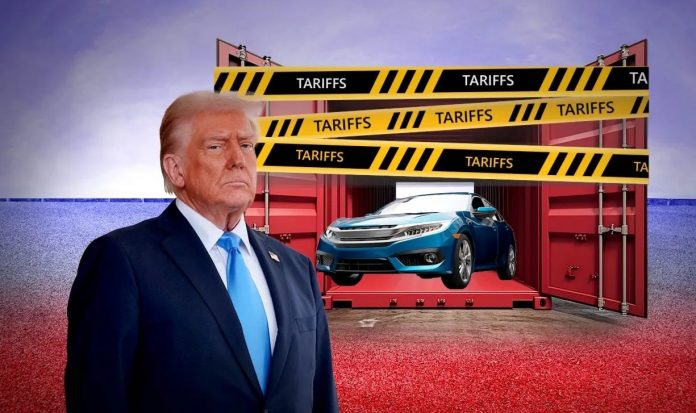
This downgrade comes as Goldman’s stock has dropped nearly 14% in the past week, with analysts expressing caution over its future performance amid ongoing economic instability caused by President Trump’s escalating tariff war.

The analysts raised concerns that over 60% of Goldman Sachs’s revenues come from its Global Banking & Markets segment, which is particularly exposed to recession risks and market volatility. Investment banking, in particular, has already shown signs of strain, with the tariffs playing a significant role in the mounting uncertainty.

In the wake of President Trump’s global tariff policy, which has led to widespread market concerns, analysts fear that American companies, including major financial institutions like Goldman Sachs, could be severely impacted by rising costs, diminished consumer confidence, and potential market contractions.

As noted by Wedbush analyst Dan Ives, if the tariffs hold at their current levels, they could have devastating effects on the U.S. tech sector, which is a critical driver of the broader economy. Ives stated: “If these tariffs (in current form/rates) hold… it would set the US tech world back a decade in our opinion while China is the clear winner… the US tech supply chain turned upside down overnight and the cost structure will be untenable. Investors know math and the sad reality.”

This statement underscores the growing concerns that Trump’s tariffs will cause severe damage to the U.S. technology sector, a key contributor to the country’s economic strength. As tensions rise between the U.S. and major trading partners, including China, analysts predict that American companies, especially those in high-tech industries, will find it increasingly difficult to maintain profitability. Goldman Sachs, with its exposure to global markets and its reliance on investment banking and trading, is seen as especially vulnerable.

In a research note, Morgan Stanley’s analysts also forecast that Goldman Sachs would fail to meet its internal medium-term return on equity target of 14-16%, projecting only a 12% return on equity (ROE) for 2025 and 13% in 2026. These figures fall below the bank’s targets and suggest potential trouble ahead. Moreover, concerns about the value of Goldman Sachs’s Apple Card portfolio, particularly its exposure to customers with lower FICO scores, have added to the overall sense of unease.

But analysts stopped short of downgrading Goldman Sachs to Underweight, believing that the bank’s Markets division could still benefit from prolonged market volatility, which may drive higher revenues. However, the long-term picture remains uncertain, and the broader risks posed by Trump’s trade war continue to weigh heavily on market sentiment.

The Recession Fears

Trump’s tariffs have sparked fears of a global recession, with analysts warning that the negative impact on trade and global supply chains could push the U.S. economy into a slowdown. The U.S. stock market, which has already been facing volatility, is expected to remain under pressure as companies brace for higher costs and shrinking profit margins.

Experts such as Dan Ives argue that the tariff war is not only undermining the competitiveness of U.S. companies but also disrupting the global supply chain. The overall uncertainty is prompting both investors and corporations to reconsider their long-term strategies, with many now waiting for signs of stabilization before committing to new investments.

“Capital isn’t going to rush to fill that void just because you raised tariffs. It’s going to wait,” Ives added, further underlining the cautious stance taken by the market.

Presently, the U.S. Federal Reserve faces its own challenges in balancing monetary policy, particularly with inflation concerns mounting. This means the impact of the tariffs is expected to be felt in various sectors of the economy. Analysts, including those from J.P. Morgan, have raised the likelihood of a U.S. recession to 60% by the end of the year, with further risks to global economic stability.
Trump Tariff Policy: America Heading Towards A Self-Inflicted “Economic Nuclear Winter”, Says Billionaire Investor Bill Ackman

0

American billionaire investor and founder of Pershing Square Capital Management, Bill Ackman, has voiced strong concerns about the tariff policy implemented by U.S. President Donald Trump, last week Wednesday.

The billionaire investor warned that such a tariffs policy could plunge America and the global economy into what he calls a “self-inflicted economic nuclear winter”.

He wrote on X,

“By placing massive and disproportionate tariffs on our friends and our enemies alike and thereby launching a global economic war against the whole world at once, we are in the process of destroying confidence in our country as a trading partner.

“To state the obvious, it does not help our country’s and our president’s negotiating position to be trying to strike deals while our market is collapsing. Whoever is recommending that idea to the President should be fired now.”

He also added that with these controversial tariffs implemented, Trump is losing the confidence of business leaders across the globe.

“Business is a confidence game. The president is losing the confidence of business leaders around the globe. The consequences for our country and the millions of our citizens who have supported the president in particular low-income consumers who are already under a huge amount of economic stress are going to be severely negative. This is not what we voted for,” he added.

Ackman’s warning resonates with broader economic critiques, echoing sentiments like those from Richard Branson who talked about Trump recognizing mistakes and correcting course swiftly. The Virgin Group co-founder doesn’t view Trump as infallible, emphasizing that advisors bear responsibility for misguiding the president with faulty data.

Also, while President Trump has acknowledged his aggressive tariff plan may result in “little pain” in the short term, billionaire “Shark Tank” star and American billionaire businessman, Mark Cuban, sees a greater risk of long-term economic harm.

In a series of posts made on Bluesky, Cuban expanded on his previous critiques of Trump’s trade policies. He suggested that the extensive tariffs announced by the Trump administration on Wednesday, combined with cuts to the federal workforce spearheaded by the White House DOGE office, could result in a worse financial crisis than the Great Recession of 2008.

He wrote,

“If the new tariffs stay in place for multiple years and are enforced and inflationary, and DOGE continues to cut and fire, we will be in a far worse situation than 2008”.

Notably, JPMorgan Chase CEO Jamie Dimon said Monday that tariffs announced by President Donald Trump last week will likely boost prices on both domestic and imported goods, weighing down a U.S. economy that had already been slowing. “Whether or not the menu of tariffs causes a recession remains in question, but it will slow down growth,” he said.

Trump’s controversial tariff policy, rolled out last week Wednesday, imposes sweeping levies on imports, including a baseline 10% tariff on goods from over 180 countries and significantly higher rates of up to 54% on imports from China. This approach builds on Trump’s long-standing belief that tariffs can address trade imbalances, protect American industries, and bring jobs back to the U.S.

The policy, dubbed by some as part of a “Liberation Day” economic agenda, aims to restore manufacturing and reduce reliance on foreign goods. Trump has however defended the tariffs as a necessary “medicine” to fix economic disadvantages, claiming they’ve already generated billions in revenue and lowered inflation, oil prices, and interest rates.

Elon Musk Falls Out With Trump’s Top Tariff Adviser, Signaling a Growing Rift with White House Over Policies That Could Deepen Tesla’s Troubles

0

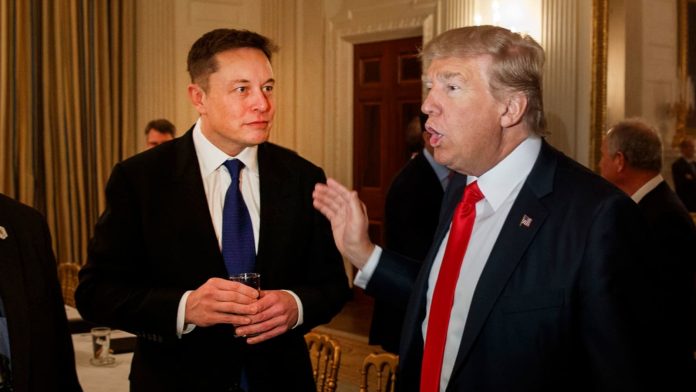
Tesla CEO Elon Musk has taken a public swipe at President Donald Trump’s top trade advisor, Peter Navarro, in what many insiders see as a veiled rebuke of the Trump administration’s sweeping new tariff regime, a policy that could further erode Tesla’s already slowing growth.

“A PhD in Econ from Harvard is a bad thing, not a good thing,” Musk wrote Saturday on X, formerly Twitter. “Results in the ego/brains>>1 problem.”

Navarro, 75, who earned his master’s and doctorate from Harvard and currently serves as Trump’s senior advisor on trade and manufacturing, brushed off the insult in a Fox News interview. But behind the scenes, many in Trump’s circle acknowledge that the rift between Musk and the administration may be deeper than they’re publicly admitting.

“Look, Elon, when he’s in his DOGE lane, he’s great,” Navarro said on Sunday Morning Futures. “But let’s understand what’s going on here—Elon sells cars. He’s protecting his own interests, as any business person would do.”

Navarro’s tone was light, but Musk’s criticism came just days after Trump rolled out a sweeping tariff policy that imposes new taxes on imports from more than 180 countries, starting at a baseline rate of 10%. Trump, who announced the measure during a rally on what he called “Liberation Day,” claimed the move would “make America wealthy again” by encouraging U.S. manufacturing.

However, economists warn the policy could do the exact opposite, particularly for American automakers like Tesla, whose global supply chains and export markets are being directly hit by the new duties.

Tesla, which relies on imported parts for its U.S. manufacturing and exports thousands of vehicles from its Gigafactory in Shanghai to Europe and elsewhere, stands to be one of the hardest-hit American automakers under the new tariff regime. Analysts say the policy could sharply raise the cost of key components, reduce competitiveness in foreign markets, and trigger retaliatory measures from other countries.

Tesla has already been facing a tough year. The electric carmaker’s global deliveries fell nearly 8% in Q1, its biggest year-over-year drop since the pandemic. With competition rising in Europe and China, and price wars eating into margins, Tesla is under pressure to show growth again. Analysts have downgraded the company’s stock, pointing to stagnating sales and weak consumer demand in key markets.

Musk, once an enthusiastic Trump backer and currently serving as a “special government employee” under the Department of Government Efficiency (DOGE), has supported the administration on a range of issues, from deregulation to free speech. But the tariff dispute may mark the beginning of a serious ideological split.

Behind the Musk–Navarro Clash

While Musk’s dig at Navarro seemed personal, many believe it’s emblematic of a deeper frustration with Trump’s inward-turning economic policy. The jab was widely interpreted as a public denunciation of the administration’s increasingly populist, protectionist direction—one that Musk believes undermines the very global competitiveness America needs to preserve.

Sources familiar with White House discussions say Musk had warned Trump privately in recent months that the auto sector needed “more open markets, not less,” especially as legacy automakers from China and Europe began flooding international markets with cheaper EVs.

Musk’s push for a “zero-tariff” trade pact between the U.S. and Europe, comments he made Saturday while attending a meeting with Italy’s League Party, also underscores his divergence from Trump’s hawkish stance. He even suggested a freer immigration policy between the two continents.

“If people wish to work in Europe or wish to work in North America, they should be allowed to do so,” Musk said, comments that stand in stark contrast to the Trump administration’s more restrictive posture on labor and immigration.

Though Navarro downplayed the spat, insiders suggest Musk’s jab may mark the beginning of a cooling relationship with Trump’s administration—one that had, until now, positioned Musk as an indispensable outsider-insider. As head of DOGE, Musk was tapped to bring Silicon Valley efficiency to federal operations. Trump, who frequently praises Musk, has said he hopes the tech billionaire stays on “as long as possible.”

But federal law restricts special government employees like Musk to 130 days of service per year, and there are signs that both sides are bracing for a natural, if increasingly tense, conclusion to the arrangement.

“Elon Musk and President Trump have both publicly stated that Elon will depart from public service as a special government employee when his incredible work at DOGE is complete,” White House press secretary Karoline Leavitt said in an X post.

Still, Trumpworld seems eager to keep Musk in the fold. Vice President JD Vance recently said on Fox News that Musk would continue advising the administration even after completing his DOGE assignment. But that loyalty may be harder to maintain if the tariff fallout continues to deepen.

However, for Musk, the battle over tariffs could force a turning point. Once seen as a rare bridge between the tech elite and Trump’s populist movement, Musk now appears caught between his business interests and the administration’s increasingly nationalistic policies.

Time will tell whether his fallout with Navarro becomes a broader split with the White House. However, it is becoming clearer as Tesla struggles to maintain growth that Musk can’t afford trade policies that choke supply chains, inflate production costs, and close foreign markets.

Investing in Tomorrow: The Rise of AI-Powered Solutions with Nexchain — The Best Presale Opportunity of 2025

0

In a groundbreaking move, OpenAI, the team behind the popular ChatGPT, has successfully closed a funding round totaling $40 billion. This event marks the largest private investment ever recorded in the technology sector, according to PitchBook. Following this significant financial boost, DeepAI’s valuation has skyrocketed to an impressive $300 billion, placing it just behind SpaceX, which boasts a valuation of $350 billion as per CB Insights. The main contributor to this funding surge is the Japanese investment giant SoftBank, which aims to invest up to $30 billion by 2025, alongside $10 billion from a consortium that includes notable names like Microsoft, Coatue, Altimeter, and Thrive.

This surge of interest in artificial intelligence from major investment firms highlights the growing recognition of AI as a transformative force in various industries. Investors understand that AI is not simply a fleeting trend; it’s a transformative underpinning for future advancements. Among the wave of innovative tech solutions is Nexchain—the world’s first blockchain network harnessing the power of artificial intelligence.

Nexchain: An Innovative Overview

Nexchain is setting itself apart as a revolutionary blockchain platform by utilizing artificial intelligence to deliver exceptional transaction speeds and reliability. Thanks to its avant-garde architecture, Nexchain is capable of processing up to 400,000 transactions per second (TPS)—a feat that ranks it among the fastest blockchain technologies available today. This remarkable capability facilitates real-time transfers, effectively eliminating delays and preventing network congestion.

A defining characteristic of Nexchain is its hybrid consensus mechanism, which synergizes Proof-of-Stake technology with AI algorithms. This combination not only fortifies security but also enables real-time adaptability, enhancing overall usability and robustness. For investors on the lookout for lucrative opportunities, Nexchain emerges as a compelling option with significant growth prospects.

The Power of Interoperability

In today’s rapidly evolving tech landscape, the ability to integrate effortlessly with various platforms is vital for business success. Nexchain is designed with this need in mind, featuring robust interoperability that allows users to connect seamlessly with other blockchain ecosystems. This functionality fosters cross-chain integrations, broadening Nexchain’s market potential and attracting an array of new projects and applications.

Scalable Architecture

One of the standout features of Nexchain is its scalable architecture, which is constructed using sharding and a Directed Acyclic Graph (DAG) structure. This design greatly diminishes network strain and facilitates the simultaneous processing of thousands of transactions, making the platform ideally suited for future growth. This capability positions Nexchain favorably in terms of long-term investment potential, demonstrating the network’s commitment to accommodating increasing transaction demands.

Affordable and Accessible

With transaction fees starting as low as $0.001, Nexchain ensures accessibility for both individual users and enterprises alike. This attractive combination of low costs and high performance can significantly enhance operational efficiency and spur innovation, making Nexchain a particularly enticing prospect for investors eager to capitalize on favorable returns.

Introducing Smart Contracts 2.0

Nexchain is also at the forefront of technological advancement with its Smart Contracts 2.0, driven by artificial intelligence. These contracts have the ability to self-optimize and make autonomous decisions based on pre-defined criteria. This innovation paves the way for new possibilities in decentralized applications (dApps) and positions Nexchain as an appealing platform for developers seeking to create cutting-edge solutions in the booming DeFi and NFT spaces.

Commitment to Sustainability

As environmental concerns gain traction among investors, Nexchain stands out by offering sustainable solutions with minimal energy consumption. This eco-conscious approach makes it an attractive option for those interested in supporting environmentally friendly technologies. With AI algorithms that optimize energy efficiency, Nexchain is well-positioned as a responsible player in the blockchain landscape.

Conclusion

The impressive funding round for DeepAI signals a broader trend identifying artificial intelligence and its related technologies as pivotal for the future—not only within software development but extending into the blockchain domain as well. Nexchain is uniquely situated at the cutting edge of this evolution, presenting unique opportunities for investors eager to harness the advantages of the forthcoming wave of decentralized technology. With its outstanding performance, reliability, and innovative features like hybrid consensus and Smart Contracts 2.0, Nexchain is destined to carve out a prominent role among the leading blockchains of tomorrow.

Nigeria Launches $552m HOPE-EDU Reform to Rescue Failing Basic Education System

0

Amid mounting concern over Nigeria’s deteriorating basic education system, the federal government has rolled out a comprehensive reform program aimed at reversing years of underperformance in public schooling.

Known as HOPE for Quality Basic Education for All (HOPE-EDU), the initiative is backed by $552.18 million in secured funding from the World Bank and the Global Partnership for Education (GPE). The launch was announced on Saturday by the Minister of State for Education, Dr. Tunji Alausa, via his verified social media handle.

Described by Alausa as a “landmark achievement” in Nigeria’s journey to rebuild its education sector, the HOPE-EDU program is being projected as a transformational reform designed to close learning gaps, modernize outdated teaching structures, and bring measurable improvements to basic education across the country.

“This is not just another project,” Alausa said. “It is a new model of how government can work — with performance-based financing, equity at the core, and results as the measure.”

According to the Minister, the program is set to directly impact over 29 million Nigerian children, 500,000 teachers, and more than 65,000 public schools across all 36 states and the Federal Capital Territory. The aim is to establish a performance-driven system that rewards progress, supports underserved communities, and reshapes public education delivery with greater accountability.

A Country in Crisis — and a Sector Long Neglected

For decades, Nigeria’s education system has been crippled by systemic neglect, poor funding, infrastructure decay, and a chronic shortage of qualified teachers. Though basic education is officially free and compulsory under the Universal Basic Education Act, millions of Nigerian children remain out of school, and for those in school, the quality of instruction has often been alarmingly low. The result is a generation of students who, even after six years of primary education, often lack foundational literacy and numeracy skills.

“Too many children in school, but not learning; too many classrooms under-resourced; too many teachers unsupported,” Alausa pointed to this crisis bluntly.

By tying funding to measurable improvements, HOPE-EDU represents a sharp departure from the traditional model in which federal funds were disbursed with limited tracking and little linkage to learning outcomes. The new system will empower state governments to lead program delivery, with federal coordination and international oversight ensuring that funds go where they’re most needed—and only when targets are met.

The Architecture of Reform

Central to the HOPE-EDU model is a performance-based financing framework that evaluates and releases funding based on clearly defined outcomes. States that improve student learning results, close gender and regional gaps, enhance infrastructure, and support teacher development will be better positioned to receive continued funding support.

The program also emphasizes the inclusion of communities, parents, and local leaders in driving school accountability and promoting enrollment and attendance. The federal government hopes to restore a sense of shared ownership to public education, one that has long been absent from Nigeria’s fractured system, by aligning these actors with national goals.

“This program will redefine how we deliver public education in Nigeria—transparently, measurably, and sustainably,” Alausa said.

As a sign of the administration’s commitment, Tinubu’s government allocated N3.5 trillion to the education sector in the 2025 budget, marking one of the highest single-year investments in recent Nigerian history. Of that amount, N826.9 billion has been earmarked for infrastructure development across primary, secondary, and tertiary institutions.

Building Momentum Through Multilateral Support

In addition to local funding, Nigeria has secured international backing to strengthen its educational foundations. The World Bank recently approved a $1.08 billion loan package for Nigeria, with nearly half—$500 million—dedicated to improving education quality, boosting household and community resilience, and enhancing nutrition outcomes for vulnerable children.

Saturday’s launch of HOPE-EDU follows months of negotiations and coordination between the federal government, sub-national entities, and international education donors. The Ministry of Education, alongside the Universal Basic Education Commission (UBEC), was instrumental in designing the new framework in partnership with technical teams from the World Bank and GPE.

Stakeholders familiar with the program say its real value may lie in its ability to enforce discipline within the delivery chain, a consistent weakness in past reform attempts. HOPE-EDU introduces a feedback mechanism that rewards performance and penalizes complacency, by conditioning disbursements on verified results.

An Education Loan Scheme for Higher Institutions

Beyond basic education, the federal government has also moved to ease access to tertiary education by establishing the Nigerian Education Loan Fund (NELFUND), aimed at supporting students from low-income backgrounds who would otherwise struggle to afford university or polytechnic tuition.

With the education system facing pressure from all angles—economic instability, ballooning youth population, and increasing demand for digital and technical skills—the combination of reforms at both the basic and tertiary levels appears to be part of a broader recalibration of Nigeria’s development strategy.

A Long Road To Success

Despite the ambitious scope and funding, implementation remains the most formidable challenge. Against this backdrop, education experts have pointed to many well-intentioned reforms that have collapsed under the weight of poor governance, inadequate oversight, and political interference.

What sets HOPE-EDU apart, for now, is its insistence on metrics, transparency, and community participation. If these principles hold firm, the program could serve as a long-overdue blueprint for restoring confidence in Nigeria’s battered education system. But if mismanaged, the consequences could deepen inequality, widen regional disparities, and derail the administration’s reform agenda.