DD
MM
YYYY

PAGES

DD
MM
YYYY

spot_img

PAGES

Home Blog Page 1549

How to Get Started with Instagram API Documentation

0

Embarking on your journey into the world of Instagram API can seem daunting at first, but with the right guidance and resources, it becomes a manageable and rewarding endeavor. Whether you’re a developer looking to integrate Instagram features into your application or a marketer aiming to harness social data, a well-documented API is your key to success. For a comprehensive overview of the Instagram API, you might find resources like https://data365.co/instagram useful. This resource provides a gateway to understanding the essentials without implying any affiliation with the tool itself. In this post, we’ll take a deep dive into the basics of Instagram API documentation, discuss how to set up a developer account, clarify the concepts behind API keys and authentication methods, explore basic endpoints for data retrieval, and highlight best practices for making API requests.

Setting Up Your Developer Account for Instagram API

Before you can interact with the Instagram API, you need to set up a developer account. This initial step ensures that you have the proper credentials and access to Instagram’s developer tools. Here’s a general overview of what you need to do:

  • Registration:
    Sign up for an account on the Instagram developer platform. This usually involves verifying your email and providing some basic information about yourself or your application.
  • Application Setup:
    Once registered, create a new application within the developer dashboard. This is where you’ll manage your API usage, set permissions, and access keys.
  • Review Policies:
    Familiarize yourself with Instagram’s developer policies and guidelines. These documents ensure that your usage complies with best practices and legal requirements.
  • Sandbox Mode:
    Many platforms offer a sandbox mode where you can test your application without affecting real users or live data. Utilize this feature to experiment and understand the API’s behavior before going live.

By following these steps, you lay the foundation for a secure and effective integration with Instagram. Each platform may have slight variations in their registration process, so it’s important to consult the latest documentation for any updates or additional requirements.

Understanding API Keys and Authentication Methods

API keys and authentication methods are the backbone of secure API interactions. They ensure that only authorized applications can access and modify data. Here’s an overview of the key concepts:

  • API Keys:
    An API key is a unique identifier that allows you to make requests to the Instagram API. It’s typically included in your HTTP headers or as a query parameter in your requests. Think of it as a digital pass that verifies your application’s identity.
  • Authentication Protocols:
    Instagram typically uses OAuth 2.0, a robust authentication framework that provides secure authorization without exposing user credentials. OAuth 2.0 involves:

    • Authorization Code Flow:
      This is a multi-step process where users grant permission to your application, which then exchanges an authorization code for an access token.
    • Access Tokens:
      Once authenticated, the API issues an access token, which must be sent with every request to verify that you have the necessary permissions.
  • Permission Scopes:
    When setting up authentication, you specify what kind of data your application can access. This is controlled by permission scopes, which may include access to user profiles, media, insights, and more.
  • Security Considerations:
    Ensure that you store your API keys securely. Avoid hardcoding them into your applications and use environment variables or secure vaults to manage sensitive credentials.

Understanding these elements not only secures your application but also enhances its reliability when interacting with Instagram’s services.

Exploring Basic Endpoints for Data Retrieval

Once you’ve set up your developer account and familiarized yourself with authentication, the next step is to explore the API endpoints available for data retrieval. Endpoints are the URLs where you send your API requests, and they provide access to specific data types. Some commonly used endpoints include:

  • User Information:
    Retrieve basic profile data, such as username, profile picture, and bio.
  • Media Endpoints:
    Access posts, images, videos, and associated metadata. This can include comments, likes, and timestamps.
  • Insights:
    For business accounts, endpoints provide detailed analytics on reach, impressions, and engagement rates.
  • Hashtags and Mentions:
    Fetch data related to specific hashtags or mentions, which can be useful for tracking trends and audience engagement.

By experimenting with these endpoints, you can build applications that pull in the exact data you need. For example, creating a dashboard that displays real-time social media metrics or a tool that automates content curation based on user interactions. The versatility of these endpoints allows you to tailor your application to meet a variety of needs.

Best Practices for Making API Requests

Making API requests efficiently and securely is crucial for the stability and performance of your application. Here are some best practices to consider:

  • Rate Limiting Awareness:
    Many APIs impose rate limits to prevent abuse. Always monitor your request counts and design your application to handle scenarios where you might hit these limits. Consider implementing exponential backoff strategies for retrying requests.
  • Error Handling:
    Develop a robust error-handling mechanism. This should include checking for common error codes such as 400 (bad request), 401 (unauthorized), and 429 (too many requests). Handling these errors gracefully can significantly improve the user experience.
  • Caching Responses:
    To reduce the number of API calls and improve performance, cache responses where appropriate. This not only saves on request quotas but also speeds up data retrieval for end-users.
  • Optimizing Requests:
    Only request the data you need by using query parameters and filtering options. This minimizes the payload size and enhances response times.
  • Logging and Monitoring:
    Keep logs of your API requests and responses. This helps in debugging issues and tracking down potential problems quickly.

More about “API request optimization” you can read here and follow the recommended guidelines for a smoother integration process.

In conclusion, getting started with Instagram API documentation involves a series of well-defined steps—from setting up your developer account and understanding API keys and authentication to exploring basic endpoints for data retrieval and implementing best practices for making API requests. By taking the time to understand these fundamental aspects, you not only secure your application but also unlock the full potential of Instagram’s rich data and functionality. Whether you’re building a new app or integrating social media features into an existing platform, these guidelines provide a solid foundation to ensure that your journey into API integration is both successful and secure. Embrace the learning process, experiment with different endpoints, and continuously refine your implementation strategies to stay ahead in the ever-evolving landscape of digital development.

Forget Dogecoin and Shiba Inu, This Is The Coin To Make New Millionaires In 2025

0

Due to Dogecoin (DOGE) and Shiba Inu (SHIB), meme coins are now significant players in the cryptocurrency landscape. This demonstrates how internet culture combined with supportive communities can transform joke projects into billion-dollar ventures. A surge of crypto millionaires emerged from their ascent, yet approaching 2025, investors are doubtful that meme coins will sustain their substantial returns.

Remittix (RTX) has gained attention in the evolving utility-driven market as a presale coin called the ‘New XRP’ because it focuses on solving real-world financial problems through blockchain technology unlike speculative assets like DOGE and SHIB. The meme coin era persists but shows signs of change as RTX emerges as the potential next altcoin to generate a wealth of crypto millionaires.

Dogecoin (DOGE): The Original Meme Coin That Keeps Fighting

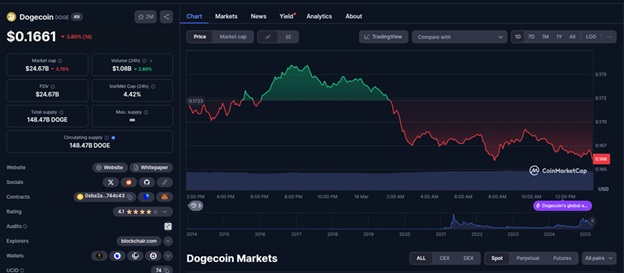
The inception of Dogecoin as a comedic cryptocurrency project evolved into a remarkable achievement. Elon Musk’s backing enabled DOGE to achieve enormous gains in value because passionate community belief combined with enthusiasm can create significant financial outcomes. Dogecoin emerged as a prominent meme coin because it survived long due to its strong branding, market-oriented features, and user-friendly entry point.

Dogecoin faces a core issue because it lacks real-world functional value. It continues to gain merchant payment acceptance and customer engagement in Twitter payment-related topics. Later blockchain projects provide superior technical advantages than Dogecoin does. The future value of Dogecoin as a wealth-building asset for 2025 depends on major ecological enhancements to its system.

Shiba Inu (SHIB): More Than a Meme, But Can It Sustain Growth?

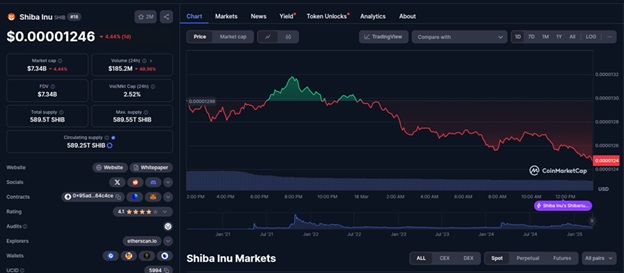
Shiba Inu emerged as the self-declared ‘Dogecoin killer’ by riding the meme-driven excitement to reach remarkable success. SHIB has broken away from meme status by establishing Shibarium to lower gas fees and enhance transaction speed through its layer-2 scaling solution. The Shiba Inu digital currency has entered both the NFT and DeFi sectors, establishing a more distinct ecosystem than Dogecoin.

Despite its evolution, SHIB faces challenges. The combination of SHIB’s ample circulating supply and recent sluggish price movement causes investors to doubt its ability to achieve another rapid growth phase. Investors are focusing on new projects with better fundamentals even though the SHIB Army continues to show strong support. Can SHIB continue its upward trajectory, or has its period of dominance as a leading altcoin reached its pinnacle?

Remittix: The ‘New XRP’ That’s Changing the Game

Remittix (RTX) is becoming significant in crypto payments while DOGE and SHIB fight for meme coin supremacy. Remittix is designed for efficient cross-border transactions, providing a quick and economical scalable solution beyond traditional financial systems, unlike meme coins that depend on hype.

Through Remittix’s blockchain system, users can transfer money worldwide without incurring the high fees that banks charge and their usual delays. This project’s real-world implementation renders it an exceptional selection for long-term investors seeking enduring investment opportunities. Unlike meme coins that struggle to maintain a sustainable presence, Remittix targets a real-world financial issue to secure its position for widespread use.

The presale numbers speak for themselves. The RTX project has secured almost $14 million in funding with 61.08% of its tokens sold which shows investors trust its goals. Remittix stands out from short-lived speculative coins because it is engineered for sustained success making it a top investment choice in 2025.

With a current price of $0.0734, Remittix positions itself as a major player in the trillion-dollar remittance market through its capability to merge crypto with fiat currencies. RTX has the potential to serve as the essential connection between conventional financial systems and the evolving world of cryptocurrency during financial institutions’ blockchain adoption phase.

Conclusion: Which Crypto Will Lead the Next Bull Run?

Meme coins like Dogecoin and Shiba Inu have shown massive profit potential, yet investors are now seeking sustainable value beyond mere hype as 2025 approaches. DOGE and SHIB still attract interest, but the future coins that will create millionaires will probably have real-world applications.

Remittix demonstrates fundamental strength as a project that has achieved impressive presale momentum. RTX combines innovative blockchain payment solutions with institutional-grade security and a strategic vision to position itself as a leading asset for future performance.

RTX may emerge as the defining cryptocurrency for the next financial surge. Can early investors turn their crypto investments into generational wealth? Remittix demonstrates potential beyond mere presale excitement as attention turns to high-utility projects, and it emerges as a leading candidate in digital finance. Will you be part of it?

Join the Remittix (RTX) presale and community:

Join Remittix (RTX) Presale

Join the Remittix (RTX) Community

Top 4 Altcoins with the Highest Upside in 2025: Rexas Finance Could Replicate Solana’s 3000% Rally from Its 2022 Dip

0

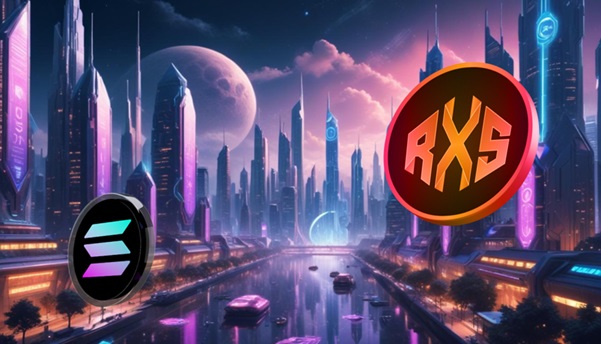
The crypto market is constantly changing, and new opportunities exist for investors looking for outsized returns. Solana’s recovery from its lows in 2022, when it surged over 3000%, proves that undervalued projects can still provide massive returns. Many altcoins show strength with the start of 2025, but one seems to be the possible Solana successor. Rexas Finance is still in the last stage of its presale but has positioned itself for exceptional growth due to its innovative asset tokenization model. Ideally, XRP, Cardano, and Dogecoin fight for supremacy, and looking ahead, they all have good reasons to increase their value in the forthcoming months.

Rexas Finance: The Next Solana?

Rexas Finance has emerged as one of the most promising 2025 altcoins. In the real-world asset tokenization process, Rexas is a leader in a rapidly growing industry. Users on the platform can help themselves by investing in tokenized real estate, artwork, gold, and silver, among other things, and opening new channels for investment and liquidity. Rexas Finance allows for fractional ownership, making wealth creation easier than most traditional finance and erecting high entry barriers. This approach is similar to the adoption phase of Solana, which drew a lot of value during its initial phases due to its ability to facilitate high-speed transactions. In the last round of presale, which is priced at $0.20, Rexas Finance has sold almost $47 million worth of tokens, about 90.90% of the total.

There is rising anticipation in the market for the scheduled launch on June 19, 2025 as Rexas Finance is expected to list at $0.25. The platform stands out from the competition by combining DeFi, AI tools, and a decentralized launchpad, establishing it as a leader in the new wave of blockchain adoption. Rexas Finance has the potential to ignite a Solana-like rally when it goes live, especially with the growing demand from institutional investors looking for blockchain-based financial solutions. With the increased adoption of tokenized digital assets, Rexas Finance will likely experience increased demand. The company’s infrastructure is decentralized and transparent, guaranteeing security and operational efficiency—key attributes for investors. As demand for early-mover advantage increases with the completion of the RXS presale, investors could experience a substantial upside once RXS is publicly traded. Should this momentum be sustained, Rexas Finance might outperform Solana’s 3000% surge and establish itself as a dominant player in blockchain-based asset management.

XRP: Regulatory Clarity Could Trigger a Major Rally

XRP is sitting at $2.59, with a 0.33% increase over the past day and 2.07% over the past week. Its market cap of $149 billion indicates good institutional interest, especially with XRP’s -8.48% and -16.13% drop over the last 2 months and 6 months, respectively. With the SEC lawsuit approaching resolution, a favorable outcome has the potential to spark a breakout and renewal in demand from banks and financial institutions. Historically, clarity in regulation has driven the price, and with Ripple’s potential victory, XRP’s price has the chance to exceed $3 by 2025, leveraged by the adoption of the currency in cross-border payments and increasing global usage.

Cardano: Smart Contract Expansion Could Drive Growth

Cardano (ADA) is currently priced at $0.77. Over the past week, it is up by 1.62%. It has nonetheless reduced by 3.67% in the past month and 20.09% within the previous 6 months. Cardano (ADA) currently has a market cap of $29.11 billion, which is a considerable amount. However, ADA is still far behind its all-time high of $3.1 in 2021. Despite this, the stability may signal accumulation before a breakout. Cardano’s layer-2 scaling solution, Hydra, improves the efficiency of transactions, making it more appealing to DeFi and smart contracts. If there is an increase in developer activity in 2025, ADA’s price can increase to the $1.50-$2 range. The market conditions would determine if the asset will attain its previous highs.

Dogecoin: The Meme Coin with Real Utility

Currently, Dogecoin (DOGE) is priced at $0.24, registering increases of 0.56% within 24 hrs as well as 0.71% within the week, though suffering losses of -13.93% over the past 30 days and -30.73% over the past 6 months. However, the asset still maintains a $35.97 billion market cap. In the past, DOGE reached its all-time high of $0.73 in 2021 due to social media hype and endorsements from Elon Musk. If retail investor sentiment returns alongside increased adoption of cryptocurrency by the general masses and payment systems in 2025, Dogecoin price may rise to $0.50, and if the market’s bullish momentum continues, it can go beyond previous all-time highs.

Conclusion: A Transformative Year for Altcoins

In 2025, investors can consider these four altcoins for investment diversification. Rexas Finance is most likely to capture Solana’s 3000% rally due to its strong tokenization of assets alongside an impressive presale. XRP appears ready to break out on bullish sentiment with clear regulations, Cardano could support a price recovery with network upgrades, and Dogecoin’s historical price swings make it a wild card but with strong upside potential. If the market conditions turn positive, these cryptocurrencies can have a lot of returns, which cements why they are the most desirable altcoins.


For more information about Rexas Finance (RXS) visit the links below:

Website: https://rexas.com

Win $1 Million Giveaway: https://bit.ly/Rexas1M

Whitepaper: https://rexas.com/rexas-whitepaper.pdf

Twitter/X: https://x.com/rexasfinance

Telegram: https://t.me/rexasfinance

The New Era in Decentralized Finance

0

Decentralized Finance (DeFi) is on the cusp of a transformative shift, often described as a new era in the financial landscape. This evolution is driven by advancements in blockchain technology, innovative protocols, and a growing recognition of DeFi’s potential to reshape how we interact with money and financial services. The DeFi ecosystem continues to mature, moving beyond its early experimental phase into a more robust, efficient, and inclusive system.

At its core, DeFi leverages decentralized networks—primarily built on platforms like Ethereum—to offer financial services without traditional intermediaries such as banks or brokers. This includes lending, borrowing, trading, and earning yields, all facilitated by smart contracts that execute automatically based on predefined rules. The promise of this new era lies in its ability to democratize access, reduce costs, and enhance transparency, appealing to both individual users and, increasingly, institutional players.

Recent developments suggest that DeFi is shedding its reliance on vanity metrics like Total Value Locked (TVL) as the sole indicator of success. Instead, the focus is shifting toward productive liquidity—capital that’s actively utilized in lending, staking, or other value-generating activities—and alignment with user commitment. Protocols are innovating to make capital more efficient, ensuring that DeFi isn’t just a speculative playground but a functional alternative to centralized finance.

Another hallmark of this new era is the integration of real-world assets (RWAs) and traditional finance elements into DeFi frameworks. Tokenized assets, such as stocks or real estate, are beginning to flow into decentralized platforms, potentially unlocking billions in liquidity. This convergence could bridge the gap between traditional markets and DeFi, making it a more mainstream option. Imagine a world where your stock portfolio earns yield on a DeFi lending platform while you borrow stablecoins for everyday use—this vision is inching closer to reality.

The process starts with an asset being digitized. For example, a $1 million property could be tokenized into 1 million tokens, each worth $1. Ownership is recorded on a blockchain, ensuring transparency and immutability. Smart contracts govern the tokens’ behavior—defining rights, transferability, or revenue distribution (like rental income in the case of real estate).

Once tokenized, these assets can flow into DeFi ecosystems, where they might be staked for yield, used to secure loans, or traded on decentralized exchanges (DEXs). Blockchains like Ethereum, Polygon, or Binance Smart Chain are commonly used due to their robust smart contract capabilities. Stablecoins often play a role too, pegging token values to fiat currencies to reduce volatility, making tokenized assets more practical for everyday use.

The rise of Layer 2 solutions, like rollups, is addressing scalability challenges, reducing transaction costs, and speeding up processes, which broadens DeFi’s appeal. Meanwhile, emerging sectors like “DeFAI” (Decentralized Finance with AI) are gaining traction, blending artificial intelligence with DeFi to create smarter, more adaptive financial tools. These innovations signal a future where DeFi is not only more accessible but also more intelligent and responsive to user needs.

However, this new era isn’t without hurdles. Security remains a concern, with smart contract vulnerabilities and hacks still posing risks. Regulatory uncertainty looms large as governments grapple with how to oversee a system designed to operate beyond centralized control. Despite these challenges, the momentum is clear: DeFi is evolving into a competitive, sustainable ecosystem that could redefine finance for the long term. This new era for DeFi is about practicality, inclusivity, and integration. It’s a shift from hype to utility, where the technology matures to meet real-world demands, potentially heralding a renaissance in how we manage and grow wealth.

Apple Faces Stricter Oversight in Germany After Court Rulings

0

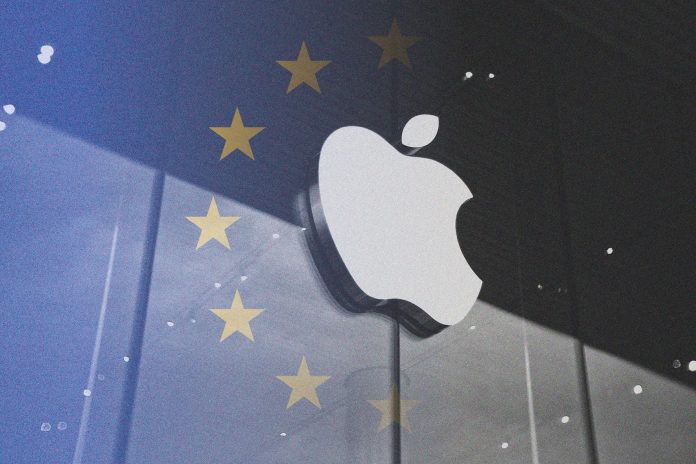
Germany’s Federal Court of Justice (BGH) ruled that Apple holds significant influence across multiple markets and is appropriately subject to heightened monitoring due to competition concerns. This decision upholds a 2023 assessment by the German Federal Cartel Office, which designated Apple as a “company of paramount cross-market significance for competition.” As a result, Apple now faces stricter oversight from German authorities, aligning it with other tech giants like Alphabet (Google’s parent company) and Meta (Facebook’s parent) under Germany’s regulatory framework aimed at curbing market dominance.

The ruling stems from Apple’s powerful economic position and its vertically integrated ecosystem, including the App Store, which acts as a gatekeeper influencing the visibility and success of third-party apps. This designation allows the Cartel Office to potentially prohibit practices deemed anti-competitive, such as favoring Apple’s own services over competitors or tying the use of one Apple product to another.

Apple contested the decision, arguing that it faces robust competition in Germany and that its business model prioritizes user privacy and security—values it believes the court overlooked. However, the BGH rejected Apple’s appeal and declined its request to escalate the case to the European Court of Justice, solidifying the German regulator’s stance.

Apple will now face proactive scrutiny from the German Federal Cartel Office under Section 19a of the German Competition Act (GWB). This means the regulator can intervene earlier and more decisively to prevent anti-competitive behavior, rather than just reacting to violations after they occur. Practices like self-preferencing (e.g., promoting Apple’s own apps over rivals in the App Store) or restrictive App Store policies could be challenged or banned outright.

Apple may need to adjust its ecosystem strategies in Germany, such as loosening control over app distribution, payment systems, or data usage. For instance, rules mandating the use of Apple’s in-app payment system (with its 30% commission) could be deemed anti-competitive, forcing Apple to allow alternatives. This could erode some of its revenue streams and weaken the “walled garden” model that ties users to its services.

While this ruling is specific to Germany, it aligns with broader European Union efforts, like the Digital Markets Act (DMA), which also targets “gatekeeper” firms like Apple. The German decision could embolden other EU regulators to take similar actions, creating a ripple effect across the single market. It might also influence jurisdictions outside Europe, as regulators globally watch how major tech firms are handled.

Smaller app developers and competitors could benefit if Apple is forced to level the playing field. For example, opening up sideloading (installing apps outside the App Store) or allowing third-party payment options could reduce costs and barriers for developers, fostering innovation and diversity in the app market. Users might see more choices and potentially lower prices if competition increases, but there’s a flip side.

Apple argues its closed ecosystem ensures privacy and security—values that could be diluted if it’s compelled to open up. Consumers might face a trade-off between variety and the seamless, secure experience Apple touts. Apple’s failed appeal—and the rejection of its bid to escalate to the European Court of Justice—signals that its legal challenges to such regulations may struggle. This could lead to costly compliance efforts and fines if violations are found, impacting its bottom line in a key market.

The ruling reinforces a growing global trend of reining in Big Tech. With Alphabet and Meta already under similar scrutiny in Germany, this decision underscores that no tech giant is immune, potentially accelerating antitrust actions worldwide. In short, Apple’s designation as a company of “paramount cross-market significance” in Germany could reshape how it operates, challenge its profitable ecosystem, and set a tone for how tech dominance is tackled in the years ahead.