
DD
MM
YYYY

PAGES

DD
MM
YYYY

spot_img

PAGES

Home Blog Page 155

Czech National Bank Purchases of First Digital Assets

0

The Czech National Bank (CNB)—the central bank of the Czech Republic—announced its first-ever purchase of digital assets, totaling approximately $1 million. This marks a historic step as the first central bank to publicly disclose acquiring Bitcoin (BTC).

The Czech National Bank’s (CNB) $1 million acquisition of Bitcoin and other digital assets is framed as a limited experimental pilot rather than a strategic investment. However, its significance extends far beyond the modest sum, representing a cautious yet pivotal entry by a Western central bank into blockchain-based assets.

The acquisition was approved by the CNB’s Bank Board on October 30, 2025, and executed through a regulated platform outside the bank’s international reserves. The purchase is not aimed at financial returns but to test operational processes for blockchain-based assets, including: Purchasing and custody.

Anti-money laundering (AML) compliance. Crisis response and tokenization workflows. The portfolio will be evaluated over 2–3 years, with the CNB planning to share insights publicly. It represents just 0.0006% of the CNB’s total assets, underscoring its limited, exploratory nature.

Governor Aleš Michl proposed the idea in January 2025 to prepare for a future where digital assets integrate with traditional finance, such as enabling seamless purchases of tokenized Czech bonds alongside everyday transactions.

The CNB noted that while it could invest in Bitcoin via exchange-traded funds (ETFs) under current laws, it opted for direct acquisition to gain hands-on experience. No immediate plans exist to add Bitcoin to official reserves due to its perceived immaturity.

This move positions the CNB as a pioneer among European central banks, leveraging the Czech Republic’s non-adoption of the euro for greater regulatory flexibility within the EU. It aligns with growing institutional interest in crypto, though the CNB emphasized compliance with Czech and EU regulations.

The announcement has sparked discussions on central bank digital asset adoption, with some viewing it as a signal for tokenized securities in public finance. As the first central bank to publicly disclose a direct Bitcoin purchase outside of seized assets or indirect ETFs, the CNB’s move normalizes crypto for sovereign institutions.

This could accelerate adoption, with analysts predicting it as a “turning point” for global Bitcoin integration into national strategies. Bitcoin’s price, already hovering above $100,000, saw a modest uptick post-announcement, reflecting heightened investor confidence in institutional inflows.

Governor Aleš Michl’s earlier proposal for up to 5% of reserves ~$7.3 billion in Bitcoin highlights potential for larger allocations. If the pilot succeeds, it could inspire similar tests elsewhere, echoing El Salvador’s full adoption but in a more measured EU context.

The portfolio—comprising Bitcoin for volatility/decentralization, a USD-pegged stablecoin and a tokenized deposit—focuses on practical workflows like custody, key management, AML compliance, and crisis simulations. Over 2–3 years, the CNB plans to share findings publicly, potentially establishing best practices for tokenizing assets like Czech bonds.

This could streamline future integrations, such as seamless koruna-based purchases of tokenized securities alongside everyday payments. By exploring blockchain’s role in payments, the CNB is preparing for a tokenized economy. Michl envisions “one-tap” transactions for everything from coffee to bonds, reducing barriers for retail investors and enhancing efficiency in a post-euro Czech system.

The Czech Republic’s non-euro status grants regulatory flexibility, allowing this pilot despite ECB President Christine Lagarde’s dismissal of Bitcoin as having “zero” value and warnings against reserve inclusion. Reactions on X describe it as “heroic,” potentially pressuring the ECB to revisit crypto policies and fostering debate on EU-wide standards.

Google Unveils $40bn Texas Data-Center Push as AI Infrastructure Race Heats Up

0

Alphabet’s Google on Friday announced a sweeping $40 billion investment to build three new data centers in Texas through 2027, marking one of the company’s largest-ever infrastructure commitments and intensifying the high-stakes battle among U.S. technology giants to secure the computing power needed for advanced artificial intelligence.

The investment underscores how fiercely competitive the AI arms race has become. Companies including OpenAI, Microsoft, Meta Platforms, and Amazon are pouring billions into AI-focused data centers across the country, driven by unprecedented demand for training and deploying frontier AI models.

Google’s latest move places Texas at the heart of this new infrastructure surge. According to the company, one of the new facilities will be located in Armstrong County in the Texas Panhandle, while the other two will rise in Haskell County, a stretch of West Texas near Abilene. The tech company will also pump fresh capital into its existing Midlothian campus and the Dallas cloud region, both of which anchor its global network of 42 cloud regions.

“This investment will create thousands of jobs, provide skills training to college students and electrical apprentices, and accelerate energy affordability initiatives throughout Texas,” Alphabet CEO Sundar Pichai said in a statement.

Texas Governor Greg Abbott welcomed the announcement, saying, “Google’s $40 billion investment makes Texas Google’s largest investment in any state in the country and supports energy efficiency and workforce development in our state.”

The company’s Texas plan lands during a period of rapid industrial expansion across the cloud and AI sectors. Big tech firms have announced massive new spending in 2024 and 2025, particularly within the U.S., as President Donald Trump pushes for major domestic investment to maintain the country’s advantage in the global AI contest. Google’s move aligns closely with that policy direction.

Earlier this month, Anthropic announced its own $50 billion plan to build data centers across the United States—including in Texas and New York—highlighting how capital expenditure is accelerating beyond long-established giants and into the broader AI startup ecosystem.

Google’s investment in Texas also complements its growing commitments in Europe. Just days earlier, the company said it would invest €5.5 billion ($6.41 billion) in Germany over the coming years, dedicated to expanding infrastructure and data-center capacity in Europe’s largest economy.

The latest Texas investment follows Google’s recent upgrade of its AI capabilities and expansion of cloud services, both of which depend heavily on computing infrastructure. As more enterprises migrate toward AI-driven processes—and as model sizes balloon—hyperscale data centers have become essential to meeting demand.

Still, analysts are warning that the current AI spending boom bears echoes of past tech cycles where capital outpaced returns. Some investors have cautioned that valuations and expenditure growth may prove difficult to sustain if AI adoption does not rise at the same explosive pace as infrastructure deployment.

Even so, with rivals racing to secure land, power, and long-term access to advanced chips, Google’s Texas expansion signals that the company is unwilling to lose ground in one of the most consequential technology competitions in modern history. The data centers—spanning workforce development, energy infrastructure, and regional economic gains—are both a strategic and symbolic marker of where the AI race is headed next.

Google says the investment will expand its cloud footprint, add significant capacity for AI workloads, and prepare the company for the next phase of rapid model development and deployment. The project is set to roll out through 2027.

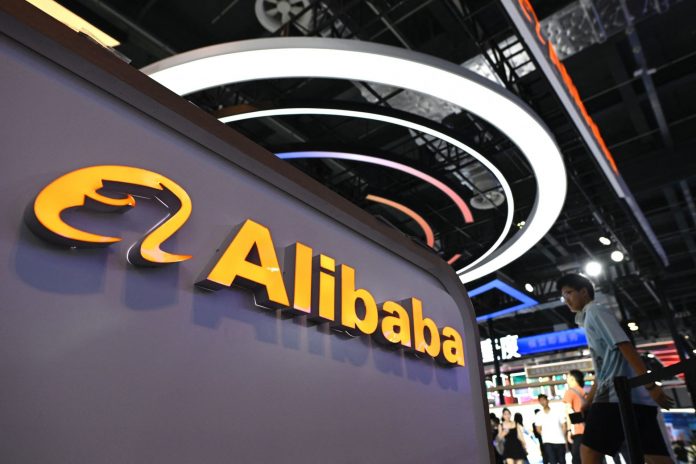
U.S. Accuses Alibaba of Aiding Chinese Military Operations as Long-Running Distrust of Chinese Tech Deepens

0

Washington has accused online marketplace giant Alibaba of providing technological support for Chinese military operations targeting the United States, according to a White House national security memo cited by the Financial Times on Friday.

The memo, which contains declassified top-secret intelligence, outlines how the company allegedly supplied capabilities to the People’s Liberation Army that the White House believes pose risks to U.S. national security.

The FT report did not specify which capabilities were involved, which military activities they allegedly supported, or whether the U.S. government is preparing a direct response. Even with those gaps, the disclosure was enough to rattle investors. Alibaba’s shares traded in the United States dropped 4.2% after the news.

Alibaba firmly rejected the allegations. “The assertions and innuendos in the article are completely false,” the company said in a statement. It added: “We question the motivation behind the anonymous leak, which the FT admits that they cannot verify. This malicious PR operation clearly came from a rogue voice looking to undermine President Trump’s recent trade deal with China.”

China’s embassy in Washington echoed that position. Embassy spokesperson Liu Pengyu said China “opposes and cracks down on all forms of cyberattacks in accordance with law,” and condemned the U.S. move.

“Without valid evidence, the US jumped to an unwarranted conclusion and made groundless accusations against China. It is extremely irresponsible and is a complete distortion of facts. China firmly opposes this,” Liu said.

A trust deficit despite fresh U.S.–China negotiations

While Beijing and Washington have recently engaged in talks aimed at easing trade tensions and stabilizing relations, the political backdrop remains fraught. The accusations against Alibaba underscore what officials in both countries quietly acknowledge: there is still a deep trust deficit. In Washington, suspicion toward Chinese technology companies has hardened into a structural, bipartisan stance, with concerns that firms could be leveraged—voluntarily or otherwise—for intelligence or military purposes.

That unease has shaped U.S. policy for years, long before this latest allegation.

How it escalated: From Huawei to TikTok — and now Alibaba

The distrust first surfaced prominently with Huawei, which Washington accused of posing national security risks due to its telecommunications equipment. The U.S. placed Huawei on its export blacklist in 2019, restricted access to American technology, and pressed allies to block the company from their 5G networks. China denied the allegations, but Huawei effectively became the first major casualty of the U.S. crackdown on Chinese tech.

The concerns later expanded to TikTok, owned by ByteDance, with U.S. intelligence agencies warning that the app could give Beijing access to American user data. Lawmakers pushed for restrictions and even forced divestiture, arguing that the social platform could be exploited for influence operations. ByteDance repeatedly denied the claims, yet the pressure persisted, marking TikTok as the second major target in Washington’s growing list of concerns.

Now, the spotlight has shifted to Alibaba.

The accusation that the company enabled Chinese military operations—an allegation Alibaba flatly denies—follows the same security logic that drove actions against Huawei and TikTok. Even as negotiations between Beijing and Washington reopen channels for cooperation, U.S. policymakers continue to act from a position that Chinese tech companies cannot be fully trusted due to their ties to, or obligations under, Chinese law.

A new front in a long-running rivalry

Though the White House memo reportedly contains declassified intelligence, the absence of public evidence leaves much unexplained. U.S. officials have not commented, and the FT report did not indicate whether further details will be released. Still, the timing is notable. The suggestion from Alibaba that the leak was intended to “undermine President Trump’s recent trade deal with China” shows how deeply geopolitical currents run beneath the accusation.

Beijing sees the allegation as another example of what it sees as Washington’s weaponizing of national security to contain China’s rise. For Washington, it is part of a broader strategy to secure its technological edge and prevent potential adversaries from acquiring or exploiting advanced capabilities.

Whether or not the U.S. pursues follow-up action, Alibaba has already found itself pulled into the same fault line that engulfed Huawei and TikTok. And with the U.S.–China tech rivalry accelerating, the company may not be the last.

Oracle Bonds Under Pressure as Plans for Additional $38bn in Debt Stir Investor Concerns

0

Oracle’s bond market turbulence deepened this week after fresh concerns surfaced over the company’s plan to take on another $38 billion in debt to fund its cloud and artificial-intelligence buildout.

The unease followed reporting by CNBC that the company intends to load significantly more leverage onto an already heavy debt stack, prompting renewed scrutiny from analysts and fixed-income investors.

Oracle has committed billions of dollars this year to expand its cloud and AI infrastructure. That effort has already pushed its outstanding debt to about $104 billion, including $18 billion in bonds, leaving the company spending more than it generates from operations as it chases long-term profit through major capacity contracts with firms such as OpenAI.

The market reaction has been immediate. Prices for Oracle’s 2033 bonds, carrying a 4.9% coupon, have slipped, lifting yields by more than three basis points over the last two weeks. Newer 2032 bonds with a 4.8% coupon have also seen yields climb by nearly two basis points in a week, according to traders monitoring the action.

The added pressure comes at a moment when several big tech names are leaning on debt markets to maintain their capital-spending and stock-buyback plans. Lisa Shalett, chief investment officer at Morgan Stanley Wealth Management, said the pattern has become clear across the industry.

“Most of the major tech companies are trying to sustain their buyback programs at the same time that they’re spending on capex currently and to do that, they’re actually borrowing and so they’re using debt,” she said.

According to Reuters, some of the concerns playing out in Oracle’s bonds have been echoed by credit analysts. Stu Novick of Gimme Credit said activity in the past few sessions indicates rising caution.

“There’s definitely some selling pressure,” he said. “The numbers are enormous and a lot of people are asking, ‘how are they actually making money on this stuff?’”

Even so, others argue the reaction is more of a stress ripple than a sign of deeper trouble. Tim Horan, chief investment officer for fixed income at Chilton Trust, downplayed the idea that the dip in Oracle’s bonds signals structural risk.

“I’m viewing this more as a bump in the road,” he said. “I don’t think what Oracle is experiencing is symptomatic of a popping of some kind of bond market expensive bubble.”

He added that the company still has levers to pull before it would need to touch dividends.

Beyond the bond moves, heavy spending from major players in the AI race has triggered a broader conversation about whether investors are underestimating the real cost of maintaining these massive infrastructure engines. Michael Burry — known for his prescient bet against the U.S. housing market before the 2008 financial crisis — recently argued that tech giants investing heavily in AI, including Oracle, Microsoft, and Google, have been extending depreciation schedules in ways that smooth reported earnings at a time when their capital outlays are surging. Burry estimated that between 2026 and 2028, those accounting choices could understate depreciation by roughly $176 billion across the sector, artificially lifting profit figures.

The durability of data-center investments has also entered the discussion. Michael Field, chief equity strategist at Morningstar in the Netherlands, said assigning a precise economic life to data-center infrastructure is increasingly difficult.

“It’s decreasing all the time and it could be single, low single-digit years very shortly,” he said. “It could be three to four years and then something’s obsolete, and you have to make a hell of a lot of money in that particular time to pay off the infrastructure that went into that site in the first place.”

That tension, massive upfront spending, short technology cycles, and increasingly careful investors, is now hanging over Oracle’s expansion drive. The company is wagering that long-term AI demand will justify its rising debt. Bond markets, for the moment, are signaling that buyers want more clarity before taking that on faith.

No Liquidation: Saylor Says Microstrategy Can Weather Any Bitcoin Storm

0

American entrepreneur and Billionaire business executive Michael Saylor has disclosed that his company, MicroStrategy is structurally prepared to survive any massive Bitcoin downturn.

Speaking in an interview with Grant Cardone, Saylor outlined the stress limits of MicroStrategy’s balance sheet and emphasized that a collapse in BTC would not force the firm to liquidate its holdings.

He explained that, with roughly $8 billion in debt and tens of billions in equity tied to Bitcoin, the company could withstand a decline of up to 90% before its collateral levels become tight. Even in such a severe scenario, he noted that the firm would turn to equity dilution before selling its Bitcoin. “The equity is going to be a loser,” he said, underscoring that shareholders, not BTC reserves, would absorb the blow.

He insisted that liquidation is not an option in any realistic downturn. When asked if MicroStrategy could ever be compelled to unwind its Bitcoin position, Saylor said, “We’re not going to liquidate.” Only if Bitcoin collapsed to zero, a total and permanent disappearance of value would bondholders face default risk”. As he summarized, “If Bitcoin fell to zero tomorrow forever, then the bonds would default.

Peter Schiff, a prominent gold advocate and Bitcoin critic, has recently criticised Strategy’s model, highlighting the risks in it. Schiff believes that MSTR’s entire business model is a fraud and has also challenged Saylor to debate him on this claim.

In a post on X, he wrote,

“MSTR’s entire business model is a fraud. Saylor and I will both be speaking at Binance Blockchain Week in Dubai in early December. I challenge @saylor to debate this proposition with me. Regardless of what happens to Bitcoin, I believe $MSTR will eventually go bankrupt. Let’s go!”.

Regardless of Bitcoin’s future, Schiff is convinced that Strategy will end up bankrupt. This comes as Bitcoin continues its dip below the $100,000 mark, currently trading at $95,749 at the time of writing this report. It is down 10% over the past week. Strategy’s stock also continues to face volatility amidst the recent downturn. It is currently trading at $199.75, down over 50% in the past 6 months.

US spot Bitcoin exchange-traded funds (ETFs) closed a third straight week in the red, deepening concerns that one of Bitcoin’s biggest institutional demand engines is stalling. Spot Bitcoin ETFs saw $1.1 billion in net negative outflows during the past trading week, marking their fourth-largest week of outflows on record, according to Farside Investors data. The ETF outflows occurred during a significant correction, as Bitcoin’s price fell by over 9.9% during the past week, to trade at $95,740 at the time of writing.

Amidst Bitcoin’s recent downward price action, Saylor has hinted in a recent post on X that the company has a “big week” ahead, suggesting that more Bitcoin purchases may be on the way. In a recent interview with CNBC, he said that the announcement would be “pleasantly” surprising. The Virginia-headquartered business intelligence firm remains the largest corporate Bitcoin holder by a huge margin, with a total of 684,412 BTC.

As bulls scan the horizon for signs of Bitcoin price direction, Saylor has predicted that the asset will end the year on a high note. The billionaire entrepreneur eyes $150,000 price by the end of 2025.