DD
MM
YYYY

PAGES

DD
MM
YYYY

spot_img

PAGES

Home Blog Page 1554

Join us today at Tekedia Mini-MBA On Webinality

0

You are not having a GREAT career ascension yet if people are not  recommending you in your absence. Join us today at Tekedia Mini-MBA as I explain the path to career advancement with effective webinality.  Join the next edition https://school.tekedia.com/course/mmba17/


Implications of US Treasury Yields Dropping By 15 Bps

0

The impacts of US Treasury yields on 2- to 10-year bonds dropping by 15 basis points (bps), are multifaceted. A 15bps drop means yields have decreased from, say, 4.20% to 4.05% on a 10-year bond, or similarly across the 2- to 10-year range. Lower Returns on New Bonds: A 15bps yield drop reduces the interest income investors earn on newly issued Treasury bonds. For example, on a $10,000 investment in a 10-year bond, annual interest falls from $420 (at 4.20%) to $405 (at 4.05%), a $15 loss per year.

Reinvestment Risk: As older, higher-yielding bonds mature, investors must reinvest at these lower rates, shrinking future income. This is especially tough for pension funds or retirees relying on fixed income.

Bond Price Increase: Since bond prices move inversely to yields, existing bonds with higher yields become more valuable. A 15bps drop could boost the price of a 10-year bond by roughly 1.3-1.5% (depending on duration), benefiting current bondholders who might sell. With Treasury yields less attractive, investors might chase higher returns in stocks, corporate bonds, or even cryptocurrencies, potentially increasing market volatility.

Cheaper Borrowing: Treasury yields influence mortgage rates, car loans, and other consumer borrowing. A 15bps drop could lower 30-year mortgage rates by a similar amount (e.g., from 4.5% to 4.35%), saving a borrower with a $300,000 loan about $30 monthly or $360 yearly. However, this effect often lags as lenders adjust.

Reduced Savings Income: Lower yields signal lower interest rates on savings accounts and CDs. A drop from 4% to 3.85% on a $10,000 CD cuts annual interest from $400 to $385, hitting savers’ wallets. Falling yields often reflect investor fears of weaker growth or recession, as they flock to safe assets like Treasuries. This could foreshadow job cuts or wage stagnation, indirectly affecting livelihoods.

Government Debt Costs: The U.S. has over $36 trillion in debt, with significant portions maturing soon. A 15bps drop across 2- to 10-year bonds could save billions in interest payments annually when refinancing, easing fiscal pressure short-term. For instance, on $7 trillion of maturing debt, this translates to roughly $10.5 billion less in yearly interest.

Inflation Dynamics: Lower yields might stimulate spending and investment by reducing borrowing costs, potentially nudging inflation up. However, recent tariff announcements (e.g., Trump’s “reciprocal tariff” policy reported around April 4, 2025) could amplify this, as higher import costs drive prices higher, possibly reversing the yield decline later.

Cheaper borrowing and a flight from bonds can lift equities, especially growth stocks. However, if the yield drops signal economic weakness (as seen in posts on X and reports of a 50bps 10-year yield decline earlier this week), stock gains might be short-lived amid recession fears. U.S. Treasury yields set a benchmark for global rates. A 15bps drop could weaken the dollar slightly, making U.S. exports cheaper but imports costlier, especially under new tariffs. This might ripple through emerging markets, lowering their borrowing costs too.

Reports from April 4, 2025, show the 10-year yield hit 4.045% after a 15bps drop, with the 2-year falling 20bps to 3.704%, tied to tariff uncertainty and recession fears. This suggests the 15bps decline you mentioned aligns with a flight to safety, amplifying the impacts above—particularly cheaper government borrowing and potential stock market volatility.

NATO’s Unwavering Supports for Ukraine Applauded by Baerbock

0

German Foreign Minister Annalena Baerbock has consistently emphasized NATO’s unwavering support for Ukraine amid its ongoing conflict with Russia. While speaking on the sidelines of a NATO foreign ministers’ meeting in Brussels, Baerbock highlighted the alliance’s unity and concrete commitments to Ukraine. She noted that European NATO members, including Germany, are increasing defense spending—some exceeding 3% of GDP—to ensure the alliance remains robust, especially as the incoming U.S. administration under President Donald Trump pushes for allies to bolster their contributions.

Baerbock underscored that this meeting demonstrated unprecedented solidarity, with pledges of financial and military support for Ukraine, reflecting NATO’s critical role in European security. She has also stressed that Ukraine’s security is integral to NATO’s interests, advocating for sustained military aid, such as air defense systems and drones, to help Ukraine defend itself against Russian aggression. Baerbock has cautioned against falling for Russian President Vladimir Putin’s tactics, arguing that a ceasefire on his terms would merely be a pause before further aggression, not a path to lasting peace.

Her stance aligns with NATO’s broader position, reaffirmed at the 2024 Washington Summit, that Ukraine’s future lies within the alliance, supporting its irreversible path toward membership once conditions are met. This reflects Germany’s commitment, under Baerbock’s leadership, to both NATO’s collective defense and Ukraine’s sovereignty. Baerbock’s emphasis on solidarity signals that NATO remains cohesive despite internal debates, such as those over burden-sharing with the U.S. This could deter Russia from exploiting perceived divisions within the alliance.

By reinforcing Ukraine’s path to NATO membership and rejecting Putin’s ceasefire terms, NATO and Germany aim to keep Russia on the defensive diplomatically and militarily, potentially complicating Moscow’s long-term strategy in the region. With the incoming Trump administration likely to demand more from European allies, Baerbock’s highlighting of increased defense spending e.g., over 3% of GDP in some countries positions Germany and Europe as proactive partners, possibly easing tensions over NATO contributions. NATO’s stance, echoed by Baerbock, reinforces its role as a counterweight to authoritarian powers, potentially influencing other nations—like those in the Indo-Pacific—to deepen ties with the alliance.

Continued military aid, such as air defenses and drones, bolsters Ukraine’s ability to hold territory and counter Russian advances, potentially prolonging the conflict but also raising the cost for Moscow. Increased defense spending among European members enhances NATO’s overall deterrence posture, particularly along its eastern flank, preparing the alliance for any escalation beyond Ukraine. Russia may view NATO’s deepening involvement—especially talk of Ukraine’s membership—as a direct threat, possibly prompting retaliatory actions like cyberattacks, hybrid warfare, or even limited strikes near NATO borders.

For Germany and other NATO countries, exceeding 3% of GDP on defense could divert resources from domestic priorities like social welfare or climate initiatives (a key concern for Baerbock’s Green Party), potentially sparking political backlash. Supporting Ukraine while countering Russia keeps energy security in focus. Germany’s shift away from Russian gas is solidified, but it may face higher costs or supply risks as the war disrupts global markets. NATO’s commitment implies sustained economic pressure on Russia via sanctions, while also raising the question of who funds Ukraine’s eventual rebuilding—likely a burden shared among allies.

Baerbock’s rejection of a Putin-dictated ceasefire suggests NATO is gearing up for a protracted struggle, prioritizing Ukraine’s sovereignty over a quick resolution. This could test the alliance’s resolve if public support wanes or costs mount. Framing membership as “irreversible” sets a precedent for NATO expansion, which could embolden other aspirants (e.g., Georgia) but also harden Russia’s opposition, locking in a cycle of confrontation.

Baerbock’s hawkish stance may strengthen her position within the coalition government, but it risks criticism from pacifist-leaning factions or voters wary of deeper involvement. In essence, Baerbock’s position locks NATO into a high-stakes strategy: doubling down on Ukraine to secure Europe’s eastern flank while navigating economic trade-offs and the specter of Russian retaliation. The alliance’s cohesion and resource commitment will be tested, but so will Russia’s ability to sustain its campaign against a fortified opponent.

Giant Asian Investors Abandon Justin Sun’s Tron (TRX) and Ripple (XRP) for Undervalued 41x Altcoin Priced at Just $0.20

0

Both TRX and XRP are currently suffering from regulatory issues and low uptake, and Asian investors are fast pulling out their investments. Rather, investors are moving to Rexas Finance (RXS), an altcoin that has risen by 566% from its presale stage. Focusing on expansive growth in 2025, RXS now offers a CertiK-audited security system, real-world asset tokenization, and projects a 3,100% increase in price. The company announced plans of having an $0.25 exchange listing on 19/06/2025, and according to experts, it has the potential to rise to $6.20, making it one of the best prospects in the current cryptocurrency market.

Tron (TRX) Faces Uncertainty Despite Market Growth

Tron (TRX) is a blockchain-based decentralized application platform that has experienced significant progress under the leadership of its founder, Justin Sun. By March of 2024, the price of TRX was $0.129 and then spiked to $0.44 in December 2024 and then to $0.221. Currently, TRX is trading at $0.0296, and to achieve such a price, it will have to rise by 353 % in the next seven years hence, the probability of it reaching $1 by 2025. Nonetheless, with a TPS of 2,000, TRX has faced competition from other new blockchain networks that offer higher TPS, thus making investors dump the digital coin. Further, some worries have been raised in relation to future regulatory measures affecting the company and a lack of strategic partnerships.

Ripple (XRP) Struggles Amid Legal Challenges

The biggest challenge affecting Ripple’s XRP cryptocurrency is the ongoing court case with the U.S. Securities and Exchange Commission. Although XRP was valued at $0.44 in December 2024, the price has since dropped to $0.221, down 1.05 percent in the last 24 hours. While analysts recommended a $15 price target, there was always the possibility of courtroom woes that kept institutional investors worried. The latest statistics revealed that the number of XRP wallets increased to 6.87 million, and this proved the active circulation of this cryptocurrency. However, many investors are still apprehensive given that there is always the possibility of regulatory challenges. Some are searching for new objects of investment that provide high returns without having to deal with the legal issues.

Rexas Finance (RXS) Gains Momentum with CertiK-Audited Security and RWA Tokenization

Currently, TRX and XRP are facing various market and regulatory issues, thus leading to investors shifting their focus to Rexas Finance (RXS). It has, during the presale, made its collections of more than $47.3 million, with the tokens’ price rising from $0.03 to $0.20. RXS is set to be listed at $0.25 on the 19th of June, 2025, with the estimation that the price will go up to $ 6.20, giving a maximum return of up to 3.100%.


Rexas Finance focuses on real-world asset (RWA) tokenization, allowing users to trade real estate, commodities and financial instruments in digital form. The platform works with ERC-20, ERC-721, and ERC-1155 tokenization standards to accommodate any class of underlying assets.

A recent security audit conducted by CertiK has checked the solidity of the project’s smart contracts and indicated positive results on security measures, which in turn has increased confidence among the investors. Unlike TRX and XRP, which still experience rivals and legal battles in their legal tender, Rexas Finance has a well-regulated structure, superior blockchain solve, and practical use cases. As institutional and retail investors keep on moving funds into safe and sustainable blockchain applications, RXS is set to be among the best-performing cryptocurrency in 2025 and beyond.


Website: https://rexas.com

Whitepaper: https://rexas.com/rexas-whitepaper.pdf

Twitter/X: https://x.com/rexasfinance

Telegram: https://t.me/rexasfinance

There Is Abundance In All Nations – Join us at Tekedia Capital Open Today

0

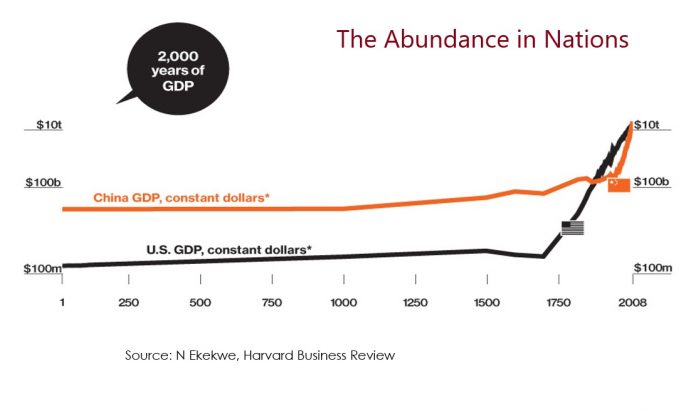
There is abundance in all nations. The real issue is what to do to unlock the abundance. If you look at the gross world product (aggregate GDPs of nations), every generation thinks about shrinking abundance, but over time, you will see there is actually more abundance.

And why is that? Provided the world has frictions and market challenges, it means abundance remains in the future since fixing those frictions will deliver the abundance of the future. The only time there will not be abundance is when all market frictions (and by extension global problems) are fixed. Of course, nothing like that because it is asymptotic in nature and you never get to the end point.

At 4pm WAT today, I will be speaking at Tekedia Capital Open on Abundance in Nations. You’re invited – free and open to the public.

Topic: The Abundance in Nations and Preview of Next Tekedia Capital Investment Cycle’s 17 Startups

Date: Saturday, April 5, 2025

Time: 4-5pm WAT

Zoom link: here