DD
MM
YYYY

PAGES

DD
MM
YYYY

spot_img

PAGES

Home Blog Page 1555

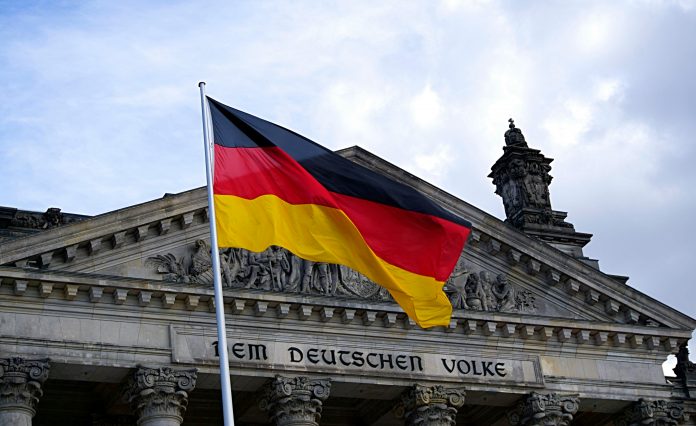
Germany Economy Forecast Indicates Minimal Growth in 2025

0

Revised forecasts for the German economy in 2025 indicate minimal growth, with projections significantly downgraded from earlier estimates. The German government now expects GDP to grow by just 0.3%, a sharp reduction from its previous forecast of 1.1%. This aligns with estimates from other economic bodies, reflecting a consensus of stagnation amid ongoing challenges. Similarly, the European Commission predicts a modest 0.7% growth, while other institutes, such as the IfW Kiel and DIW Berlin, forecast near-zero growth or slight contractions, ranging from 0.0% to 0.2%.

These revisions highlight persistent economic headwinds, including subdued domestic and foreign demand, high energy costs, geopolitical uncertainties, and structural issues like labor shortages and bureaucratic inefficiencies. Uncertainty surrounding U.S. trade policies, particularly potential tariffs, further dampens the outlook, especially for Germany’s export-driven manufacturing sector. Despite some positive factors, such as rising real wages and expected interest rate cuts, the overall sentiment remains cautious, with recovery not anticipated until 2026, when growth is projected to range between 0.8% and 1.3%.

German consumer spending has been subdued due to high inflation in recent years, which eroded purchasing power. Although inflation is cooling and real wages are rising, consumer confidence remains low, partly due to economic uncertainty and fears of job losses in key industries. High interest rates, while starting to decline, have also dampened investment in housing and other sectors. Germany’s economy is heavily reliant on exports, particularly in manufacturing sectors like automotive, machinery, and chemicals. Weak global demand, especially from key markets like China and the U.S., has hit German exporters hard.

China’s economic slowdown and shifting focus to domestic production have reduced demand for German goods, while potential U.S. tariffs under a new administration could further hurt exports. The loss of cheap Russian natural gas following the Ukraine war has significantly increased energy costs for German industry. While energy prices have stabilized somewhat, they remain higher than pre-crisis levels, squeezing profit margins, especially for energy-intensive industries like chemicals and steel.

Germany’s ambitious push toward renewable energy and decarbonization (the Energiewende) requires massive investments in infrastructure, technology, and workforce training. While necessary for long-term sustainability, these costs are a short-term burden on businesses, particularly small and medium-sized enterprises (SMEs), which form the backbone of the German economy (Mittelstand). Germany faces a severe shortage of skilled workers, exacerbated by an aging population and declining birth rates. This demographic challenge limits the economy’s growth potential, particularly in sectors like technology, healthcare, and construction.

Efforts to attract foreign talent are underway but are hindered by bureaucratic hurdles and language barriers. Germany’s economy is weighed down by excessive red tape, slow administrative processes, and a lag in digitalization. Many businesses, especially SMEs, struggle with outdated infrastructure and slow adoption of digital technologies, reducing their competitiveness compared to global peers. German industries, particularly in automotive and manufacturing, face challenges in adapting to global technological shifts, such as the transition to electric vehicles (EVs) and automation. Insufficient investment in research and development (R&D) and a risk-averse business culture have slowed innovation.

Germany’s export-driven economy is highly vulnerable to shifts in global trade policies. The potential return of protectionist measures, such as U.S. tariffs under a possible Trump administration, poses a significant risk. Tariffs on German cars and machinery could severely impact exports, given the U.S. is one of Germany’s largest trading partners. Ongoing geopolitical tensions, including the war in Ukraine, conflicts in the Middle East, and U.S.-China rivalry, create uncertainty for global supply chains and trade flows. This disproportionately affects Germany, which relies on stable global markets for its economic model.

The shift to electric vehicles (EVs) has caught German automakers off-guard, as they face fierce competition from Tesla and Chinese manufacturers. High production costs in Germany, combined with delays in scaling up EV production, have weakened the sector’s global position. Germany’s industrial base, once a global leader, is losing competitiveness due to high costs, supply chain disruptions, and weaker demand. Some companies are relocating production to lower-cost countries, further hollowing out the industrial sector. Although inflation has moderated from its 2022 peak, it remains above the European Central Bank’s (ECB) 2% target.

This limits the ECB’s ability to cut interest rates aggressively, which would otherwise stimulate investment and consumption. Elevated interest rates, implemented to combat inflation, have increased borrowing costs for businesses and households, dampening investment and construction activity. While rate cuts are expected, their pace and impact remain uncertain.


Explosion Rocks Trans-Niger Pipeline Amidst Political Turmoil in Rivers State

0

An explosion has ruptured a section of the Trans-Niger Pipeline (TNP) in Bodo community, Gokana Local Government Area of Rivers State, igniting concerns over environmental degradation and potential disruptions to Nigeria’s oil production.

This incident unfolds against a backdrop of escalating political tensions in the state, which analysts warn could exacerbate insecurity and further threaten oil operations.

The explosion occurred late Monday night near the Bodo-Bonny road, a critical infrastructure project currently under construction. Eyewitnesses reported a massive fire outbreak, with thick black smoke and flames engulfing the surrounding mangrove forests. The TNP is a vital conduit for transporting crude oil to the Bonny export terminal in Rivers State, and any disruption to its operations could significantly impact Nigeria’s oil exports.

Environmental groups have long voiced concerns about oil-related activities in the Niger Delta, particularly in areas like Ogoniland, which have suffered extensive pollution from past oil spills. The recent explosion threatens to compound these environmental challenges, affecting local communities that rely on the ecosystem for their livelihoods.

Political Crisis Fuels Insecurity and Threatens Oil Production

The pipeline explosion is believed to have been instigated by the deepening political crisis in Rivers State, marked by a power struggle between Governor Siminalayi Fubara and his predecessor, Nyesom Wike, now the Minister of the Federal Capital Territory (FCT). The rift has led to a divided State House of Assembly, with factions loyal to each leader.

Earlier this month, energy economist Kelvin Emmanuel cautioned the federal government that the political turmoil could lead to insecurity affecting oil production. He remarked, “You want to raise crude oil output but you’re watching the state that contributes the most feedstock descend into anarchy that might necessitate a state of emergency. We are just not serious!”

Supreme Court Ruling Intensifies Legislative-Executive Standoff

The crisis escalated following a Supreme Court judgment affirming the legitimacy of 27 members of the Rivers State House of Assembly, who were previously accused of defection by Governor Fubara. The court upheld earlier decisions, stating that these lawmakers did not defect from the Peoples Democratic Party (PDP) to the All Progressives Congress (APC), as alleged. This ruling has intensified the standoff between the legislative and executive branches in the state.

Fubara has accused the Assembly of obstructing his efforts to implement the Supreme Court’s judgment, particularly concerning the presentation of the 2025 Appropriation Bill. The governor claimed that the lawmakers’ actions were hindering governance and development in the state. The lawmakers led by Amaewhule have refused to honor the notice of the governor for the re-presentation of the budget, and have instead, served notices of misconduct to the governor and his deputy.

Accusations of Federal Interference

President Bola Tinubu’s administration has faced allegations of allowing Minister Nyesom Wike to leverage federal influence and the judiciary to destabilize Rivers State.

An 11-member Independent Judicial Accountability Panel, which included three retired justices, criticized the Supreme Court’s handling of the political crisis in Rivers State. On Friday, March 14, 2025, the panel faulted the court’s judgment, suggesting it set a dangerous precedent that could destabilize Nigeria’s legal and political systems.

The escalating crisis has drawn national attention, with political figures like Peter Obi, the 2023 Labour Party presidential candidate, urging everyone to sheath their sword. Obi in a statement on Tuesday, emphasized that the people of Rivers State are the real losers in the ongoing political drama and called for an end to the crisis to prevent further harm to the state’s stability and development.

“Looking at the ongoing crisis in Rivers State, we see yet another glaring example of how our democracy and governance is not serving it’s purpose, the welfare of the people of River State. The disagreement is not about improving the measurable indices of development: education, healthcare, or lifting people out of poverty but rather for reasons that do not in any way benefit the people of Rivers State and Nigeria in general,” he said.

“I fully understand the impact of what is happening in Rivers State. The real losers are the people—their welfare and the future of the society their children will live in.

“My respectful appeal to all those involved is to reconsider their positions and reflect on the grace God has bestowed upon them as leaders. They must think about the suffering people of Rivers State and work towards a better future for their children.”

Temu Expands Payment Options With Checkout.com And Verve For Seamless Global Shopping

0

Temu, a global online marketplace with a wide variety of products, has strengthened its partnership with digital payment provider Checkout.com to enhance payment processing and improve customer checkout experiences.

Since its launch in 2022, Temu has relied on Checkout.com for secure payment transactions worldwide. With this expanded collaboration, Checkout.com will now process payments across 30+ markets, supporting major credit cards, digital wallets, and regional payment solutions like Tamara, a buy-now-pay-later option in the Middle East.

Utilizing Checkout.com’s AI-driven payment optimization engine, and intelligent acceptance, Temu aims to streamline transactions and minimize payment failures.

Speaking on the partnership, a Temu spokesperson said,

“We are proud of the reliable and trustworthy experience we provide to our consumers alongside our everyday best offers. Checkout is an important partner supporting our mission to provide quality affordable products with its global reach and expertise, enhancing the digital payments experience for our customers”.

Also commenting,

Brian Sze, General Manager of Checkout.com for the Asia-Pacific region said,

“We are excited to empower Temu’s merchants with Checkout.com’s secure, stable, and convenient payment solutions, allowing them to focus more on their core business while ensuring a seamless checkout experience for consumers on the Temu platform”.

Temu Now Accepts Payment in Nigeria With a Verve Card

In a significant development for Nigerian shoppers, Verve, Africa’s largest domestic payment card brand, has secured a strategic partnership with Temu. This allows Verve cardholders in the country, to make direct Naira payments on both platforms, eliminating foreign exchange hurdles and simplifying cross-border shopping.

Previously, Nigerian consumers could only shop on Temu using Visa, Mastercard, or virtual dollar cards. With Verve now fully integrated, shoppers can seamlessly access affordable products without currency conversion complexities.

Similarly, AliExpress has now adopted Verve payments, further easing online transactions for Nigerian users. Beyond expanding its reach, Verve is advancing payment innovation with contactless technology, enabling faster, more secure transactions across digital and physical channels. With over 70 million Verve cards in circulation, users can now enjoy seamless payments on platforms like Google Play, YouTube Premium, Netflix, Uber, and Amazon Prime.

These strategic moves by Temu, Checkout.com, and Verve reflect a growing commitment to enhancing digital commerce and ensuring secure, borderless, and frictionless payment experiences for consumers worldwide.

Temu’s Growth in Nigeria

Temu officially launched its operations in Nigeria on Wednesday, November 27, 2024, to disrupt the local market with its direct-from-manufacturer model.

Since its launch, the Chinese e-commerce platform has seen strong consumer uptake. A few days after entering the Nigerian market, it became the most downloaded app with more than 500 million downloads on the Android store

Offering a wide range of products from electronics to home goods and sporting equipment, the online marketplace makes it easier than ever for Nigerians to find great deals and upgrade their lifestyles without breaking the bank. Temu’s popularity is part of the explosive growth in Nigerian e-commerce, where industry revenues are projected to climb 7.81% from a year ago to US$7.43 billion in 2025, while user numbers are estimated to rise 15% to 28.6 million by 2029.

Underpinning this popularity is the platform’s ability to offer quality products at affordable prices. It also allows consumers to purchase products directly from manufacturers, eliminating middleman markups and handling costs. This direct connection results in lower prices, closer to wholesale levels.

Beyond consumer benefits, Temu’s entry catalyzes the growth of Nigeria’s e-commerce ecosystem. It brings competition to the market, forcing existing players like Jumia, and Konga, amongst others to innovate, improve their offerings, and enhance customer service.

Notably, Temu’s strategy of leveraging social media and digital marketing to engage with customers also holds promise in Nigeria, where social platforms are integral to daily life. By harnessing the power of social influence and creating engaging content, the platform can effectively build brand loyalty and drive sales.

Google Deepmind CEO Predicts A Decade-Long Wait For AI To Match Or Surpass Human Intelligence Across All Domains

0

Despite rapid advancements in artificial intelligence, the development of Artificial General Intelligence (AGI)—AI that can match or surpass human intelligence across all domains—remains an elusive goal. Demis Hassabis, CEO of Google DeepMind, has projected that AGI could start emerging in the next five to ten years, a timeline that contradicts more aggressive predictions by some of his industry peers, including Elon Musk, who has warned that AI capable of surpassing human intelligence could arrive as soon as 2025.

Speaking at a briefing in DeepMind’s London offices on Monday, Hassabis defined AGI as “a system that’s able to exhibit all the complicated capabilities that humans can,” while emphasizing that today’s AI models, despite their impressive capabilities, remain far from achieving that level of intelligence.

“I think today’s systems, they’re very passive,” he said. “There’s still a lot of things they can’t do. But I think over the next five to ten years, a lot of those capabilities will start coming to the fore, and we’ll start moving towards what we call artificial general intelligence.”

Diverging Views on AGI’s Arrival

Hassabis’ measured outlook places him in contrast with other AI leaders who predict a much faster timeline for AGI. Dario Amodei, CEO of AI startup Anthropic, told CNBC in January that he expects AI systems that are “better than almost all humans at almost all tasks” to emerge in just two to three years. Cisco’s Chief Product Officer Jeetu Patel has gone even further, suggesting that meaningful evidence of AGI could appear as early as 2025.

Musk, one of the most vocal figures in the AI space, said last year that AI systems would likely surpass human intelligence by 2025, a claim that has fueled his calls for strict regulation. Musk has repeatedly warned that AI poses a serious threat to human civilization, arguing that without oversight, its rapid development could lead to catastrophic consequences.

Speaking at the World Government Summit in Dubai, Musk reiterated his concerns, saying, “AI is one of the biggest threats to the future of civilization.” He has called for regulatory bodies to oversee AI development, comparing the technology’s potential risks to those posed by nuclear weapons.

However, like Hassabis, many experts remain skeptical of the 2025 timeline. Robin Li, CEO of Chinese tech giant Baidu, has suggested that AGI is “more than 10 years away,” emphasizing that while AI is advancing quickly, it still lacks the fundamental reasoning and adaptability of human intelligence.

The Challenges of Achieving AGI

Although there is notable rapid evolution of AI systems like OpenAI’s ChatGPT, Google’s Gemini, and Anthropic’s Claude, developing AGI requires overcoming several fundamental challenges.

According to Hassabis, the biggest obstacle is getting AI to truly understand and interact with the real world. While AI has excelled in structured environments, such as playing strategy games like Go or Starcraft, transferring those problem-solving abilities to the complexities of real-world decision-making remains an immense challenge.

“The question is, how fast can we generalize the planning ideas and agentic kind of behaviors, planning and reasoning, and then generalize that over to working in the real world, on top of things like world models—models that are able to understand the world around us?” Hassabis explained.

Multi-Agent AI Systems As A Possible Path to AGI

One promising avenue for AGI development is the advancement of multi-agent AI systems—networks of AI models that can collaborate, compete, and communicate to accomplish tasks. Hassabis pointed to DeepMind’s work on training AI agents to master Starcraft, a complex strategy game requiring high-level decision-making and coordination.

“We’ve done a lot of work on that with things like Starcraft in the past, where you have a society of agents, or a league of agents, and they could be competing, they could be cooperating,” he said.

Thomas Kurian, CEO of Google Cloud, added that enabling AI agents to communicate and share information with one another is a key step in developing AGI.

“Those are all elements that you need to be able to ask an agent a question, and then once you have that interface, other agents can communicate with it,” he said.

The Future of Human-Like Intelligence in AI

While AI models continue to break new ground in areas like natural language processing, image generation, and autonomous decision-making, the prospect of truly human-like intelligence remains distant. AI today excels at pattern recognition, data analysis, and performing specialized tasks, but it still struggles with abstract reasoning, intuition, and common-sense understanding—qualities that define human intelligence.

For AGI to become a reality, AI systems are expected to develop the ability to generalize knowledge across different domains, understand context deeply, and make independent decisions in unpredictable situations. While incremental progress is being made, the kind of breakthrough required for AGI is still an open question.

Hassabis’ prediction of a 10-year timeline suggests that AGI is not an imminent reality, contradicting Musk’s warnings of AI surpassing human intelligence within the next two years. The debate highlights a broader uncertainty about AI’s trajectory—whether it will steadily progress toward human-like intelligence or hit fundamental roadblocks that delay AGI indefinitely.

The Next Frontier—Artificial Super Intelligence (ASI)

While AGI remains a long-term goal, some tech leaders are already speculating about the next step: Artificial Super Intelligence (ASI), which would not only match but surpass human intelligence. However, the timeline for ASI is even more uncertain than AGI.

“No one really knows when superintelligence will happen,” Hassabis admitted.

However, analysts believe that if AGI does emerge in the next decade, it will represent one of the most significant technological shifts in human history. Unlike today’s AI systems, which are highly specialized in narrow tasks, AGI would be capable of reasoning, learning, and adapting in ways that rival human cognition. This is expected to revolutionize industries from healthcare to finance while raising profound ethical and existential questions about AI governance, safety, and control.

Musk’s push for regulation stems from concerns that, if left unchecked, AI could develop in ways that pose existential threats to humanity. However, with leading AI researchers still struggling to bridge the gap between today’s AI models and true AGI, the future of human-like intelligence in AI remains speculative.

The Hunt for Highest ROI Crypto Ends Here: Avalanche, NEAR, SUI & BlockDAG Dominate the Market!

0

Market watchers are constantly searching for the next highest ROI crypto to enhance their portfolios and secure long-term profits. Lately, Avalanche (AVAX), Near Protocol (NEAR), SUI, and BlockDAG have captured the interests of such traders due to their mindblowing features, community support, and strong growth potential.

Their integration of cutting-edge technology along with strong backing makes them appealing options for any crypto portfolio. This article explores what sets Avalanche, Near Protocol, SUI, and BlockDAG apart from the crowd. By the end, you’ll know which crypto could give your portfolio the biggest jump!

1. BlockDAG (BDAG): Historic Presale & Huge Forecasts

On the top of the list is BlockDAG (BDAG) that has recently captured attention for raising over $203.5 million and selling more than 18.8 billion coins in its presale. The price progression from the first batch at $0.001 to the current $0.0248 showcases a 2380% increase, signaling strong market faith in this project.

Set to list on 10 centralized exchanges in 2025, BlockDAG is set to enhance its visibility and trading activity significantly. Such strategic moves like the listings have historically led to price surges for cryptos in the past, and BDAG is set to see similar price boom.

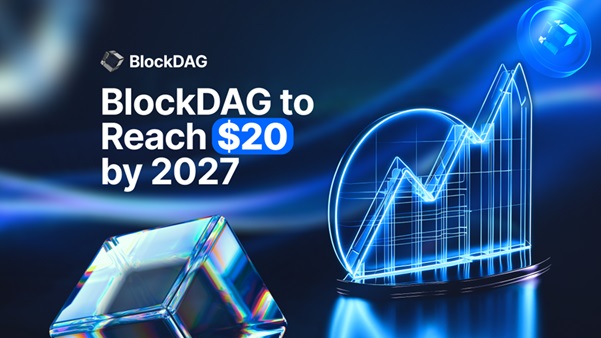
Experts predict that if the market conditions align favorably with its launch, BlockDAG could climb to $1 in 2025 and $20 by 2027, which translates to a massive ROI. Such potential marks BlockDAG as possibly the highest ROI crypto on the horizon, promising significant returns for early backers. With the presale advancing quickly and the potential for substantial growth evident, now is the time to explore what BlockDAG has to offer!

2. Avalanche (AVAX): Combining Sustainability & Scalability

One of the highest ROI cryptos in the market is Avalanche (AVAX). It is quickly becoming a popular choice in the cryptocurrency sector with its efficient and eco-conscious blockchain technology. Notably, it boasts the ability to process up to 4,500 transactions per second, which outpaces many competitors. Avalanche (AVAX) supports the creation of customized Subnets, enhancing its adaptability for various blockchain needs.

Moreover, it employs a blend of consensus mechanisms to achieve transaction confirmations in under two seconds. Currently priced at $17.24, despite a recent 31.80% price drop over the past month, Avalanche (AVAX) continues to attract interest with its rapid, low-cost transaction capabilities and a strong emphasis on sustainability.

3. Near Protocol (NEAR): Enhancing Interoperability

Near Protocol is making its mark in the world of decentralized applications by providing tools for developers to build and launch apps without central control. Co-founded by Alex Skidanov and Illia Polosukhin, this platform has attracted over $20 million from leading venture capital firms.

NEAR offers features like the Rainbow Bridge for transferring tokens from Ethereum and Aurora, a Layer 2 solution that enhances performance with lower fees. With its current price potentially rising to $2.91 and offering a 15% return on investment, NEAR Protocol’s commitment to improving accessibility and performance for developers makes it a notable option in the digital currency space.

4. Sui (SUI): The Next Generation of Blockchain

Sui (SUI) is quickly becoming known as one of the highest ROI crypto assets available. This platform stands out by focusing on simplicity and security, which makes it a strong candidate for developers and traders looking to dive into blockchain technology.

By employing an object-centric approach rather than the usual blockchain model, Sui enhances how data is handled, making the platform not only secure but also more adaptable for various uses. With a notable price rise of 38.54% over the last year and a present rate of $2.18, Sui (SUI) is carving a niche for itself in the growing Web3 sector.

Wrapping Up

When diversifying a crypto portfolio, it is crucial to choose platforms that combine robust growth potential with innovative technology. Avalanche (AVAX), Near Protocol (NEAR), Sui (SUI), and BlockDAG each present compelling cases for inclusion in any forward-thinking investor’s portfolio.

However, BlockDAG stands out due to its substantial growth potential and strategic market positioning. With over $203.5 million raised in its presale and plans for listing on multiple major exchanges soon, BlockDAG is set for significant visibility and liquidity. This strategic approach, coupled with potential for huge gains, positions BlockDAG as the highest ROI crypto in the marketplace today.