DD
MM
YYYY

PAGES

DD
MM
YYYY

spot_img

PAGES

Home Blog Page 156

5 Explosive Meme Coins Dominating Q4 2025: One is a Dogecoin Rival Crowned Top Crypto to Buy

0

Q4 2025 pumps hard with 5 meme coins exploding past $1B market caps each. Trading volume reaches $500M daily across these wild tokens, up 300% from the previous quarter. Leading the pack, Little Pepe (LILPEPE) flips the script as the new Dogecoin rival, crowned the top crypto to buy, with massive gains in the last quarter of 2025.

Little Pepe (LILPEPE): The Dogecoin Rival Crowned Top Crypto to Buy

Among the five meme coins dominating Q4 2025, Little Pepe (LILPEPE) stands out as the breakout sensation leading the charge. Currently in stage 13 of its presale and priced at $0.0022, Little Pepe has already raised over $27.3 million, selling more than 16.58 billion tokens in total.  Investors are rushing to secure their share before listings go live, and analysts predict that LILPEPE could multiply in value once trading opens on major exchanges. The project’s appeal goes beyond memes. Little Pepe (LILPEPE) has been audited by CertiK, achieving an impressive security score of 95.49%, which provides investors with confidence in its integrity and safety.  The project team describes the current stage as its “pregnancy stage,” humorously referring to it as the “cryptowomb” phase, where the project is being nurtured by “Mumma Pepe.” This creative branding, combined with real utility and strong tokenomics, sets the stage for one of the most anticipated launches of Q4 2025. With expert backers who have previously supported successful meme tokens, Little Pepe is being hailed as the top crypto to buy before year-end.

Pepe Coin (PEPE): Rebounding Strong with a Bullish Setup

Pepe Coin (PEPE) is gaining momentum in the fourth quarter of 2025, showing new strength. The token has formed a declining wedge pattern after a dip earlier this year. It bounced off key support at $0.00000550. In early November, trading volume went up by 150%, which could mean a comeback. This setup suggests that the market may be about to turn around and go up, with the $0.000016 resistance level as a possible target for a rally. Traders are once again eyeing PEPE as it looks ready to flip bearish positions and lead another “frog frenzy” through the close of Q4.

Floki (FLOKI): Breaking Out and Gearing Up for a Q4 Moonshot

Floki (FLOKI) recently broke out of an ascending triangle pattern on the daily chart. After weeks of consolidation, it pushed through the $0.000070 resistance. Trading volume has gone up 120% to $100 million a day because whales are buying more. FLOKI whales purchased 5% more supply in just seven days, reinforcing confidence in its upward momentum. Analysts predict that Floki could continue its run with further gains before the year ends.

Dogwifhat (WIF): The Solana Meme Star with Explosive Momentum

Dogwifhat (WIF) is the high-speed Solana meme coin making waves across Q4 2025. After a 27% daily pump that broke through the $3.00 resistance, WIF has become a trader favorite with massive $500M daily volume. Its chart shows an inverse head-and-shoulders breakout, while the RSI is now at 65, suggesting healthy bullish continuation. The Fibonacci 0.5 retrace at $2.95 has held strong, setting up the next target near $10. As Solana continues to rally, Dogwifhat is benefitting from the liquidity flow, positioning itself as a serious meme coin force this quarter.

Fartcoin (FARTCOIN): Turning Humor into High Returns

Fartcoin (FARTCOIN) proves that humor and gains can go hand in hand. This token broke through the $1.00 level after forming an inverse head-and-shoulders pattern, flipping a previous 54% monthly decline into a 1.7% weekly gain.  With a $1B market cap achieved in October, FARTCOIN’s viral community has pushed it to new highs, targeting a 150% rally from its pivot at $0.77. It’s crude, it’s funny, and it’s surprisingly profitable in Q4 2025.

The Meme Coin Explosion of Q4 2025

The meme coin sector has experienced explosive growth this quarter, with trading volume up 300% compared to the previous quarter. Investors are pouring into coins with strong communities, hype, and momentum. But among all the names topping charts, Little Pepe (LILPEPE) has emerged as the top crypto to buy heading into year-end.


For more information about Little Pepe (LILPEPE) visit the links below:

Website: https://littlepepe.com

Whitepaper: https://littlepepe.com/whitepaper.pdf

Telegram: https://t.me/littlepepetoken

 Twitter/X: https://x.com/littlepepetoken

 $777k Giveaway: https://littlepepe.com/777k-giveaway/


From $100 to $20,000: The 5 Crypto Projects Most Likely to Explode in 2026 — Ozak AI Leads the Pack in AI Utility and Adoption

0

Ozak AI (OZ) — High-Risk, High-Reward Presale Leader

Ozak AI is emerging as one of the most promising early-stage crypto projects. Its presale began at $0.001 in Phase 1, and the token has since surged to $0.014 in Phase 7, marking an increase of over 1,300%. So far, 1,003,379,887 $OZ tokens have been sold, raising $4,447,356. The platform targets a listing price of $1, with long-term projections suggesting a possible $8–$10 price by 2030.

What sets Ozak?AI apart is its use?case: the platform aims to build prediction agents that rely on both short?term and long?term memory of market events, drawing on its “Ozak Stream Network” and DePIN infrastructure to supply real?time data and analytics. Ozak AI’s unique edge lies in its predictive trading agents that use both short-term and long-term memory to analyze market trends, helping users make data-driven decisions.

Why it might hit $20,000 from $100: A $100 investment at $0.001 buys 100,000 tokens. If the token rises to $1.00, that becomes $100,000. If bullish momentum carries it to ~$2.00 or beyond, the value could approach $200,000 — making a $100?$20,000 scenario entirely plausible under the right conditions.

From an ROI perspective:

  • A $1,000 investment in Phase 7 ($0.014) could grow to $71,000 if the token reaches $1.
  • Early Phase 1 investors could see $1,000 grow to nearly $1 million at the same price target.

Shiba Inu (SHIB) — Meme Coin with Potential

SHIB is trading recently around $0.0000096, with a market cap of approximately $6.3 billion and a 24-hour trading volume of $400 million. Technical analysis shows support near $0.0000093 and resistance around $0.000011. RSI suggests the coin is neither overbought nor oversold, while MACD indicates potential upward momentum if it breaks resistance.

Dogecoin (DOGE) — Veteran Meme Leader

DOGE is trading near $0.072, with a market cap of $9.5 billion and a 24-hour trading volume of $2 billion. Key support lies around $0.065, and resistance sits at $0.08. RSI is neutral, and MACD shows the potential for short-term upward movement, especially if social sentiment remains strong.

Bitcoin Cash (BCH) — Established Blockchain Payment Token

BCH is trading at approximately $210, with a market cap of $4.0 billion and daily trading volume around $300 million. Technicals indicate support near $200 and resistance at $230–$240. RSI is neutral, while MACD points to sideways consolidation, suggesting limited near-term volatility.

Cardano (ADA) — Smart Contract Pioneer

ADA is trading around $0.55, with a market cap of $19.8 billion and 24-hour trading volume of $1.5 billion. Support is at $0.50, and resistance sits near $0.70. RSI shows slight bullishness, and MACD hints at a potential upward trend if the price breaks above $0.60–$0.65.

Conclusion
 Ozak AI leads this list due to its early presale growth, innovative memory-driven trading agents, and strong partnerships, offering one of the highest potential returns in crypto. While SHIB, DOGE, BCH, and ADA offer lower-risk options, their upside potential is more limited. Investors seeking transformational gains might find Ozak AI particularly attractive, though risk remains high.

EU Moves to Centralize Crypto Regulation, as UAE Revamps Crypto Regulations

0

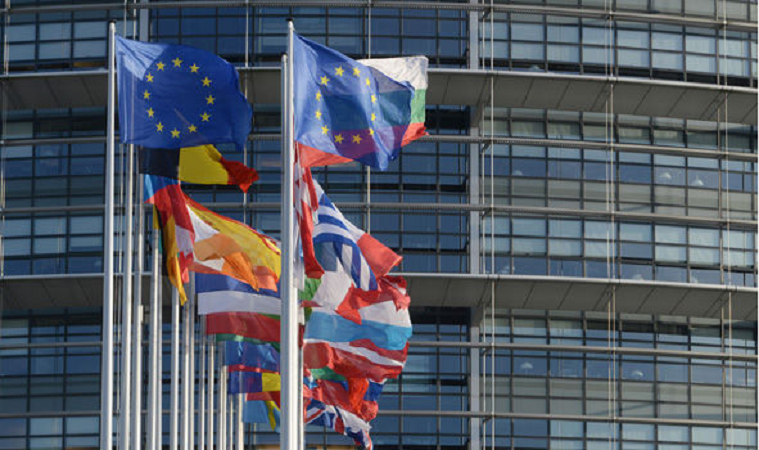
The European Commission advanced a proposal to grant the European Securities and Markets Authority (ESMA) expanded direct supervisory powers over cryptocurrency businesses across the EU.

This initiative builds on the Markets in Crypto-Assets Regulation (MiCA), which fully entered into force on December 30, 2024, but currently relies on a fragmented system where crypto firms obtain authorization in one member state and operate bloc-wide under national oversight.

Building on the Markets in Crypto-Assets Regulation (MiCA), this shift from fragmented national oversight to a unified EU-level framework could reshape the €6.9 billion crypto sector projected to reach €27.6 billion by 2033.
The push aims to create a more
unified framework, addressing vulnerabilities exposed by events like the 2025 Bybit hack, where stolen funds flowed through EU-licensed exchanges like OKX.
ESMA would gain “SEC-like” powers, similar to the U.S. Securities and Exchange Commission, to directly oversee major crypto-asset service providers (CASPs), stablecoin issuers, and even traditional stock exchanges.

This includes final decision-making in cross-border disputes and enhanced monitoring of global operations by EU-licensed firms. Proponents, including regulators in France, Austria, and Italy, cite risks to investor protection, market stability, and anti-money laundering (AML) compliance from inconsistent national rules.

Centralization could foster stability and growth but at the cost of short-term disruptions. By standardizing rules, ESMA oversight may attract institutional investors through enhanced transparency and reduced cross-border risks, potentially boosting trading volumes—already up 70% quarter-over-quarter in Q1 2025 under MiCA.

However, it risks market consolidation, where smaller firms struggle with heightened compliance, leading to mergers or exits and a less diverse ecosystem. The Bybit incident highlighted how international exposures could threaten the EU market.

The draft targets larger exchanges first, with potential delegation back to national authorities for smaller firms. It’s part of a broader “market integration package” to complete the EU’s Capital Markets Union.

Approval from the European Parliament and Council is pending, with a formal proposal expected in December 2025. National regulators supervise firms licensed in their country, with passporting rights for bloc-wide operations.

ESMA takes direct control for major players, reducing reliance on 27 national bodies. Licensing for CASPs effective Jan 2025, stablecoin rules, whitepaper registries. Enhanced AML via upcoming Anti-Money Laundering Authority launching 2026; stress testing and global risk monitoring.

Transitional Measures

Grandfathering until July 2026 for some jurisdictions; DORA applies Jan 2025. New compliance layers for firms, potentially disrupting existing setups. Supporters argue it fosters a “single market” for crypto, boosting innovation and investor confidence—aligning with MiCA’s goals of consumer protection and financial stability.

Critics, including some industry voices, warn of “bureaucratic overreach” that could stifle startups, prolong approvals, and drive firms to less regulated jurisdictions. German officials and fintech advocates see it as a step toward economic sovereignty, potentially integrating crypto with initiatives like the digital euro.

French regulators pushed the idea post-Bybit, but others fear it replaces decentralized crypto ideals with Brussels-centric control. Market chatters called it “centralization & control nothing else,” echoing fears of reduced autonomy.

If approved, this could position the EU as a global crypto standard-setter, contrasting with U.S. divergences under a pro-crypto Trump administration. However, it risks short-term market disruption for the EU’s €6.9 billion crypto sector (projected to hit €27.6 billion by 2033).

Firms should prepare for stricter reporting, with ESMA’s interim registers already tracking compliant entities. This move underscores the EU’s balancing act: harnessing crypto’s growth while mitigating risks like those from non-EU mining or hacks.

UAE’s New Crypto Regulations: No Bitcoin Ban, But Significant Restrictions on Tools Like Wallets

The United Arab Emirates (UAE) has introduced stricter cryptocurrency regulations through Federal Decree-Law No. 6 of 2025, which updates the country’s banking framework and expands the Central Bank’s oversight.

Published in the Official Gazette and effective since September 16, 2025, this law does not outright ban Bitcoin or cryptocurrencies. Residents can still legally buy, hold, trade, and own Bitcoin through licensed platforms.

However, it imposes heavy licensing requirements on entities offering crypto-related “tools” and services, sparking widespread fears of a de facto ban on self-custodial wallets and similar infrastructure.

This has led to global panic in the crypto community, with some developers and firms considering pulling services from the UAE to avoid liability. The regulation targets “facilitation” of financial activities, broadening the scope to include technology providers.

Any entity (local or foreign) offering tools that “engage in, offer, issue, or facilitate” financial activities must obtain a Central Bank license. This includes APIs, blockchain explorers, analytics platforms (e.g., CoinMarketCap), and self-custodial wallets.

Global apps accessible to UAE residents could face fines up to AED 500 million ~$136 million or jail time if unlicensed. Developers like Mikko Ohtamaa warn this makes offering Bitcoin wallets a “crime” without approval.

Article 61 criminalizes unlicensed advertising, emails, or online posts about crypto services. Even social media promotions or DeFi-related content could trigger enforcement, affecting influencers and exchanges.

Scope and Extraterritorial Reach; Applies nationwide, overriding free-zone rules (e.g., Dubai’s crypto hubs like DMCC). Foreign firms are liable if services reach UAE users. Could lead to app stores (Google/Apple) geo-blocking wallets in the UAE, limiting self-custody options.

Imprisonment and fines from AED 50,000 to AED 500 million for violations (Article 170). Harsh deterrents; compliance costs may drive smaller providers out. One-year transition from September 16, 2025 potentially extendable, for firms to license up.

Additional clarifying rules expected soon, but uncertainty persists. This aligns with international pressures from bodies like the Financial Action Task Force (FATF) to combat money laundering, but critics argue it stifles innovation in a country previously hailed as a crypto haven.

Developer Mikko Ohtamaa called it a “Bitcoin ban” on X, highlighting how it effectively kills self-custody by requiring KYC/AML for wallets. Aave founder Stani Kulechov echoed concerns about Dubai’s “crypto paradise” ending.

Legal firm Gibson Dunn described the scope as “unusually broad,” risking a global tech crackdown. UAE authorities and analysts have stressed no ban on holding or trading Bitcoin—only unlicensed provision of tools. Community members on X dismissed exaggerated claims, noting licensed exchanges like Binance remain operational.

One user quipped: “No wallet. No Bitcoin. No problem”—but this was labeled misleading bait. This follows earlier 2024 rules on stablecoins effective June 2025, restricting non-dirham tokens for payments but allowing them for trading/investment.

Ironically, just weeks ago, UAE telecom giant du launched regulated Bitcoin cloud mining for residents, signaling ongoing pro-crypto moves. While not a full ban, the law could erode the UAE’s appeal as a crypto hub by complicating access to decentralized tools.

High-net-worth investors might pivot to licensed custodians, but everyday users risk reduced options for privacy-focused self-custody. Watch for Central Bank clarifications in the coming months—these could ease fears or confirm the crackdown.

For now, UAE-based crypto enthusiasts should stick to licensed platforms to stay compliant. If you’re in the UAE, consult local legal experts before using unregulated wallets.

Tekedia Mini-MBA Graduation Kit [Video] and Amazing Eyitayo

0

When you have self-driven and innovative team members, missions are not just executed, they are elevated. When Eyitayo Adeleke joined us as a student, he brought fresh energy and introduced new constructs that reshaped parts of our operations. Months before his graduation, we told him that it would be an honour to have him join our team. He accepted.

He excelled so profoundly that I wrote a formal letter to the Dean of his university, Kwara State University, commending the institution for producing and shaping this remarkable young man.

Eyitayo generates ideas in ways that sometimes I cannot even decipher. This latest one, how to celebrate Tekedia Mini-MBA graduates during their physical convocation on Dec 6, 2025 is yet another example. That physical graduation itself? Eyitayo invented it.

Celebrate exceptional team members. They expand the boundaries of possibilities.

Bitfarms Announces Pivot from Bitcoin Mining to AI Infrastructure

0

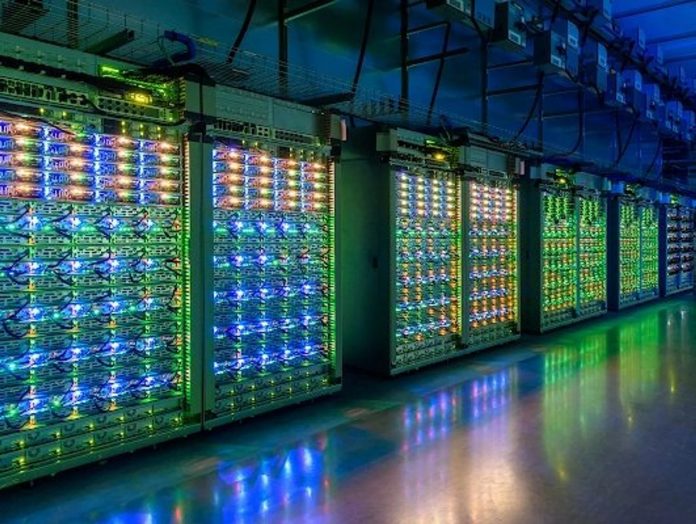
Bitfarms Ltd, a major North American Bitcoin mining company, revealed plans to wind down its Bitcoin mining operations over the next two years (2026–2027) and redirect its energy infrastructure toward artificial intelligence (AI) and high-performance computing (HPC) data centers.

This marks Bitfarms as the first large-cap Bitcoin miner to commit to fully exiting its core crypto mining business, driven by shrinking profit margins in mining amid the 2024 Bitcoin halving and volatile token prices.

Mining activities will phase out gradually through 2027, with full conversion of facilities to AI/HPC by the end of that period. The company’s 2.1 GW energy portfolio across North America—clustered in power- and fiber-rich regions—positions it well for this shift.

The 18 MW facility in Washington State will be the initial focus, retrofitted with Nvidia GB300 GPUs and advanced liquid cooling. This site, representing less than 1% of Bitfarms’ developable capacity, is expected to be operational for AI workloads by December 2026.

Bitfarms has secured a $128 million fully funded supply agreement with a major U.S. data center partner for equipment and materials. CEO Ben Gagnon stated that GPU-as-a-Service (GPUaaS) at the Washington site alone could generate more net operating income than Bitfarms has ever achieved from Bitcoin mining, providing a “strong cashflow foundation” to cover operations, debt, and further expansions.

Bitfarms’ Q3 2025 earnings, released alongside the announcement, highlighted the pressures prompting this pivot: Net Loss: $46 million, nearly double the $24 million loss from Q3 2024. $69 million, up 156% year-over-year but missing analyst expectations by 16%.

520 BTC mined at an average direct cost of $48,200 per BTC. 1,827 BTC as of November 13, 2025. The decision reflects broader industry challenges: post-halving block rewards dropped to 3.125 BTC, network hashrate has surged, and Bitcoin’s price volatility trading below $96,000 on November 14 has eroded margins.

In contrast, AI compute demand offers stable, long-term contracts with higher margins and fewer regulatory hurdles.Market ReactionStock Impact: Shares plunged 18% to $2.60 on November 14, extending a 51% monthly decline amid broader crypto market weakness. After-hours trading saw further dips.

While some view the pivot as forward-thinking—leveraging existing infrastructure for the AI boom—others expressed concern over near-term revenue uncertainty during the transition.

Bitfarms joins a wave of miners diversifying into AI/HPC:Similar Moves: Marathon Digital (MARA) expanded AI services alongside record revenues; Core Scientific (CORZ) partnered with CoreWeave for AI cloud computing; Cipher Mining and TeraWulf have deals with SoftBank and Google, projecting billions in AI revenue.

Miners’ access to cheap, scalable power gives them a competitive edge over traditional data center builders. AI’s explosive growth—fueled by models like those from OpenAI and enterprises needing GPU power—promises steadier cash flows than crypto’s cycles.

Short-term pain, potential long-term gain, 2026–2027 will be a revenue trough. Mining will wind down gradually, but AI revenue won’t fully replace it until late 2026 or 2027. Expect negative free cash flow, possible equity dilution, and continued stock pressure.

The market will stop valuing Bitfarms as a Bitcoin miner (BTC holdings + hashrate) and start valuing it as an AI/HPC infrastructure play (power capacity × $/kW-month + GPU utilization). This re-rating is already underway — the stock is trading near book value of power assets rather than mining multiples.

Retrofitting mining sheds for liquid-cooled Nvidia GB300s, securing long-term GPUaaS or colocation contracts, and hitting the December 2026 deadline are all non-trivial. One major delay or failed contract could be catastrophic.

This strategic overhaul could redefine Bitfarms’ identity, but execution risks remain high: retrofitting costs, securing clients, and navigating energy demands for AI. For now, it’s a bold bet on compute over crypto.