DD
MM
YYYY

PAGES

DD
MM
YYYY

spot_img

PAGES

Home Blog Page 1564

Implications of Bybit Remarkable Recovery After February Hacks

0

Bybit recorded a remarkable recovery in March 2025, attracting $3.61 billion in capital inflows, outpacing Binance’s $3.545 billion for the same period. This surge came after a significant setback in February 2025, when Bybit suffered a major hack, losing approximately $1.5 billion in Ethereum due to a sophisticated attack linked to North Korea’s Lazarus Group. The hack exploited vulnerabilities in Bybit’s cold wallet transfer process, shaking user confidence and triggering massive outflows. This turnaround highlights Bybit’s resilience and the competitive dynamics among centralized exchanges (CEXs) in 2025’s volatile crypto landscape.

Bybit’s rebound can be attributed to several strategic moves: swift crisis management, securing emergency loans to cover losses, and implementing security enhancements like the Retail Price Improvement (RPI) mechanism to boost liquidity. These efforts restored trust, as evidenced by the return of users and capital, positioning Bybit ahead of Binance in March inflows. Binance, while still the largest exchange by trading volume, saw slightly lower inflows, possibly reflecting a stabilization after absorbing much of Bybit’s fleeing user’s post-hack.

The implications of Bybit leading centralized exchanges (CEXs) with $3.61 billion in March inflows, surpassing Binance after its February hack, ripple across the crypto ecosystem. The inflow surge signals that Bybit has regained user trust post-hack. Its rapid response—securing funds, upgrading security, and introducing features like RPI—demonstrates operational resilience, potentially solidifying its reputation as a reliable CEX. Outpacing Binance in inflows could help Bybit chip away at Binance’s dominance, especially if it sustains this momentum. It might attract more institutional and retail users seeking alternatives.

The hack exposed vulnerabilities. With increased inflows, Bybit becomes a bigger target, meaning any future security lapse could be catastrophic. Binance, despite its volume lead, losing the inflow race suggests it’s not invincible. It may need to innovate or double down on user incentives to reclaim momentum. The $3.545 billion inflow is still massive, but slower growth compared to Bybit might hint at market saturation or a shift in user preference post-hack fallout.

For the Crypto Market

Bybit’s rise could intensify rivalry among CEXs, driving better services, lower fees, and enhanced security—ultimately benefiting users. The hack and recovery underscore the persistent threat of cyberattacks. Other exchanges may preemptively bolster defenses, and users might prioritize platforms with proven recovery track records. The $3.61 billion flowing into Bybit reflects confidence in CEXs despite risks. This could fuel bullish sentiment, pushing trading volumes and crypto prices higher in the short term.

Large inflows and past hacks might draw regulators’ attention, especially if tied to groups like Lazarus. CEXs could face stricter compliance demands, impacting operations. Bybit’s recovery might temporarily quiet calls for DEX adoption, but another major hack could flip the narrative, accelerating the shift to decentralized platforms. If the Lazarus Group link holds, it ties crypto to international security concerns, potentially influencing policies on digital assets in regions like the U.S. or South Korea. This shift could reshape user behavior, exchange strategies, and even the regulatory landscape. Which angle are you most curious about?

Bybit overtaking Binance in March 2025 inflows ($3.61 billion vs. $3.545 billion) after its February hack has several implications for Binance, the long-standing leader in the centralized exchange (CEX) space. Binance has historically dominated by trading volume and user base, but Bybit’s inflow lead signals a potential shift in user preference. If Bybit sustains this edge, Binance could lose ground in the race for new capital and active traders. To counter Bybit’s momentum, Binance might need to roll out new features, lower fees, or enhance its offerings (e.g., staking, derivatives). It can’t coast on its reputation alone anymore.

Binance absorbed many of Bybit’s users after the February hack, boosting its inflows then. However, Bybit’s recovery and March lead might make Binance seem less of a “safe haven” if users perceive Bybit as more resilient or rewarding. If Binance’s slightly lower inflows ($3.545 billion) reflect a plateau rather than growth, users might question whether it’s keeping pace with competitors’ improvements. Inflows drive trading activity, which fuels fees—Binance’s primary revenue source. A dip in relative inflows could signal slower revenue growth compared to Bybit, though Binance’s sheer volume ($1.12 trillion in March spot and derivatives, per past trends) still dwarfs Bybit’s.

Binance might redirect resources to marketing or security upgrades to reclaim dominance, potentially straining budgets or shifting focus from other projects like its blockchain ecosystem BNB Chain. Binance benefited from Bybit’s February stumble, but Bybit’s rebound suggests Binance didn’t lock in those gains. Binance may need to double down on loyalty programs or incentives to retain users who sampled it during the chaos. While Binance hasn’t faced a hack of Bybit’s scale recently, Bybit’s recovery could pressure Binance to publicly reinforce its own security measures to avoid being seen as vulnerable by comparison.

This isn’t an immediate dethroning—Binance’s volume and global reach remain unmatched—but it’s a crack in the armor. If Bybit (or others) consistently outpaces Binance in inflows, it could erode Binance’s psychological edge as the “default” CEX. Binance’s size has made it a regulatory target (e.g., past U.S. fines). Bybit’s rise might split scrutiny, giving Binance breathing room—or intensify it if regulators see CEX competition as a systemic risk. Binance isn’t in crisis; $3.545 billion in inflows is still colossal. But Bybit’s lead is a wake-up call. Binance might respond with aggressive user acquisition tactics, security PR, or product enhancements to reassert dominance.


Sony Electronics Enables USDC Payments for Online Payments in Singapore

0

Sony Electronics Singapore has enabled USDC payments for online purchases through its Sony Store Online, in partnership with Crypto.com. This integration allows customers in Singapore to use the USDC stablecoin, which is pegged to the U.S. dollar, to buy Sony products directly via Crypto.com Pay. This marks Sony Singapore’s first step into accepting cryptocurrency transactions locally, with plans to expand support for additional cryptocurrencies in the future. To encourage adoption, Sony is offering promotions: the first 50 customers spending at least S$300 (approximately $223 USD) in USDC will receive a free LinkBuds Speaker (worth S$299), and the first 150 customers spending at least S$100 will get 20 USDC credited to their Crypto.com accounts. These offers are valid until April 30, 2025, subject to availability.

The introduction of USDC payments by Sony Electronics Singapore via Crypto.com could have several impacts across different domains. By allowing USDC payments, Sony Singapore is normalizing the use of stablecoins for everyday purchases. This could encourage other retailers in Singapore and beyond to adopt crypto payment options, especially given Sony’s brand influence. Partnering with a major corporation like Sony could drive more users to Crypto.com, increasing its transaction volume and potentially its market share in the crypto payment space. Since USDC is a stablecoin pegged to the U.S. dollar, it reduces volatility concerns compared to cryptocurrencies like Bitcoin or Ethereum.

This might make crypto payments more appealing to cautious consumers and businesses, potentially shifting preference toward stablecoins in e-commerce. Customers who already hold USDC or use Crypto.com can now seamlessly spend their digital assets on Sony products, potentially increasing convenience and loyalty among this demographic. The promotional offers (e.g., free LinkBuds Speaker or USDC credits) could attract new users to try crypto payments, especially those unfamiliar with or hesitant about digital currencies. Over time, if the experience is smooth, some consumers might prefer crypto payments over traditional methods like credit cards, especially if transaction fees are lower or rewards are better.

Technological and Operational Impacts

Sony Singapore’s integration of Crypto.com Pay demonstrates how traditional companies can adapt existing online payment systems to accommodate blockchain-based transactions, potentially setting a precedent for others. This rollout will test Crypto.com’s ability to handle real-world retail transactions at scale with a major partner, which could influence future partnerships or expose technical limitations. Sony’s plan to support more cryptocurrencies suggests ongoing investment in blockchain technology, which could lead to more sophisticated payment systems down the line.

Singapore’s Crypto Hub Status; As a financial and tech hub, Singapore’s adoption of crypto payments by a brand like Sony reinforces its position as a leader in fintech innovation, potentially attracting more crypto-related businesses. Competitors like Samsung or LG might feel pressured to explore similar crypto payment options to keep pace, especially if Sony’s move gains traction among tech-savvy consumers. If successful, this could influence smaller retailers in Singapore to adopt crypto payments, creating a ripple effect in the local e-commerce ecosystem.

Increased corporate adoption of crypto payments might prompt Singapore’s Monetary Authority (MAS) to refine or expand its already progressive crypto regulations, balancing innovation with consumer protection. Unlike proof-of-work cryptocurrencies like Bitcoin, USDC operates on less energy-intensive blockchains (e.g., Ethereum post-merge). This could improve public perception of crypto payments as more sustainable, aligning with Sony’s corporate responsibility goals.

Sony Singapore’s acceptance of USDC payments could accelerate crypto adoption in retail, influence consumer and competitor behavior, and solidify Singapore’s role in the global fintech landscape—all while testing the practical viability of stablecoin transactions in mainstream commerce. The success of this initiative, especially with its promotional push, will likely determine its long-term impact.

Nigerian Fintech Earnipay Lays Off Staff Amid Shift to Business Lending Focus

0

Earnipay, a financial technology (fintech) solution that provides flexible and on-demand salary access to income earners, has laid off a part of its workforce.

The company’s CEO Nonso Onwuzuike describes the move as a “difficult but necessary” decision, noting that it is part of a strategic shift toward business lending, the company’s most profitable segment.

While the number of laid-off staff was not disclosed, Earnipay will offer affected employees two months’ salary as severance, HMO coverage through year-end, subsidized access to work laptops, and job-seeking support. “This decision does not reflect your contributions”, the CEO said. “You have helped build Earnipay into what it is today.”

Amidst the shake-up of its workforce, the remaining staff have been urged to rally around the company’s new leaner vision, stabilizing operations and focusing on profitability.

Earnipay’s layoff of part of its workforce also reflects a wider downturn in African startup funding. In 2024, startups on the continent raised $2.01 billion, marking a 31% drop from $2.9 billion in 2023 and a steep decline from over $4 billion in 2022.

Although fintechs still led in funding, securing $882.43 million, access to capital has become more selective, especially for startups without a clear path to profitability. Nigeria, Earnipay’s home market, raised only $331.52 million in 2024, trailing behind Kenya and South Africa. This funding squeeze has pushed several startups which include Kuda, and Chipper Cash to implement layoffs and restructuring to extend their financial runway.

With no guarantee of raising additional capital, Earnipay is scaling back non-core services and doubling down on business lending, its primary revenue driver.

Notably, Earnipay downsizing of its workforce comes after three years when it raised $4 million to scale its operation in Africa and provide on-demand salaries to workers. The funding round was led by Canaan, with participation from XYZ Ventures, Village Global, Musha Ventures, Ventures Platform, Voltron Capital, and Paystack.

According to the company it disclosed to use the seed funding to accelerate the development of its technology platform to save large enterprise employers. By doing so, it will provide employees with the tools they need to make better financial decisions and improve the quality of their life.

However, this rapid expansion came at a high financial cost. According to Onwuzulike, Earnipay has been spending four times its revenue on product development and growth—particularly outside its lending segment. “We had hoped to grow into our cost structure,” he admitted, “but some products aren’t generating enough revenue to justify the burn.” Without restructuring, the company risked running out of money.

Founded by Nonso Onwuzulike in 2021, the company launched to improve employees’ financial well-being by partnering with employers and seamlessly integrating with their payroll system to offer its services to employees, who can then track and withdraw their accrued salaries via the app on any day of the month.

Earnipay has quickly established itself with a product built specifically for payroll behaviors in Nigeria, and early employer uptake is very strong. The fintech is systematically addressing the inefficiencies in how the African workforce interacts with salaries and will continue to build products and services with both employers and employees in mind. Aside from enabling employees to access part of their salary, the company has other product offerings which include loans (personalized for customers’ needs) and savings, which enable users to grow their funds with personalized plans.

Earnipay is backed by top investors which include Voltron Capital, Ventures Platform, Canaan Partners, XYZ, and Village Global. The company is driven by a mission to provide best-in-class financial services to businesses and their employees.

Amazon Joins Race for TikTok as U.S. Ban Deadline Nears—But Another Extension Seems Likely

0

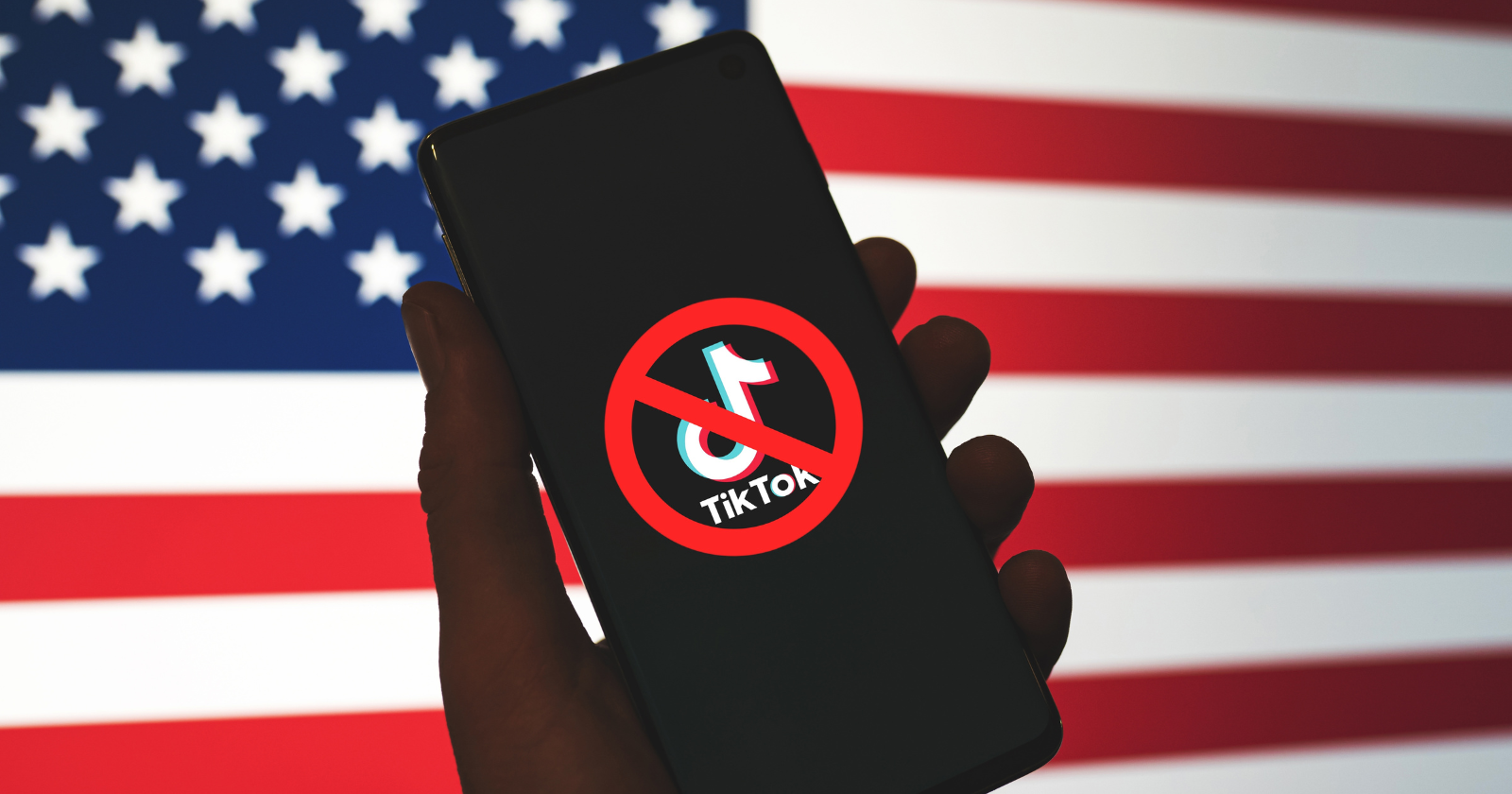
Amazon has submitted a last-minute bid to acquire TikTok, a Trump administration official revealed on Wednesday, just days before a U.S. ban on the popular social media platform is set to take effect.

The bid adds another twist to the high-stakes negotiations over TikTok’s fate in the United States.

The official, who spoke on the condition of anonymity because they were not authorized to comment publicly, confirmed that Amazon’s offer was communicated in a letter to Vice President JD Vance and Commerce Secretary Howard Lutnick. The New York Times was the first to report on the bid.

With the Saturday deadline fast approaching, President Donald Trump has remained firm on his demand that TikTok’s Chinese owner, ByteDance, must sell the platform to an approved U.S. buyer or face a nationwide ban. However, despite his strong rhetoric, signs are emerging that the deadline may be extended once again, as no deal appears to be close to completion.

Amazon has so far declined to comment on its bid, while TikTok has not responded to inquiries about the potential sale.

Will the Ban Deadline Be Pushed Again?

Although Trump has stated that TikTok must be sold before Saturday, insiders suggest that a last-minute extension is increasingly likely. This wouldn’t be the first time the U.S. government has set a firm deadline, only to push it back when it became clear that negotiations were still ongoing.

Over the past few months, several potential buyers have expressed interest in acquiring TikTok’s U.S. operations, but no deal has materialized. The complexity of the negotiations—ranging from valuation disputes to national security concerns—has slowed the process, making it difficult for any acquisition to be finalized before the weekend.

While Trump has framed the Saturday deadline as a hard stop, political analysts suggest that extending it could serve as a strategic move. The president could use the looming threat of a ban to extract further concessions from ByteDance while avoiding immediate economic fallout from shutting down a platform that boasts over 150 million U.S. users.

Amazon’s Entry into the Bidding War

Amazon’s bid introduces a new dynamic into the negotiations, raising questions about how the e-commerce giant would integrate TikTok into its broader business. The company has been aggressively expanding its digital advertising and streaming operations, making TikTok an attractive asset. However, Amazon’s involvement also increases regulatory scrutiny, as many believe that allowing the tech behemoth to acquire TikTok could create antitrust concerns.

Amazon’s bid puts it in competition with several other companies and investment groups that have been circling TikTok for months.

Among the strongest contenders is Oracle, which already holds a 12.5% stake in TikTok Global after securing a deal in 2020 to provide cloud services for the platform. Blackstone, one of the world’s largest investment firms, has also expressed interest in acquiring TikTok’s U.S. operations.

Meanwhile, AI startup Perplexity AI has proposed a merger with TikTok’s U.S. operations, arguing that it is “singularly positioned to rebuild the TikTok algorithm without creating a monopoly.” The company insists that its approach would ensure TikTok’s infrastructure remains under American oversight, aligning with U.S. privacy regulations.

A separate consortium led by billionaire businessman Frank McCourt has reportedly offered ByteDance $20 billion in cash, with Reddit co-founder Alexis Ohanian advising the group. Other investors include Jesse Tinsley, founder of Employer.com, who has proposed a bid exceeding $30 billion, and Wyoming-based entrepreneur Reid Rasner, who has offered approximately $47.5 billion.

The National Security Concern At The Center of Push for TikTok’s Sale

The fight over TikTok’s ownership has been driven by U.S. national security concerns. Both the FBI and the Federal Communications Commission (FCC) have warned that ByteDance could be compelled to share American user data—including browsing history, location, and biometric identifiers—with the Chinese government. TikTok has denied these allegations, maintaining that it has never shared data with Beijing and would not do so if asked. The U.S. government has yet to present concrete evidence that ByteDance has engaged in such activities.

While the national security argument has been central to Trump’s push for TikTok’s sale, the issue has also taken on a political dimension. Trump has millions of followers on TikTok and has credited the platform with helping him connect with younger voters. His decision to temporarily pause the ban on Inauguration Day was widely seen as an attempt to avoid alienating young supporters.

However, his long-term position on the app remains uncertain. During his first term, he took a hardline stance, issuing executive orders aimed at banning both TikTok and the Chinese messaging app WeChat. Now, with re-election looming, Trump faces a delicate balancing act—maintaining a tough stance on China while not shutting down a platform that has become a key tool for political engagement.

With just days remaining until the ban deadline, the pressure is mounting for a resolution. If ByteDance refuses to sell TikTok, the U.S. government will be forced to decide whether to proceed with the ban, extend the deadline, or seek another legal workaround.

The SEC and Gemini Jointly Requested for 60-Day Delay on Litigation

0

The U.S. Securities and Exchange Commission (SEC) and Gemini Trust Company jointly requested a 60-day delay in their ongoing legal case from the U.S. District Court for the Southern District of New York. This request aims to allow both parties to explore a “potential resolution” to the lawsuit, which began in January 2023 when the SEC accused Gemini of illegally raising billions of dollars through its Gemini Earn program by offering unregistered securities. The motion does not specify whether this resolution might involve a settlement, dismissal, or another outcome, but both parties argue that pausing the case could conserve judicial resources and serve the public interest.

If approved, they will submit a joint status report within 60 days. This development follows a broader trend of the SEC easing its enforcement actions against cryptocurrency firms under the current administration, with Gemini having previously announced in February 2025 that the SEC closed a separate investigation into the company without charges. The SEC’s request for a 60-day delay in the Gemini case, filed jointly with Gemini on April 1, 2025, carries several potential implications for the parties involved, the cryptocurrency industry, and regulatory enforcement trends.

The joint motion suggests that both the SEC and Gemini see a path toward resolving the lawsuit, which centers on allegations of unregistered securities offerings through the Gemini Earn program. A settlement could involve Gemini paying a fine, agreeing to compliance measures, or restructuring its offerings without admitting liability—common outcomes in SEC cases. Alternatively, a resolution could mean the SEC dropping some or all claims, especially given its recent closure of a separate Gemini investigation in February 2025 without charges. This ambiguity leaves open whether Gemini might avoid significant penalties or if the SEC is refining its approach.

Shift in SEC Enforcement Strategy: The delay aligns with reports of the SEC softening its stance on crypto enforcement under the current administration. This could signal a pragmatic pivot—perhaps prioritizing negotiation over litigation—especially as the agency faces resource constraints and mixed success in court against crypto firms. A resolution here might set a precedent for how the SEC handles similar cases against other platforms, like Coinbase or Kraken, potentially favoring settlements over prolonged battles.

For Gemini, a pause offers breathing room to negotiate terms that could limit financial and reputational damage. A favorable outcome might strengthen its position in the competitive crypto market, especially after weathering the Earn program’s fallout tied to Genesis Global Capital’s bankruptcy. However, any settlement requiring operational changes could still impose costs or restrictions, affecting its business model. A resolution could clarify regulatory expectations for crypto lending and yield products, which remain a gray area under U.S. securities law. If the SEC secures concessions from Gemini, other firms might preemptively adjust their offerings to avoid similar scrutiny.

Conversely, a perceived SEC retreat could embolden the industry to push back against future enforcement, interpreting this as a sign of regulatory fatigue or shifting priorities. The joint motion’s emphasis on conserving judicial resources hints at mutual recognition that a drawn-out trial might not serve either side’s goals. A negotiated outcome could also align with public interest by reducing uncertainty for Gemini’s users and the market, though critics might argue it lets Gemini off lightly if no clear accountability emerges.

The next 60 days (assuming the court grants the delay) will be critical. The joint status report due afterward—around early June 2025—should reveal whether a deal is struck or if litigation resumes, providing further insight into the SEC’s evolving crypto strategy and Gemini’s fate. Until then, the implications hinge on speculation, but the move suggests a preference – at least temporarily – de-escalating tensions in this high-stakes regulatory standoff.