DD
MM
YYYY

PAGES

DD
MM
YYYY

spot_img

PAGES

Home Blog Page 1565

Goldman Sachs Mentions Crypto in Its 2024 Annual Shareholder’s Letter

0
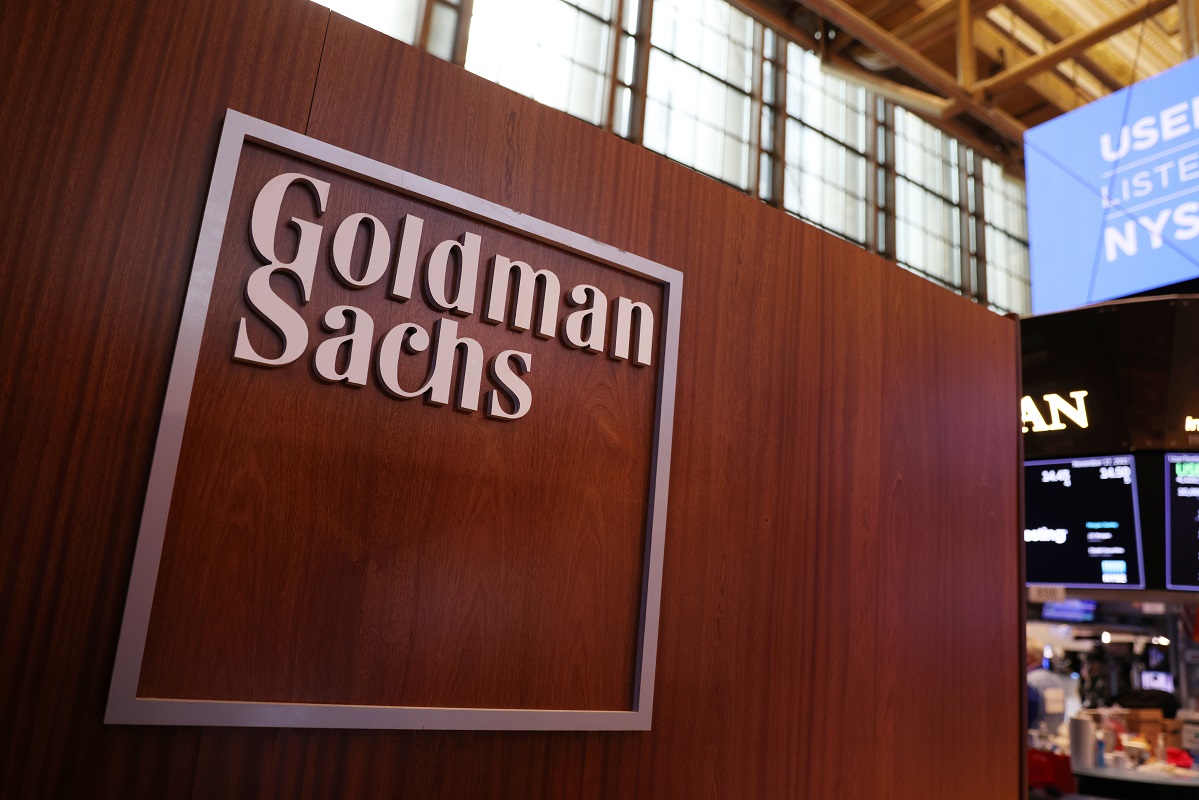
The logo for Goldman Sachs is seen on the trading floor at the New York Stock Exchange (NYSE) in New York City, New York, U.S., November 17, 2021. REUTERS/Andrew Kelly/Files

Goldman Sachs mentioned cryptocurrencies for the first time in its 2024 annual shareholder letter, marking a significant acknowledgment of the growing influence of digital assets in the financial industry. The letter, released in March 2025, highlights the increasing competition driven by new technologies, including cryptocurrencies, blockchain, and artificial intelligence, which are reshaping financial markets. Specifically, the bank noted that some competitors offer crypto-related financial products that Goldman Sachs currently does not provide, potentially influencing client preferences.

This mention reflects a shift in Wall Street’s perspective, driven by factors such as Bitcoin’s success, the approval of spot Bitcoin ETFs, and broader institutional interest in blockchain technology. However, the bank also cautioned about the risks associated with these technologies, such as cybersecurity vulnerabilities and the nascent nature of the market. If Goldman Sachs and other institutions invest heavily in blockchain, it could lead to significant economic impacts, such as job creation in tech development, new revenue streams from tokenized assets, and increased efficiency in financial transactions.

By recognizing that competitors are offering crypto-related products, Goldman Sachs is signaling an awareness of potential gaps in its product offerings. This could prompt the bank to explore or expand its involvement in crypto-related services to retain clients and remain competitive. While Goldman Sachs has historically been cautious about cryptocurrencies, this mention may indicate a strategic pivot. The bank could consider developing crypto trading desks, custody services, or blockchain-based financial products, especially given its existing blockchain efforts (e.g., its Digital Assets platform for tokenization).

The letter’s mention of risks (e.g., cybersecurity, market volatility) suggests that any move into crypto would be tempered by a strong risk management framework, aligning with Goldman Sachs’ reputation for prudent financial practices. Goldman Sachs, as a leading Wall Street institution, mentioning crypto in its annual letter further legitimizes digital assets within traditional finance. This could encourage other major banks and financial institutions to accelerate their own crypto initiatives, reducing the stigma associated with cryptocurrencies. The acknowledgment of competitors offering crypto products highlights the growing competitive landscape in financial services.

This could lead to an “arms race” among banks to develop innovative crypto and blockchain solutions, benefiting clients with more options and potentially lower costs. As major institutions like Goldman Sachs signal interest in crypto, regulators may intensify their focus on the sector. This could lead to clearer guidelines or stricter regulations, particularly around cybersecurity, anti-money laundering (AML), and consumer protection. Goldman Sachs’ mention of crypto, even if cautious, is likely to be viewed as a positive signal by crypto investors and enthusiasts. It reinforces the narrative of institutional adoption, potentially boosting market sentiment and driving further investment into digital assets.

If Goldman Sachs were to expand its crypto offerings, it could attract more institutional investors to the market, adding liquidity and stability. This would be particularly impactful following the approval of spot Bitcoin ETFs in 2024, which already opened the door for institutional capital. The letter’s reference to blockchain technology alongside crypto suggests that Goldman Sachs may prioritize blockchain-based solutions (e.g., tokenization of real-world assets, smart contracts) over speculative crypto trading. This could accelerate the development of decentralized finance (DeFi) and other blockchain applications.

If Goldman Sachs enters the crypto space, its high-net-worth clients, institutional investors, and corporate clients could gain access to crypto-related services, such as trading, custody, or investment vehicles. This would democratize access to digital assets within the bank’s ecosystem. Goldman Sachs’ involvement could bring greater trust and security to the crypto market, given its reputation for rigorous risk management and compliance. This might attract conservative investors who have been hesitant to enter the crypto space due to concerns about fraud, volatility, or regulatory uncertainty.

Increased competition in crypto-related financial products could lead to lower fees and better services for clients, as banks vie for market share in this emerging sector. Goldman Sachs’ mention of crypto alongside AI and other technologies underscores the broader trend of digital transformation in finance. This could accelerate the adoption of cutting-edge technologies across industries, reshaping how financial services are delivered.

The U.S. financial sector’s engagement with crypto could enhance its global competitiveness, especially as other regions (e.g., Europe, Asia) are also exploring digital currencies and blockchain. However, this depends on the U.S. establishing a supportive regulatory framework. If Goldman Sachs enters the crypto market and faces issues (e.g., a major hack, regulatory penalties), it could damage its reputation as a trusted financial institution. This underscores the importance of a cautious and well-planned approach.

Goldman Sachs’ mention of cryptocurrencies in its 2024 annual shareholder letter is a watershed moment that reflects the growing integration of digital assets into mainstream finance. The implications are far-reaching, signaling potential shifts in the bank’s strategy, increased competition in the financial sector, and further legitimization of the crypto market. However, the bank’s cautious tone also highlights the challenges and risks involved, suggesting that any move into crypto will be deliberate and aligned with its broader goals of innovation, client service, and risk management.

5 Taxation Tips for Investors

0

In addition to maximizing your investment income and saving money for retirement, you should also consider how to minimize the tax burden. Here are a few taxation tips that can help investors save money.

1.      Hold Investments for a Long Time

Before determining the right allocation for your money, it is important to understand how income from multiple assets is taxed. Interest from bonds, cash holding, and stocks is taxed at different rates depending on your holding period.

Short-term capital gains are taxed at a higher rate than long-term capital gains. If you are planning to sell a taxable asset, understand these capital gain strategies:

Short-Term Capital Gains:

  • Apply to profit from investments that you held for less than one year
  • Taxed at your income tax rate
  • The tax rate depends on your tax bracket and usually ranges from 10% to 37%

Long-Term Capital Gains:

  • Apply to profit from investments that you held for more than one year
  • Taxed at low rates based on your income
  • Tax rates are usually 0%, 15%, or 20%

2.      Utilize Tax-Loss Harvesting

This approach allows you to reduce your taxable capital gains by offsetting them with capital losses. If you have sold a stock with a loss, you can use that loss to reduce taxes on your other capital gains. For example, if you realize $20,000 in gain but also sold a stock at a $10,000 loss, your taxable gain would be only $10,000.

Many people are not aware of how to pay taxes on stocks. Tax-loss harvesting is an effective technique for them. It significantly increases the after-tax value of an equity investment portfolio and lowers the overall tax liability.

3.      Reinvest Your Dividends

Many brokerages offer dividend reinvestment plans, which redirect dividends earned from mutual funds or stocks into purchasing additional shares of the same investment instead of taking cash payouts. This approach accelerates your long-term growth, but you must take into account that dividends are taxable in the year they are earned, whether you reinvest them or take them as cash.

Many people pay tax on a higher amount and forget to deduct their reinvested dividends. Missing out on any tax savings can be costly in the long run. By neglecting this, you lose the potential growth those extra dollars would have earned in the future.

4.      Add Broker Fees to Stock Costs

Buying stock is not free, and you always have to pay some commission or transfer a particular fee if you change brokerages. These costs are direct expenses incurred to help your money grow. When you buy or sell stock, the Internal Revenue Service does not allow you to write off these transactions, but you must add them to the total amount you have paid for the stock.  After all, this money came out of your pocket while taking an investment.

5.      Invest in Bonds

When stock markets perform badly, investors look for a safe place to put their money. Bonds are the perfect choice as they boost your interest income, and you do not even have to pay tax on it.

You can also consider investing in municipal bonds, which offer significant tax advantages. These bonds are mainly provided by local municipalities or the federal government to finance various projects.

The U.S. Senate’s Financial Integrity and Regulation Management Act

0

The Financial Integrity and Regulation Management Act (FIRM Act) is a legislative proposal introduced in the U.S. Senate, aimed at addressing concerns over financial institutions’ practices of denying services to customers based on subjective or politically motivated criteria. The act seeks to reform banking supervision by eliminating the use of “reputational risk” as a factor in regulatory oversight. This concept of reputational risk has been criticized for allowing regulators to pressure banks into refusing services to certain industries, businesses, or individuals, often without clear evidence of financial instability or illegal activity.

The FIRM Act is intended to ensure that all law-abiding American consumers and businesses, regardless of their political, religious, or ideological affiliations, have equal access to financial services. Proponents argue that this legislation is necessary to prevent regulatory overreach, where federal banking agencies might use vague or subjective criteria to influence banks’ customer relationships.

For instance, there have been reports of banks terminating relationships with clients involved in controversial but legal sectors, such as cryptocurrency or firearms, allegedly due to regulatory pressure. The act aims to create a more predictable and fair financial system by focusing regulatory supervision on objective, market-based risks rather than perceived reputational concerns.

The legislation has garnered support from various stakeholders, including business organizations and some political leaders, who view it as a step toward protecting economic freedom and reducing arbitrary discrimination in financial services. However, it may face opposition from those who argue that reputational risk is a legitimate supervisory tool to ensure the stability and integrity of the financial system. As of early 2025, the FIRM Act is under consideration in the Senate Banking Committee, but its ultimate passage and impact remain uncertain.

Many banks have been reluctant to serve crypto-related businesses due to perceived “reputational risk,” regulatory uncertainty, and pressure from federal banking regulators. This has led to instances of “de-banking,” where crypto firms are denied accounts or have existing accounts terminated, even when they are operating legally. By eliminating “reputational risk” as a factor in regulatory oversight, the FIRM Act would reduce the ability of regulators to pressure banks into refusing services to crypto businesses based on subjective or ideological concerns. This could lead to; Crypto firms might find it easier to open and maintain accounts with traditional financial institutions, improving their operational stability.

The act could prevent banks from arbitrarily denying services to crypto businesses, especially those engaged in legal activities, fostering a more inclusive financial ecosystem. Improved banking access could lower barriers to entry for new cryptocurrency startups, encouraging innovation and competition in the sector. Federal banking regulators, such as the Office of the Comptroller of the Currency (OCC), the Federal Reserve, and the Federal Deposit Insurance Corporation (FDIC), have sometimes used reputational risk as a pretext to discourage banks from engaging with crypto firms.

This has been evident in policies like the controversial “Operation Choke Point,” where regulators were accused of targeting certain industries, including crypto, without clear evidence of financial instability or illegal activity. The legislation would shift regulatory supervision toward objective, market-based risks, such as credit risk, liquidity risk, or operational risk, rather than subjective concerns like reputational risk. This could benefit the crypto industry by: Crypto businesses might face less scrutiny from regulators over vague or politically motivated concerns, allowing them to operate with greater certainty.

The act could ensure that crypto firms are evaluated based on their actual financial practices and compliance with existing laws, rather than being penalized for being part of a controversial or emerging industry. By focusing on objective standards, regulators might be incentivized to provide clearer, more consistent guidance for banks on how to engage with crypto businesses, reducing uncertainty in the sector.

Institutional adoption of cryptocurrencies, such as Bitcoin and Ethereum, has been hindered by the reluctance of traditional financial institutions to engage with the sector. Banks, payment processors, and custodians often cite regulatory pressure and reputational risk as reasons for avoiding crypto-related services. If banks feel less regulatory pressure to avoid crypto clients, the act could lead to: More banks might offer services like custodial solutions, payment processing, and lending to crypto businesses, facilitating broader institutional adoption.

Financial institutions might develop new products, such as crypto exchange-traded funds (ETFs), lending platforms, or stablecoin services, knowing they are less likely to face regulatory backlash based on reputational concerns. Greater banking support could help integrate cryptocurrencies into the mainstream financial system, making them more accessible to retail and institutional investors. While the FIRM Act could provide significant benefits to the cryptocurrency industry, there are potential risks and challenges to consider. The FIRM Act does not eliminate all regulatory oversight of the crypto industry.

Regulators could still target crypto businesses under other pretexts, such as concerns over money laundering, consumer protection, or systemic risk. Crypto firms would still need to comply with laws like the Bank Secrecy Act (BSA) and regulations enforced by agencies like the Securities and Exchange Commission (SEC) and the Commodity Futures Trading Commission (CFTC). Some regulators and policymakers might oppose the FIRM Act, arguing that reputational risk is a legitimate tool for managing emerging risks in the financial system, including those posed by cryptocurrencies.

If the act faces significant pushback, its passage could be delayed or weakened, limiting its impact on the crypto sector. Even if banks are less constrained by reputational risk, they might still choose not to serve crypto businesses due to perceived market-specific risks, such as volatility, cybersecurity threats, or regulatory uncertainty. The FIRM Act would not directly address these concerns, meaning crypto firms might still need to demonstrate robust risk management practices to secure banking relationships.

The FIRM Act is part of a broader debate over how to regulate cryptocurrencies and emerging technologies in the financial sector. Its passage could signal a shift toward a more innovation-friendly regulatory environment, encouraging other legislative efforts to clarify the legal status of cryptocurrencies, such as defining whether certain tokens are securities or commodities. By reducing regulatory barriers to crypto businesses, the FIRM Act could help the United States maintain its position as a leader in blockchain and cryptocurrency innovation. This could attract more crypto firms to operate in the U.S., rather than relocating to jurisdictions with more favorable regulatory climates, such as Switzerland or Singapore.

Halborn Greenlights BlockDAG—Focus Shifts to CertiK Audit! PI Market Cap Hits $15B & Hedera ETF Advances

0

The PI market cap has escalated to $15 billion, showcasing that enthusiasm for crypto remains robust among everyday buyers. Anticipation is building around a potential Binance listing, with hopes that March 14—Pi Day—will bring significant news. At the same time, institutional entities are positioning themselves. Grayscale’s application for a Hedera Grayscale ETF points to a rising demand for officially sanctioned crypto investment vehicles.

However, as funds from both public and private sectors pour into crypto, security is crucial. BlockDAG (BDAG) excels here, having completed a Halborn audit with a CertiK certification pending, positioning it as a benchmark for blockchain safety. This dedication, combined with a historic $202.8 million presale, positions it as one of the best cryptos to buy today.

PI Market Cap Touches $15 Billion: Could a Binance Listing Propel It Further?

The PI market cap has rocketed to $15 billion, positioning Pi Coin as a focal point in the fluctuating crypto market. With its price peaking at $2.98, the currency’s robust performance fuels debates over its potential to reach $10. Many are optimistic that an upcoming Binance listing could serve as a significant growth trigger.

A recent poll by Binance Square reveals that 86% of respondents support listing Pi Coin. As March 14—Pi Day—draws near, market participants are keen to see if this could further escalate the PI market cap, driving the currency to new peaks.

Hedera Grayscale ETF Edges Toward Approval

Grayscale Investments has progressed in diversifying its crypto ETF portfolio by filing a Hedera Grayscale ETF with the U.S. Securities and Exchange Commission (SEC). The Nasdaq 19b-4 filing signifies Grayscale’s sixth venture into altcoin-focused ETFs, underscoring increased institutional backing for Hedera (HBAR).

While the SEC has previously recognized filings for other altcoins like XRP and Solana, the review for the Hedera Grayscale ETF continues. Analysts suggest that an approval could facilitate a broader range of crypto-based index ETFs. With regulatory focus intensifying, the market watches closely for the SEC’s forthcoming decisions on Grayscale’s latest cryptocurrency venture.

BlockDAG Sets New Security Benchmarks, Awaits CertiK Review

BlockDAG is raising the bar for security among blockchain projects. Having completed an extensive Halborn audit, it’s now in the process of CertiK certification, highlighting its commitment to robust security protocols. These rigorous independent evaluations proactively address vulnerabilities, ensuring the platform’s resilience. By embracing such thorough audits, BlockDAG demonstrates that security is foundational to its operations.

In an industry plagued by security breaches, from hacks to abrupt project failures, BlockDAG confronts these challenges by building a network designed to resist such threats. The Halborn audit affirmed the robustness and integrity of its architecture, and the ongoing CertiK review aims to further enhance its trustworthiness.

Such proactive security measures provide reassurance to participants within the ecosystem, affirming its durability and safety. In a market becoming increasingly wary of unverified platforms, BlockDAG’s commitment to security validates its position as one of the best cryptos to buy today.

BlockDAG’s security-first approach has catalyzed unprecedented demand in its presale, accumulating $202.8 million and selling over 18.7 billion BDAG coins, with its value soaring by 2380% since the initial offering. This remarkable growth from $0.001 to $0.0248 has heightened expectations, with forecasts suggesting a 20,000x return on investment for early backers.

As the crypto market remains uncertain, investors are drawn to projects that blend growth prospects with stringent security, making BlockDAG a standout candidate as one of the best cryptos to buy today.

The Bottom Line

The upcoming period could be crucial for the PI market cap, particularly with the buzz around a potential Binance listing on March 14. Should this occur, Pi Coin might experience a significant uptick in both value and public visibility. Simultaneously, the Hedera Grayscale ETF awaits SEC approval, which could herald a new era of institutional engagement in alternative cryptocurrencies.

However, the spotlight is firmly on BlockDAG. With the Halborn audit complete and a CertiK certification on the horizon, it is distinguishing itself as a highly secure blockchain endeavor. The crypto presale, which has raised a remarkable $202.8 million, coupled with analyst predictions of up to a 20,000x return, suggests that early investors may witness transformative profits.


Presale: https://purchase.blockdag.network

Website: https://blockdag.network

Telegram: https://t.me/blockDAGnetworkOfficial

Discord: https://discord.gg/Q7BxghMVyu

Nigerian House of Reps. Secures N28.7bn Payment from Seplat and Chorus Energy, Intensifies Debt Recovery Efforts

0

The House of Representatives has disclosed that Seplat Production Development Limited and Chorus Energy Limited have remitted a total of N28.7 billion into Nigeria’s Federation Account as part of efforts to clear outstanding liabilities owed to the nation.

This development was announced by the House of Representatives Public Accounts Committee (PAC) in a statement signed by Rep. Akin Rotimi Jr, the official spokesman of the House. The Committee, tasked with ensuring accountability in public financial management, described this as a significant breakthrough in ongoing efforts to recover overdue revenues from oil and gas companies operating in Nigeria.

According to the statement, Chorus Energy Limited settled its outstanding liability with a payment of $847,623 (N1.2 billion) on March 11, 2025, while Seplat Production Development Limited fully discharged its obligation by remitting $18.39 million (N27.6 billion) between March 10 and March 14, 2025.

The payments come as part of a broader investigation into outstanding financial obligations owed by oil companies to the federal government. The House of Representatives, through its Public Accounts Committee, launched an investigation into these liabilities based on findings from the 2021 Audit Report, which revealed that 45 oil companies collectively owed Nigeria $1.7 billion.

The Nigerian Upstream Petroleum Regulatory Commission (NUPRC), the industry’s regulatory authority, has been provided with evidence of these payments for final verification. The House emphasized that this progress signals a renewed commitment to enforcing financial discipline among oil and gas operators.

Rep. Akin Rotimi Jr, speaking on behalf of the House, noted that another company, Shoreline Natural Resources Ltd., had made an initial payment of $30 million towards its total debt of $100.28 million before the commencement of the investigation. The company has also requested a structured repayment plan to clear the remaining balance.

During the Committee’s proceedings, a representative of the NUPRC, Balarabe Haruna, provided additional insights into the reconciliations undertaken so far. He stated that Seplat Energy Producing Nigeria Unlimited, formerly known as Mobil Producing, currently has a credit balance of $211,911.09 for crude oil royalty, $33.01 million for gas flare penalties, and $163,046.40 for concession rentals, with no outstanding liabilities owed to the federal government.

The House commended Seplat Energy for promptly fulfilling its financial obligations. The Public Accounts Committee reaffirmed its commitment to utilizing all constitutionally sanctioned measures to recover outstanding debts from the remaining 38 oil companies still under investigation. The Committee stressed that accountability remains a priority and that companies must comply with the financial obligations imposed by the government.

The House of Representatives also revealed that some other oil companies had fully settled their outstanding financial commitments. Among the companies that no longer have liabilities to the federal government are Amalgamated Oil Company Nigeria Ltd., Seplat Energy, Shell Exploration and Production, and Shell Petroleum Development Company.

VAT Recovery Too

In a separate development, the House reported significant progress in the recovery of public funds linked to excessive charges and non-remittance of Value Added Tax (VAT) on transactions processed through the Remita platform. It disclosed that a total of N199.3 million had been successfully recovered out of an outstanding N6.8 billion in excessive charges collected between March and October 2015.

The Committee had, in 2024, launched an investigation into revenue leakages and the non-remittance of funds by Ministries, Departments, and Agencies (MDAs) through Remita. This inquiry followed a motion sponsored by Hon. Jeremiah Umaru, which was subsequently referred to the Committee for thorough examination.

According to the Committee’s findings, the federal government had earlier directed financial service providers, including banks, Remita, and the Central Bank of Nigeria (CBN), to refund 1% of transaction charges collected through the Remita platform between March and October 2015. An audit of financial records from banks and Remita indicated that while N7.63 billion had been refunded, an outstanding sum of N1.98 billion remained unpaid.

Further analysis showed that applying the prevailing Monetary Policy Rate (MPR) of 27.25% to the unpaid sum resulted in the accumulated interest of N4.84 billion, bringing the total refundable amount to N6.83 billion.

The Committee confirmed that on March 13, 2025, Guaranty Trust Bank (GTB) remitted N40.6 million in overdue charges for the period between March and October 2015. Additionally, the Committee’s investigations revealed non-remittance of VAT on transactions processed through Remita. The Central Bank of Nigeria (CBN) acknowledged an outstanding VAT liability of N521.76 million for transactions conducted between November 2018 and April 2024, which remains unsettled.

Some banks have already remitted a portion of the funds. Zenith Bank has paid N126.13 million, while Guaranty Trust Bank has settled N32.59 million. However, the House noted that several other financial institutions and value chain providers are yet to comply with VAT remittance requirements and other under-remittances identified during the investigation.

Chairman of the House Public Accounts Committee, Rep. Bamidele Salam, vowed to pursue every available avenue to ensure that all outstanding public funds are recovered. He emphasized that these recoveries demonstrate the effectiveness of the National Assembly’s oversight function in ensuring transparency and accountability in public financial management.

“These recoveries demonstrate the effectiveness of the oversight function of the National Assembly in ensuring accountability and transparency in the management of public funds. We will continue to engage with relevant institutions and deploy all necessary legislative tools to recover outstanding debts and prevent revenue leakages. Our objective is to ensure that every kobo due to the Federation is accounted for and remitted accordingly,” he stated.

The House of Representatives, through its Public Accounts Committee, reaffirmed its unwavering commitment to upholding financial discipline, strengthening institutional accountability, and safeguarding public resources in the national interest. It stressed that its ongoing efforts are geared toward ensuring compliance with financial regulations, recovering lost revenues, and preventing future occurrences of financial misconduct by corporate entities and government agencies.