DD
MM
YYYY

PAGES

DD
MM
YYYY

spot_img

PAGES

Home Blog Page 1568

Top Presale Cryptos to Eye During Bitcoin’s Accumulation Phase in 2025

0

Recently, Bitcoin experienced a significant drop from its peak at $109K to $77K, leading to widespread selling. However, experienced traders view this decline as a potential setup for Bitcoin’s upcoming significant rally. Current analyses and on-chain data now indicate an accumulation phase, suggesting a strong rebound could be on the horizon.

As Bitcoin gears up for its next significant move, the focus is shifting to uncovering cryptos that could yield substantial gains. Presales, in particular, offer attractive prospects, and three projects are currently catching attention: BTC Bull Token, MIND of Pepe, and BlockDAG.

Here’s an in-depth examination of Bitcoin’s present condition and the three top presale cryptos poised for the most substantial impact.

Potential Reasons for Bitcoin’s Upcoming Rise

Several enduring metrics hint at an impending Bitcoin breakout:

  1. Increasing Supply Among Long-Term Holders:
    After realizing profits, long-term Bitcoin holders are now accumulating again. This pattern has traditionally indicated a market bottom, typically followed by a sharp upward trajectory.

  2. Stable VDD Multiple:
    The low Value Days Destroyed (VDD) Multiple indicates that older, high-value coins are not being traded, a sign of solid market confidence from long-term holders.

  3. NUPL Enters ‘Belief’ Phase:
    The Net Unrealized Profit/Loss metric shows that confidence is returning to the market, often a precursor to price increases.

  4. Hash Ribbons Indicate Buy Signal:
    A positive crossover in the Hash Ribbons, showing miner confidence, has historically been a reliable forecast of Bitcoin price rises.

These indicators suggest it is an opportune moment to explore ahead of potential market movements. Presale cryptos, in particular, are attracting attention from those looking for significant growth potential.

1. BTC Bull Token ($BTCBULL): A Meme Coin Reflecting Bitcoin’s Achievements

BTC Bull Token is capturing interest as a standout meme coin currently in presale. Unlike typical hype-driven offerings, $BTCBULL aims to provide holders benefits linked directly to Bitcoin reaching new price levels such as $150K or $200K through automatic BTC airdrops—this, however, requires holding the $BTCBULL in the Best Wallet app.

The initiative also includes a deflationary tactic by periodically reducing the supply to help maintain demand and price stability. It positions itself as a meme coin crafted for those dedicated to Bitcoin, providing additional exposure without the necessity of engaging in derivatives. With more than $4.2 million collected and a token price of only $0.002435, BTC Bull Token is poised to become one of the top presale cryptos and major breakthroughs in the crypto scene for 2025.

2. MIND of Pepe ($MIND): AI-Enhanced Crypto Market Scanning

MIND of Pepe goes beyond simple meme status by acting as an AI-enhanced tool that combs through the myriad of crypto conversations on social platforms and forums, providing top presale cryptos insights and early investment leads to its holders.

Utilizing real-time data, it identifies shifts in sentiment, highlights trending cryptocurrencies, and spots early-stage opportunities, operating like an advanced collective intelligence tool for the crypto community. This capability gives holders a considerable edge, potentially boosting their investment outcomes.

With over $7.7 million raised in its presale and each token priced at merely $0.0036234, MIND of Pepe offers an attractive entry point for those interested in a cutting-edge project that blends AI with strategic crypto investing.

3. BlockDAG (BDAG): Pioneering High-Speed Blockchain Scalability

BlockDAG (BDAG) is distinguished among top presale cryptos for its robust technical infrastructure and a highly successful presale. Diverging from the linear transaction processing of traditional blockchains, BlockDAG employs a Directed Acyclic Graph (DAG) architecture, enabling the simultaneous processing of multiple transactions. This architecture enhances throughput, eliminates congestion, and achieves near-instantaneous finality.

Furthermore, BlockDAG is compatible with both EVM and WASM environments, allowing developers to implement smart contracts and dApps across various programming languages and frameworks. The inclusion of the Token & NFT Wizard simplifies asset creation, making it an attractive platform for developers aiming for scalability.

The impressive presale figures speak volumes:

  • Over $210.5 million raised in its presale
  • More than 19.1 billion BDAG coins distributed
  • Current batch priced at $0.0248, a significant rise from $0.001 in the initial batch
  • Anticipated post-listing price target: $1, suggesting a potential 3,932% ROI for early participants

With the Beta Testnet operational, over 100 active nodes, and 10 CEX listings anticipated, BlockDAG is rapidly expanding its ecosystem in 2025. As Bitcoin gears up for its next growth phase, BDAG is well-positioned not only to capitalize on this momentum but potentially to exceed it.
Concluding Insights

While Bitcoin’s current consolidation might be fleeting, the prospects it unveils could have enduring implications. During such phases, examining high-potential alternatives can be prudent, and top presale cryptos such as BTC Bull, MIND of Pepe, and BlockDAG are capturing attention for valid reasons.

BlockDAG, in particular, is leading the forefront with its unprecedented presale success, practical applications, and scalability that challenges established Layer 1 networks. For those considering prominent crypto acquisitions before Bitcoin’s next upswing, BDAG represents a strategic choice.

Shiba Inu and PEPE Traders Are Betting Big on This Coin Should You?

0

Shiba Inu (SHIB) and PEPE traders are in a tough spot. SHIB’s price is slipping amid market uncertainty, while PEPE whales are cashing out, triggering sharp declines. As volatility grips meme coin investors, many are shifting their focus to a more promising alternative, RCO Finance (RCOF).

Unlike hype-driven assets, RCOF offers AI-powered investment strategies, ultra-low fees, and a privacy-first DeFi model. With traders searching for stability and high-growth potential, could this emerging altcoin be the smarter bet?

Shiba Inu and PEPE Holders Seek Stability—RCO Finance Emerges as a Hedge

The recent turmoil in the meme coin market has left traders scrambling for alternatives. Shiba Inu (SHIB) and PEPE are again facing significant headwinds. With SHIB sliding 1.53% amid a broader market downturn and PEPE whales offloading massive holdings, investors are searching for stable alternatives.

Shiba Inu’s latest price drop is part of a larger trend of market uncertainty. After hitting a high of $0.00001567 on March 26, SHIB has declined, erasing its weekly gains. A wave of profit-taking and macroeconomic concerns, including rising inflation, have dampened investor sentiment.

Adding to the turmoil, a new phishing scam targeting SHIB holders has surfaced, causing further anxiety among the community. The fraudulent messages, disguised as Binance security alerts, have raised alarms about holdings’ safety, making investors question the long-term security of their SHIB investments.

The PEPE market faces a whale-driven sell-off, with a major investor liquidating 150 billion tokens for $1.14 million. This marks the second large-scale dump by the same wallet, which has offloaded over 1 trillion PEPE tokens for a staggering $6.66 million profit.

The sell-off has triggered a 7% decline in PEPE’s price, causing panic among smaller investors. Meanwhile, a leveraged trader betting on a PEPE price rebound suffered a $3.36 million loss, underscoring the extreme volatility in the market.

RCO Finance (RCOF) Gains Momentum as Shiba Inu and PEPE Traders Seek Stability

With Shiba Inu (SHIB) struggling amid market uncertainty and PEPE experiencing whale-driven volatility, RCO Finance (RCOF) continues to capture investor interest. Unlike meme coins, which often rise and fall on speculation, RCOF is built on an AI-powered financial ecosystem designed for sustainable, long-term growth.

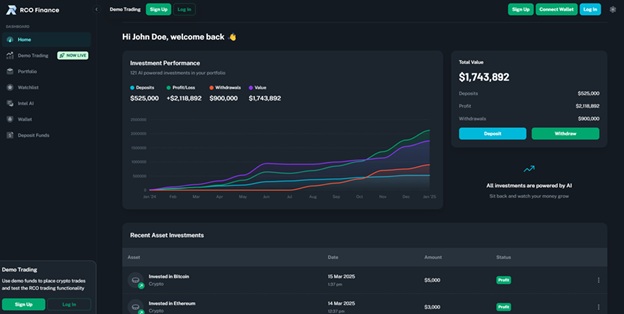
At the core of RCO Finance’s appeal is its AI-powered Robo Advisor—a game-changer in the altcoin space. This advanced tool delivers a highly personalized investment experience by analyzing risk tolerance, financial goals, and real-time market conditions.

Unlike meme coins, where price movements are often dictated by hype, RCOF leverages machine learning to pinpoint high-value opportunities, giving investors an edge in an unpredictable market.

The AI system pulls data from reputable financial sources like Reuters, offering a precision-driven investment model that can identify profitable assets before they surge, just like BROCCOLI’s. For traders frustrated by the recent downturns in the meme coin sector, RCOF presents a calculated and data-backed alternative.

Beyond its smart trading solutions, RCO Finance expands investment horizons by supporting traditional altcoins and tokenized real-world assets (RWAs), including real estate, stocks, and commodities.

This diversification strengthens the platform’s ecosystem and provides investors with a hedge against the extreme volatility plaguing meme coin markets.

Security and privacy are also at the forefront of RCO Finance’s model. Unlike most DeFi platforms that require extensive identity verification, RCO Finance operates on a no-KYC basis, allowing users to access financial opportunities without intrusive checks.

Despite this, security is never compromised. The platform’s smart contracts have been rigorously audited by SolidProof, a leading Web3 security firm, ensuring robust investor protection without sacrificing user anonymity.

RCO Finance’s rise is no coincidence. Its beta launch attracted over $14 million in investment inflows, with more than 10,000 new users joining the platform.

The upcoming alpha launch is set to drive even greater demand, particularly with the expansion of its AI-powered trading suite. Traders are eagerly anticipating how RCO Finance’s predictive analytics will redefine market strategies in real time.

RCO Finance (RCOF) Presale: A High-Reward Investment Opportunity

As Shiba Inu and PEPE holders hedge against market swings, many are turning to RCO Finance’s presale as a promising entry point. Now in Stage 5, RCOF is priced at just $0.10 and has already secured over $14.6 million in funding. This price is anticipated to increase to $0.13 in the next phase.

Analysts predict that once RCOF launches on major exchanges, its price could surge to $0.40 or even $0.60, with the most bullish forecasts eyeing a potential 2500% rally.

Beyond the price upside, early investors in RCOF will gain access to exclusive benefits, including governance voting rights, tier-based rewards, quarterly dividends, and premium financial tools powered by AI.

For those seeking a high-growth alternative to volatile meme coins, RCO Finance stands out as a next-generation opportunity with real-world applications, intelligent trading strategies, and a growing community of investors ready to capitalize on its potential.

For more information about the RCO Finance (RCOF) Presale:

Visit RCO Finance Presale

Join The RCO Finance Community

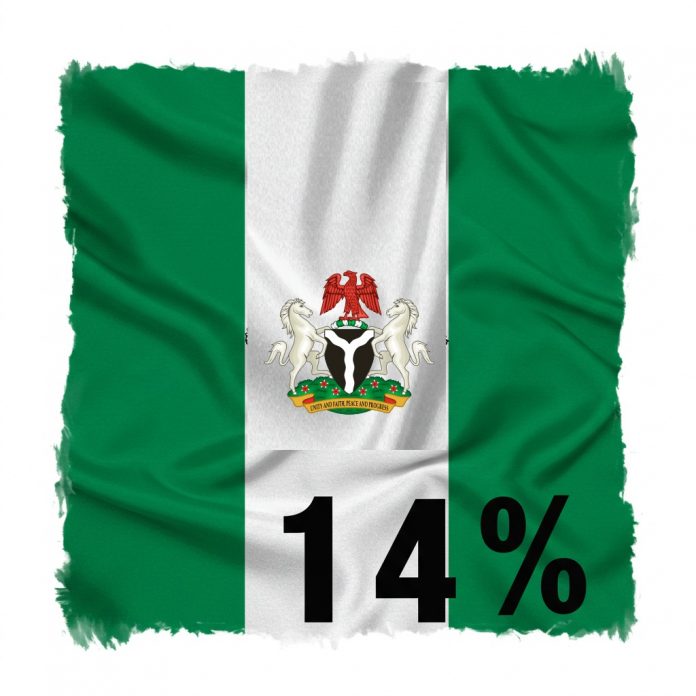
The New Imposed 14% Tariff for Nigerian Exports to US

0

Hope this does not affect imports of African food into the US (lol): “In a landmark shift in global trade policy, U.S. President Donald Trump has announced a sweeping 10% baseline tariff on all imports, alongside sharper, country-specific reciprocal tariffs targeting nations that impose higher duties on American goods….

“Among the countries affected is Nigeria, which will now face a 14% U.S. tariff on exports—a direct response to what Washington claims is a 27% duty imposed by Nigeria on U.S. goods. The decision could have significant consequences for Nigeria’s trade sector, particularly as exports to the U.S. have recently shown an uptick after years of stagnation.”

Can the council of Elders of Nigeria beg President Trump on this? Lol. This is a really big issue since most businesses in Nigeria have been optimizing to export to the US. Now this…I wish the government good luck on managing this paralysis.

Nigeria to Face 14% U.S. Tariff on Exports As Trump’s New Tariff Policy Reshapes Global Trade

A Foray into Senator Tuberville’s Financial Freedom Act

0

U.S. Senator Tommy Tuberville is set to introduce a bill in April 2025 that would allow Americans to invest their retirement funds, such as 401(k) plans, in cryptocurrencies like Bitcoin. Known as the Financial Freedom Act, this legislation aims to expand investment options by reversing Department of Labor restrictions that currently limit the types of assets permissible in self-directed retirement accounts. Tuberville, a Republican from Alabama, has framed this as a move to enhance financial autonomy, aligning it with what he calls a pro-crypto stance from the Trump administration. This is his third attempt at passing such a measure, having introduced it unsuccessfully in 2022 and 2023, with renewed optimism now tied to a shifting political and regulatory climate.

The bill’s implications are significant. It could mainstream crypto within retirement planning, tapping into a growing interest—evidenced by BlackRock’s $50 billion Bitcoin Trust and Circle’s $4-5 billion IPO push. Proponents argue it offers diversification and potential high returns, especially as Bitcoin’s value has climbed to $108,268 in March 2025. Critics, however, highlight the risks: crypto’s volatility could jeopardize retirement security, and a lack of fiduciary oversight might expose investors to fraud or loss, concerns previously raised by the Labor Department and figures like Senator Elizabeth Warren.

Senator Tommy Tuberville’s proposed Financial Freedom Act, set for introduction in April 2025, to allow retirement funds like 401(k)s to invest in cryptocurrencies, carries far-reaching implications across financial, regulatory, and societal domains. With United States retirement assets totaling $38.9 trillion in 2024 per the Investment Company Institute, even a small allocation to crypto could inject billions into Bitcoin and other digital assets. This could propel Bitcoin beyond its March 2025 peak of $108,268, amplifying market growth and liquidity.

Proponents argue crypto offers a hedge against inflation and dollar devaluation—key concerns given the $36.6 trillion U.S. debt. If BlackRock’s Larry Fink is right about Bitcoin challenging the dollar’s reserve status, retirement savers might see it as a long-term store of value, diversifying away from bonds and equities. Crypto’s wild price swings—Bitcoin dropped 20% in a single week in 2024—could destabilize retirement accounts. A 2025 bear market might wipe out gains for late adopters, threatening financial security for retirees reliant on these funds.

Regulatory and Policy Implications

The bill challenges the Department of Labor’s 2022 guidance warning against crypto in 401(k)s due to its speculative nature. Passage could force a rewrite of fiduciary rules, but opposition from figures like Senator Warren, who’s called crypto a “risky gamble,” might spark amendments or delays, especially if tied to broader stablecoin or CBDC debates by mid-2025. Success here could embolden further pro-crypto legislation, aligning with Circle’s IPO and reinforcing a trend toward mainstreaming digital assets. Failure, however, might embolden regulators to tighten restrictions, citing systemic risks as U.S. debt servicing nears $952 billion in 2025. Retirement accounts in crypto would require new IRS rules for tracking gains, losses, and withdrawals.

Without clear guidance, tax evasion or errors could surge, prompting a regulatory scramble. Early adopters and high-income savers with larger 401(k) balances could reap outsized gains if crypto soars, widening the wealth gap. Lower-income workers, less likely to take the risk, might miss out, echoing patterns seen with Bitcoin’s 2020-2025 rally. Critics warn that crypto’s volatility could leave retirees vulnerable, especially if a crash coincides with withdrawals. Supporters counter that traditional assets like stocks also carry risks, and younger savers (e.g., Millennials, 40% of whom own crypto per 2024 surveys) demand modern options.

Normalizing crypto in retirement plans could accelerate public acceptance, dovetailing with Fink’s vision of decentralized finance. By 2030, it might redefine how Americans view wealth preservation amid a weakening dollar. Billions from retirement funds could supercharge firms like BlackRock’s IBIT, already at $50 billion. This might spur innovation in custody, staking, and stablecoin offerings, strengthening the sector’s infrastructure. If Fink’s warning holds and Bitcoin gains traction as a reserve asset, retirement fund investments could amplify this shift, reducing dollar demand. This aligns with Tuberville’s Trump-backed narrative but risks destabilizing U.S. fiscal policy if debt markets falter by July 2025’s projected default deadline.

The bill’s introduction 401(k) crypto allocations could fuel speculative bubbles, especially if tied to a Bitcoin surge post-IPO. A subsequent bust could ripple through retirement savings, drawing parallels to the 2008 crisis but with a digital twist. Tuberville’s third attempt reflects GOP momentum under a pro-crypto Trump influence, but Democrats, wary of consumer protection, may resist. A divided Congress in 2025 could stall the bill unless tied to a broader fiscal package addressing the $36.6 trillion debt. With 2026 midterms looming, both sides might use this as a wedge issue—Republicans touting freedom, Democrats emphasizing stability—shaping voter perceptions of economic innovation versus risk.

By mid-2025, if passed, it could lock in crypto as a retirement staple, amplifying Bitcoin’s reserve status bid. If it fails, it might cool enthusiasm, leaving savers in traditional assets as the U.S. navigates fiscal cliffs. The outcome hinges on political will, market performance, and public trust in a volatile asset class. The legislation could reshape how millions manage their nest eggs, potentially funneling billions into digital assets by mid-2025. Its success hinges on bipartisan support in a divided Congress and navigating a regulatory landscape wary of crypto’s systemic risks, especially as the U.S. grapples with a $36.6 trillion debt and debates the dollar’s reserve status.

Google’s AI-Powered Search Feature, Overview AI, Yet To Roll Out In EU Countries Due To Regulation

0

Google’s AI-powered search feature, Overview AI, has not yet been rolled out in most EU countries due to regulatory uncertainty, a senior executive at the US tech giant has confirmed.

The delay highlights a growing concern over the European Union’s approach to artificial intelligence and the impact of its regulatory framework on innovation.

Overview AI, designed to help users ask complex questions and navigate web information more efficiently, was launched in eight EU member states—Austria, Belgium, Germany, Ireland, Italy, Poland, Portugal, and Spain—as well as Switzerland in late March. However, it was held back in the remaining EU nations, including France, which has stringent national copyright and neighboring rights laws that add further complexity to EU-wide rules.

Google officials have not ruled out launching the feature in other EU countries but acknowledge that the region’s increasingly dense web of AI-related regulations, including the AI Act, Digital Services Act (DSA), and Digital Markets Act (DMA), is slowing progress.

“The EU is behind when it comes to product innovation, and users in Europe will have a less good product experience,” the Google executive said, expressing frustration over what the company sees as excessive regulatory hurdles. The delays also mean that AI Overview entered the EU market nine months after its initial launch in the US and other jurisdictions.

The development highlights a fundamental challenge in Europe’s AI rollout—overregulation. Although the European Union has announced ambitious plans to position itself as a major player in the global AI race, mapping billions of euros for AI development and research, analysts warn that unless the bloc addresses its heavy-handed regulatory environment, it will continue to lag behind the US and China in technological innovation.

While the EU champions consumer protection and ethical AI deployment, critics pointed out that its rigid rules make it difficult for companies to experiment, iterate, and scale AI solutions at the pace required to compete with Silicon Valley and Beijing. US firms, including Google and Meta, have repeatedly expressed concerns that Europe’s complex and evolving legal landscape stifles AI advancements, deterring investment and delaying cutting-edge technologies from reaching European users.

Meta, which launched its AI assistant in Europe only after extended negotiations with regulators, recently echoed these concerns. The company, led by CEO Mark Zuckerberg and global policy chief Joel Kaplan, has long been vocal about what it views as disproportionate scrutiny of US tech firms by European authorities.

“It’s taken longer than we would have liked to get our AI technology into the hands of people in Europe as we continue to navigate its complex regulatory system—but we’re glad we’re finally here,” Meta said earlier this month.

Since the new US administration of President Donald Trump took office in January, transatlantic tensions over tech regulation have further escalated, with Washington increasingly critical of Brussels’ strict stance on major American technology firms.

With the AI revolution unfolding at breakneck speed, the EU faces a critical decision to either maintain its strict regulatory grip and risk losing further ground in the AI arms race or streamline its approach to foster a more competitive environment for AI development. Without addressing its overregulation problem, experts say, Europe may continue to play catch-up in the global tech industry.