DD
MM
YYYY

PAGES

DD
MM
YYYY

spot_img

PAGES

Home Blog Page 158

xAI Secures $15bn in Fresh Capital, Pushing Valuation to $200bn Amid AI Funding Frenzy

0

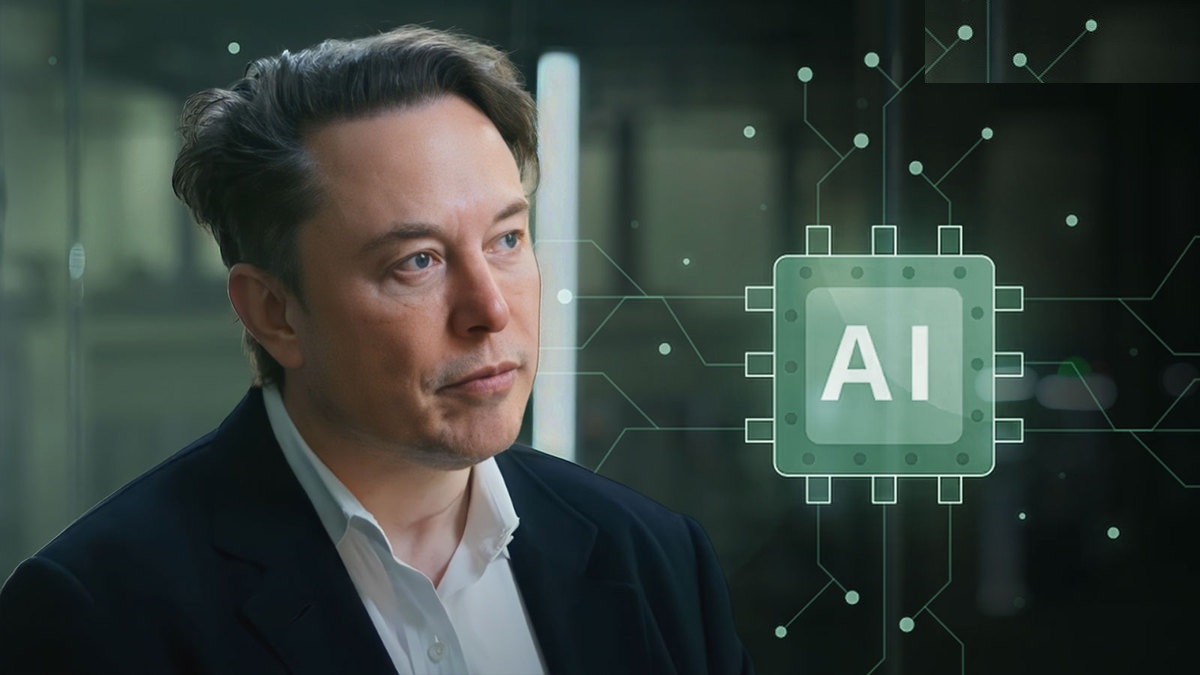
Elon Musk’s xAI has secured $15 billion in new capital, sources close to the deal confirmed to CNBC’s David Faber on Thursday, pushing the two-year-old startup’s post-money valuation to $200 billion and intensifying the GPU-fueled arms race among frontier AI labs.

The round comprises a $10 billion tranche first reported by CNBC in September and an additional $5 billion closed this week. Insiders described the bulk of the proceeds as earmarked for “a massive build-out” of graphic processing units—the silicon backbone of large language models like xAI’s Grok series. While the company declined to specify vendors, the allocation aligns with industry patterns: Nvidia’s H100 and next-generation Blackwell GPUs remain the gold standard, though AMD, Intel, and custom silicon from Google and Amazon are gaining traction.

The $200 billion valuation catapults xAI past Anthropic ($61 billion after a $13 billion raise in September) and into rarefied air behind only Sam Altman’s OpenAI, which closed a $6.6 billion secondary sale last month at $500 billion. Reuters reported in October that OpenAI is laying the groundwork for an IPO that could value the ChatGPT maker at $1 trillion as early as 2027.xAI’s fundraising velocity—$15 billion in under 60 days—mirrors a broader frenzy in artificial intelligence.

Venture firms, sovereign funds, and corporate strategics are pouring unprecedented sums into a handful of labs believed capable of training models at the scale required for general intelligence. Training a single frontier system now routinely exceeds $1 billion in compute alone, and xAI is reportedly negotiating for tens of thousands of GPUs across multiple U.S. data centers.

Tesla Shareholder Vote Adds Intrigue

The xAI raise landed days after Tesla shareholders approved Musk’s $1 trillion compensation package—which cast a non-binding but symbolically significant vote on a proposal for Tesla to invest directly in xAI. Tesla general counsel Brandon Ehrhart said that the xAI investment resolution received more “for” than “against” votes but noted “meaningful abstentions.” He declined to release precise tallies, citing ongoing review by the board’s special committee.

Any transaction would require approval from the Delaware Chancery Court, which voided the original pay package in 2024. Musk has publicly framed xAI and Tesla as complementary rather than competitive, with xAI focused on foundational reasoning models and Tesla applying AI to Full Self-Driving software and humanoid robotics. A direct Tesla investment could provide xAI with both capital and access to proprietary sensor data from the Tesla fleet—estimated at over 6 billion miles of real-world driving—but would also invite scrutiny over conflicts of interest.

Investor Syndicate and Capital Intensity

Sources said the $15 billion round drew from a mix of returning September backers and new entrants, though participant names remain under wraps. The syndicate is believed to include at least one Middle Eastern sovereign fund, a major U.S. public pension, and strategic limited partners with data-center or chip expertise. xAI has now raised at least $25 billion in equity since its March 2023 founding, excluding any debt or convertible notes.

The capital burn is equally eye-watering. Industry estimates peg xAI’s annual run rate above $1.5 billion, driven by GPU leases, power contracts, and a growing engineering roster that topped 400 last quarter. Musk told investors in a September memo that the company will require “hundreds of thousands” of Nvidia GPUs by mid-2026 to keep pace with OpenAI and Anthropic, according to a document seen by CNBC.

Navigating Competitive Market Dynamics

The valuation surge reflects a market consensus that a small cohort of labs—xAI, OpenAI, Anthropic, and Google DeepMind—will dominate the economics of artificial general intelligence. McKinsey projects the generative AI infrastructure market alone will exceed $200 billion annually by 2030, with training compute growing at a 70% CAGR.

However, the numbers are brewing concerns. xAI remains pre-revenue, with Grok accessible primarily through a freemium tier on X (formerly Twitter) and limited enterprise pilots. Monetization pathways—API access, enterprise licensing, and potential government contracts—are still nascent. Meanwhile, GPU supply constraints persist despite Nvidia’s record capex, and power availability is emerging as the next bottleneck, with xAI reportedly negotiating 500-megawatt deals in Texas and Nevada.

For Musk, the $15 billion war chest buys time and leverage. It funds the GPU clusters needed to train Grok-3, due for release in Q1 2026, and positions xAI to bid for top talent amid a tightening labor market—OpenAI poached xAI’s former safety lead last month, and Anthropic has doubled its compensation bands. For the broader AI ecosystem, xAI’s raise signals that the bar for entry has risen irreversibly. Startups without nine-figure compute budgets are increasingly relegated to fine-tuning open-source models or niche applications.

Looking ahead, xAI has no public timeline for profitability or an IPO. Musk has said the company will remain private “as long as it takes to solve AGI safely,” a stance that echoes OpenAI’s pre-2023 nonprofit roots but sits uneasily with a $200 billion price tag. Investors, for now, are betting on Musk’s track record of turning capital-intensive bets—SpaceX, Tesla—into multi-trillion-dollar outcomes.


Cursor’s 12x Surge and the New Sustainability Strategy for Software Careers

0

Listening to our faculty today as he dissected sustainable strategies for SMEs in moments of economic dislocation, something profound struck me. Even as the lecture was ongoing, in that signature Tekedia way where learning connects seamlessly with the pulse of the market, I picked up news that speaks to the velocity of this age.

Good People, Cursor, the AI-powered coding startup, has grown its valuation 12x in barely eleven months: “Engineers love Cursor because its AI coding tools adapt to a programmer’s style across a range of models, and now, investors are buying into the hype, too. The buzzy startup just raised $2.3 billion from heavyweights such as Google and Nvidia, The Wall Street Journal reports, and is now valued at $29.3 billion — a nearly 12-fold increase since January.” – LinkedIn News

Yes, a company built on the promise that anyone can code, and that machines can learn your style and become your digital apprentice, has unlocked massive investor confidence. So, let me ask our community: Is this the moment to rethink sustainable strategies for careers, especially for software developers, when AI is collapsing the moat that once protected coding? If Cursor is teaching us one thing, it is this: the future belongs to those who redesign their relevance, not those who defend old territories.

Dr Abel Osuji, DBA, FCA, thank you for the masterpiece today. Thanks for teaching our learners.

Aave Crashes and Solana Struggles as Zero Knowledge Proof (ZKP) Invests $100M to Forge the Next Era of Crypto Growth

0

The recent Aave (AAVE) price drop and the wavering Solana (SOL) market sentiment reveal growing investor unease and a shift in focus toward utility and scalability. As traders seek the next big crypto, attention turns to Ethereum’s next chapter, privacy. But what happens when that very foundation is flawed?

Vitalik Buterin’s latest comments about removing features that slow ZKEVM adoption point to a deeper issue. Building privacy on Ethereum is proving increasingly difficult. Zero Knowledge Proof (ZKP) saw this coming and invested $100 million to design a network built specifically for these operations from the ground up. With Ethereum’s privacy progress stalling, developers will soon migrate to a network that already works, strengthened by $17 million in Proof Pods manufacturing. The whitelist is already open, setting up early participants for a major shift before auctions begin.

Zero Knowledge Proof (ZKP): Addressing Ethereum’s ZK Limitation

The pursuit of a functional zero-knowledge Ethereum Virtual Machine (ZKEVM) is facing critical setbacks. When Ethereum’s co-founder suggests removing key features that “impede adoption,” it exposes serious structural issues. Privacy-focused projects like Aztec Network and RAILGUN continue to struggle, trying to build on a system that was never optimized for such functions.

In contrast, Zero Knowledge Proof (ZKP) avoided this pitfall by building a network dedicated to these tasks from inception. The team didn’t depend on speculative fundraising, they self-financed $100 million to ensure the network is built before launching. The result is a platform where privacy and performance are not at odds. This is why many view ZKP as the next big crypto.

Its infrastructure rollout, backed by $17 million in Proof Pods, will be ready for deployment once the presale goes live. As Ethereum’s ZKEVM progress slows, developers and enterprises are preparing to migrate toward ZKP’s functional ecosystem.

The whitelist is now open ahead of daily auctions, where 200 million ZKP tokens will be distributed every 24 hours based on contribution, offering fair participation and early exposure to what could be the next transformative crypto network.

The Aave Price Drop Signals Market Fatigue

The Aave (AAVE) price drop is more than a passing correction, it reflects deeper market exhaustion. Alongside Solana (SOL)’s softening sentiment, this trend shows investors moving away from legacy projects that no longer represent the future of blockchain innovation.

This cooling enthusiasm signals a broader realization: the market is tired of familiar systems and now seeks projects offering real-world, scalable use cases. The Aave decline highlights investors’ growing impatience with architectures that cannot evolve fast enough.

It’s creating space for platforms like Zero Knowledge Proof (ZKP), networks that weren’t built to patch existing systems but engineered for new-age demands such as privacy, verified computation, and regulatory readiness. These are the kinds of features investors increasingly see as essential to the next big crypto wave.

Solana Market Sentiment: Speed Alone No Longer Impresses

The shifting Solana (SOL) market sentiment underscores a key change in investor priorities. Once hailed for its speed, Solana’s well-known reliability issues are starting to wear thin. This isn’t typical volatility, it’s a signal that the market is moving beyond hype and throughput toward systems that deliver sustainable performance and privacy.

When paired with the recent Aave drop, the message becomes clear: traders are seeking platforms that can handle the growing complexity of blockchain applications, not just fast transactions. The new focus is on networks that blend speed with structural soundness, compliance, and advanced privacy support.

This transformation places projects like Zero Knowledge Proof (ZKP) in the spotlight. With its $100 million infrastructure investment and $17 million in Proof Pods already complete, ZKP represents a ready solution for privacy-first computation and institutional-grade reliability.

Experts Point to ZKP as the Next Big Crypto

The Aave (AAVE) price drop and Solana (SOL) market sentiment reflect an ongoing transition away from older models. Investors are now looking for blockchain networks that combine purpose-built technology with real-world applications, exactly what Zero Knowledge Proof (ZKP) delivers.

As Ethereum’s own privacy efforts slow due to structural limitations, ZKP’s $100 million purpose-built infrastructure and $17 million in ready hardware offer an operational head start. With the whitelist already open and auctions on the horizon, experts believe Zero Knowledge Proof (ZKP) is uniquely positioned to capture the developer and institutional migration, cementing its reputation as the next big crypto built for Web3’s privacy-driven era.

Find Out More At:  https://zkp.com

After Solana (SOL), Here’s Where Smart Investors See the Next 20,000% Profit Opportunity

0

The cryptocurrency landscape has never been short on stories of exponential growth. From Bitcoin’s early believers turning modest investments into fortunes, to Solana’s meteoric rise from obscurity to a top-tier blockchain ecosystem, the market has rewarded foresight and conviction. Now, as Solana cements its dominance in decentralized finance (DeFi) and NFTs, attention is shifting toward the next explosive opportunity, a project poised to blend viral community energy with strong tokenomics and tangible growth catalysts. That project is Little Pepe (LILPEPE), a meme-born token that’s capturing serious interest from sophisticated investors and early crypto adopters alike.

From Solana’s (SOL) Surge to the Search for the Next Big Wave

What truly propelled Solana beyond the noise was community momentum and market conviction. It became more than a blockchain; it became a narrative of innovation. That narrative is now repeating in a different form. Investors are scanning the market for projects with the same mix of strong fundamentals and explosive cultural traction. Many are turning their attention to tokens that can not only capture speculative capital but also sustain long-term community engagement. In that regard, LILPEPE stands out as one of the most promising entrants in 2025’s new bull cycle. 

The Rise of Little Pepe (LILPEPE): A Meme with Purpose

At first glance, Little Pepe may seem like another playful entrant in the meme coin arena, a space often driven by internet humor and viral trends. But beneath its playful exterior lies a token structure and presale performance that signal something far more strategic. Currently 96% into stage 13 of its presale, with tokens priced at $0.0022, LILPEPE has already raised over $27.4 million and sold more than 16.6 billion tokens across all stages. These are not just vanity metrics; they’re early indicators of demand depth and market readiness. Meme coins often act as cultural gateways to crypto adoption, but most fade as quickly as they rise. LILPEPE merges virality with structure, a formula that has historically delivered astronomical returns when executed correctly.

Why the Smart Money Is Paying Attention

Behind every major crypto breakout lies a convergence of timing, tokenomics, and sentiment. Solana’s rise during its glory days aligned with DeFi’s boom. Now, as the market reawakens to a new bullish cycle, investors are again looking for projects with asymmetric upside potential. Little Pepe’s presale success is a signal that seasoned investors are already positioning themselves early. With 96% of the current presale stage sold out, the token’s scarcity dynamics are intensifying, creating the ideal setup for exponential appreciation. Moreover, the broader macro environment favors high-conviction plays. As liquidity returns to the crypto markets and institutional money begins rotating from blue-chip assets into emerging narratives, tokens like LILPEPE, those with strong early community momentum and clear branding, become prime candidates for speculative and strategic capital.

Positioning for the Next 20,000% Play

It takes more than hype to sustain a token through market cycles. What gives LILPEPE the potential for a 20,000% trajectory is not just its presale numbers, it’s the fusion of its community-driven model, deflationary design, and clear liquidity strategy post-launch. With a committed holder base already forming and multiple market-makers reportedly preparing for listings, the foundation for aggressive post-launch performance is being laid in real time. As market cycles turn, attention gravitates toward narratives with emotional and financial pull. LILPEPE offers both a token that embodies internet culture and demand. For smart investors, these are the rare conditions that precede parabolic gains.

The Bottom Line

The search for the next Solana-level success story is always ongoing, but certain patterns tend to repeat: strong communities, early conviction, transparent execution, and a market-ready narrative. Little Pepe checks every box. Its presale numbers are not just impressive, they’re a testament to growing belief that this project could spearhead the next era of meme-driven market momentum. For those watching closely, this moment feels familiar, the same mixture of excitement and opportunity that has preceded some of crypto’s most legendary runs. If history is any guide, the next 20,000% opportunity may already be here, and its name is Little Pepe (LILPEPE).

For more information about Little Pepe (LILPEPE) visit the links below:

Website: https://littlepepe.com

Whitepaper: https://littlepepe.com/whitepaper.pdf

Telegram: https://t.me/littlepepetoken

 Twitter/X: https://x.com/littlepepetoken

 $777k Giveaway: https://littlepepe.com/777k-giveaway/

Japan’s Push for Stricter Oversight on Digital Asset Treasury Companies

0

Japan’s financial regulators are intensifying scrutiny on publicly traded companies that have pivoted to holding large cryptocurrency reserves as part of their corporate treasury strategies—commonly known as Digital Asset Treasury (DAT) firms.

This move, reported widely on November 13, 2025, comes amid a boom-and-bust cycle in the sector, where firms raised approximately $15 billion through private placements between April and November 2025, only for share prices to plummet due to post-lockup sell-offs and crypto market volatility.

The Japan Exchange Group (JPX), which operates the Tokyo Stock Exchange, is leading the effort to implement additional safeguards, focusing on investor protection, governance, and risk management.

Several DAT firms, including high-profile players like Metaplanet Inc. Japan’s largest public Bitcoin holder with 30,823 BTC, have experienced dramatic share declines. Metaplanet’s stock dropped over 75% from its June 2025 highs after an initial 420% surge, while Convano Inc. fell nearly 60%.

These swings have exposed retail investors to excessive risks tied to crypto’s price fluctuations. Japan now hosts 14 publicly listed Bitcoin-holding companies—the most in Asia—often created via mergers or business pivots rather than traditional IPOs.

This has raised concerns about “backdoor listings,” where firms bypass rigorous public offering processes to quickly adopt crypto-heavy strategies. The proposals align with broader Asia-Pacific trends. Hong Kong Exchanges & Clearing Limited blocked at least five similar listings in October 2025, while Australia and India have imposed caps on crypto allocations in corporate treasuries.

Proposed Regulatory MeasuresJPX is evaluating a multi-pronged approach, though no final rules have been enacted. The focus is on closing loopholes while preserving Japan’s reputation as a crypto-friendly jurisdiction.

Extend bans on backdoor listings to prevent listed companies from pivoting to crypto treasuries without shareholder approval or full disclosure. This would treat such shifts similarly to prohibited shell company acquisitions.

Slows rapid DAT formation; requires more transparency in business model changes. Impose additional financial audits for firms with significant crypto exposure, including reviews of asset valuation, custody practices, and related-party transactions.

Enhanced reporting on risk management would also be required. Increases compliance costs but could boost investor confidence by addressing governance gaps. Since September 2025, JPX has already urged at least three firms to halt digital asset acquisitions during reviews. This could become a standard interim step for high-risk cases.

Provides regulators time to assess stability without outright bans. Integrate DAT strategies into existing securities rules under the Financial Instruments and Exchange Act (FIEA), potentially classifying certain crypto holdings as financial products with tighter insider trading and disclosure mandates.

Aligns with Japan’s 2025 updates, like reclassifying tokens as securities and introducing Crypto-Asset Intermediary Service Providers (CAISPs). These steps build on Japan’s established crypto framework, governed by the Payment Services Act (PSA) since 2017, which requires exchanges to segregate customer assets and adhere to AML/KYC standards.

The Financial Services Agency (FSA) oversees licensing, and self-regulatory bodies like the Japan Virtual and Crypto Assets Exchange Association (JVCEA) enforce industry rules.Industry Response and OutlookDAT advocates, including Metaplanet CEO Simon Gerovich, argue the sector complies with current laws and that transparency—not restriction—drives growth.

In a statement, Metaplanet emphasized it has faced no formal inquiries and views audits as opportunities for validation. Analysts suggest the regulations could stabilize the market without stifling innovation, potentially attracting more institutional investors by mitigating volatility risks.

Japan’s government remains committed to Web3 promotion, as outlined in the 2024 Web3 White Paper, aiming for a balanced ecosystem where crypto integrates responsibly into finance.If implemented, these rules could reshape Asia’s DAT landscape, positioning Japan as a leader in regulated crypto adoption rather than unchecked speculation.