

Why Singing Is Surprisingly Good for Your Health: From Brain Power to Better Well-Being

Quote from Alex Bobby on December 14, 2025, 4:36 AM
Singing offers surprising health benefits, from boosting brain function and mood to reducing pain and strengthening social bonds. Discover why lifting your voice can improve both body and mind.
As the festive season approaches, streets, shopping centres and community halls once again fill with voices lifted in song. Some are angelic, others enthusiastic rather than tuneful, but together they create a shared sense of warmth and celebration. Beyond spreading cheer, these moments of collective singing may be doing something far more powerful: quietly improving our health.
Whether it’s belting out carols, joining a choir, or humming along to the radio at home, singing has been shown to benefit the body and mind in ways that surprise even scientists. Research suggests that singing can sharpen the brain, strengthen the heart, ease pain, and foster deeper social bonds. And the best part? You don’t need formal training or perfect pitch to experience the effects.
Singing and the Brain
Singing is one of the most complex activities the human brain can perform. It requires coordination between language, memory, emotion and motor control, engaging multiple regions of the brain simultaneously. According to Alex Street, a researcher at the Cambridge Institute for Music Therapy Research, singing is “a cognitive, physical, emotional and social act” all rolled into one.
This mental workout can be especially valuable as we age. Studies have found that singing may help preserve memory and attention, and music therapy is increasingly used to support people recovering from brain injuries or living with neurological conditions such as stroke and dementia. Even when speech is impaired, the ability to sing often remains intact, offering a powerful alternative pathway for communication.
A Natural Mood Booster
Few activities lift the spirits quite like singing. When we sing, the brain releases a cocktail of feel-good chemicals, including dopamine and endorphins, which are linked to pleasure and reward. At the same time, levels of cortisol — a hormone associated with stress — tend to drop.
This is one reason why people often report feeling calmer and happier after singing, even if they were anxious beforehand. Group singing amplifies this effect. Choir members frequently describe a sense of emotional release and improved mood after rehearsals, regardless of the musical style or skill level involved.
Singing and Physical Health
Singing doesn’t just benefit the mind; it also has measurable effects on the body. Controlled breathing during singing strengthens the lungs and improves oxygen flow, which can support cardiovascular health. Some research has even compared the breathing patterns of singers to those of people practicing yoga or meditation.
There is also evidence that singing can influence the immune system. Studies have shown that singing can increase levels of immunoglobulin A, an antibody that plays a key role in defending the body against infections. While singing is no substitute for medical care, it may offer a gentle boost to the body’s natural defenses.
Reducing Pain and Discomfort
One of the more surprising benefits of singing is its potential to reduce pain. Endorphins released during singing act as natural painkillers, while the focused breathing and rhythmic structure can distract the brain from discomfort. In medical settings, singing and music therapy have been used to help patients cope with chronic pain, post-surgical recovery and even childbirth.
For people with respiratory conditions such as asthma or long COVID, structured singing programmes have also shown promise in improving breath control and confidence, helping participants feel more in control of their bodies.
The Power of Singing Together
Perhaps the most profound impact of singing lies in its social power. Singing together creates a sense of belonging that few other activities can match. Research suggests that group singing synchronises heart rates and breathing patterns, fostering a feeling of connection and unity.
This shared experience can be especially valuable in combating loneliness and social isolation, which are increasingly recognised as major public health concerns. Community choirs, singing groups for older adults, and workplace singing initiatives have all been linked to improved social well-being and reduced feelings of isolation.
Importantly, these benefits are not limited to professional choirs or religious settings. Informal gatherings — from football chants to birthday songs — can offer similar social rewards.
You Don’t Have to Be “Good” at Singing
One of the biggest barriers to singing is the fear of sounding bad. But experts stress that technical ability has little to do with the health benefits. The act of singing itself, not the quality of the sound, is what matters.
Street and other researchers emphasise that singing is a deeply human behaviour that predates formal music training. Long before written language, humans used vocal sounds to bond, communicate and express emotion. In that sense, singing is something we are all wired to do.
Conclusion
Singing is far more than a festive pastime or a performance skill. It is a powerful, accessible tool for improving mental, physical and social health. From boosting brain function and lifting mood to strengthening the immune system and easing pain, the simple act of raising your voice offers benefits that ripple through the whole body.
Whether sung alone in the kitchen or shared with others in joyful harmony, singing reconnects us with something fundamental: our capacity to breathe deeply, feel fully and belong together.
Final Thought
In a world often defined by stress, speed and silence, singing invites us to slow down, open up and connect — with ourselves and with one another. You don’t need a stage, an audience or perfect pitch. All it takes is a voice and the willingness to use it.
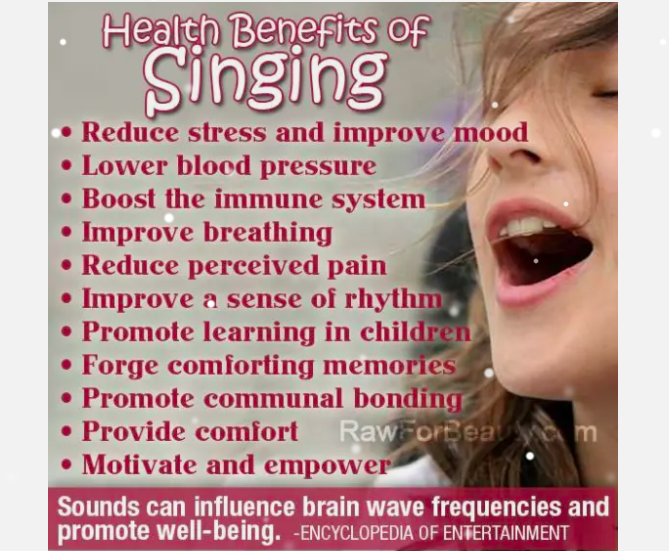
Singing offers surprising health benefits, from boosting brain function and mood to reducing pain and strengthening social bonds. Discover why lifting your voice can improve both body and mind.
As the festive season approaches, streets, shopping centres and community halls once again fill with voices lifted in song. Some are angelic, others enthusiastic rather than tuneful, but together they create a shared sense of warmth and celebration. Beyond spreading cheer, these moments of collective singing may be doing something far more powerful: quietly improving our health.
Whether it’s belting out carols, joining a choir, or humming along to the radio at home, singing has been shown to benefit the body and mind in ways that surprise even scientists. Research suggests that singing can sharpen the brain, strengthen the heart, ease pain, and foster deeper social bonds. And the best part? You don’t need formal training or perfect pitch to experience the effects.
Singing and the Brain
Singing is one of the most complex activities the human brain can perform. It requires coordination between language, memory, emotion and motor control, engaging multiple regions of the brain simultaneously. According to Alex Street, a researcher at the Cambridge Institute for Music Therapy Research, singing is “a cognitive, physical, emotional and social act” all rolled into one.
Register for Tekedia Mini-MBA edition 19 (Feb 9 – May 2, 2026).
Register for Tekedia AI in Business Masterclass.
Join Tekedia Capital Syndicate and co-invest in great global startups.
Register for Tekedia AI Lab.
This mental workout can be especially valuable as we age. Studies have found that singing may help preserve memory and attention, and music therapy is increasingly used to support people recovering from brain injuries or living with neurological conditions such as stroke and dementia. Even when speech is impaired, the ability to sing often remains intact, offering a powerful alternative pathway for communication.
A Natural Mood Booster
Few activities lift the spirits quite like singing. When we sing, the brain releases a cocktail of feel-good chemicals, including dopamine and endorphins, which are linked to pleasure and reward. At the same time, levels of cortisol — a hormone associated with stress — tend to drop.
This is one reason why people often report feeling calmer and happier after singing, even if they were anxious beforehand. Group singing amplifies this effect. Choir members frequently describe a sense of emotional release and improved mood after rehearsals, regardless of the musical style or skill level involved.

Singing and Physical Health
Singing doesn’t just benefit the mind; it also has measurable effects on the body. Controlled breathing during singing strengthens the lungs and improves oxygen flow, which can support cardiovascular health. Some research has even compared the breathing patterns of singers to those of people practicing yoga or meditation.
There is also evidence that singing can influence the immune system. Studies have shown that singing can increase levels of immunoglobulin A, an antibody that plays a key role in defending the body against infections. While singing is no substitute for medical care, it may offer a gentle boost to the body’s natural defenses.
Reducing Pain and Discomfort
One of the more surprising benefits of singing is its potential to reduce pain. Endorphins released during singing act as natural painkillers, while the focused breathing and rhythmic structure can distract the brain from discomfort. In medical settings, singing and music therapy have been used to help patients cope with chronic pain, post-surgical recovery and even childbirth.

For people with respiratory conditions such as asthma or long COVID, structured singing programmes have also shown promise in improving breath control and confidence, helping participants feel more in control of their bodies.
The Power of Singing Together
Perhaps the most profound impact of singing lies in its social power. Singing together creates a sense of belonging that few other activities can match. Research suggests that group singing synchronises heart rates and breathing patterns, fostering a feeling of connection and unity.
This shared experience can be especially valuable in combating loneliness and social isolation, which are increasingly recognised as major public health concerns. Community choirs, singing groups for older adults, and workplace singing initiatives have all been linked to improved social well-being and reduced feelings of isolation.
Importantly, these benefits are not limited to professional choirs or religious settings. Informal gatherings — from football chants to birthday songs — can offer similar social rewards.
You Don’t Have to Be “Good” at Singing
One of the biggest barriers to singing is the fear of sounding bad. But experts stress that technical ability has little to do with the health benefits. The act of singing itself, not the quality of the sound, is what matters.
Street and other researchers emphasise that singing is a deeply human behaviour that predates formal music training. Long before written language, humans used vocal sounds to bond, communicate and express emotion. In that sense, singing is something we are all wired to do.
Conclusion
Singing is far more than a festive pastime or a performance skill. It is a powerful, accessible tool for improving mental, physical and social health. From boosting brain function and lifting mood to strengthening the immune system and easing pain, the simple act of raising your voice offers benefits that ripple through the whole body.
Whether sung alone in the kitchen or shared with others in joyful harmony, singing reconnects us with something fundamental: our capacity to breathe deeply, feel fully and belong together.
Final Thought
In a world often defined by stress, speed and silence, singing invites us to slow down, open up and connect — with ourselves and with one another. You don’t need a stage, an audience or perfect pitch. All it takes is a voice and the willingness to use it.
Uploaded files:Share this:
- Click to share on Facebook (Opens in new window) Facebook
- Click to share on X (Opens in new window) X
- Click to share on WhatsApp (Opens in new window) WhatsApp
- Click to share on LinkedIn (Opens in new window) LinkedIn
- Click to email a link to a friend (Opens in new window) Email
- Click to print (Opens in new window) Print