DD
MM
YYYY

PAGES

DD
MM
YYYY

spot_img

PAGES

Home Blog Page 1582

BRICS’ De-Dollarization Agenda: A Tough Sell for Nigeria

0

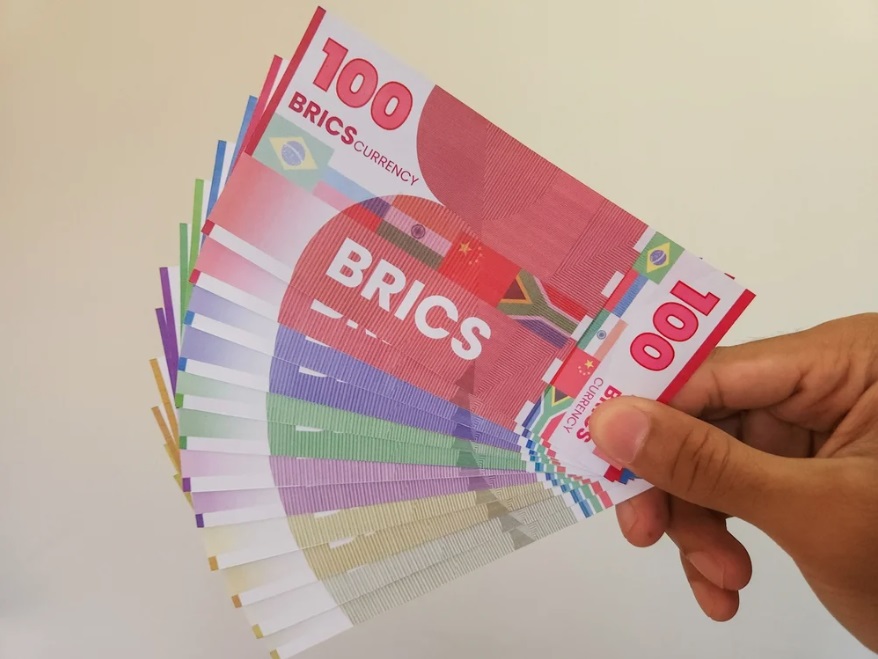
The depreciation of the Naira continues to shake Nigeria’s economic landscape, impacting various sectors, including oil trade. Nigeria, Africa’s largest oil producer, has found itself at the center of the ongoing global debate over de-dollarization, particularly within the BRICS coalition. Despite earlier interest in joining BRICS and supporting local currency transactions, Nigeria is now resisting the push to settle oil payments in anything other than the US dollar.

Nigeria’s Oil Trade and the Naira-for-Crude Framework

In an attempt to strengthen the Naira and reduce reliance on foreign currencies, the Nigerian government introduced a Naira-for-crude transaction framework. However, this move has been met with strong opposition from key stakeholders in the oil sector. According to Olufemi Adewole, Executive Secretary of the Depot and Petroleum Products Marketers Association of Nigeria (DAPPMAN), settling oil transactions in Naira could destabilize the foreign exchange market and deter much-needed foreign direct investment (FDI).

“The naira-for-crude oil transaction framework presents significant risks that could affect Nigeria’s foreign exchange stability and deter foreign direct investment. The global oil market operates in US dollars due to its stability,” Adewole stated.

This sentiment echoes the broader challenges faced by BRICS in pushing for de-dollarization. Even Saudi Arabia, which had previously expressed openness to accepting local currencies for oil payments, continues to conduct most transactions in US dollars.

How Naira’s Depreciation Fuels This Standoff

Traders Union argues that the volatility of the Naira makes it an unattractive option for international trade, especially in the energy sector, where stability is crucial. Over the past year, Nigeria’s currency has suffered significant losses, leading to increased import costs, inflation, and economic uncertainty. If oil marketers were to accept the Naira for crude exports, they would expose themselves to high risks of currency depreciation, making transactions unpredictable and costly.

Moreover, Nigeria’s dependence on oil revenue means that any policy affecting oil trade has direct consequences on government earnings. With the Naira weakening against the dollar, accepting local currency payments for crude would further strain foreign reserves, making it difficult for the country to meet external obligations.

BRICS’ De-Dollarization Agenda: A Tough Sell for Nigeria

Despite BRICS’ push to challenge US dollar dominance, Nigeria is now aligning with other developing nations that view de-dollarization as a risky endeavor. The country’s economic stability remains closely tied to the dollar, making it difficult to adopt BRICS’ vision of trading oil in local currencies.

While BRICS has made strides in reducing dollar reliance, its oil trade policies are yet to gain widespread acceptance. Nigeria’s reluctance to trade oil in Naira highlights the practical challenges of de-dollarization—without a stable alternative, the greenback remains king in global oil markets.

Conclusion

Naira’s depreciation is a key factor in Nigeria’s rejection of local currency oil trade. The risks of currency instability, inflation, and declining FDI outweigh the potential benefits of de-dollarization. As BRICS continues its mission to challenge dollar dominance, Nigeria’s stance signals that transitioning to local currencies in global oil markets may take longer than expected. For now, the US dollar remains the preferred medium for oil trade, reinforcing its stronghold over international finance.
Solana Price Faces Consolidation While This Altcoin Prepares for a Major Move

0

The Solana price is at a crossroads, consolidating around the $127 mark as traders weigh their next moves. While some investors remain hopeful for an upside breakout, growing concerns over weak on-chain activity and selling pressure suggest a potential pullback.

As Solana stalls, attention is shifting to a rising altcoin rapidly gaining traction, RCO Finance (RCOF). Unlike the Solana price, which is battling resistance, RCO Finance is expanding its ecosystem and preparing for a major breakout.

Solana’s Price Consolidation: A Precursor to a Deeper Pullback?

The recent Solana price action suggests consolidation could be masking an impending downturn. Currently battling resistance at $127, the Solana price has struggled to break higher, despite bullish sentiment surrounding its long-term potential.

Weak DeFi activity and a decline in on-chain engagement compound the inability to move decisively past this level. Adding to the bearish signals, large investors have begun unstacking their SOL holdings, with one whale recently unloading over 60,000 SOL at the $127 mark.

This has reinforced the area as a strong supply zone, increasing selling pressure. Moreover, the SOL/BTC trading pair has hit a two-year low, signaling a shift in investor preference toward alternative assets.

With trading volume contracting by over 32% and derivatives positions at risk of liquidation, the Solana price consolidation could soon give way to a sharper correction. If bearish momentum continues, SOL may dip toward the $110–$115 range, setting the stage for a volatile Q2.

RCO Finance (RCOF): The Altcoin Poised for a Breakout Amid Solana’s Price Consolidation

As the Solana price faces resistance at $127, investors are looking for alternatives with stronger upside potential. RCO Finance (RCOF) is a next-generation altcoin that combines artificial intelligence and decentralized finance to create a robust trading ecosystem.

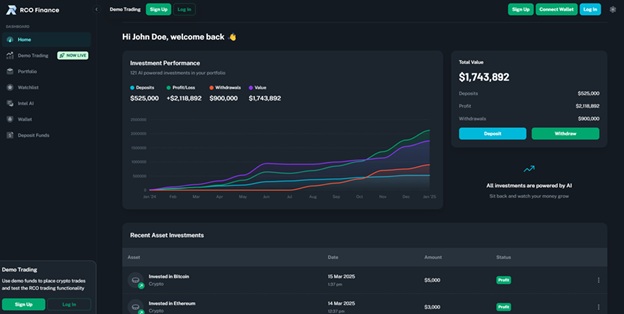
At the core of RCO Finance’s innovation is its AI-powered Robo Advisor, a sophisticated trading assistant designed to optimize investment strategies. Unlike traditional crypto trading, which often relies on speculative momentum and market sentiment, RCOF’s AI system continuously analyzes vast amounts of financial data, identifying emerging trends before they go mainstream.

This real-time intelligence enables investors to make data-driven decisions, reducing the risks of volatile market movements. By pulling insights from multiple financial sources, RCOF’s AI doesn’t just follow market trends—it anticipates them, offering users early entry into high-growth opportunities.

Beyond its advanced AI capabilities, RCO Finance stands out with its expansive financial ecosystem. Unlike most DeFi platforms that restrict users to cryptocurrency trading, RCOF broadens the investment landscape by granting access to over 120,000 assets.

Investors can trade cryptocurrencies and traditional financial instruments such as stocks, bonds, commodities, and tokenized RWAs like real estate and precious metals. This diversification allows users to hedge their positions across multiple asset classes, mitigating risk while maximizing profit potential.

Regulatory compliance and ease of access are also at the forefront of RCO Finance’s appeal. While many blockchain projects struggle with restrictive onboarding processes, RCOF operates with a streamlined, KYC-free framework.

Security remains a top priority, with RCOF’s smart contracts undergoing rigorous audits by SolidProof, a leading blockchain security firm. These audits confirm the resilience of RCO Finance’s infrastructure, reducing vulnerabilities and reinforcing investor confidence.

The platform’s rapid adoption speaks volumes about its growing market dominance. Since launching its Beta version, RCO Finance has amassed over 10,000 active users and secured more than $14.5 million in investments.

With the upcoming Alpha launch set to introduce even more advanced features like minute-by-minute monitoring, analysts anticipate an influx of institutional and retail investors eager to capitalize on the project’s growth potential.

Experts predict RCO Finance is Positioned for Exponential Growth

RCO Finance is in its fifth presale stage, offering RCOF tokens at $0.10. As the presale progresses, the price will rise to $0.13, giving early investors an immediate advantage before RCOF enters the open market.

Investors taking part in the presale also benefit from promotional offers, such as the WELCOME40 discount, which provides additional incentives to accumulate RCOF tokens before demand surges. Moreover, they get access to higher APYs, trading discounts, cash rewards and priority customer support.

Market analysts predict that once RCO Finance secures listings on major exchanges, its value could rise to $0.60, translating to a 600% ROI for presale participants. However, the long-term projections are even more bullish, with forecasts suggesting that RCOF could hit an over 7,500% surge.

With the Solana price facing consolidation and investor sentiment shifting, RCO Finance has positioned itself as a strong alternative for those seeking high-growth opportunities. Now is the perfect time to invest in RCOF and secure your position in DeFi’s future.


For more information about the RCO Finance (RCOF) Presale:

Visit RCO Finance Presale

Join The RCO Finance Community

Net FX Inflow to Nigerian Surged to $17.39bn in Q4 2024 – CBN

0

The Central Bank of Nigeria (CBN), has revealed in its Fourth Quarter 2024 Economic Report, released on Monday, that the country’s net foreign exchange (FX) inflow surged to an impressive $17.39 billion in Q4 2024.

This upswing, driven by a flood of autonomous sources like foreign investments, remittances, and export earnings, signals a bolstered forex market—a critical buoy for an economy grappling with the decline of its once-dominant oil revenues. Against this backdrop, Nigeria has increasingly leaned on its diaspora’s remittances to shore up its foreign reserves, a shift that’s proving vital as oil’s revenue tanks.

According to the CBN’s data, total FX inflows climbed 20.62% to $27.81 billion in Q4 2024, up from $23.06 billion in Q3, propelled by a remarkable 47.55% leap in autonomous inflows—from $11.03 billion to $16.27 billion. These funds, flowing from private channels rather than official coffers, include a potent mix of diaspora remittances, foreign portfolio investments, and non-oil export proceeds.

Meanwhile, inflows through the CBN itself dipped slightly, falling 4.05% to $11.54 billion from $12.03 billion, a decline hinting at softer official receipts—perhaps from reduced foreign direct investment (FDI), grants, or government-channeled remittances. Despite this, the net inflow rose 14.99% to $17.39 billion from $15.13 billion, with autonomous sources delivering a hefty $14.84 billion (up from $10.40 billion) and the CBN contributing a more modest $2.56 billion (down from $4.72 billion in Q3).

This forex surge comes as Nigeria grapples with an economic downturn that has seen FX reserves depreciate significantly. For decades, crude oil has been the bedrock of its FX earnings, fueling reserves and stabilizing the naira. But declining oil revenues—masterminded largely by low oil output, insecurity, vandalism, and theft—have exposed the fragility of this reliance. In response, the government has doubled down on diversifying its FX streams, with diaspora remittances being prioritized.

The CBN reported a staggering 130% surge in remittance inflows to $553 million by July 2024, a figure that underscores the growing heft of Nigeria’s 15-million-strong diaspora.

In November 2024, Finance Minister Wale Edun announced a $2.35 billion net inflow into CBN reserves, crediting it with steadying the naira amid market turbulence.

“This boost to reserves is a game-changer,” Edun said, pointing to improved liquidity and a narrowing gap between official and parallel exchange rates.

Posts on X from analysts echo this optimism, with many linking the naira’s relative calm in late 2024 to these inflows. Yet, the Forex story tells of a troubled economy. Outflows spiked 31.37% to $10.42 billion in Q4 from Q3 levels, driven by a 22.98% rise in CBN outflows to $8.99 billion and a jaw-dropping 129.59% jump in autonomous outflows to $1.43 billion. These exits—likely tied to import payments, debt servicing, and capital repatriation—highlight the pressure on Nigeria’s FX gains. Still, the net inflow of $17.39 billion offers breathing room, a buffer against the outflows that once drained reserves dry.

Oil, though waning, hasn’t bowed out entirely. The federal government’s push to ramp up crude production hit its mark in 2024, achieving a target of 2 million barrels per day (bpd).

“Oil remains our fiscal anchor,” Edun reiterated, framing it as a backstop for revenue shortfalls.

This milestone, paired with rising non-oil exports, has kept export earnings in the autonomous inflow mix. But it’s remittances that steal the spotlight, their 130% growth by mid-2024 signaling a shift in Nigeria’s FX playbook.

Policies like the Electronic Foreign Exchange Matching System (EFEMS), introduced for FX transactions in the Nigerian Foreign Exchange Market (NFEM), and designed to match buy and sell orders automatically, have also curtailed volatility in the market.

However, economists have warned that reliance on external inflows will never boost Nigeria’s foreign reserves to stabilize the FX market,


Sustainability Strategies for SMEs During Economic Challenges | Tekedia Mini-MBA

0

Across Africa, there are many economic perturbations. In Nigeria, recently, we have seen how rising energy costs, forex paralysis, and other vectors, are affecting the abilities of small and medium scale enterprises (SMEs) to pursue their strategic missions in the market.

According to the nation’s tax agency, FIRS, more than N1.7 trillion revenue disappeared in 2023, and thousands of companies faded in the broad manufacturing industry.  It goes beyond Nigeria as there are pockets of “turbulence” everywhere, for SMEs, fuelled by wars, insecurity or even technology.

The implications of these economic turbulence are huge, not just to the state’s revenue, but also to the companies. Today, at Tekedia Mini-MBA, our Faculty, Dr Abel Osuji, from Afreximbank, Africa’s bank of this decade, in our opinion, will be teaching on “Sustainability Strategies for SMEs During Economic Challenges”. Zoom in the class board.

Tekedia Mini-MBA >> our product is Knowledge

Nigeria Embraces Crypto Era With Investments And Securities Act 2025

0
SEC Nigeria

In a groundbreaking move, the Nigerian government has ushered in a new era for the nation’s capital market with the investments and securities Act 2025, opening a new chapter for the country’s financial landscape.

This comes as President Bola Ahmed Tinubu officially signed the Investments and Securities Bill, thus providing for a robust regulatory framework in Nigeria’s capital market.

According to a statement by the Securities and Exchange Commission (SEC), the new Investments and Securities Act 2025 repeals the Investments and Securities Act 2007 and introduces key reforms aimed at boosting investor confidence, strengthening market oversight, and aligning Nigeria’s financial markets with global best practices.

Commenting on this development, the Director-General of SEC, Dr. Emomotimi Agama, commended the President’s assent as a transformative step for the capital market.

He said,

“The ISA 2025 reflects our commitment to building a dynamic, inclusive, and resilient capital market. By addressing regulatory gaps and introducing forward-looking provisions, the new Act empowers the SEC to foster innovation, protect investors more efficiently, and reposition Nigeria as a competitive destination for local and foreign investments.

“We commend all stakeholders within and outside the capital market community for their unwavering solidarity towards the achievement of this historic milestone and solicit their continued collaboration in respect of the effective implementation of the ISA 2025 for the benefit of our economy”.

It is worth noting that the investments and securities Act 2025, explicitly recognized virtual assets such as crypto and investment contracts, as securities, a move that signals Nigeria’s readiness to embrace the global cryptocurrency revolution. This progressive step has been met with widespread approval from financial experts and market stakeholders, who see it as a catalyst for revitalizing Nigeria’s capital market.

Lauded as a visionary reform, the ISA 2025 introduces measures to align Nigeria with international financial standards, particularly in the fast-evolving crypto space. One standout feature of the legislation is its firm stance against Ponzi schemes and other illicit investment activities, imposing harsh penalties, including significant jail time, on perpetrators.

Implications of The (ISA) 2025, For The Nigerian Crypto Community

The Investments and securities act (ISA) 2025, recently signed into law, carries profound implications for both the Nigerian crypto community and the broader advancement of the country’s capital market.

For years, Nigeria’s crypto community has operated in a gray area, navigating inconsistent policies and occasional crackdowns by the government, such as the Central Bank of Nigeria’s 2021 ban on banks facilitating crypto transactions.

However, the ISA 2025 has changed this narrative by formally classifying cryptocurrencies as securities under the oversight of the Securities and Exchange Commission (SEC). This provides much-needed legal clarity, legitimizing crypto as a recognized asset class and reducing uncertainty for traders, developers, and businesses in the sector.

With crypto now under Nigeria’s SEC regulatory umbrella, investors both individual and institutions, can engage with digital assets with greater assurance. The law mandates protections against fraud and market manipulation, which could attract hesitant participants who previously viewed crypto as too risky or unregulated. This boost in confidence may drive higher adoption and investment in Nigeria, a country already known as one of Africa’s leading crypto markets.

Notably, by integrating crypto into the capital market framework, the ISA 2025 opens the door for innovative financial products, such as tokenized securities, crypto-based investment funds, and blockchain-driven platforms. Nigerian startups and fintechs, many of which have been at the forefront of Africa’s blockchain revolution, now have a legal foundation to build and scale solutions that leverage digital assets.

Looking ahead

By embedding cryptocurrencies into its legal framework, Nigeria is positioning itself as a leader in Africa’s digital economy, fostering an environment ripe for growth, transparency, and investor confidence in the crypto era.