DD
MM
YYYY

PAGES

DD
MM
YYYY

spot_img

PAGES

Home Blog Page 1592

The Investment Training Companies Worth Your Time

0

Introduction

Investment training is a critical component of successful investing. In an ever-evolving financial landscape, understanding investment principles, strategies, and market dynamics is essential. The right investment training can provide you with the skills and knowledge needed to make informed decisions and achieve financial goals. Visit bitcoin-synergy.io it offers specialized education that helps investors navigate complex markets effectively. This kind of targeted training can enhance your investment approach and maximize your potential returns. This article delves into the top investment training companies, evaluates criteria for choosing them, and explores future trends in investment education.

Understanding the Value of Investment Training

Investment training plays a pivotal role in developing the competencies necessary for making sound investment decisions. Effective education can enhance your understanding of market trends, risk management, and investment strategies. By gaining insights from experts, investors can avoid common pitfalls and capitalize on opportunities. Professional training offers structured learning and practical applications, bridging the gap between theoretical knowledge and real-world investing.

Top Investment Training Companies

Company 1: Investopedia Academy Investopedia Academy provides comprehensive courses designed for various levels of investors. Their offerings include fundamentals of investing, financial analysis, and portfolio management. The courses are developed by industry experts and are highly rated for their practical, hands-on approach. Investopedia’s reputation as a leading financial education resource underscores the quality and relevance of their training programs.

Company 2: Coursera Coursera partners with renowned institutions like the University of Michigan and Yale to offer investment courses that cover a range of topics, from basic financial concepts to advanced portfolio strategies. The platform provides flexible learning options, including self-paced and instructor-led courses. Coursera’s courses are well-regarded for their academic rigor and comprehensive content.

Company 3: The CFA Institute The CFA Institute is renowned for its Chartered Financial Analyst (CFA) program, which is a gold standard in investment education. The CFA program covers financial analysis, ethics, and portfolio management. This intensive program is recognized globally and is highly respected in the finance industry. The CFA Institute also offers various continuing education resources for finance professionals.

Criteria for Evaluating Investment Training Companies

Expertise and Credentials Assess the background of instructors and course developers. Look for companies that employ experienced professionals with proven track records in finance and investing. Instructors with practical experience bring valuable insights and real-world knowledge to the training.

Course Content and Structure Evaluate the depth and breadth of the material covered. Effective training programs should offer a comprehensive curriculum that includes fundamental principles, advanced strategies, and practical applications. Consider whether the content is up-to-date with current market trends and technologies.

Reputation and Reviews Research feedback from past students and industry experts. Positive testimonials and high ratings often indicate the quality and effectiveness of the training. Look for reviews that highlight the applicability of the training to real-world investing.

Cost and Value Analyze the pricing models of various training programs. While cost is an important factor, consider the value offered. Compare the price of the training with the depth of content, the expertise of instructors, and the overall learning experience.

Comparing Online vs. In-Person Investment Training

Online Training Online platforms offer flexibility and accessibility. They are ideal for individuals who need to balance learning with other commitments. Online training often includes interactive elements such as forums and virtual simulations. However, it may lack the personal interaction and immediate feedback found in in-person settings.

In-Person Training In-person classes and workshops provide direct interaction with instructors and peers. This format is beneficial for those who prefer hands-on learning and networking opportunities. The personal touch and immediate clarification of doubts are significant advantages of in-person training. However, it may require more time and a commitment to travel.

Hybrid Models Hybrid models combine online and in-person elements, offering the best of both worlds. They provide flexibility while retaining opportunities for face-to-face interaction and networking. Hybrid programs can be particularly effective in delivering comprehensive training experiences.

Specialized Training for Different Investment Strategies

Day Trading and Technical Analysis Companies specializing in day trading and technical analysis focus on short-term trading strategies, chart analysis, and market trends. Look for programs that offer real-time simulations and detailed technical training. Companies such as Warrior Trading and TradingAcademy are known for their specialized training in these areas.

Long-Term Investing and Portfolio Management For long-term investing, seek companies that emphasize strategic planning, asset allocation, and risk management. Programs that cover fundamental analysis and long-term investment strategies are valuable. The CFA Institute and Morningstar offer in-depth training suitable for long-term investment planning.

Alternative Investments and Niche Markets Training in alternative investments, such as real estate, private equity, or cryptocurrencies, requires specialized knowledge. Companies like the Alternative Investment Management Association (AIMA) provide targeted training in these niche markets. Their courses offer insights into emerging trends and investment opportunities.

Future Trends in Investment Training

Emerging Technologies The integration of technologies like artificial intelligence (AI) and machine learning is reshaping investment training. AI-powered tools and simulations offer personalized learning experiences and advanced market analysis. Companies that incorporate these technologies into their training programs are likely to lead in future investment education.

Innovations in Learning Methods Future trends may include more interactive and immersive learning experiences, such as virtual reality (VR) simulations and gamified training modules. These innovations aim to enhance engagement and practical understanding.

Conclusion

Choosing the right investment training company is essential for gaining valuable knowledge and skills. By considering expertise, course content, reputation, and cost, you can select a program that aligns with your investment goals. Whether you prefer online, in-person, or hybrid training, the right education can significantly impact your investment success. Explore the recommended companies, evaluate your options, and invest in training that will help you achieve your financial aspirations.

Senator Cynthia Lummis Reintroduces BITCOIN Act to the U.S. Senate

0

Senator Cynthia Lummis, a Republican from Wyoming, has reintroduced the Boosting Innovation, Technology, and Competitiveness through Optimized Investment Nationwide (BITCOIN) Act in the U.S. Senate as of March 2025. This legislation aims to establish a Strategic Bitcoin Reserve, codifying an executive order by President Donald Trump to enhance America’s financial security and global competitiveness.

The BITCOIN Act proposes that the U.S. Treasury acquire up to 1 million Bitcoins over five years, mirroring the strategic importance of U.S. gold reserves, with a mandatory 20-year holding period. The reserve would be managed through a decentralized network of secure Bitcoin vaults, ensuring transparency with independent proof-of-reserve audits. Funding for the program would come from existing Federal Reserve and Treasury resources, including adjustments to Federal Reserve remittances and revaluation of gold certificates, without imposing new taxpayer burdens.

The legislation also affirms the self-custody rights of private Bitcoin holders, emphasizing financial freedom, and allows states to voluntarily establish their own Bitcoin reserves in segregated accounts. It has garnered support from several Republican senators, including Jim Justice, Tommy Tuberville, Roger Marshall, Marsha Blackburn, and Bernie Moreno, with companion legislation introduced in the House by Representative Nick Begich.

Senator Lummis, known for her pro-Bitcoin stance, views this as a transformative step to address national debt and maintain U.S. leadership in financial innovation. However, the bill faces challenges, including skepticism about Bitcoin’s volatility, its economic impact relative to the U.S. debt, and the need for broader bipartisan support to pass through Congress.

The bill proposes adjustments to the Federal Reserve’s surplus remittances to the Treasury, redirecting these funds to finance Bitcoin purchases. The Treasury would revalue its gold certificates held against the Federal Reserve to generate additional funds. The bill allows the use of other non-taxpayer-funded Treasury resources, though specifics on these sources are not fully detailed in public summaries.

The legislation affirms the right of private individuals and entities to self-custody their Bitcoin, ensuring that the government’s actions do not infringe on personal financial freedom or property rights. This provision is intended to assuage concerns among Bitcoin holders and the broader cryptocurrency community about potential government overreach. The bill allows states to voluntarily establish their own Bitcoin reserves in segregated accounts, separate from the federal reserve. States would have autonomy in managing these reserves, potentially using them for economic development, debt reduction, or other state-specific financial strategies.

Proponents of the bill argue that holding Bitcoin as a strategic asset could help address the U.S. national debt (currently over $35 trillion) by diversifying reserve assets and potentially benefiting from Bitcoin’s long-term appreciation. The bill positions Bitcoin as a transformative financial technology, aiming to keep the U.S. competitive in the global financial system, particularly as other nations (e.g., China, El Salvador) explore digital currencies and blockchain technologies. Bitcoin is viewed by supporters as a potential hedge against inflation and currency devaluation, complementing traditional reserves like gold.

If enacted, the U.S. government’s purchase of 1 million Bitcoins could significantly influence Bitcoin’s market price, given its current circulating supply of approximately 19.8 million coins (as of late 2024). This represents about 5% of the total supply, potentially driving up demand and price. Proponents argue that Bitcoin’s historical appreciation (averaging over 100% annualized returns in some periods) could generate significant returns, helping offset the U.S. national debt. However, critics highlight Bitcoin’s volatility, with potential for substantial losses during market downturns.

By holding Bitcoin, the U.S. could position itself as a leader in digital asset adoption, potentially influencing other nations to follow suit. However, this could also challenge the dominance of the U.S. dollar as the world’s reserve currency if Bitcoin gains wider acceptance. The bill has primarily Republican support, aligning with a broader GOP narrative of economic innovation, deregulation, and skepticism of centralized financial systems. Democrats have expressed mixed views, with some supportive of cryptocurrency innovation but others concerned about environmental impacts, financial risks, and consumer protection.

Lagos-Calabar Coastal Highway Wasteful, Corrupt, And A Misplaced Priority – Obasanjo

0

Former President Olusegun Obasanjo has launched a scathing attack on the N15.6 trillion Lagos-Calabar Coastal Highway project, describing it as wasteful, corrupt, and a misplaced priority that raises serious questions about governance and transparency under the Bola Tinubu administration.

Obasanjo’s criticism, contained in Chapter Six of his new book, Nigeria: Past and Future, is one of the strongest rebukes yet against the controversial 700-kilometer project. In the book, unveiled last week during his 88th birthday celebration, the former president not only condemned the project’s cost but also questioned the manner in which it was awarded without a competitive bidding process.

The former leader also slammed the Tinubu government for approving a N21 billion new residence for Vice President Kashim Shettima, calling it an extravagant project designed as a conduit for embezzling public funds.

“Typical examples of waste, corruption, and misplaced priority are the murky Lagos-Calabar Coastal Road on which the President had turned deaf ears to protests and the new Vice-President’s official residence built at a cost of N21bn in the time of economic hardship,” Obasanjo stated.

He further expressed concerns about the quality of leadership in Nigeria, alleging that many in power are self-serving individuals who view governance as an opportunity for personal enrichment.

“Everything is said to be transactional, and the slogan is ‘It is my turn to chop,’” Obasanjo wrote, referencing Tinubu’s widely criticized 2023 campaign mantra, “Emi lo kan.”

Criticism From Prominent Political Figures

Obasanjo is not alone in his condemnation of the Lagos-Calabar Coastal Highway project. Other notable Nigerian political figures, including former Vice President Atiku Abubakar and former Anambra State Governor Peter Obi, have also decried the initiative, citing corruption and economic recklessness.

Atiku, who was the presidential candidate of the Peoples Democratic Party (PDP) in the 2023 general elections, has openly accused the Tinubu administration of using the project as a conduit to siphon public funds. In a statement, Atiku described the contract’s award process as “opaque” and a deliberate attempt to defraud Nigerians.

“This project is nothing but an avenue for corruption. No due process was followed, no competitive bidding was conducted, and we are left with a contract that will further burden Nigerians with debt,” Atiku stated.

Similarly, Peter Obi, the 2023 presidential candidate of the Labour Party (LP), has condemned the project, questioning why such an exorbitant road construction plan was being prioritized over existing debilitated ones. Obi argued that the government’s decision to demolish thriving businesses in Lagos to make way for the project was a sign of reckless governance.

Demolitions and Business Devastation

One of the most controversial aspects of the Lagos-Calabar Coastal Highway project has been the widespread demolitions it has triggered, leading to the loss of businesses, jobs, and significant tax revenue for the Lagos State government.

Among the high-profile casualties is the Landmark Resort, a popular leisure and business hub that has played a vital role in the Lagos economy. Landmark, which provided thousands of direct and indirect jobs and contributed billions of naira in taxes to the Lagos State government, was partially demolished to make way for the coastal highway.

Landmark’s CEO, Paul Onwuanibe, publicly lamented the destruction, stating that the company had invested heavily in infrastructure development and employed thousands of Nigerians.

Lack of Transparency and Due Process

The controversy surrounding the Lagos-Calabar highway has deepened due to its mode of execution. The project, awarded to Gilbert Chagoury’s Hitech Construction Company, has been widely criticized for lacking transparency, as it was granted without competitive bidding. Chagoury, a long-time associate of President Tinubu, has been linked to several major government contracts under previous Lagos administrations, raising concerns about cronyism and favoritism.

David Umahi, the Minister of Works, has defended the project, claiming that it was awarded on a counterpart-funding basis rather than through a Public-Private Partnership (PPP). He also revealed that the road would cost an estimated N4.93 billion per kilometer, a figure that has sparked outrage among experts and the general public.

With growing criticism from political figures and civil society, the Lagos-Calabar Coastal Highway continues to be a major source of controversy, raising questions about fiscal responsibility, transparency, and the true beneficiaries of the project.

Managing Operations for Productivity | Tekedia Mini-MBA

0

Tekedia Mini-MBA Live continues today. We will be focusing on a critical component of business execution: productivity. Our Faculty is Modupe Olusoga, the Chief Operating Officer of Streamsowers & Köhn (a law firm), and a former HR Business Partner of KPMG Nigeria.

How do you combine factors of production efficiently to pursue your business mission? Yes, elephants fly! Our faculty will provide the roadmaps.

Tekedia Institute Mini-MBA >> learn from the best.

Lagos’ GDP Hits $259bn, Secures Position as Africa’s Second-Largest Economy

0

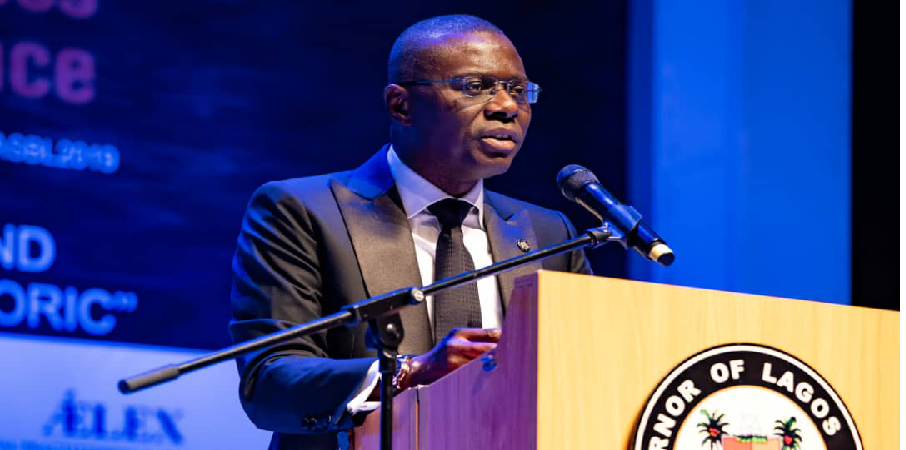
Lagos State has solidified its status as an economic powerhouse, with its Gross Domestic Product (GDP) hitting $259 billion based on Purchasing Power Parity (PPP), making it the second-largest economy on the African continent, behind only Cairo, Egypt.

This milestone, announced during the official launch of the Lagos Economic Development Update (LEDU) 2025, underscores the city’s growing influence as Nigeria’s economic hub.

The LEDU report, executed under the Ministry of Economic Planning and Budget (MEPB), lays out strategies for economic resilience, fiscal sustainability, and revenue mobilization, reflecting the state’s long-term vision for development.

Speaking at the launch, Ope George, Commissioner for Economic Planning and Budget, emphasized the importance of the 2025 LEDU, stating that it provides critical insights to guide Lagos’ economic policy decisions. He reiterated the government’s commitment to fiscal sustainability, economic diversification, and infrastructure development, aligning with Governor Babajide Sanwo-Olu’s ‘Budget of Sustainability.’

This year’s LEDU, themed ‘Lagos Economic Outlook: Charting a Resilient Path Towards a Sustainable Future,’ highlights the state’s dedication to evidence-based policymaking and inclusive development, with a focus on strengthening its revenue base.

The Lagos economy saw significant expansion in the first half of 2024, growing to N27.38 trillion, a substantial increase from N19.65 trillion in 2023. This growth is a testament to the city’s resilience amid Nigeria’s economic reforms and ongoing infrastructure investments.

However, despite its rapid economic expansion, Lagos continues to struggle with a low tax-to-GDP ratio of just 2.3%, highlighting an urgent need for improved revenue mobilization. While the state remains Nigeria’s economic nerve center and top investment destination, its ability to generate revenue falls far behind its economic potential.

Projected Growth and Economic Outlook

The Lagos GDP is expected to grow from N54.77 trillion in 2024 to N66.47 trillion in 2025, with real GDP growth projected between 5.02% and 6.49%.

The service sector is expected to remain the primary driver of this growth, supported by improvements in agriculture and industrial production. Additionally, economic stability is forecasted to be aided by a decline in petrol prices and a stable naira-to-dollar exchange rate, offering some relief amid economic turbulence.

For 2025, the Lagos State Government aims to generate N2.79 trillion in revenue but to achieve this target, the state must implement aggressive fiscal reforms and diversify its revenue base.

The Need for a More Robust Revenue Generation Strategy

During the keynote address titled ‘Bridging the Revenue Gap in Lagos: Innovative Pathways to Enhanced Revenue Mobilisation,’ Chairman of the Presidential Fiscal Policy and Tax Reforms Committee, Taiwo Oyedele, stressed the need for Lagos to align its revenue generation with its economic ambitions.

“Lagos is big, but its revenue is small, collecting less than 2% of GDP. While some progress has been made, we still have big room for improvement, and the time to change this narrative is now,” Oyedele stated.

He outlined three key strategies to boost Lagos’ revenue collection:

  1. Property Taxation: Leveraging real estate assets to increase property tax revenue.
  2. Expansion of Personal Income Tax Base: Using technology to identify high-income earners and ensure compliance.
  3. Tax Harmonisation: Eliminating multiple taxation issues that hinder business growth.

Oyedele emphasized a business-friendly taxation approach, stating, “A better approach to taxation is not to tax the seed, but the fruit. Let businesses grow, and tax them fairly on their successes.”

Furthermore, he called for the formalization of the informal economy, particularly in sectors such as digital entrepreneurship, content creation, and event planning, which currently remain untapped revenue sources.

Oyedele urged Lagos to draw inspiration from global success stories such as Dubai and Singapore, highlighting their strategic economic policies that transformed them into leading financial centers.

He argued that with the right reforms, Lagos could generate up to N5 trillion annually in Internally Generated Revenue (IGR), positioning it as an economic powerhouse not just in Africa, but globally.

Infrastructure Deficits and the Urgent Need for Investment

Despite its rising GDP, Lagos continues to struggle with severe deficits in basic infrastructure, particularly in housing and electricity supply. Experts have urged the state government to intensify efforts in providing affordable housing, clean water, and stable electricity, as these are critical to sustaining economic growth.

The housing deficit in Lagos is estimated to be over 3 million units, making affordable homes out of reach for the majority of residents. This challenge is exacerbated by the rapid population growth, fueled by an influx of people seeking economic opportunities in the state. The cost of renting or purchasing a home remains prohibitively high, putting pressure on low- and middle-income earners.

Additionally, Lagos faces a major energy deficit, which continues to place an enormous financial burden on residents and businesses. According to a newly released report, the energy shortfall adds an estimated N5.3 trillion annually to the cost of doing business in the state. The Lagos Economic Development Update (LEDU) 2025 reveals that while the state requires approximately 9,000 megawatts (MW) of electricity, it receives only 1,000 MW from the national grid—just 11 percent of its demand.

As a result, more than 80 percent of Lagos’ population and businesses rely on off-grid power solutions, predominantly petrol, diesel, or fuel oil generators. This dependence significantly increases the cost of operations for businesses, discouraging investment and limiting the potential for industrial growth.

With its economic advantage attracting more people to Lagos, the government has been urged to take urgent steps to provide affordable housing, pipe-borne water, and a reliable power supply. Economists have warned that the state’s failure to address these pressing concerns could stifle economic progress and widen social inequality, threatening the very foundation of Lagos’ economic expansion.