DD
MM
YYYY

PAGES

DD
MM
YYYY

spot_img

PAGES

Home Blog Page 1595

Lagos’ GDP Hits $259bn, Secures Position as Africa’s Second-Largest Economy

0

Lagos State has solidified its status as an economic powerhouse, with its Gross Domestic Product (GDP) hitting $259 billion based on Purchasing Power Parity (PPP), making it the second-largest economy on the African continent, behind only Cairo, Egypt.

This milestone, announced during the official launch of the Lagos Economic Development Update (LEDU) 2025, underscores the city’s growing influence as Nigeria’s economic hub.

The LEDU report, executed under the Ministry of Economic Planning and Budget (MEPB), lays out strategies for economic resilience, fiscal sustainability, and revenue mobilization, reflecting the state’s long-term vision for development.

Speaking at the launch, Ope George, Commissioner for Economic Planning and Budget, emphasized the importance of the 2025 LEDU, stating that it provides critical insights to guide Lagos’ economic policy decisions. He reiterated the government’s commitment to fiscal sustainability, economic diversification, and infrastructure development, aligning with Governor Babajide Sanwo-Olu’s ‘Budget of Sustainability.’

This year’s LEDU, themed ‘Lagos Economic Outlook: Charting a Resilient Path Towards a Sustainable Future,’ highlights the state’s dedication to evidence-based policymaking and inclusive development, with a focus on strengthening its revenue base.

The Lagos economy saw significant expansion in the first half of 2024, growing to N27.38 trillion, a substantial increase from N19.65 trillion in 2023. This growth is a testament to the city’s resilience amid Nigeria’s economic reforms and ongoing infrastructure investments.

However, despite its rapid economic expansion, Lagos continues to struggle with a low tax-to-GDP ratio of just 2.3%, highlighting an urgent need for improved revenue mobilization. While the state remains Nigeria’s economic nerve center and top investment destination, its ability to generate revenue falls far behind its economic potential.

Projected Growth and Economic Outlook

The Lagos GDP is expected to grow from N54.77 trillion in 2024 to N66.47 trillion in 2025, with real GDP growth projected between 5.02% and 6.49%.

The service sector is expected to remain the primary driver of this growth, supported by improvements in agriculture and industrial production. Additionally, economic stability is forecasted to be aided by a decline in petrol prices and a stable naira-to-dollar exchange rate, offering some relief amid economic turbulence.

For 2025, the Lagos State Government aims to generate N2.79 trillion in revenue but to achieve this target, the state must implement aggressive fiscal reforms and diversify its revenue base.

The Need for a More Robust Revenue Generation Strategy

During the keynote address titled ‘Bridging the Revenue Gap in Lagos: Innovative Pathways to Enhanced Revenue Mobilisation,’ Chairman of the Presidential Fiscal Policy and Tax Reforms Committee, Taiwo Oyedele, stressed the need for Lagos to align its revenue generation with its economic ambitions.

“Lagos is big, but its revenue is small, collecting less than 2% of GDP. While some progress has been made, we still have big room for improvement, and the time to change this narrative is now,” Oyedele stated.

He outlined three key strategies to boost Lagos’ revenue collection:

  1. Property Taxation: Leveraging real estate assets to increase property tax revenue.
  2. Expansion of Personal Income Tax Base: Using technology to identify high-income earners and ensure compliance.
  3. Tax Harmonisation: Eliminating multiple taxation issues that hinder business growth.

Oyedele emphasized a business-friendly taxation approach, stating, “A better approach to taxation is not to tax the seed, but the fruit. Let businesses grow, and tax them fairly on their successes.”

Furthermore, he called for the formalization of the informal economy, particularly in sectors such as digital entrepreneurship, content creation, and event planning, which currently remain untapped revenue sources.

Oyedele urged Lagos to draw inspiration from global success stories such as Dubai and Singapore, highlighting their strategic economic policies that transformed them into leading financial centers.

He argued that with the right reforms, Lagos could generate up to N5 trillion annually in Internally Generated Revenue (IGR), positioning it as an economic powerhouse not just in Africa, but globally.

Infrastructure Deficits and the Urgent Need for Investment

Despite its rising GDP, Lagos continues to struggle with severe deficits in basic infrastructure, particularly in housing and electricity supply. Experts have urged the state government to intensify efforts in providing affordable housing, clean water, and stable electricity, as these are critical to sustaining economic growth.

The housing deficit in Lagos is estimated to be over 3 million units, making affordable homes out of reach for the majority of residents. This challenge is exacerbated by the rapid population growth, fueled by an influx of people seeking economic opportunities in the state. The cost of renting or purchasing a home remains prohibitively high, putting pressure on low- and middle-income earners.

Additionally, Lagos faces a major energy deficit, which continues to place an enormous financial burden on residents and businesses. According to a newly released report, the energy shortfall adds an estimated N5.3 trillion annually to the cost of doing business in the state. The Lagos Economic Development Update (LEDU) 2025 reveals that while the state requires approximately 9,000 megawatts (MW) of electricity, it receives only 1,000 MW from the national grid—just 11 percent of its demand.

As a result, more than 80 percent of Lagos’ population and businesses rely on off-grid power solutions, predominantly petrol, diesel, or fuel oil generators. This dependence significantly increases the cost of operations for businesses, discouraging investment and limiting the potential for industrial growth.

With its economic advantage attracting more people to Lagos, the government has been urged to take urgent steps to provide affordable housing, pipe-borne water, and a reliable power supply. Economists have warned that the state’s failure to address these pressing concerns could stifle economic progress and widen social inequality, threatening the very foundation of Lagos’ economic expansion.


Best Cryptos with 1000X Potential: Qubetics’ Weekly Price Jumps Keep Buyers Rushing In as Immutable X Sees NFT Demand & Toncoin Holds $3.40

0

The hunt for the best cryptos with 1000X potential is on, and some projects are making serious waves. Immutable X (IMX) has been trending, currently trading at $0.5062 with a market cap of $895.17M and a circulating supply of 1.76B IMX. Meanwhile, Toncoin (TON) is under the spotlight with a price of $2.63, but a -4.43% dip in the last 24 hours has left traders questioning its next move. While both coins show potential, an even bigger breakout opportunity is emerging—Qubetics ($TICS).

Qubetics is revolutionizing crypto wallets with its Non-Custodial Multi-Chain Wallet, allowing seamless integration across blockchains. Unlike traditional wallets, Qubetics provides smooth fiat-to-crypto conversions, debit card integration, and advanced security features, making it more than just a storage solution. With an innovative presale model that guarantees weekly price increases, Qubetics is quickly becoming the best crypto presale to watch. Could this be the next 1000X project? Let’s dive in.

Qubetics: A Non-Custodial Wallet That Does More Than Just Store Crypto

Most crypto wallets focus on one thing: storing tokens. But Qubetics takes it further, offering a full-fledged digital banking experience that integrates multiple blockchains, fiat payments, and enhanced security.

Imagine a user who holds Ethereum, Solana, and Bitcoin—normally, they would need separate wallets or rely on centralized exchanges for swaps. With Qubetics’ Multi-Chain Wallet, all assets can be managed in one place, with seamless cross-chain transactions and real-time conversion mechanisms. Businesses can also leverage Qubetics’ debit card integration, allowing them to accept crypto payments that instantly convert to fiat for real-world use.

This unique combination of decentralization, interoperability, and fiat compatibility is why many believe Qubetics is among the best cryptos with 1000X potential.

Qubetics Presale: The Best Cryptos with 1000X Potential for Early Adopters

Qubetics is currently in its 25th presale stage, with $TICS priced at $0.1074. Unlike most presales that rely on speculation, Qubetics follows a 7-day stage system, where prices increase by 10% every Sunday at 12 AM. This structure ensures steady, predictable price appreciation, creating urgency for early buyers. With its rapid growth and strong fundamentals, Qubetics is being recognized as one of the best cryptos with 1000X potential. So far, the project has raised over $14.9M, with 22,900+ token holders and 499M+ tokens sold.

But the real excitement comes from the ROI potential:

  • If $TICS reaches $1, that’s an 830.65% return.
  • At $10, early buyers could see a 9,206.51% gain.
  • If $TICS hits $15 post-mainnet launch in Q2 2025, ROI skyrockets to 13,859.77%.

For example, a $100 investment today at $0.1074 gets you 930 $TICS. If the price reaches $1, that turns into $930. At $10, that’s $9,300, and at $15, it becomes $13,950. That’s why Qubetics is not just the best crypto presale—it’s also one of the best cryptos with 1000X potential.

Immutable X (IMX): A Rising Star in the Layer-2 Market

Immutable X (IMX) is gaining traction as one of the leading Layer-2 scaling solutions for Ethereum-based NFTs. Currently trading at $0.5062, IMX has seen a 2.42% price increase in the last 24 hours, bringing its market cap to $895.17M.

One of the standout metrics is Immutable X’s total supply of 2B IMX, with a circulating supply of 1.76B IMX and 91.9K holders. However, while its market cap is growing, trading volume has dropped by 23.29%, signaling potential short-term uncertainty.

The big question: Can IMX break past $1 again? With increasing NFT adoption and blockchain gaming projects integrating Immutable X, the long-term outlook remains bullish.

Toncoin (TON): Can It Recover from Its Recent Drop?

Toncoin (TON) is currently priced at $2.63, reflecting a 4.43% decline in the past 24 hours. While its long-term projection looks optimistic, short-term volatility has raised concerns.

According to price forecasts, TON could rise to $3.30 by 2027 and potentially hit $3.40 by 2030. However, the absence of a strong consensus rating among analysts makes its growth path uncertain.

Toncoin’s ecosystem is expanding, and its integration with Telegram’s blockchain initiatives provides a strong foundation.

Final Verdict: Which Crypto Has the Best Upside?

Immutable X is strengthening its Layer-2 dominance, and Toncoin is positioning itself for steady growth, but neither offer the high-velocity price appreciation that Qubetics delivers. With its weekly price increase model, multi-chain wallet technology, and projected 13,859.77% ROI, Qubetics is shaping up to be one of the best cryptos with 1000X potential. With the mainnet launch set for Q2 2025, now is the time to join this crypto presale before the next price jump.

For More Information:

Qubetics: https://qubetics.com

Presale: https://buy.qubetics.com/

Telegram: https://t.me/qubetics

Twitter: https://x.com/qubetics

FAQs

  1. Is Qubetics one of the best cryptos with 1000X potential?
    Yes, Qubetics’ multi-chain wallet, structured presale, and high ROI projections make it a strong candidate for exponential growth.
  2. How does Qubetics compare to Immutable X and Toncoin?
    Immutable X is leading in NFT Layer-2 scaling, and Toncoin is expanding within Telegram’s blockchain ecosystem, but Qubetics’ Web3 wallet and fiat-crypto integration give it real-world adoption potential.
  3. When does the Qubetics presale end?
    The Qubetics presale follows a 7-day stage system, with prices increasing every Sunday at 12 AM until the mainnet launch in Q2 2025.

Alt Text: best cryptos with 1000X potential, Qubetics presale, best crypto presale, top crypto presale, Immutable X IMX price update, Toncoin TON price prediction, Qubetics multi-chain wallet, crypto presale 2025, best new crypto, join this crypto presale

Total Global Stablecoins Marketcap Hits New All Time High

0

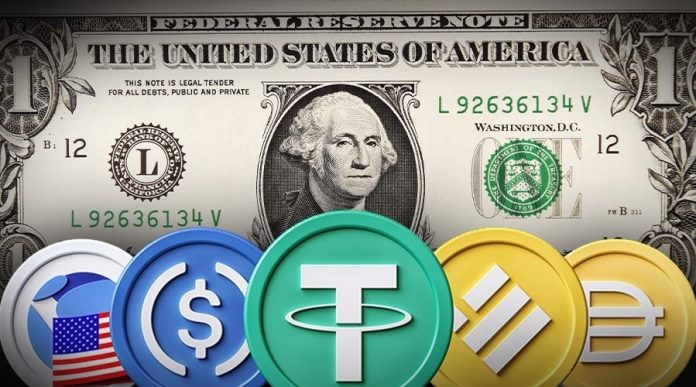
The total market capitalization of stablecoins has reached a new all-time high, surpassing previous records. The stablecoin market cap has climbed to approximately $235.7 billion, exceeding the prior peak of $204.7 billion for the top five stablecoins earlier in the month. This growth reflects significant capital inflows, increased adoption for trading, payments, and remittances, and the introduction of new yield-generating stablecoin products.

Leading stablecoins such as Tether (USDT) and Circle’s USD Coin (USDC) continue to dominate, with USDT holding a market cap of around $143 billion and USDC at approximately $58 billion. The surge is also notable on blockchains like Solana, which has seen its stablecoin market cap rise from $4 billion in December 2024 to $11.7 billion by mid-March 2025. This milestone occurs amidst a broader cryptocurrency market downturn, suggesting a shift of capital into stablecoins as investors adopt a more cautious approach.

The key factors fueling their growth

Role in DeFi Ecosystems: Stablecoins are integral to decentralized finance (DeFi) platforms, where they serve as a stable medium of exchange, collateral for lending and borrowing, and liquidity for decentralized exchanges (DEXs) like Uniswap and Curve. The growth of DeFi, with total value locked (TVL) reaching new highs, has driven demand for stablecoins. Stablecoins, which are cryptocurrencies pegged to stable assets like fiat currencies (e.g., USD), gold, or other commodities, have become a cornerstone of the digital asset ecosystem.

Stablecoins provide a low-volatility option for liquidity pools, enabling traders and investors to participate in yield farming, staking, and other DeFi activities without exposure to the price volatility of assets like Bitcoin or Ethereum. The rise of yield-generating stablecoin products, such as tokenized real-world assets (RWAs) and stablecoin savings protocols, has attracted significant capital, further boosting stablecoin market caps.

Stablecoins offer a faster, cheaper alternative to traditional cross-border payment systems, which often involve high fees and long settlement times. This has made them particularly attractive for remittances, especially in regions with underdeveloped banking infrastructure. Stablecoins like USDT and USDC are widely used in emerging markets, where they provide a stable store of value amid local currency depreciation or hyperinflation (e.g., in countries like Argentina, Venezuela, or Turkey). Companies like Ripple (using XRP but also stablecoin integrations) and Stellar have partnerships that leverage stablecoins for cross-border settlements, further driving adoption.

Major corporations and payment processors, such as PayPal, Visa, and Mastercard, have integrated stablecoins into their platforms, enabling merchants and consumers to use them for everyday transactions. For instance, PayPal’s stablecoin, PYUSD, has contributed to the overall stablecoin market cap growth. Some corporations and institutional investors use stablecoins as a cash equivalent for treasury management, especially in high-inflation environments or as a hedge against currency risk. The adoption of USDC by institutional players for settlement in blockchain-based financial systems has significantly boosted its market cap, reaching $58 billion by March 2025.

During periods of cryptocurrency market downturns, investors often move capital from volatile assets like Bitcoin and Ethereum into stablecoins to preserve value. This trend was evident in early 2025, as the broader crypto market experienced a correction, yet stablecoin market caps hit new highs. Stablecoins are the preferred base currency for trading pairs on centralized and decentralized exchanges, facilitating arbitrage opportunities and high-frequency trading. This increases their circulation and demand.

Former U.S. Treasury Secretary Projects Odds of a Recession Close to 50%

0

Former U.S. Treasury Secretary Lawrence Summers has recently warned that the odds of the U.S. entering a recession in 2025 are close to 50%. He attributes this heightened risk to policy uncertainties stemming from the Trump administration, particularly citing the economic fallout from aggressive tariff policies, significant reductions in federal government staffing, and restrictive immigration measures. Summers expressed these concerns during an interview on Bloomberg Television, emphasizing that these policies are eroding economic confidence and could lead to a slowdown.

He also urged the Federal Reserve to recognize the limits of its ability to counteract these uncertainties through monetary policy alone. This assessment aligns with broader market sentiments and analyses from financial institutions, which have similarly raised recession probabilities due to the potential negative impacts of tariffs and other policy shifts on economic growth.

The administration’s aggressive tariff proposals, including up to 60% tariffs on Chinese imports and 10–20% universal tariffs on other imports, are seen as highly disruptive. Summers warns that such measures could increase costs for businesses and consumers, disrupt global supply chains, and provoke retaliatory tariffs from trading partners, all of which could dampen economic activity.

Plans to drastically reduce the size of the federal workforce, potentially by up to 800,000 jobs through measures like “Schedule F” (which would reclassify many federal employees as at-will workers), could lead to inefficiencies in government services, disrupt regulatory oversight, and reduce consumer and business confidence. Summers highlights that such cuts could also directly reduce aggregate demand by lowering public sector employment and spending.

The Federal Reserve can lower interest rates or engage in quantitative easing to stimulate the economy, but Summers warns that these tools may be insufficient if policy uncertainty and supply-side shocks (e.g., tariffs, labor shortages) dominate. For example, lower interest rates cannot easily offset the cost increases from tariffs or the output losses from deportations. If tariffs and labor shortages drive inflation higher, the Fed may face a dilemma, raising interest rates to combat inflation, which could further slow growth and increase recession risks, or maintaining low rates, which could exacerbate inflationary pressures and erode confidence in the dollar.

Summers notes that monetary policy is most effective when it operates in a stable policy environment. The current uncertainty, driven by unpredictable fiscal and trade policies, undermines the Fed’s ability to anchor expectations and stabilize markets. Summers’ argument here is that the Fed cannot be relied upon as a “silver bullet” to prevent a recession, increasing the onus on policymakers to mitigate the risks of disruptive policies.

The 2018–2019 U.S.-China trade war, while not causing a recession, slowed global growth and increased costs for U.S. businesses. Summers warns that the current tariff proposals are far more aggressive, increasing the risk of a more severe economic impact. Historical examples of protectionism, such as the Smoot-Hawley Tariff Act, demonstrate how trade barriers can exacerbate economic downturns. Summers uses this as a cautionary tale, though he acknowledges differences in the current global economic structure.

Summers may also draw parallels to other periods of policy uncertainty, such as the debt ceiling crises of the 2010s, which led to temporary economic slowdowns due to eroded confidence. By framing current risks in historical context, Summers underscores the plausibility of a 50% recession probability, emphasizing that policy mistakes have tangible economic consequences.

He highlights the disruptive potential of aggressive tariffs, federal government staffing reductions, and restrictive immigration policies, which together erode economic confidence and create supply-side and demand-side pressures. Summers also emphasizes the limits of monetary policy in offsetting these risks, urging policymakers to consider the broader economic fallout of their actions. His assessment is both a warning and a call for more cautious and predictable policymaking to mitigate the risk of an economic downturn.

Franklin Templeton Filed for an S-1 XRP ETF with SEC

0

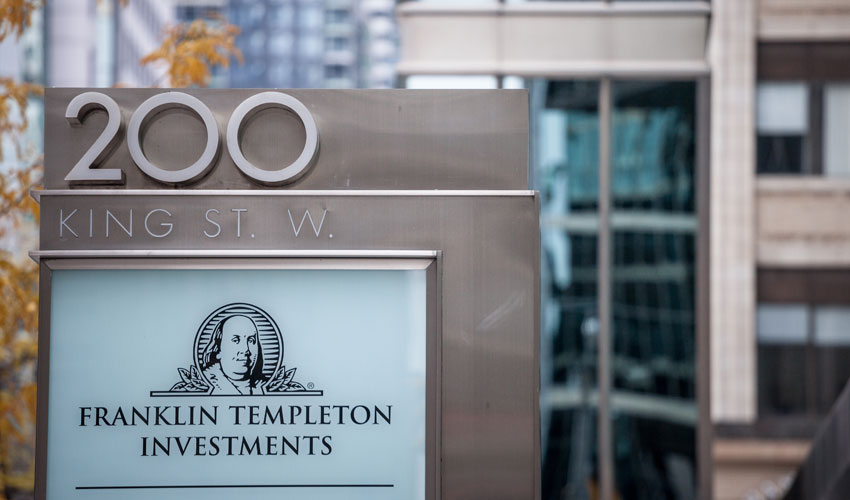
Franklin Templeton, a global asset management firm overseeing $1.6 trillion in assets, filed an S-1 registration form with the U.S. Securities and Exchange Commission (SEC) to launch an exchange-traded fund (ETF) that will track the spot price of XRP, the cryptocurrency created by Ripple Labs. This filing marks a significant step in the firm’s expansion into digital asset investments beyond Bitcoin and Ethereum, following its earlier filings for spot Bitcoin, Ethereum, and Solana ETFs.

The proposed Franklin XRP ETF aims to provide investors—both institutional and retail—with exposure to XRP without the need to directly hold the cryptocurrency, thereby offering a regulated investment vehicle. The ETF is planned to trade on the Cboe BZX Exchange, with Coinbase Custody serving as the custodian for the fund’s XRP holdings and Coinbase acting as the prime broker. CSC Delaware Trust Company will serve as the trustee. The fund will use the CME CF XRP-Dollar Reference Rate to determine its net asset value (NAV), with shares offered continuously at NAV and only authorized participants able to create or redeem creation units.

Franklin Holdings, a subsidiary of Franklin Templeton, will sponsor the fund and cover most ordinary operating expenses in exchange for a sponsor’s fee. The trust is structured as an emerging growth company under the JOBS Act, which provides certain regulatory exemptions. This filing is part of a broader wave of interest in altcoin ETFs, with Franklin Templeton joining other asset managers such as Bitwise, 21Shares, Canary Capital, Grayscale, WisdomTree, CoinShares, ProShares, and Volatility Shares in seeking SEC approval for XRP ETFs.

There are 17 XRP ETF proposals in various stages of review. The surge in filings is attributed to expectations of a more crypto-friendly regulatory environment under the Trump administration, which has expressed intentions to include XRP in a strategic cryptocurrency reserve. Market sentiment, as reflected in Polymarket data, shows a 75% probability of SEC approval for an XRP ETF in 2025, up from earlier estimates, signaling growing optimism.

However, the SEC has up to 240 days to approve or deny Franklin Templeton’s application, meaning a final decision may not come until late 2025. The SEC has already delayed decisions on other XRP ETF filings, such as those from Grayscale and Canary Capital, with deadlines extended to May 21, 2025, and potentially further into October. The regulatory process remains complex, partly due to ongoing scrutiny of XRP’s status following the SEC’s legal battle with Ripple Labs, which has raised questions about whether XRP should be classified as a security.

Despite these challenges, Franklin Templeton’s entry into the XRP ETF race is seen as a significant development, potentially driving institutional adoption and liquidity for XRP, which currently holds a market capitalization of approximately $124 billion, making it the fourth-largest cryptocurrency. The filing has contributed to bullish sentiment for XRP, with its price rising 4.2% in the 24 hours following the announcement, outpacing Bitcoin and Ethereum’s gains during the same period.

Analysts, including those from JPMorgan, estimate that XRP ETFs could attract $4.3 billion to $8.4 billion in investments within their first year if approved, though this is more modest compared to the inflows seen for Bitcoin ETFs, which now manage nearly $100 billion. Franklin Templeton’s move underscores the growing institutional interest in altcoins and the potential for XRP to become a mainstream investment asset, contingent on regulatory approval and broader market dynamics.