DD
MM
YYYY

PAGES

DD
MM
YYYY

spot_img

PAGES

Home Blog Page 1595

Top 3 Altcoins to Watch in April 2025 Before the Market Turns Bullish

0

The top 3 altcoins trending in the crypto market are Shiba Inu (SHIB), Dogecoin (DOGE), and RCO Finance (RCOF).  With RCOF leading the rise of new memecoins and serving as the go-to solution for new launches.

Experts are quite optimistic about RCO Finance since it has elements that the market has never seen before, which will benefit all investors.

And if there is something extremely beneficial to investors, you can bet they will flock to it once they understand it. As a result, analysts predict that RCOF will be widely adopted in the near future, with its price showing massive growth potential in 2025.

Read on to find out more about the top 3 altcoins to invest in 2025.

Shiba Inu Experiences Upward Trends

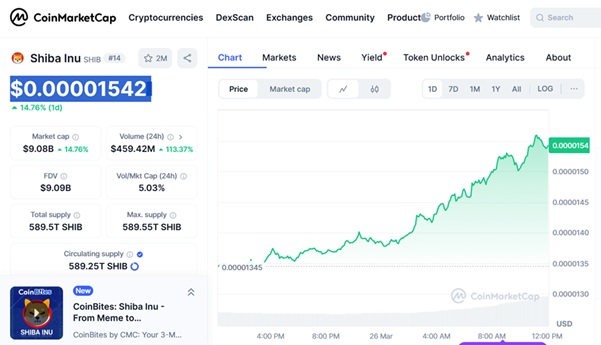
Shiba Inu has recently received bullish momentum following many days of price growth. The second-largest meme coin by market capitalization is up a remarkable 14% this week, outperforming most high-quality assets.
Despite the northward momentum, a Shiba Inu ecosystem team member believes SHIB will fetch far higher prices. Lucie, the ecosystem’s lead marketer, has stated that the doggy-themed meme coin may experience a 12x rise into uncharted territory.

If SHIB maintains the current price level, the study projects a rise to the eventual aim of $0.0001833. From the present market price of about $0.00001542, the asset would rise 1,137% to an unprecedented price high, making it one of the top 3 altcoins to buy in 2025.

Dogecoin Witnesses Sudden Price Hike

Another altcoin that has made it to our list of the top 3 altcoins to invest in 2025 is Dogecoin. Dogecoin (DOGE), the industry’s biggest meme coin, is leading the altcoin rebound today following a surprising surge recently.

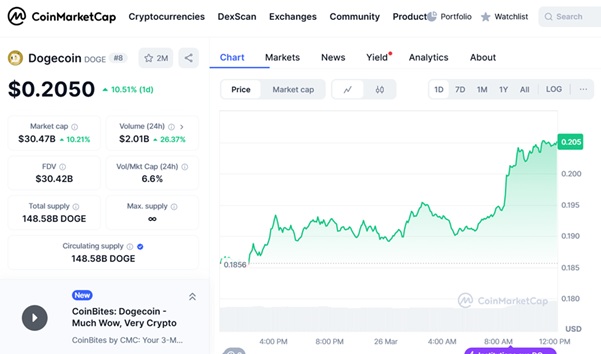
According to CoinMarketCap data, Dogecoin’s price has increased by more than 10% in the last 24 hours, sending the coin past the $0.20 resistance level.

DOGE frequently exhibits high market volatility. Currently, Dogecoin’s trading volume has increased by 16.95% overnight to $1.85 billion. This obvious interest in the altcoin has set it apart today, indicating a breakout push towards its multi-week high of over $0.23.

So far this year, Dogecoin has reached a high of $0.4159 before seeing a protracted fall amid volatility. DOGE’s open interest has steadily increased, indicating an obvious buildup to the present breakthrough.

All of these price movements make it stand out as one of the top 3 altcoins in the crypto market this year.

RCO Finance (RCOF): The Best Among the Top 3 Altcoins in 2025

As SHIB and DOGE compete for dominance, RCOF emerges as a stronger competitor among the top 3 altcoins in 2025, which coincides with the upcoming AI boom, which is expected to propel the finest AI coins to new heights.

RCOF is the native token of RCO Finance, a cutting-edge AI trading platform that will make it easier to trade cryptocurrency than ever before.

Specifically, RCO Finance provides numerous opportunities to both novice and skilled traders. New traders can benefit from the advantages offered by the cryptocurrency market without having to spend years learning, whereas experienced traders can automate their tactics and sit back and watch their portfolios develop.

The recent surge of over 7% in Pepe Coin (PEPE) demonstrates how the Robo Advisor can be utilized. This rise would have been highlighted by the Robo Advisor to help the cryptocurrency trader increase his earnings.

Because of this unique utility, the RCOF team is constantly working to improve the AI feature.

RCO Finance’s AI Robo Advisor makes all these fantastic features possible. It can completely automate trading methods without the trader’s scripting.

The Robo Advisor accomplishes this by questioning the trader about their goals, risk aversion, and market preferences before developing a personalized strategy based on those criteria.

Following that, the Robo Advisor will conduct trades using the technique, allowing new traders to profit significantly even if they have never traded before. Pro traders can also teach their methods to the Robo Advisor, automate them, and observe how they play out without having to intervene.
This type of trading has never been done before; hence, experts believe RCO Finance will exceed Shiba Inu and Dogecoin in Q2 2025.

The RCO Finance project has also established a new beta platform, allowing early investors to gain access to the platform’s AI capabilities.

Join The RCOF Presale And Make The Most of Your Trading

RCOF is currently in the fifth stage of its public presale, priced at $0.100000. Experts believe it will be launched between $0.4 and $0.6, with early investors earning more than 1,000% in presale returns.

Over 51.15% of the tokens allocated to this presale round have already been sold in a short amount of time, indicating trader interest in this rapidly expanding altcoin.
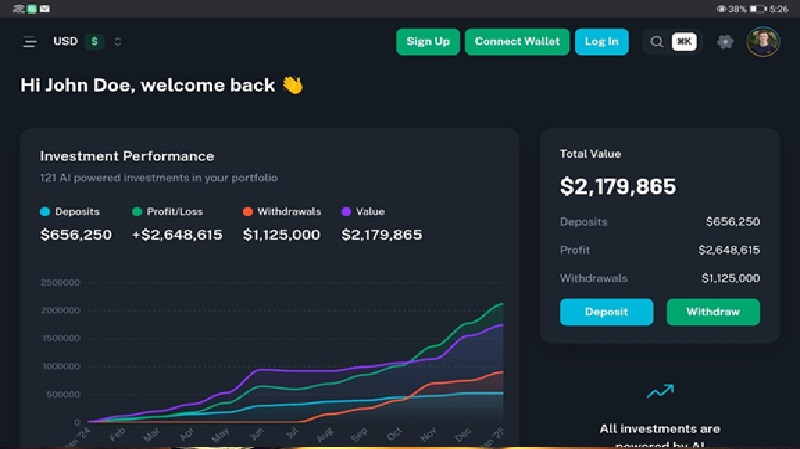
To further encourage crypto traders, SolidProof, a leading security firm, reviewed the RCOF smart contract to verify the security of investors’ funds.

Also, analysts believe that RCOF’s future will become even brighter when consumers without a cryptocurrency background discover they can finally use RCO Finance to make life-changing riches in the lucrative crypto market.

Even in the top 3 altcoins in 2025, there is obviously a leader, which turns out to be RCO Finance. Buy the RCOF token and be a part of the winning team today.

For more information about the RCO Finance (RCOF) Presale:

Visit RCO Finance Presale
Join The RCO Finance Community

Is BlockDAG the Next Big Thing? Keynote 3 Reveals $209M Raised as Mainnet Nears

0

While much of crypto stays distracted by sideways charts, BlockDAG is gaining real momentum. Keynote 3 wasn’t another routine update—it was a clear signal of what’s coming. With $209 million raised in presale, all without venture capital, BlockDAG now has backing from over 170,000 individual investors. With its Beta Testnet V1 live and a plan to scale up to 15,000 TPS, Keynote 3 is already being called one of the year’s standout events.

Still, BlockDAG’s most impressive move might not just be the funding—it’s the forward momentum as it builds toward its mainnet later this year.

$209 Million Raised Through Community Support

CEO Antony Turner kicked off the keynote with the numbers. BlockDAG has raised more than $209 million in less than 10 months—driven entirely by retail and community investors.

“This isn’t just capital—it’s fuel for innovation, expansion, and the next evolution of blockchain technology,” Turner said.

Instead of seeking venture capital and compromising on decentralization, BlockDAG has relied on its community. The raised funds are already being used to:

  • Speed up mainnet development
  • Grow the global developer team
  • Secure top-tier partnerships with Inter Milan and UFC

This isn’t a whitepaper-only project—it’s growing steadily in users and infrastructure every day.

A Hybrid Blockchain Model That Pushes Past Old Limits

One of the keynote’s key moments came when CTO Jeremy Harkness explained BlockDAG’s hybrid consensus system, blending the speed of Directed Acyclic Graphs (DAG) with the reliability of Proof-of-Work (PoW).

Our hybrid consensus mechanism combines the best of two worlds: the security and proven robustness of Proof-of-Work with the flexibility and speed of a Directed Acyclic Graph. This isn’t your traditional blockchain—we’re literally rewriting the rules,” said Harkness.

This design unlocks parallel confirmations, high throughput, lower fees, and MEV resistance. Instead of chasing small upgrades, BlockDAG is solving blockchain’s biggest challenges. It’s already set to handle 2,000 TPS at launch, with plans to increase to 15,000 TPS within 24 months—easily surpassing most current Layer-1 networks.

Beta Testnet V1 Is Live & Comes With Real Rewards

Where some projects talk, BlockDAG delivers. The Beta Testnet V1 is now fully operational, with upgrades that include:

  • Double the blockchain speed of the alpha version
  • A redesigned explorer with smart contract and token visibility
  • A no-code Token & NFT creation tool
  • Live dApps for hands-on network interaction

Even better, BlockDAG made the testnet count by rewarding verified investors with 10,000 testnet BDAG tokens, vested over four weeks to simulate mainnet token behavior.

They also introduced a $60,000 reward program for the top 30 testnet participants—split evenly across the most active wallets, top miners, and highest balances.

“We’re even going to incentivize you to get involved,” Turner added. “This isn’t just a test. It’s a dress rehearsal for mainnet.”

Community Growth Already in Motion

BlockDAG isn’t waiting for mainnet to build a user base. The X1 Miner App and Tap Miner Game have attracted more than 1.1 million users, with over 100,000 engaging daily.

To date, we have more than 750,000+ users mining, earning, and engaging with us,” Turner shared. “The results of the ‘play-to-earn’ Tap Miner have been phenomenal.”

This approach—simple, fun, and rewarding—is drawing in a broader audience. BlockDAG isn’t only attracting crypto enthusiasts, but also casual users, gamers, and future developers.

A Developer-Ready Ecosystem with Learning at Its Core

The keynote also introduced BlockDAG Academy—led by Professor Maurice Herlihy. It’s designed to educate users at every level:

  • Elementary: Blockchain basics
  • Intermediate: Smart contracts, staking, and governance
  • Advanced: Full-stack dApp development on BlockDAG

“Our program goes beyond simply showing you which buttons to press—it provides you with the essential principles and insights needed to safely and confidently harness BlockDAG’s transformative potential,” Herlihy said.

Alongside the Academy is a comprehensive Developer Launchpad that features:

  • An Ambassador Program
  • Developer Grants
  • Hackathons with over $100K in prizes
  • A Bug Bounty Program launching soon

These tools aim to support and empower builders at every step.

Strong Security & a Mainnet on the Horizon

Security has been a top priority. BlockDAG has already completed audits with Certik and Halborn for its vesting contracts and built its treasury with MPC protection.

At BlockDAG, security is not a feature—it’s the bedrock upon which we’ve built everything,” said Dr. Youssef Khaoulaj.

The mainnet is confirmed for 2025, with initial specs including:

  • 2,000 TPS scaling to 15,000 TPS
  • Full DeFi suite: staking, lending, swaps, and bridges
  • On-chain governance tools
  • Listings on 10+ exchanges after TGE

BlockDAG also aims to support over 1,000 dApps by 2026, with future plans pointing to AI, decentralized ID, and data sovereignty.

We’re not simply dreaming about the future—we’re shaping it,” Turner concluded. “And we’re just getting started.”

Presale: https://purchase.blockdag.network

Website: https://blockdag.network

Telegram: https://t.me/blockDAGnetworkOfficial

Discord: https://discord.gg/Q7BxghMVyu

How Stripe Utilizes AI to Create Personalized Checkout Experiences For Users

0

Stripe, a payment platform that powers online and in-person payment processing financial solutions for businesses of all sizes, is capitalizing on Artificial Intelligence (AI) to enhance its services.

The platform continues to advance the checkout experience with AI-powered personalization, enabling businesses to optimize conversions while balancing fraud prevention. Every transaction is unique with customers exhibiting distinct checkout preferences based on factors such as location device and payment method.

For many businesses, creating a seamless and personalized checkout experience remains a challenge. The complexity of dynamically adjusting to customer preferences in real-time has led many to adopt one-size-fits-all solutions or rely on extensive A/B testing to implement rigid, pre-defined logic. These methods often fall short of delivering optimal customer experiences. Furthermore, checkouts must also account for fraud risks, requiring careful calibration of authentication steps to prevent fraudulent transactions while minimizing unnecessary friction for legitimate customers.

Recognizing these challenges, Stripe has integrated AI into its Optimized Checkout Suite, leveraging machine learning to refine and tailor each checkout experience. This suite combines prebuilt payment UIs, seamless access to over 100 payment methods, and Link, Stripe’s accelerated checkout solution. By orchestrating these elements with AI-driven intelligence, businesses can achieve improved conversion rates, enhanced user experiences, and more effective fraud management.

Leveraging AI for Checkout Personalization

With new AI-driven features being rolled out, including updates to be unveiled from May 6–8, 2025, Stripe continues to refine the way transactions are personalized. The effectiveness of personalization depends on the quality and scale of data, and Stripe’s dataset provides unparalleled advantages:

Scale: In 2023, Stripe processed $1.4 trillion in payment volume, equivalent to approximately 1.3% of global GDP. This extensive transaction history enhances AI models’ ability to contextualize and personalize payment experiences.

Density: More than 73% of customers using Stripe Checkout—a prebuilt payment form within the Optimized Checkout Suite—have previously made payments on Stripe’s network. This continuity enables AI models to adapt checkout experiences based on individual customer behaviors.

Breadth: Stripe facilitates billions of checkout sessions across industries and global markets, providing a comprehensive view of payment behaviors across startups, mid-sized businesses, and enterprises alike.

Stripe’s Fraud Prevention With AI

Beyond personalization, Stripe’s optimized checkout suite also provides businesses with the best fraud prevention tools, seamlessly integrating Stripe Radar, trained on billions of data points across Stripe’s global network, and augmenting it with an extensive set of contextual signals.

The suite also adjusts fraud interventions based on transaction risk levels, ensuring that scripted attacks are blocked while legitimate customers face minimal friction. Soon, Stripe disclosed that the system would be able to intelligently remove optional fields for low-risk transactions, streamlining the checkout process further.

The Future of AI-Powered Checkout Optimization

Stripe is continuously refining its AI-driven checkout solutions, with future enhancements focused on layout personalization. In 2025, the company disclosed plan to enhance its model architecture with new techniques for pretraining and fine-tuning foundational models, while expanding training data with additional features. 

Additionally, Stripe plans to introduce customizable optimization targets, allowing businesses to fine-tune AI models based on their specific goals, whether focused on conversion rates, fraud mitigation, cost reduction, or margin growth. This granular level of control ensures that checkout experiences evolve alongside changing consumer preferences and business strategies.

As the global payments landscape continues to evolve, Stripe remains committed to leveraging AI to create frictionless, personalized, and secure checkout experiences, empowering businesses to maximize growth and customer satisfaction.

MRS Oil to Delist from NGX Amid Strong Financial Performance as All-Share Index Rises

0

MRS Oil Nigeria Plc has announced plans to voluntarily delist its shares from the Nigerian Exchange Limited (NGX) following a strong financial performance in 2024.

The decision, which was approved by shareholders at an Extraordinary General Meeting (EGM) held on June 25, 2024, comes at a time when the Nigerian stock market is experiencing renewed momentum, with the All-Share Index (ASI) recording steady gains.

The company reported a significant 71.2% increase in revenue, reaching N312.2 billion, and a profit after tax of N6.49 billion, marking a 62.2% year-on-year growth. These robust results reflect MRS Oil’s strong market positioning, particularly following its strategic purchase of refined products from the Dangote Refinery, which has attracted fuel-efficiency-conscious customers.

Despite these positive financial outcomes, MRS Oil cited several reasons for its decision to exit the NGX, including the rising costs of maintaining a public listing, the need for greater operational flexibility, and the challenges posed by the full deregulation of Premium Motor Spirit (PMS). The company acknowledged that while the recent deregulation has led to higher fuel prices and lower sales volume, overall revenue growth has remained strong enough to offset these declines.

Following its delisting, MRS Oil plans to migrate its shares to the NASD OTC Securities Exchange, a platform that facilitates the trading of unlisted securities. This will allow existing investors to continue trading their shares while enabling the company to focus on long-term growth without the regulatory burdens of a public listing.

Share Buyback and Capital Reduction for Shareholders

As part of the delisting process, MRS Oil will initiate a share buyback and share capital reduction program, aimed at providing an exit opportunity for dissenting shareholders who do not wish to remain invested after the delisting. The company has set aside the necessary funds to compensate these shareholders, with the claim period running from April 4 to July 4, 2025. Shareholders who do not opt for the buyout within this window will have their shares automatically migrated to the NASD OTC Exchange.

MRS Oil has assured investors that the entire delisting process will comply with all necessary regulatory approvals from the Securities and Exchange Commission (SEC) and the NGX. The company also emphasized that this strategic move will allow it to streamline operations and focus on long-term growth strategies without the restrictions associated with being a publicly listed company.

Part of a Broader Market Trend of Corporate Exits

MRS Oil’s exit follows a growing trend of companies delisting from the NGX in recent years, citing similar challenges such as high compliance costs, low trading liquidity, and macroeconomic instability. Notable exits include GlaxoSmithKline (GSK) Consumer Nigeria Plc, which delisted in 2023 due to strategic business reviews and operational constraints; 11 Plc (formerly Mobil Oil Nigeria), which left the NGX in 2021 and transitioned to the NASD OTC Securities Exchange; and Union Diagnostics, which also delisted, opting for private ownership.

Before its announcement, MRS Oil had a market capitalization of approximately N59 billion, contributing to the overall NGX market size of N63 trillion. Its departure further underscores wider concerns about the NGX’s ability to retain listings, particularly from mid-sized and multinational companies facing operational challenges in Nigeria’s economic landscape.

Analysts have warned that the steady stream of corporate exits reflects deeper structural problems within the Nigerian capital market, which may require urgent reforms to improve investor confidence and retain listings.

Delisting Comes Amid Market Gains

MRS Oil’s decision to delist coincides with a rally in the Nigerian stock market, with the All-Share Index (ASI) recording an increase of 244.24 points on March 28, 2025, closing at 105,670.36 points. This represents a 0.23% increase from the previous day’s figure of 105,426.12 points. The market capitalization also grew to N66.2 trillion, up from N66.1 trillion the previous day, reflecting increased investor activity. Daily trading volume surged to 544 million shares, compared to 423.6 million shares recorded the previous day, signaling renewed investor confidence.

Among the biggest gainers were UPDC and ABBEYBDS, each soaring by 10 percent, while INTENEGINS and AFRIPRUD led the losers’ chart with 10 percent declines.

UPDC saw its price rise to N2.97, while ABBEYBDS closed at N4.73. NNFM also recorded a strong gain of 9.96 percent, ending the day at N87.75. MBENEFIT followed with a 9.38 percent increase, reaching N1.05, while ROYALEX advanced by 8.25 percent to close at N1.05.

On the losing side, INTENEGINS fell to N1.62, and AFRIPRUD dropped to N13.05. CADBURY recorded a 9.42 percent loss, closing at N23.55, while UPDCREIT declined by 9.09 percent to N5.50. RTBRISCOE also saw a decline of 7.69 percent, ending at N2.40.

Trading volume remained high, with MBENEFIT leading at 73.9 million shares, followed by CUTIX with 72 million shares. GTCO recorded 67.8 million shares, while FIDELITYBK saw 47.5 million shares exchanged. UNIVINSURE also recorded significant activity, with 33 million shares traded.

In terms of value, ARADEL led the market with transactions worth N6.4 billion, followed by GTCO with N4.5 billion. NESTLE and GEREGU facilitated trades worth N2.3 billion and N2.2 billion, respectively, while ZENITHBANK recorded N1.1 billion in transactions.

Market Outlook: ASI Pushes Towards 106,000 Points

The Nigerian All-Share Index (ASI) is attempting to break past the 106,000 mark, as market sentiment shows signs of renewed optimism following weeks of corrections. Analysts note that this market rebound could provide opportunities for investors to enter at more favorable price levels.

However, despite the gains in the broader market, MRS Oil’s delisting underscores lingering concerns about the NGX’s ability to retain companies. With ongoing economic challenges such as foreign exchange volatility, inflation, and high operational costs, businesses may continue to rethink the benefits of maintaining public listings.

While MRS Oil has assured shareholders that it will provide updates throughout the delisting process, the pattern of corporate exits suggests deeper structural issues that may require urgent reforms to restore investor confidence in the Nigerian capital market.

Ovia, Elumelu to Receive Respective N25.4bn & N12.71bn Zenith & UBA Dividend as Banks Report Record Profits

0

Jim Ovia, the chairman and founder of Zenith Bank, and Tony Elumelu, the Chairman of UBA, are set to receive a staggering N25.4 billion and N12.71 billion dividend payout respectively for the 2024 financial year, an outcome of their banks’ record-breaking performance.

The Zenith payout, scheduled for April 15, 2025, follows a year in which the bank delivered an exceptional profit after tax of N1.03 trillion, a significant 52.5% increase from the N676.9 billion reported in the previous year.

The financial statements for the year ended December 31, 2024, reveal that the Board of Directors has proposed a final dividend of N4.00 per share. This, when combined with the N1.00 interim dividend per share paid earlier in the year, brings the total dividend payout to N5.00 per share.

For Ovia, whose direct shareholding stands at 3,552,949,395 shares and indirect holding at 1,529,851,344 shares, the total shareholding of 5,082,800,739 shares translates to a windfall of N25,414,003,695.

The increased dividend payout reflects the bank’s strong earnings performance, which saw gross earnings rise to N3.9 trillion, a sharp increase from N2.39 trillion in the previous year. A significant driver of this revenue boost was interest income, which more than doubled to N2.7 trillion, compared to N1.14 trillion in 2023.

The high-interest-rate environment in Nigeria, fueled by the Central Bank of Nigeria’s (CBN) aggressive monetary policy stance, has allowed tier-one banks like Zenith to capitalize on rising yields on government securities while expanding their loan books.

Zenith Bank’s net interest income climbed to N1.73 trillion, supported by strong earnings from loans and advances as well as strategic investments in low-risk government securities such as treasury bills. The bulk of the bank’s revenue came from its Nigerian operations, which generated N3.5 trillion out of the total N3.97 trillion in net consolidated revenue.

Meanwhile, its African and European operations recorded a revenue increase to N510 billion, up from N281.1 billion in the prior year, demonstrating the bank’s growing international footprint.

Tony Elumelu to Receive N12.71 Billion Dividend from UBA

Meanwhile, another prominent name in Nigeria’s financial sector, billionaire investor Tony Elumelu, is also set to receive a significant dividend payout of N12.71 billion from United Bank for Africa (UBA) following the bank’s robust financial performance in 2024.

Elumelu, who serves as Chairman of UBA, owns a total of 2,542,511,824 shares in the bank, spread across both direct and indirect holdings. His direct shareholding stands at 195,124,581 shares, while his indirect holdings are spread across three investment entities: HH Capital Limited, Heirs Holdings Limited, and Heirs Alliance Limited. The sheer size of his holdings secures him one of the highest individual dividend earnings from UBA’s latest financial results.

UBA declared a total dividend of N5.00 per share, marking a significant increase from the previous year. The final dividend of N3.00 per share, combined with an interim dividend of N2.00 per share, resulted in a total payout ratio of 26.6%, a significant jump from the 16.32% recorded in 2023. Consequently, UBA’s total dividend payout surged to N147.05 billion, compared to N47.88 billion in the prior year, reflecting the bank’s record-breaking financial performance.

The bank reported a pre-tax profit of N803.7 billion, a 6% increase from N757.6 billion in 2023. After-tax profit climbed by 26.14% to N766.5 billion, marking the highest annual profit in the bank’s history. UBA also recorded substantial growth in key financial metrics, with gross earnings surging by 53.6% to N3.19 trillion, up from N2.08 trillion in 2023.

UBA, one of Nigeria’s five largest banks, known as FUGAZ (FirstHoldCo, UBA, GTCO, Access Holdings, and Zenith Bank), also witnessed a remarkable expansion in total assets, which grew to N30.3 trillion, an increase of N9.7 trillion from the N20.65 trillion reported in the previous year. The bank’s 2024 full-year results were highly anticipated by investors, especially amid a declining stock market.

Over the last two years, UBA has posted a cumulative profit of N1.37 trillion, a striking contrast to the N570.4 billion recorded over the preceding five-year period. This rapid growth highlights the bank’s improved operational efficiency and strategic execution. Despite economic challenges, UBA has managed to maintain strong performance, driven by its pan-African presence and an expanding balance sheet.

For Elumelu, this dividend payout reinforces his deep investment in UBA’s success, a testament to his role in driving the bank’s expansion across Africa and beyond.

The performances of both Zenith Bank and UBA highlight a booming Nigerian banking sector, one that is thriving despite economic headwinds. With record profits, increasing revenues, and substantial dividend payouts, these banks continue to solidify their positions as leading financial institutions in Africa.

The high-interest-rate environment, fueled by the CBN’s stringent monetary policy, has proven beneficial for banks, driving interest income growth and strong financial performance. Analysts anticipate that, with inflationary pressures persisting, tier-one banks like Zenith and UBA will continue to enjoy elevated earnings, even as economic uncertainty remains a concern.

The record payouts to Jim Ovia and Tony Elumelu demonstrate the massive wealth accumulation among Nigeria’s top banking executives, reinforcing their financial status as key players shaping the country’s financial sector.