DD
MM
YYYY

PAGES

DD
MM
YYYY

spot_img

PAGES

Home Blog Page 1596

Total Global Stablecoins Marketcap Hits New All Time High

0

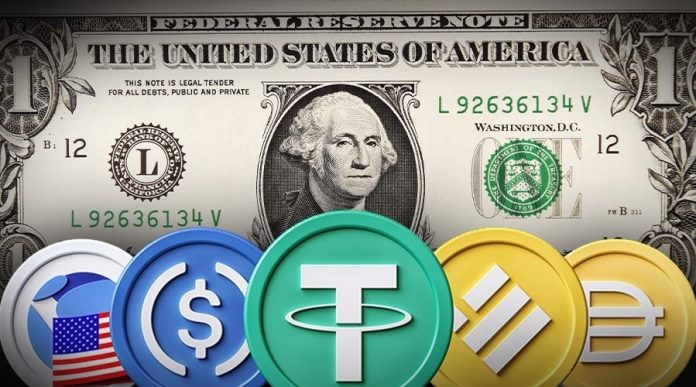
The total market capitalization of stablecoins has reached a new all-time high, surpassing previous records. The stablecoin market cap has climbed to approximately $235.7 billion, exceeding the prior peak of $204.7 billion for the top five stablecoins earlier in the month. This growth reflects significant capital inflows, increased adoption for trading, payments, and remittances, and the introduction of new yield-generating stablecoin products.

Leading stablecoins such as Tether (USDT) and Circle’s USD Coin (USDC) continue to dominate, with USDT holding a market cap of around $143 billion and USDC at approximately $58 billion. The surge is also notable on blockchains like Solana, which has seen its stablecoin market cap rise from $4 billion in December 2024 to $11.7 billion by mid-March 2025. This milestone occurs amidst a broader cryptocurrency market downturn, suggesting a shift of capital into stablecoins as investors adopt a more cautious approach.

The key factors fueling their growth

Role in DeFi Ecosystems: Stablecoins are integral to decentralized finance (DeFi) platforms, where they serve as a stable medium of exchange, collateral for lending and borrowing, and liquidity for decentralized exchanges (DEXs) like Uniswap and Curve. The growth of DeFi, with total value locked (TVL) reaching new highs, has driven demand for stablecoins. Stablecoins, which are cryptocurrencies pegged to stable assets like fiat currencies (e.g., USD), gold, or other commodities, have become a cornerstone of the digital asset ecosystem.

Stablecoins provide a low-volatility option for liquidity pools, enabling traders and investors to participate in yield farming, staking, and other DeFi activities without exposure to the price volatility of assets like Bitcoin or Ethereum. The rise of yield-generating stablecoin products, such as tokenized real-world assets (RWAs) and stablecoin savings protocols, has attracted significant capital, further boosting stablecoin market caps.

Stablecoins offer a faster, cheaper alternative to traditional cross-border payment systems, which often involve high fees and long settlement times. This has made them particularly attractive for remittances, especially in regions with underdeveloped banking infrastructure. Stablecoins like USDT and USDC are widely used in emerging markets, where they provide a stable store of value amid local currency depreciation or hyperinflation (e.g., in countries like Argentina, Venezuela, or Turkey). Companies like Ripple (using XRP but also stablecoin integrations) and Stellar have partnerships that leverage stablecoins for cross-border settlements, further driving adoption.

Major corporations and payment processors, such as PayPal, Visa, and Mastercard, have integrated stablecoins into their platforms, enabling merchants and consumers to use them for everyday transactions. For instance, PayPal’s stablecoin, PYUSD, has contributed to the overall stablecoin market cap growth. Some corporations and institutional investors use stablecoins as a cash equivalent for treasury management, especially in high-inflation environments or as a hedge against currency risk. The adoption of USDC by institutional players for settlement in blockchain-based financial systems has significantly boosted its market cap, reaching $58 billion by March 2025.

During periods of cryptocurrency market downturns, investors often move capital from volatile assets like Bitcoin and Ethereum into stablecoins to preserve value. This trend was evident in early 2025, as the broader crypto market experienced a correction, yet stablecoin market caps hit new highs. Stablecoins are the preferred base currency for trading pairs on centralized and decentralized exchanges, facilitating arbitrage opportunities and high-frequency trading. This increases their circulation and demand.
Former U.S. Treasury Secretary Projects Odds of a Recession Close to 50%

0

Former U.S. Treasury Secretary Lawrence Summers has recently warned that the odds of the U.S. entering a recession in 2025 are close to 50%. He attributes this heightened risk to policy uncertainties stemming from the Trump administration, particularly citing the economic fallout from aggressive tariff policies, significant reductions in federal government staffing, and restrictive immigration measures. Summers expressed these concerns during an interview on Bloomberg Television, emphasizing that these policies are eroding economic confidence and could lead to a slowdown.

He also urged the Federal Reserve to recognize the limits of its ability to counteract these uncertainties through monetary policy alone. This assessment aligns with broader market sentiments and analyses from financial institutions, which have similarly raised recession probabilities due to the potential negative impacts of tariffs and other policy shifts on economic growth.

The administration’s aggressive tariff proposals, including up to 60% tariffs on Chinese imports and 10–20% universal tariffs on other imports, are seen as highly disruptive. Summers warns that such measures could increase costs for businesses and consumers, disrupt global supply chains, and provoke retaliatory tariffs from trading partners, all of which could dampen economic activity.

Plans to drastically reduce the size of the federal workforce, potentially by up to 800,000 jobs through measures like “Schedule F” (which would reclassify many federal employees as at-will workers), could lead to inefficiencies in government services, disrupt regulatory oversight, and reduce consumer and business confidence. Summers highlights that such cuts could also directly reduce aggregate demand by lowering public sector employment and spending.

The Federal Reserve can lower interest rates or engage in quantitative easing to stimulate the economy, but Summers warns that these tools may be insufficient if policy uncertainty and supply-side shocks (e.g., tariffs, labor shortages) dominate. For example, lower interest rates cannot easily offset the cost increases from tariffs or the output losses from deportations. If tariffs and labor shortages drive inflation higher, the Fed may face a dilemma, raising interest rates to combat inflation, which could further slow growth and increase recession risks, or maintaining low rates, which could exacerbate inflationary pressures and erode confidence in the dollar.

Summers notes that monetary policy is most effective when it operates in a stable policy environment. The current uncertainty, driven by unpredictable fiscal and trade policies, undermines the Fed’s ability to anchor expectations and stabilize markets. Summers’ argument here is that the Fed cannot be relied upon as a “silver bullet” to prevent a recession, increasing the onus on policymakers to mitigate the risks of disruptive policies.

The 2018–2019 U.S.-China trade war, while not causing a recession, slowed global growth and increased costs for U.S. businesses. Summers warns that the current tariff proposals are far more aggressive, increasing the risk of a more severe economic impact. Historical examples of protectionism, such as the Smoot-Hawley Tariff Act, demonstrate how trade barriers can exacerbate economic downturns. Summers uses this as a cautionary tale, though he acknowledges differences in the current global economic structure.

Summers may also draw parallels to other periods of policy uncertainty, such as the debt ceiling crises of the 2010s, which led to temporary economic slowdowns due to eroded confidence. By framing current risks in historical context, Summers underscores the plausibility of a 50% recession probability, emphasizing that policy mistakes have tangible economic consequences.

He highlights the disruptive potential of aggressive tariffs, federal government staffing reductions, and restrictive immigration policies, which together erode economic confidence and create supply-side and demand-side pressures. Summers also emphasizes the limits of monetary policy in offsetting these risks, urging policymakers to consider the broader economic fallout of their actions. His assessment is both a warning and a call for more cautious and predictable policymaking to mitigate the risk of an economic downturn.

Franklin Templeton Filed for an S-1 XRP ETF with SEC

0

Franklin Templeton, a global asset management firm overseeing $1.6 trillion in assets, filed an S-1 registration form with the U.S. Securities and Exchange Commission (SEC) to launch an exchange-traded fund (ETF) that will track the spot price of XRP, the cryptocurrency created by Ripple Labs. This filing marks a significant step in the firm’s expansion into digital asset investments beyond Bitcoin and Ethereum, following its earlier filings for spot Bitcoin, Ethereum, and Solana ETFs.

The proposed Franklin XRP ETF aims to provide investors—both institutional and retail—with exposure to XRP without the need to directly hold the cryptocurrency, thereby offering a regulated investment vehicle. The ETF is planned to trade on the Cboe BZX Exchange, with Coinbase Custody serving as the custodian for the fund’s XRP holdings and Coinbase acting as the prime broker. CSC Delaware Trust Company will serve as the trustee. The fund will use the CME CF XRP-Dollar Reference Rate to determine its net asset value (NAV), with shares offered continuously at NAV and only authorized participants able to create or redeem creation units.

Franklin Holdings, a subsidiary of Franklin Templeton, will sponsor the fund and cover most ordinary operating expenses in exchange for a sponsor’s fee. The trust is structured as an emerging growth company under the JOBS Act, which provides certain regulatory exemptions. This filing is part of a broader wave of interest in altcoin ETFs, with Franklin Templeton joining other asset managers such as Bitwise, 21Shares, Canary Capital, Grayscale, WisdomTree, CoinShares, ProShares, and Volatility Shares in seeking SEC approval for XRP ETFs.

There are 17 XRP ETF proposals in various stages of review. The surge in filings is attributed to expectations of a more crypto-friendly regulatory environment under the Trump administration, which has expressed intentions to include XRP in a strategic cryptocurrency reserve. Market sentiment, as reflected in Polymarket data, shows a 75% probability of SEC approval for an XRP ETF in 2025, up from earlier estimates, signaling growing optimism.

However, the SEC has up to 240 days to approve or deny Franklin Templeton’s application, meaning a final decision may not come until late 2025. The SEC has already delayed decisions on other XRP ETF filings, such as those from Grayscale and Canary Capital, with deadlines extended to May 21, 2025, and potentially further into October. The regulatory process remains complex, partly due to ongoing scrutiny of XRP’s status following the SEC’s legal battle with Ripple Labs, which has raised questions about whether XRP should be classified as a security.

Despite these challenges, Franklin Templeton’s entry into the XRP ETF race is seen as a significant development, potentially driving institutional adoption and liquidity for XRP, which currently holds a market capitalization of approximately $124 billion, making it the fourth-largest cryptocurrency. The filing has contributed to bullish sentiment for XRP, with its price rising 4.2% in the 24 hours following the announcement, outpacing Bitcoin and Ethereum’s gains during the same period.

Analysts, including those from JPMorgan, estimate that XRP ETFs could attract $4.3 billion to $8.4 billion in investments within their first year if approved, though this is more modest compared to the inflows seen for Bitcoin ETFs, which now manage nearly $100 billion. Franklin Templeton’s move underscores the growing institutional interest in altcoins and the potential for XRP to become a mainstream investment asset, contingent on regulatory approval and broader market dynamics.

U.S. Gas Price Drops for Third Consecutive Weeks

0

U.S. gas prices have indeed dropped for the third consecutive week as of early March 2025, reaching an average of $3.03 per gallon. This marks the lowest average price for the month of March since 2021, during the COVID-19 pandemic. The decline is attributed to several factors, including economic uncertainty, softening oil prices, and concerns over potential tariffs, such as those threatened by President Donald Trump on Canadian oil imports, which were paused shortly after taking effect.

Oil prices are influenced by a complex interplay of supply, demand, geopolitical, economic, and environmental factors. Understanding these dynamics is key to explaining why oil prices fluctuate, impacting everything from gas prices at the pump to global economic stability. Below is a detailed breakdown of the major factors influencing oil prices:

OPEC (Organization of the Petroleum Exporting Countries): OPEC, led by countries like Saudi Arabia, controls a significant portion of global oil production (about 40% of the world’s crude oil). OPEC members often coordinate production levels to influence oil prices. For example: Reducing production (e.g., output cuts) can tighten supply and drive prices up. Increasing production can flood the market, leading to lower prices. OPEC+: This includes OPEC members plus allies like Russia, further amplifying their influence on global supply.

Non-OPEC Producers: Countries like the United States, Canada, and Brazil also play a major role. The U.S., in particular, has become a leading oil producer due to shale oil extraction, often countering OPEC’s influence by increasing supply.
Political instability or conflicts in oil-producing regions can disrupt supply, causing price spikes. Examples include Wars or civil unrest in the Middle East (e.g., Iraq, Libya, or Yemen). Sanctions on oil-producing countries like Iran or Venezuela, which reduce their ability to export oil. Attacks on oil infrastructure, such as pipelines or tankers (e.g., attacks in the Strait of Hormuz, a critical oil chokepoint).

Extraction Costs: The cost of extracting oil varies by region. For instance, Saudi Arabia has low-cost conventional oil reserves, while U.S. shale oil or Canadian oil sands are more expensive to extract. When oil prices drop below production costs, some producers may cut output, reducing supply. Innovations, such as fracking in the U.S., have increased supply by making previously uneconomical reserves viable, often putting downward pressure on prices.

Natural Disasters: Hurricanes, earthquakes, or other natural disasters can disrupt oil production and refining, particularly in regions like the Gulf of Mexico, a hub for U.S. oil production. Such disruptions can cause temporary supply shortages and price spikes. Oil inventories, tracked by organizations like the U.S. Energy Information Administration (EIA), indicate the amount of oil stored for future use. High inventory levels signal oversupply, pushing prices down, while low inventories suggest tight supply, driving prices up.

Sanctions on oil-producing countries, such as Iran, Russia, or Venezuela, reduce global supply, often leading to higher prices. For example, U.S. sanctions on Iranian oil exports have tightened global supply in recent years. Trade policies, such as tariffs on oil imports, can also affect prices. For instance, President Trump’s threatened tariffs on Canadian oil imports in late January briefly raised concerns about supply disruptions, though the tariffs were quickly paused.

Countries like the U.S. maintain strategic oil reserves to stabilize markets during supply disruptions. Releasing oil from the SPR can increase supply and lower prices, while building reserves can reduce supply and push prices up. Oil is priced in U.S. dollars on the global market. A stronger U.S. dollar makes oil more expensive for countries using other currencies, potentially reducing demand and lowering prices. Conversely, a weaker dollar can boost demand and push prices up. Oil prices are not solely determined by physical supply and demand but are also influenced by financial markets and speculative trading.

Oil is traded on futures markets, such as the New York Mercantile Exchange (NYMEX) and the Intercontinental Exchange (ICE). The price of West Texas Intermediate (WTI) and Brent crude, the two main benchmarks, reflects market expectations of future supply and demand. Traders and investors speculate on future price movements, which can amplify price volatility. For example, if traders expect a supply disruption, they may bid up futures prices, driving spot prices higher.

Broader financial market sentiment, including fears of inflation, recession, or geopolitical instability, can influence oil prices. For instance, economic uncertainty in 2025 has contributed to softening oil prices as investors anticipate weaker demand. Oil producers and consumers (e.g., airlines, shipping companies) use futures contracts to hedge against price volatility. This activity can stabilize prices in the long term but may also contribute to short-term fluctuations. Policies aimed at reducing carbon emissions, such as carbon taxes, stricter emissions standards.

Oil prices are determined by a dynamic mix of supply, demand, geopolitical, financial, and environmental factors. Short-term price movements are often driven by immediate events, such as geopolitical tensions or inventory reports, while long-term trends are influenced by economic growth, technological advancements, and the global energy transition. Understanding these factors is essential for analyzing trends in oil-dependent sectors, such as transportation, manufacturing, and consumer prices (e.g., gas prices at the pump).

Rexas Finance Crypto Price Predicted to Skyrocket 15767% While DOGE, SHIB Could Slide in March

0

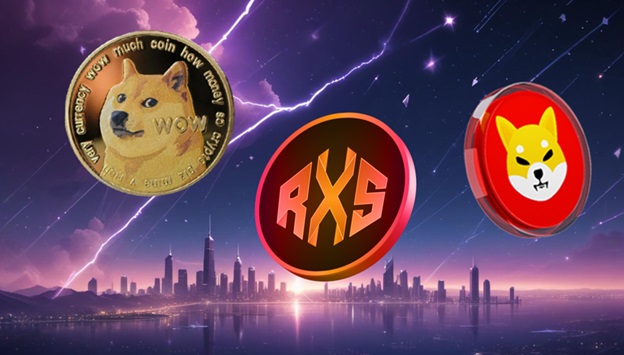
Rexas Finance (RXS) has attracted significant attention in the crypto world because it offers something unique to other crypto: it focuses on real-world assets. Analysts predict that RXS could experience an extraordinary surge of 15767% due to this. Two top-themed dog meme coins,  Dogecoin (DOGE) and Shiba Inu (SHIB) have been on the downtrend, with analysts predicting a significant crash in March.

RXS Token: Backed by Real-World Assets, Set for 15,767% Surge—Final Presale Phase Nearing Completion!

Rexas Finance stands apart in the crypto market because it implements Real World Assets (RWA) throughout its business operations. The strategic method connects conventional financial systems to the developing blockchain environment. The tokenized approach to tangible assets, including real estate and physical goods, gives RXS operational value to cryptocurrency markets that numerous alternative tokens do not possess. The innovative approach has gained substantial attention from retail investors and institutions. The RXS presale enters its final 12th stage, having exceeded 90% of its funding objective before its June 19, 2025, public listing. Investors show strong interest because the token will open for public trading at $0.25 on June 19, 2025. The presale success indicates strong market confidence in RXS and its future potential, as it has exceeded its $46 million fundraising goal and sold 453 million tokens. Analysts expect RXS to experience a significant price surge of 15767%, according to their predictions. The strong presale results combined with increasing RWA-backed token interest drive the prediction about RXS’s future value. The token’s public listing date will trigger rising market demand that will boost its price. The listing of RXS on CoinMarketCap and CoinGecko has established a strong base for upcoming expansion by increasing its market visibility.

Certik audits established RXS’s security and credibility. This combination of factors makes RXS an attractive token with potential significant growth throughout the next few months. RXS’s long-term value proposition has become increasingly visible to investors, who will continue to support it after completing its presale phase.

Dogecoin & Shiba Inu Face Uncertain Future as RXS and Innovative Projects Gain Momentum

Dogecoin (DOGE) and Shiba Inu (SHIB) face an unpredictable path ahead. DOGE currently has a value of $0.2442 and has experienced a 3.72% decrease during the past 24 hours, while SHIB maintains a price of $0.00001524 and has experienced a 2.45% decline. The market value of DOGE and SHIB remains stagnant, while analysts predict further price drops will occur in March. Investor interest in these well-established tokens has waned because RXS and other innovative projects have gained popularity. The success of DOGE and SHIB during their initial phase faces an uncertain future unless significant updates are implemented to boost their adoption rate.

Looking Ahead

In conclusion, RXS-Rexas Finance emerges as a strong contender while DOGE and SHIB face stiff competition, with top analysts backing it with a bold prediction of a 15767% surge. With a successful presale where it currently sits in the final stage, credible audits, and strong market interest, RXS is poised for massive growth. Savvy investors who wish to capitalize on this are encouraged to visit the RXS website and buy into the presale stage.


Website: https://rexas.com

Whitepaper: https://rexas.com/rexas-whitepaper.pdf

Twitter/X: https://x.com/rexasfinance

Telegram: https://t.me/rexasfinance