DD
MM
YYYY

PAGES

DD
MM
YYYY

spot_img

PAGES

Home Blog Page 16

Sui and GOBLIN Rally Reveals the Increasing Overlap between AI culture and Crypto Markets

0

The cryptocurrency market thrives on narratives, momentum, and cultural relevance. Few weeks illustrate this better than the recent rise of the Sui ecosystem and the explosive rally of the GOBLIN memecoin. In a market increasingly driven by attention and community engagement, both stories demonstrate how visibility, branding, and internet culture can rapidly influence investor behavior and token prices.

The Sui blockchain emerged as one of the strongest performers of the week, gaining more than 35% following its major appearance at the annual Consensus conference in Miami. Consensus has long been regarded as one of the most influential gatherings in the crypto industry, attracting developers, venture capitalists, institutions, and blockchain founders from around the world.

For Sui, the event provided a platform to showcase its expanding ecosystem, technical infrastructure, and ambitions within the layer-1 blockchain race.  Unlike previous crypto cycles dominated by speculative hype alone, Sui’s rally appeared connected to growing optimism around its real-world adoption potential.

The network has continued positioning itself as a high-performance blockchain capable of supporting gaming, decentralized finance, digital identity, and AI-powered applications. Its architecture, designed for speed and scalability, has attracted developers looking for alternatives to more congested ecosystems. The exposure at Consensus Miami amplified that momentum.

Conferences in the crypto industry often function as catalysts because they concentrate media attention, partnership announcements, and investor interest into a single moment. When projects successfully capture attention during these events, markets tend to react aggressively. In Sui’s case, the exhibition strengthened the perception that the blockchain is becoming one of the more serious contenders among next-generation networks.

The rally reflected a broader return of risk appetite across crypto markets. Traders are once again rotating capital into emerging ecosystems searching for high-growth opportunities beyond Bitcoin and Ethereum. As institutional money continues entering crypto through ETFs and tokenized assets, many investors are also looking further down the risk curve toward ecosystems that could potentially deliver exponential growth.

Yet while Sui’s rise was grounded partly in technological optimism and ecosystem development, the sudden surge of the GOBLIN memecoin highlighted the opposite side of crypto culture — pure internet-driven speculation.

The GOBLIN token skyrocketed after OpenAI CEO Sam Altman reportedly considered naming a future AI model “goblin.” That single comment was enough to ignite a frenzy across crypto social media. Traders rushed into the memecoin almost instantly, hoping to capitalize on the viral momentum and cultural crossover between artificial intelligence and crypto speculation.

This phenomenon may appear irrational from a traditional finance perspective, but it perfectly reflects how modern digital markets operate. Memecoins derive value less from utility and more from attention, relatability, humor, and community participation. In many cases, they function almost like internet-native social assets. Once a meme gains traction online, speculative capital can flood into associated tokens within minutes.

The GOBLIN rally also reveals the increasing overlap between AI culture and cryptocurrency markets. Artificial intelligence has become the dominant technological narrative globally, influencing venture capital flows, equity markets, and startup investment. Crypto traders are now attempting to monetize every possible connection to the AI boom, even if those links are symbolic or entirely speculative.

What makes memecoins particularly volatile is their dependence on narrative sustainability. Unlike infrastructure projects such as Sui, which can point to developer activity and ecosystem growth, memecoins often rely solely on continued online engagement. The same internet attention that sends them soaring can disappear overnight.

Together, the rise of Sui and the GOBLIN memecoin capture the dual nature of the cryptocurrency industry in 2026. One side is focused on building scalable infrastructure and attracting institutional relevance. The other remains driven by memes, viral trends, and speculative enthusiasm. Both forces coexist within the same market, shaping prices in dramatically different ways.

These events demonstrate that crypto is no longer just a financial ecosystem. It has evolved into a fusion of technology, culture, entertainment, and social psychology — a market where conference presentations and internet jokes can each move billions of dollars in value within days.

Sui Plans to Launch Confidential Transactions

The announcement that Sui plans to launch confidential transactions marks another major milestone in the evolution of blockchain technology. For years, the crypto industry has faced a difficult balancing act between transparency and privacy.

Public blockchains allow anyone to view wallet activity, transaction histories, and token movements, which creates trust and accountability. However, this same transparency can become a disadvantage for businesses, institutions, and individuals who require financial confidentiality.

By introducing confidential transactions, SUI is attempting to bridge that gap and position itself as one of the most advanced blockchain ecosystems in the market.

Confidential transactions are designed to hide sensitive transaction details such as the amount being transferred while still allowing the network to verify that the transaction is valid. This means users can maintain privacy without sacrificing the security and decentralization that blockchains provide. The concept is not entirely new, as privacy-focused cryptocurrencies such as Monero and Zcash have long explored similar technologies.

However, SUI’s approach is particularly significant because it integrates privacy features into a broader smart contract ecosystem rather than focusing solely on anonymity. The move could have substantial implications for institutional adoption. Large corporations, hedge funds, and financial institutions often hesitate to conduct transactions on fully transparent blockchains because competitors can monitor their activities.

A company making a major token purchase, for example, could unintentionally reveal trading strategies or treasury positions. Confidential transactions would allow enterprises to interact on-chain without exposing sensitive financial information to the public. In this sense, SUI is aligning itself with the growing demand for enterprise-grade blockchain infrastructure.

Another important aspect of this development is how it may affect decentralized finance, commonly known as DeFi. One of the criticisms of DeFi has been the lack of privacy. Traders executing large swaps are vulnerable to front-running, where bots detect pending trades and exploit them for profit.

By concealing transaction amounts, confidential transactions could reduce these risks and create a more efficient trading environment. This would improve user confidence and potentially attract more liquidity into the SUI ecosystem. The timing of this initiative is also noteworthy. Competition among Layer-1 blockchains has intensified dramatically over the past few years.

Networks such as Ethereum, Solana, and Avalanche are all competing for developers, users, and institutional partnerships. To stand out, newer chains must offer differentiated features and superior technology. Privacy-enhancing infrastructure could become one of SUI’s defining advantages, especially as regulators and enterprises increasingly demand secure yet compliant blockchain systems.

Despite the excitement, challenges remain. Privacy technologies often attract regulatory scrutiny because authorities fear they could be used for illicit activities such as money laundering or sanctions evasion. SUI will likely need to ensure that its confidential transaction system balances user privacy with compliance mechanisms. Achieving that balance will be critical if the network hopes to gain widespread institutional trust.

SUI’s push toward confidential transactions reflects a broader trend within the cryptocurrency industry: the recognition that privacy is not merely an optional feature, but an essential component of digital finance. As blockchain adoption expands globally, users are demanding systems that combine transparency, efficiency, and confidentiality.

If implemented successfully, SUI’s innovation could help shape the next generation of blockchain infrastructure and strengthen its position in the rapidly evolving crypto economy.


Claude’s Deep Integration with AWS Highlights the Next Phase of the AI Revolution

0

The competition in artificial intelligence is no longer centered only on building the smartest chatbot. Increasingly, the battle is about ecosystem control, enterprise integration, and cloud infrastructure dominance. That reality became clearer as Anthropic’s Claude AI assistant secured deeper integration with the cloud ecosystem of Amazon Web Services, better known as AWS.

The move signals a major shift in how AI models are being deployed across businesses and could significantly reshape the enterprise AI landscape. Claude, developed by Anthropic, has rapidly emerged as one of the strongest competitors to OpenAI’s ChatGPT and Google’s Gemini models.

While many AI companies focus primarily on consumer-facing applications, Anthropic has positioned Claude as an enterprise-grade AI assistant designed for reliability, safety, and large-scale business workflows. Its deeper integration into AWS now gives the model access to one of the largest cloud computing ecosystems in the world.

AWS dominates global cloud infrastructure, powering millions of businesses, governments, startups, and enterprise applications. By embedding Claude more deeply into AWS services, Amazon is effectively making Anthropic’s AI models easier for companies to adopt directly inside their existing cloud environments.

This reduces friction for businesses that want to implement generative AI without building entirely new systems or migrating to different platforms. The partnership also strengthens Amazon’s broader AI ambitions. For years, AWS led cloud computing but faced criticism that it lagged behind rivals in the generative AI race. Microsoft’s multibillion-dollar investment in OpenAI gave Azure a major boost, while Google accelerated development of Gemini across its own ecosystem.

Amazon responded by investing heavily in Anthropic, reportedly committing billions of dollars to the company while making AWS its primary cloud provider. This integration is therefore not just a technical upgrade — it is a strategic alliance. Claude’s capabilities can now be embedded more seamlessly into AWS tools for software development, analytics, automation, customer support, cybersecurity, and enterprise data management.

Businesses already operating on AWS infrastructure may now view Claude as the most natural AI solution for their workflows. One of the biggest implications is the rise of AI-native cloud infrastructure. Instead of companies purchasing standalone AI tools, artificial intelligence is becoming embedded directly into the platforms businesses already use every day.

Developers can integrate Claude into applications, automate coding tasks, analyze internal documents, or create AI agents that operate inside enterprise environments with fewer compatibility concerns. The partnership also reflects a growing trend toward vertical integration in AI.

Large technology firms increasingly want control over the full stack: chips, cloud servers, AI models, enterprise software, and distribution channels. Amazon contributes massive computing infrastructure and global reach, while Anthropic provides the advanced language models and safety research.

Together, they create a powerful competitive combination. For Anthropic, AWS integration provides scale and credibility. Enterprise customers often prioritize reliability, compliance, and security over consumer popularity. Being tightly integrated into AWS instantly places Claude in front of a massive enterprise customer base already accustomed to Amazon’s infrastructure.

Companies may gain faster deployment times, lower operational complexity, and easier access to sophisticated AI capabilities without needing specialized in-house AI teams. As generative AI adoption accelerates globally, integrations like this could become decisive in determining which models dominate the enterprise market.

Claude’s deep integration with AWS highlights the next phase of the AI revolution. The future may not belong solely to the most intelligent chatbot, but to the AI systems most effectively woven into the digital infrastructure powering the global economy.

Why ISA 2025 Will Shape Nigeria’s Next Wealth Cycle

0

I saved for my first car, a secondhand Honda Accord imported from Amsterdam, during NYSC. I earned the money through a business opportunity built on observation.

Those were the days when being “technical” meant assembling computers from scratch. You bought the motherboard, RAM, hard drive, power unit, and installed Windows yourself. That was the engineering side. But the real lesson was not the technology; it was the positioning.

One day, then President Obasanjo announced a major payment package for university lecturers. Early every morning, I would tune to FRCN to listen to Orji Ogbonnaya Orji, then State House Correspondent at the Villa. One morning, he announced that the payments had hit the lecturers’ accounts.

Immediately, I saw a market signal.

That afternoon, I began visiting lecturers at the University of Jos with a simple proposition: “I will help you buy your first family computer.” I knew liquidity had entered the system. Orders started coming in. I traveled to Lagos multiple times, purchased computer parts, assembled the systems myself, and delivered them. It became a thriving business.

Years later, while working in the banking sector, I noticed another pattern. The IT skills that once made professionals special were becoming commoditized. Tasks that once required deep technical expertise were becoming easier, standardized, and widely accessible. I quickly realized the moat was shrinking, and I made the decision to pivot back toward electronics and deeper engineering systems. Looking back, that was one of the best decisions I made because much of that earlier IT market eventually became heavily commoditized.

Today, I see another pattern emerging in Nigeria. And that pattern is this: the Investment and Securities Act (ISA) 2025 (here) will create immense wealth opportunities in Nigeria during the 2030s. I consider that legislation one of the most important economic and business documents Nigeria has produced in decades. It is upon that thesis that the vision for Contisx Securities Exchange Plc was built.

Today, Nigeria’s capital market already accounts for more than 30% of GDP. But the real transformation is ahead. Why? Because ISA 2025 has the potential to move Nigeria from being merely a nation of money into becoming a nation of capital. And nations rise when they operate at the level of capital.

Money stored without productive deployment creates limited prosperity. Capital deployed into enterprises, infrastructure, innovation, housing, sovereign instruments, and businesses creates compounding prosperity.

That is the shift I see coming. If you are looking for business inspiration in Nigeria, read ISA 2025 carefully. Study it. Nigeria’s capital market is evolving. And I believe abundance is ahead.

OpenAI Reportedly Agrees to Cap Revenue Sharing with Microsoft at $38bn

0

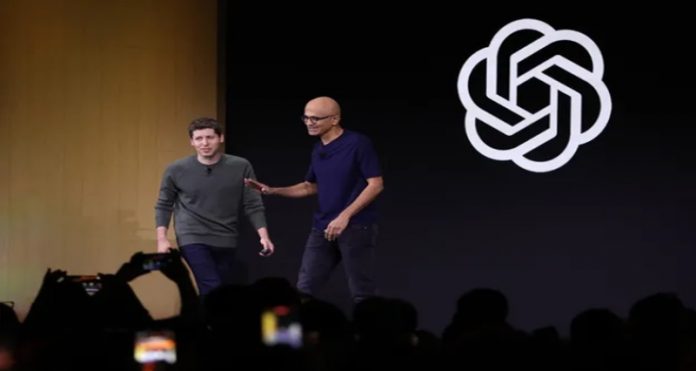
OpenAI has reportedly agreed to cap the total revenue it shares with Microsoft at $38 billion, a significant development that marks how the balance of power inside one of Silicon Valley’s most consequential partnerships is beginning to evolve as the artificial intelligence industry enters a new phase.

According to a report by The Information, the arrangement emerged from a renegotiated agreement between the two companies last month that gives OpenAI greater flexibility to pursue infrastructure and commercial partnerships with other major technology firms, including Amazon and Google.

The move signals that OpenAI is increasingly positioning itself less as a tightly aligned Microsoft partner and more as an independent AI platform company seeking broader control over its future economics, infrastructure, and strategic relationships. The reported cap could also become central to OpenAI’s preparations for a potential public offering, which some executives reportedly believe could happen as early as the end of this year.

Some analysts believe that limiting Microsoft’s long-term revenue participation could materially improve OpenAI’s valuation outlook by increasing the amount of future cash flow retained within the company itself.

The shift, among other things, reflects the extraordinary speed at which the AI industry is maturing. What began in 2019 as a rescue-style investment by Microsoft into a relatively small research lab has evolved into one of the most powerful alliances in modern technology. Microsoft’s more than $13 billion investment helped finance the massive computing infrastructure needed to train OpenAI’s large language models while also transforming Microsoft into one of the biggest beneficiaries of the AI boom through its Azure cloud business and Copilot software suite.

But the relationship has become increasingly complex as OpenAI’s influence and market value have exploded. Earlier this year, OpenAI reportedly reached a valuation of roughly $852 billion, placing it among the world’s most valuable private technology firms and dramatically shifting negotiating leverage between the two companies.

OpenAI Seeks More Independence As AI Infrastructure Race Intensifies

The revised arrangement comes at a critical moment in the global AI infrastructure race, where access to computing power, data centers, and semiconductor supply chains has become as strategically important as software itself. OpenAI’s ability to work more freely with Amazon and Google reflects growing recognition that no single cloud provider may be able to satisfy the staggering computational demands created by next-generation AI systems.

The industry is already facing severe capacity constraints. Executives across the sector, including Dario Amodei of Anthropic, have warned that AI demand is growing faster than companies can build infrastructure.

Amodei recently disclosed that Anthropic’s usage and revenue surged 80-fold in the first quarter on an annualized basis, straining available compute capacity and forcing the company into multibillion-dollar infrastructure agreements with partners including Amazon and SpaceX.

OpenAI faces similar pressures.

As AI models become larger and more capable, companies increasingly require enormous amounts of graphics processing units, power generation, networking equipment, and specialized data centers. That has transformed the sector into a global industrial race involving cloud providers, semiconductor firms, utilities, and governments.

The revised Microsoft agreement appears designed partly to ensure OpenAI is not operationally constrained by overdependence on one infrastructure partner. At the same time, Microsoft is also recalibrating its own AI strategy. While the company remains OpenAI’s largest partner, Microsoft has increasingly diversified its AI portfolio, developing more in-house models and expanding relationships with other AI companies to reduce reliance on OpenAI alone.

The result is a partnership that remains deeply intertwined but is becoming structurally more independent on both sides.

Pressure Mounts from Rivals and Regulators

The development also comes amid intensifying competitive pressure across the AI sector. OpenAI’s early dominance following the launch of ChatGPT is increasingly being challenged by rivals, including Anthropic, Google, Elon Musk’s xAI, and Chinese AI firms advancing rapidly despite U.S. export restrictions. The competition is happening as investors become more focused on sustainable monetization rather than experimental expansion.

OpenAI has reportedly scaled back or shut down several side projects in recent months, including efforts tied to Sora, while concentrating resources around core commercial products such as ChatGPT and Codex. That tightening of focus suggests the company is moving from a hypergrowth research phase toward a more disciplined operational structure consistent with eventual public market scrutiny.

The company also continues to face legal and governance pressures. Elon Musk, one of OpenAI’s original co-founders, filed a lawsuit in 2024 alleging that CEO Sam Altman and President Greg Brockman abandoned the organization’s original nonprofit mission.

Musk is seeking $150 billion in damages and is asking the court to remove both executives from leadership positions. The lawsuit has intensified scrutiny over OpenAI’s unusual hybrid structure, where a nonprofit entity oversees a massively valuable for-profit business increasingly competing at the center of the global technology industry.

In practical terms, the renegotiation between Microsoft and OpenAI is believed to be a pointer that the AI boom is beginning to reshape the traditional balance between startups and Big Tech incumbents. In previous technology cycles, younger firms often remained dependent on larger platforms for distribution, infrastructure, and capital. In AI, however, companies like OpenAI have become powerful enough to renegotiate relationships with the world’s largest technology firms while simultaneously preparing for independent public-market futures.

OpenAI’s Move into Deployment Services Demonstrates AI is Entering a Commercial Stage 

0

The rapid commercialization of artificial intelligence has entered a new phase as OpenAI moves beyond building models and into helping enterprises deploy them at scale. In a significant strategic expansion, OpenAI has reportedly created a deployment-focused company designed to assist businesses in integrating AI systems directly into their operations.

The move signals a broader transformation occurring across the technology industry: the race is no longer only about who builds the most advanced AI model, but also about who can successfully embed AI into the real economy. For years, artificial intelligence development was concentrated largely around research labs and infrastructure providers.

Companies competed on benchmark scores, model sizes, and computational power. However, many businesses struggled to convert AI hype into measurable productivity gains. Executives understood that AI could improve efficiency, automate workflows, and reduce operational costs, but implementation remained difficult. Integrating AI into existing enterprise systems often required customized infrastructure, data preparation, cybersecurity safeguards, compliance reviews, employee retraining, and workflow redesigns.

OpenAI’s decision to establish a deployment-oriented business reflects recognition that enterprise adoption is now the critical bottleneck. The strategy mirrors the historical evolution of previous technological revolutions. Cloud computing, for example, initially centered around raw infrastructure before expanding into consulting, migration services, and enterprise transformation.

Companies like Amazon Web Services, Microsoft, and Google eventually realized that many corporations needed hands-on support to modernize their systems. AI is now entering a similar stage. Businesses are no longer simply asking whether AI works; they are asking how to operationalize it safely and profitably.

OpenAI’s deployment initiative could dramatically accelerate enterprise adoption of generative AI tools. Many firms remain hesitant because of concerns around reliability, hallucinations, intellectual property protection, and regulatory compliance. A dedicated deployment company could provide tailored solutions that reduce these risks.

Rather than offering only an API or chatbot subscription, OpenAI could help organizations redesign workflows, fine-tune models on proprietary data, and build internal AI ecosystems optimized for specific industries such as finance, healthcare, logistics, or manufacturing.

Rivals including Microsoft, Google, Anthropic, and Amazon are all pursuing enterprise AI opportunities, but deployment services may become one of the most lucrative segments of the market. Large corporations are willing to spend billions not merely on access to models, but on comprehensive transformation strategies that improve productivity and generate new revenue streams.

The company capable of becoming the AI operating partner for enterprises could secure long-term dominance. This shift also highlights how AI economics are evolving. Training frontier models requires enormous capital expenditures, particularly for GPUs, data centers, and energy infrastructure.

Enterprise deployment offers recurring, high-margin revenue opportunities that go far beyond consumer chatbot subscriptions. By embedding AI deeply into corporate operations, OpenAI can create long-term dependence on its ecosystem, much like enterprise software companies did during earlier technology cycles.

Another important aspect of this development is the growing convergence between consulting and artificial intelligence. Traditional consulting giants such as Accenture, McKinsey & Company, and Deloitte have aggressively expanded their AI advisory businesses because clients increasingly need strategic guidance rather than standalone software.

OpenAI’s deployment company could place the firm into partial competition with these consulting firms, creating a hybrid model that combines advanced AI infrastructure with enterprise transformation services.

The broader economic consequences could be profound. If deployment barriers are reduced, AI adoption may spread much faster across industries. Businesses could automate administrative functions, accelerate software development, improve customer service, optimize supply chains, and enhance decision-making through predictive analytics.

This may boost productivity growth globally at a time when many economies are struggling with slowing labor-force expansion and persistent inflationary pressures. Widespread enterprise AI integration will intensify debates about workforce disruption. As AI systems become embedded into daily operations, companies may reduce reliance on certain categories of white-collar labor.

Tasks involving documentation, analysis, coding, support services, and data processing are increasingly vulnerable to automation. While new jobs may emerge around AI oversight and systems management, the transition could reshape labor markets significantly over the next decade.

OpenAI’s move into deployment services demonstrates that the AI race is entering a more mature commercial stage. Building powerful models remains essential, but real economic value will come from integration, scalability, and execution. The winners of the AI era may not simply be the firms with the smartest algorithms, but the ones capable of transforming entire industries through practical implementation.