
DD
MM
YYYY

PAGES

DD
MM
YYYY

spot_img

PAGES

Home Blog Page 1601

8 Best Bitcoin Cloud Mining Providers in 2025: Start Mining and Earn BTC Without Equipment

0

As Bitcoin (BTC) continues to dominate the cryptocurrency market, many investors are seeking ways to earn passive income through mining. However, traditional mining requires expensive hardware, technical expertise, and high electricity costs, making it inaccessible to many. Cloud mining offers a simple alternative, allowing users to rent mining power and receive daily rewards without owning mining equipment.

This guide introduces the 8 best Bitcoin cloud mining providers in 2025, ideal for beginners who want to start mining without any equipment. These cloud mining platforms offer the most reliable services, competitive pricing, and user-friendly experiences to help you maximize your cryptocurrency earnings.

  1. SpeedHash – Best for Beginners with a Free $18 Bonus

Founded in 2018, SpeedHash is a global leader in cloud mining, offering a beginner-friendly platform with high profitability and a free $18 mining bonus for new users. SpeedHash specializes in BTC and DOGE mining, providing low investment thresholds and flexible short-term contracts with high daily returns.

Why Choose SpeedHash?

  • Low investment, high returns – Start mining with as little as $200 and earn up to 8% daily returns.
  • Flexible contracts – Choose 1 to 5-day plans with daily payouts to reduce market risks.
  • Free mining bonusGet $18 for free upon registration to experience cloud mining.
  • Security guarantee – Advanced encryption technology ensures fund and data security.
  • Supports BTC & DOGE mining – Multiple payment methods with easy withdrawals.

Mining Plans on SpeedHash

Investment Amount (USD) Contract Duration (Days) Daily Return (%) Total Payout (USD)
$200 1 2.5% $205
$1,300 3 3.2% $1,424.80
$3,600 5 3.6% $4,248
$12,800 2 4.5% $13,952
$20,000 3 5.0% $23,000
$33,000 1 8.0% $35,640

Claim your free $18 bonus now and start mining with SpeedHash!

  1. ECOS – Government-Regulated Long-Term Mining Provider

ECOS is one of the few government-regulated cloud mining platforms, operating in Armenia’s Free Economic Zone. It provides a secure and long-term Bitcoin mining solution, making it ideal for investors seeking stability.

Why Choose ECOS?

  • Government-backed – Ensures high security and legal compliance.
  • Long-term stability – Designed for BTC holders looking for steady growth.
  • Additional features – Offers cloud mining, digital wallets, and investment portfolio management.
  1. F2Pool – One of the Largest Bitcoin Mining Pools

Founded in 2013, F2Pool is one of the world’s oldest and largest mining pools, supporting BTC, DOGE, LTC, and more. With high platform stability and transparent payouts, F2Pool is a top choice for consistent mining rewards.

Why Choose F2Pool?

  • High mining power and stability – One of the largest BTC mining pools worldwide.
  • Supports multiple cryptocurrencies – Not limited to BTC and DOGE.
  • Daily payouts – Ensures transparent and regular earnings.
  1. KuCoin Pool – Cloud Mining Integrated with an Exchange

KuCoin Pool, launched by the KuCoin exchange, offers BTC, ETH, and KAS mining services with low fees and high efficiency. It’s ideal for those looking to combine mining with trading.

Why Choose KuCoin Pool?

  • Seamless integration with KuCoin Exchange – Easily reinvest mining earnings.
  • Low fees and high efficiency – More cost-effective than traditional mining pools.
  • Secure platform – Backed by KuCoin’s exchange security measures.
  1. Poolin Cloud – Flexible Contracts for Advanced Miners

Poolin Cloud, operated by the well-known Poolin mining pool, allows users to choose custom mining contracts, making it ideal for investors who want flexibility in mining strategies.

Why Choose Poolin Cloud?

  • Customizable contracts – Choose from short-term and long-term plans.
  • Advanced tools – Offers mining management features for experienced users.
  • Global mining farms – Optimized for high mining efficiency.
  1. AntPool – Bitmain’s Official Cloud Mining Pool

AntPool, operated by Bitmain, provides cloud mining services based on enterprise-grade mining hardware, ensuring stable mining performance.

Why Choose AntPool?

  • Industry-leading mining hardware – Efficient mining performance with high returns.
  • Reliable long-term profits – Backed by a well-established mining pool.
  • Real hardware mining – Suitable for users who want exposure to real mining operations.
  1. Binance Pool – A Secure and Profitable Mining Option

Binance Pool, managed by the world’s largest crypto exchange, offers BTC, ETH, and LTC mining with FPPS payout models for maximum earnings.

Why Choose Binance Pool?

  • Direct integration with Binance Exchange – Mine and trade seamlessly.
  • Low fees, high rewards – Competitive returns with a strong ecosystem.
  • Advanced securityTop-tier protection against hacking and fraud.
  1. NiceHash – The Largest Hash Power Marketplace

NiceHash operates as a cloud-based marketplace for mining power, allowing users to buy and sell hash power. This is ideal for those who want flexible mining solutions.

Why Choose NiceHash?

  • Flexible mining strategy – Buy and sell mining power as needed.
  • No long-term contracts – Mine only when profitable.
  • Multi-crypto support – Choose from a variety of mineable assets.

Final Thoughts

Choosing the best Bitcoin cloud mining platform can help you earn BTC and DOGE easily, ensuring a steady passive income.

  • For beginners, SpeedHash offers a $18 free bonus to start mining with minimal investment.
  • For long-term miners, ECOS, F2Pool, and BeMine offer steady income and security.
  • For traders looking to combine mining and trading, Binance Pool and KuCoin Pool offer seamless exchange integration.

Whatever your investment goals, these cloud mining platforms will help you mine Bitcoin efficiently and profitably. Start earning passive income in crypto today!

The Fragility of China’s Financial Landscape

0

China’s stock market has experienced a significant downturn, with reports indicating that on April 7, 2025, it suffered its worst single-day crash since 2008. The Shanghai Composite Index, a key benchmark for mainland China’s stock market, reportedly dropped sharply, with losses estimated around 6.6% to 7.51% for the day, depending on the exact moment of reporting. This plunge has erased substantial market value and sparked widespread concern, drawing parallels to the global financial crisis of 2008. Several factors appear to have contributed to this dramatic decline.

Economic slowdown in China, marked by deflationary pressures and a persistent property crisis, has eroded investor confidence. Additionally, recent global trade tensions, including retaliatory tariffs from China in response to U.S. policies, have heightened market volatility. The lack of robust stimulus measures from Beijing to counter these challenges has further fueled the sell-off. For instance, while the government has intervened with state investments to mitigate losses, the absence of a comprehensive “big bang” fiscal package has left investors skeptical about a sustainable recovery.

The ripple effects of this crash are notable. Hong Kong’s Hang Seng Index, closely tied to mainland markets, also saw steep declines, with reports of a 9.4% drop earlier in the year being among its worst since 2008. Globally, the event has rattled financial markets, with U.S. stock futures and commodity prices like oil and iron ore sliding in response. This reflects China’s significant role in the world economy and the interconnectedness of global markets. Historically, China’s stock market has faced turbulence before, such as the 2007 bubble burst and the 2015-2016 crash, but the current situation stands out due to its severity and timing amidst broader economic woes.

The sharp decline in stock values erodes household wealth, particularly for retail investors who make up a significant portion of the market. This could dampen consumer spending, worsening China’s already sluggish economic recovery from deflation and the post-COVID slowdown. Companies listed on the Shanghai Composite and other indices may face higher borrowing costs and reduced access to capital as investor trust wanes. This could stall growth plans, especially for firms in vulnerable sectors like real estate and manufacturing.

The crash amplifies calls for Beijing to roll out aggressive stimulus measures. While state funds have stepped in to cushion losses, the lack of a decisive fiscal response so far might force a shift in strategy—potentially increasing debt levels to stabilize markets and the broader economy. A prolonged market slump could fuel public discontent, especially if tied to perceptions of government mismanagement. Historically, economic downturns have tested the Communist Party’s legitimacy, though its control mechanisms typically mitigate unrest. The crash has already triggered declines in global indices, such as U.S. futures and European markets, reflecting China’s role as a major economic engine.

Investors worldwide may pull back from riskier assets, amplifying volatility. China’s vast demand for raw materials means its economic woes hit commodity markets hard. Oil, iron ore, and copper prices have dipped, affecting exporting nations like Australia, Brazil, and Canada. This could lead to a broader slowdown in commodity-driven economies. A weaker Chinese economy might prompt the government to let the yuan depreciate further, boosting export competitiveness but risking a currency war. This, combined with ongoing tariff disputes (e.g., with the U.S.), could disrupt global trade flows.

Chinese tech giants and manufacturers, many dual-listed in Hong Kong, saw massive losses (e.g., the Hang Seng Tech Index dropping significantly). Supply chain disruptions could follow, impacting global tech and industrial production. The crash compounds pressure on China’s property sector, already reeling from a debt crisis. Falling stock values for developers signal deeper trouble, potentially necessitating more government bailouts. A hit to Chinese consumer wealth could reduce demand for luxury brands and outbound tourism, affecting companies in Europe, Japan, and Southeast Asia that rely on Chinese buyers.

If this crash marks a turning point, global investors might reassess China’s attractiveness as a market, favoring diversification into other emerging economies like India or Southeast Asia. Economic weakness could weaken China’s position in international negotiations, though it might also push Beijing to double down on self-reliance initiatives like “Made in China 2025.” A sustained downturn might force structural reforms—easing reliance on debt-fueled growth and exports—but such shifts would take years and face resistance from entrenched interests.

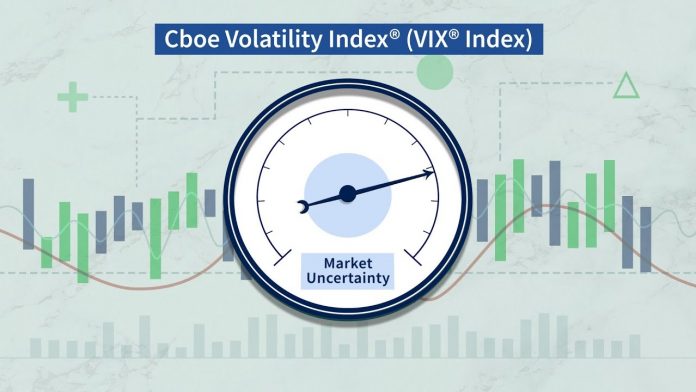
CBOE Volatility Index Reached 53.25 Highest Since August 2024

0

The CBOE Volatility Index (VIX) reaching 53.25, its highest since August 2024, reflects a market gripped by heightened uncertainty. Several factors could be fueling this shift, based on current dynamics and historical patterns. First, geopolitical tensions or major policy announcements often jolt the VIX upward. Given the timing—April 8, 2025—speculation might point to something like escalating trade disputes or unexpected economic measures. For instance, aggressive tariff proposals or shifts in U.S. monetary policy could spook investors, driving demand for S&P 500 options as a hedge. Back in August 2024, a VIX spike was tied to global market reactions to Japan’s monetary tightening; a similar external shock could be at play now.

Second, economic indicators might be flashing red. A sharp drop in corporate earnings forecasts, rising inflation fears, or a sudden jump in unemployment could signal recession risks, pushing the VIX higher as markets price in turbulence. When the VIX hit 80+ in 2008, it was amid a financial meltdown—while we’re not there yet, a VIX at 53.25 suggests serious unease, possibly from weakening fundamentals.

Third, market sentiment itself can amplify volatility. A rush to safe-haven assets or a sell-off in equities often feeds into a self-reinforcing loop, where fear drives more fear. Options traders pile into puts, inflating implied volatility. If leading stocks or indices like the S&P 500 are showing cracks, that could explain the VIX’s climb. The CBOE Volatility Index (VIX) hitting 53.25 on April 8, 2025—its highest since August 2024—carries significant implications for markets, investors, and the broader economy.

A VIX at 53.25 signals intense fear and uncertainty among investors. Known as the “fear gauge,” it measures expected volatility in the S&P 500 over the next 30 days. Levels above 30 typically indicate high stress; at 53.25, it’s a loud alarm of panic. This suggests markets are pricing in sharp declines or wild swings, likely driven by a major shock—think escalating trade wars, geopolitical flare-ups, or economic data signaling trouble. Investors are rushing to buy options for protection, driving up implied volatility and reflecting a collapse in confidence.

Historically, a VIX this high often coincides with steep equity sell-offs. The S&P 500 and other indices tend to drop as volatility spikes, as seen during past peaks like 2008 (VIX hit 80+) or August 2024’s turbulence. While it doesn’t guarantee a bear market, it’s a red flag that stocks could face more pain, especially if the underlying trigger—like trade policy chaos or recession fears—worsens. Conversely, some argue extreme VIX readings can mark short-term bottoms, as panic exhausts itself, but that depends on whether the root cause stabilizes. For traders, a VIX at 53.25 opens opportunities and risks. Hedging becomes pricier as option premiums soar, but it’s a lifeline for portfolios exposed to equities.

Speculators might bet on volatility itself via VIX futures or options, though timing is tricky volatility can spike and fade fast. Long-term investors might see this as a chance to buy quality assets at discounted prices if markets overreact, but only if they can stomach the turbulence. Cash-heavy players could sit tight, waiting for clarity. The VIX doesn’t just reflect markets—it hints at real-world impact. Sustained volatility often ties to economic uncertainty, like trade disruptions or policy missteps, which can hit corporate earnings, consumer spending, and growth.

If tariffs or global tensions are behind this (plausible given recent patterns), supply chains could seize up, inflation could tick up, and recession odds could climb. Central banks, like the Fed, might respond with rate cuts to calm markets, but that’s a double-edged sword if inflation’s already brewing. A VIX above 50 is rare outside crises—think 2008, 2020’s COVID crash, or August 2024’s jolt. It’s not a daily norm (the long-term average hovers around 20). Past spikes suggest this could be a multi-week storm, not a one-day blip, unless a clear resolution emerges. The August 2024 peak faded as global markets steadied; today’s driver needs watching to gauge duration.

The implications hinge on the catalyst. If it’s a solvable issue—like trade talks resuming—volatility could ease, and the VIX might drop back toward 30 or below. If it’s systemic, like a deepening economic slowdown, we could see 60+ levels, with broader damage. Markets will look to leading indicators (earnings, policy moves) and sentiment shifts for cues. In short, a VIX at 53.25 means buckle up: expect choppy markets, reassess risk, and watch the news closely.

Shiba Inu Price Eyes 550% Upside Potential Upon Shibarium L3 Update, WallitIQ (WLTQ) Is Gearing Up For A 5,000% Surge  

0

As the crypto market navigates uncertain waters, two tokens have caught the attention of investors: the Shiba Inu price, which shows signs of a 550% upside, and WallitIQ (WLTQ), poised for a staggering 5,000% growth. These developments, like Shibarium, are creating new opportunities for traders seeking promising assets, especially with the Shiba Inu price struggling.

Shiba Inu Eyes a Price Rebound with Shibarium L3 Update

Shiba Inu price has recently drawn attention due to the anticipated Shibarium Layer-3 blockchain update. With privacy being a growing concern in the crypto space, this update could provide Shiba Inu with a significant advantage and boost the Shiba Inu price.

The Shibarium L3 testnet, known as “puppynet,” has already been launched, and the system features the Karma rewards program. These updates have led crypto analyst Javon Marks to predict a potential 550% Shiba Inu price increase for SHIB, with some expecting a breakout toward $0.000081.

However, the Shiba Inu price still faces challenges, including a market downtrend and low investor sentiment. If adoption and usage increase, the upcoming Shibarium update could offer a turning point for SHIB.

WallitIQ (WLTQ) Unveils AI-Powered Wallet Platform

While Shiba Inu’s price is struggling, WallitIQ (WLTQ) offers a new wallet management approach that merges artificial intelligence with blockchain technology. The platform provides real-time market tracking, predictive trading tools, and an all-in-one wallet system for users. It supports multi-wallet management, automated trading alerts, and enhanced security features like biometric authentication.

Users can also benefit from an advanced AI module that analyzes price trends and suggests perfect trade timings. The platform includes machine learning-based risk management and a Physical2Digital asset tokenization system. This allows users to securely integrate physical assets such as documents and IDs into the blockchain using WallitIQ’s P2D technology.

According to the development team, the MVP mobile app is already available and clearly outlines the platform’s goals. Features include simulated wallet interactions, QR payment options, live market prices through CoinGecko API, and interactive candlestick charts. These tools help users make more informed decisions and reduce transaction costs.

Security and Privacy Features Lead WallitIQ’s Growth

WallitIQ (WLTQ) uses multiple layers of protection, including fingerprint and facial recognition, to ensure wallet access security. It also includes anomaly detection tools to warn users of any unusual activity. AI powers these tools and helps minimize risks during transactions and trading sessions.

Additionally, the wallet offers Escrow-secured peer-to-peer trading using Escrow Connect. This service is designed to make transactions safer without relying on third-party verification. With crypto scams rising, these features are becoming a central part of WallitIQ’s (WLTQ)  growth strategy.

The platform also plans to expand its services by introducing AI chatbots for 24/7 customer support and automated responses. These bots are expected to improve user experience and boost engagement rates. Combined with staking rewards of up to 180% APY, WallitIQ’s (WLTQ) model presents an attractive offer for traders and long-term holders.

WallitIQ (WLTQ) Token Gains Investor Interest During Presale

WallitIQ (WLTQ) presale token is currently priced at $0.0420, offering tax-free entry for early investors. Buyers gain access to referral rewards, governance rights, and eligibility for exclusive airdrops. The platform’s smart contract has already been audited by SolidProof, adding further confidence for those looking to invest. WallitIQ (WLTQ) is in its beta phase, allowing early users to experience the platform’s features before the full launch.

After the presale phase ends, the AI token will also be listed on major exchanges. Analysts expect the launch and growing market demand to drive prices higher as more users adopt the wallet.

With its AI-driven features and growing community, many watch WallitIQ (WLTQ) as a potential top performer in 2025. As such, investors are urged to secure their stake before it’s too late.

Conclusion

While Shiba Inu’s Shibarium L3 update offers the potential for a significant price recovery, WallitIQ (WLTQ) is capturing attention with its innovative AI-powered wallet platform. With advanced features, including AI-based trading tools, enhanced security, and the P2D functionality, WallitIQ presents a strong growth opportunity.

Join Early. Investors do not want to miss out on this opportunity, which is still priced cheaply at $0.0420.

Join the WallitIQ (WLTQ) presale and community:


Website: https://wallitiq.io/

Whitepaper: https://wallitiq.gitbook.io/wallitiq

Telegram: https://t.me/wallitiqofficial

Twitter/X: https://x.com/wiqnetwork

Instagram: https://www.instagram.com/wallitiqnetwork

Best Crypto to Buy Now and Make $40450 from $450 if You Missed Cardano (ADA) in 2021

0

Cardano (ADA) investors in 2021 made substantial returns after riding the coin’s massive surge. But don’t fret if you missed Cardano’s rise! Rexas Finance (RXS) has the potential to turn a $450 investment into $40,450 by 2025. Right now seems to be the perfect time to hop on board.

What Can We Learn From Cardano’s Journey?

The success story of Cardano is nothing short of remarkable. Starting as a small crypto project, it overcame numerous obstacles and hurdles against most cryptocurrencies. With a devoted community behind it, it is now one of the top five largest cryptocurrencies by market cap. The success of Cardano was certainly not driven by hype. The cryptocurrency had a strong technical foundation, actual use cases, and a promising future. Investors of ADA, otherwise known as Cardano’s token, experienced unbelievable returns in 2021 when the price soared from $0.18 to an all-time high of $3.10. Though quite a few missed the bus, Cardano’s price is still respectable, but it hasn’t skyrocketed as before. The main takeaway is that timing matters; however, significant returns are still possible. A new competitor has emerged, and it might provide even higher returns.

The Next Big Investment in Cryptocurrency – Rexas Finance (RXS)

Rexas Finance (RXS) is speeding through the crypto sphere and is on its way to launching and establishing itself as one of the most prominent coins available. Having surpassed $47 million in fundraising during the efforts of their presale, the coin is set to launch at an affordable $0.20.  This early indicator suggests that Rexas Finance is incredibly appealing to numerous enthusiastic investors. Rexas Finance is not simply a meme coin in circulation, as the project comes with some real-world utility that aims to bring real-world assets and blockchain technology together.  The uniqueness does not end here, as it enables Rexas Finance to capture much attention in the market. Unlike Cardano or other altcoins, one feature that sets RXS apart is that it seeks to fuse traditional finance with the growing world of Decentralized Finance (DeFi).

How RXS Could Make You Huge Profits

Rexas Finance is more than just another promising investment option; it may actually lead the way in the forthcoming wave of blockchain integrations. Rexas Finance has been solving issues in DeFi for a long time by focusing on tokenizing Real-World Assets (RWAs) and putting them on the blockchain. By solving the problem of how real-world financial transactions can be done through the blockchain, Rexas Finance will capture a lot of value. The RXS presale has been one of the most successful, which shows the growing confidence in its value proposition. As of March 2025, RXS has sold 456.87 million tokens, and the presale is almost over. The coin is expected to be available on the primary exchanges by June 2025 at a starting price of $0.25, 25 percent higher than the current presale price. The token’s growing community, utility, and expected massive growth in DeFi make its demand, along with the supply for blockchain technology solutions that integrate traditional finance and digital assets, surge, preparing the coin’s value to grow tremendously.

Reinstate Your Thoughts with a 90x Potential Gain Investment Return

Should you acquire RXS tokens during its presale at $0.20 each, your investment of $450 would get you 2,250 RXS tokens. And as its value increases to $0.25, so would your investment, amounting to $562.50, a whopping 25% increase. But this is only the tip of the iceberg. RXS is set for a new tie-up surge of 90x after its exchange listing, which could leave your $450 investment at a jaw-dropping $40,450. If Rexas Finance flames on just like Cardano with its growth, we can expect good returns in a couple of years. That being said, compared to Cardano’s growth, Rexas Finance’s striking 90x potential makes it a pretty alluring opportunity to pursue, particularly considering the project’s infancy. Early-stage investors stand to gain a lot due to the upcoming surge in the crypto market.

Here Is Why You Should Invest Right Now

If the offer stands while you are invested in the crypto market, you miss no opportunities. At lower rates, the RXS token is currently up for sale in its presale phase. By jumping in immediately, you can potentially rake in loads of cash in returns before it hits the big exchanges. You still have time to purchase RXS for its current price of $0.20 before its exchange listing on June 19, 2025. Once it is listed, the increased liquidity will enable a larger pool of investors, which will most likely cause a price surge. Combine Rexas Finance’s tokenization of RWAs with the growing DeFi ecosystem, and we have a recipe for price appreciation. This company’s success puts it in a favorable position in the rapidly changing world of cryptocurrency.

Conclusion: Could RXS Be Your Solution for $40,000?

If you were late to Cardano, Rexas Finance might be the next opportunity for you to turn an investment of $450 into $40,450. Supported by DeFi, real-world use cases, and a building community, Rexas Finance is set to explode. Risk is always involved with any investment, but the potential reward with RXS is enormous. If you want to take advantage of the next big wave in crypto, the time to act is now. Don’t wait too long.


For more information about Rexas Finance (RXS) visit the links below:

Website: https://rexas.com

Win $1 Million Giveaway: https://bit.ly/Rexas1M

Whitepaper: https://rexas.com/rexas-whitepaper.pdf

Twitter/X: https://x.com/rexasfinance

Telegram: https://t.me/rexasfinance