DD
MM
YYYY

PAGES

DD
MM
YYYY

spot_img

PAGES

Home Blog Page 1605

Ecobank Transnational Inc (ETI) Reports Record N735.9bn Profit in 2024, Driven by Strong Interest and Non-Interest Revenue Growth

0

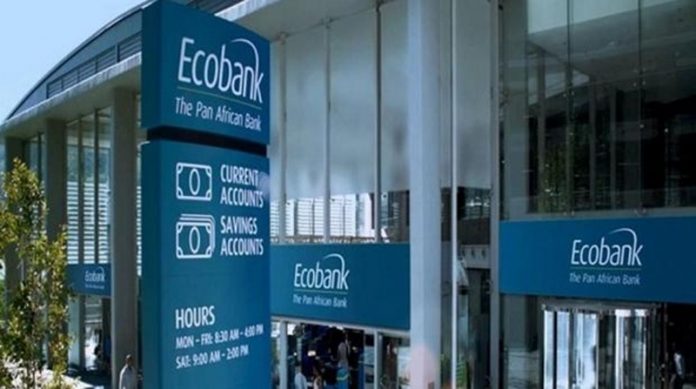
Ecobank Transnational Incorporated (ETI) has reported a 179% year-on-year (YoY) increase in post-tax profit, reaching N735.9 billion ($494 million) in its 2024 consolidated financial statement.

The impressive earnings growth was fueled by a surge in both interest and non-interest income, alongside improved cost efficiency. The bank’s pre-tax profit also more than doubled, rising from N376.5 billion in 2023 to N980.7 billion in 2024, highlighting the impact of higher lending activity and increased investments in securities.

Nigeria remained the dominant earnings driver in reported currency, with post-tax profit soaring by 179.3% to N455.7 billion, accounting for 61.9% of ETI’s total profit. However, in constant currency terms, Nigeria’s contribution to the $494 million post-tax profit was just 0.63%, underlining the impact of currency translation adjustments.

The bank’s gross earnings surged by 130.6% to N4.22 trillion, demonstrating the strength of its diversified revenue streams. Interest income rose by 128.3% to N2.76 trillion, while interest expenses climbed by 122.9% to N1.01 trillion. Net interest income stood at N1.75 trillion, representing a 131.5% growth compared to the previous year. Fees and commission income increased significantly, jumping by 151.8% to N879.9 billion, while expenses on commissions also grew to N98 billion, reflecting a 136.4% rise.

Trading and foreign exchange gains more than doubled, reaching N538.8 billion, contributing significantly to the bank’s overall profitability. Non-interest revenue expanded by 135% to N1.36 trillion, reinforcing the strength of ETI’s diversified income streams. Operating income grew by 133% to N3.11 trillion, while operating expenses rose by 129.2% to N1.65 trillion. The bank’s profit after tax stood at N735.9 billion, marking an increase of 179.3% year-on-year. Basic earnings per share rose to N20.19, up by 166.4% from the previous year.

In terms of assets, ETI reported a total asset base of N43.3 trillion, reflecting a 67.1% increase. Customer deposits grew significantly to N31.64 trillion, up by 66.4% from the previous year, while shareholders’ funds rose by 68.4% to N2.78 trillion.

A deep dive into ETI’s financials shows that core operating income was the key driver behind its remarkable earnings growth. The bank benefitted from both interest and non-interest revenue streams, reinforcing its strong financial position. Interest income remained the largest revenue source, contributing over 65% of total earnings. This was primarily driven by higher lending activity, as ETI expanded loans and advances to customers. The bank also increased its investments in securities, which grew from N6.3 trillion to N10.68 trillion, providing a steady revenue stream despite market fluctuations.

However, this aggressive expansion came at a cost. Impairment charges on loans surged, pushing the bank’s non-performing loan (NPL) ratio to 6.7%. The cost of risk increased to 1.8%, marking the second-highest level in five years. Interest expenses also climbed sharply due to the rising cost of deposits and borrowings in a high-interest-rate environment. The expansion in customer deposits led to higher interest expenses, which rose from N257.2 billion to N559.4 billion. Borrowings nearly tripled to N306 billion, further increasing financing costs.

However, ETI managed to maintain strong net interest income, reflecting its ability to manage lending spreads effectively. Beyond interest income, non-interest revenue also played a crucial role in driving profit growth. The bank saw a significant rise in fees and commissions, driven by increased cash management services and credit-related fees.

Foreign exchange and trading gains also contributed significantly, more than doubling in value. These robust non-interest revenue streams helped cushion the impact of rising costs and bolstered the bank’s overall earnings.

ETI’s ability to contain costs was another major factor in its strong financial performance. The bank reduced its cost-to-income ratio to 53%, marking its best efficiency level in five years despite inflationary pressures and rising operational expenses. This improvement underscores the bank’s efforts to optimize its cost structure while maintaining revenue growth.

In reported currency, Nigeria remained the largest earnings contributor, reinforcing the country’s significance to ETI’s overall financial performance. However, in constant currency terms, its contribution was significantly lower due to the impact of foreign exchange translation.

While ETI’s 2024 financial performance was exceptionally strong, financial analysts have pointed out key challenges to watch moving forward. The bank’s rising impairment charges pose a potential risk, as its aggressive lending strategy has led to higher provisions for bad loans. Managing credit risk will be critical to sustaining profitability in the long run.

Another challenge is the high borrowing cost, as ETI’s borrowings nearly tripled. The bank must strategically manage its funding expenses to maintain profitability in a high-interest-rate environment. Additionally, currency translation risks remain a concern. While Nigeria is the dominant earnings contributor in reported currency, its impact diminishes when adjusted for exchange rate fluctuations.


Ferrari to Raise Prices by 10% in Response to U.S. Tariffs, Adding Up to $350,000 on Some Models

0

Luxury automaker Ferrari announced a 10% price increase on several of its models following President Donald Trump’s decision to impose a 25% tariff on imported cars. The move, which takes effect after April 1, could add as much as $50,000 to the price of a typical Ferrari, with the most exclusive models seeing increases of over $350,000.

Trump’s latest tariff escalation has drawn sharp criticism from financial analysts, with Gary Black, investment adviser and managing partner at The Future Fund, warning that the move could worsen economic conditions.

“Trump (aka Tariff Man) found further ways to push the economy into recession today (Thursday), signing a proclamation to implement a 25% tariff on auto imports, expanding a trade war designed to bring more manufacturing jobs to the U.S. and setting the stage for an even broader push on levies next week,” Black said.

Many car brands with factories in the US, including Tesla, are expected to be impacted by the tariff, due to the import of raw materials from targeted countries.

Ferrari’s Price Hikes: What Buyers Should Expect

In a statement released Thursday, Ferrari confirmed that prices will remain unchanged for all vehicles imported before April 2. However, for cars arriving afterward, the Ferrari 296, SF90, and Roma will maintain their current pricing, while other models will see substantial hikes.

The Purosangue SUV, which starts at $430,000, will now cost an additional $43,000, while the limited-edition F80, priced at over $3.5 million, will see a $350,000+ increase due to tariff-related adjustments.

Will Tariffs Affect Ferrari Sales?

While Trump argues that the tariffs will encourage automakers to build cars in the U.S., Ferrari—like many other foreign luxury car manufacturers—produces all its vehicles in Maranello, Italy, and has no U.S.-based production. Despite the added costs, Ferrari’s business model, which relies on exclusivity and high demand, is unlikely to see an immediate drop in sales.

With a one-year waiting list for most Ferrari models, the company remains in a strong market position, even with rising prices. However, the tariff policy could have broader implications for the luxury auto sector and global trade relations.

Ferrari CEO Benedetto Vigna, in a recent interview with CNBC, acknowledged the wealth of Ferrari customers but insisted the company must be cautious about passing on too much of the tariff burden.

“When we look at the client, we consider that these people, to buy a Ferrari, they have to work,” Vigna said. “We have to respect them. Because for us, the most important thing is the client. So we need to make sure that we treat them in the right way.”

Ferrari reaffirmed its financial targets for 2025 but warned that the tariffs pose a potential risk of 50 basis points on its profit margins. Following the announcement, Ferrari’s stock saw slight gains, while shares of the U.S. “Big Three” automakers—General Motors, Ford, and Stellantis—trended lower.

Trump’s tariff decision is expected to have ripple effects across the global auto industry, particularly as speculation grows that further trade restrictions could be introduced in the coming weeks. Meanwhile, Ferrari is preparing to launch its first all-electric model in October, a milestone that could shift its pricing strategy amid increasing regulatory pressures.

Wyoming Planning to Launch WYST Stablecoin

0

Wyoming is planning to launch its own stablecoin, called the Wyoming Stable Token (WYST). Governor Mark Gordon has indicated that the state aims to introduce this cryptocurrency as early as July 2025, following a testing phase. The WYST will be a U.S. dollar-pegged stablecoin, fully backed by reserves such as cash, U.S. Treasuries, and repurchase agreements, with a requirement to maintain at least 102% collateralization for stability. This initiative, supported by the Wyoming Stable Token Commission, is being developed in partnership with LayerZero, a blockchain interoperability protocol, allowing the token to operate across multiple blockchains like Ethereum, Solana, Avalanche, and others.

The move is part of Wyoming’s broader effort to lead in blockchain innovation, with potential profits from the stablecoin earmarked to support the state’s school system. This would mark the first state-issued stablecoin in the U.S., though it has sparked some debate, with critics like Rep. Tom Emmer labeling it a state-issued central bank digital currency (CBDC) by another name. Testing is currently underway, and if successful, the launch could set a precedent for other states.

Unlike volatile cryptocurrencies like Bitcoin or Ethereum, stablecoins are pegged to a stable asset, typically the U.S. dollar, at a 1:1 ratio. This minimizes price fluctuations, making them practical for everyday transactions, savings, or as a reliable store of value in the crypto ecosystem. Stablecoins enable fast, low-cost transfers on blockchain networks, bypassing traditional banking delays and fees. For example, cross-border payments that might take days and incur high costs through banks can be near-instant and cheaper with stablecoins, benefiting businesses and individuals alike.

They provide a digital dollar alternative that’s accessible to anyone with an internet connection and a compatible wallet. This is especially valuable in regions with limited banking infrastructure or for unbanked populations, democratizing access to financial tools. Built on blockchain platforms like Ethereum or Solana (as with WYST), stablecoins can integrate with smart contracts. This enables automated, transparent financial applications—think lending, insurance, or escrow—without intermediaries, cutting costs and boosting efficiency.

Stablecoins act as a gateway, allowing users to easily move between traditional currencies and the crypto world. Traders use them to park funds during market volatility without cashing out to fiat, while businesses can accept them as payment without worrying about crypto’s wild price swings. Some stablecoin systems, like Wyoming’s, aim to generate profits from reserve investments (e.g., U.S. Treasuries). Wyoming plans to funnel excess returns into its school system, showing how stablecoins can fund public goods while maintaining their peg through over-collateralization (102% in WYST’s case).

When issued by a state like Wyoming, with its pro-blockchain laws, stablecoins can offer more legal certainty compared to private issuers. Wyoming’s framework, requiring full backing and audits, aims to build trust and reduce risks like those seen in past stablecoin failures (e.g., TerraUSD). In Wyoming, the WYST could streamline state financial operations, attract blockchain businesses, and position the state as a crypto hub—all while offering residents and users a stable, practical digital currency. That said, benefits depend on execution, maintaining the peg, managing reserves, and ensuring security are critical to delivering on these promises.

Altcoin Season Dead? Not for Solana (SOL), Sui (SUI) & Rexas Finance (RXS), Here’s What’s Coming

0

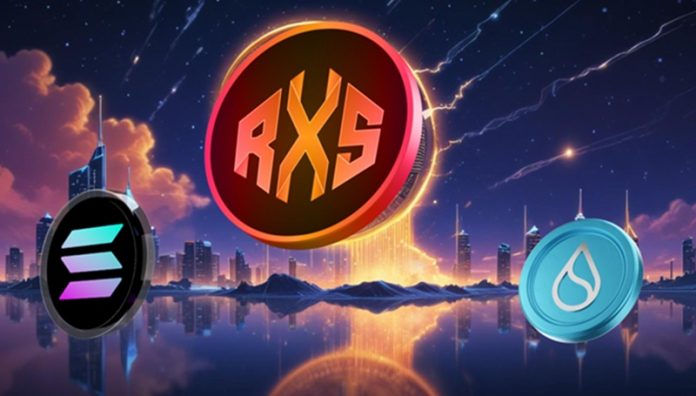
The crypto market is obsessed about the end of altcoin seasons, but Solana (SOL), Sui (SUI), and Rexas Finance (RXS) defy the narrative. Analysts project 500% rallies for Solana and Sui, fueled by growing institutional interest and regulatory developments. Meanwhile, Rexas Finance dominates headlines as its presale rockets toward completion, raising over $47 million and selling 91.25% of its allocated tokens. While Solana eyes $200 and Sui leverages partnerships with Trump-backed entities, Rexas Finance steals the spotlight by merging blockchain with real-world assets—a $16 trillion market spanning real estate, gold, and art. Here’s why these tokens remain pivotal in a shifting market.

Solana’s Race to $200

Solana continues attracting attention as analysts debate its potential to reclaim $200. Its high-speed transactions and low fees keep it competitive in decentralized applications and NFTs. Inclusion in Donald Trump’s proposed crypto reserve has bolstered credibility, positioning it as a viable Ethereum alternative. Market sentiment hinges on sustained trading volume and network upgrades, but resistance levels and macroeconomic factors could test its momentum. While short-term hurdles exist, Solana’s ecosystem growth keeps it in the altcoin race.

Sui’s Strategic Moves

Sui’s recent 4.7% dip to $2.42 hasn’t dampened optimism. Its partnership with World Liberty Financial, a DeFi project linked to Trump, highlights its institutional appeal. The collaboration focuses on stabilizing volatility and funding emerging projects, backed by a $388 million reserve. A potential Sui ETF, filed by Canary Capital, adds momentum. Approval could enhance liquidity and reduce supply, though SEC scrutiny looms. Despite regulatory uncertainty, Sui’s alliances and ETF prospects position it for long-term relevance.

Rexas Finance Redefining Real-World Asset Ownership 

While Solana and Sui navigate market dynamics, Rexas Finance reshapes how investors interact with tangible assets. Rexas Finance bridges blockchain and real-world assets, enabling fractional ownership of property, gold, and art through tokenization. Imagine a retail investor in Nigeria owning a stake in a Tokyo apartment or a European café—all managed via blockchain. This innovation unlocks access to trillion-dollar markets, democratizing opportunities once reserved for the wealthy. The platform’s ERC-20 token standard ensures compatibility across networks, while tools like the Quickmint Bot simplify asset tokenization.

Tools Driving Mass Adoption

Rexas Finance equips users with a Token Builder for creating asset-backed tokens and a Launchpad for fundraising. The AI Shield and GenAI tools enhance security and streamline processes, eliminating technical barriers. These features empower anyone to tokenize assets or launch projects, fostering a decentralized ecosystem. By prioritizing user-friendly solutions, Rexas accelerates blockchain integration into mainstream finance.

Unmatched Presale Momentum 

Rexas Finance’s presale has surged 6.6x from $0.03 to $0.20, with Stage 12 nearing completion. Over 456 million tokens (91.25%) have sold, raising $47.2 million of its $56 million target. Unlike projects reliant on venture capital, Rexas opted for a public presale, letting everyday investors join its revolution. The CertiK-audited platform guarantees secure smart contracts, while listings on CoinMarketCap and CoinGecko boost visibility.

Further, 2,000,000 RXS ($400k) was acquired, underscoring whale confidence in Rexas Finance.  A $1 million giveaway—offering 20 winners $50,000 each—fuels community excitement. With a confirmed $0.25 listing price and plans to launch on three top-tier exchanges in 2025, analysts forecast a 50x surge post-launch.

The Final Word 

Altcoin seasons may fluctuate, but Solana, Sui, and Rexas Finance prove resilience through innovation and strategic growth. While Solana and Sui leverage partnerships and ETFs, Rexas Finance stands out by merging blockchain with real-world value. Its presale’s explosive demand, coupled with tools democratizing asset ownership, positions RXS as a cornerstone of the tokenized future. With the presale’s final stage underway, the window for early access narrows—a reality investors keen on exponential gains can’t ignore.


For more information about Rexas Finance (RXS) visit the links below:

Website: https://rexas.com

Win $1 Million Giveaway: https://bit.ly/Rexas1M

Whitepaper: https://rexas.com/rexas-whitepaper.pdf

Twitter/X: https://x.com/rexasfinance

Telegram: https://t.me/rexasfinance

Shiba Inu Secures Listing on BingX As Meme Coin Adoption Grows, As WallitIQ (WLTQ) Steals Investor Spotlight, Find Out Why

0

Shiba Inu (SHIB) has recently experienced a significant surge in trading volume and market interest. This rally comes when meme coin adoption steadily increases, especially following its listing on BingX Futures. At the same time, WallitIQ (WLTQ) is gaining momentum, with its advanced functionalities attracting growing attention from investors, who have the potential to outrun Shiba Inu despite the BingX listing.

Shiba Inu’s Momentum and Recent Developments

Shiba Inu’s price rose significantly, with a 10% rally observed on the BingX futures optimism in a single day. According to data from Shiba Inu’s on-chain metrics, whale transactions surged by 73%, suggesting strong interest from large investors. Daily user transactions have also been steadily increasing, further indicating growing confidence in SHIB.

In a recent development, Shiba Inu (SHIB) secured a listing on BingX Futures, which provides more than 10 million traders with leveraged access to SHIB. This BingX Futures exposure increases liquidity and attracts new participants to the Shiba Inu ecosystem, potentially driving further growth in the token’s value.

Furthermore, despite the BingX Futures listing, the Shiba Inu (SHIB) team has teased the launch of Shib Finance, a decentralized finance (DeFi) upgrade that could offer advanced financial tools.

Why Is WallitIQ (WLTQ) Gaining Investor Attention

While Shiba Inu (SHIB) remains in the spotlight due to the listing of BingX Futures, WallitIQ (WLTQ) is emerging as a new and innovative player in the crypto space. This wallet offers unique features to ease the user experience and security within the cryptocurrency market.

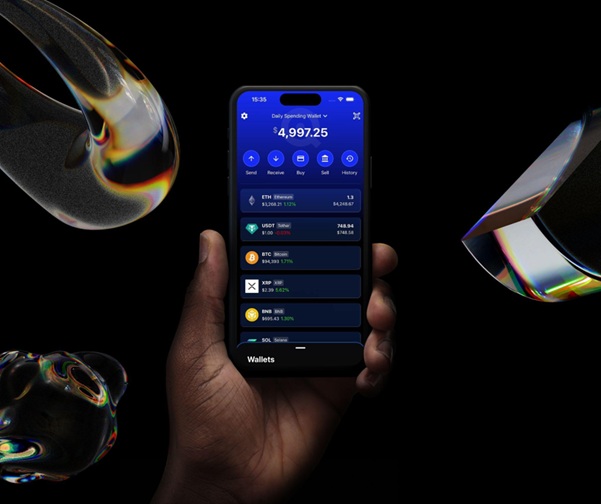
One of WallitIQ’s (WLTQ) standout features is its advanced crypto wallet management mobile app. The app integrates real-time market data from CoinGecko, allowing users to manage their wallets easily, track crypto prices, and execute transactions. The app also features an interactive candlestick chart with adjustable timeframes, offering investors a valuable tool for monitoring the market’s movements.

Another key component of WallitIQ (WLTQ) is its Physical to Digital (P2D) feature, which allows users to tokenize physical assets. This feature bridges the gap between traditional real-world assets and blockchain technology, unlocking new possibilities for decentralized finance (DeFi) and NFT-based ownership verification.

WallitIQ (WLTQ) also strongly emphasizes security. The platform uses its AI-Einstein layer to analyze potential threats and vulnerabilities in dApps and Web 3.0 platforms before users interact with them.

This added security guarantees that users’ assets remain protected from phishing attacks and malicious activities. SolidProof’s smart contract audit further boosts confidence in the platform’s safety and reliability. This commitment to security is a key selling point, particularly as concerns around crypto fraud and hacks continue to rise.

WallitIQ (WLTQ) Multilingual Chatbot and QR Code Payment Technology

Another important feature of WallitIQ (WLTQ) is its multilingual chatbot, which offers real-time assistance in multiple languages. This feature helps to improve user engagement and accessibility, particularly for users in different regions of the world.

By integrating this functionality, WallitIQ (WLTQ) guarantees that users from diverse backgrounds can easily interact with the platform.

Additionally, WallitIQ (WLTQ) has integrated QR code payment technology, simplifying transactions and promoting broader adoption of cryptocurrencies in everyday commerce.

This feature allows users to send and receive payments with ease, making crypto transactions more accessible for both merchants and consumers. This integration is a crucial step in expanding the practical uses of cryptocurrencies in daily life, enabling faster and safer transactions.

WallitIQ (WLTQ) Presale Opportunity and Future Prospects

WallitIQ (WLTQ) is currently in the presale phase, with its token priced at $0.0420. Early investors can participate in what is expected to be a high-growth platform, as the presale continues to draw attention due to its unique features.

Beyond its wallet management features, WallitIQ (WLTQ) has also launched its Beta platform, which promises easier functionalities and an intuitive user interface. This updated version aims to simplify users’ experience and provide a more robust solution for managing their digital assets.

Investors are advised to secure a stake in this groundbreaking token’s presale today to position themselves for life-changing gains.

Join the WallitIQ (WLTQ) presale and community:

Website: https://wallitiq.io/

Whitepaper: https://wallitiq.gitbook.io/wallitiq

Telegram: https://t.me/wallitiqofficial

Twitter/X: https://x.com/wiqnetwork

Instagram: https://www.instagram.com/wallitiqnetwork