DD
MM
YYYY

PAGES

DD
MM
YYYY

spot_img

PAGES

Home Blog Page 1613

BubbleMaps Sets to Launch $BMT on Bybit and MEXC

0

BubbleMaps, a blockchain analytics platform known for its visual representations of on-chain data, is set to launch its native token, $BMT, on March 11, 2025. The token will be issued on the Solana blockchain with a total supply of 1 billion tokens. This launch coincides with the rollout of BubbleMaps’ new community-driven investigation platform, Intel Desk, aimed at combating crypto scams by allowing users to propose, vote on, and contribute to investigations of suspicious wallets, tokens, or activities.

BMT will serve as a utility and governance token, enabling holders to access advanced features like cross-chain analytics, AI-driven cluster interpretation, and profit-loss tracking, as well as participate in the platform’s decision-making processes. The launch has garnered significant attention, with major exchanges like Bybit and MEXC confirming plans to list BMT on their spot trading platforms, signaling strong early adoption.

BubbleMaps’ focus on scam detection is commendable, but the effectiveness of Intel Desk will depend on the quality of community governance and the platform’s ability to filter out frivolous or biased investigations. Additionally, the crypto analytics sector is highly competitive, with established players like Chainalysis and emerging tools like Arkham Intelligence also vying for dominance.

The success of BMT will hinge on BubbleMaps’ ability to deliver on its promises and differentiate itself, especially given the speculative nature of token launches, which can sometimes prioritize hype over substance. Investors should approach with caution, recognizing the inherent risks of new token ecosystems, particularly in a market prone to volatility and manipulation.

Any user can submit a case for investigation, such as suspicious wallets, tokens, or activities that may indicate scams, fraud, or market manipulation. This democratizes the process, allowing community members, including traders, enthusiasts, and investigators, to highlight potential risks they encounter in the crypto space. For example, users might flag a token launch where a single cluster of wallets controls a disproportionate share of the supply, as BubbleMaps has previously done with projects like Hawk Tuah, where 96% of the token supply was held by connected wallets.

Once a case is submitted, Intel Desk employs a governance system where users holding BMT tokens can vote to prioritize cryptocurrencies, NFT and Defi investigations. The cases with the most votes are escalated for in-depth analysis, ensuring that community interest drives the investigative focus. This feature aims to make the platform responsive to real-time concerns, such as sudden memecoin pumps or insider trading allegations, by leveraging collective decision-making.

BubbleMaps’ core team leads the investigations on prioritized cases, utilizing the platform’s advanced analytics tools, such as omnichain visualization, historical token data (Time Travel), and AI-driven cluster analysis (Magic Nodes). These tools help uncover hidden patterns, such as wallet connections, token distribution centralization, or suspicious transaction flows. While BubbleMaps spearheads the effort to ensure credibility, users can also contribute by providing additional information or insights, fostering a collaborative approach.

The results of investigations are published publicly, making the findings accessible to the broader crypto community. This transparency is intended to warn potential investors about risks, expose fraudulent projects, and enhance overall market trust. For instance, BubbleMaps’ past investigations, like those into NEIRO and Focai memecoins, have revealed insider activity and centralized control, helping users make informed decisions.

BubbleMaps’ visual analytics, already integrated into platforms like Pumpfun and Etherscan, give Intel Desk a strong foundation, but its success will depend on execution. For instance, Arkham’s platform has gained traction by offering bounties for identifying wallet owners, a feature Intel Desk might consider enhancing its investigative power. Without such innovations, Intel Desk risks being seen as a niche tool rather than an industry standard.

Intel Desk’s functionality—case submission, community voting, led investigations, public reporting, and incentivization—represents an innovative attempt to decentralize crypto scam investigations, leveraging BubbleMaps’ expertise in visual analytics and the power of community governance. Its potential to enhance transparency and combat fraud is significant, particularly in a sector plagued by scams costing billions annually.

Changpeng Zhao Calls for Total Bot Elimination on X

0

Changpeng Zhao (CZ), co-founder of Binance, has publicly called for the complete elimination of automated bots on X, the social media platform formerly known as Twitter. In posts found on X, CZ expressed frustration with the prevalence of bots, particularly those that post via API, arguing that they disrupt human interaction and contribute to spam, scams, and misinformation. He emphasized a preference for genuine human engagement, suggesting that while AI-generated content is acceptable if manually posted, automated bot activity should be entirely disabled.

CZ’s stance highlights a broader issue within the crypto community on X, where bots are often used to impersonate influencers, promote fake tokens, and execute phishing scams. His call to action, directed at X’s owner Elon Musk, includes disabling API posting to curb bot-driven spam while preserving human-centric interactions. This aligns with ongoing concerns about X’s struggles to manage inauthentic accounts and harmful content, as evidenced by studies showing the platform’s challenges in moderating such activity.

However, CZ’s proposal raises questions about feasibility and unintended consequences. While eliminating API-driven bots could reduce spam, it might also limit legitimate automation, such as news feeds or customer service tools, which rely on API access. Additionally, distinguishing between harmful bots and beneficial automation is complex, and a blanket ban could alienate developers or businesses using X for legitimate purposes. Furthermore, CZ’s distinction between manual AI-generated posts and automated ones may not fully address the root issue, as bad actors could still manually post misleading content.

Critically, while CZ’s frustration is understandable, especially given the crypto sector’s vulnerability to bot-driven scams, his call for “total bot elimination” may oversimplify a nuanced problem. X’s bot issue is part of a larger challenge facing social media platforms, where balancing free speech, user safety, and platform utility remains elusive. Elon Musk has previously promised to address bots, but progress has been slow, suggesting that technical, economic, or strategic barriers may complicate such efforts. Until concrete evidence of a comprehensive solution emerges, CZ’s advocacy, while influential, remains a sentiment rather than a definitive path forward.

AI-powered chatbots have also supercharged romance scams. These scams feature a long-time horizon where a threat actor pretends to have a romantic interest in their target to build up trust with the victim over time. Elon Musk has proposed several solutions to automated bots, including asking users to register a credit card that would incur a small fee of several cents to impose a cost on new account creation, preventing bot farms from mobilizing armies of fake accounts.

Once trust is sufficiently established, the malicious actor typically requests funds from the target either through feigning financial problems or pitching a fake investment scheme. A 2023 study from the Network Contagion Research Institute also found that bots were responsible for manipulating altcoin prices by using coordinated posts from multiple bots to artificially pump prices. Automated bots are a well-documented problem on X that spam the site and are particularly active in the crypto sphere of influence — plaguing users with scam messages advertising fake tokens, phishing links to malicious sites, and pump-and-dump schemes.

Top Cryptos to Hold for Short Term? Qubetics Transforms Blockchain while Hedera and VeChain Enhance Real-World Applications

0

When considering the top cryptos to hold for the short term, few projects stand out like Qubetics, Hedera, and VeChain. These cryptocurrencies offer distinct advantages that make them ideal for backers seeking immediate returns and exposure to cutting-edge blockchain innovations. Qubetics, with its innovative QubeQode IDE, is not just another blockchain project. The Qubetics presale is rapidly approaching its final stages, making it an opportunity no early adopter should miss.

Hedera (HBAR) and VeChain (VET) have already proven their worth with solid real-world use cases, making them popular choices among the crypto community. While both have a firm grip on industries like supply chain management and enterprise blockchain, Qubetics presents a fresh approach to blockchain development that could disrupt the status quo.

Qubetics: Empowering the Next Generation of Blockchain Projects

Qubetics’ flagship product, the QubeQode IDE, has the potential to transform the blockchain development landscape. While many platforms offer blockchain tools, Qubetics is set to make life easier for businesses and professionals by integrating all necessary components into a seamless development environment. Developers will no longer need to hop between different platforms to build decentralized applications (dApps), saving valuable time and resources.

Qubetics has been making waves in the crypto space, with more than 22,700 holders purchasing tokens in the ongoing presale. The crypto presale has already raised over $14.9 million, reflecting strong community backing and growing demand. The current $TICS price is set at $0.1074, with analysts predicting a 132% ROI by the end of the presale at $0.25. After the presale, prices could soar, with estimates pointing to as much as 830% ROI if $TICS reaches $1 and even a staggering 13,859% ROI at $15 after the mainnet launch.

What sets Qubetics apart is its ability to address the core issues that have plagued other blockchain platforms. Many solutions focus on scalability or transaction speed but fail to provide the tools necessary for developers to create robust, secure dApps. Qubetics solves that problem by offering a streamlined IDE that reduces the complexity of blockchain development.

Hedera: The Enterprise Blockchain Powerhouse

Hedera Hashgraph is widely regarded as one of the top cryptos to hold for the short term, thanks to its unique Hashgraph consensus algorithm. Unlike traditional blockchains, Hedera offers unparalleled speed, security, and scalability, which is why major corporations have embraced it for enterprise-grade applications. Hedera’s real-world adoption in sectors like supply chain management, payments, and tokenization has solidified its reputation as a blockchain solution built for businesses.

One of Hedera’s standout features is its instant finality, meaning transactions are confirmed almost immediately without the risk of forks. Hedera’s low fees make it an attractive option for companies looking to integrate blockchain technology without incurring the high transaction costs seen on other networks. Fortune 500 companies and major institutions, including IBM, LG, and Google, have trusted Hedera to power their blockchain applications.

For community members seeking exposure to a reliable, enterprise-grade blockchain, Hedera’s HBAR token provides an ideal investment. The project’s proven track record in industries like tokenization and supply chain management makes it a top contender for those interested in short-term gains with long-term potential.

VeChain: Revolutionizing Supply Chain Management

VeChain’s focus on supply chain management has made it one of the most exciting blockchain projects in recent years. With its real-world applications already in full swing, VeChain is a must-watch for anyone looking for top cryptos to hold for the short term. By using blockchain technology, VeChain allows businesses to track products from production to delivery, ensuring transparency and reducing fraud along the way.

What sets VeChain apart from other blockchain projects is its extensive network of partnerships with major corporations. Companies like BMW, Walmart, and PwC have integrated VeChain into their supply chains, validating the platform’s real-world utility. This gives VeChain a solid foundation in the market and makes it an attractive option for early buyers looking to get in on a crypto project with proven results.

VeChain’s VET token powers the platform, enabling transactions and facilitating the verification of product data. With its growing adoption, VeChain has become a leading player in the blockchain supply chain space. For community members looking for a crypto presale that offers real utility, VeChain’s partnerships and use cases make it a solid choice.

Conclusion

Qubetics, Hedera, and VeChain are three of the top cryptos to hold for short-term growth, each offering unique features that cater to the evolving needs of the blockchain and crypto space. Qubetics stands out with its innovative QubeQode IDE, providing developers with an all-in-one platform to streamline blockchain development. Hedera’s high-speed, enterprise-grade blockchain technology offers unmatched security and scalability, making it a top choice for businesses. Meanwhile, VeChain continues to redefine supply chain management with its transparent and efficient blockchain solution, backed by strong corporate partnerships.

For community members seeking to diversify their crypto portfolios, these three projects offer promising opportunities for both short-term growth and long-term potential. Whether you are a developer, business owner, or participant looking to capitalize on blockchain innovation, Qubetics, Hedera, and VeChain provide the tools and infrastructure necessary to succeed in this dynamic market. Don’t miss the chance to engage with these projects as they continue to reshape industries and unlock new possibilities in the world of crypto.

For More Information:

Qubetics: https://qubetics.com

Presale: https://buy.qubetics.com

Telegram: https://t.me/qubetics

Twitter: https://x.com/qubetics


FAQs

1. What is the best crypto presale to invest in for short-term growth?

The best crypto presale to invest in for short-term growth is Qubetics, which has raised over $14.9 million in its ongoing presale. The platform’s QubeQode IDE offers unique advantages for developers.

2. What are the potential ROI gains from the Qubetics presale?

The Qubetics presale offers a potential 132% ROI by the end of the presale at $0.25, and up to 13,859% ROI after the mainnet launch at $15 per token.

3. How does Hedera differentiate itself from other blockchain projects?

Hedera stands out with its Hashgraph consensus, which offers unmatched speed, security, and scalability. Its enterprise-grade applications in supply chain management, tokenization, and payments make it a top contender for short-term growth.

4. What makes VeChain a top contender for short-term crypto investment?

VeChain’s real-world applications in supply chain management and its partnerships with major corporations like BMW and Walmart make it a strong choice for those looking for stable, short-term gains.

5. Why is Qubetics considered the future of blockchain development?

Qubetics addresses the need for a comprehensive development toolkit with its QubeQode IDE. This will make it easier for businesses and developers to create decentralized applications, positioning Qubetics for long-term success. 

Best Cryptos to Join for Long Term: Qubetics At $0.1074 as Polkadot Price Prediction Shows Promise and ICP Leads AI Revolution

0

The cryptocurrency landscape is full of dynamic, innovative projects aiming to disrupt traditional industries, and three standout names are constantly making waves: Qubetics, Internet Computer Protocol (ICP), and Polkadot. Each of these projects brings something fresh and unique to the table, from decentralization to advanced blockchain interoperability. But how do they measure up against each other in terms of long-term potential and real-world impact?

While Polkadot continues to dominate the conversation about cross-chain communication and interoperability, Internet Computer Protocol is pushing the boundaries of what decentralized computing can achieve. Then there’s Qubetics, the newcomer, which is making waves with its highly promising features like a Non-Custodial Multi-Chain Wallet and decentralized VPN, both aiming to solve the real-world problems that other blockchain platforms struggle to address.

As the crypto space evolves, the question on everyone’s mind is: which of these are the Best Cryptos to Join for Long Term? Let’s break it down and see what makes these three projects so exciting.

Qubetics: The Future of Blockchain with Multi-Chain Wallets and Decentralized VPN

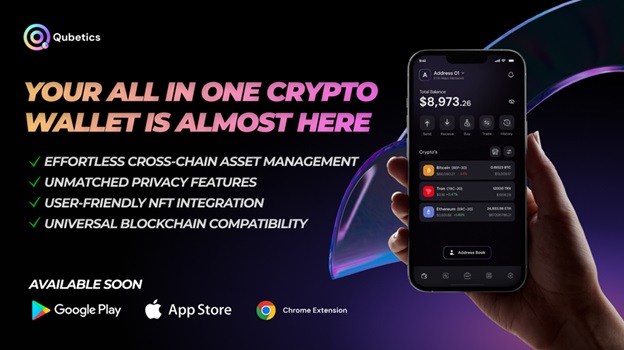
Qubetics is quietly making a name for itself as a major player in the crypto space, and it’s easy to see why. With a mission to provide a decentralized, secure, and seamless user experience, Qubetics is building what could be one of the most comprehensive blockchain solutions available. Among its standout features are its Non-Custodial Multi-Chain Wallet and decentralized VPN, two tools that aim to solve some of the key issues facing the industry today.

What is the Non-Custodial Multi-Chain Wallet?

A non-custodial wallet gives users complete control of their funds, removing third-party intermediaries. Unlike traditional wallets that are controlled by exchanges or custodial services, a non-custodial wallet empowers users with total ownership. This is a crucial feature for anyone looking for the Best Cryptos to Join for Long Term.

Qubetics takes this a step further with its multi-chain functionality, meaning it supports assets from multiple blockchains, not just one. For businesses, professionals, and individuals, this means greater flexibility, ease of use, and security when managing crypto assets across various networks.

But what really sets Qubetics apart is its decentralized VPN, providing an extra layer of privacy and security for users. Unlike centralized VPN services, which can track and store user data, a decentralized VPN ensures that no single entity has access to your browsing habits or personal information.

As the presale enters its 25th stage, Qubetics has already sold more than 498 million tokens to over 22,700 holders, raising over $14.9 million. The $TICS token is currently priced at $0.1074, and analysts predict a 132% return on investment if the price reaches $0.25 by the presale’s end. In fact, some predict a price of $1 after the presale, giving early adopters an 830% ROI. If you’re thinking long-term, you could even see returns of over 13,000% if the price reaches $15 post-mainnet launch.

Polkadot (DOT): Latest Updates and Price Predictions

Polkadot (DOT) has experienced a minor price fluctuation, trading around $4.52, reflecting a slight decrease of 1.65% from the previous close. Despite this minor dip, Polkadot continues to be one of the most important projects in the blockchain ecosystem, thanks to its innovative multi-chain structure and interoperability features.

Polkadot Price Prediction: What Experts Are Saying

The price forecast for Polkadot varies depending on the perspective of analysts, but most projections suggest moderate to strong growth in the coming years. According to CoinCodex, DOT could reach $5.27 by the end of 2025, indicating a potential gain of 31.12% from its current price. This conservative estimate reflects the growing demand for Polkadot’s technology, which has gained traction within the decentralized finance (DeFi) and other blockchain projects.

On the more optimistic side, Changelly suggests that Polkadot could reach $6.24 by September 2025, which could represent an even greater upside for those interested in its potential. Analysts have also pointed to Polkadot’s continued strength in its parachain auctions, where projects bid to launch on the Polkadot network, indicating the rising value of the ecosystem.

Ali Martinez, a well-regarded crypto analyst, also shared an optimistic price prediction, noting that if Polkadot can maintain support at $3.80, it could surge to $6.40, with a potential high of $10.80—a potential 180% gain. This further highlights Polkadot’s potential for strong growth, especially if it continues to attract new projects and use cases.
Internet Computer Protocol (ICP): Innovations and Market Momentum

The Internet Computer Protocol (ICP) has been making significant strides in 2025, positioning itself as a leader in decentralized cloud computing and blockchain-based artificial intelligence (AI). Recent reports have highlighted ICP’s rising prominence, particularly its innovative solutions for smart contracts and decentralized applications powered by AI.

ICP’s AI Collaboration: A Game Changer in the Blockchain World

ICP’s increasing focus on AI development is drawing attention in the crypto space. Recent collaborations with industry-leading entities such as Ozak AI, AI16Z, and Jupiter demonstrate how ICP’s blockchain technology can be used to power AI-driven applications and smart contracts. These partnerships provide ICP with a significant competitive advantage, as the blockchain sector seeks to integrate more advanced AI capabilities.

By leveraging its decentralized network, ICP is creating a platform that enables businesses to build and deploy AI applications with improved security, scalability, and cost-efficiency. This makes ICP one of the most promising blockchain projects for AI integration, and its growth trajectory is poised to continue in 2025 and beyond. Given the increasing demand for decentralized applications in AI, ICP is positioned to be a key player in the intersection of these two rapidly growing industries.

ICP’s strong focus on both decentralization and AI makes it one of the Best Cryptos to Join for Long Term, helping businesses and developers unlock new possibilities in the world of smart contracts and digital innovation.

The Non-Custodial Multi-Chain Wallet: What’s All the Buzz About?

The concept of non-custodial wallets isn’t new, but when paired with multi-chain capabilities, it takes the idea to a whole new level. A non-custodial multi-chain wallet lets users store and manage assets from multiple blockchain networks without relying on a centralized service. This kind of wallet offers total control, complete privacy, and the flexibility to interact with several blockchain ecosystems.

For businesses and professionals, these types of wallets are a game changer. They simplify transactions and asset management, offering a seamless experience across different blockchain networks. By removing intermediaries, they also reduce the risk of hacking or fraud. A non-custodial wallet also makes it easier for users to stay in control of their crypto holdings without worrying about third-party risks.

The value of such wallets is clear: they provide a much-needed layer of security and autonomy for anyone serious about getting the Best Cryptos to Join for Long Term.

Conclusion: Best Cryptos to Join for Long Term

In conclusion, Qubetics, Internet Computer Protocol, and Polkadot each offer unique advantages in the blockchain and crypto space. From Qubetics’ innovative non-custodial multi-chain wallet and decentralized VPN to Polkadot’s interoperability and ICP’s decentralized cloud computing, all three projects are positioning themselves as Best Cryptos to Join for Long Term.

But with the Qubetics crypto presale entering its final stages, the buzz surrounding its potential is undeniable. With its presale already raising more than $14.9 million and the $TICS token continuing to gain traction, now could be the perfect time to consider getting involved in what’s shaping up to be one of the Best Cryptos to Join for Long Term.

For More Information:

Qubetics: https://qubetics.com

Presale: https://buy.qubetics.com

Telegram: https://t.me/qubetics

Twitter: https://x.com/qubetics


FAQs

What makes Qubetics different from other blockchain projects?

Qubetics stands out with its focus on asset tokenization, user privacy, and democratizing access to exclusive investments, powered by smart contracts and decentralization.

How does Polkadot enable cross-chain interoperability?

Polkadot enables cross-chain interoperability through its relay chain, allowing different blockchains to transfer data and assets seamlessly.

What is the role of the Non-Custodial Multi-Chain Wallet in Qubetics?

The Non-Custodial Multi-Chain Wallet in Qubetics ensures secure, decentralized control over assets, empowering users without relying on third parties.

How does ICP aim to decentralize the cloud computing industry?

ICP aims to decentralize the cloud computing industry by providing an open, scalable, and secure alternative to traditional cloud services, powered by blockchain technology.

Is Polkadot a good choice among the Best Cryptos to Join for Long Term?

Yes, Polkadot is a solid choice for long-term growth due to its strong scalability, innovative cross-chain capabilities, and growing ecosystem.

How DeFi Helps Hedge Against Inflation

0

Inflation hedging with DeFi yields involves using decentralized finance (DeFi) protocols to protect your wealth from the eroding effects of inflation while generating returns. DeFi offers tools that can help investors maintain or grow the purchasing power of their assets in inflationary environments, often with higher yields than traditional finance (TradFi) options. DeFi platforms operate on blockchain technology, meaning they are decentralized and not controlled by central authorities like banks or governments.

Access to Stablecoins

Stablecoins, such as USDC or USDT, are cryptocurrencies pegged to fiat currencies like the U.S. dollar, making them less volatile than other crypto assets. By converting fiat money into stablecoins, you can escape the direct devaluation of your local currency during inflation. DeFi platforms allow you to deposit these stablecoins into various services to generate yields, effectively earning returns while preserving capital stability.

Traditional financial institutions, such as banks, often offer very low interest rates—sometimes as low as 0.03% for checking accounts or 0.06% for savings accounts in the U.S. In contrast, DeFi platforms can offer significantly higher yields, often ranging from 5% to 20% or more, depending on the protocol and risk level. These yields can outpace inflation, helping to maintain or grow the real value of your money.

Many cryptocurrencies, including those used in DeFi, have mechanisms like supply caps (e.g., Bitcoin’s 21-million-coin limit) that make them resistant to inflation caused by excessive money printing. DeFi extends this principle by offering financial services that are not subject to central bank policies, giving users more control over their funds and strategies to combat inflation.

Key DeFi Strategies for Inflation Hedging

DeFi lending platforms allow you to deposit stablecoins and earn interest as other users borrow your funds. This generates a steady cash flow that can help offset inflation. For example, platforms aggregate DeFi services, enabling users to lend stablecoins like USDC or USDT and earn competitive yields without the platform controlling the funds.

By providing liquidity to decentralized exchanges (DEXs), you can earn trading fees and rewards in the form of yields. This involves depositing pairs of assets (often including stablecoins) into liquidity pools. While this strategy can offer high returns, it comes with risks like impermanent loss, where the value of your deposited assets may fluctuate relative to holding them.

Staking involves locking up certain cryptocurrencies to support a blockchain network’s operations, earning rewards in return. Some DeFi protocols offer staking of stablecoins or other inflation-resistant assets, providing yields that can outpace inflation. However, ensure the staking protocol is secure and sustainable, as some high-yield staking programs may be Ponzi-like schemes.

Yield Farming

Yield farming involves moving assets between different DeFi protocols to maximize returns. This can include lending, staking, or providing liquidity to earn the highest possible yields. While potentially lucrative, yield farming is complex and carries higher risks, including smart contract vulnerabilities and market volatility.

DeFi platforms allow you to use crypto assets as collateral to borrow other assets, such as stablecoins. You can then use these borrowed funds to invest in yield-generating opportunities. This strategy can amplify returns but also increases risk, as over-collateralization is typically required, and liquidation is possible if collateral values drop.

Diversification and Dollar-Cost Averaging

DeFi enables easy diversification by allowing you to spread investments across multiple protocols, assets, and strategies. Additionally, dollar-cost averaging—investing a fixed amount regularly—can help mitigate volatility risks, making it easier to build a portfolio that withstands inflationary pressures over time. Several DeFi platforms and tools can help implement these strategies platforms like Aave and Compound allow you to lend stablecoins and earn interest.

DEXs like Uniswap and Curve offer opportunities to provide liquidity and earn fees. Services like Yearn.Finance automatically optimize your investments across protocols to maximize yields. Some platforms, such as Nuon, aim to create “flatcoins” or yield-generating stablecoins specifically designed to protect against inflation by tying their value to the cost of living rather than fiat currencies. While DeFi offers powerful tools for inflation hedging, it is not without risks. DeFi protocols rely on smart contracts, which can have bugs or vulnerabilities that lead to hacks or loss of funds.

Even stablecoins can face risks, such as depegging (losing their peg to the fiat currency) during extreme market conditions. Non-stablecoin assets in DeFi can also be highly volatile, impacting strategies like liquidity provision. When providing liquidity, you may experience impermanent loss if the price of one asset in the pair diverges significantly from the other, reducing the value of your position compared to simply holding the assets.

DeFi operates in a largely unregulated space, which can lead to sudden changes in legal or tax treatment. Stay informed about regulations in your jurisdiction to avoid unexpected compliance issues. Protocols offering extremely high yields (e.g., 100%+ APY) may be unsustainable or outright scams. Be cautious of “yield farming” schemes that resemble Ponzi structures, where returns are paid from new investors’ funds rather than genuine profits.

Some DeFi protocols may have low liquidity, making it difficult to withdraw funds quickly, especially during market stress. Ensure you understand the liquidity dynamics of any platform you use. While DeFi is often touted as a revolutionary tool for inflation hedging, it’s important to critically examine its limitations and the broader economic. DeFi yields are not guaranteed to outpace inflation, especially during periods of hyperinflation or extreme market downturns. Yields can fluctuate based on market demand, protocol incentives, and broader economic conditions.

DeFi requires technical knowledge, internet access, and a willingness to navigate complex platforms. This can exclude less tech-savvy investors, particularly in regions with high inflation but limited digital infrastructure. The DeFi ecosystem is interconnected, meaning a failure in one major protocol (e.g., a hack or liquidity crisis) can cascade across the market, impacting yields and asset values.

Traditional inflation hedges like Treasury Inflation-Protected Securities (TIPS), real estate, or commodities may offer more stability and lower risk compared to DeFi, especially for conservative investors. DeFi should be seen as a complementary, not sole, strategy. DeFi yields offer a promising, albeit high-risk, approach to hedging against inflation.

By leveraging stablecoins, lending, staking, and other strategies, investors can potentially earn returns that outpace inflation, preserving or growing their wealth. However, the risks—ranging from smart contract vulnerabilities to regulatory uncertainty—mean that DeFi should be approached with caution and as part of a broader, diversified inflation-hedging strategy.