DD
MM
YYYY

PAGES

DD
MM
YYYY

spot_img

PAGES

Home Blog Page 1615

Jim Cramer Warns of Further Nvidia Declines as AI Stocks Struggle Amid Rising Chinese Competition

0

CNBC’s Jim Cramer on Wednesday cautioned investors about Nvidia’s ongoing stock struggles, warning that the artificial intelligence (AI) giant could face even more turbulence after suffering a 5.74% drop in a single session.

As concerns over rising competition and new U.S. trade policies grow, the once-dominant semiconductor stock is showing signs of weakness.

“Nvidia’s the linchpin of this group, and the pin is failing,” Cramer said. “I don’t know whether the stock plunges from here, but if you like it enough to keep owning it, I say prepare for the turbulence.”

The warning came as the broader stock market ended a three-day rally, with major indexes closing in the red. The Dow Jones Industrial Average declined 0.31%, the S&P 500 lost 1.12%, and the Nasdaq Composite—which is heavily concentrated in tech stocks—fell 2.04%. Several major tech companies, including Meta, Amazon, Alphabet, and Tesla, saw their stock prices decline alongside Nvidia.

Much of this downward pressure on the market was driven by investor anxieties over President Donald Trump’s upcoming round of tariffs, set to take effect on April 2. The looming trade restrictions have injected fresh uncertainty into the market, particularly for companies like Nvidia that have global supply chains and are heavily dependent on international markets.

Nvidia’s $600 Billion Stock Plunge and Rising Chinese AI Competition

While Nvidia has been one of the biggest beneficiaries of the AI boom, its stock has come under increasing pressure in recent months due to intensifying competition in the AI chip market. The company, which had led the market for most of last year, has struggled to maintain momentum amid concerns that its dominance may be under threat.

The most significant blow came in January 2024, when Nvidia experienced the largest single-day stock loss in U.S. history, erasing nearly $600 billion in market value. The selloff was triggered by the emergence of DeepSeek, a Chinese AI startup that unveiled a groundbreaking AI-driven semiconductor technology aimed at competing directly with Nvidia’s high-end chips.

DeepSeek’s entry into the market sent ripples through Wall Street, as investors scrambled to reassess Nvidia’s long-term prospects. The startup’s cost-effective AI solutions have raised concerns that Nvidia’s premium-priced chips could lose market share, especially in regions where affordability is a key factor.

China’s aggressive push into AI chip manufacturing has further fueled fears that Nvidia may struggle to maintain its dominant position. Several Chinese companies, backed by significant government funding, have been developing alternative AI chips that offer comparable performance at lower costs. This has led to speculation that major AI firms may shift away from Nvidia’s expensive GPUs in favor of cheaper alternatives.

The “Death Cross” and Fears of Continued Stock Turmoil

Adding to investor fears, Nvidia has recently exhibited a bearish “death cross” pattern—a widely watched technical signal that suggests a stock may face further downside. This pattern occurs when a stock’s 50-day moving average falls below its 200-day moving average, often viewed as an indicator of sustained weakness in stock performance.

“The ‘death cross’ is widely seen as a terrifying development,” Cramer explained, warning that Nvidia’s struggles could spill over into the broader AI sector.

With Chinese AI companies recording cost-effective breakthroughs, analysts fear that Nvidia’s stock could remain under pressure for the foreseeable future. If alternative AI chips continue to gain traction, Nvidia may be forced to cut prices or innovate at an even faster pace to maintain its competitive edge.

Cramer Remains Bullish on AI But Warns of Volatility

However, Cramer maintained his long-term faith in Nvidia and the AI industry as a whole. He argued that while Nvidia is currently experiencing turbulence, the company remains a cornerstone of the AI revolution, particularly in the development of advanced semiconductors.

“One day… we’re going to get some certainty on Nvidia,” Cramer said. “And if we can get that certainty, we’ll also know what’s happening with a whole host of other stocks.”

Nigeria Bill to Transfer Control of Natural Resources to States Passes Second Reading in House of Reps., But It’s Likely to Fail

0

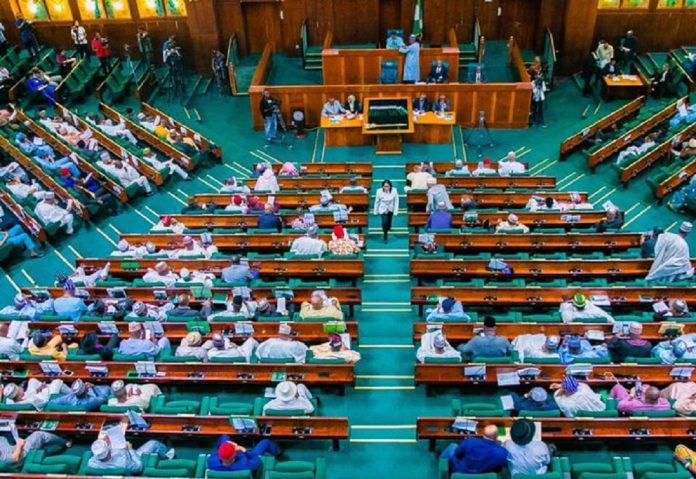
A bill seeking to amend the 1999 Constitution to transfer control of natural resources—including oil fields, minerals, and natural gas—from the federal government to individual states has scaled second reading in the House of Representatives.

The proposed amendment aims to decentralize Nigeria’s resource governance structure, granting states greater autonomy over the exploration, management, and revenue generation of natural resources within their jurisdictions. If passed into law, it would significantly alter the existing fiscal framework, where the federal government has exclusive control over key natural resources.

The bill, titled “A Bill for an Act to Alter the Provisions of the Constitution of the Federal Republic of Nigeria, 1999 to Decentralize the Governance of Natural Resources in the Federal Republic of Nigeria to transfer Mines and Minerals, Including Oil Fields, Oil Mining, Geological Surveys and Natural Gas from the Exclusive Legislative List to the Concurrent Legislative List and for Related Matters,” was sponsored by House Speaker Abbas Tajudeen and three other lawmakers.

Under the current structure, natural resources such as oil, gas, and minerals are managed exclusively by the federal government, as stipulated in Item 39, Part 1, Second Schedule of the 1999 Constitution’s Exclusive Legislative List. This provision prevents states from directly legislating, regulating, or benefiting from resource extraction within their territories.

Essentially, only the federal government can issue mining and oil exploration licenses, regulate natural resource extraction, and collect revenue. The proposed amendment seeks to remove this exclusive power from the federal government and place it under the Concurrent Legislative List, allowing both federal and state governments to regulate and legislate over resource management.

If the bill is passed, it would mean that states can issue mining and oil exploration licenses, regulate extractive activities, and collect resource-related revenues independently, without seeking approval from the federal government.

The Economic and Political Realities That May Block the Bill

However, while proponents argue that the amendment would strengthen fiscal federalism and boost local economies, the bill is unlikely to become law due to strong opposition from states with little or no natural resources.

One of the major reasons the bill will struggle to pass is the economic disparity among states in terms of natural resource deposits. Only a handful of states, mainly in the Niger Delta, have significant mineral resources, particularly crude oil and gas, which account for the bulk of Nigeria’s revenue. This means that states that do not have substantial natural resource wealth would lose a major source of funding if the federal government ceases to control and redistribute resource revenue.

Currently, most states in Nigeria depend heavily on monthly allocations from the federal government’s revenue pool, which is largely funded by oil sales. Without this shared revenue, many states, especially those in the North and some parts of the Southwest, could struggle financially. Lawmakers representing these states will likely oppose the bill, knowing that decentralizing resource control would tilt economic power toward oil-producing states like Rivers, Bayelsa, Delta, and Akwa Ibom, while leaving other states with limited means of revenue generation.

This same pattern of opposition played out with the Presidential Tax Reform Bills, which have been widely resisted, especially by northern leaders, who argue that they would impoverish the region. The tax reform initiative, championed by the Presidential Fiscal Policy and Tax Reform Committee, aims to overhaul Nigeria’s complex tax system by introducing the derivation-based VAT model. This approach would allow states that generate more VAT to retain a larger share of the revenue, fostering economic accountability and encouraging self-sufficiency.

While the federal government has presented the reforms as a way to boost tax compliance and increase internally generated revenue (IGR), northern leaders have argued that the reforms would favor wealthier states with strong economic activities, while leaving less-developed states behind.

The same argument is expected to be used against the resource control bill, as northern lawmakers and governors would likely insist that their states would be disproportionately affected by such a policy shift.

A Long-Standing Demand for Resource Control

Despite the likelihood of failure, the bill represents a long-standing demand by oil-producing states and advocates of fiscal federalism, who argue that the current revenue-sharing formula is unjust. Oil-rich states in the Niger Delta have long pushed for greater control over the wealth generated from their land, arguing that the federal government takes too much while giving back too little.

Proponents of the bill believe that allowing states to control their natural resources would encourage local economic development, reduce conflicts in oil-rich areas, and promote competition among states. They argue that decentralization would also lead to more efficient resource management, as states would be directly responsible for ensuring their resources are extracted and used effectively.

However, similar bills have been introduced in the past and failed to progress beyond the second reading. The last major attempt to amend resource control laws in 2016 was met with strong resistance from lawmakers representing non-oil-producing states, who feared their states would become financially unstable if the federal government lost control over resource allocation.

What’s Next for the Bill?

Having passed its second reading, the bill will now move to the House Committee on Constitutional Amendment for review. If the committee approves it, the bill will proceed to a third reading before being sent to the Senate for concurrence.

However, for the amendment to become law, it must secure approval from two-thirds of the House of Representatives, two-thirds of the Senate, and two-thirds of Nigeria’s 36 State Houses of Assembly, as required under Section 9 of the 1999 Constitution for constitutional amendments.

Given the strong regional divide on resource control and fiscal policies, the bill faces an uphill battle. While it highlights growing frustrations with Nigeria’s centralized economic system, it is unlikely to gain the broad support needed to pass, as the majority of states stand to lose more than they would gain.

Encryption in Elections: Pursuing and Balancing Security and Transparency

0

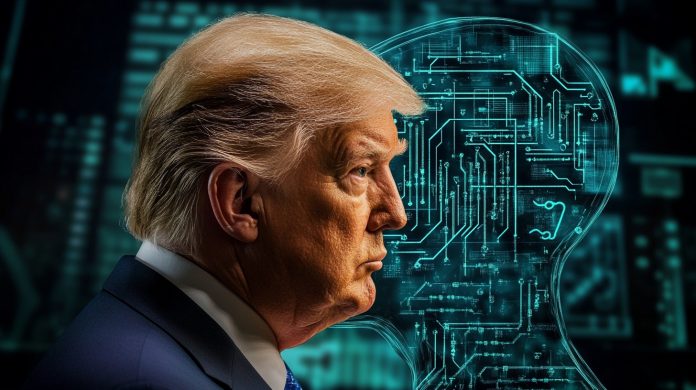
The executive order signed by President Donald Trump on March 25, 2025, titled “Preserving and Protecting the Integrity of American Elections.” This order, enacted during his second term as the 47th president, aims to overhaul U.S. federal election processes. The order mandates documentary proof of citizenship—like a passport or birth certificate—for voter registration in federal elections, a shift from the current system where self-attestation under penalty of perjury suffices. It also demands that all ballots be received by Election Day, rejecting late arrivals regardless of postmark—a tighter rule than many states currently follow.

States are directed to collaborate with federal agencies like the Department of Homeland Security (DHS) and the Social Security Administration to share voter lists and verify citizenship, with the Attorney General tasked to prioritize prosecuting non-citizen voting. Non-compliant states risk losing federal election funds, a stick to enforce cooperation.
Trump pitched this as a fix for what he calls a “sick” system prone to fraud, echoing his long-standing claims—unsubstantiated by large-scale evidence—about rigged elections. The order rescinds Biden’s 2021 directive that boosted voter registration via federal agencies, framing it as partisan overreach.

It also tasks the Election Assistance Commission (EAC) with updating voting system guidelines, pushing against tech like QR-coded ballots to favor paper-based, “chain-of-custody” methods. It’s a power play with teeth—but shaky legs. Constitutionally, states hold broad authority over elections under Article I and the 10th Amendment; the president can’t unilaterally rewrite those rules. Experts like UCLA’s Rick Hasen argue the EAC can’t be forced to amend forms this way—it’s bipartisan and independent for a reason.

Legal challenges are already brewing, with voting rights groups like the Brennan Center calling it “lawless,” citing the 2013 Supreme Court ruling (Arizona v. Inter Tribal Council) that blocked states from adding citizenship proof to federal forms without Congressional approval. The 14th Amendment’s birthright citizenship clause could also clash with any DHS push to exclude certain groups. Practically, it could shrink voter rolls. Millions lack easy access to passports—only 38% of Americans had one in 2023, per State Department data—and birth certificates can be a hassle for the elderly or displaced.

Proponents say it’s about integrity; critics say its suppression dressed as reform. Enforcement hinges on state buy-in, and blue states might just say no, daring the feds to cut funds and face lawsuits. Red states, already strict, might double down—think Texas or Georgia syncing with DHS databases. The digital defiance angle ties in too. Posts on X suggest grassroots support, with some users cheering it as a blow against “illegal voting” (though studies, like one from Brennan in 2014, peg non-citizen voting at under 0.0001% of ballots).

Others call it a power grab, predicting chaos at the polls. It’s a polarizing move, fueled by Trump’s narrative and enabled by tech that lets both sides rally fast—encrypted chats for planning, viral posts for amplification. Will it stick? Doubtful without Congress or courts bending. It’s a bold imprint, but the system’s checks—state autonomy, judicial review—might sand it down.

Encryption scrambles election data—voter registrations, ballot casts, or results—so only authorized parties with the right keys can read it. End-to-end (E2E) encryption, like what Signal uses, ensures even system operators can’t peek. Estonia’s been the poster child since 2005, with over 50% of its 2023 parliamentary votes cast online via an E2E-encrypted i-Voting system. Voters get a cryptographic receipt to verify their ballot, and the code’s open-source—anyone can audit it. Switzerland tried something similar with Scytl’s system, encrypting votes from cast to count, though it hit a wall in 2019 over transparency bugs.

In the U.S., it’s patchier. Voatz, a mobile voting app, used encryption for West Virginia’s 2018 midterms, letting overseas military vote via blockchain-backed security. About 150 ballots went through, biometrically verified and E2E-encrypted. Denver piloted it too, with 2020 audits showing no breaches. Microsoft’s ElectionGuard, rolled out in 2024 trials, encrypts votes and spits out a public ledger—voters can check their tally without exposing choices. It’s not widespread; only a dozen jurisdictions tested it by now. Trump’s order doesn’t name encryption but slams digital gimmicks like QR-coded ballots, pushing a paper-first ethos.

That’s a swipe at systems like Voatz or ElectionGuard, which lean on encrypted digital flows. The order’s citizenship checks, and Election Day deadlines don’t mesh easily with online voting either—encrypted or not, verifying identity remotely gets messy when passports are demanded. It’s a signal: encryption’s welcome only if it fits a tight, analog-heavy frame. Encryption could lock down voter data against hacks—Russia’s 2016 probing of voter rolls, or China’s 2022 state-level breaches show the risk. It also fights fraud claims; cryptographic proofs let voters confirm their ballot without trusting some clerk. Estonia’s had zero verified tampering cases in 18 years.

In Africa, Kenya’s 2022 election used encrypted transmission of results from polling stations, cutting rigging rumors (though courts still tossed it over process flaws). Complexity breeds skepticism. MIT’s 2020 Voatz audit found encryption solid but app flaws exploitable—think jailbroken phones. Public trust lags too; a 2023 Pew survey showed 60% of Americans doubt digital voting, encrypted or not, versus 20% for paper. Digital defiance ties in. Activists could use encrypted platforms to monitor elections—think Telegram chats tracking irregularities in real time, like Myanmar’s 2024 resistance did. But if the U.S. doubles down on paper, encryption’s role shrinks to back-end security, not voter-facing tools.

Nigerian House of Reps. Advances 42 Constitutional Amendment Bills, Moves to Scrap Immunity for Govs. and VPs

0

The House of Representatives on Wednesday passed 42 constitutional amendment bills through second reading, marking a significant step in Nigeria’s ongoing push for governance reforms.

This comes a day after 39 similar bills scaled second reading, bringing the total number of constitutional amendment proposals passed in two days to 81.

Among the most significant amendments is a proposal to remove the immunity currently enjoyed by the vice president, governors, and their deputies, a move that has been widely welcomed by Nigerians who see the immunity clause as a major enabler of corruption and impunity among public officials.

Key Constitutional Amendments Passed

The House moved quickly to approve the amendments, which also include:

  • Scrapping of Immunity for the Vice President, Governors, and Deputies: The bill proposes to limit the immunity of the president while completely revoking it for the vice president, governors, and their deputies. This means that once passed into law, these officials can be investigated, arrested, and prosecuted while still in office.
  • Separation of the Attorney-General and Minister of Justice Offices: The bill seeks to ensure that the Attorney-General of the Federation (AGF) and state Attorneys-General operate as independent legal officers, rather than as political appointees who could be influenced by the executive arm of government. This is aimed at strengthening the rule of law and reducing political interference in legal matters.
  • Gender and Citizenship Rights: Another amendment aims to grant automatic Nigerian citizenship to foreign spouses of Nigerian women, a right that is already granted to foreign spouses of Nigerian men. The bill also proposes mandatory youth and women representation in government appointments.
  • Creation of New States: Some of the amendments propose the creation of Ijebu State, Ife-Ijesa State, Tiga State, Orlu State, and Etiti State, reflecting the long-standing agitation for more state representation across different regions.

Why Scrapping Immunity Is a Major Talking Point

The removal of immunity for governors and Vice presidents has been one of the most talked-about constitutional amendments, as many Nigerians believe that the clause has served as a shield for corruption, abuse of power, and reckless governance.

Currently, under Section 308 of the Nigerian Constitution, the president, vice president, governors, and deputy governors cannot be prosecuted or arrested while in office, even if they are found to have engaged in criminal activities. This provision, while originally designed to protect government officials from political distractions, has been widely abused, with many governors allegedly looting public funds while in office and later facing trial only after leaving power.

For example, several former governors, including Orji Uzor Kalu (Abia), Joshua Dariye (Plateau), and Jolly Nyame (Taraba), were convicted for corruption years after leaving office, alluding that immunity delayed justice.

Nigerians have largely welcomed the proposal to strip governors of immunity, arguing that it will serve as a deterrent to reckless governance. Many believe that if public officeholders know they can be arrested and prosecuted while in office, they will be forced to act more responsibly.

Many have also pointed out that while past efforts to amend the constitution have failed, this proposal should be pursued to completion to break the cycle of impunity.

Fast-Tracked Process Raises Concerns

Despite the widespread support for the amendment, some have raised concerns about the speed at which the bills were passed through second reading without debate. It is argued that constitutional amendments of this magnitude require extensive public consultation and scrutiny to ensure they serve the best interests of the people.

The removal of immunity, in particular, could have political implications, with fears that opposition figures in power may face politically motivated legal battles. Some political analysts warn that without judicial reforms, politically exposed persons could still manipulate the legal system in their favor.

Will These Amendments Succeed?

For any constitutional amendment to take effect in Nigeria, it must:

  1. Pass with a two-thirds majority in both the House of Representatives and the Senate.
  2. Be approved by at least 24 out of the 36 state Houses of Assembly.

Historically, most proposed constitutional amendments in Nigeria do not survive this process, as state lawmakers—who are often loyal to their governors—have blocked previous attempts to remove immunity.

However, with growing public pressure for governance reforms, this attempt could gain more momentum. The coming weeks will reveal whether lawmakers, particularly in the Senate and state assemblies, will support the move or sabotage it to protect their political allies.

MTN, Airtel Africa to Share Mobile Network Infrastructure in Nigeria & Uganda As Demand for Better Services Heightens

0

MTN Group and Airtel Africa have entered into a strategic partnership to share mobile phone network infrastructure in Nigeria and Uganda, a move aimed at reducing costs while expanding service coverage.

The agreement, announced by both companies on Wednesday, comes at a time when telecom operators across Africa are facing mounting financial pressure to expand their networks, particularly with the growing demand for high-speed internet and digital services.

The collaboration is expected to optimize network investments and facilitate faster deployment of 5G and broadband services in underserved areas, particularly rural regions where inadequate infrastructure has stalled digital development, including online learning and e-commerce.

Backdrop: Tariff Hike Sparks Demand for Better Services

This development comes on the heels of the recent 50% tariff increase approved by the Nigerian Communications Commission (NCC), which has significantly impacted mobile users and driven expectations for improved network services. The tariff hike has placed additional financial strain on consumers, making it imperative for telecom operators to ensure that the quality of service matches the increased cost.

With millions of Nigerians now paying more for mobile and internet services, complaints about poor network quality have intensified. The lack of reliable internet in many rural and semi-urban areas has stifled digital inclusion, making remote work, online learning, and financial transactions challenging for millions.

The partnership between MTN and Airtel Africa is seen as a direct response to these concerns, as both companies seek to maximize coverage without incurring exorbitant costs.

Scope of the Agreement

According to statements released by MTN and Airtel Africa, the partnership is not limited to Nigeria and Uganda. The companies have revealed plans to explore similar collaborations in Congo-Brazzaville, Rwanda, and Zambia, among other African markets.

Key aspects of the partnership include:

  • Radio Access Network (RAN) SharingThis constitutes the most significant portion of network deployment costs. Both companies aim to optimize network expansion while minimizing capital expenditure by sharing RAN infrastructure.
  • Fiber Infrastructure Sharing – The agreement also covers commercial and technical arrangements for sharing fiber-optic networks, improving connectivity while reducing redundancy.
  • Joint Fiber Network Construction – Where necessary, the two telecom giants may collaborate on building new fiber networks to increase data capacity and reliability in targeted regions.

While the agreement marks a major step toward cost efficiency, both companies emphasized that it does not prevent them from engaging in similar partnerships with other telecom operators in different markets.

MTN Group CEO Ralph Mupita highlighted the company’s commitment to improving digital access across Africa.

“As MTN, we are driven by the vision of delivering digital solutions that drive Africa’s progress,” Mupita stated. “We continue to see strong structural demand for digital and financial services across our markets. To meet this demand, we continue to invest in coverage and capacity to ensure high-quality connectivity for our customers. That said, there are opportunities within regulatory frameworks for sharing resources to drive higher efficiencies and improve returns.”

Airtel Africa CEO Sunil Taldar emphasized the cost-saving benefits of infrastructure sharing, particularly in rural areas where the business case for separate networks is weak.

“Sharing infrastructure allows operators to extend their network coverage more quickly, especially in rural or less densely populated areas where it might not be economically viable to build separate networks,” Taldar said.

Why Infrastructure Sharing Matters

For years, industry experts have touted network infrastructure sharing as a key strategy to cut costs while expanding telecom services, particularly in Africa’s challenging business environment. Telecom operators have faced rising operational expenses, currency fluctuations, and the high cost of deploying next-generation networks such as 5G.

By partnering to share infrastructure, MTN and Airtel Africa are not only reducing capital expenditure but also accelerating network rollout in areas that have been historically underserved. This is crucial at a time when mobile penetration in Africa is increasing, and the demand for reliable internet access is surging.

Key benefits of infrastructure sharing include:

  • Lower Costs for Operators – Telecom companies save billions in investment costs by eliminating duplication in infrastructure development.
  • Faster Network Expansion – With shared infrastructure, companies can deploy services more quickly, especially in rural and semi-urban areas.
  • Improved Network QualityWith the rising cost of telecom services, shared infrastructure ensures that consumers get better service delivery.
  • Environmental Benefits – Fewer cell towers and reduced power consumption contribute to lower carbon emissions.

Challenges and Potential Roadblocks

While the partnership offers multiple benefits, it is not without challenges. Regulatory approvals, revenue-sharing agreements, and technical compatibility could pose significant hurdles. The competitive dynamics of the telecom industry may also complicate full implementation, as companies continue to battle for market dominance.

Additionally, questions remain about consumer benefits—whether telecom companies will pass on cost savings to users or maintain high tariffs despite reducing their expenditures.

However, the MTN-Airtel Africa partnership is expected to set a precedent for broader industry-wide collaborations across Africa. With the region’s telecom sector witnessing rapid digital transformation, infrastructure-sharing agreements could become the norm, rather than the exception.