DD
MM
YYYY

PAGES

DD
MM
YYYY

spot_img

PAGES

Home Blog Page 1616

Rexas Finance Crypto Price Set for a 15460% Price Explosion in the Next 7 Months as Ripple (XRP) Targets $4

0

Rexas Finance (RXS) could lead the cryptocurrency market’s unparalleled rise during the next bullish cycle. Due to the platform’s novel Real-World Asset (RWA) tokenization, analysts and early adopters expect a 15,460% price increase in seven months. Rexas Finance democratizes market liquidity for tokenized assets, including real estate, commodities, and luxury collectibles, by combining traditional finance with blockchain technology.  Ripple (XRP) is approaching $4 as institutional use increases and regulatory restrictions fall. Rexas Finance offers a rare chance for investors to latch onto the next crypto megatrend as market sentiment shifts toward utility-driven enterprises. As both assets expand exponentially, individuals who act now could see record gains in the coming months.

Real-World Asset Tokenization Revolutionized by Rexas Finance

Rexas Finance (RXS) is leading the next generation of real-world asset (RWA) tokenization as the financial landscape changes. By combining blockchain and traditional finance, Rexas Finance changes how investors buy real estate, commodities, and collectibles.  Complex ownership arrangements, high entry costs, and low liquidity have dominated these asset sectors. Rexas Finance enables investors to buy fractionalized shares of valuable assets using blockchain-based tokens, making investment more accessible, decentralized, and liquid. After starting at $0.03 in Stage 1 and rising to $0.20, Rexas Finance raised over $46.4 million with 452 million tokens traded. As the last presale concludes, excitement is building for its June 19, 2025, debut at $0.25 per token, creating a 15,460% price explosion, according to analysts.

Innovative Blockchain and Deflationary Tokenomics

Our blockchain-powered solutions simplify and improve digital asset production, demonstrating Rexas Finance’s revolutionary approach. One of its most famous breakthroughs is the Rexas Token Builder, which allows users to create digital assets without coding. This innovation allows more people and businesses to easily tokenize their blockchain assets.  Through Telegram and Discord, the Rexas QuickMint Bot speeds up tokenization and allows real-time asset production and distribution. Rexas Estate will revolutionize real estate investment, allowing investors to easily acquire and sell tokenized properties. Rexas AI Shield vigilantly examines smart contracts for weaknesses, boosting investor trust.  Rexas Finance passed a Certik audit and will begin to be listed on CoinMarketCap and CoinGecko, improving its credibility. Deflationary tokenomics is used, with 1 billion RXS tokens allocated between presale, liquidity, and staking pools. A limited token supply plan promotes long-term price stability and sustainable growth, making Rexas Finance a formidable contender in the growing crypto market.

Following Launch, Rexas Finance Will Grow Rapidly

Incentives like its $1 million giveaway campaign are helping Rexas Finance build a vibrant community beyond its strong foundations. Top 20 participants receive $50,000 in RXS tokens for this campaign, luring early adopters. Over 1.5 million entries have boosted excitement for Rexas Finance’s exchange launch.  Mainstream acceptance and institutional interest will begin when Rexas Finance launches on at least three of the top 10 crypto exchanges on June 19, 2025. After launch, analysts expect Rexas Finance to surge 15,460%, making it a high-reward investment. Providing a secure, transparent, and profitable ecosystem for investors globally, Rexas Finance will dominate the market as blockchain adoption increases and tokenized asset demand rises.  Due to its usefulness, security, and innovative technology, retail and institutional investors will see Rexas Finance become one of the most disruptive digital assets in the next months.

Ripple (XRP) Wants $4 Despite Market Uncertainty

Institutional adoption and international payments have made Ripple (XRP) a cryptocurrency powerhouse. Despite its excellent fundamentals, XRP’s price trajectory is highly volatile. Recent market trends forecast a huge drop or breakout. Following the crypto market, Ripple has dropped 3.99% to $2.57.  A 19.4% trading volume increase in 24 hours suggests investor interest remains. Some analysts forecast a 50% collapse by 2025, but others see Ripple’s breakout from a 7-year symmetrical triangle as a bullish indicator that could boost XRP above $15. Legal victories against the SEC have not eliminated regulatory ambiguity, which dampens investor confidence.  Capital outflows are also possible because XRP lacks the viral momentum of meme currencies and high-growth assets like Panshibi (SHIBI). XRP’s path to $4 depends on its ability to overcome legal challenges, sustain adoption, and regain market momentum as investors seek alternative assets with higher returns.

Seizing the Future: Why Rexas Finance and XRP Are Key Investments

Rexas Finance (RXS) and Ripple (XRP) are poised for exponential expansion as the crypto industry prepares for its next bull run. Rexas Finance is leading the tokenization of real-world assets (RWA), connecting blockchain and traditional finance.  Analysts forecast a 15,460% spike in seven months for RXS, which will launch at $0.25 on major exchanges after a successful presale that raised over $46.4 million. Institutional finance favors Ripple (XRP), whose price depends on legal clarity and uptake.  For 2025 investors seeking large profits, Rexas Finance offers an unmatched high-growth prospect as XRP targets $4. With mainstream usage rising and blockchain technology upsetting traditional businesses, investors should strategically invest in these breakthrough assets.


For more information about Rexas Finance (RXS) visit the links below:

Website: https://rexas.com

Win $1 Million Giveaway: https://bit.ly/Rexas1M

Whitepaper: https://rexas.com/rexas-whitepaper.pdf

Twitter/X: https://x.com/rexasfinance

Telegram: https://t.me/rexasfinance

Mens Bowler Hat Styling: Classic Elegance & Modern Flair

0

Introduction

The bowler hat, a symbol of classic elegance and modern flair, has long been a staple in men’s fashion. Known for its distinctive rounded crown and short brim, this iconic piece of headwear has made its mark throughout history and continues to captivate contemporary style enthusiasts. In this article, we will explore the rich history of the men’s bowler hat, delve into its classic and modern styling options, and offer practical tips for care and maintenance. Whether you’re a seasoned fashion enthusiast or a curious newcomer, there’s something for everyone in the world of bowler hats.

The History and Origins of the Bowler Hat

The bowler hat, also known as the derby hat, has its origins in mid-19th century England. It was initially designed by the Bowler brothers, asked by Edward Coke, a British nobleman, to make a hat that was safer than the top hats of that time. The result was a sturdy, practical hat that quickly became popular among the working class for its durability and unique design.

For a deeper dive into the history and naming of the bowler hat, you can visit Lock & Co. Hatters.

Over the years, the bowler hat evolved from its practical beginnings into a fashionable accessory. It was embraced by both the upper and middle classes, becoming a symbol of sophistication and style. Today, the bowler hat is celebrated for its versatility, seamlessly blending into both classic and contemporary wardrobes. Its journey from a functional piece to a fashion statement is a testament to its enduring appeal and adaptability.

Classic and Modern Styling with Men’s Bowler Hat

The bowler hat, with its unique rounded crown and short brim, is a symbol of timeless elegance.

Here’s how you can style a men’s bowler hat for various occasions:

  • Formal Occasions: Pair a traditional bowler hat with a tailored suit and a high-quality Rolex watch for a sophisticated look. This classic combination is perfect for weddings, high-end events, or any occasion where you want to show elegance.
  • Semi-Formal Events: For a less formal setting, try wearing a bowler hat with a blazer and smart trousers. This look is a mix of formal and casual, making it ideal for dinners or social gatherings.
  • Contemporary Style: To bring a modern twist, mix the bowler hat with casual wear. Think of pairing it with a leather jacket or a trendy shirt and jeans. This approach adds flair and makes the hat a standout accessory.

When it comes to different types, the derby bowler hat and the western bowler hat offer unique styling options:

  • Derby Bowler Hat: Known for its traditional shape, it works well with classic attire. Try it with a three-piece suit for a vintage look or with a modern suit for a touch of retro style.
  • Western Bowler Hat: This variant often features a slightly wider brim and can be styled with western-inspired outfits such as denim or leather. It’s perfect for those who want to add a bit of rugged charm to their ensemble.

For those interested in exploring a range of bowler hats that blend fashion with functionality, check out the diverse collection at Conner Hats.

Cultural Icons and the Bowler Derby Hat

The bowler derby hat has been worn by many cultural icons, making it important in fashion history. Notable figures like Charlie Chaplin and Patrick Macnee have famously donned this hat, each bringing their unique style and flair.

For instance, Patrick Macnee, known for his role in ‘The Avengers,’ was one of the last great wearers of the bowler hat. His style influenced many and kept the hat in the limelight. You can read more about his impact in this article by BBC News.

These icons have contributed to the bowler hat’s enduring popularity, showing that it can be both a practical accessory and a bold fashion statement. Whether you’re channeling the charm of Chaplin or the suave style of Macnee, the bowler hat remains a versatile piece that continues to inspire.

Practical Tips: Hat Care and Maintenance

Owning a bowler hat is not just about style; it’s also about keeping it looking nice. Proper care and maintenance are essential to make sure your men’s bowler hat stays in good shape for years to come. Here’s how you can achieve that:

  • Regular Cleaning: Gently brush your hat with a soft-bristle brush to remove dust and dirt. For more detailed cleaning tips, you can refer to guidelines by American Hat Makers
  • Proper Storage: Store your bowler hat in a cool, dry place. Use a hat box or cover it with a cloth to protect it from dust and sunlight.
  • Avoid Moisture: Keep your hat away from water. If it gets wet, let it air dry naturally. Never use direct heat sources, as they can damage the material.
  • Handle with Care: Always pick up your hat by the brim, not the crown, to maintain its shape.

By following these simple steps, you can ensure your bowler hat retains its classic appeal and remains a staple in your wardrobe.

Why the Bowler Hat Matters Today

The bowler hat has stood the test of time, evolving from a practical accessory to a symbol of style and sophistication. Its enduring appeal lies in its versatility and the unique flair it adds to any outfit. Here’s why you should consider adding a bowler hat to your clothing choices:

  • Unique Personalization: With various styles such as the derby bowler hat and the western bowler hat, you can choose one that suits your personal taste and fashion sense.
  • Fashion Statement: Wearing a bowler hat can elevate your look, adding a touch of elegance and distinction to your ensemble.

In today’s fashion scene, the bowler hat continues to be a symbol of individuality and flair. Whether you’re dressing up for a formal event or adding a unique touch to a casual outfit, the bowler hat remains a relevant and stylish choice. Embrace the charm of the bowler hat and explore the endless possibilities it offers in expressing your personal style.

Wrapping Up Your Bowler Hat Journey

As we conclude our exploration of the men’s bowler hat, it’s clear that this iconic accessory has stood the test of time. From its practical beginnings to its place in modern fashion, the bowler hat offers a unique blend of classic elegance and modern flair.

Here’s a quick recap of what we’ve covered:

  • Historical Significance: The bowler hat’s journey from a protective piece for gamekeepers to a staple in fashion history.
  • Styling Tips: Whether you’re aiming for a formal look or a contemporary edge, the bowler hat can be a versatile addition to your wardrobe.
  • Cultural Influence: Notable figures have left a lasting impact on the bowler hat’s popularity, making it a symbol of style across generations.
  • Care and Maintenance: Proper care ensures your bowler hat remains in pristine condition, ready to elevate your outfit.

Incorporating a bowler hat into your style is not just about fashion; it’s about enjoying a part of history. Whether you choose the classic derby bowler hat or opt for the western bowler hat, there’s a style to suit every taste. Don’t hesitate to experiment with different looks and make the bowler hat your own.

The bowler hat remains a testament to timeless style and adaptability. So why not explore the possibilities and bring a touch of sophistication to your wardrobe?

Exploring the Global Tariffs Wars in 2025

0
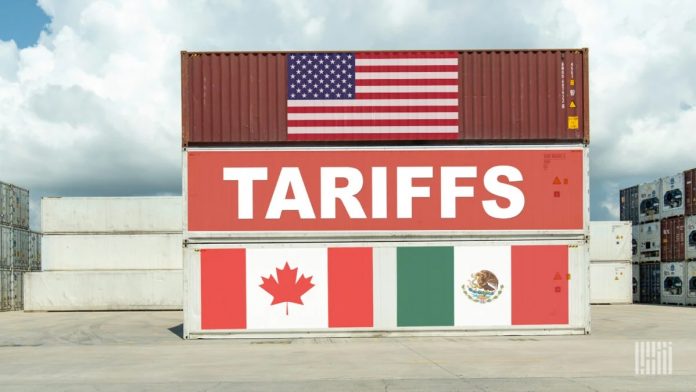
USC experts talk about the importance of U.S.-China trade and how it affects the economy. (Illustration/iStock)

The global trade wars in 2025, particularly those involving the United States, Canada, China, and Mexico, represent a significant escalation of economic tensions driven by protectionist policies, geopolitical strategies, and retaliatory measures. The U.S., under President Donald Trump, imposing steep tariffs on its top trading partners: 25% on most imports from Canada and Mexico, 10% on Canadian energy exports, and a doubling of tariffs on Chinese goods from 10% to 20%.

These measures, effective from March 4, 2025, were justified by the U.S. administration as a response to perceived failures by these countries to curb the flow of fentanyl and, in the case of Canada and Mexico, illegal immigration. The tariffs disrupted nearly $2.2 trillion in annual U.S. trade, targeting over $918 billion in imports from Canada and Mexico alone, and significantly escalated tensions with China.

Retaliatory actions followed swiftly. Canada imposed 25% tariffs on $20.6 billion of U.S. exports, with plans to expand to $106 billion after three weeks, targeting sectors like appliances, wine, and agricultural products. China introduced 10% to 15% tariffs on U.S. agricultural goods, including chicken, wheat, corn, soybeans, pork, and beef, alongside export restrictions on 25 U.S. firms, particularly those involved in arms sales to Taiwan. Mexico, while initially delaying its response, planned retaliatory tariffs on U.S. goods, though specifics were pending as of early March.

These retaliatory measures signal a tit-for-tat escalation, threatening to entangle global supply chains and raise costs across multiple sectors.
The economic impacts are already evident. In the U.S., the tariffs are projected to increase consumer prices significantly, with estimates suggesting an additional $1,000 to $1,200 per household annually, driven by higher costs for goods like avocados, automobiles, electronics, and energy.

The automotive sector, deeply integrated across North America, faces particular strain, with potential price increases of $3,000 per vehicle due to cross-border supply chains. U.S. industries such as retail, housing, and manufacturing are also under pressure, with companies like Target and Best Buy warning of price hikes. Globally, stock markets have reacted sharply, with the S&P 500 and Nasdaq dropping 1.8% and 2.6%, respectively, by March 6, 2025, erasing gains made since November 2024. Asian markets, including Japan’s Nikkei and Hong Kong’s Hang Seng, also fell, reflecting broader fears of economic disruption.

The trade wars are not limited to North America and China. Trump has threatened further tariffs, including 25% on European Union imports, citing trade imbalances, and potential duties in India and other nations. The EU has condemned the U.S. approach, and China has sought to strengthen ties with Europe to counter U.S. pressure, highlighting a potential realignment of global trade alliances. These actions challenge the multilateral trading system, with critics arguing that they violate World Trade Organization (WTO) rules and undermine decades of free-trade agreements like the USMCA.

Critically, the stated rationales for these tariffs—fentanyl and immigration—require scrutiny. While fentanyl is a significant public health crisis in the U.S., Canada has emphasized that less than 1% of the drug enters via its border, suggesting the U.S. justification may be exaggerated or misdirected. Similarly, the immigration argument appears to serve broader political and economic goals, such as leveraging trade policy to pressure neighbors into compliance on non-trade issues.

This raises questions about the sincerity of the U.S. administration’s motives, with some analysts suggesting the tariffs are more about asserting economic dominance or fulfilling campaign promises than addressing the stated issues. The use of the International Emergency Economic Powers Act (IEEPA) to justify these measures further underscores the strategic deployment of national security rhetoric to bypass traditional trade negotiation frameworks.

The broader implications of these trade wars are profound. Economists warn of stagflation risks, where economic growth slows while inflation rises, potentially shaving 0.7% off U.S. GDP growth in 2025 and increasing unemployment to 4.5% from 4.1%. Globally, supply chain disruptions are expected to intensify, particularly in sectors reliant on cross-border inputs, such as automotive, electronics, and energy. The weakening of currencies like the Canadian dollar, Mexican peso, and Chinese yuan may partially offset tariff impacts on exporters in those countries but will increase import costs for consumers, fueling inflation worldwide.

Moreover, the trade wars risk fragmenting the global economy into competing blocs, with countries hedging their trade relationships to mitigate exposure to U.S. or Chinese pressure. Looking ahead, the trajectory of these trade wars remains uncertain. The U.S. has signaled potential exemptions, such as for agriculture from Canada and Mexico, and there are indications of ongoing negotiations, as evidenced by a one-month tariff delay secured by Canada and Mexico in February 2025.

However, Trump’s rhetoric, including threats of “reciprocal tariffs” and non-tariff measures, suggests a willingness to escalate further, potentially targeting additional countries or sectors. The response of other nations will be critical—whether they pursue direct retaliation, seek WTO arbitration, or pivot to alternative markets. China’s strategic restraint, such as not yet imposing tariffs on all U.S. goods, and Canada’s efforts to diversify trade away from the U.S., indicate a long-term shift in global trade dynamics.
Critically, the narrative of tariffs as a tool to “make America great again” must be challenged.

The historical precedent of the Smoot-Hawley Tariff Act of 1930, which deepened the Great Depression, serves as a cautionary tale, yet current U.S. policy appears to ignore these lessons. Furthermore, the focus on bilateral trade deficits as a justification for tariffs oversimplifies complex global trade flows, ignoring the role of U.S. consumption patterns and currency strength in driving these deficits.

The global trade wars of 2025, centered on U.S. tariffs and retaliatory measures, are reshaping economic and geopolitical landscapes. While the U.S. aims to leverage its market power to extract concessions, the costs—economic, political, and social—are mounting, with no clear winners in sight. The risk of a broader trade conflict, potentially involving the EU and other major economies, looms large, threatening the stability of the global trading system.

Nigerian Women Embrace Entrepreneurship at Extraordinary Rate, Outpacing Regional Average – Mastercard Research Reveals

0

Nigerian women are embracing entrepreneurship at an extraordinary rate, with a significant number of them starting and running businesses at a higher rate.

Research by Mastercard titled “Empowerment for All”, reveals that 83% of women in Nigeria identify as entrepreneurs, significantly higher than the regional average of 51% across Eastern Europe, the Middle East, and Africa (EEMEA). Millennial women are at the forefront, with 86% considering themselves entrepreneurs, surpassing their male counterparts at 79%.

Key motivations fueling this surge include; financial independence, personal ambition, and the desire to turn innovative ideas into reality. Among Nigerian business owners, 49% started their business to pursue a dream, while 45% aimed to bring a great idea to life, underscoring their strong sense of purpose.

“The entrepreneurial spirit among women is strong and growing, with younger generations leading the way. With access to the right financial tools, mentorship, and digital resources, women entrepreneurs can unlock new opportunities, drive innovation, and significantly contribute to economic development”, said Selin Bahadirli, Executive Vice President, of Services, EEMEA, Mastercard.

Nigerian women are not just starting businesses, they are actively engaged in side hustles, with 87% participating in income-generating activities outside their primary jobs. This highlights their determination to achieve financial security and independence.

The research reveals that Millennial women (86%) are the most likely to consider themsleves entrepreneurs, followed by Gen Z (81%) and Gen X (73%).

90% of Nigerian women aspire to start their businesses driven by;

  • Increasing earnings (83%)
  • Achieving financial independence (67%)
  • Creating a financial safety net (52%)

Also, 93% of Nigerian business owners (both men and women) anticipate revenue growth over the next five years.

Top sectors for women Entrepreneurs in Nigeria include; Agriculture (36%), Food and Beverage (22%), and Education and Tutoring (20%). However, Despite their entrepreneurial drive, Nigerian women encounter significant barriers, with confidence being a major concern. 15% of women more than twice the proportion of men (7%), feel they lack the confidence to start a business.

Other major challenges include:

  • Lack of funding (57%)
  • Limited financial resources (56%)
  • Difficulty securing startup capital (40%)

“Nigerian women entrepreneurs are redefining business success with their ambition, creativity, and resilience. With 83% of women considering entrepreneurship, the potential for inclusive economic growth is immense. However, barriers like access to finance, digital infrastructure, and business skills must be addressed to unlock their full potential,” said Folasade Femi-Lawal, Country Manager and Area Business Head for West Africa, Mastercard.

To overcome these barriers, Nigerian women identified key areas of support that would enable them to thrive:

  • More accessible funding options (65%)
  • Better business skills training (55%)
  • Greater access to grants and public funding (47%)

Women entrepreneurs are also more likely than men to see technology guidance (37% vs. 29%) and sustainable business practices (35% vs. 25%) as criteria for long-term success. Also, it is interesting to note that women lead in Al Adoption, as Nigerian women entrepreneurs are at the forefront of Al adoption, with:

  • 80% regularly use Al in their business-—nearly twice the rate of men (45%).
  • 82% reporting significant. Cost and time savings from Al, compared to 63% of men.

Looking Ahead

As Nigerian women continue to lead the entrepreneurial revolution, addressing their key challenges, funding, digital access, and business skills will be crucial in ensuring their long-term success and economic impact.

Apple Cofounder Steve Wozniak Slams Tesla’s User Interface Amid Company’s Struggles: “The Worst in the World”

0

Apple co-founder Steve Wozniak, who once adored his Tesla Model S, has publicly criticized the electric vehicle (EV) maker’s user interface, calling it “the worst in the world.”

His comments come as Tesla grapples with its longest stock slump in over a year, declining for seven consecutive weeks.

Wozniak, a technology pioneer with a keen eye for intuitive design, praised Tesla’s innovation a decade ago but now says the car’s interface has become “miserable” due to frequent and confusing software changes.

“Coming from Apple, the user interface, the way you deal with technology, is the most important thing in the world to me,” Wozniak told CNBC. “And Tesla is the worst in the world at that.”

He expressed frustration over the vehicle’s ever-changing software that makes simple tasks, such as finding the time of day or using favorite radio channels, overly complicated.

“The modes hide things that aren’t there, and your finger knows how to get them. Nothing makes sense in that car, intuitively,” he said.

Wozniak highlighted a particular incident involving Tesla’s controversial yoke steering wheel. His wife was pulled over for failing to signal a turn because she struggled to locate the turn signal button on the touchscreen. The situation worsened when she couldn’t find the glove box button to retrieve the car’s insurance, as it was buried within the screen’s menus.

A Criticism Amid Tesla’s Stock Slump

Wozniak’s criticism comes at a challenging time for Tesla. The automaker’s stock has fallen for seven straight weeks, its longest losing streak since December 2022. The downturn has wiped out billions of dollars in market value, raising concerns among investors.

Tesla’s struggles are linked to multiple factors, including CEO Elon Musk’s controversial politics and rising competition from Chinese EV makers.

Musk’s political stance has increasingly become a double-edged sword for Tesla. Once hailed as a visionary, Musk’s public alignment with right-wing politics and his unfiltered comments on social media platform X have polarized Tesla’s customer base.

In 2022, Musk declared his support for Republican candidates, ending his history of voting for Democrats. He has frequently waded into divisive debates, criticizing the Biden administration, promoting conspiracy theories, and attacking the mainstream media. His political views have alienated some environmentally conscious consumers who were among Tesla’s earliest supporters.

The fallout is evident in surveys and anecdotal evidence suggesting that some customers are hesitant to buy Tesla vehicles due to Musk’s behavior. A 2023 Morning Consult survey revealed that Tesla’s brand favorability among Democrats plummeted by over 20 percentage points since Musk acquired Twitter in late 2022.

Rising Competition from China

At the same time, Tesla faces mounting competition from Chinese automakers such as BYD, Nio, and Xpeng. These companies are not only undercutting Tesla on price but also offering innovative features that appeal to tech-savvy consumers.

BYD, in particular, has surpassed Tesla in global EV sales, leveraging China’s vast domestic market and aggressive expansion overseas. Chinese EV makers have also benefited from robust government support, which includes subsidies and incentives that have helped them gain a foothold in Europe and other regions.

Musk Acknowledges Tesla’s Struggles

On Sunday, Elon Musk acknowledged the challenges Tesla is facing. Responding to a customer who bought a new Cybertruck, Musk expressed gratitude to Tesla’s supporters, hinting at the adversities the company is enduring.

“Heartfelt thanks to everyone supporting @Tesla, despite many attacks against our stores and offices,” he posted on X.

Musk did not elaborate on the nature of the attacks. However, Tesla has faced legal challenges, including a lawsuit from California’s Department of Fair Employment and Housing over alleged racial discrimination at its Fremont factory. Additionally, Tesla showrooms in some locations have been targeted by protestors over labor practices and customer service issues.

Industry Experts Allay Concerns Over Tesla’s Future

While Wozniak’s criticism and Tesla’s stock slump paint a grim picture, some industry experts believe the company’s underlying fundamentals remain strong. They argue that Tesla’s brand loyalty and its advancements in battery technology and autonomous driving will continue to drive sales.

However, they warn that Tesla must address its user interface and other concerns and navigate its political and competitive challenges carefully to maintain its market position.