DD
MM
YYYY

PAGES

DD
MM
YYYY

spot_img

PAGES

Home Blog Page 1629

Nigeria’s Eurobond Market Outshines Sub-Saharan Counterparts in February, With Debt Sustainability Concerns

0

Nigeria’s Eurobond market ended February on a strong note, reflecting sustained foreign investor confidence despite global economic uncertainties. According to the Debt Management Office (DMO), the average yield on Nigeria’s Eurobonds dropped to 8.80%, a 41-basis-point decline from 9.21% at the start of the month.

This positive performance not only underlines robust investor appetite but also places Nigeria ahead of the broader Sub-Saharan African (SSA) Eurobond market, where average yields fell by 27 basis points to 8.4%.

Strong Investor Demand and Regional Comparison

Analysts at Afrinvest attributed the bullish trend to improving macroeconomic conditions in the region and a pivot toward lower interest rates.

“The region continued to attract interest amid improving macroeconomic dynamics and lower interest rate pivots,” Afrinvest noted in its monthly report.

Nigeria’s performance was mirrored by other SSA countries, with Kenya leading regional gains. Yields on Kenya’s 2028 bond fell by 0.44%, while its 2048 bond dropped by 0.06%, indicating strong investor confidence following the government’s plan to introduce a centralized bond reporting system. This move is expected to enhance market transparency and boost efficiency.

Other regional players, such as Benin Republic and South Africa, also saw declines in yields on their 2038 and 2041 Eurobonds, respectively. However, Ivory Coast faced a different scenario, with yields rising across all its bond tenors, suggesting a more cautious investor sentiment.

Global Economic Factors Influencing Yields

Despite the generally positive performance, Nigeria’s Eurobond market experienced brief sell-offs in the last week of February, pushing yields slightly up from 8.79% to 8.80%. Analysts at CSL attributed this volatility to global risk-off trends, geopolitical uncertainties, and mixed economic signals from key global markets.

“In the U.S., Q4 GDP growth came in at 2.3%, aligning with expectations, while jobless claims unexpectedly rose to 242,000 (vs. 222,000 forecast), fueling concerns over labor market softness,” CSL analysts explained in a note to investors.

These global developments led to cautious trading in emerging market assets, including Nigerian Eurobonds. The broader market sentiment was influenced by fears of a potential economic slowdown in the U.S. and the uncertain path of monetary policy in advanced economies.

Debt Sustainability Concerns Emerge

While the high yields on Nigerian Eurobonds have made them attractive to foreign investors, economists are increasingly concerned about the country’s debt sustainability. Nigeria’s public debt, which recently crossed the N90 trillion mark, is raising red flags among financial experts. The country’s debt service-to-revenue ratio remains critically high, exceeding 80%, which is far above the 30% international threshold recommended by the World Bank.

Economists reiterate that the higher the yield, the more Nigeria will have to pay to service its debt – a situation compounded by the country’s already high debt servicing costs.

The growing allure of Nigeria’s bonds is a double-edged sword, as it provides the government with access to much-needed funds to bridge its budget deficit and finance critical infrastructure projects on the one hand. On the other hand, the increasing reliance on high-yield Eurobonds could escalate the country’s debt service obligations, further straining the federal budget.

Future Expectations

Looking ahead, analysts remain optimistic about the market’s performance, bolstered by strong liquidity inflows expected in March. Afrinvest estimates that N642.6 billion will come from coupon payments, while N562.5 billion is expected from maturities. These inflows are likely to support demand for Nigerian Eurobonds and maintain a bullish market sentiment.

“Additionally, a dovish interest rate outlook should reinforce the bullish bias. In the SSA market, the hunt for yield is likely to remain a dominant theme for sustained offshore interest in the region,” Afrinvest stated.

The dovish outlook aligns with a broader global trend of central banks in developed markets signaling a potential slowdown in rate hikes. Should this materialize, emerging markets like Nigeria could continue to attract yield-seeking investors. However, this scenario also means that Nigeria might need to keep offering attractive yields to maintain this interest, a strategy that could worsen its debt sustainability metrics.

Crypto Arbitrage Trading: A Profitable Strategy for Smart Investors

0

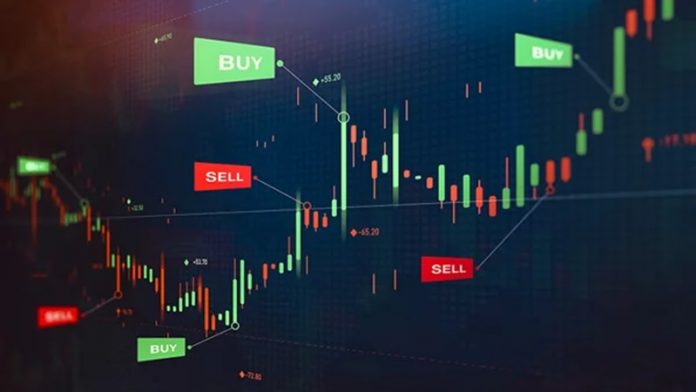
Cryptocurrency trading has evolved significantly over the years, offering traders a multitude of strategies to generate profits. One such strategy that has gained popularity is crypto arbitrage trading. This method involves exploiting price differences of a particular cryptocurrency across multiple exchanges. Given the volatility of the crypto market and its decentralized nature, arbitrage trading presents a unique opportunity to earn risk-free profits.

However, while the strategy may sound simple, successful execution requires a keen understanding of market dynamics, trading fees, and execution speeds. In this article, we will explore different types of crypto arbitrage trading, the risks involved, and how traders can maximize their gains.

What is Crypto Arbitrage Trading?

Crypto arbitrage trading is a strategy where traders buy a cryptocurrency from one exchange at a lower price and sell it on another exchange at a higher price to earn a profit. Since cryptocurrency prices can vary between platforms due to supply and demand differences, traders can leverage these price gaps to their advantage.

Types of Crypto Arbitrage Trading

  1. Simple Arbitrage – This is the most basic form, where a trader buys a cryptocurrency on one exchange and sells it on another with a price difference.
  2. Triangular Arbitrage – This strategy involves trading between three different cryptocurrencies to capitalize on price discrepancies. For example, a trader may exchange Bitcoin (BTC) for Ethereum (ETH), then trade ETH for Ripple (XRP), and finally convert XRP back to BTC, profiting from the slight differences in exchange rates.
  3. Statistical Arbitrage – This method relies on quantitative models and trading algorithms to identify and execute arbitrage opportunities.
  4. Cross-border Arbitrage – Traders buy cryptocurrencies in countries where prices are lower and sell them in regions where prices are higher due to regulatory or demand-based differences.

Pros and Cons of Crypto Arbitrage Trading

Pros:

  • Low-Risk Strategy: Since arbitrage involves buying and selling an asset almost simultaneously, the risk of price fluctuations is minimized.
  • Profit Potential: Traders can earn steady profits if they efficiently identify and execute arbitrage opportunities.
  • Market Inefficiency Exploitation: Arbitrage takes advantage of market inefficiencies, making it a lucrative option for traders.

Cons:

  • Trading Fees: High withdrawal and transaction fees can eat into profits.
  • Slippage and Execution Risk: Delays in trade execution can lead to price changes, reducing profitability.
  • Liquidity Issues: Some exchanges have lower liquidity, making it difficult to execute large arbitrage trades.

How to Succeed in Crypto Arbitrage Trading

Choosing the Right Exchanges

  • Select exchanges with significant price differences and high liquidity.
  • Ensure the exchanges support quick deposits and withdrawals.

Automating Trades

  • Many traders use trading bots to automate arbitrage transactions and capitalize on price differences in real time.
  • Bots help reduce human error and execute trades faster than manual trading.

Managing Trading Fees

  • Compare transaction fees across different exchanges.
  • Look for exchanges that offer lower withdrawal fees or have fee discounts for high-volume traders.

Considering Legal and Regulatory Aspects

  • Some regions have strict cryptocurrency regulations that may impact arbitrage trading.
  • Ensure compliance with local laws to avoid potential legal issues.

Conclusion

Crypto arbitrage trading is a lucrative strategy for traders looking to capitalize on market inefficiencies. However, to succeed, traders need to consider trading fees, execution speeds, and market liquidity. With the right tools and knowledge, crypto arbitrage can be a reliable way to generate consistent profits.

For traders looking for an advanced platform that simplifies cryptocurrency trading strategies, Finance Legend offers innovative solutions to maximize trading opportunities.

Frequently Asked Questions (FAQ)

What is the best way to start crypto arbitrage trading?

To begin, research multiple exchanges, compare prices, and start with small trades to understand execution speeds and fees.

Can crypto arbitrage trading be automated?

Yes, many traders use bots to scan multiple exchanges and execute trades automatically.

Is crypto arbitrage trading legal?

It depends on the country. Some regions have strict regulations, so traders must ensure compliance with local laws.

How do trading fees affect arbitrage profits?

High withdrawal and transaction fees can reduce overall profits, so it’s important to choose exchanges with low fees.

What risks are involved in crypto arbitrage trading?

The main risks include trade execution delays, liquidity issues, and sudden price changes that could reduce profits.

How does triangular arbitrage work?

Triangular arbitrage involves exchanging one cryptocurrency for another, then trading it for a third cryptocurrency, and finally converting it back to the original currency for a profit.

Do all exchanges have arbitrage opportunities?

Not necessarily. Arbitrage opportunities exist due to market inefficiencies, but not all exchanges will have significant price differences.

Can beginners try crypto arbitrage trading?

Yes, but beginners should start with small amounts, research thoroughly, and consider using automated tools for better efficiency.

Leveraged Trading in Cryptocurrency: A High-Risk, High-Reward Strategy

0

Leveraged trading in cryptocurrency is a powerful strategy that allows traders to borrow funds to increase their trading position beyond their initial investment. While leverage can amplify gains, it also magnifies losses, making it a high-risk, high-reward approach. This trading technique is popular among experienced traders who seek to capitalize on market movements with relatively small capital. However, it requires a deep understanding of market dynamics, risk management, and the potential pitfalls associated with high leverage ratios.

In this article, we will explore the fundamentals of leveraged trading, its advantages and risks, and key strategies for minimizing losses while maximizing potential gains.

What is Leveraged Trading in Cryptocurrency?

Leveraged trading, also known as margin trading, involves borrowing funds from an exchange or broker to increase the size of a trade. This allows traders to gain greater exposure to price movements without committing a large amount of their own capital.

How Leverage Works

  • Leverage Ratios: Typically, leverage is expressed as a ratio (e.g., 5x, 10x, 50x), indicating how much a trader can multiply their initial investment.
  • Margin Requirement: Traders must deposit a portion of their funds as collateral, known as the margin, which determines how much they can borrow.
  • Liquidation Risks: If the market moves against a trader’s position and their margin is insufficient to cover potential losses, the exchange may automatically liquidate their position to prevent further losses.

Pros and Cons of Leveraged Trading

Pros

  • Amplified Profits: If the market moves in the trader’s favor, leverage can significantly increase potential gains.
  • Short-Selling Opportunities: Leverage allows traders to profit from both rising and falling markets by taking long or short positions.
  • Capital Efficiency: Traders can open large positions with a smaller initial investment, freeing up capital for other trades.

Cons

  • High Risk of Liquidation: A slight market movement against the position can wipe out the entire margin, leading to liquidation.
  • Interest and Fees: Borrowing funds incurs interest rates and fees, which can accumulate over time, eroding potential profits.
  • Market Volatility: The crypto market is notoriously volatile, making leveraged trading particularly risky.

Best Practices for Leveraged Trading

1. Start with Low Leverage

Beginners should use lower leverage ratios (e.g., 2x-5x) to minimize risks and gain experience before increasing exposure.

2. Use Stop-Loss Orders

Setting stop-loss orders helps to limit potential losses by automatically closing positions when the price reaches a predefined level.

3. Monitor Market Trends

Technical analysis tools, such as moving averages and RSI, can help traders identify market trends and make informed decisions.

4. Diversify Trading Strategies

Rather than relying solely on leveraged trading, traders should diversify their strategies to balance risk and reward.

5. Manage Risk Effectively

Never invest more than you can afford to lose, and always keep a portion of your funds as a reserve to avoid liquidation.

Leveraged Trading Platforms

Several cryptocurrency exchanges offer leveraged trading, each with different leverage limits, fees, and risk management tools:

  • Binance: Offers up to 125x leverage with advanced risk management tools.
  • Bybit: Known for its user-friendly interface and up to 100x leverage.
  • Kraken: Provides a regulated trading environment with up to 5x leverage.
  • FTX: Offers various leverage options and innovative trading products.

Conclusion

Leveraged trading in cryptocurrency is a double-edged sword. While it can amplify profits, it also increases exposure to risk, making it suitable only for traders who understand market dynamics and risk management. By starting with low leverage, using stop-loss orders, and diversifying trading strategies, traders can mitigate risks and improve their chances of success.

For those looking to enhance their trading experience, platforms like FenorixTrader 8.4 Ai provide advanced AI-driven insights to help traders make informed decisions in leveraged trading.

Frequently Asked Questions (FAQs)

What is the safest leverage ratio for beginners?

A leverage ratio between 2x and 5x is recommended for beginners to minimize risk.

Can I lose more than my initial investment in leveraged trading?

Yes, if you do not use proper risk management strategies, you may lose more than your initial margin.

How does liquidation work in leveraged trading?

Liquidation occurs when the market moves against your position, and your margin balance is insufficient to cover losses.

Which cryptocurrencies are best for leveraged trading?

High-liquidity cryptocurrencies like Bitcoin (BTC) and Ethereum (ETH) are ideal for leveraged trading due to lower volatility compared to smaller coins.

Are there any fees associated with leveraged trading?

Yes, leveraged trading involves fees such as interest on borrowed funds and trading commissions.

How can I manage risk in leveraged trading?

Using stop-loss orders, diversifying trades, and maintaining a risk-to-reward ratio are effective ways to manage risk.

Is leveraged trading legal?

The legality of leveraged trading varies by jurisdiction, so it’s important to check local regulations before engaging in margin trading.

Can AI help in leveraged trading?

Yes, AI-driven platforms like FenorixTrader 8.4 Ai can provide real-time insights and automate trading strategies to enhance decision-making.

Leveraged trading requires discipline and expertise. If approached cautiously with proper risk management, it can be a valuable tool for experienced traders looking to maximize returns in the crypto market.

A Greater Nigeria and Flying Into Greatness

0

Only in America would a sports commenting-zen-guru earn a state budget as salary. Yes, sportscaster Stephen A. Smith has agreed to a $100 million, five-year contract extension with ESPN: ‘According to the report, the lucrative contract will allow Smith to continue hosting his popular flagship morning show, “First Take,” … Smith was previously earning $12 million per year.’

Stephen A. Smith has agreed to a new contract with ESPN worth at least $100 million for five years, an agreement that will result in Smith continuing to star on “First Take” on ESPN while scaling back some of his other required appearances on the network, which would free him up to talk even more about politics, sources briefed on the agreement told The Athletic.

Good People, young men are fighting at CMS Bus Stop in Lagos, Ariaria park in Aba, right now, but in America, those free fights will become a sport, and people will pay to watch them. And magically, even those analysing their fighting skills become legends.

If Nigeria has free and fair elections, I will run in the next election [my slogan will be “A Greater Nigeria”, and I have my plan titled “Flying Into Greatness” – written. I have shared some ideas here]. But because it cannot and has no capacity to have free and fair elections, we will all be ranting for a future unborn, but already dead. Congrats Smith!

3 Altcoins Set for a Parabolic Rally in 2025: PEPE, Dogecoin, and This Viral $0.18 Altcoin

0

PEPE and Dogecoin prices are getting attention, with DOGE staying strong as a top meme coin. But another altcoin at $0.18 is catching eyes, and it’s not just hype. DTX Exchange is set to list soon, and early buyers could see big gains.

Many believe it could follow the path of PEPE and DOGE, which started small before huge runs. The listing price is already set higher, meaning those buying now could be in for a major win.

The presale is already sold out, and with the listing coming up, all eyes are now on what happens next.

DTX Exchange Could Be the Next Big Win

DTX Exchange is designed to give traders a smooth and easy experience. The platform can handle over 200,000 transactions per second, making trading fast and efficient.

Many exchanges slow down during high activity, but DTX is built to keep running smoothly, no matter how busy the market gets. This makes it a strong choice for anyone looking for a reliable place to trade.

DTX has also passed a SolidProof audit, proving it is built with strong security measures. With so many platforms facing security issues, DTX is giving traders a safer way to trade without worrying about their funds being at risk.

Right now, DTX Exchange is offering a 100% bonus on token purchases. Investors who use the LIST2X code will double their tokens instantly, setting them up for bigger returns when trading starts.

The presale has already sold out, and the listing price is locked in higher than $0.18, meaning early buyers are already looking at a 4X return before launch. Opportunities like this don’t come around often, and many are securing their position before it’s too late.

With its listing coming up, DTX Exchange is being talked about as one of the biggest tokens for 2025. At just $0.18, it is still in its early stages, and many believe this is just the beginning.

Some investors regret missing out on early-stage tokens before they exploded, but DTX is still open for those looking to catch the next big move.

PEPE’s Chart Signals Point to a Huge 2025 Breakout

PEPE is showing signs that it could make a big move in 2025. The price recently bounced off a 10-month support level, which has led to strong rallies in the past.

Experts on reliable sources say that PEPE’s RSI has just recovered from an oversold zone, which is a good sign for buyers. The coin’s market cap is over $3.46 billion, showing that PEPE is still getting strong investor interest.

PEPE’s daily trading volume is around $1.15 billion, meaning there’s steady demand. If the token breaks past key resistance, analysts expect another strong rally.

The formation of a strong buying signal on the 2-day chart is another sign that the memecoin could be preparing for a big price move. With meme coins gaining attention again, PEPE’s setup looks promising for a major run in 2025.

Dogecoin Price Could See a Big Move in 2025

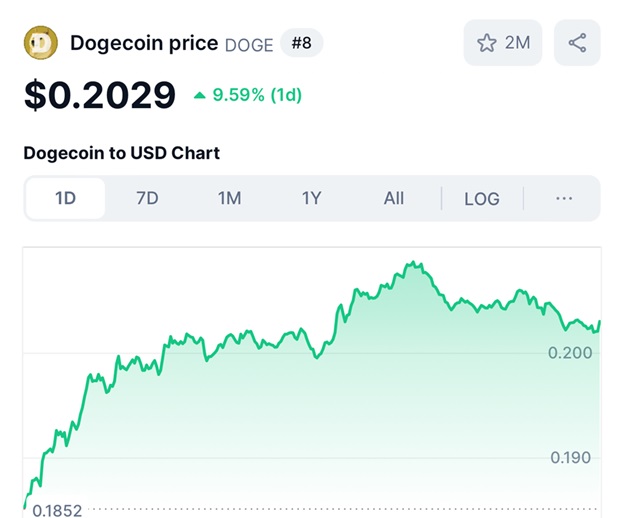
Dogecoin price is showing strong signs of a possible breakout in 2025. A strong pattern has shown up on the DOGE chart, one that has led to big Dogecoin price jumps before.

Experts believe that if this happens again, Dogecoin price could hit $0.85 to $1.12 by late 2025. The chart also shows DOGE holding steady at an important price level, which usually means buyers are coming in.

Source: CoinMarketCap

Big investors are still buying more DOGE, and the market looks strong. Elon Musk’s support remains a big reason for Dogecoin price moves. His past comments have always led to big price jumps.

If Bitcoin and the overall market remain strong, DOGE could be set for another major rally in 2025.

Conclusion

PEPE, Dogecoin price, and DTX Exchange, the viral $0.18 altcoin are three tokens people are watching for 2025. DOGE has a strong history of big runs, and PEPE is showing signs of another breakout.

But DTX Exchange is the one making headlines. It has already sold out its presale and will offer profit-sharing, letting big holders earn from platform revenue. The LIST2X code is the final chance for buyers to double their tokens before the listing.


To know more about the DTX Exchange ecosystem, Check out:

Visit Website

Buy Presale

Join Community