DD
MM
YYYY

PAGES

DD
MM
YYYY

spot_img

PAGES

Home Blog Page 164

Bitcoin Slips Below $100K as Market Enters Deep Bearish Phase

0

Bitcoin’s momentum has weakened sharply, plunging the world’s largest cryptocurrency into one of its most bearish phases of 2025.

The digital asset has once again fallen below the $100,000 threshold, the third time this month, as investors continue to offload risk assets such as cryptocurrencies and tech stocks amid mounting economic concerns.

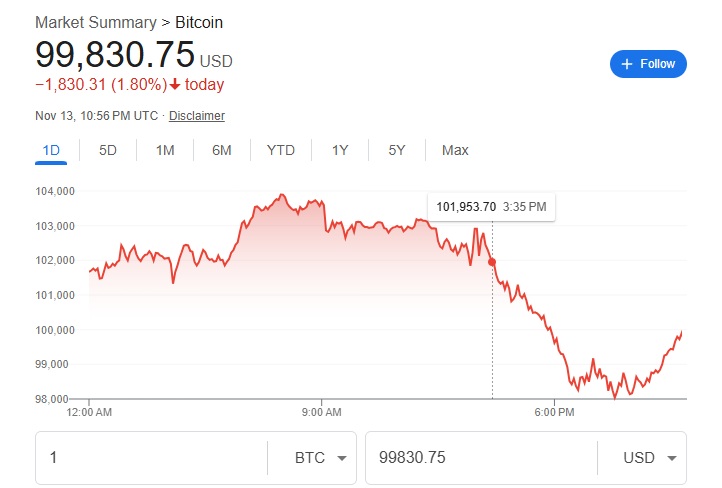
As of the time of writing, Bitcoin was trading at $99,103, marking a steep decline from its October peak of $126,080. Data indicates that long-term holders have sold approximately 815,000 BTC in the past 30 days, the highest level of selling activity since January 2024. With demand contracting, this surge in sell-side pressure has intensified downward momentum.

A Market Losing Its Grip on Momentum

Earlier in October, Bitcoin’s record high of $126,000 was accompanied by a strongly optimistic market sentiment, with the Fear and Greed Index registering 80  a signal of aggressive buying. However, that optimism has since evaporated. As Bitcoin slipped below $100,000 for the first time since June, the index plummeted to 20, reflecting extreme bearish sentiment.

The decline underscores a swift shift from enthusiasm to hesitation, as weakening spot demand and a slowdown in stablecoin liquidity,  typically a key driver of market inflows created a fragile market environment.

Long-Term Holders Unload at Rare Levels

One of the most notable developments has been the aggressive selling by long-term Bitcoin holders. Over the past month, approximately 815,000 BTC were distributed, representing the heaviest selling since early 2024. This occurred as Bitcoin traded between $118,000 and $121,000, even as spot demand began to fade.

Despite the bearish sentiment, JPMorgan analysts believe Bitcoin’s downside risk is now “very limited.” In a Wednesday note, Managing Director Nikolaos Panigirtzoglou and his team estimated Bitcoin’s production cost  historically a reliable price floor at around $94,000, up from a previous estimate of $92,000.

The sharp increase stems from a rise in network difficulty, which reflects the growing computational power required to mine Bitcoin. The ratio of Bitcoin’s price to production cost now sits just above 1.0, at the lower end of its historical range.

“The bitcoin production cost has empirically acted as a floor for bitcoin, so a $94,000 production cost implies very limited downside to the current bitcoin price,” the analysts wrote.

JPMorgan reiterated its 6–12 month upside projection of $170,000, based on Bitcoin’s volatility-adjusted comparison to gold. The firm noted that Bitcoin currently absorbs about 1.8 times more risk capital than gold. To reach parity with private-sector gold investment — roughly $6.2 trillion — Bitcoin’s market capitalization would need to rise by about 67%, implying a theoretical price near $170,000.

Bitcoin Stuck in “Consolidation Limbo”

Blockchain analytics firm Glassnode described Bitcoin’s current phase as a “state of consolidation.” Analysts at the firm noted that both on-chain and off-chain indicators reflect a stabilizing market that is “not yet ready to confirm a bullish reversal.”

Until new inflows or a strong macroeconomic catalyst emerge, Glassnode expects Bitcoin to oscillate within a $97,000–$111,900 range, with $100,000 remaining a crucial psychological support level.

Macro Pressures Add to Market Strain

Notably, Bitcoin’s recent plunge coincides with the reopening of the U.S. government following its longest shutdown in history, as President Donald Trump signed a funding bill late Wednesday. The broader downturn also mirrors the Federal Reserve’s recent monetary stance. Chairman Jerome Powell maintained a hawkish tone, stating that further rate cuts were “not a foregone conclusion,” even after the central bank lowered rates by a quarter point in October.

Together, these factors have created a challenging environment for risk assets leaving Bitcoin, once again, in a fragile balance between consolidation and renewed decline.

Outlook

While near-term sentiment remains cautious, analysts believe the worst of Bitcoin’s correction may be nearing its end. The confluence of limited downside, steady network activity, and rising production costs suggest that Bitcoin could find firm support around the $94,000–$97,000 range before attempting a gradual recovery.

Market participants are also watching for potential macroeconomic triggers — including a shift in Federal Reserve policy, improved liquidity conditions, and renewed institutional inflows that could spark a fresh uptrend in 2026


Nigeria’s Digital Lending Sector Faces Major Compliance Overhaul as FCCPC Sets January 2026 Deadline

0

The Federal Competition and Consumer Protection Commission (FCCPC) has issued a firm directive requiring all digital lending operators in Nigeria to fully comply with the Digital, Electronic, Online and Non-Traditional Consumer Lending Regulations, 2025 by Monday, January 5, 2026.

The regulations, which came into effect on July 21, 2025, under the Federal Competition and Consumer Protection Act (FCCPA) 2018, are designed to promote transparency, accountability, and fairness in a sector that has seen explosive growth over the past few years.

The move is part of the Commission’s continuing efforts to sanitize a rapidly expanding digital lending space, following years of widespread complaints about unethical practices, such as unauthorized deductions, aggressive loan recovery, harassment of borrowers, and data privacy breaches.

Guidelines to Aid Compliance

To assist operators in aligning with the new rules, the FCCPC has released a supplementary instrument titled Guidelines on the Digital, Electronic, Online and Non-Traditional Consumer Lending Regulations, 2025. Developed under Sections 17 and 163 of the FCCPA, the guidelines provide detailed instructions for digital lenders, including updated versions of Forms 1 and 3 and clear documentation requirements.

The FCCPC noted that the updates were created following feedback from industry stakeholders and that operators with pending submissions could proactively provide additional information as required under the new guidelines, without waiting for a formal request.

Mr. Tunji Bello, Executive Vice Chairman of the FCCPC, emphasized the importance of timely compliance.

“Full compliance is not only a legal requirement but a critical step in protecting consumers and ensuring the sector grows fairly and responsibly. Operators have had ample time to adjust to the regulations, and we now expect all obligations to be met before the deadline,” he said.

Bello added that the Commission would continue to process pending applications transparently and promptly, ensuring no operator is unduly delayed in meeting the new compliance standards.

Enforcement and Penalties

The FCCPC has warned that enforcement actions will commence immediately after January 5, 2026. Digital lenders that fail to comply risk being restricted from operating, while their platform partners or service providers may also be ordered to cease dealings. The Commission clarified that other sanctions provided under the law could be applied to non-compliant operators. All affected entities—including lending platforms, intermediaries, and service partners—are required to meet their compliance obligations by the set deadline.

To facilitate transparency, the Commission has made copies of the Guidelines, Forms, and Frequently Asked Questions (FAQs) available on its official website, fccpc.gov.ng, and operators can also access information via FCCPC offices nationwide or other official communication channels.

Growth of the Digital Lending Market and Emerging Risks

Nigeria’s digital lending market has grown rapidly in recent years, fueled by a surge in demand for instant credit among consumers often excluded from traditional banking channels. According to Nairametrics, the number of formally approved digital lending firms increased to 425 by May 2025, up from 320 the previous year.

This expansion has provided new avenues for financial inclusion, offering instant credit access to individuals and small businesses. However, the sector’s growth has also exposed significant consumer protection risks, including high interest rates, aggressive debt collection methods, and weak credit control mechanisms.

The FCCPC’s new regulations and guidelines seek to address these challenges by introducing uniform standards for transparency, fair lending, and borrower protection, while ensuring that operators can continue to innovate and provide services responsibly. The directive also signals the Commission’s commitment to strengthening oversight of digital financial services, balancing sector growth with the protection of vulnerable consumers.

This regulatory push reflects a broader trend in Nigeria and across emerging markets, where digital financial services are expanding rapidly, but regulatory frameworks are struggling to keep pace. Now, the FCCPC aims to instill discipline, restore consumer trust, and reduce the prevalence of predatory practices by enforcing compliance with these guidelines.

For operators, the January 2026 deadline is a critical turning point: failure to comply could result in business restrictions or operational sanctions, while timely adherence may enhance credibility with consumers and investors, ensuring long-term sustainability in a highly competitive market.

European Commission Launches Investigation into Google’s “Site Reputation Abuse Policy.”

0

The European Commission has intensified its scrutiny of Google by launching a detailed investigation into the company’s “site reputation abuse policy,” citing concerns that it may adversely affect publishers’ revenue and business operations.

According to the Commission, preliminary findings indicate that Google could be demoting websites and content from news media and other publishers when these sites include content from business partners, potentially impacting a common and legitimate way for publishers to monetize their websites and content.

The inquiry is examining whether the policy infringes on publishers’ freedom to conduct legitimate business, innovate, and collaborate with third-party content providers, raising questions about whether Google’s anti-abuse measures go beyond targeting spam to unintentionally or deliberately penalize lawful business practices.

Google describes the site reputation abuse policy as a measure designed to curb manipulation of search rankings, targeting websites that republish third-party content in an attempt to exploit high-ranking signals without creating original material.

Responding to the Commission’s investigation, Pandu Nayak, chief scientist of Search at Google, argued that the probe is “misguided and risks harming millions of European users.” He emphasized that a similar claim had been dismissed by a German court, which ruled that Google’s anti-spam measures were valid, reasonable, and applied consistently. Nayak added that the policy is essential to fighting deceptive pay-for-play tactics, helping to “level the playing field so that websites using deceptive tactics don’t outrank websites competing on the merits with their own content.”

If the investigation concludes that Google violated the European Union’s Digital Markets Act (DMA), Alphabet could face fines of up to 6% of its global annual turnover. For systematic infringements, the Commission could also impose structural remedies, including forced divestitures or restrictions on acquisitions linked to the violation.

This probe is part of a wider EU regulatory effort. In 2023, the European Commission designated Google Search as a “core platform service” under the DMA, granting it expanded powers to oversee the platform. Google is also under separate investigation for alleged self-preferential treatment of its own services, reflecting the EU’s broader push to curb dominance by Big Tech and ensure fair competition in digital markets.

The current investigation mirrors earlier EU actions against major technology companies, particularly in how platform policies can affect competition and publishers’ revenues. For example, the Commission has previously scrutinized Apple and Amazon over their App Store and marketplace policies, focusing on practices that favored their own services or imposed restrictive conditions on third-party businesses. These cases highlight the EU’s broader strategy of regulating core platform services to prevent market distortions and safeguard digital ecosystem fairness.

Similar to these past cases, the Google investigation goes beyond simple antitrust enforcement, aiming to evaluate how algorithmic policies and platform rules can unintentionally suppress innovation and legitimate monetization strategies. This approach signals a new phase in EU tech oversight, where regulators are increasingly considering not only market share but also policy design and its real-world impact on third-party businesses.

The inquiry underscores the challenges of publishers operating in a digital landscape dominated by a few tech giants, where platform rules can directly influence visibility, traffic, and revenue. The EU’s findings could reshape the dynamics between platforms, publishers, and users, potentially setting new precedents for how AI-driven content moderation and ranking policies are regulated across Europe.

Hyperliquid HLP Vault Attack: $4.9M Loss from POPCAT Manipulation

0

Hyperliquid, a leading decentralized perpetuals exchange built on Arbitrum, suffered a coordinated market manipulation attack targeting its community-owned Hyperliquidity Provider (HLP) vault.

The incident, which unfolded over several hours, resulted in approximately $4.9 million in bad debt for the HLP vault, equivalent to about three months of its prior profits. This marks the third such manipulation event against Hyperliquid in 2025, highlighting vulnerabilities in low-liquidity memecoin perpetuals markets.

Blockchain analytics firms like Lookonchain and Arkham Intelligence tracked the attacker’s actions in real-time, revealing a deliberate strategy to exploit Hyperliquid’s liquidation mechanics. Here’s how it played out: Preparation ?13 Hours prior.

The attacker withdrew $3 million in USDC from the centralized exchange OKX and fragmented it across 19 separate Ethereum wallets. This obfuscation tactic distributed the funds to evade easy tracking and simulate organic trading activity.

Building the Trap (?14:45 CET): The funds were bridged into Hyperliquid via the Arbitrum bridge. Using high leverage up to 10x, the attacker opened massive long positions on POPCAT—a volatile Solana-based memecoin perpetual contract—totaling $20–30 million in exposure.

To artificially inflate the price, they placed a $20–30 million “buy wall” pending buy orders at $0.21, creating the illusion of strong demand and pushing POPCAT’s price upward. Once the price hit the target, the attacker abruptly canceled or pulled the buy orders.

This removed the artificial support, causing POPCAT’s price to crash 43% from $0.21 to $0.12 in minutes. The sudden dump triggered cascading liquidations across the platform, totaling $63 million in wiped positions—including the attacker’s own $3 million in collateral, which they intentionally sacrificed.

HLP Absorption: Hyperliquid’s HLP vault acts as a backstop for liquidations, automatically absorbing uncollateralized losses to maintain platform liquidity. In this case, it inherited the attacker’s underwater $28 million long position on POPCAT, leading to a $4.9 million net loss after manual closure by the Hyperliquid team.

The vault was left holding over $25 million in devalued POPCAT tokens temporarily. The attacker did not profit from the scheme; instead, it appears designed as “degen warfare” to inflict maximum damage on the HLP liquidity providers (LPs), who share the bad debt proportionally.

Hyperliquid’s Response: Temporary Pauses HLP Vault Lock

Deposits and withdrawals to the HLP vault were immediately halted to allow manual position closure and prevent further exposure. An automated safety feature triggered a brief lock on the Arbitrum bridge used for Ethereum-Arbitrum transfers to Hyperliquid, suspending platform-wide deposits and withdrawals for about 25 minutes.

Hyperliquid developer “Iliensinc” confirmed in the project’s Discord: “The Arbitrum bridge’s automatic locking was triggered by a conservative set of conditions… Funds are safe. The Hyperliquid blockchain itself was not impacted and experienced no downtime.”

All pauses were lifted shortly after, with trading resuming normally. No user funds were lost beyond the HLP’s bad debt, and the platform’s native token HYPE dipped briefly below $38 before rebounding to $38.80. Hyperliquid has not issued a formal statement directly linking the event to the pauses, but on-chain data and community updates confirm the timeline.

The memecoin itself saw anomalous volatility but recovered partially, as organic spot market bids on Solana provided some floor. However, the incident underscores risks in thin-liquidity perps for memecoins. Liquidity providers in the vault face diluted returns due to the loss. This event echoes prior attacks, like a $12 million unrealized hit from JELLYJELLY manipulation in March 2025.

Hyperliquid remains the top DEX by open interest, but repeated incidents have sparked discussions on X about enhancing anti-manipulation measures, such as tighter leverage caps for low-liquidity pairs or improved oracle feeds.

This attack highlights ongoing “crime season” in DeFi perps, where thin order books and automated liquidations can be weaponized. Hyperliquid users should monitor official channels for any fee adjustments or compensation proposals.


OnePlus 15 Offers Groundbreaking Two-Day Battery Life, but U.S. Launch Delayed by Federal Shutdown

0

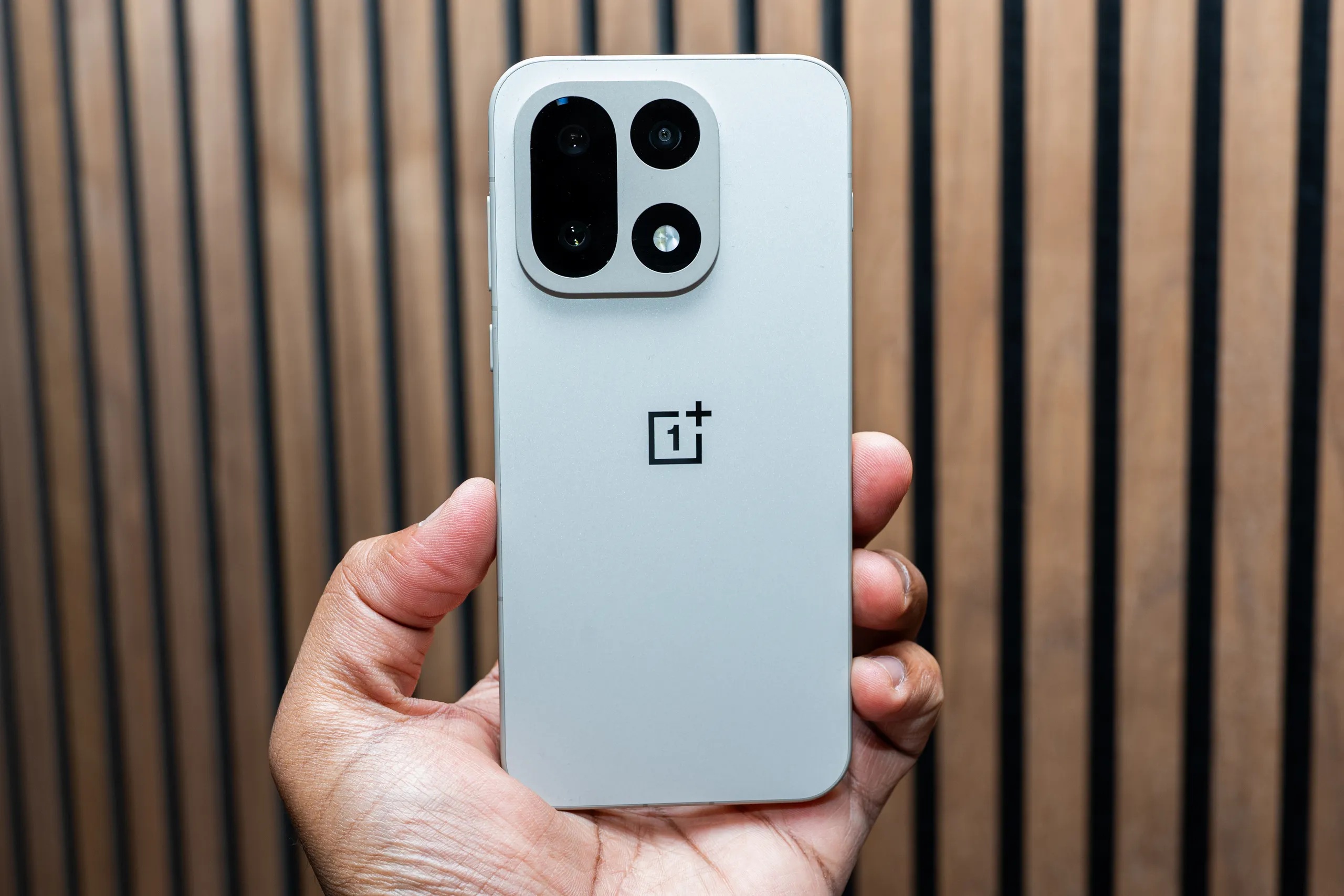
The OnePlus 15, the latest flagship from Chinese smartphone maker OnePlus, is poised to hit the U.S. market, but buyers will have to wait a little longer. Despite a U.S. price of $899 for the 12GB RAM, 256GB storage model—matching the OnePlus 13—regulatory delays have pushed the launch into uncertainty.

The hold-up comes from the federal government shutdown, which stalled operations at the Federal Communications Commission (FCC), the agency responsible for certifying devices before they can be sold in the United States. Even with the shutdown now over, OnePlus cautions that the FCC will need time to process a backlog of approvals accumulated during the closure.

Spenser Blank, OnePlus’ head of marketing, explained that the company has completed all required FCC testing at recognized labs and formally submitted its certification application.

“As is the case with every smartphone manufacturer, the United States’ Federal Communications Commission certifies OnePlus devices before they are sold in the U.S. As a result of the government shutdown, device certifications have been delayed… We are hopeful that approvals can be generated quickly and as a result, we can bring the OnePlus 15 to our customers in the U.S. expeditiously,” Blank said, emphasizing that the delay is procedural rather than technical.

Consumers eager for the device can sign up for email alerts at OnePlus.com/us to be notified as soon as sales open. The OnePlus 15 promises one major reason to wait: its exceptional battery life. The device uses silicon-carbon battery technology, a breakthrough embraced by OnePlus’ parent company, Oppo, and other Chinese manufacturers. This technology enables thinner, higher-capacity batteries compared with traditional lithium-ion cells.

While the OnePlus 13 already used silicon-carbon batteries with a 6,000mAh capacity, the OnePlus 15 takes it further with a 7,300mAh battery, offering genuine two-day battery life—a rare feature in the U.S. smartphone market. For users frustrated by daily charging cycles, the 15 promises a transformative improvement, enabling extended use for work, gaming, and media without constant recharging.

The launch delay highlights the complexities of bringing global tech products to the U.S. market, particularly in the wake of government disruptions. FCC certification is a critical step, ensuring devices meet safety and communication standards. While OnePlus has cleared all testing requirements, the final approval stamp remains pending, leaving fans in suspense.

The OnePlus 15 also represents a broader trend among Chinese smartphone manufacturers, who are increasingly investing in advanced battery technology to differentiate their devices in competitive markets. By leveraging silicon-carbon cells, the OnePlus 15 balances capacity, weight, and efficiency, giving it an edge over many current flagship smartphones in the U.S.

For those willing to wait, the phone’s compelling combination of cutting-edge battery technology, robust hardware, and competitive pricing makes the wait worth it.