DD
MM
YYYY

PAGES

DD
MM
YYYY

spot_img

PAGES

Home Blog Page 1645

Nigerian Govt. Releases Withheld Rivers State Funds to Sole Administrator, Sparks Legal Concerns, Allegations of Embezzlement Plot

0

The Sole Administrator of Rivers State, Ibok-Ete Ibas, has announced the release of withheld local government allocations, assuring that necessary steps will be taken to ensure the prompt payment of workers’ salaries.

Speaking during a meeting with Heads of Local Government Administrators in Port Harcourt, Ibas described the gathering as a pivotal moment in the collective effort to restore stability and progress in the state.

He lamented the economic hardship in the Niger Delta, noting that despite the region’s vast natural resources, its people continue to suffer. “This is unacceptable,” he stated, emphasizing the need for transformation and accountability. Expressing concern over the delay in salary payments across local government areas, the administrator acknowledged the struggles of affected workers.

“I feel the pain of the workers,” he said, assuring them that the withheld allocations had been released and that his administration would ensure that salaries were paid without delay. However, he warned that financial accountability would be strictly enforced.

Ibas, a retired vice admiral and former Chief of Naval Staff, directed all local government areas to submit their wage bills, supported by relevant documentation, through the office of the Head of Service. He emphasized that his administration would not tolerate financial recklessness, vowing to scrutinize the handling of public funds and take action against any mismanagement.

He stressed that good governance is not just a slogan but a commitment to changing the negative narrative within the next six months. He further highlighted the importance of collaboration with traditional rulers and security agencies to enhance security at the grassroots level.

“You must take the lead in ensuring security within your domains,” he urged local government administrators.

In response, the President of the Nigeria Union of Local Government Employees (NULGE) and Administrator of Port Harcourt Local Government Area, Clifford Paul, acknowledged the developmental strides made in the state despite political conflicts. He commended the Federal Government for appointing the Sole Administrator, attributing the decision to his competence and leadership ability.

He pledged to support peace and stability while urging the administrator to prioritize workers’ welfare. He explained that local government workers are currently owed two months’ salaries but are hopeful now that the withheld allocations have been released. He encouraged stakeholders to seize this opportunity to rebuild trust and foster unity in the state.

Legal and Constitutional Questions Over Release of Funds

While the announcement may have brought relief to local government workers, it has raised serious legal and constitutional questions. The Supreme Court had ruled that statutory allocations to Rivers State should be withheld because Governor Siminalayi Fubara did not recognize the House of Assembly and did not present the state budget for passage.

President Bola Tinubu has accused Fubara of failing to obey the Supreme Court ruling, despite the governor reportedly writing to the same House to enable him to present the budget. However, rather than allowing the constitutional process to unfold, Tinubu proceeded to suspend both the Governor and the House of Assembly and appointed a Sole Administrator to run the state.

Now, the same withheld allocations are being released to Ibas, a move that legal experts describe as a blatant violation of the court’s order.

Rights lawyer Inibehe Effiong sharply criticized the development, questioning the logic behind withholding allocations due to a lack of House of Assembly recognition, only to release them to a Sole Administrator who has no constitutional basis to appropriate state funds.

“So, the allocations were withheld because there was no House of Assembly or the Governor did not recognize the House and did not present the budget, but you have now suspended both the Governor and the House and proceeded to appoint a Sole Administrator and handed over allocations to the Sole Administrator,” Effiong said.

“How do you reconcile this?” he asked.

“If it was right for the allocations to be withheld because there was no House of Assembly or due to the governor’s refusal to present the budget before the House, on what legal, moral, or logical basis are you releasing the same allocations to a Sole Administrator after suspending the Governor and the House?”

He further pointed out that under Sections 120 and 121 of the Nigerian Constitution, no state funds can be appropriated without a valid Appropriation Law. Since the Sole Administrator has no budget legally passed by a recognized House of Assembly, the release of the withheld allocations raises suspicions of financial mismanagement.

“Is the Sole Administrator a constitutional substitute for the House of Assembly and the Governor?” Effiong queried.

“Which budget will the Sole Administrator now use to appropriate the allocations of Rivers State? State funds and allocations cannot be appropriated without being enabled by an Appropriation Law.”

He concluded that Tinubu’s actions amounted to trampling on Nigeria’s Constitution.

“Tinubu has defecated on the Constitution of Nigeria,” he stated.

Allegations of an Embezzlement Ploy

Beyond the legal and constitutional debates, many Nigerians believe the imposition of a state of emergency and the appointment of a Sole Administrator are calculated moves to enable the embezzlement of Rivers State’s funds. The decision to suspend a sitting governor and an entire legislative assembly, only to place a federal appointee in charge of the state’s finances, has raised red flags.

Rivers State, one of Nigeria’s richest due to its oil revenue, has long been a battleground for political control. With the governor and House of Assembly sidelined, the state’s funds are now in the hands of a federally appointed official with no elected mandate.

The appointment of Ibas, a retired military officer with no prior experience in civilian governance, has further fueled suspicions. Many believe his role is not to provide leadership but to serve as a conduit for the diversion of funds.

Is this shenanigans all about stealing the allocations of Rivers State? Is that what this impunity is all about?” Effiong asked.

Political Implications of The Martial Law

This development has sparked fears that similar takeovers could happen in other states where federal interests are at stake. The move is seen as a dangerous precedent that undermines Nigeria’s federal structure, weakening the power of state governments and centralizing control in Abuja.

“So let me understand it: A minister or ally of the president can wake up any time to engineer chaos and instability in a state and the president’s response will be to illegally remove the state governor to placate his ally,” a social commentator, Olufunmilayo, said. “So someone from the presidency can artificially start chaos in Osun, Oyo, or Kano and next thing their governor is gone. This is the era we are now in, yeah?”

These Top Crypto Projects for 2025—LTC, OM, XRP, & BlockDAG Could Dominate the Market—Hold & Earn Huge Profits

0

Bitcoin has long been a major topic in the crypto market, yet those eager for growth now look to other cryptocurrencies (altcoins).

This article delves into leading altcoins currently shaping the market: BlockDAG, Litecoin, Mantra, and XRP. Each of these top crypto projects for 2025 is set to make a major impact, backed by modern technology, strategic market positioning, and the potential for widespread adoption. Continue reading to discover their distinctive attributes and the promising future they might bring.

  1. BlockDAG: Mainnet & 10 CEX Listings Poised to Propel 2025 Growth!

BlockDAG (BDAG) is capturing attention with its impressive presale, having already amassed over $205 million and distributed more than 18.8 billion coins. The altcoin’s price has escalated from just $0.001 in the first batch to $0.0248 in the current batch 27, marking a staggering 2,380% growth. This consistent rise indicates a solid market trust in BlockDAG and its standing as a top crypto project for 2025.

As anticipation escalates, BlockDAG is gearing up for a significant breakthrough with 10 forthcoming centralized exchange (CEX) listings in 2025. These listings are set to enhance accessibility and increase liquidity, inviting a wider global audience to engage with BDAG. Additionally, the much-awaited mainnet launch is expected to activate its sophisticated decentralized network, solidifying its marketplace presence.

With the presale nearing the ambitious $600 million goal, the blend of imminent exchange listings and mainnet activation is poised to attract even greater interest. With just a few presale batches remaining and prices rising each round, those exploring strong opportunities might want to consider acquiring BlockDAG soon—before the next price increase makes entry more challenging.

  1. Litecoin: Pioneering Faster Digital Transactions

Litecoin (LTC), developed by former Google engineer Charlie Lee in 2011, builds on Bitcoin’s framework to accelerate transaction times and reduce space usage. With a market capitalization of $8.61 billion and a price of $114.46 per coin, Litecoin has established itself as a reliable and valuable crypto.

As one of the top crypto projects for 2025, Litecoin stands out for its contribution to quicker and more efficient transaction processing. Those interested in the evolving crypto market should monitor Litecoin’s advancements closely!

  1. Mantra: Integrating Blockchain with Traditional Finance

Mantra (OM) is a DeFi platform aimed at merging blockchain technology with conventional financial services. It provides staking, lending, and governance features, enabling users to partake in decision-making and earn rewards. The platform’s native OM is crucial in supporting these functions.

Currently priced at $7.38 with a notable increase of 92.71% this year, Mantra is worth watching for its ecosystem development, partnerships, and adoption in RWA tokenization.

  1. XRP: Streamlining Global Financial Transactions

XRP is engineered to expedite and streamline international payments, forming the backbone of RippleNet. It cuts across traditional banking barriers by offering lower costs and faster transaction times, challenging conventional systems like SWIFT.

Though open-source, XRP’s classification as a cryptocurrency often sparks debate due to its distinct architecture. As a key player among the top crypto projects for 2025, XRP is a significant choice for those focused on enhancing global financial interactions.

Selecting Top Crypto Projects for 2025

The crypto market continues to present diverse opportunities, each tailored for specific needs and goals. Litecoin (LTC) has demonstrated consistent reliability, facilitating faster transactions and enhanced efficiency.

Mantra (OM) progresses in the DeFi sector, linking traditional banking with blockchain innovations, complete with staking and governance capabilities. Meanwhile, XRP excels in global payments, optimizing international transfers through its robust network.

When considering top crypto projects for 2025, BlockDAG stands out with its significant presale achievement of $205 million, upcoming CEX listings, and an impending mainnet launch. As the demand increases and presale batches dwindle, acquiring BlockDAG soon is essential for leveraging potential future gains.

USAID is Exploring the Use of Blockchain to Facilitate Payments

0

Reports indicate that a USAID memo, as cited by outlets like Wired and Crypto News, reveals the Trump administration’s plans to integrate blockchain technology into the U.S. Agency for International Development’s (USAID) payment and procurement systems. The proposal aims to enhance security, transparency, and traceability in aid distributions by leveraging blockchain to track funds and enforce outcome-based payment models, rather than traditional input-focused approaches.

The memo suggests this could encourage innovation and efficiency among implementing partners. However, it remains unclear whether this would involve cryptocurrencies, stablecoins, or simply a blockchain ledger, and specifics on implementation are still vague. This move aligns with broader discussions within the administration about modernizing foreign aid distribution. Blockchain operates as a decentralized ledger where every transaction is recorded publicly (or within a permissioned network) and is visible to all authorized participants.

This reduces opacity, making it easier to track funds or assets from origin to destination—ideal for ensuring aid reaches intended recipients. Data on a blockchain is encrypted and linked in a chain of blocks, where each block references the previous one. Altering a single record requires changing all subsequent blocks, which is computationally impractical, especially on large networks. This tamper-resistance protects against fraud and unauthorized changes.

Once a transaction is recorded and validated, it can’t be erased or modified without consensus from the network. This creates a reliable audit trail, crucial for accountability in systems like aid distribution where funds often pass through multiple hands. By cutting out intermediaries—like banks or clearinghouses—blockchain can streamline processes. Payments or contracts (via smart contracts, self-executing code on the blockchain) can settle faster and cheaper, reducing administrative overhead and delays.

Every transaction is time-stamped and linked to a unique identifier, allowing precise tracking of resources. For USAID, this could mean verifying that funds hit specific milestones (e.g., vaccines delivered) before releasing further payments, aligning with outcome-based models. In environments with low institutional trust, blockchain’s decentralized nature means no single party controls the system. Participants can rely on the technology itself, rather than a central authority, which could be a game-changer for aid in conflict zones or corrupt systems.

Over time, eliminating manual reconciliation, paperwork, and third-party fees can lower operational costs. For a large organization like USAID, even small savings per transaction could add up significantly. That said, it’s not flawless—blockchain can be energy-intensive (depending on the consensus mechanism, like proof-of-work in Bitcoin), complex to implement, and requires tech literacy to manage effectively. Still, for something like aid payments, where fraud and inefficiency are perennial headaches, the benefits could outweigh the hurdles if executed well.

The Trump administration has pivoted toward a crypto-friendly framework. An executive order in January 2025 established a working group to draft new regulations and explore a national digital asset stockpile from seized cryptocurrencies. The U.S. has also repealed stringent IRS DeFi broker rules and paused SEC enforcement actions, signaling a lighter regulatory touch. Stablecoin legislation is gaining traction, with bills like the Clarity for Payment Stablecoins Act under consideration, though a retail central bank digital currency (CBDC) has been ruled out.

Flutterwave Expands Payment Options in Ghana With Virtual Accounts

0

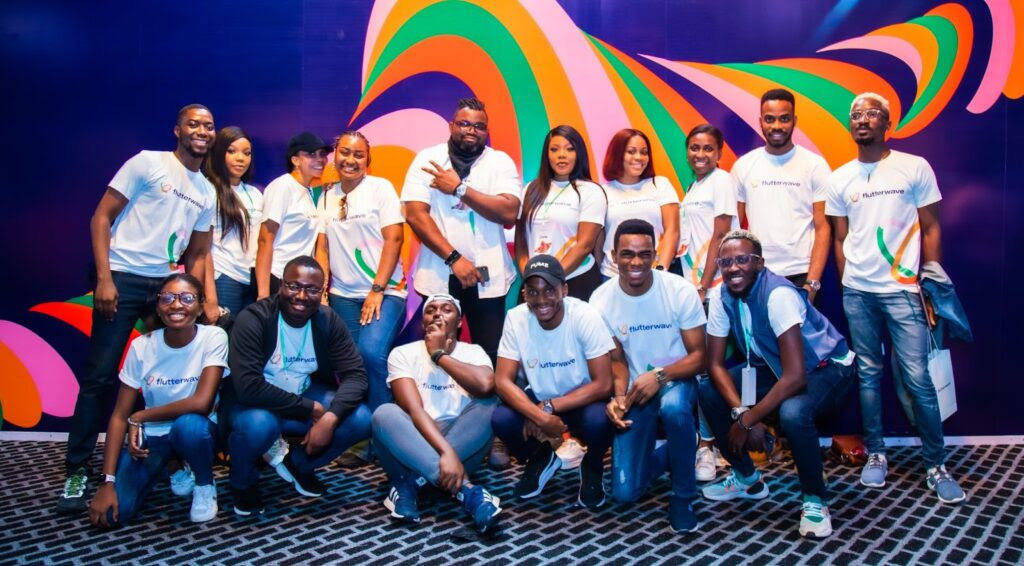
Flutterwave, Africa’s leading payments technology company, has announced the roll-out of its Static and Dynamic Virtual Accounts service to Flutterwave merchants in and outside Ghana, further expanding its suite of payment solutions to enhance convenience and flexibility for businesses and customers.

The new feature enables Ghanaian customers to make payments to Flutterwave merchants using the widely adopted Pay With Bank Transfer (PWBT) method. As a company committed to simplifying payments and enabling seamless transactions, Flutterwave continues to innovate by providing businesses with new tools to collect payments efficiently. By introducing Static and Dynamic Virtual Accounts, the company aims to eliminate payment limitations caused by borders or restricted payment methods.

Enhancing Payment Options With Virtual Accounts

The newly launched Ghana Virtual Accounts service enables merchants to generate both static and dynamic virtual accounts through Flutterwave’s API. These virtual accounts provide customers with an additional payment option, allowing direct transactions via bank transfers or mobile money services.

  • Dynamic Virtual Accounts are designed for one-time transactions at checkout. Customers are presented with virtual account details during the payment process and must transfer the exact amount to that account for the transaction to be completed successfully.
  • Static Virtual Accounts can be used for recurring payments or to assign unique account details to specific customers, offering greater flexibility for businesses managing frequent transactions.

This expansion complements existing payment methods available to Ghanaian customers, which includes mobile money, debit and credit cards, Google Pay, and Apple Pay, further strengthening Flutterwave’s payment ecosystem.

Benefits of Ghana Virtual Accounts

  1. Seamless & Secure Transactions
    Customers can securely complete payments through bank transfers, reducing fraud risks. Transactions are authorized via the customer’s banking app or mobile money platform, ensuring a high level of security.

  2. Minimized Errors & Refund Requests
    The use of dynamic virtual accounts ensures that customers pay the exact amount required, reducing discrepancies and refund-related issues.

  3. Swift Settlements
    Payments processed through the Pay with Bank Transfer method are settled within 24 hours, significantly faster than other payment options. This rapid settlement process improves cash flow for merchants.

  4. Increased Transaction Limits
    With Pay with Bank Transfer, customers can complete transactions up to GHS 2,000,000, far exceeding the GHS 25,000 limit imposed on mobile money transactions. This higher limit enhances the payment experience for customers handling large transactions.

  5. Scalability for Businesses
    Whether for small businesses or large enterprises, Ghana Virtual Accounts provide scalable solutions to meet varying payment needs. Merchants can generate single or bulk static accounts via API as required.

  6. Easy Integration
    Businesses can seamlessly integrate this feature into their existing systems via Flutterwave’s API. Detailed API documentation is available to facilitate smooth adoption.

  7. E-Levy Considerations
    To improve the customer experience, Flutterwave has incorporated E-Levy charge notifications into the system, ensuring that users are aware of applicable charges before completing transactions.

Driving Digital Payment Innovation in Ghana

Flutterwave’s introduction of Ghana Virtual Accounts comes after the fintech unicorn earlier this month, announced its approval to provide inward remittance services to Ghana, granted by the Bank of Ghana (BoG).

These developments, underscores the company’s commitment to expanding digital payment options in the country. By offering secure, fast, and scalable payment solutions, the Flutterwave continues to empower merchants while improving the payment experience for Ghanaian consumers.

Google’s Experiment Claims News is Worthless to Its Business, But It Could Trigger Further Scrutiny From EU

0

Google has reported the results of an experiment that removed news content from search results for 1% of users in eight European markets over a period of 2.5 months. The tech giant claims that the test demonstrated that news content has no meaningful impact on its ad business, a finding that could shape its negotiations with European publishers over copyright payments.

The experiment comes against the backdrop of mounting regulatory pressure on Google to compensate news publishers for content used in serving ads. The push to make Google pay for news is particularly strong in Europe, where lawmakers have implemented copyright laws aimed at forcing tech platforms to share revenue with media organizations.

France has been at the forefront of this fight, imposing heavy fines on Google for failing to negotiate fairly with publishers. In 2021, the French competition authority fined the company more than half a billion dollars after determining that it had failed to comply with orders requiring fair negotiations over payments to media outlets.

Despite eventually reaching licensing agreements with some publishers, Google’s experiment appears to be a strategic move to undercut the argument that news is valuable to its platform and should be compensated.

A Tactical Move Ahead of Payment Talks

By releasing the results of this study, Google is expected to use the findings as leverage in future negotiations with European publishers. The company argues that publishers “vastly overestimate” the value of their journalism to its business and claims that removing news from search did not negatively impact its advertising revenue. According to Google, the financial impact was so minimal that it “could not be statistically distinguished from zero, either overall or by country.”

However, media organizations and analysts are likely to challenge this claim, pointing out that Google’s methodology lacks transparency and that the company’s dominance in online search means that even minor shifts in how news appears in results can have major consequences for publishers.

Google’s argument that news is insignificant to its business also runs contrary to the position of regulators, who see news content as an integral part of the platform’s ability to engage users. This is why lawmakers have been pushing for revenue-sharing arrangements, arguing that tech giants profit from news content even if they do not directly place ads on articles.

Regulatory Scrutiny and EU’s Retaliation Against Big Tech

However, the experiment is unlikely to influence regulatory decisions in Europe. The European Union has taken an increasingly aggressive stance against American tech giants, particularly in the wake of U.S. President Donald Trump’s tariffs on European goods. The EU made it clear that it would target Big Tech in strict enforcement of its antitrust and copyright laws in retaliation for the tariffs imposed by Trump.

This geopolitical backdrop makes it unlikely that regulators will soften their stance on Google based on the results of this experiment. European lawmakers remain committed to enforcing copyright protections that require tech platforms to share revenues with publishers, and Google’s findings are unlikely to change their approach.

Furthermore, Google’s history of regulatory clashes in Europe suggests that any attempt to minimize the role of news in its business model could trigger further scrutiny. France’s competition authority has already shown that it is willing to take strong action against Google when it fails to comply with fair payment requirements, and Germany has also increased oversight of the company’s handling of news content.

Google had initially included users in France in the news ablation tests but abandoned this portion of the experiment after a French court warned it would be fined for breaking a prior agreement with the antitrust authority. Also, the company notably did not run the test in Germany.

The Risk of Further Antitrust Action

Google has already faced billions of dollars in fines from European regulators over various antitrust violations, including its dominance in online search and digital advertising. By downplaying the importance of news to its platform, the company risks further legal battles if regulators view this as an attempt to evade copyright obligations.

While the web search giant insists that its experiment shows news has little value to its advertising business, it is believed that news content helps drive user engagement on the platform, indirectly boosting ad revenue. Even if Google does not place ads directly on news articles, the presence of timely and relevant news in search results encourages users to stay on the platform longer, making them more likely to click on ads elsewhere.

Media organizations are expected to push back strongly against Google’s findings, warning that the tech giant’s dominance in search already puts publishers at a disadvantage. News outlets have long argued that Google benefits disproportionately from their content, and they will likely use this experiment to call for even stricter regulations.