DD
MM
YYYY

PAGES

DD
MM
YYYY

spot_img

PAGES

Home Blog Page 1646

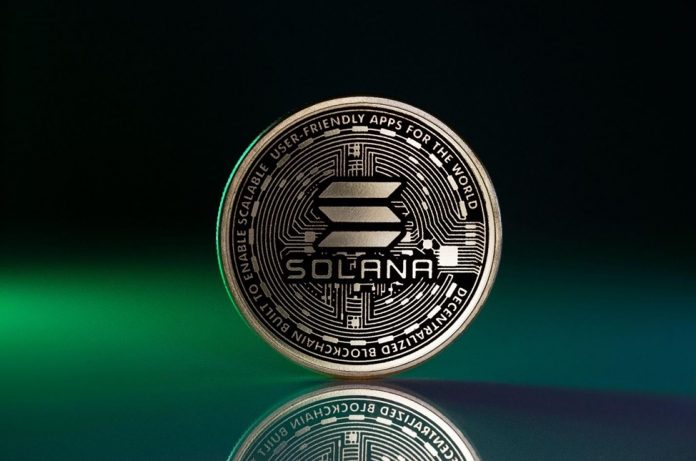
Solana’s Cofounder Yakovenko Supports the SIMD-0228 Proposal

0

Solana co-founder Anatoly Yakovenko has expressed strong support for the SIMD-0228 proposal, which seeks to reduce the Solana network’s emissions rate by shifting SOL token issuance from a fixed schedule to a dynamic, market-driven model. This proposal, set for a community vote starting March 6, 2025, during epoch 753, could lower SOL’s annual inflation rate from approximately 4.5% to as low as 0.87%. Yakovenko has likened its potential impact to an “asteroid hitting Earth,” emphasizing its significance for Solana’s economic framework.

The plan, authored by Multicoin Capital’s Tushar Jain and Vishal Kankani with support from Anza’s lead economist Max Resnick, adjusts emissions based on staking participation—reducing rewards when staking is high and increasing them when it’s low—to create a more sustainable and responsive tokenomics system. While it has garnered backing from figures like the Solana Foundation’s Head of Staking, Ben Hawkins, some community members worry it could favor larger validators and impact decentralization.

A dynamic model, in the context of Solana’s SIMD-0228 proposal, refers to a system where the issuance (or “emissions”) of new SOL tokens adjusts automatically based on real-time network conditions, rather than following a predetermined, fixed schedule. Unlike Solana’s current model, which has a set annual inflation rate (starting at 8% and decreasing by 15% yearly until stabilizing at 1.5%), the dynamic model ties token issuance to the percentage of SOL staked on the network. Here’s how it works and why it matters:

The staking ratio is the proportion of total SOL tokens actively staked to secure the network. In the SIMD-0228 proposal, this ratio determines the inflation rate. If a large percentage of SOL is staked (e.g., 80%), the issuance rate drops significantly—potentially to as low as 0.87% annually. The logic is that high staking indicates strong network security, so fewer new tokens are needed as rewards.

If fewer tokens are staked (e.g., 50%), the issuance rate increases—up to a cap of 4%—to incentivize more staking and maintain network security.
Target Staking Ratio: The model aims for an “ideal” staking ratio, often set around 65-70% in discussions, balancing security and liquidity. The issuance adjusts dynamically to push the network toward this target.

Unlike a fixed model, where issuance is predictable but inflexible, the dynamic approach reacts to market behavior. If staking drops due to low yields or external factors (e.g., price crashes), issuance rises to attract stakers. If staking surges (e.g., during bullish markets), issuance falls to avoid oversupplying. At 4.5% inflation, 4.5 million new SOL are issued yearly, split among stakers, no matter how many participate. If 80% of SOL is staked (80 million), issuance might drop to 0.87%, adding just 870,000 SOL. If only 50% is staked (50 million), issuance could rise to 4%, adding 4 million SOL.

Lower issuance during high staking reduces inflation, potentially making SOL scarcer and more valuable over time. Higher issuance during low staking ensures validators are incentivized to participate, maintaining Solana’s proof-of-stake security. The model adapts to economic conditions, unlike rigid schedules that might misalign with market reality.

This shift reflects a broader trend in blockchain tokenomics toward self-regulating systems, akin to how Ethereum’s post-merge issuance adjusts with network activity. For Solana, it’s a bid to fine-tune its economy as it scales, though critics note it could complicate predictability for validators and investors.

The USA Bitcoin Strategy is Taking Shape Under President Trump’s Administration

0

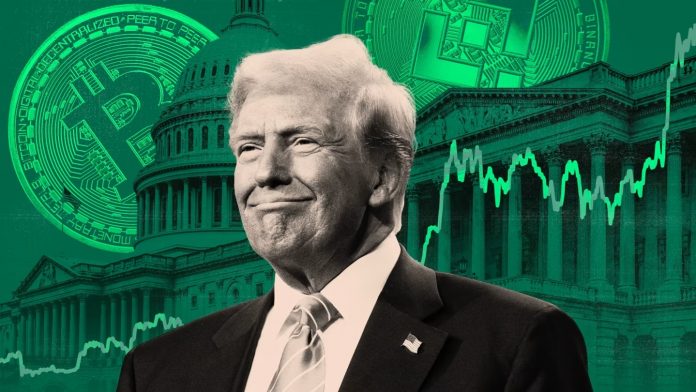
The U.S. Bitcoin strategy is taking shape under President Donald Trump’s administration, reflecting a sharp pivot toward embracing cryptocurrency as a national asset. This shift builds on campaign promises and early executive actions following Trump’s inauguration in January 2025, spurred by his 2024 election win and a pro-crypto stance that contrasts with prior U.S. skepticism.

Here’s a rundown of the strategy, its components, and its implications, grounded in current developments and sentiment.

Executive Action: On February 3, 2025, Trump signed an executive order establishing a “Crypto Strategic Reserve,” directing the Treasury to retain approximately 200,000 BTC (worth ~$18 billion at current prices) seized by the Justice Department from criminal activities, like the Silk Road and PlusToken cases. Reports from Reuters note this as a starting point, with Trump framing it as a “national asset” akin to the Strategic Petroleum Reserve.

Senator Cynthia Lummis’ BITCOIN Act, introduced in July 2024, remains a blueprint. It calls for the Treasury to buy 200,000 BTC annually for five years, aiming for 1 million BTC (~5% of Bitcoin’s 21 million cap), funded by Federal Reserve profits or gold sales. Though not yet law, Trump’s July 2024 Nashville Bitcoin Conference speech endorsed this vision, suggesting purchases to “dominate the global Bitcoin market.”

Proponents, including Trump and Lummis, argue it hedges against inflation, bolsters the dollar, and could halve U.S. debt in 20 years if Bitcoin appreciates. Analysts highlight enthusiasm for this as a counter to BRICS de-dollarization efforts. The February 3 order created a Digital Asset Working Group, tasked with slashing red tape by July 2025. It aims to reverse Biden-era hostility—e.g., SEC crackdowns on exchanges like Coinbase—and foster blockchain innovation. Trump’s stated goal is U.S. “dominance in digital finance.”

The strategy responds to perceived moves by China (rumored Bitcoin reserve legislation) and BRICS nations using BTC for settlements. This suggests a “Bitcoin arms race,” with the U.S. aiming to secure its share of the finite supply first. Advocates like Michael Saylor (proposing a 20% BTC supply grab) and Bernstein ($725B AUM firm suggesting debt-funded purchases) see Bitcoin as a long-term fiscal tool, leveraging its deflationary nature against a $34 trillion national debt.

President Trump signed Executive Order 14178 shortly after taking office, establishing a policy to support the “responsible growth and use of digital assets, blockchain technology, and related technologies across all sectors of the economy.” This order revoked Executive Order 14067 (March 9, 2022), which focused on ensuring responsible development of digital assets under the previous administration and directed the Treasury Department to revoke its “Framework for International Engagement on Digital Assets” from July 7, 2022.

The executive order created a Working Group on Digital Assets, chaired by White House A.I. & Crypto Czar David Sacks and administered by Executive Director Bo Hines. The group includes officials from key agencies such as the Treasury Department, Department of Justice, Securities and Exchange Commission (SEC), and Commodity Futures Trading Commission (CFTC).

Bitcoin and Ethereum in a national reserve could expose the U.S. government to financial risks and benefit private holders at taxpayers’ expense. The specifics of how the reserve will be funded, managed, or expanded—beyond seized assets—remain unclear, pending the working group’s report due in July 2025. Market reactions have been mixed but generally positive, with Bitcoin and Ethereum prices stabilizing and even rising slightly after the clarification, while SOL, ADA, and XRP continue to see gains from the initial announcement.

Financial Technology in Africa and Europe: What Startups Can Learn from Each Other

0

It used to be that banking was a matter of bricks and mortar, of queueing behind a pensioner paying in coppers, of signing things in triplicate, and waiting five working days for anything to happen. Now, financial technology—or fintech, if one insists—has changed all that, and in many ways, Africa and Europe have been rewriting the rulebook in parallel, each continent with its own way of doing things.

There is, of course, the urge to assume that Europe’s deep systems of regulation and compliance put it in the driver’s seat, but this would be misguided. In fact, it is Africa that has stepped forward in a few ways, unhampered by inherited banking systems and the sort of institutional jitters that still cause some European banks to close for lunch. From mobile money to blockchain, Africa has created a fintech identity that is less about tradition and more about necessity. Companies like Flutterwave, which provides a payment platform for global merchants and service providers across Africa, and Chipper Cash, offering cross-border payment services, have pioneered digital payments and cross-border transactions, shaping the future of finance across the continent.

Europe, however, as the bureaucratic elder statesman, has had to adapt to serve the needs of a younger, less positivistic audience that would rather have payments instant and an algorithm to oversee their investments.

The Regulation Dilemma: Strangling or Safeguarding?

Regulation is both the shield and the hindrance for the European fintech start-up. Frameworks like the Revised Payment Services Directive (PSD2) and the Anti-Money Laundering Directive (AMLD) ensure security but also slow down innovation.

It encourages trust, the confidence that consumers aren’t about to have their life savings spirited away by an outfit that began in a spare bedroom. It means, however, that it can take an age to get anything remotely financial up and running. Startups have to fight through a thicket of regulations before they even take a moment’s consideration about how to build an app, so many of them burn through dollars of investment and never manage to get that very first customer to click “sign up.”

Africa, meanwhile, plays with a degree of flex that will send shivers of fear down European regulators’ spines. There, fintech is often characterized by the sheer need to bring access to financial services to regions where banking, if at all possible, is not. Mobile money services like M-Pesa have thrived precisely because they circumvent conventional banks altogether, allowing people to send and receive money using only a basic mobile phone. It is a system that did not come into existence by convenience but by necessity and one that has revolutionized entire economies.

Europe’s strict financial regulations shape various industries, including online gaming. Players choosing a European online casino benefit from strong consumer protections, secure payment methods, and compliance with responsible gambling policies. These regulations ensure that licensed operators provide a fair and transparent gaming experience.

It’s a sector that has had to learn how to survive under tight regulatory requirements and one that makes for a fascinating study for fintech start-ups looking for a balance between innovation and compliance.

Innovation and Stability: Finding the Balance

One of the more ironic contradictions of fintech is that Africa, the long-held perception being that it’s the riskier market, actually turns out to be in many ways the driver of innovation. While European startups are fretting about obtaining the proper permits prior to launching their newest app-based financial management solution, African startups are bringing financial services to the masses who otherwise would be hiding stacks of cash in their socks.

It is one of necessity. A European consumer, overwhelmed with choices, might hesitate before adding yet another banking app to their phone. Meanwhile, an African consumer, unable to step into a bank building, sees fintech as a necessity, not an option. This difference has led European fintech firms like Revolut, N26, and Klarna to focus on seamless digital banking experiences that prioritize speed and automation.

That is why Africa has some of the world’s most successful mobile banking products—products that European startups gaze upon with a pinch of admiration and more than a whiff of envy.

But stability, that old European virtue, has its benefits too. A fintech business that wants to attract long-term investment needs to show that it can co-exist within regulatory parameters. No point in developing the most exciting financial product in the world if, five years down the line, some new regulation makes it obsolete. European startups know all about this and would rather experience slow, steady growth than bullet-like expansion.

Security and Trust: Lessons in Digital Payments

The European fintech consumer is wary. They’ve been warned about phishing, heard stories of hacked accounts, and approach any new financial product with a healthy dose of skepticism. Security is therefore key. Two-factor authentication, secure payments, and biometric log-ons are all de rigueur in European fintech products, not just because they protect the customer, but because they reassure them too.

Africa, on the other hand, has handled security differently. In most cases, fintech products are designed for initial adopters of financial services. Focus is placed on ease so that products are not complicated enough to require significant financial knowledge. Security, therefore, has to be solid but subtle—solid enough to protect but subtle enough not to create barriers.

And then, of course, there is fraud. A fintech firm in Nairobi or Amsterdam must consider preventing financial crime. In Europe, it means abiding by anti-money laundering regulation. In Africa, it will most likely mean determining how to make transactions on the lowest end of mobile telephones. Different issues, but with the same goal at the end.

Financial Inclusion: The Real Test of Fintech Success

If there is one thing both continents can learn from each other, it is that fintech is only worth the value of the people it serves. In Africa, where enormous masses of people are still not covered by traditional banking, fintech is life and death. It gives people credit, facilitates savings, and facilitates business growth. In Europe, it is convenience—processing more quickly, investing better, and payments easier.

But even in Europe, there is exclusion. There remain the unbanked, there remain the businesses with creaking payment systems, and there remain the consumers trapped in debt cycles because the old banks won’t—or can’t—serve them. Here, European fintech startups can learn from their African brethren: by creating solutions that serve not just the tech-savvy but also those excluded by traditional finance.

At its best, fintech needs to be empowerment. It needs to be about enabling people to take charge of their money, whether that is paying from a remote village or investing in stocks from a smartphone. For fintech entrepreneurs, the real opportunity lies in bridging the gap—leveraging Africa’s high mobile penetration and Europe’s regulatory expertise to create scalable, inclusive financial solutions.

And while Africa and Europe may be approaching this problem differently, both could learn from the other—if they are prepared to listen.

China is Elusively Planning a Strategic Bitcoin Reserve

0

China is accelerating legislation to adopt a strategic Bitcoin reserve, but concrete evidence remains elusive. The idea has surfaced amid speculation of a global “Bitcoin arms race,” especially following U.S. President Donald Trump’s crypto-friendly rhetoric and proposals for a U.S. strategic reserve post his 2024 election win.

Posts on microblogging site X and some crypto news outlets, like CryptoBriefing on March 3, 2025, cite David Bailey, CEO of BTC Inc., claiming China is “working double time” on this, based on “closed-door meetings” since the U.S. election. However, no official statements from Chinese authorities confirm this, and the narrative hinges on insider speculation rather than documented policy.

China’s relationship with Bitcoin is complex. Since 2021, it has banned domestic crypto trading and mining, slashing its once-dominant 70%+ share of global Bitcoin hash rate. Yet, it holds significant Bitcoin—around 194,000 BTC (worth ~$18 billion at current prices) seized from the 2019 PlusToken scam, according to CryptoQuant CEO Ki Young Ju. Posts on X suggest China might retain rather than sell this stash, aligning with a reserve strategy, though a January 2025 report indicated sales occurred. The lack of transparency from Beijing fuels uncertainty—did they sell, hold, or quietly accumulate more?

The rumored legislation could tie into broader geopolitical goals, like de-dollarization. Analysts speculate China sees Bitcoin as a hedge against U.S. financial dominance, especially as BRICS nations explore alternatives to the dollar. A strategic reserve might also counter Trump’s plans, which include a U.S. stockpile of Bitcoin, Ethereum, and other assets, as announced on Truth Social in early 2025. If true, China’s move could be a preemptive strike in a digital currency power play.

A Bitcoin reserve’s scalability for China would leverage its existing holdings and economic might. With over $3 trillion in foreign reserves (mostly U.S. Treasuries), adding 500,000 BTC (~$46 billion at $92,000/BTC) as some crypto analysts claim, is plausible but modest—about 1.5% of its reserves. Bitcoin’s fixed 21 million supply (19.9 million mined by 2025) means China could aim for 2–5% of it, mirroring U.S. gold reserve strategies (5% of global gold). Unlike MegaETH’s tech-driven scalability, this is about financial and strategic capacity—China’s centralized control could execute bulk purchases via OTC markets or state-backed entities, bypassing its trading ban.

Challenges include Bitcoin’s volatility (e.g., 17% drop in February 2025) and legal hurdles. Legislation would need to reconcile the 2021 ban with state adoption, possibly framing Bitcoin as a reserve asset, not a currency for citizens. Enforcement could rely on existing cybersecurity laws—like the 2020 Cryptography Law—while sidestepping decentralized mining or trading.

No public Chinese legislation exists as of now. Bailey’s claims lack primary sources, and Beijing’s censorship obscures verification—X posts calling it a “censored regime holding censorship-resistant money” highlight the irony. Past actions (selling seized BTC) and Hong Kong’s 2024 BTC/ETH ETF approvals suggest a nuanced shift, but not a confirmed reserve policy. Meanwhile, U.S. states (e.g., Oklahoma, Arizona) and Senator Cynthia Lummis’ Bitcoin Act (proposing 1 million BTC over five years) offer a clearer legislative blueprint China might emulate.

If China legislates a reserve, it could spike Bitcoin demand, pushing prices toward $100,000+ as supply tightens. It’d signal nation-state adoption, accelerating global competition—BRICS might follow. Yet, without official word, this remains speculative. China’s silence contrasts with U.S. openness, leaving the “speeding up” claim tantalizing but unproven.

Why Harry Hippo’s $HIPO Is the Next Big Thing in P2E Crypto

0

Harry Hippo steps into the crypto space with a curious tale, drawing from the unruly hippos that roam Hacienda Napolis, Colombia; a remnant of a wild historical chapter. This project, steered by its AI-crafted mascot Harry Hipo, pairs memecoin roots with a blockchain-driven play-to-earn (P2E) gaming twist.

Moreover, its token, $HIPO, threads through an ecosystem that favors gradual progress over fleeting buzz. Kicking off in late 2024, it’s already piqued interest among those who see promise in its blend of oddball inspiration and quiet ambition. Here’s a closer look at what fuels Harry Hippo and how it’s charting its course.

Harry Hippo’s Presale That Whispers Strength

The Harry Hippo presale launched in Q4 2024, pulling together over $1.5 million so far, according to updates on the website. That figure underscores a community ready to back a project that leans on substance rather than splashy headlines.

At $0.005725 per $HIPO, the token sets a low bar for entry, appealing to those eyeing an early stake. The Harry Hippo team, in a tweet post, encouraged users to join the $HIPO herd while the presale remains live. The project teased an exciting universe, urging potential investors not to miss out.

Joining in takes little effort—users link a wallet like MetaMask or Trust Wallet, buy with ETH, BNB, USDT, or a debit card through the website’s widget, and wait to claim tokens once the presale wraps.

This early traction tells a story of trust. The funds point to belief in a concept that threads quirky heritage into blockchain utility. Alongside the presale, the team unveiled a website and sharpened the Harry Hippo brand, crafting a base that feels rooted rather than rushed.

Besides, it’s not about dazzling the crowd—it’s about laying tracks for a journey that’s just beginning. The approach resonates, pulling in a herd that’s betting on its staying power.

Crafting a World Beyond the Token

Harry Hippo builds its identity around an ecosystem where $HIPO does more than sit in wallets. The Harry Hungry Hipo game drives this vision—a P2E setup where players scrap to claim the Alpha Hippo title, staking $HIPO to pocket rewards tied to their skill.

AI slips in as a companion, feeding players subtle insights to hone their moves, a nod to Harry Hipo’s sharp-witted core. NFTs deepen the mix, offering collectibles that don’t just decorate but stitch into the game’s fabric, enriching the experience without overpowering it.

Staking adds a layer of grit. Those who lock $HIPO during the presale tap into a 601% APY, with rewards landing after the phase closes—project tallies show over 300 million tokens already staked.

The catch is patience—tokens stay locked until the presale ends, then shift to wallets, a structure that’s drawn a crowd willing to wait. It’s not a grab-and-go deal; it’s a stake in a system blending gaming with a longer play. That balance hints at Harry Hippo’s aim to outlast the memecoin pack.

Roadmap and Tokenomics: A Blueprint of Patience and Purpose

Harry Hippo carves its tokenomics from a pool of 3 billion $HIPO tokens, spread with care across distinct goals. The presale claims 30%, casting a wide net for newcomers, while 10% shores up liquidity to ease trading later.

Development snags 20%, feeding the game’s growth and ecosystem polish, and another 20% flows to staking rewards, keeping users tethered. Marketing takes the last 20%, tasked with spreading the word without tipping into hype—a setup that balances now and next.

The roadmap sketches a steady climb. Q4 2024 locked in the presale and website launch—both humming along now. Q1 2025 rolls out a game prototype and lands $HIPO on its first centralized exchange, testing broader waters.

Q2 brings the full game, weaving in staking and $HIPO use, while Q3 layers on AI insights and NFT depth. Q4 2025 eyes GameFi and metaverse territory, aiming to plant $HIPO as a memecoin with roots that run deep. It’s a deliberate pace, echoing the hippo’s unhurried heft, and it’s built to weather the long haul.

Final Thoughts

Harry Hippo opens its gates to anyone curious about a project that grows without grandstanding. Its presale haul and staking numbers nod to a community hooked on its origin and outlook.

The website lays it bare—token purchases, game details, and a roadmap worth a skim. As the project continues to execute its roadmap, its vision of blending entertainment with crypto rewards is set to attract a growing community.

Investors looking for an early stake in a dynamic, utility-driven crypto project may find Harry Hippo an intriguing opportunity. Click this link, https://harrythehippo.io/,  to join the movement today.


Visit the Harry Hippo Today Here:

Harry HippoTwitter | Telegram