DD
MM
YYYY

PAGES

DD
MM
YYYY

spot_img

PAGES

Home Blog Page 165

Tencent’s AI-Powered Third Quarter Delivers 15% Revenue Surge as Gaming and Cloud Expansion Strengthen Growth

0

Tencent posted a strong third quarter on Thursday, delivering 15% year-on-year revenue growth as aggressive investments in artificial intelligence continued to reshape its advertising, gaming, and cloud businesses.

The Chinese tech giant said AI enhancements are already improving targeting, boosting game engagement, and accelerating internal production pipelines.

The company reported 192.9 billion Chinese yuan ($27.12 billion) in revenue for Q3 2025, beating the 189.2 billion yuan expected by analysts surveyed by LSEG. Operating profit rose to 63.6 billion yuan, also above the 58.01 billion yuan the market had forecast.

For a company long anchored in gaming and social entertainment, Tencent’s core business remained firm. Revenue from gaming, marketing, and social media services reached 95.9 billion yuan, a 16% increase from a year earlier, underscoring the strength of both its domestic and international content pipelines.

AI-powered games drive demand at home and abroad

In China, Tencent’s domestic gaming revenue climbed 15% year-on-year, driven by the recently released titles “Delta Force” and “VALORANT MOBILE.” The latter has already become “China’s most successful mobile game launch year-to-date,” the company said.

International gaming — Tencent’s fastest-growing segment in recent quarters — surged 43% to 20.8 billion yuan. The company pointed to strong performance from “Clash Royale” and “Dying Light: The Beast,” as well as higher contributions from Supercell’s catalogue and a new acquisition that helped extend Tencent’s global footprint.

The momentum reflects the company’s broader efforts to strengthen AI-enabled game development. Tencent said improvements in its AI foundation model are now being deployed across gameplay optimization, live-ops engagement, and production design.

“Our strategic investments in AI are benefitting us in business areas such as ad targeting and game engagement, as well as in efficiency enhancement areas such as coding, and game and video production,” CEO Ma Huateng said in the earnings release.

Cloud expansion and Europe ambitions

Tencent has been pushing deeper into cloud computing as part of its strategy to challenge established global providers, including Amazon Web Services, Microsoft Azure, and Google Cloud. The company lifted capital expenditure earlier in the year to build out AI-ready data center capacity and accelerate its expansion into Europe, where regulatory pressure on U.S. tech giants has created fresh opportunities for cloud alternatives.

That strategy has had a visible payoff. The company reported higher cloud services revenue, citing increased demand for AI-related workloads as enterprises upgrade their digital infrastructure.

Tencent also noted continued improvement to HunYuan, its in-house foundational AI model. The update boosted its coding, math, and science reasoning abilities. The firm also confirmed it uses DeepSeek in some products, illustrating a hybrid model approach blending in-house and external AI technologies.

Payments and financial services lift fintech arm

The WeChat owner’s financial and business services division posted 58.2 billion yuan in revenue for the quarter, a 10% increase from a year earlier. Tencent attributed the rise to stronger commercial payments activity, higher consumer spending, and growth in digital loan services.

The company recently launched TenPay Global Checkout, a cross-border payment platform allowing selected Weixin merchants to receive funds from outside the Chinese mainland. The move expands Tencent’s reach in international e-commerce at a time when Chinese consumer platforms are increasingly seeking offshore payment channels.

Capex slows after heavy AI build-out

After front-loading spending earlier in the year to strengthen its AI and cloud capabilities, Tencent’s capital expenditures eased to 13 billion yuan in the third quarter. The company’s capex is heavily concentrated in IT infrastructure, including data centers, high-performance computing clusters, and AI training hardware.

The slowdown signals that Tencent is entering a phase of absorbing the infrastructure it built — even as demand for AI inference and cloud services continues to climb.

Stock surges nearly 57% this year

Tencent shares are up 56.7% year-to-date, a rally fueled by its resurgence in gaming, improvements in macro sentiment around China’s tech sector, and investor confidence in the company’s ability to commercialize its AI pipeline.

The Q3 numbers reinforce that pivot. Tencent’s ability to capture AI-driven efficiency gains while pushing deeper into cloud computing and global gaming places it among the few Chinese tech giants showing consistent, broad-based growth amid a challenging regulatory and economic backdrop.

With HunYuan gaining new capabilities, gaming hits rolling out on schedule, and European cloud expansion underway, Tencent’s Q3 report signals an AI-powered business that is scaling across nearly every major revenue line — and still gathering momentum.

Senate Pressures Finance Minister to Revisit 30% Capital Gains Tax as Market Losses Deepen

0

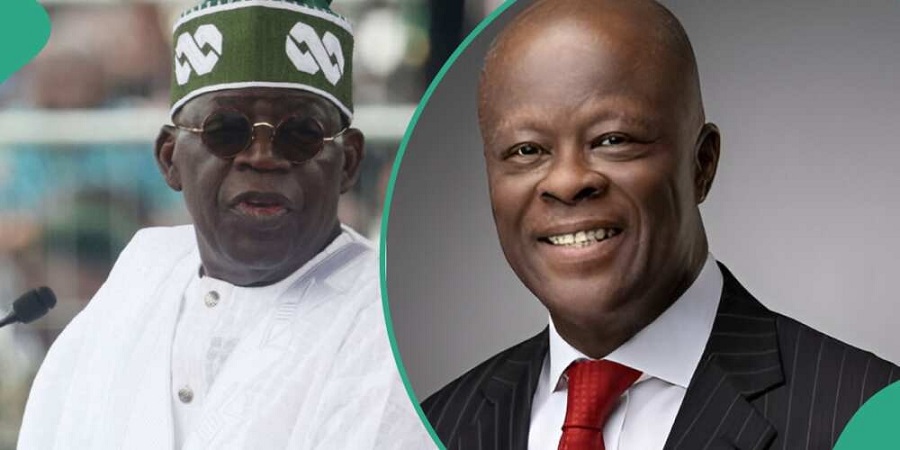
Nigeria’s Senate has called on Finance Minister and Coordinating Minister of the Economy, Wale Edun, to urgently revisit the controversial 30 percent Capital Gains Tax (CGT) on large share sales after what began as a sharp selloff last week deepened into a broader market slump.

The uproar follows a massive N2 trillion loss first recorded in a single week—an episode analysts now say spiraled into a deeper slide that has wiped out over N4.6 trillion in value on the Nigerian Exchange (NGX).

Analysts believe a significant part of the turmoil is tied to the newly passed Nigerian Tax Act 2025, which raises CGT on share disposals worth N150 million and above from 10 percent to 30 percent, with implementation slated for January 2026. The size of the tax jump and its timing are believed to have rattled both domestic and foreign investors, causing heavy selloffs across several blue-chip stocks.

Senator Osita Izunaso, Chairman of the Senate Committee on Capital Market and Institutions, addressed the issue head-on on Wednesday while presenting a paper titled “Redefining the Rules: The Investment and Securities Act 2025 and the Future of Nigeria’s Capital Market” at the Moneyline with Nancy Investment Forum 2025 in Abuja.

Izunaso said the sudden change in the tax regime had “unsettled investors,” leading to panic disposals that wiped out over N2 trillion within days.

Although multiple factors influence market movements, analysts say the timing of the selloffs closely mirrors the release of details about the new CGT regime, especially the proposed 30 percent rate on transactions above N150 million. They argue that foreign portfolio investors—already wary due to currency pressure, inflation, and patchy liquidity in the FX market—were spooked by the tax hike and accelerated their exit.

Izunaso acknowledged that the reform has introduced friction into a market that had begun recovering under President Bola Ahmed Tinubu, whose administration he credited for stabilizing macroeconomic conditions and improving policy coherence.

But he cautioned that the CGT change risks reversing those gains. He remarked that the increase in Capital Gains Tax on share sales above N150 million is worrisome and has created understandable concern among investors.

He underlined that taxation is essential for revenue generation but warned that poorly timed fiscal changes can erode confidence.

“While taxation is essential for revenue generation, it is equally critical that fiscal measures do not inadvertently undermine investors’ confidence or discourage long-term capital formation,” he said.

Senate to open talks with Finance Ministry

Izunaso said the Senate Committee on Capital Market would engage Finance Minister Wale Edun with an appeal to explore “a mechanism to address this concern” and safeguard both domestic and foreign investor confidence. He emphasized that certain provisions in the new tax law allow for ministerial discretion regarding commencement dates.

“We are aware that the new law is supposed to commence by January 2026. But we are suggesting that there are some provisions of that Act that require the commencement to begin only when the Honorable Minister of Finance advises the Executive. I think this is one of those things that should not commence on January 1, because it is already affecting the market,” he said.

Lawmakers believe delaying implementation could help stabilize sentiment, allow more consultation with market stakeholders, and prevent further capital flight.

Beyond domestic concerns, analysts say foreign investors reacted sharply to the news for several reasons:

• Large investors often structure exits months in advance, and a sudden jump from 10 percent to 30 percent on significant share disposals alters portfolio strategies overnight.

• Foreign funds, which had slowly begun trickling back into Nigeria after FX reforms, viewed the CGT increase as evidence of fiscal unpredictability.

• Heavy positions in tier-one banks and industrial stocks were unwound as global funds moved to reprice Nigeria-related risk.

The result, according to several market operators, was a swift contraction that accelerated losses from around N2 trillion to over N4.6 trillion within days, pulling the NGX All-Share Index off recent highs and eroding 2025 gains across multiple sectors.

Government officials offer clarifications

Amid the backlash, the Chairman of the Presidential Fiscal Policy and Tax Reforms Committee, Taiwo Oyedele, clarified that the new CGT will not apply retroactively. He explained that the reform includes:

• a cost basis reset, and
• a grandfathering clause

…ensuring gains accumulated before 2026 are preserved, and the 30 percent tax will apply only to new gains realized after the effective date.

Finance Minister Wale Edun has also stressed that the Federal Government will adopt a cautious and consultative approach in rolling out the new laws, acknowledging concerns about the capital market component of the reform.

He signaled willingness to refine guidelines and transition rules to avoid unintended shocks.

The coming weeks may determine whether the government leans toward a delay, amendment, or full rollout of the 30 percent CGT. For now, the market remains volatile, with analysts warning that without quick intervention, investor sentiment could deteriorate further.

The NGX, which had shown renewed activity and higher listing appetite in 2023 and 2024, is now grappling with the risk that the tax reform could slow capital formation, deter long-term equity investments, and push foreign funds to competing African markets with lower transaction taxes.

Izunaso’s push signals that the Senate recognizes the risk and is preparing to press the Executive for adjustments before more value evaporates.

For investors, the pressing question is whether Abuja will act fast enough to stop the bleeding — or whether the market will need months to recover from a tax shock that hasn’t even taken effect yet.

Tekedia AI Lab Begins Today, Nov 15 [Register Now]

0

Tekedia AI Lab program comes with rich technical manuals and videos, organized in four modules:

  • Understanding AI and AI Agents [theory], and Deploying Agents in Tekedia server [Lab]
  • Deploying Agents in Local Machines (e.g. laptops and PCs) [Lab]
  • Vibecoding and Building Agents with Prompts [Lab]
  • Deployment in Custom domain and Personal VPS server [Lab]

From AI Invention to AI Acceleration: The Journey to Enterprise Transformation

If your artificial intelligence (AI) deployment has not improved your enterprise intelligence, it means you are still operating at the inventive phase of AI where technology functions as a tool, not a transformer. At that level, AI helps you run the business, but not rethink it.

However, when your AI begins to deepen your enterprise intelligence, helping you see patterns, make strategic shifts, and unlock new value, then AI is no longer just running your company; it is transforming it. And transformation happens only when the business model, the very logic through which a firm captures value in the marketplace, is redesigned.

At Tekedia AI in Business Masterclass and Tekedia AI Technical Lab, we guide innovators, professionals, and institutions to move from AI Invention to AI Innovation, and then to AI Acceleration where technology becomes the new engine of business growth and value capture.

A new edition begins on Saturday, Nov 15. I invite you to register and join us as we co-learn how to build the future with AI: https://school.tekedia.com/course/ailab/


While XRP Waits on ETFs and Ethereum Updates Legacy Code, Zero Knowledge Proof (ZKP) Opens Whitelist

0

Institutional catalysts, network capacity, and launch-model fairness are becoming decisive factors in crypto’s next growth cycle. This analysis compares XRP, currently driven by ETF speculation, with Ethereum, the long-standing leader in smart contracts, and introduces Zero Knowledge Proof (ZKP), a project built natively for scale and fairness.

By exploring chart formations, system design, and token-distribution frameworks, we’ll assess which project may define the upcoming era of digital infrastructure. While XRP and Ethereum rely heavily on external upgrades and regulatory signals, Zero Knowledge Proof (ZKP) architecture brings fresh momentum with user-centric economics and verifiable compute as its foundation.

XRP Depends on Regulatory Decisions

The XRP chart breakout narrative has intensified as the asset oscillates between $2.19 and $2.64 heading into late 2025. Much of its potential hinges on the long-anticipated ETF approval, which could push XRP toward the $4.00 mark or beyond. However, this optimism is tempered by the binary nature of its catalyst. Without a regulatory green light, XRP may remain locked in consolidation.

The token’s core use case in cross-border settlement remains intact, yet its growth remains dependent on institutional decisions rather than organic utility. For traders, XRP’s near-term outlook is more about timing than transformation. This makes it a high-risk, event-driven play rather than a foundational growth ecosystem. For those seeking the top crypto to buy with more predictable fundamentals, this dependency creates uncertainty.

Ethereum Battles Its Own Legacy

Ethereum’s price prediction continues to center around a $3,800 to $4,000 band by mid-2026, supported by DeFi and NFT dominance. Yet, its legacy architecture and reliance on Layer-2 rollups highlight persistent scaling challenges. The planned roadmap upgrades from Danksharding to execution layer optimizations could enhance throughput, but may take years to fully realize.

Ethereum remains the largest crypto project by developer participation and institutional adoption, but this scale comes with inertia. Competing networks are launching without historical baggage, offering immediate performance advantages. While ETH retains its central role in decentralized finance, investors seeking higher velocity innovation may increasingly turn to newer systems engineered for native efficiency. The question of whether Ethereum remains the top crypto to buy becomes more complex as alternatives emerge.

Zero Knowledge Proof Synchronizes Everything

Zero Knowledge Proof (ZKP) positions itself as the largest crypto project by design scope, integrating scalability, transparency, and verifiable compute into one coherent system. Instead of speculative tokenomics or delayed utility, Zero Knowledge Proof (ZKP) launches with everything synchronized on Day 1 of its presale auction. This includes its on-chain auction model, Proof Pods, and real-time earning dashboard.

Its Initial Coin Auction (ICA) replaces traditional ICO pricing with a proportional, transparent mechanism that distributes 200 million ZKP coins every 24 hours based on contributions. This ensures fair access and removes private-round advantages. In parallel, Proof Pods, which are plug-and-play devices, perform decentralized AI computation. They validate tasks and earn ZKP tied to daily auction prices.

This architecture fuses user participation with network growth. Contributors provide capital through auctions, operators supply compute power, and all rewards remain verifiable on-chain. Backed by $100 million in development and $20 million in infrastructure, the Zero Knowledge Proof (ZKP) foundation is already built and awaiting activation.

Analysts forecast a potential 100x to 10,000x ROI as value accrues through real utility, not speculation. Many view this as a strong candidate for the top crypto to buy in 2025. The whitelist is open now, giving early participants the only chance to secure guaranteed entry before the presale’s Day 1.

Verifiable Compute Beats Empty Promises

While XRP relies on regulatory timing and Ethereum refines its legacy architecture, Zero Knowledge Proof (ZKP) redefines participation through compute-based fairness and verifiable value. For investors seeking early-stage access to a transparent, privacy-first network, Zero Knowledge Proof (ZKP) represents a distinct evolution, not a variation.

It blends real-world utility with equitable distribution, aligning contributors and operators from the start. As the whitelist remains open now, those who secure access early could stand at the foundation of crypto’s next major infrastructure layer. This is one built for users, not intermediaries. For those evaluating the top crypto to buy based on preparation and fairness, Zero Knowledge Proof (ZKP) offers a compelling alternative to speculation-driven assets.

Find Out More About Zero Knowledge Proof (ZKP):

Website: zkp.com

ZEC & XMR Lose Momentum While Zero Knowledge Proof (ZKP)’s ICA Model Becomes the New 1000x Gem!

0

Recent regulatory pressure has pushed the discussion around the Zcash (ZEC) privacy coin and the Monero (XMR) privacy trend into sharper focus, urging a fresh look at how anonymity survives in a compliance-driven space. As people search for the best crypto to buy for stronger gains, a key question now stands out: can a network keep complete functional privacy while also giving full transparency of origin? Zero Knowledge Proof (ZKP) enters this space with a finished system rather than promises, building a model where mathematical checks replace blind trust.

Even though only the whitelist is open at this stage, the upcoming auction format removes the old “black box” presale style. Zero Knowledge Proof (ZKP) sets a rule where every allocation can be viewed fully on-chain. When someone contributes 5% of the day’s pool, the system assigns them 5% of the supply for that day without hidden boosts or private tiers. This structure ensures that fairness comes from verified data instead of unclear claims.

Zero Knowledge Proof: The End of Hidden Distribution Models

Many early-sale systems feel like puzzles where privileged groups always know more, and smaller buyers are left guessing. Zero Knowledge Proof (ZKP) removes this uncertainty by offering a design where openness is the foundation. Once the auctions begin, every detail becomes visible. You can check the total funds for the day and see your share in real time. For people evaluating the best crypto to buy for long-shot 1000x potential, this sharp clarity is vital because fairness can be confirmed on-chain during the same 24-hour window.

The numeric logic is simple and direct. A 250 USDC contribution in a 5,000 USDC pool equals 5% of a 200 million coin release for that day. No team privileges exist. When the daily cycle ends, 10 million coins appear instantly. This system removes the fear of waiting for teams to carry out vague plans. The code itself performs all distribution instantly and permanently.

Many projects keep pricing unclear to give early insiders an advantage, but Zero Knowledge Proof (ZKP) shows that open rules produce cleaner outcomes. The on-chain auction process serves as a public record explaining how each reward was calculated. Although auctions, the testnet, and Proof Pods will activate together later, the whitelist is already open. Searching for the best crypto to buy for better returns often comes down to finding a project that hides nothing, and this design guarantees that verification is always stronger than trust.

Zcash Privacy Coin and the New Compliance Challenge

Global regulators are tightening rules, including the expected EU ban on anonymity tools in 2027, yet the Zcash (ZEC) privacy coin has grown stronger under this pressure. While Monero faces removals due to its always-private design, Zcash’s partial transparency gives it an edge with large entities. This helped spark a major rise in late 2025 that pushed it ahead of Monero in market cap as big players chose privacy options that can still survive regulatory tests. The trend suggests the future favors networks that balance privacy with compliance.

This support can be seen through renewed interest in the Grayscale Zcash Trust and new corporate strategies built around accumulating ZEC. Upgrades are pushing ZCash deeper into DeFi networks like Solana. Still, even with these improvements, ZEC lives inside a traditional structure where users depend on network history and liquidity depth. It stands strong but remains shaped by the tightening environment.

Monero’s Privacy Stance Refuses to Bend

Many regulators praise the removal of privacy coins from big exchanges, yet they have unintentionally strengthened the Monero (XMR) privacy trend. By the end of 2025, the story is no longer about Monero fading; it is about it becoming less visible. Delistings from large platforms only shifted activity to decentralized markets and atomic swaps, forming a harder-to-track space. It has become clear that a protocol that does not cooperate cannot be controlled, and this firmness keeps Monero as the tool for absolute anonymity.

This determination grows through a community that treats upgrades as protective actions. The recent “Fluorine Fermi” update acted directly against surveillance attempts. As users move toward self-custody and direct exchanges, the gap between Zcash’s balanced transparency and Monero’s strict secrecy becomes clearer. ZCash suits large institutions, while Monero supports individuals who see privacy as a right.

Final Thoughts

The space now sits between two different approaches. The Zcash (ZEC) privacy coin appeals to institutions by adjusting to rules, while the Monero (XMR) privacy trend commits to full secrecy. Each has strengths, but both ask people to choose between regulatory comfort and complete privacy without giving full clarity on how things happen behind the scenes.

Zero Knowledge Proof (ZKP) offers another route by showing everything openly. With a built system that proves allocations instantly, it ensures fairness comes from math and visible data. For people looking for the best crypto to buy and aiming for better returns, the strongest move is choosing a structure where openness guides everything.

Learn More about Zero Knowledge Proof:

Website: https://zkp.com/