DD
MM
YYYY

PAGES

DD
MM
YYYY

spot_img

PAGES

Home Blog Page 1658

SpacePay Presale Races Ahead: The Next 100X Crypto Opportunity?

0

Cryptocurrencies have challenged the idea of how we see investments and money.

However, the industry still faces roadblocks, especially when it comes to demonstrating its relevance in everyday purchases.

SpacePay ($SPY) changes this. With its MVP ready and close to $1 million raised in the ongoing presale, the new crypto payment solution demands attention.

Before we dive deep into the project, let’s find out the key challenges that stand in the way of crypto adoption in mainstream retail.

Why Crypto Payments Haven’t Gone Mainstream

Crypto payments have yet to gain widespread adoption. The reasons are clear.

First, crypto prices can fluctuate wildly in minutes. Merchants are hesitant to access Bitcoin as a payment, as there is always the risk of seeing its value drop before cashing out. That’s not a profitable way to run a business.

Now, let’s say the business decides to accept only stable coins. There are still challenges. For example, most crypto payment solutions require businesses to install new hardware or undergo complicated integration processes.

While large brands like Tesla and Gucci can afford to experiment with crypto payments and the growing new demographic of crypto users, the case is different for small and medium-sized businesses (SMBs). They can’t afford the hassle.

Businesses are also concerned that traditional blockchain transactions can take longer than credit card payments. Crypto payment processors charge hefty fees during active markets, which can significantly eat into business profits.

For crypto to be used as easily as cash or cards, these concerns should be efficiently addressed. SpacePay does just that. The London-based fintech startup is designed to make crypto payments effortless for both businesses and consumers.

How SpacePay Solves These Problems

A prominent feature of SpacePay is real-time fiat conversion. Here, customers can pay in crypto by scanning a QR code. Merchants instantly receive the exact amount in their local currency.

Instant conversion and payment settlement eliminate the risk of volatility. As a result, businesses don’t have to worry about market fluctuations affecting their earnings.

Unlike other payment solutions that require costly hardware, SpacePay is an affordable solution. It is compatible with existing Android-based POS (Point of Sale) systems.

Businesses can start accepting crypto without investing in new technology, making adoption seamless and cost-effective.

While traditional credit card transactions charge merchants anywhere between 1.5% and 3.5% per sale, SpacePay charges a flat 0.5% transaction fee.

Payment providers enjoy zero integration costs.

Crypto payments can be risky, with fraud and hacks being common concerns. SpacePay secures its ecosystem with fast, irreversible transactions with strict protocols. It provides peace of mind to both businesses and users.

A Community-Driven Ecosystem with $SPY

At the heart of SpacePay’s payment network is the $SPY token.

It plays a crucial role in the ecosystem beyond just transactions.

$SPY holders have voting rights, which allows them to influence platform upgrades and decisions. The decentralized governance ensures that the community has a say in SpacePay’s future direction. Few traditional financial platforms can claim this feature.

$SPY holders can also earn loyalty rewards and unlock exclusive platform features, making it more than just a speculative asset.

$SPY Presale Nears $1 Million – What’s Next?

The SpacePay presale is moving fast.

The project is closing in on its first major milestone–$1 million raised.

Currently, $SPY is selling for $0.003126. The price is set to increase at every stage. Investors looking to enter early have limited time before the token lists on major exchanges.

The SpacePay tokenomics is structured for sustainable growth, with 18% allocated to marketing and 10% reserved for development. They fund ongoing upgrades and ecosystem expansion.
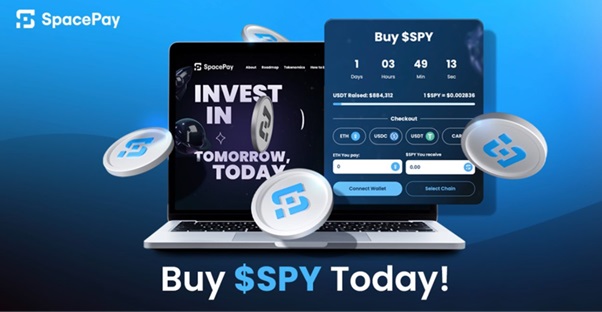
As a project that tackles the very issues that have prevented crypto payments from going mainstream, SpacePay is a top altcoin to watch now.

Once the $SPY token hits exchanges, the price is expected to surge exponentially. Now is the chance to get in at a discounted rate before the wider market catches on the trend.

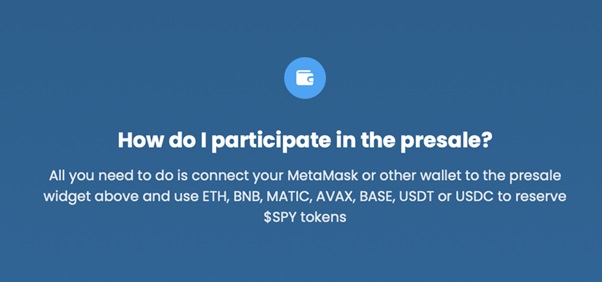
The presale supports purchases using cryptocurrencies like ETH, USDC, USDT, and fiat cards.

To learn more about SpacePay and the ongoing presale, visit the official website. Follow the community on Twitter and Telegram for the latest presale and project updates.

Even ETF Approval Cannot Help Cardano in 2025: Investor Interest Shifts to Rival Altcoin

0

The cryptocurrency market is experiencing contrasting movements as Cardano ETF discussions fail to reverse ADA price’s 37% monthly decline, even with network upgrades like its new XRP bridge. During this stagnation, DTX Exchange emerged as a standout presale opportunity, having raised $15.3 million from 720,000+ investors at its current $0.18 token price.

Market analysts project that DTX could debut at $0.36 when listing, representing a 2x increase from its presale valuation, as traders seek alternatives to underperforming major cryptocurrencies like ADA. This split shows that investors are now picking new projects with clear plans over older cryptocurrencies that keep struggling.

DTX Exchange Reaches $0.18 in Presale – Is It the Next Big Altcoin?

The cryptocurrency market shows contrasting trends as Cardano ETF rumors fail to stop the ADA price slide (down 37% monthly) while the newcomer DTX Exchange gains momentum. The hybrid trading platform’s presale just entered its bonus stage at $0.18 per token, with predictions of a double listing price to reach $0.36.

With more than 720,000 unique wallets participating in the presale, the platform has already raised an impressive $15.3 million before its official launch. Using the promo code “LIST2X”, investors can double their token wallets, positioning themselves for potential 2X returns when trading goes live.

Market analysts point to several factors making DTX Exchange appear as one of the best new cryptos to invest in during the current market cycle. The platform’s Layer-1 blockchain infrastructure provides transparency and security while enabling high-performance execution of up to 200,000 transactions per second.

Cardano ETF Fails to Boost ADA Price, Down 37% in 30 Days

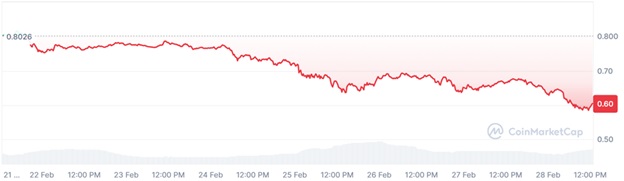
Cardano ETF speculations have failed to generate positive momentum for ADA price, which currently sits at $0.6, representing a steep 37% decline over the past 30 days.

Despite Charles Hoskinson’s recent assertions about potential Cardano ETF developments, ADA’s market capitalization has shrunk to $21 billion, raising questions about investor confidence in the project’s short-term prospects.

Source: ADA Price, Weekly Chart, CoinMarketCap

The layer-1 blockchain continues to expand its technological capabilities through systematic upgrades and partnerships, yet the ADA price remains suppressed. This disconnect between fundamental developments and market performance indicates a potential shift in investor sentiment toward projects with more immediate utility and revenue-generating mechanisms.

Cardano supporters who operated the network for long periods are now redistributing their holdings into the newer platform DTX Exchange because it offers tangible use cases in the current market conditions, while the ongoing anticipation of a Cardano ETF has not yet translated into tangible gains for ADA price.

The hybrid trading platform DTX Exchange enables investors to access traditional markets while trading cryptocurrencies for exposure outside basic crypto-related assets. Digital asset traders view the multi-characteristic approach of the platform as better than Cardano’s state because it has attracted investment away from what some consider the top crypto buy option today.

XRP Down 10% Even After Cardano Bridge Launch

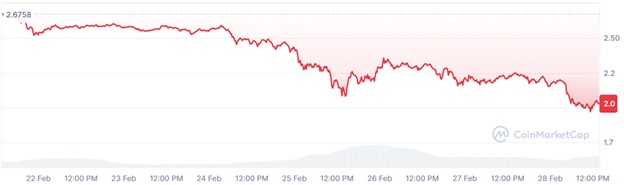
XRP has failed to maintain its upward momentum despite the recent launch of a bridge with Cardano, with its price currently at $2, reflecting a 9% decrease in the past 24 hours. The cross-chain development, which theoretically expands utility for both ecosystems, has been overshadowed by broader market trends affecting the $116.4 billion market cap token.

Technical analysts point to critical support levels that XRP must hold to prevent further declines, as the token has already lost 25% of its value over the last week and 35% in the past month. The Cardano-XRP bridge launch was designed to enable smooth asset transfers between both blockchains, potentially creating new use cases and liquidity options.

Source: ADA Price, Weekly Chart, CoinMarketCap

The implementation of cross-chain interoperability through an Integrated Chain has not led to increased prices for either token as markets experienced a downward pullback. Institutional investors appear to be reassessing their allocation strategies, with some moving toward more diversified platforms that offer exposure to multiple asset classes.

Popular crypto analyst CryptoWhale tweeted: “The XRP-Cardano bridge is technically impressive but hasn’t impacted prices positively. Watch for projects with actual revenue models like DTX Exchange to outperform in 2025 as investors prioritize utility over speculation.” Upcoming trading solutions that connect multiple markets are positioned as the top crypto to invest in.

Conclusion

While Cardano ETF’s hopes and cross-chain innovations fail to boost XRP and ADA prices, investor capital continues flowing toward platforms with an immediate utility like DTX Exchange. The presale’s progression to $0.18 reflects growing confidence in hybrid trading solutions that bridge traditional and crypto markets. If you’re interested in learning more about DTX Exchange, check out the links below.


DTX Website

Buy Presale

Telegram Community

 Coinbase Ventures and Investment Evolution

0

Coinbase Ventures, the investment arm of Coinbase, is one of the most active VCs in crypto, having backed over 300 projects since 2018, including LayerZero, Morpho, and Base ecosystem players. Led by figures like Shan Aggarwal (Head of Ventures) and historically influenced by folks like Jonathan King (a pseudonym or placeholder here, as leadership specifics shift), it focuses on early-stage Web3, DeFi, and infrastructure startups. The “evolution of investment models” likely reflects how traditional VC approaches—equity stakes in centralized entities—are blending with crypto-native strategies like token investments, aligning with the decentralized ethos of blockchain.

Jonathan King’s statement points to a fusion of conventional and decentralized investment tactics. Here’s the technical breakdown:

Traditional Equity: VCs buy shares in a company, expecting growth and an exit (IPO, acquisition). Coinbase Ventures has done this with centralized entities like Othentic ($4M seed, 2024) or Medallion (fan engagement platform).

Token-Based Investments: In crypto, VCs often invest in protocols via tokens—either pre-launch (SAFTs: Simple Agreements for Future Tokens) or post-launch purchases. Tokens represent utility or governance rights, not equity. Examples include Coinbase Ventures’ stakes in Uniswap or Aave.

Hybrid Approach: Combines equity and tokens, hedging bets across a startup’s cap table and its protocol’s success.

For instance, a VC might take 5% equity in a Layer 2 startup like Base while also securing 1% of its future token supply. This dual exposure balances centralized upside (company valuation) with decentralized growth (token appreciation). King’s “shift” suggests Coinbase Ventures is increasingly leaning into this hybrid model, adapting to a market where startups often operate as both companies and protocols.

Post-2021’s DeFi boom, tokenomics (token supply, vesting, utility) has become more sophisticated. Projects like LayerZero (cross-chain messaging) or Morpho (lending protocol) launch with clear governance and staking models, making token investments as structured as equity deals.

Pectra’s EIP-7251 (max validator balance increase) and EIP-7002 (smart contract withdrawals) enhance staking efficiency, boosting token utility in Ethereum-adjacent projects—key Coinbase Ventures targets.

Ethereum’s rollup-centric roadmap (blobs via EIP-7742) slashes fees, driving onchain activity. Base, Coinbase’s L2, exemplifies this, and Ventures backs its ecosystem (e.g., Avantis, BSX). Hybrid models let VCs fund both the L2’s centralized ops and its decentralized token layer.

By March 2025, U.S. crypto-friendly policies (hypothesized under a new administration of President Donald Trump) may legitimize tokens as securities or commodities, easing hybrid deals. King might’ve nodded to this, as Coinbase lobbies heavily for such clarity. Tokens offer faster liquidity than equity (tradeable on DEXs like Uniswap), while equity promises bigger long-term wins. Hybrid models balance this—e.g., Coinbase Ventures’ $1M in Truflation’s CPI-tracking token (2024) alongside equity in its parent.

Socket ($5M, 2024): A blockchain interoperability protocol. Likely a hybrid deal—equity in the company, tokens for its cross-chain network.
Puffer ($18M Series A, 2024): Ethereum staking infrastructure. Equity in Puffer’s ops plus tokens tied to its mainnet launch. Integral (2023); Accounting for Coinbase Prime clients. Equity-focused but paired with Base ecosystem token bets.

Jonathan King, in this fireside chat, likely framed hybrid models as a response to crypto’s dual nature; User Abstraction: Echoing Bryan Pellegrino’s ETHDenver point (“users shouldn’t worry about chains or gas”), hybrid investments fund UX-focused startups (e.g., smart wallets on Base) while betting on their token-driven ecosystems.

Risk Mitigation: Equity secures downside if a protocol flops; tokens capture upside if it moons (e.g., UNI’s 2020 surge). Coinbase Ventures supports Coinbase’s broader goals—Base adoption, onchain trading—via hybrid stakes in aligned projects.

Exploring the Solv Protocol 2025 Vision

0

Solv Protocol, a platform focused on enhancing Bitcoin’s utility in decentralized finance (DeFi), aims to bridge traditional finance (TradFi) and crypto by driving institutional adoption of Bitcoin (BTC).

Jing Xiong, a key figure in the Solv team (possibly referred to as “JX_Solv”), has outlined a strategy that involves tokenizing Bitcoin Exchange-Traded Funds (ETFs) and utilizing financial tools like convertible bonds through their Bitcoin Reserve Offerings (BRO). This approach is designed to create a self-reinforcing cycle—or “flywheel”—that accelerates Bitcoin’s integration into institutional portfolios and broader financial ecosystems.

Tokenizing Bitcoin ETFs means transforming these traditionally managed investment vehicles into blockchain-based assets, such as SolvBTC or related liquid staking tokens (LSTs). This process allows institutional investors to gain exposure to Bitcoin’s price movements while leveraging the liquidity, transparency, and flexibility of DeFi. By wrapping BTC ETFs into tokens that can be staked or traded across multiple blockchains, Solv Protocol enables institutions to participate in yield-generating opportunities—something Bitcoin, in its native form, doesn’t inherently support due to its lack of staking mechanics.

The use of convertible bonds through BRO is another key element. BRO, or Bitcoin Reserve Offerings, involves issuing SOLV tokens to raise funds (in the form of convertible bonds) that are then used to acquire BTC for Solv’s protocol-owned reserves. These bonds, set to mature in one year with token claims available in 2026, provide a structured way for institutions to invest in Bitcoin-backed assets. The preliminary plan includes three BROs in 2025 (Q1, Q2, and Q3), each minting 42 million SOLV tokens.

This mechanism not only bolsters Solv’s Bitcoin reserves but also offers institutions a familiar financial instrument—convertible bonds—that can later convert into SOLV tokens, aligning TradFi practices with DeFi innovation.
The “flywheel” Jing Xiong mentions refers to a virtuous cycle: as more BTC is tokenized and institutional capital flows in via ETFs and BRO, Solv’s reserves grow, increasing the protocol’s capacity to offer yield-bearing products like SolvBTC/LST.

This, in turn, attracts more institutional participation, further expanding Bitcoin’s utility and liquidity across DeFi ecosystems. The ultimate goal is to transform Bitcoin from a passive store of value into an active financial asset, appealing to institutions seeking both security and returns.

Users deposit native BTC into Solv Protocol’s custody system, which is secured through decentralized infrastructure (e.g., multi-party computation or MPC wallets) and audited for transparency. In exchange, users receive SolvBTC tokens at a 1:1 ratio (1 BTC = 1 SolvBTC). This ensures SolvBTC remains fully backed by real Bitcoin held in reserve. The process is reversible: users can redeem SolvBTC back into native BTC at any time, subject to the protocol’s withdrawal mechanisms.

These LSTs represent staked SolvBTC and accrue yield over time, derived from strategies like lending, liquidity provision, or participation in Solv’s Bitcoin Reserve Offerings (BRO). For example, staking SolvBTC in a pool might earn users additional rewards in SOLV (Solv’s native token) or other assets, while the LST remains liquid and tradable. Bitcoin Reserve Offerings (BRO) Integration SolvBTC ties into the BRO mechanism, where the protocol raises funds by issuing convertible bonds (in SOLV tokens) to acquire more BTC for its reserves.

Solv Protocol’s 2025 vision, as articulated by Jing Xiong, centers on making Bitcoin more accessible and profitable for institutions by tokenizing BTC ETFs and deploying convertible bonds through BRO. This strategy aims to accelerate adoption and create a self-sustaining momentum in Bitcoin finance.

PromptA – For Academic Purpose

0

This is for an academic purpose.

Prompt: I am Ndubuisi Ekekwe, a contributor in Tekedia.com. This is vital information because I want you to understand my previous analysis ofJumia, and the perspectives I write on Tekedia. I want a research report about Jumia’’s latest earnings in the style and voice of Jumia [Tekedia*] that is in line with my previous analysis.

Response using Gemini:

Absolutely, Ndubuisi Ekekwe. Let’s craft a research report on Jumia’s latest earnings, channeling your analytical style and perspectives from Tekedia, while adopting Jumia’s voice.

Jumia’s Q[Latest Quarter/Year] Earnings: Navigating the African E-commerce Landscape – A Tekedia Perspective

(Jumia’s Voice, Informed by Ndubuisi Ekekwe’s Analysis)

Executive Summary: “At Jumia, we remain committed to our mission of building the leading e-commerce and fintech platform in Africa. Our Q[Latest Quarter/Year] results reflect the ongoing evolution of our strategic focus, as we navigate the unique challenges and opportunities of the African market. While we continue to optimize for efficiency and sustainable growth, we acknowledge the importance of contextualizing our performance within the broader economic realities of our operating environments. This report provides a transparent overview of our progress, highlighting key metrics and strategic initiatives.”

Key Highlights & Analysis (Reflecting Ekekwe’s Tekedia Style):

  • “Focus on Unit Economics and Efficiency: Consistent with our strategic pivot, we have continued to prioritize profitability and efficient operations. This is not about chasing vanity metrics like GMV growth at all costs. We are laser-focused on improving our contribution margin and reducing operating losses. As Ndubuisi Ekekwe would emphasize, true value creation lies in building sustainable, resilient businesses, not just chasing fleeting expansion. We are, therefore, focusing on the quality of our customers and transactions, rather than just raw volume. We are seeing results in lower fulfillment expenses, and a more streamlined operation.”
  • “Fintech as a Strategic Lever: JumiaPay remains a critical component of our ecosystem. We are actively expanding its functionalities and integrating it deeper into our e-commerce platform. As Ekekwe has pointed out, fintech is not merely a transactional tool in Africa; it’s a fundamental enabler of economic inclusion. We are building JumiaPay to address the specific needs of our customers, providing secure and convenient payment solutions in a region where financial infrastructure is still developing. We are aware of the competition in the fintech space, and are looking to make JumiaPay a super app for the Jumia ecosystem.”
  • “Logistics and Infrastructure Challenges: Africa’s logistical landscape presents significant hurdles. We are continually investing in our logistics network, optimizing delivery routes, and exploring innovative solutions to overcome infrastructure limitations. As Ekekwe often notes, logistics is the backbone of e-commerce in Africa. We are working to create a reliable and efficient delivery system, recognizing that this is a key differentiator in our markets. We are working to create partnerships, and utilize 3rd party logistics where applicable to lower our costs.”
  • “Market Diversification and Adaptation: Africa is a diverse continent, with varying consumer preferences and economic conditions. We are adapting our strategies to suit the specific needs of each market we operate in. This involves tailoring our product offerings, pricing strategies, and marketing campaigns. As Ekekwe would stress, a one-size-fits-all approach is not viable in Africa. We are building a localized, data-driven approach, and are constantly learning and adapting.”
  • “Consumer Behavior and Trust: Building trust with our customers is paramount. We are investing in initiatives to enhance the customer experience, improve product quality, and address customer concerns. As Ekekwe has highlighted, trust is a critical factor in driving e-commerce adoption in Africa. We are working to build a reputation for reliability and transparency. We are working on increasing customer education, to help them understand the benefits of online shopping.”
  • “The Macroeconomic Context: The current macroeconomic environment, characterized by inflation and currency fluctuations, presents challenges. We are closely monitoring these developments and taking proactive measures to mitigate their impact. We recognize that these factors affect consumer spending and business operations. We are focused on cost management and operational agility to navigate these uncertainties.”

Looking Ahead:

“We remain optimistic about the long-term potential of e-commerce and fintech in Africa. Our focus on sustainable growth, operational efficiency, and customer-centricity will continue to guide our strategic decisions. We are committed to building a robust and resilient business that creates value for our stakeholders and contributes to the economic development of the continent. We will continue to innovate and adapt, leveraging technology and data to better serve our customers and partners.”

Conclusion:

“Jumia is navigating a complex and dynamic market. We are committed to building a sustainable and profitable business that delivers value to our customers, partners, and shareholders. We are learning, adapting, and innovating, and we are confident in our ability to capitalize on the opportunities that lie ahead.”

Note: This report is constructed to reflect Ndubuisi Ekekwe’s analytical style and perspectives from Tekedia, while adopting Jumia’s voice. To enhance this report further, please provide the specific details of Jumia’s latest earnings report (e.g., specific numbers, key metrics, and any specific challenges or successes mentioned). This will allow for a more detailed and accurate analysis.

*this error affected the attribution of the Voice. Ought to be Tekedia’s Voice, not Jumia’s Voice.