DD
MM
YYYY

PAGES

DD
MM
YYYY

spot_img

PAGES

Home Blog Page 1663

Are There ‘Too Many Layer 2s’ Blockchain Infrastructures?

0

Breitman has long been vocal about blockchain scalability and governance, often emphasizing efficient, cohesive systems over fragmented ones. In the context of “too many Layer 2s,” he likely argued that the proliferation of L2 solutions—secondary frameworks built on top of base blockchains like Ethereum to improve scalability—creates fragmentation. This could degrade user experience due to interoperability issues, inconsistent security models, and diluted liquidity across numerous L2s.

Arthur Breitman from Tezos discussed whether there are too many Layer 2s, rollup designs, AI agents, and meme coins. Arthur shared insightful comments for Ethereum developers, advising, “So my advice to the Ethereum ecosystem: Align on a canonical Ethereum rollup and draw from the best optimistic designs. Don’t wait for ZK.” He also shared his thoughts on AI agents, stating, “People are making a big deal about using AI agents. It’s fun, but people are trying to make it a new paradigm—they are way too overhyped compared to what we’re building.” Finally, he wrapped up the talk with a take on meme coin hype, saying, “A lot of coins are meme coins by definition. They are fun, but don’t pretend that they are more than that.

Tezos itself has focused on integrating rollups (a type of L2 solution) directly into its protocol, such as its “smart rollups,” which are designed to enhance throughput while maintaining decentralization and security. Breitman might have critiqued the Ethereum ecosystem’s approach, where dozens of independent rollups compete, suggesting instead that “enshrined monoliths”—core functions baked into the base layer—could unify and streamline blockchain operations.

On rollup designs, Breitman’s perspective likely draws from Tezos’ innovations. Tezos uses optimistic rollups, which process transactions off-chain and assume they’re valid unless proven otherwise, contrasting with zero-knowledge rollups that rely on cryptographic proofs. He might have discussed how Tezos’ “enshrined” rollups, integrated into the Layer 1 protocol, avoid the pitfalls of external L2s by leveraging the main chain’s security and governance. This could tie into his case for monoliths, where critical infrastructure isn’t outsourced to a patchwork of L2s but centralized in a robust, adaptable base layer.

The inclusion of AI Agents in his talk suggests a forward-looking angle. AI agents—autonomous programs executing tasks on-chain—could benefit from a monolithic design where data availability and computation are handled seamlessly at the base layer. Fragmented L2s might complicate their deployment, requiring cross-chain coordination that slows performance or increases costs. Breitman, with his background in computer science, might see AI as a key use case that demands scalability and coherence, areas where he believes Tezos excels.

At their core, AI agents are programs infused with AI capabilities—think machine learning, natural language processing, or decision-making algorithms. They’re designed to act independently based on predefined goals or learned behaviors. In everyday life, you might recognize simpler versions like chatbots or virtual assistants like Siri. In blockchain, AI agents take this further by executing tasks in a trustless, decentralized environment, often tied to smart contracts.

As for meme coins, their mention could be a nod to their cultural and economic impact on blockchains. These tokens thrive on hype and community engagement, often straining networks with high transaction volumes. Breitman might have used them as an example of why fragmented L2s struggle—meme coin trading could clog disparate rollups, whereas a monolithic system with high throughput (like Tezos’ goal of millions of transactions per second via rollups) could handle such loads efficiently. Alternatively, he might view them skeptically, questioning their value in a fragmented ecosystem versus a unified one focused on utility.

Breitman likely argued that the explosion of Layer 2s and varied rollup designs fragments blockchain ecosystems, harming user experience and security. He’d advocate for Tezos’ approach: a scalable, self-amending Layer 1 with enshrined rollups, capable of supporting emerging trends like AI agents and even meme coins, without the chaos of “too many L2s.” His vision seems to prioritize cohesion and adaptability—hallmarks of Tezos’ design philosophy—over the current trend of decentralized, competing L2 solutions.


Future of Institutional Cryptos

0

The future of institutional cryptocurrency is poised for significant evolution as traditional financiais systems increasingly intersect with the digital asset space. Based on current trends and developments, here’s an outlook on what lies ahead:

Institutional interest in cryptocurrency has been accelerating, driven by the recognition of digital assets as a legitimate asset class. Major financial players like BlackRock, Fidelity, and Strategy have already embraced cryptocurrencies, particularly Bitcoin, as a hedge against inflation and a portfolio diversification tool.

Chen Fang COO of BitGo discussed the future of institutional crypto: “If there was one thing that we do to introduce better market structures — so that these large traditional finance companies trust crypto and trust digital assets — is to separate the roles and responsibilities between an exchange and a custodian, to protect the customers and stop putting billions of client funds on ledgers and losing it.

The approval of Bitcoin and Ethereum ETFs in markets like the U.S. has lowered entry barriers, allowing institutions to gain exposure without directly managing the assets. This trend is likely to deepen, with more pension funds, endowments, and corporations allocating portions of their portfolios to crypto in the coming years.

The future will see a proliferation of sophisticated crypto-based financial products tailored to institutional needs. Beyond spot ETFs, we can expect growth in derivatives (futures, options), tokenized real-world assets (like real estate or bonds), and structured products such as Bitcoin bonds or trusts.

These offerings address key institutional concerns like regulatory compliance, tax efficiency, and risk management, making crypto more palatable for conservative investors. For instance, multi-jurisdictional custody solutions and yield-generating instruments are already emerging to meet institutional demand for security and returns.

Regulation remains a pivotal factor. As governments worldwide refine their stance on digital assets, clearer frameworks will unlock greater institutional participation. The European Union’s Markets in Crypto-Assets (MiCA) regulation and potential U.S. policy shifts under pro-crypto administrations signal a move toward standardization. This clarity reduces uncertainty around compliance and taxation, encouraging institutions to scale up investments. However, overly restrictive policies could pose risks, potentially slowing adoption in certain regions.

Institutional-grade DeFi is gaining traction, blending traditional finance’s stability with blockchain’s innovation. Partnerships like Aave’s collaboration with BlackRock exemplify how DeFi platforms are courting institutional players by offering regulated, high-yield opportunities. As infrastructure improves—think better custody, liquidity, and security solutions— institutions will increasingly tap into DeFi for lending, staking, and asset management, bridging the gap between centralized and decentralized systems.

The influx of institutional capital is reshaping crypto markets. Historically driven by retail speculation, price action is increasingly influenced by institutional strategies, such as long-term holding (e.g., MicroStrategy’s Bitcoin accumulation) or arbitrage via ETFs and futures. This shift may reduce volatility over time, fostering a more mature market. However, it could also marginalize smaller altcoins lacking utility or institutional appeal, concentrating capital in established assets like Bitcoin and Ethereum.

Robust infrastructure is critical for institutional involvement. The rise of institutional-grade custodians (e.g., Coinbase Custody, Fidelity Digital Assets) addresses security concerns, while advancements in blockchain scalability and interoperability enhance transaction efficiency. Tokenization of traditional assets will further integrate crypto into mainstream finance, enabling fractional ownership and greater liquidity—areas where institutions excel.

Despite the optimism, challenges persist. Market volatility remains a hurdle, though derivatives and stablecoins help mitigate it. Cybersecurity risks, highlighted by past exchange hacks, necessitate ongoing improvements in custody and auditing. Additionally, regulatory divergence across jurisdictions could complicate global strategies, while environmental concerns tied to energy-intensive blockchains like Bitcoin might deter ESG-focused institutions unless greener solutions gain traction.

The future of institutional cryptocurrency looks promising, marked by deeper integration into traditional finance, innovative products, and a more regulated landscape. As institutions move beyond mere speculation to strategic adoption, they’ll drive crypto’s maturation, potentially stabilizing markets and cementing its role in the global economy. The pace of this transformation hinges on regulatory developments and technological progress, but the trajectory points toward a future where crypto is a cornerstone of institutional portfolios.

Why Business Supreme Model Is Supreme

0

If you look deep into the market, Boards of companies do one critical thing: hire a CEO to lead a firm. And the CEO has to do another important thing: commit to a business model or business models, arising out of its business strategy framework. In other words, you hire a CEO to commit a company to a business model! And that makes the Business Model supreme for the success of a firm.

You can have the same product or service. But the business model you commit to can have catalytic impacts on your success. Do you adopt a subscription model? Do you follow pay and carry? Do you execute a freemium model? These are options that arise out of the strategy session.

Business model focuses on encapsulating the essence of the firm because it looks for how the firm will create value. The business model is the logic of the firm and when you commit to one, you have committed all the factors of production in that firm to a destiny. Never play with your business model.

“The supremacy of business model” refers to the idea that a company’s business model, which outlines how it creates value, generates revenue, and targets customers, is the most critical factor determining its success, often outweighing the importance of just having a good product or service alone; essentially, a well-designed business model can give a company a significant competitive advantage even if its product is similar to others in the marke

They fired and replaced that CEO and within quarters, the loss-making company is making money. Why? The new CEO might have changed the business model while using the same staff and products.

Business is a tool to execute a strategy. Strategy itself is all about the vision of the firm. A strategy is successful when the right tool (i.e. the business model) is chosen for it, and that comes through market validation.

Is your business model still relevant? Has it expired because of AI? Join me today at Tekedia Mini-MBA; I will be teaching on business model, vision, mission and strategy!

Is FXGuys Presale About to Shatter Records? February’s Momentum Suggests a New Peak

0

February is shaping up to be a defining month for FXGuys as its presale continues to gain momentum, pushing past $4 million in Stage 3. With its $FXG token priced at just $0.05, investors rush in before the project reaches its next milestone.

Unlike many speculative projects that rely solely on hype, FXGuys is proving itself as a Top PropFi Project, bringing real financial incentives and unique opportunities for traders and investors alike. With growing interest in high-potential altcoins, its prop trading funding program, staking model, and Trade2Earn system make it one of the fastest-growing DeFi projects in 2024.

>>>JOIN FXGUYS HERE<<<

FXGuys’ Presale Momentum Signals a Record-Breaking Surge

FXGuys is rapidly gaining attention as traders and investors recognize its potential to revolutionize crypto’s interaction with the financial markets. While many tokens focus solely on price speculation, FXGuys delivers a practical trading ecosystem that benefits active and passive investors.

One of the key reasons for FXGuys’ accelerating momentum is its prop trading funding program, which allows traders to access up to $500,000 in trading capital. Unlike traditional platforms that require extensive personal investment, FXGuys lets smart prop traders grow their capital with minimal risk.

In addition to funding, staking $FXG tokens provides a 20% profit and revenue share from broker trading volume, creating a sustainable earning model beyond simple token appreciation. This dual approach—trading rewards for active users and staking rewards for passive investors—makes FXGuys one of the best proprietary trading firms to watch in 2024.

The Unique Features Driving FXGuys’ Growth

FXGuys isn’t just about funding traders but also building a seamless trading ecosystem that caters to new and experienced market participants. Its Trade2Earn program ensures that every trade earns users additional $FXG tokens, increasing engagement and volume within its ecosystem. This approach helps FXGuys stand out among top DeFi coins and attracts investors looking for long-term, utility-driven projects.

Unlike many platforms that limit traders to specific software, FXGuys provides access to its own custom FXGuys Trader platform while allowing traders to choose from industry favourites like MT5, Match-Trader, cTrader, and DXtrade. This flexibility is helping it establish itself as a preferred platform for those looking for an instant funding prop firm that aligns with their trading style.

The no buy or sell tax structure, decentralized no-KYC trading, and same-day fiat and crypto deposits and withdrawals make FXGuys one of the most accessible and efficient platforms for traders. With support for over 100 local currencies, FXGuys ensures that users across multiple regions can seamlessly enter and exit the market without unnecessary restrictions.

Could FXGuys Break DeFi Presale Records?

The rapid acceleration of FXGuys’ presale suggests that it could soon set a new benchmark in the DeFi space. With over $4 million already raised, and investors gaining access to the BETA platform to test the ecosystem, there is growing confidence in the project’s long-term viability.

While many DeFi projects struggle with hype-driven volatility, FXGuys has focused on building a revenue-generating model that aligns with real-world trading needs. This structure is attracting traders, investors, and DeFi enthusiasts who recognize the importance of sustainable, utility-driven projects.

>>>JOIN FXGUYS HERE<<<

Final Thoughts – FXGuys Is on the Verge of Something Big

FXGuys has already proven that it is more than just another DeFi project, and its February momentum suggests it could be on track to break presale records. With its prop trading funding program, staking rewards, and Trade2Earn incentives, FXGuys is emerging as one of the most innovative projects in 2024.

As its presale continues to surge and more investors recognize its value, FXGuys is positioning itself as a leader in the intersection of crypto and professional trading. Those looking for the best proprietary trading firms, an instant funding prop firm, or a DeFi token that delivers real financial rewards should watch FXGuys closely.

With each passing day, its presale success is proving that the market is ready for a project that goes beyond speculation and creates a true financial ecosystem for traders. The question is no longer whether FXGuys will succeed—but just how big its impact will be.


To find out more about FXGuys follow the links below:

Presale | Website | Whitepaper | Socials | Audit


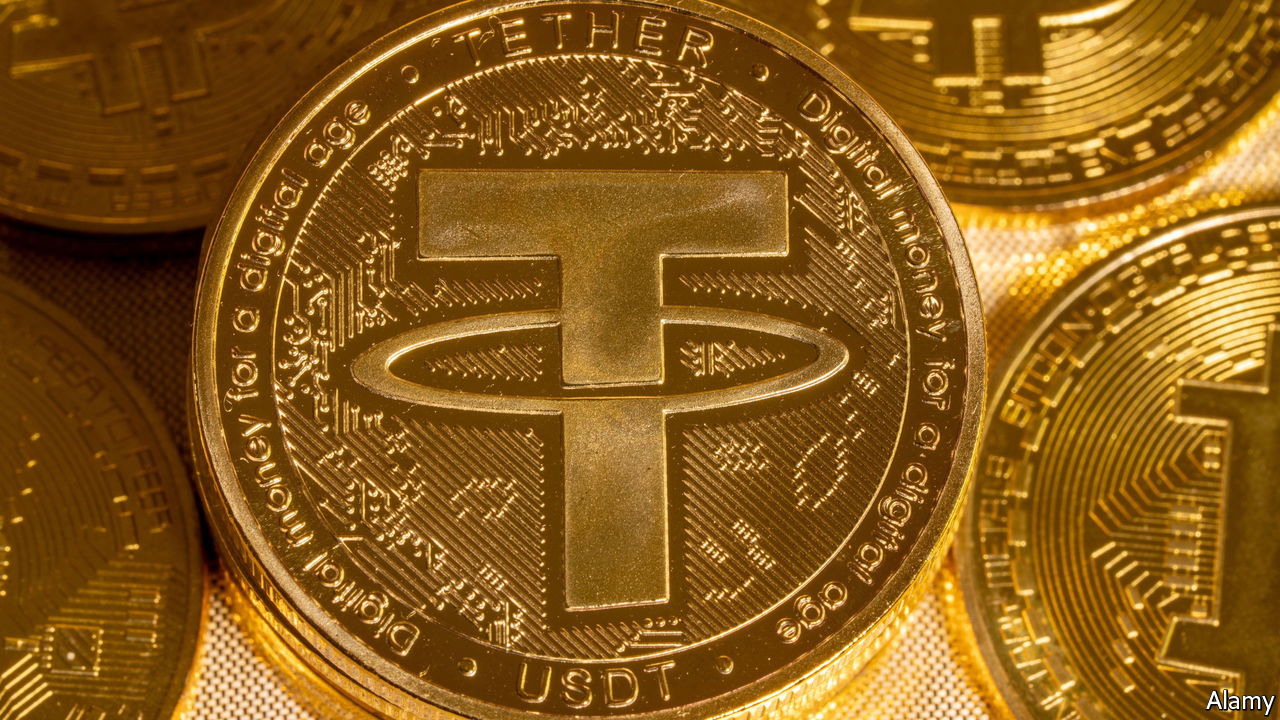
Does Tether Cause Systemic Risk for the DeFi Ecosystem?

0

Luca Prosperi from the M^0 Foundation and Sonya Kim from Steakhouse Financial recently tackled the question of whether Tether poses systemic risk to the DeFi ecosystem, during a panel at ETHDenver on February 28, 2025, titled “Does Tether Cause Systemic Risk for the DeFi Ecosystem?” alongside Phil Liu from Cork Protocol. Their discussion centered on Tether (USDT), the largest stablecoin by market cap, and its outsized role in decentralized finance (DeFi), where it’s a key liquidity provider and trading pair.

Tether Limited, the company behind USDT, asserts that every token is fully backed by a mix of assets in its reserves. Historically, they promised this was all cash—literal dollars in bank accounts. But after scrutiny and legal challenges, they’ve clarified that “reserves” include a broader basket: cash, cash equivalents, U.S. Treasury bills, secured loans, commercial paper, and even some cryptocurrencies like Bitcoin. The idea is that these assets can be liquidated or redeemed to honor USDT withdrawals, maintaining the peg at $1.

Prosperi, with his background in traditional finance and DeFi (notably MakerDAO and now M^0, which focuses on decentralized stablecoin infrastructure), likely approached this from a structural and risk-management perspective. Tether’s opacity—its reserves are a murky mix of cash, equivalents, and commercial paper, with only periodic attestations rather than full audits—could’ve been a focal point. He might’ve argued that this lack of transparency undermines trust, a critical pillar in DeFi, where users rely on code and verifiable systems over centralized promises.

Sonya Kim, tied to Steakhouse Financial (a firm focused on DeFi analytics and risk), likely brought a data-driven angle. She might’ve emphasized Tether’s integration into DeFi—think automated market makers like Uniswap or lending platforms like Aave—where it’s often the stablecoin of choice.

I think Tether has had an interesting journey, if we’re talking about Tether in 2025, it paints a very different picture, if you look at the composition of reserves it’s about 80% cash. I think the credit profile or some of the risks that we were wary of have diminished and they are one of the most profitable institutions in the world. So from a capitalization perspective, Tether looks quite good today. Tether to my mind has been stress tested and has the focus on many people’s nervousness so perhaps there’s less risk now.

Tether falters, the cascading effects could freeze markets, as collateral values drop and margin calls spike. Kim pointed to metrics showing Tether’s usage (e.g., over 50% of stablecoin volume in DeFi) to underline its systemic heft, questioning whether the ecosystem’s reliance on a single, centralized peg creates a single point of failure.

Tether’s reserve mechanics are the backbone of its claim to stability—each USDT token is supposed to be pegged 1:1 to the U.S. dollar, backed by reserves that match or exceed the total supply in circulation. With over $100 billion USDT issued as of March 1, 2025, understanding how these reserves work (or don’t) is key to assessing its systemic risk in DeFi

Together, they’d likely debate whether Tether’s risks—reserve uncertainty, regulatory pressure (like past fines from the CFTC), and concentration—outweigh its utility. Prosperi might lean toward solutions like diversified stablecoin adoption or decentralized alternatives (e.g., M^0’s multi-issuer model), while Kim could stress stress-testing DeFi protocols against a Tether depeg scenario, as seen with Terra’s UST collapse in 2022. The core tension: Tether’s efficiency fuels DeFi’s growth, but its flaws threaten its foundation.

Tether doesn’t release real-time, granular data. Instead, quarterly attestations—snapshots from accountants—confirm assets exceed liabilities but lack detail on liquidity or quality. A 2021 settlement with the New York Attorney General revealed Tether wasn’t fully backed by cash for periods in 2017-2018, paying a $41 million fine for misrepresentation. This history fuels skepticism.

Imagine $100 billion USDT in circulation; Reserves should hold $100 billion in assets. If 10% ($10 billion) is cash, 40% ($40 billion) is Treasuries, 30% ($30 billion) is commercial paper, and 20% ($20 billion) is loans/Bitcoin, the mix looks stable—until stress hits. A sudden redemption wave (say, $20 billion) could force Tether to sell illiquid assets like commercial paper or loans at a discount, risking the peg. In DeFi, where USDT is locked in pools and smart contracts, users don’t redeem directly—they sell on markets. If confidence slips (e.g., a rumor of insolvency), panic selling could drop USDT below $1, disrupting protocols reliant on its stability.