
DD
MM
YYYY

PAGES

DD
MM
YYYY

spot_img

PAGES

Home Blog Page 1664

Is FXGuys Presale About to Shatter Records? February’s Momentum Suggests a New Peak

0

February is shaping up to be a defining month for FXGuys as its presale continues to gain momentum, pushing past $4 million in Stage 3. With its $FXG token priced at just $0.05, investors rush in before the project reaches its next milestone.

Unlike many speculative projects that rely solely on hype, FXGuys is proving itself as a Top PropFi Project, bringing real financial incentives and unique opportunities for traders and investors alike. With growing interest in high-potential altcoins, its prop trading funding program, staking model, and Trade2Earn system make it one of the fastest-growing DeFi projects in 2024.

>>>JOIN FXGUYS HERE<<<

FXGuys’ Presale Momentum Signals a Record-Breaking Surge

FXGuys is rapidly gaining attention as traders and investors recognize its potential to revolutionize crypto’s interaction with the financial markets. While many tokens focus solely on price speculation, FXGuys delivers a practical trading ecosystem that benefits active and passive investors.

One of the key reasons for FXGuys’ accelerating momentum is its prop trading funding program, which allows traders to access up to $500,000 in trading capital. Unlike traditional platforms that require extensive personal investment, FXGuys lets smart prop traders grow their capital with minimal risk.

In addition to funding, staking $FXG tokens provides a 20% profit and revenue share from broker trading volume, creating a sustainable earning model beyond simple token appreciation. This dual approach—trading rewards for active users and staking rewards for passive investors—makes FXGuys one of the best proprietary trading firms to watch in 2024.

The Unique Features Driving FXGuys’ Growth

FXGuys isn’t just about funding traders but also building a seamless trading ecosystem that caters to new and experienced market participants. Its Trade2Earn program ensures that every trade earns users additional $FXG tokens, increasing engagement and volume within its ecosystem. This approach helps FXGuys stand out among top DeFi coins and attracts investors looking for long-term, utility-driven projects.

Unlike many platforms that limit traders to specific software, FXGuys provides access to its own custom FXGuys Trader platform while allowing traders to choose from industry favourites like MT5, Match-Trader, cTrader, and DXtrade. This flexibility is helping it establish itself as a preferred platform for those looking for an instant funding prop firm that aligns with their trading style.

The no buy or sell tax structure, decentralized no-KYC trading, and same-day fiat and crypto deposits and withdrawals make FXGuys one of the most accessible and efficient platforms for traders. With support for over 100 local currencies, FXGuys ensures that users across multiple regions can seamlessly enter and exit the market without unnecessary restrictions.

Could FXGuys Break DeFi Presale Records?

The rapid acceleration of FXGuys’ presale suggests that it could soon set a new benchmark in the DeFi space. With over $4 million already raised, and investors gaining access to the BETA platform to test the ecosystem, there is growing confidence in the project’s long-term viability.

While many DeFi projects struggle with hype-driven volatility, FXGuys has focused on building a revenue-generating model that aligns with real-world trading needs. This structure is attracting traders, investors, and DeFi enthusiasts who recognize the importance of sustainable, utility-driven projects.

>>>JOIN FXGUYS HERE<<<

Final Thoughts – FXGuys Is on the Verge of Something Big

FXGuys has already proven that it is more than just another DeFi project, and its February momentum suggests it could be on track to break presale records. With its prop trading funding program, staking rewards, and Trade2Earn incentives, FXGuys is emerging as one of the most innovative projects in 2024.

As its presale continues to surge and more investors recognize its value, FXGuys is positioning itself as a leader in the intersection of crypto and professional trading. Those looking for the best proprietary trading firms, an instant funding prop firm, or a DeFi token that delivers real financial rewards should watch FXGuys closely.

With each passing day, its presale success is proving that the market is ready for a project that goes beyond speculation and creates a true financial ecosystem for traders. The question is no longer whether FXGuys will succeed—but just how big its impact will be.


To find out more about FXGuys follow the links below:

Presale | Website | Whitepaper | Socials | Audit
 

Does Tether Cause Systemic Risk for the DeFi Ecosystem?

0

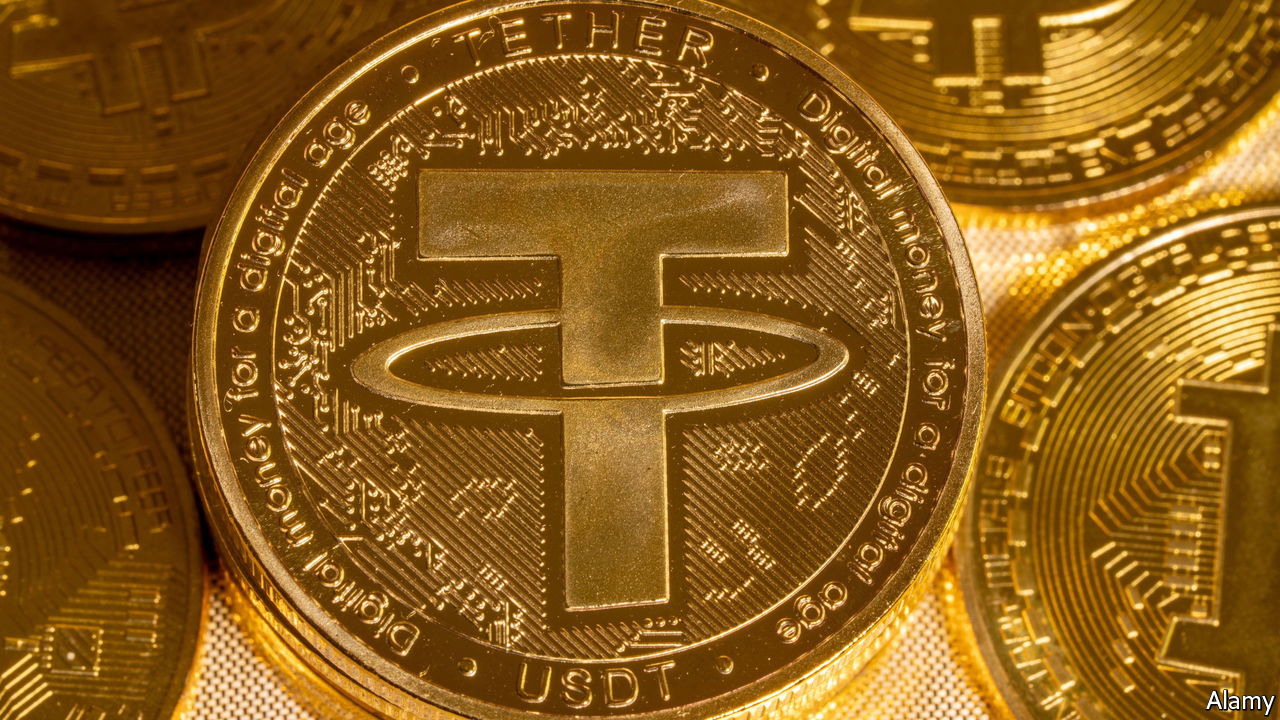
Luca Prosperi from the M^0 Foundation and Sonya Kim from Steakhouse Financial recently tackled the question of whether Tether poses systemic risk to the DeFi ecosystem, during a panel at ETHDenver on February 28, 2025, titled “Does Tether Cause Systemic Risk for the DeFi Ecosystem?” alongside Phil Liu from Cork Protocol. Their discussion centered on Tether (USDT), the largest stablecoin by market cap, and its outsized role in decentralized finance (DeFi), where it’s a key liquidity provider and trading pair.

Tether Limited, the company behind USDT, asserts that every token is fully backed by a mix of assets in its reserves. Historically, they promised this was all cash—literal dollars in bank accounts. But after scrutiny and legal challenges, they’ve clarified that “reserves” include a broader basket: cash, cash equivalents, U.S. Treasury bills, secured loans, commercial paper, and even some cryptocurrencies like Bitcoin. The idea is that these assets can be liquidated or redeemed to honor USDT withdrawals, maintaining the peg at $1.

Prosperi, with his background in traditional finance and DeFi (notably MakerDAO and now M^0, which focuses on decentralized stablecoin infrastructure), likely approached this from a structural and risk-management perspective. Tether’s opacity—its reserves are a murky mix of cash, equivalents, and commercial paper, with only periodic attestations rather than full audits—could’ve been a focal point. He might’ve argued that this lack of transparency undermines trust, a critical pillar in DeFi, where users rely on code and verifiable systems over centralized promises.

Sonya Kim, tied to Steakhouse Financial (a firm focused on DeFi analytics and risk), likely brought a data-driven angle. She might’ve emphasized Tether’s integration into DeFi—think automated market makers like Uniswap or lending platforms like Aave—where it’s often the stablecoin of choice.

I think Tether has had an interesting journey, if we’re talking about Tether in 2025, it paints a very different picture, if you look at the composition of reserves it’s about 80% cash. I think the credit profile or some of the risks that we were wary of have diminished and they are one of the most profitable institutions in the world. So from a capitalization perspective, Tether looks quite good today. Tether to my mind has been stress tested and has the focus on many people’s nervousness so perhaps there’s less risk now.

Tether falters, the cascading effects could freeze markets, as collateral values drop and margin calls spike. Kim pointed to metrics showing Tether’s usage (e.g., over 50% of stablecoin volume in DeFi) to underline its systemic heft, questioning whether the ecosystem’s reliance on a single, centralized peg creates a single point of failure.

Tether’s reserve mechanics are the backbone of its claim to stability—each USDT token is supposed to be pegged 1:1 to the U.S. dollar, backed by reserves that match or exceed the total supply in circulation. With over $100 billion USDT issued as of March 1, 2025, understanding how these reserves work (or don’t) is key to assessing its systemic risk in DeFi

Together, they’d likely debate whether Tether’s risks—reserve uncertainty, regulatory pressure (like past fines from the CFTC), and concentration—outweigh its utility. Prosperi might lean toward solutions like diversified stablecoin adoption or decentralized alternatives (e.g., M^0’s multi-issuer model), while Kim could stress stress-testing DeFi protocols against a Tether depeg scenario, as seen with Terra’s UST collapse in 2022. The core tension: Tether’s efficiency fuels DeFi’s growth, but its flaws threaten its foundation.

Tether doesn’t release real-time, granular data. Instead, quarterly attestations—snapshots from accountants—confirm assets exceed liabilities but lack detail on liquidity or quality. A 2021 settlement with the New York Attorney General revealed Tether wasn’t fully backed by cash for periods in 2017-2018, paying a $41 million fine for misrepresentation. This history fuels skepticism.

Imagine $100 billion USDT in circulation; Reserves should hold $100 billion in assets. If 10% ($10 billion) is cash, 40% ($40 billion) is Treasuries, 30% ($30 billion) is commercial paper, and 20% ($20 billion) is loans/Bitcoin, the mix looks stable—until stress hits. A sudden redemption wave (say, $20 billion) could force Tether to sell illiquid assets like commercial paper or loans at a discount, risking the peg. In DeFi, where USDT is locked in pools and smart contracts, users don’t redeem directly—they sell on markets. If confidence slips (e.g., a rumor of insolvency), panic selling could drop USDT below $1, disrupting protocols reliant on its stability.

Nigeria Moves to Avert Fuel Crisis with Pledge to Settle IPMAN’s N100bn Bridging Claims, But It Reignites Subsidy Debate

0

Nigeria’s fuel subsidy debate has resurfaced with renewed intensity following the Federal Government’s last-minute intervention to prevent an imminent strike by the Independent Petroleum Marketers Association of Nigeria (IPMAN).

The crisis was triggered by the government’s failure to pay N100 billion in outstanding bridging claims, a situation that threatened to disrupt fuel supply across the country. While the government’s pledge to settle the debt has temporarily diffused tensions, it has also drawn fresh scrutiny over whether the fuel subsidy—officially declared abolished in May 2023—has actually been removed or merely continued under a different name.

The controversy erupted when IPMAN issued a seven-day ultimatum on February 24, 2025, demanding that the Nigerian Midstream and Downstream Petroleum Regulatory Authority (NMDPRA) settle the long-overdue bridging claims owed to petroleum marketers. The association warned that failure to make the payment would result in a nationwide shutdown of petrol supply, an action that could have plunged the country into yet another fuel scarcity crisis.

As the deadline loomed, the government moved swiftly to de-escalate the situation. On February 27, 2025, IPMAN’s National President, Alhaji Abubakar Maigandi, announced that the government had assured marketers of payment and expressed commitment to resolving other outstanding issues in the sector. He called on members to remain patient and suspend any planned industrial action while discussions with the NMDPRA continued.

”We have been in communication with the NMDPRA and the Federal Ministry of Petroleum Resources. They have expressed their commitment to addressing these pending claims and other issues.

”In the meantime, we kindly implore all members to remain calm and patient as we work towards securing the necessary approvals and payments.

”We understand the importance of these claims to you and appreciate your understanding during this process.

”We also encourage all members to refrain from any actions that may disrupt our collective efforts, including strike actions.

”Our upcoming official meeting with the NMDPRA will be a critical opportunity to discuss these matters further, and your participation will be invaluable,” he said.

However, the episode has raised deeper concerns about the true status of Nigeria’s fuel subsidy policy. The very existence of unpaid bridging claims suggests that the government is still subsidizing fuel distribution, contradicting its earlier stance that subsidy payments had been completely abolished.

The Subsidy Removal Controversy

When President Bola Ahmed Tinubu assumed office in May 2023, he announced an immediate and total removal of the fuel subsidy, a longstanding policy that had drained government finances and fostered inefficiencies in the oil sector. The move was widely seen as a bold economic reform aimed at reducing public spending and attracting private-sector investments in fuel importation and refining.

However, the decision came with severe economic consequences. Fuel prices tripled overnight, soaring from N185 per liter to over N500, and later surpassing N600 per liter in several states. The sharp increase led to an inflationary spiral, with the cost of transportation, food, and essential goods skyrocketing. Public frustration mounted, and labor unions staged multiple protests, arguing that the policy had pushed millions of Nigerians deeper into poverty.

As pressure intensified, the government introduced palliatives to cushion the impact, including cash transfers to vulnerable households and salary adjustments for civil servants. However, these interventions failed to prevent widespread economic hardship. Amid growing discontent, the government quietly resumed fuel subsidies under a different guise, despite insisting publicly that the subsidy regime had ended.

Subsidies Disguised as “Price Stabilization”

Although fuel prices were expected to fluctuate with global crude oil prices and exchange rate movements following subsidy removal, this has not been the case. Analysts noted that despite the naira’s depreciation and rising international crude prices, petrol prices in Nigeria remained artificially low—a clear indication that the government was still subsidizing fuel behind the scenes.

The clearest evidence of this came from the Nigerian National Petroleum Company Limited (NNPCL), which retained control over fuel imports even after subsidy removal. By early 2024, experts estimated that without any subsidy, the actual market price of petrol should have been over N1,000 per liter. Yet, the government ensured that prices remained within the N600 to N700 range, effectively covering the cost difference—just as it did during the official subsidy era.

The N100 billion bridging claims owed to IPMAN further confirm the continued existence of subsidies. Bridging claims are transportation subsidies meant to equalize fuel prices across different regions, ensuring that consumers in remote areas pay the same price as those in urban centers. If the government had truly eliminated the subsidy, there would be no reason to maintain these payments. Yet, as this crisis has shown, the government remains indebted to marketers, proving that fuel prices are still being manipulated through indirect subsidies.

Best Crypto to Buy Now— Will DexBoss Become the Next Big Crypto?

0

As the cryptocurrency market rapidly evolves, presale events have become critical opportunities for investors seeking early access to high-potential projects. Two standout pre-sales currently generating significant interest are DexBoss and Aureal One, both offering unique functionalities and impressive investment potential. This article explores the top five presale opportunities, highlighting their innovation, market impact, and potential returns.

The top 5 Best Crypto to Buy Now are listed below:

  1. DexBoss (DEBO)
  2. AurealOne (DLUME)
  3. Beescoin (BEE)
  4. StrikeBit (STB)
  5. PixFun (PIX)

1.DexBoss ($DEBO)

DexBoss is currently leading the pack in the presale phase of its next-gen DeFi platform, aiming to integrate traditional finance with the ever-growing world of DeFi. This would make decentralized trading and investments much easier for a wider demographic.

Click here to know more about DexBoss

DexBoss’s presale strategy involves a well defined 17-step pricing structure starting as low as $0.01 per token. Through this method, DexBoss aims to raise $50 million and provide early investors with huge returns. As the presale continues, the price of the token will increase in increments, reaching $0.0458 in the final round before being listed at $0.0505.

DexBoss’s initiative for well-defined and transparent DeFi fundraising structures is incentivizing early investment and will guarantee success in the long term.

Dexboss tackles some of the most pressing problems in the DeFi space like expensive fees, complex systems, and delayed execution. It creates a user-friendly trading ecosystem with deep liquidity pools, margin trading, liquidity farming, and staking features, assuring an optimized trading environment for all levels of investors. One major highlight of the DexBoss ecosystem is his buyback and burn mechanism that steadily decreases the token’s market supply as the macroeconomy improves. With its smartly designed presale, DexBoss is leading the pack in the DeFi space.

2.Aureal One (DLUME)

With Aureal One taking the second spot, this fantastic blockchain network is specially designed for gaming and metaverse industries and comes with super potent immersion capabilities. This token started with a $50 million cap aimed at establishing a strong gaming ecosystem and commenced its 21 round presale at $0.0005 per token.

DLUME is designed for seamless transactions in the metaverse and serves as a dual purpose in-game currency as well as an investment asset. The boldest feature is the deployment of Zero-Knowledge Rollups that greatly improves scalability and reduce transaction costs making it a sought after feature in blockchain gaming. Furthermore, DLUME holders are allowed to stake their coins to earn rewards as well as to make platform governance decisions which allows for real community involvement.

The ecosystem is already bustling with flagship titles such as Clash of Tiles, with more like DarkLume on the way. Investors can buy DLUME tokens at a discount during the presale and are likely to benefit financially as the blockchain gaming ecosystem expands.

3.Beescoin (BCC)

Third on the list is Beescoin, an innovative project focused on the intersection of blockchain technology and sustainable agriculture. At the moment, Beescoin is valued at $0.005 and seeks to improve bee farming and honey production through the blockchain’s transparency and traceability features. Using an open and decentralized system like Beescoin helps ensure proper payments to beekeepers, good farming methods, and verification within the supply chain, thus catering to the increasing need for green investment.

4.StrikeBit (STB)

At the fourth, StrikeBit is capturing the attention of the masses due to its automated crypto trading feature. The platform’s presale token price is $0.007. StrikeBit helps automate trading strategy formulation and execution with its sophisticated algorithmic systems.

StrikeBit stands out because its technology allows traders to manage risks while maximizing returns, which is appealing for novice traders and seasoned investors alike. The platform will certainly change the way traders engage with the crypto market since it plans to incorporate AI powered trading strategies.

5.PixFun (PIXFUN)

Completing the top five is PixFun, a P2E gaming platform that is currently in its presale phase and selling its token for $0.002. PixFun is aimed at the gaming population and enables users to earn cryptocurrency by playing games, making it an entertaining way to earn money. With an increase in popularity in blockchain gaming and the P2E model, PixFun will be a great investment opportunity for those looking to combine gaming and cryptocurrency.

To Summarise

Pre-selling tokens of cryptocurrency projects give a unique opportunity for investment as pre-sales take place before the public sale. For example, DexBoss and Aureal One are leaders on the market and adequately serve the domains of DeFi and gaming thanks to their advanced technology and engaged communities. In the same time,

projects like Beescoin, StrikeBit, and PixFun showcase the diverse potential of blockchain technology across sustainability, trading automation, and gaming.For investors seeking high-growth opportunities, participating in pre-sales can be a strategic move. However, conducting thorough research and staying informed through official channels is crucial for making informed decisions. With blockchain innovation accelerating, now may be the perfect time to explore these cutting-edge investment opportunities before they take off.

End of an Era: Microsoft to Retire Skype in May, Pushes Users to Teams

0

After years of speculation and last-minute updates that prolonged its lifespan, Microsoft has officially announced that Skype will be retired in May 2025.

This decision marks the end of an era for one of the most well-known digital communication platforms, which at one point dominated the global market for video and voice calls. Instead of trying to revive the aging service with another update, Microsoft is now directing users to Microsoft Teams, its newer, more widely used collaboration platform.

According to XDA, the news was first spotted inside the latest Skype for Windows preview by a sharp-eyed user and later confirmed by XDA Developers, which found an embedded message stating: “Starting in May, Skype will no longer be available. Continue your calls and chats in Teams.”

Accompanying the message was a note indicating how many of the user’s contacts had already transitioned to Teams Free, subtly nudging holdouts to make the switch before Skype disappeared permanently.

The Rise and Fall of Skype

Skype’s journey has been marked by meteoric success, missteps in development, and eventual obsolescence. It was first launched in 2003 and quickly became the go-to platform for online voice and video calling, at a time when broadband internet was becoming more widespread.

The service revolutionized communication by enabling free calls over the Internet, eliminating the need for expensive international phone calls. Its popularity led to Microsoft’s acquisition of the platform for $8.5 billion in 2011, a move intended to position Skype as the company’s flagship communication tool.

Following the acquisition, Microsoft discontinued its own Windows Live Messenger and attempted to integrate Skype into its ecosystem. However, the transition proved far from seamless. Over the years, Skype underwent multiple redesigns, and Microsoft’s efforts to merge it with Windows were inconsistent. In 2015, Skype was bundled into Windows 10 with separate apps for messaging, calling, and video conferencing, but the confusing implementation lasted only nine months before Microsoft scrapped it. The company then introduced a Universal Windows Platform (UWP) app, which was later abandoned as well, in favor of returning to a Win32-based version.

Despite Microsoft’s continued investment in Skype, it failed to maintain relevance in a rapidly changing digital landscape. While it once dominated video calling, it faced increasing competition from emerging platforms that offered greater simplicity, ease of use, and mobile-friendly experiences.

The Role of Competition in Skype’s Decline

Although Microsoft’s internal strategy shifts played a role in Skype’s struggles, analysts have pointed to competition as another major factor in its downfall. Over the years, the platform faced mounting pressure from tech giants, each offering more streamlined and user-friendly communication alternatives.

One of the biggest blows to Skype came with the rise of Zoom. Unlike Skype, which had gradually become bloated with unnecessary features and suffered from connectivity issues, Zoom provided a simple, intuitive, and highly efficient video-calling experience. Its ease of use, particularly for business meetings and online events, made it the preferred choice during the COVID-19 pandemic, effectively cutting into Skype’s user base. Zoom’s dominance was so profound that it became the default term for video conferencing, much like Skype had been in its heyday.

Additionally, nearly all major social media platforms have integrated video calling features, further reducing the need for Skype. Facebook Messenger, WhatsApp, Instagram, FaceTime, Google Meet, and Microsoft Teams have all made video communication more accessible, often without requiring separate software installation. These platforms provided seamless cross-device functionality, something Skype struggled to perfect in later years.

Microsoft’s Shift to Teams and the End of Skype

Microsoft’s introduction of Teams in 2017 marked the beginning of Skype’s final decline. Originally developed as a workplace collaboration tool, Teams leveraged Skype’s technology but quickly evolved into a full-fledged competitor to Slack, focusing on business communication and productivity.

By the time Microsoft officially retired Skype for Business in 2021, it was evident that the company had deprioritized Skype in favor of Teams as the primary communication platform. The shift became even more pronounced with the launch of Windows 11, which came pre-installed with Teams instead of Skype. Unlike Skype’s failed attempt at Windows integration in 2015, Teams’ placement in Windows 11 felt more natural and well-received.

For years, it seemed like Microsoft was unwilling to completely pull the plug on Skype. Each time users speculated about its impending demise, Microsoft would release an update, keeping the platform alive but without any clear long-term vision. However, the writing was on the wall. As Teams gained traction among businesses and individual users, Skype became increasingly redundant.

Now, Microsoft has finally decided to shut down Skype for good, encouraging its remaining users to migrate to Teams Free.

With Skype set to cease operations in May 2025, Microsoft is expected to roll out in-app notifications urging users to transition to Teams. However, the company has yet to provide a formal statement explaining the transition process or how it plans to support users during the migration.

For longtime Skype users, this marks the end of an era, but for Microsoft, the move is part of a larger strategy to consolidate its communication tools under a single brand. The digital landscape has changed significantly since Skype’s glory days, and with Microsoft fully committed to Teams, the legacy of Skype is now coming to a definitive close.