DD
MM
YYYY

PAGES

DD
MM
YYYY

spot_img

PAGES

Home Blog Page 1668

Traders Have Adjusted Their Expectations for Federal Reserve Monetary Policies

0

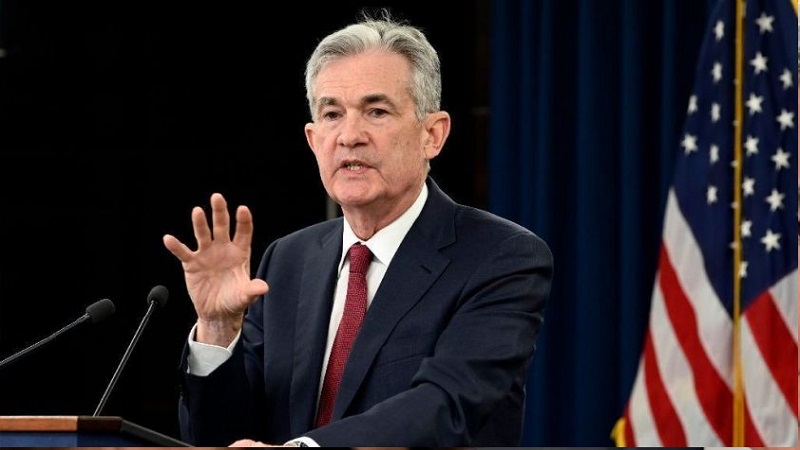
Traders have adjusted their expectations for Federal Reserve monetary policy following the Atlanta Federal Reserve’s GDPNow model update on March 3, 2025, which estimated a -2.8% annualized real GDP growth rate for the first quarter of 2025. This marked a significant downgrade from the previous estimate of -1.5% on February 28 and an even sharper decline from the +2.3% forecast on February 19. The shift in expectations reflects growing concerns about an economic slowdown, prompting markets to anticipate a more aggressive Federal Reserve response to stimulate growth.

Money markets, as tracked by tools like the CME Group’s FedWatch, have moved to fully price in three quarter-point interest rate cuts by the end of 2025, which would lower the federal funds rate from its current range of 4.25%–4.5% to approximately 3.5%–3.75%. This shift in pricing, which emerged for the first time since mid-December 2024, was partly driven by fears of an economic contraction, exacerbated by policy uncertainties, including the imposition of new U.S. tariffs on major trading partners like Canada, Mexico, and China.

These tariffs, implemented by the President Donald Trump administration, have raised concerns about potential disruptions to global supply chains, increased inflationary pressures, and a broader dampening of economic growth, often referred to as a “Trumpcession.” The Fed’s own December 2024 projections anticipated only two rate cuts in 2025, and recent economic data, such as a strong December 2024 jobs report adding 256,000 jobs, have raised doubts about the need for aggressive easing, particularly if inflation remains sticky, as suggested by a University of Michigan survey showing consumer inflation expectations rising to 3.3%.

The Atlanta Fed’s GDPNow model, while not an official forecast, is a widely watched nowcast that uses incoming economic data to estimate GDP growth in real time. The sharp downgrade was attributed to weaker-than-expected consumer spending, a record-high U.S. trade deficit of $153 billion in January, and declining manufacturing activity, as reported by the Census Bureau and the Institute for Supply Management. These indicators, combined with a drop in consumer confidence—evidenced by The Conference Board’s index falling from 105.3 to 98.3 points in February, the largest monthly decline since August 2021—have heightened recession fears.

Critically, however, the expectation of three rate cuts must be viewed with caution. The GDPNow model is volatile, especially early in the quarter, and its estimates can change significantly as more data becomes available. Historically, the model’s final forecasts have had an average absolute error of 0.77 percentage points, indicating it is not infallible. Moreover, the Federal Reserve’s actual policy decisions are data-dependent and made meeting by meeting, meaning long-term market pricing is speculative and subject to revision.

Furthermore, the narrative of tariffs as a primary driver of economic slowdown, while plausible, requires scrutiny. Tariffs may indeed reduce growth by increasing costs and disrupting trade, but some economists, such as those at Deutsche Bank, argue they are more likely to fuel inflation than cause a recession, potentially limiting the Fed’s ability to cut rates as aggressively as markets expect.

The steepening of the U.S. Treasury yield curve, with two-year yields dropping six basis points to 3.89% following the tariff announcements, reflects market expectations of rate cuts, but the inversion of parts of the yield curve, such as the two-year and five-year spread briefly turning negative, has historically preceded economic contractions, not guaranteed them.

Traders have priced in three Federal Reserve rate cuts for 2025 in response to the Atlanta Fed’s -2.8% GDP growth estimate for Q1 and broader economic concerns, including tariffs and weakening consumer indicators. However, this pricing reflects market sentiment rather than a guaranteed outcome, as economic data, Fed policy, and geopolitical developments could alter the trajectory. The establishment narrative of an impending slowdown requiring significant monetary easing should be critically examined, as alternative scenarios—such as persistent inflation or a more resilient economy—could lead to fewer or no rate cuts, challenging current market expectations.

4 Top Presales To Watch Now Before They Take Off—Don’t Miss Out on These Crypto Gems!

0

Crypto presales have gained attention for offering early investment opportunities at discounted prices. While some projects bring strong potential, others struggle due to poor execution. Identifying the most promising options requires a careful evaluation of factors like funding strength, market trends, and presale demand.

Currently, projects like The Last Dwarfs, Harry Hippo, Best Wallet Token, and BlockDAG are gaining traction, each offering distinct features across GameFi, AI-driven ecosystems, and blockchain infrastructure.

By analyzing token distribution, adoption metrics, and long-term viability, this reading breaks down these 4 top presales to watch now, giving you a clear view of where the real opportunities lie in the crypto market.

1. BlockDAG (BDAG): Presale Gem Projected to Reach $1 in 2025

BlockDAG (BDAG) rose to prominence largely due to its Directed Acyclic Graph (DAG) architecture and Proof-of-Work (PoW) consensus, a combination that sets its blockchain apart from traditional blockchain networks.

Unlike linear blockchains, DAG technology validates multiple transactions at once, improving scalability, speed, and decentralization. This innovation ensures faster processing times, lower fees, and enhanced security, making BlockDAG an advanced layer-1 solution. With its ability to handle growing transaction volumes efficiently, it stands as a strong alternative to traditional blockchain models.

BlockDAG’s ongoing presale is one of the fastest-growing in crypto history, raising $203.5 million across 27 batches. The BDAG price has surged from $0.001 in Batch 1 to $0.0248 in the current Batch 27, delivering a 2,380% gain for early adopters.

The network’s mainnet launch and 10 upcoming CEX listings are both set for this year, moves that will accelerate BlockDAG’s growth even further. These listings will provide greater liquidity, global trading access, and enhanced market visibility, potentially driving BDAG’s value even higher. Analysts anticipate a post-launch price target of $1, making BlockDAG one of the top presales to watch now for long-term growth potential.

2. The Last Dwarfs (TLD): GameFi Meets Investment

The Last Dwarfs (TLD) is a GameFi project built on The Open Network (TON), offering a Play-to-Invest model. Players earn and stake TLD tokens, benefiting from staking rewards of up to 300% APY. Its gamified Web3 launchpad allows users to participate in early investments through gameplay, making it an innovative addition to the GameFi space.

However, concerns exist regarding its high APY, which may lead to inflation risks. Additionally, TON is not as widely adopted as Ethereum or Solana, which could slow TLD’s ecosystem growth. With approximately $117.26K raised, its presale continues to gain momentum. Despite these challenges, The Last Dwarfs remains one of the top presales to watch now due to its unique model and engaged community.

3. Harry Hippo (HIPO): AI-Driven Meme Coin

Harry Hippo (HIPO) combines AI, GameFi, and meme culture, offering a high-yield staking system and a play-to-earn game. The Harry Hungry Hippo game allows users to earn HIPO tokens, which offer 601% APY on staking. Future updates include NFT utilities, AI-driven gameplay enhancements, and CEX listings. So far, the project has raised over $6.7 million. With 35% of the supply allocated to marketing, the project aims for broad adoption.

However, meme coin projects often rely heavily on community hype. Sustainability depends on whether the platform maintains engagement after launch. Still, its AI-enhanced features and gaming incentives make it an exciting presale to watch, particularly for those seeking high-reward staking options.

4. Best Wallet Token (BEST): Multi-Chain Wallet Growth

Best Wallet Token ($BEST) is a utility token supporting the Best Wallet ecosystem, designed to provide reduced transaction fees, staking rewards, and early presale access. It integrates with Best DEX, Best Card, and a presale aggregator. Its presale has already raised approximately $11 million, reflecting strong market confidence.

Despite its strong roadmap, $BEST’s success relies on its wallet’s adoption. Intense competition in the non-custodial wallet market may impact long-term growth. However, its multi-chain support, security features, and growing user base place it among the top presales to watch now. Investors should monitor adoption metrics to gauge its potential.

Top Presales To Watch Now—Final Say!

While The Last Dwarfs, Harry Hippo, and Best Wallet Token bring unique innovations to GameFi, AI, and utility sectors, BlockDAG stands out with its advanced DAG-based blockchain and record-breaking presale. With $203.5 million raised, its rapid adoption signals strong market confidence.

As the mainnet launch and 10 exchange listings approach, BDAG’s liquidity and visibility are set to increase, potentially pushing its value toward $1 post-launch. For those seeking the top presales to watch now, BlockDAG’s long-term growth prospects make it a standout choice in today’s competitive crypto market.

Nigerian Digital Lender Sycamore Expands Into Wealth Management, Secures SEC License

0

Sycamore, a Nigerian digital lender, has taken a major step in its expansion into wealth management, by securing a license from Nigeria’s Securities and Exchange Commission (SEC) to operate as a fund and portfolio manager.

Alongside this milestone, the company has appointed seasoned investment expert Oluwagbenga Magbagbeola, former managing director of ARM securities, to lead its asset management division.

With over N10 billion in assets under management, Sycamore’s SEC approval cements its position among Nigeria’s top regulated investment firms.

The company’s CEO Babatunde Akin-Moses emphasized the significance of the license stating,

“Securing our SEC license represents the culmination of years of building institutional-grade compliance systems that protect investor interests. With this regulatory foundation and Oluwagbenga’s proven investment expertise, we’re uniquely positioned to deliver performance and security to investors navigating Africa’s complex market conditions.”

Reinforcing this commitment, Co-founder and CCO Onyinye Okonji noted,

“This milestone reflects our commitment to operating at the highest standards of financial governance. Our team underwent a rigorous evaluation process, during which regulators examined our governance structures, risk management frameworks, and client protection mechanisms.”

The company’s latest mobile app upgrade further enhances the investment experience. With an intuitive dashboard, clients can access real-time portfolio analytics, track performance, and identify growth opportunities. A key highlight is the new Multi-Currency Wallet, which enables users to manage and invest in USD, EUR, and GBP, and provides a seamless way to hedge against currency volatility.

“This is more than just fintech innovation’s about creating accessible and regulated investment solutions that empower Nigerians,” said Onyinye Okonji, Sycamore’s Co-founder and CCO.

Revenue from Sycamore’s asset management business will come from management fees and performance-based earnings, however, the company hasn’t shared specific financial targets yet.

Sycamore Expansion Into Wealth Management, A Game Changer For The Company

Securing a wealth management license from Nigeria’s SEC is indeed a game changer for Sycamore, positioning it among Nigeria’s elite regulated investment firms.

This regulatory approval offers the company a competitive advantage in Nigeria’s wealth management space, which includes the following;

1. Institutional Trust and Credibility

The SEC license signals that Sycamore meets the highest regulatory standards in governance, risk management, and client protection. In an investment environment where concerns about fraud and financial mismanagement are prevalent, being a licensed fund/portfolio manager sets Sycamore apart from unregulated competitors.

2. Ability to Offer Regulated Investment Products

With this license, Sycamore can now legally structure and manage investment funds, mutual funds, and diversified portfolios, catering to both retail and institutional investors. This broadens its product offering beyond traditional lending or savings features, allowing it to compete directly with established asset management firms.

3. Increased Investor Confidence & Market Expansion

Regulatory approval boosts investor trust, making Sycamore more attractive to high-net-worth individuals (HNIls), institutional investors, and corporate clients who typically prefer SEC-licensed investment managers. It also opens doors to partnerships with banks, pension funds, and government-backed initiatives seeking credible wealth management platforms.

4. Competitive Differentiation Through Fintech Innovation

Unlike traditional asset managers, Sycamore integrates Al-driven portfolio optimization and digital investment tools. By combining regulatory compliance with cutting-edge fintech, it offers a more dynamic, data-driven approach to wealth management, giving it an edge over conventional investment firms.

Looking Ahead

The SEC license transforms Sycamore from a fintech lender into a fully regulated investment powerhouse. It enhances credibility, expands market opportunities, and reinforces Sycamore’s fintech-driven competitive advantage.

With Al-powered wealth management, multi-currency investment options, and regulatory legitimacy, Sycamore is well-positioned to disrupt Nigeria’s wealth management space and attract a new wave of investors seeking secure and technology-driven financial solutions. Notably, with these strategic advancements, Sycamore is redefining the future of digital investing in Nigeria, offering a secure and technology-driven platform for wealth growth.

High-Risk and Low-Risk Investments: Which One is Best for You?

0

Investment is a very powerful wealth creation tool but with very different levels of risk associated with different investments. The investor needs to decide whether he or she is prepared to take higher risks for the possibility of higher returns or whether he or she would like a conservative approach with lower risk and safer gains. This article explains the differences between high-risk and low-risk investments, their pros and cons, and how to choose the right approach based on your goals.

If you’re new to investing and want to explore trading strategies, AvaTrade offers a comprehensive guide on how to trade forex. Whether you’re interested in Forex, stocks, or commodities, their platform provides essential tools and insights for beginners.

1. Investing with Risk

What is Investment Risk?

Risk associated with investment is the probability that the value of an asset may change and thus may result in losses. Various risks affect investment performance, such as:

  • Market Risk: The risk that overall market movements will affect the value of an asset.
  • Credit Risk: The risk that a firm or a debtor will not repay a loan or bond.
  • Inflation Risk: The possibility that rising inflation will erode purchasing power and reduce real returns.
  • Liquidity Risk: The difficulty of selling a property with minimal loss of value.

2. High-Risk Investments: Greater Potential, Greater Risk

What Are High-Risk Investments?

High-risk investments carry the possibility of high returns but are also highly volatile with the possibility for substantial losses. They are desirable for individuals who are willing to risk their money for the possibility of increased rewards.

Popular High-Risk Investments

Stocks (Growth Stocks and Small-Cap)

  • Growth-oriented businesses can yield high returns but are also vulnerable to price fluctuations.
  • Small-cap stocks are usually more volatile than established blue-chip companies.

Cryptocurrencies

  • Digital assets like Bitcoin and Ethereum are gaining popularity as these have high growth potential.
  • They are highly dependent upon regulatory developments and mood within the markets.

Startups and Venture Capital

  • Early-stage investment into new businesses can yield tremendous profits provided the venture prospers.
  • However, the rate of startup failure is high, making this venture risky.

Forex and Commodities Trading

  • Currency and commodity markets are potential sources of instant gains but are highly volatile.
  • Sharp price changes are brought about by economic and geopolitical reasons.

Real Estate Investments in Volatile Markets

  • Some investors treat real estate as a high-risk asset, especially in volatile housing markets.
  • According to a recentLinkedIn article, real estate can outperform stocks in certain economic conditions but requires careful market analysis.

Pros and Cons of High-Risk Investments

  • Higher potential for high returns.

  • Ability to amass wealth quickly.

x Greater risk of losing a lot.

x Active management and deep understanding of the markets are required.

3. Conservative Investments: Stability Rather Than Speed

What Are Low-Risk Investments?

Low-risk investments prioritize capital protection above all else and earn steady but lower returns. They are most suitable for investors who prioritize financial predictability and safety.

Popular Low-Risk Investments

Government Bonds and Treasury Securities

  • Issued by governments, these investments provide reliable returns and are among the safest options.
  • S. Treasury bonds, for example, offer fixed interest payments with minimal risk.
  • As highlighted in a S. Bank report, changes in interest rates significantly affect bond yields, making them a crucial factor for low-risk investors.

Certificates of Deposit (CDs) and Fixed Deposits

  • Banks offer CDs with guaranteed returns over a specified period.
  • While low-risk, they often provide lower yields than other investments.

Dividend-Paying Stocks and Blue-Chip Companies

  • Well-established corporations consistently pay dividends, providing investors with regular income.
  • These stocks are generally more stable than small-cap or growth stocks.

Real Estate (Stable Markets)

  • Property investments in well-developed regions appreciate over time and provide rental income.
  • Real estate is less volatile than stock markets but requires significant capital.

Advantages & Disadvantages of Low-Risk Investments

  • Lower risk, reducing exposure to steep declines.
  • Known returns, making financial planning easier.

x Lower potential for high returns relative to risky assets.

x Risk of value loss through inflation unless returns are higher than rising prices.

4. How to Choose the Right Investment Approach

Evaluate Your Risk Tolerance

  • If you can handle fluctuations in the markets and losses, high-risk investments may be appropriate for your goals.
  • If predictable and steady growth is your goal, low-risk investments are the better choice.

Set Your Financial Objectives

  • Short-term objectives (such as savings for a major expense) typically require low-risk investments.
  • Long-term goals (such as planning for retirement) may involve a mix of high-risk and low-risk assets.

Diversify Your Portfolio

  • A balanced approach with a combination of high-risk and low-risk investments balances overall risk.
  • 70% in stable assets (blue-chip stocks and bonds) and 30% in higher-growth assets (crypto and tech stocks).

Final Thoughts: Balancing Risk and Reward

Both high-risk and low-risk investments find their place within a balanced investment plan. The right mix depends upon your individual financial situation, time horizon, and risk tolerance. New investors may find a balanced approach merging safe, steady-growth investments with a dash of higher-risk opportunities balances the equation while leaving the door open for potential gains. An understanding of how risk operates and making intelligent choices can allow investors to achieve their goals with minimal exposure to unwanted fluctuations.

Robinhood Partners with Kalshi to Launch Prediction Markets

0

Robinhood has recently launched a prediction markets hub in partnership with Kalshi, a regulated exchange under the Commodity Futures Trading Commission (CFTC). This new feature allows Robinhood users to trade contracts based on the outcomes of various real-world events, such as sports, politics, and economic indicators. The hub debuted with offerings like contracts on the Federal Reserve’s target interest rate for May and the men’s and women’s NCAA basketball tournaments, aligning with the timing of March Madness.

This move expands Robinhood’s offerings beyond traditional stocks and crypto, tapping into the growing popularity of prediction markets in the U.S. The collaboration with Kalshi, which won a legal battle in 2024 to offer election-related contracts, ensures regulatory compliance while bringing event-driven trading to Robinhood’s roughly 25 million users. Kalshi’s legal battle centers on its fight with the U.S. Commodity Futures Trading Commission (CFTC) over the right to offer event contracts tied to political outcomes, specifically congressional control contracts that let users bet on which party will control the U.S. House or Senate after an election.

In June 2023, Kalshi, a New York-based prediction market registered as a designated contract market (DCM) under the CFTC, sought approval to list these contracts. The CFTC rejected them in September 2023, arguing that they constituted “gaming” or gambling—activities it believed were unlawful under the Commodity Exchange Act (CEA) and against the public interest. The agency worried that such contracts could undermine election integrity, incentivize manipulation, or blur the line between financial markets and betting.

Kalshi fired back, suing the CFTC in November 2023 in the U.S. District Court for the District of Columbia. It claimed the CFTC overstepped its authority, calling the decision “arbitrary, capricious, and contrary to law” under the Administrative Procedure Act. Kalshi argued that its contracts weren’t gambling but financial instruments tied to economically significant events—elections—that people could use to hedge risks or gain insight into future outcomes. They pointed to examples like businesses hedging against policy shifts or researchers using market data to forecast trends more accurately than polls.

On September 12, 2024, District Court Judge Jia Cobb ruled in Kalshi’s favor, granting summary judgment and vacating the CFTC’s ban. Cobb found that the CFTC misinterpreted “gaming” in the CEA, noting that elections aren’t games or illegal activities but civic processes with major economic impacts. She rejected the CFTC’s public interest concerns as speculative, saying the agency failed to prove concrete harm. The CFTC didn’t back down, appealing to the D.C. Circuit Court of Appeals and seeking an emergency stay to block Kalshi from offering the contracts during the appeal. Initially, the appeals court issued a temporary administrative stay, but on October 2, 2024, it denied the CFTC’s request for a longer stay.

Judge Patricia Millett wrote that the CFTC hadn’t shown it, or the public would suffer “irreparable injury” without the stay, though she called the underlying merits “close and difficult.” This greenlit Kalshi to launch its election contracts ahead of the 2024 U.S. presidential election, and it quickly did so, listing contracts on everything from congressional control to presidential outcomes. The CFTC’s appeal is still pending as of early 2025, with oral arguments heard by the D.C. Circuit on January 17, 2025. Meanwhile, Kalshi has expanded its offerings, and by late 2024, it reportedly saw over $1 billion in election-related trades.

The CFTC continues to argue that these contracts threaten election integrity, while Kalshi counters that they’ve proven valuable—offering clearer signals than polls during the 2024 race, with no evidence of manipulation. This battle’s outcome could reshape prediction markets. A win for Kalshi might open the floodgates for other platforms to offer similar contracts, challenging the CFTC’s regulatory scope. A CFTC victory could tighten restrictions, pushing such markets offshore to unregulated spaces like Polymarket. Beyond federal rules, state regulators could still ban these contracts locally, adding another layer of complexity. For now, Kalshi’s operating, but the fight’s far from over.