DD
MM
YYYY

PAGES

DD
MM
YYYY

spot_img

PAGES

Home Blog Page 1672

The Evolution of Casino Gambling: How New Technologies Are Shaping the Future of Gaming

0

Gambling has undergone a significant evolution from land-based casinos with mechanical slots to digital platforms available at any time. Technological development has become a key factor in these changes, determining not only the format of games but also the level of security, transaction speed and personalization for players.

Today, the market is influenced by artificial intelligence, blockchain, virtual reality, and 5G, changing the approach to gambling for both users and operators. The introduction of these technologies is already forming a new industry standard, and further developments can completely reformat the interaction with gambling.

In this article, we will consider how innovations change the market, what solutions have already been implemented, and what prospects are opening up for the gambling industry.

History of Casino Development and the Impact of Technology

The earliest casinos were in a traditional form, in which all the games were based on mechanical mechanisms or deals of cards. Mechanical slots, developed in the late 19th century, were the earliest automatic gambling games, yet their potential was restricted.

The creation of electronic slots in the second half of the XX century revolutionized the market – electronics substituted for mechanics, providing new fields for gaming. The final milestone was online gambling, which emerged with the creation of the Internet in the 1990s. Electronic casinos made it possible for players to get access to games without a direct connection to institutions.

The proliferation of mobile devices further changed the industry, making gambling accessible from anywhere. Thanks to mobile casinos, players were able to play in real-time, and operators began to implement responsive design, fast payments, and optimized randomness algorithms. At the same time, Vegas free slots online became a popular choice among players looking for risk-free entertainment while experiencing the excitement of classic slot gameplay. Innovations in technology have shaped the modern gambling market, creating the basis for further changes.

Key Technologies That Are Changing Gambling

Technological developments are significantly transforming the gambling industry, improving the security, personalization, and accessibility of casinos. The main drivers of these changes are artificial intelligence, virtual reality, blockchain, and cloud technologies.

  • Artificial intelligence and machine learning. Operators use AI to study the behavior of the players, enabling them to make personalized propositions, slot and bonus recommendations. Algorithms also forecast the likelihood of user churn and modify marketing campaigns. AI is also instrumental in the anti-fraud fight: machine learning systems review transactions and detect suspicious patterns. In responsible gambling, artificial intelligence identifies the symptoms of gambling addiction and imposes limitations or warnings on the players.
  • Virtual and augmented reality (VR/AR). VR casinos recreate the atmosphere of a land-based casino, with the possibility to walk around the virtual room and communicate with dealers and other players. They apply such technologies to live casinos, poker, and slots and achieve a sense of presence. Augmented reality (AR) adds more interactivity, e.g., displaying virtual items on real surfaces or adding animations to mobile games. AR slots bring bonus rounds into the player’s real world, enhancing interaction.
  • Blockchain and cryptocurrencies. Blockchain technologies facilitate the game’s fairness and transparency by utilizing smart contracts that exclude any type of third-party influence on the outcome. Provably Fair algorithms are applied by operators to enable players’ independent verification of round outcomes. Bitcoin, Ethereum, and USDT are gaining popularity as alternative payment methods at casinos. They enable real-time transactions without the intervention of banks, reducing fees and improving the level of anonymity of the players.
  • Cloud technology and 5G. Cloud solutions enable you to launch games without downloading on the client side, on a streaming basis. It removes the necessity of possessing high-end devices and enables gaming on any device. 5G speeds up data transmission and lowers latency, which is essential for live games and VR casinos. Operators have a secure connection with players, and operators can develop features of interactive games without any performance compromise.

Technological innovations continue to change gambling, increasing the level of security, personalization and accessibility of casinos for both operators and players.

What does the Future Hold for the Industry?

Gambling will continue to adopt new technologies. AI dealers can replace human croupiers in live games, automating the process and reducing costs for operators. Metaversions will allow players to chat in virtual casinos, making the gameplay even more realistic.

The growing demand for interactive games will facilitate the development of adaptive slots that change mechanics in response to player actions. In the meantime, the industry will need to overcome challenges: the need to regulate AI solutions, data protection, and adaptation to changes in legislation. Casinos that invest in new technologies will gain a competitive advantage in the future.

Conclusion

Technologies have already changed gambling – from land-based casinos to VR games, AI analysis, and blockchain solutions. They have increased security, personalization, and speed of games.

Further development of innovations will be a key factor in the evolution of the industry. To keep up with the changes, it is worth following new trends and adapting to technological changes.

Top Meme Coins to Buy Now: 4 Explosive Picks for Massive Gains

0

Meme coins have found their corner in the crypto market, combining internet culture with the rollercoaster ride of speculative investing. As of March 2025, several meme coins are making waves. Notably, Arctic Pablo Coin, Dogwifhat, Floki Inu, and Brett are capturing the attention of investors worldwide.

This article delves into these trending top meme coin to buy now, providing insights into their unique narratives, investment potentials, and current presale details.

1.  Arctic Pablo Coin: Embarking on an Icy Adventure

Arctic Pablo Coin ($APC) isn’t just another meme coin presale; it’s an adventurous narrative that invites investors to join Arctic Pablo on his quest to uncover the earth’s hidden mysteries. This unique approach bridges the gap between myth and reality, with each presale phase tied to distinct locations and stories. As one of the top meme coin presales to buy now, Arctic Pablo Coin is capturing global attention with its thrilling concept and high-growth potential.

Arctic Pablo Coin is currently exploring “Nippy Nook,” the 15th location in his journey, with tokens priced at $0.000079. This unique journey-style presale has already amassed over $1.92 million, proving significant investor interest. Early investors are eyeing a staggering 10,027.85% ROI when the token launches at $0.008.Investors are particularly drawn to the potential returns; for instance, investing $500 today would yield 6,328,430.00 $APC tokens. If the coin lists at $0.008, this stake could soar to $50,627.44, showcasing a remarkable return on investment.

A standout feature of Arctic Pablo Coin is its deflationary mechanism. Unsold tokens are burned at the end of each week, creating a deflationary environment that enhances scarcity and potential value. This strategy aligns with the project’s goal of bridging myth and reality, as each token burn symbolizes the uncovering of new mysteries and the closing of old chapters. It’s no wonder that investors seeking top meme coin presales to buy now are flocking to Arctic Pablo Coin for its promising tokenomics and scarcity-driven value.

Why did this coin make it to this list? Arctic Pablo Coin’s unique narrative-driven approach, combined with its deflationary tokenomics and attractive staking rewards, positions it as a top meme coin presale to buy now. Its innovative strategy of tying presale phases to adventurous locations adds an element of excitement and exclusivity, appealing to investors seeking both engagement and potential high returns.

2.  Dogwifhat: The Canine Meme Coin with a Twist

Dogwifhat enters the meme coin arena with a playful twist, combining the internet’s love for dogs with a humorous take on fashion—specifically, hats. This coin leverages viral dog memes featuring canines wearing various hats, creating a lighthearted and engaging community.

While specific presale details for Dogwifhat are currently limited, the project’s community-driven approach is evident. The development team actively engages with followers on social media platforms, encouraging user-generated content and meme creation. This strategy not only fosters a strong community but also increases the coin’s visibility and appeal.

Why did this coin make it to this list? Dogwifhat’s unique blend of canine memes and fashion, coupled with its community-centric approach and plans for NFT integration, make it a noteworthy contender among meme coins. Its focus on user engagement and content creation fosters a vibrant community, positioning it as a top meme coin presale to watch.

3.  Floki Inu: Sailing the Meme Coin Seas

Floki Inu pays homage to Elon Musk’s Shiba Inu dog, Floki, capitalizing on the billionaire’s influence in the crypto space. The coin’s Viking-themed narrative sets it apart, inviting investors to join the “Floki Vikings” on a journey to conquer the crypto seas.

The project emphasizes community involvement, with a decentralized and community-driven ecosystem. Floki Inu has also ventured into the NFT space, launching “FlokiPlaces,” a marketplace for trading NFTs and merchandise. This expansion into the NFT realm provides additional utility for the token and engages a broader audience.

Why did this coin make it to this list? Floki Inu’s strategic branding, community-driven ecosystem, and expansion into NFTs position it as a compelling meme coin presale to consider. Its Viking-themed narrative and active community engagement create a unique identity in the crowded meme coin market.

4.  Brett: The Meme Coin with a Personality

Brett differentiates itself by personifying the coin as a character—Brett, a laid-back surfer dude who embodies the carefree and adventurous spirit. This personification adds a relatable and entertaining dimension to the project, attracting a community that resonates with Brett’s persona.

The project’s marketing strategy leverages Brett’s character, creating engaging content and storytelling that appeal to a broad audience. This approach not only entertains but also fosters a strong community around the coin.

Why did this coin make it to this list? Brett’s unique character-driven narrative, combined with its engaging marketing strategy and plans for interactive utilities, make it a standout meme coin presale. Its focus on storytelling and community engagement creates a compelling investment opportunity for those looking to be part of a fun and immersive crypto project. With plans for interactive games, community-driven content, and a strong branding identity, Brett offers a refreshing take on meme coins that could drive significant investor interest.

Final Thoughts: Which Meme Coin Presale Is the Best to Buy Now?

Based on our research and market trends, Arctic Pablo Coin stands out as the top meme coin presale to buy right now. Its unique storytelling approach, deflationary tokenomics, high staking APY, and adventurous branding make it more than just a meme—it’s an experience. With the potential for explosive returns and a growing presale community, early investors could see massive gains once it hits the market.

Floki Inu, Dogwifhat, and Brett also offer exciting prospects, each with its own niche appeal, community engagement, and utility-driven roadmap. However, Arctic Pablo Coin’s combination of scarcity, staking rewards, and an immersive narrative sets it apart as the best investment opportunity in the meme coin space today.

Don’t miss out! Join the Arctic Pablo Coin presale now and secure your spot in this thrilling crypto adventure.

For More Information:

Arctic Pablo Coin: https://www.arcticpablo.com/

Telegram: https://t.me/ArcticPabloOfficial

Twitter: https://x.com/arcticpabloHQ

Frequently Asked Questions (FAQs)

1. What is the best meme coin presale to buy now?

Arctic Pablo Coin is currently the top meme coin presale to buy now. With its unique storytelling, deflationary tokenomics, high staking APY, and strong community backing, it offers massive return potential. Plus, its presale price is set to increase weekly, making early entry even more lucrative.

2. How does Arctic Pablo Coin’s presale work?

Unlike traditional presales with stages, Arctic Pablo Coin’s presale is structured as an adventurous journey through different locations. Right now, it’s in Nippy Nook, the 15th location, with a price of $0.000079. The price rises weekly, and any unsold tokens are permanently burned, creating scarcity and driving up potential value.

3. What makes Arctic Pablo Coin different from other meme coins?

Arctic Pablo Coin isn’t just another meme token—it’s an immersive adventure. Inspired by the mythical journeys of Arctic Pablo, the coin ties its presale locations to a larger narrative. Combined with 66% APY staking rewards, a Binance Smart Chain (BSC) foundation, and a weekly token burn mechanism, it stands out as a high-potential, community-driven investment.

4. Can I stake Arctic Pablo Coin ($APC) for passive income?

Yes! Arctic Pablo Coin offers a 66% APY staking program, allowing investors to grow their holdings while contributing to the ecosystem. Staked coins are locked for two months post-launch, ensuring a strong foundation for long-term growth.

5. When will Arctic Pablo Coin be listed, and what is the potential return on investment (ROI)?

Arctic Pablo Coin is expected to list at $0.008, meaning an early investment of $500 at the current price ($0.000079) could turn into a massive $50,627.44,at launch. The combination of increasing presale prices, token burns, and staking incentives makes it one of the most promising meme coin investments in 2025.

Harvard and YCombinator’s Amazing American Playbooks On Seeding the Future

0
A university

A new model of education funding is emerging: “Harvard University has announced a major expansion of its financial aid program, stating that, beginning in the 2025-26 academic year, it will offer free tuition to students from families earning $200,000 or less annually.”

This is very commendable as education remains the best path for economic ascension. When the nation’s finest private universities become more affordable than states’ universities, opportunities open up for the nation’s best young people.

Harvard may be spending about $60 million on this yearly (the university accepts 2,000 students yearly at tuition of $60,000 on average yearly tuition per class. I model the worst case scenario percentage is 50% for financial support since most of those who could be accepted into Harvard are kids of rich parents, well over the $200k cut-off). It has to model that over 4 years to give $240 million.

Similarly, YCombinator gives out $300 million to young people yearly to build the next future. YC gives each startup $500k and in the four cycles it now runs per year, you are looking at least 600 companies!

Good People, it is only in America. Check left and right, efficient tax policy plays a role here. When you donate in America, your tax positioning improves, and when you invest, they make things fun. In Africa, even when you are selling equities at a huge loss, you will still pay tax. In America, selling at a loss can help you reduce tax burdens where you made profits. We need to learn from the Yankees for us to activate these playbooks

Harvard to Offer Free Tuition for Families Earning $200,000 Or Less As DEI Shutters

NBS Says Nigeria’s Inflation Rate Declines to 23.18% in February, But Many Disagree

0

Nigeria’s inflation rate declined to 23.18% in February 2025, marking a slight drop from the 24.1% recorded in January 2025, according to the latest Consumer Price Index (CPI) report by the National Bureau of Statistics (NBS).

The agency’s report comes after a major overhaul of its methodology, changing the reference year to 2024 in an attempt to provide a more accurate reflection of inflationary pressures.

The NBS report states that the February 2025 headline inflation rate showed a decrease of 1.30% compared to January 2025 and that inflation on a year-on-year basis was 8.52% lower than in February 2024. On a month-on-month basis, the agency recorded inflation at 2.04% in February 2025.

However, a large number of Nigerians are skeptical of the latest figures, arguing that the reality on the ground tells a different story. Many believe the government is pressuring the NBS to paint a more favorable picture of the economy, even as food and basic necessities continue to become more expensive.

Food prices, transportation costs, and utility bills have continued to rise, making it difficult for people to believe the claim that inflation is slowing down.

The situation has fueled suspicions that the government is influencing the NBS to manipulate inflation data to create an illusion of economic stability. Critics argue that while the official figures may suggest inflation is easing, the purchasing power of Nigerians tells a different story.

One of the most telling signs that inflation remains a major problem is the fact that Nigerians continue to spend more than half of their earnings on food. This is a sharp contrast to the reported decline in inflation, as food prices remain high, and in some cases, continue to increase.

“Nigerians have spent more on food in 2024 than in any other year in the last decade. In June 2024, PricePally sold a basket (50kg) of Grade-A tomatoes at N112,000. This was a new record, surpassing the peak price of N100,000 seen in 2023,” Stew Index Report noted.

Many believe that nothing has changed in the first few months of the year. According to the NBS report, food inflation stood at 23.51% year-on-year in February 2025, reflecting a 14.41 percentage point drop from the 37.92% recorded in February 2024. The agency attributes this decline largely to its revised inflation measurement, but Nigerians argue that food prices remain unaffordable.

Experts also caution against taking the latest inflation report at face value. They note that what we are seeing is a situation where inflation is still high, just growing at a slightly slower rate. But in real terms, Nigerians are still spending more on food, transportation, and basic goods.

Urban vs. Rural Inflation

The NBS report also highlighted differences in urban and rural inflation. It stated that urban inflation stood at 25.15% in February 2025, a decline from 33.66% recorded in February 2024. Rural inflation was reported at 19.89%, marking a decrease from 29.99% in the same period last year.

Despite these figures, residents in both urban and rural areas report continued hardship. In rural communities, rising transportation costs and supply chain disruptions have made staple foods more expensive. In urban centers, the cost of rent, electricity, and other essentials has remained high, squeezing household budgets.

Government Under Pressure

The Nigerian government has faced increasing pressure to address the economic crisis, particularly as the naira continues to depreciate and household incomes shrink. While the government has blamed external factors such as global inflation and currency fluctuations, it is believed that poor policy decisions, including the removal of fuel subsidies and high interest rates, have worsened the situation.

The Tinubu administration has defended its economic policies, arguing that reforms take time to yield results. However, with inflation still straining household budgets, public trust in government statistics continues to erode.

Nigeria’s Debt Service Payments Drop from $540m to $276m in February 2025 – CBN

0

Nigeria’s total debt service payments declined significantly from $540 million in January 2025 to $276 million in February 2025, according to newly released data from the Central Bank of Nigeria (CBN).

The drop comes as the federal government intensifies efforts to restructure its debt portfolio, improve dollar liquidity, and ease pressure on the foreign exchange market.

The figures, published on the CBN’s website, highlight the increasing burden of debt obligations on Nigeria’s external reserves and overall fiscal sustainability. Analysts believe that recent negotiations with multilateral lenders and deferred debt repayments may have contributed to the lower outflows for the month.

However, concerns persist over the government’s continued reliance on borrowing to fund its budget, with economists warning that increased borrowing could erode any gains made in debt service reduction.

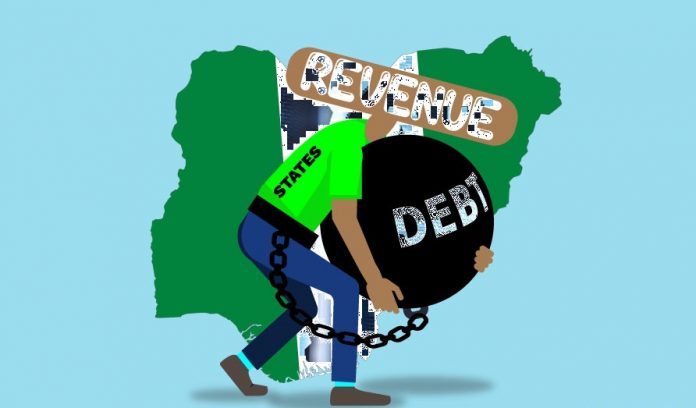
Nigeria’s debt crisis has been a major source of concern, with debt service obligations consuming a significant portion of government revenue. President Bola Tinubu recently claimed that his administration has reduced Nigeria’s revenue-to-debt service ratio from 97% to 65% in 17 months. While this suggests an improvement, Nigeria’s debt obligations still account for a large share of its earnings, limiting resources available for infrastructure development and social programs.

The federal government has been engaging with global lenders such as the World Bank and the International Monetary Fund (IMF) to explore ways to restructure its debt and reduce repayment pressure. However, despite the government’s debt management strategies, Nigeria’s total debt stock continues to rise, raising concerns that the country is merely postponing financial distress rather than resolving it.

Surge in Trade Financing Through Letters of Credit

While debt service payments declined, the CBN reported a sharp rise in Letters of Credit (LCs), indicating increased financing of trade transactions. In February 2025, LCs issued totaled $95.6 million, reflecting a 48% increase from $64.6 million in January 2025.

The increase suggests a rebound in import-related activities, as businesses adjust to fluctuating exchange rates and government policies aimed at stabilizing trade financing. However, with Nigeria’s dependence on imported goods, this rise in trade financing could further strain foreign reserves, especially if oil revenues fail to keep pace with growing forex demand.

The government’s strategy to stabilize Nigeria’s foreign reserves while managing debt repayment obligations remains a delicate balancing act. The CBN’s recent monetary policy measures, including higher interest rates and tighter forex controls, aim to support the naira and ensure adequate dollar liquidity for external obligations.

However, debt service payments remain a major concern. According to the Debt Management Office (DMO), Nigeria’s debt service payments surged by 69% in the first half of 2024, reaching N6.04 trillion, up from N3.58 trillion in the same period of 2023. The sharp increase was largely driven by the devaluation of the naira, which made foreign debt repayments more expensive.

Although February’s lower debt service payment figures provide a momentary relief, the government has shown no sign of slowing down borrowing. The federal government recently secured new loans from both local and international creditors, further raising concerns about long-term debt sustainability.

The World Bank has repeatedly warned about the growing debt burden of developing economies, including Nigeria. In a recent statement, Indermit Gill, the World Bank’s Chief Economist, and Senior Vice President, highlighted the risks associated with mounting debt service costs, stressing that they could push countries into financial crises if left unaddressed.

Can Nigeria Sustain Lower Debt Service Payments?

While the drop in February’s debt service payments may appear to be a positive development, it does not necessarily indicate a lasting solution to Nigeria’s debt challenges. The government’s continued reliance on borrowing to fund the budget raises concerns that debt repayments will inevitably rise again in the near future.

To avoid this relapse,  experts suggest that a combination of higher oil revenues, improved tax collection, and strategic debt restructuring could help sustain lower debt service payments.