DD
MM
YYYY

PAGES

DD
MM
YYYY

spot_img

PAGES

Home Blog Page 168

ZEC & XMR Lose Momentum While Zero Knowledge Proof (ZKP)’s ICA Model Becomes the New 1000x Gem!

0

Recent regulatory pressure has pushed the discussion around the Zcash (ZEC) privacy coin and the Monero (XMR) privacy trend into sharper focus, urging a fresh look at how anonymity survives in a compliance-driven space. As people search for the best crypto to buy for stronger gains, a key question now stands out: can a network keep complete functional privacy while also giving full transparency of origin? Zero Knowledge Proof (ZKP) enters this space with a finished system rather than promises, building a model where mathematical checks replace blind trust.

Even though only the whitelist is open at this stage, the upcoming auction format removes the old “black box” presale style. Zero Knowledge Proof (ZKP) sets a rule where every allocation can be viewed fully on-chain. When someone contributes 5% of the day’s pool, the system assigns them 5% of the supply for that day without hidden boosts or private tiers. This structure ensures that fairness comes from verified data instead of unclear claims.

Zero Knowledge Proof: The End of Hidden Distribution Models

Many early-sale systems feel like puzzles where privileged groups always know more, and smaller buyers are left guessing. Zero Knowledge Proof (ZKP) removes this uncertainty by offering a design where openness is the foundation. Once the auctions begin, every detail becomes visible. You can check the total funds for the day and see your share in real time. For people evaluating the best crypto to buy for long-shot 1000x potential, this sharp clarity is vital because fairness can be confirmed on-chain during the same 24-hour window.

The numeric logic is simple and direct. A 250 USDC contribution in a 5,000 USDC pool equals 5% of a 200 million coin release for that day. No team privileges exist. When the daily cycle ends, 10 million coins appear instantly. This system removes the fear of waiting for teams to carry out vague plans. The code itself performs all distribution instantly and permanently.

Many projects keep pricing unclear to give early insiders an advantage, but Zero Knowledge Proof (ZKP) shows that open rules produce cleaner outcomes. The on-chain auction process serves as a public record explaining how each reward was calculated. Although auctions, the testnet, and Proof Pods will activate together later, the whitelist is already open. Searching for the best crypto to buy for better returns often comes down to finding a project that hides nothing, and this design guarantees that verification is always stronger than trust.

Zcash Privacy Coin and the New Compliance Challenge

Global regulators are tightening rules, including the expected EU ban on anonymity tools in 2027, yet the Zcash (ZEC) privacy coin has grown stronger under this pressure. While Monero faces removals due to its always-private design, Zcash’s partial transparency gives it an edge with large entities. This helped spark a major rise in late 2025 that pushed it ahead of Monero in market cap as big players chose privacy options that can still survive regulatory tests. The trend suggests the future favors networks that balance privacy with compliance.

This support can be seen through renewed interest in the Grayscale Zcash Trust and new corporate strategies built around accumulating ZEC. Upgrades are pushing ZCash deeper into DeFi networks like Solana. Still, even with these improvements, ZEC lives inside a traditional structure where users depend on network history and liquidity depth. It stands strong but remains shaped by the tightening environment.

Monero’s Privacy Stance Refuses to Bend

Many regulators praise the removal of privacy coins from big exchanges, yet they have unintentionally strengthened the Monero (XMR) privacy trend. By the end of 2025, the story is no longer about Monero fading; it is about it becoming less visible. Delistings from large platforms only shifted activity to decentralized markets and atomic swaps, forming a harder-to-track space. It has become clear that a protocol that does not cooperate cannot be controlled, and this firmness keeps Monero as the tool for absolute anonymity.

This determination grows through a community that treats upgrades as protective actions. The recent “Fluorine Fermi” update acted directly against surveillance attempts. As users move toward self-custody and direct exchanges, the gap between Zcash’s balanced transparency and Monero’s strict secrecy becomes clearer. ZCash suits large institutions, while Monero supports individuals who see privacy as a right.
Final Thoughts

The space now sits between two different approaches. The Zcash (ZEC) privacy coin appeals to institutions by adjusting to rules, while the Monero (XMR) privacy trend commits to full secrecy. Each has strengths, but both ask people to choose between regulatory comfort and complete privacy without giving full clarity on how things happen behind the scenes.

Zero Knowledge Proof (ZKP) offers another route by showing everything openly. With a built system that proves allocations instantly, it ensures fairness comes from math and visible data. For people looking for the best crypto to buy and aiming for better returns, the strongest move is choosing a structure where openness guides everything.

Learn More about Zero Knowledge Proof:

Website: https://zkp.com/

Michael Burry Goes “Unchained”, Shuts Hedge Fund to External Clients

0

Michael Burry, the contrarian investor immortalized in The Big Short, has closed the chapter on managing money for external clients. On Monday, regulatory filings confirmed that Scion Asset Management—Burry’s hedge fund—was deregistered with the U.S. Securities and Exchange Commission.

The fund had managed roughly $155 million across four accounts as of late March, according to its most recent Form ADV filing. The move marks a return to a model Burry has used before: focusing solely on personal capital while shedding the pressures of managing client money.

Burry himself posted the development on X, sharing a screenshot of Scion’s terminated status on Wednesday evening. He had foreshadowed the change in a post on October 30, his first since April 2023. In it, he reflected on the nature of market cycles, writing: “Sometimes, we see bubbles. Sometimes, there is something to do about it. Sometimes, the only winning move is not to play.”

The timing coincides with a period of heightened market volatility and speculation, particularly in the artificial intelligence sector. Burry drew attention in October when Scion’s third-quarter portfolio update revealed bearish put options on Nvidia and Palantir, two leading AI-focused companies. The disclosure prompted a public exchange with Palantir CEO Alex Karp, who called the positions “batshit crazy.” Burry responded on X that he was unsurprised Karp “cannot crack a simple 13F,” referencing the regulatory filing that details major institutional holdings.

Burry also addressed misreported figures around the Palantir trades. Media outlets had suggested he had bet $912 million against the stock, but he clarified that he purchased 50,000 put option contracts, each covering 100 shares, at a premium of $1.84 per share, totaling $9.2 million.

“That was done last month,” he wrote. “On to much better things Nov 25th.” His X bio now reads: “Official X account for ‘The Big Short’ Michael Burry, M.D., dubbed ‘Cassandra’ by Warren Buffett. Now unchained -??? launches Nov 25th, Stay Tuned!”

Following a Familiar Pattern

Burry’s exit from managing external capital mirrors past moves by prominent investors seeking autonomy. After profiting from the 2008 housing market collapse, he closed Scion Capital, relaunching it in 2013 as Scion Asset Management with a much smaller set of clients. Freed from investor pressures, he was able to make contrarian bets without answering to demanding clients.

Other high-profile investors have taken similar paths. John Paulson, who also profited from the housing bubble, converted his hedge fund into a family office in 2020. Billionaires David Tepper and Stanley Druckenmiller returned client capital years ago but continue to exert significant market influence. Leon Cooperman did the same in 2018. The late Julian Robertson, founder of Tiger Management, arguably grew even more influential after returning outside money, mentoring a generation of hedge fund managers known as the Tiger Cubs, including Chase Coleman, Andreas Halvorsen, and Philippe Laffont.

Returning external funds allows these investors to focus solely on strategy and market positioning without obligations to write quarterly letters or explain every move to clients. Burry’s social-media activity suggests he plans to embrace this freedom fully, potentially pursuing positions that are more aggressive or unconventional.

Contrarian Moves in AI and Tech Markets

Burry’s recent positions underscore his contrarian approach to AI speculation, likening the current AI investment boom to the dot-com bubble of the late 1990s. The S&P 500 and Nasdaq 100 recently hit record highs, and Burry’s short positions on Nvidia and Palantir reflect skepticism about valuations in a sector experiencing frenzied investor attention.

While Scion Asset Management will no longer accept client money, Burry remains a significant market participant. His “unchained” status may allow him to act and speak more freely, leveraging both his market insight and public platform. Investors and analysts are now looking closely at what Burry will do next, with his moves potentially influencing sentiment in high-flying sectors like technology and AI.

What Comes Next?

Although Burry is returning client capital, his history suggests this is not a retreat from markets but a strategic pivot. In 2008, his bets against the housing bubble made him a legend. Today, he appears poised to take similarly contrarian positions, focusing on sectors and strategies without external constraints.

Burry’s narrative also highlights a broader trend on Wall Street, where high-profile investors increasingly prioritize flexibility and independence over managing outside capital, choosing instead to leverage their insight, reputation, and personal capital to navigate complex, rapidly evolving markets.

In Burry’s case, this latest move may mark the beginning of another influential chapter—one in which he can operate without the boundaries imposed by client obligations, all while retaining the public attention and scrutiny that have followed him for nearly two decades.

ACS Pushes Into Global Data Centre Race With BlackRock’s GIP in a €23bn Partnership

0

Spain’s ACS is edging toward one of the largest digital-infrastructure deals Europe has seen this year, moving close to a €23 billion partnership with BlackRock’s Global Infrastructure Partners (GIP) to build and scale a new data-center powerhouse.

The reported agreement, revealed by Expansion and still unconfirmed by the companies, comes at a moment when demand for AI computing is sending valuations for digital infrastructure to new highs and leaving construction firms, asset managers, and tech giants scrambling to secure what little available power remains across key markets.

Market sources cited by Expansion said the deal would give GIP a 50% stake in ACS Digital & Energy, supported by a complex capital stack consisting of €5 billion in equity — contributed in phases — and €18 billion in debt. The reported structure paints a clear picture of a partnership engineered to scale fast and limit financial exposure, particularly for ACS.

ACS had previously projected that its data-center business would reach a valuation between €3 billion and €5 billion by 2030. The new partnership places the business at the top end of that range immediately, reflecting how surging demand for AI infrastructure and scarce power availability have reshaped valuations across the sector.

A Capital Stack Built for Speed and Scale

The reported equity commitment — €5 billion, deployed progressively — signals a disciplined approach to expansion. Both firms can inject capital as projects hit key milestones, reducing early exposure and allowing the business model to adapt as infrastructure requirements evolve. This kind of phased equity contribution is common in large-scale digital infrastructure and energy projects, where costs can shift as land acquisition, power availability, and hyperscale tenant contracts are firmed up.

But the bigger story lies in the €18 billion debt component, which dominates the capital structure and effectively acts as the engine of scale. In today’s market, this kind of debt-heavy model resembles a classic project-finance or digital-REIT playbook: using infrastructure loans, revenue-backed facilities, and sustainability-linked financing to accelerate expansion without overburdening the parent company’s balance sheet.

This type of financing allows ACS to pursue aggressive data-center construction plans without assuming direct balance-sheet debt — crucial for a construction giant balancing multiple global projects. For GIP, the leverage amplifies returns while maintaining shared risk with a trusted developer.

Why the Valuation Landed at the High End

The aggressive capital stack also reflects a fast-moving global context. With Morgan Stanley estimating that major tech companies will spend $400 billion on AI infrastructure this year, the window for securing power, land, and long-term client agreements is rapidly narrowing. Digital infrastructure valuations have soared as a result, and firms with pipelines — even those still under development — now command premiums.

GIP is coming into the deal after participating last month in the $40 billion acquisition of U.S. data-center operator Aligned, alongside Microsoft and Nvidia. With more than $180 billion in assets under management, GIP has become one of the most active global players in digital infrastructure, and this partnership with ACS presents it with the opportunity to accelerate a European expansion that lines up with its broader portfolio.

ACS is expected to update its data-center plans at an investor day on Friday, a meeting that will likely focus on how this partnership transforms its growth trajectory. With valuations climbing and power restrictions tightening in markets from Ireland to the United States, Europe’s data-center sector has become a race against both time and grid capacity.

The company has been working to align itself with these market realities, and the potential GIP partnership suggests that ACS wants long-term exposure to digital infrastructure — but without committing the full weight of its own balance sheet to a sector that demands enormous upfront capital.

A Deal Shaped by Global AI Demand

The bigger backdrop is a reshaping of how data-center deals are structured globally. AI computing has created unprecedented demand for high-density facilities, and the bottleneck is no longer land or construction capacity, but power. That scarcity has pushed valuations upward and prompted construction companies like ACS to forge alliances with deep-pocketed infrastructure investors capable of mobilizing capital at scale.

The ACS–GIP structure — combining modest but strategic equity with massive, multi-layered debt — mirrors a broader shift in how markets are financing hyperscale expansion. Rather than building data centers project-by-project, firms are forming large platforms capable of delivering multiple facilities over several years, backed by global financing lines and long-term tenant commitments.

If finalized, the deal would place ACS among the continent’s most ambitious developers of AI-ready facilities, positioning the firm alongside global digital-infrastructure leaders like DigitalBridge, Brookfield, KKR, and GIP itself. And with ACS receiving a valuation at the very top of its previously projected range, the partnership signals investor confidence that Europe’s data-center pipeline — especially when paired with an established construction giant — holds long-term profitability despite power-grid constraints.

Surging AI demand has created what market analysts describe as the most intense global competition for data-center capacity in history.

Baidu Unveils New AI Chips and Supernodes as China Pushes for Domestic Computing Power

0

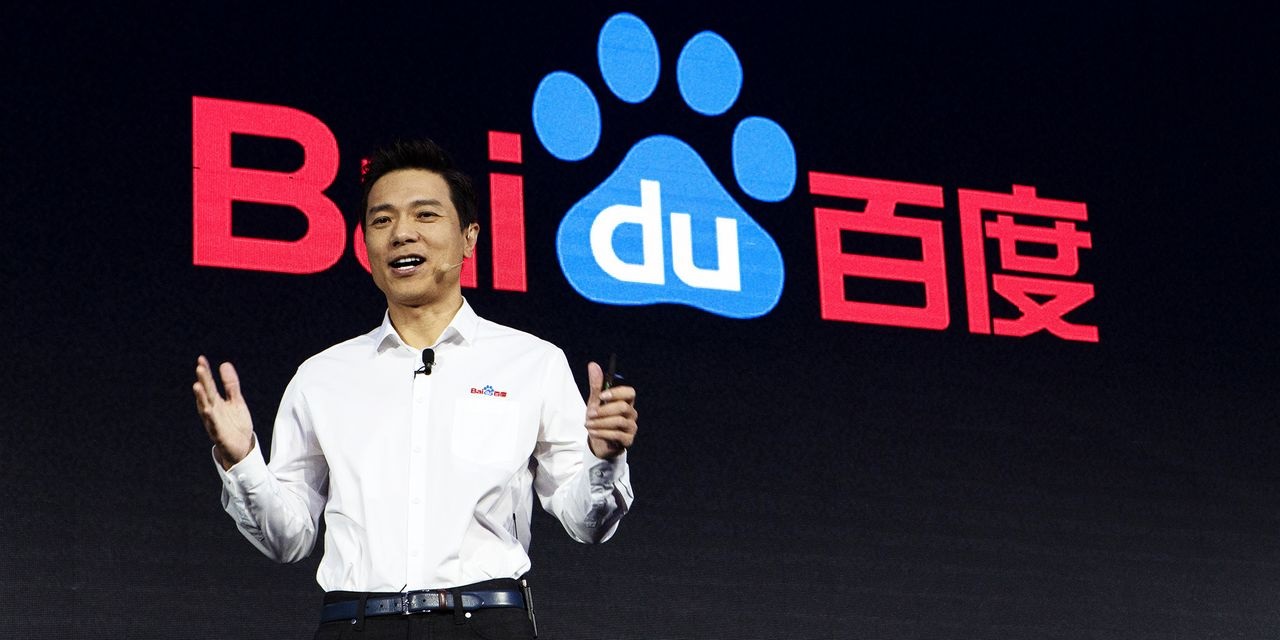
Baidu took a significant step toward AI self-reliance in China on Thursday, unveiling two new semiconductors and two supernode products designed to provide domestic companies with powerful, cost-effective computing resources.

The announcement, made at the company’s annual Baidu World technology conference, underscores Beijing’s broader push to reduce dependence on U.S. AI technology amid escalating geopolitical tensions.

The newly announced chips, the M100 and M300, are aimed at addressing distinct AI workloads. The M100, optimized for inference tasks—where trained models are used to process user queries and make predictions—is set for launch in early 2026. The M300, capable of both training large AI models and performing inference, will be released in early 2027.

Training is a computationally intensive process that teaches AI models to recognize patterns in vast datasets, while inference applies these models to real-world tasks such as language understanding, image recognition, or predictive analytics.

To further enhance performance, Baidu revealed two supernode products, which link multiple chips through advanced networking, compensating for the limitations of single-chip performance. The Tianchi 256, which integrates 256 P800 chips, is expected to become available in the first half of next year, while a larger 512-chip version will launch in the second half of 2026. Supernodes, in essence, allow for scalable, high-throughput AI processing, enabling faster training and inference across complex models.

Baidu’s supernode strategy mirrors similar developments from other Chinese technology giants. Huawei, for example, deployed the CloudMatrix 384, which comprises 384 Ascend 910C chips. Analysts note that this system outperforms Nvidia’s GB200 NVL72, one of the U.S. company’s most advanced system-level AI products. Huawei has also announced plans to release more powerful supernodes in the coming years, reflecting a growing trend among Chinese firms to build domestic alternatives to U.S.-based AI hardware.

Beyond hardware, Baidu also introduced a new iteration of its Ernie large language model, capable not only of text processing but also image and video analysis, signaling the company’s ambition to compete with leading AI platforms on multiple fronts. This advancement highlights a growing emphasis on multimodal AI capabilities, where a single model can understand and generate insights across text, visual, and audiovisual data.

Baidu has been developing proprietary chips since 2011, but the recent announcements underline an accelerated push toward domestic AI independence, particularly as U.S. restrictions on exporting advanced AI chips to Chinese firms continue. These restrictions, part of a broader strategy to maintain technological leverage, have pushed companies like Baidu to innovate internally or rely on domestic alternatives to maintain their competitive edge in AI research and deployment.

The unveiling of the M100, M300, and Tianchi supernodes represents a critical step in China’s AI infrastructure development, providing companies with powerful, low-cost, and locally controlled computing power. Baidu is believed to be positioning itself to strengthen China’s autonomy in AI technology while challenging the dominance of U.S. firms such as Nvidia in the global AI chip market by combining advanced chip design with networked supernodes and sophisticated AI models like Ernie.

Singapore Pushes Ahead with Tokenized Finance and CBDC Trials, To Regulate Stablecoins

0

Singapore’s Monetary Authority of Singapore (MAS) is accelerating its drive to establish a robust, scalable, and secure tokenized financial ecosystem, announcing plans to trial tokenized MAS bills next year and introduce legislation regulating stablecoins.

The announcement came during a keynote address at the Singapore FinTech Festival by MAS Managing Director Chia Der Jiun, who emphasized the central bank’s focus on both domestic innovation and international alignment.

“Tokenization has lifted off the ground. But have asset-backed tokens achieved escape velocity? Not yet,” Chia remarked, highlighting that while tokenization is gaining traction, full adoption of asset-backed digital financial instruments remains a work in progress.

He stressed that MAS has been refining its stablecoin regulatory framework, with draft legislation expected to be prepared soon. The emphasis will be on sound reserve backing and reliable redemption, ensuring that stablecoins can serve as trustworthy instruments for payments and settlement.

Advancing Digital Asset Trials and CBDCs

MAS is actively supporting trials under the BLOOM initiative, which explores the use of tokenized bank liabilities and regulated stablecoins for settlement. This initiative reflects MAS’s broader goal of integrating digital assets into conventional financial infrastructure, ensuring liquidity, transparency, and operational efficiency.

Chia also highlighted the successful live trial of Singapore dollar wholesale CBDC conducted by the country’s three major banks—DBS, OCBC, and UOB—in interbank overnight lending transactions.

“In the CBDC space, I am pleased to announce that the three Singapore banks, DBS, OCBC, and UOB, have successfully conducted interbank overnight lending transactions using the first live trial issuance of Singapore dollar wholesale CBDC,” he said.

A CBDC, or central bank digital currency, is a digital form of central bank money that can be used to streamline settlements, reduce transaction friction, and strengthen systemic trust.

Looking forward, MAS plans to expand trials to include tokenized MAS bills settled with CBDC, marking a significant step in bridging tokenized financial instruments with traditional capital markets operations. To further guide market participants, MAS will publish a regulatory guide on tokenized capital markets products this week, designed to provide clarity on compliance, risk management, and operational standards.

International Coordination and Cross-Border Digital Finance

Singapore’s approach to tokenized finance is not limited to domestic experimentation. MAS has announced cooperation agreements with international central banks, including the Bank of England and the Bank of Thailand, to conduct experiments aimed at enabling real-time, secure, and interoperable foreign exchange transactions across jurisdictions.

Additionally, MAS signed a memorandum of understanding with Deutsche Bundesbank to collaborate on cross-border digital asset settlement. The partnership aims to enhance market liquidity and efficiency through asset tokenization, signaling Singapore’s ambition to set global standards for the integration of digital and traditional finance.

Implications for Singapore and Global Financial Markets

Singapore’s initiatives reflect a strategic vision to position the city-state as a hub for tokenized capital markets and digital assets, while ensuring robust regulatory frameworks. MAS is aiming to create a secure and scalable ecosystem that can support innovation, improve settlement efficiency, and foster financial inclusion by combining trials of tokenized MAS bills and CBDCs with stablecoin regulation and international collaboration.

The cross-border experiments and regulatory guidance signal that Singapore is taking a proactive role in shaping global standards for tokenized finance, positioning itself as a model for central banks worldwide. The combination of domestic CBDC trials, regulatory clarity for stablecoins, and international partnerships demonstrates a comprehensive approach, blending technological innovation with risk management and legal certainty.

MAS’s efforts are also expected to accelerate the adoption of digital finance globally, offering a blueprint for central banks seeking to leverage tokenized instruments for capital markets, cross-border transactions, and payments efficiency, while ensuring that these instruments remain secure, reliable, and interoperable.