DD
MM
YYYY

PAGES

DD
MM
YYYY

spot_img

PAGES

Home Blog Page 168

National Bank of Ethiopia Crackdown on Illegal Money Transfers to Strengthen The Country’s Remittance System

0

The National Bank of Ethiopia (NBE) has commenced coordinated actions, in collaboration with relevant legal authorities, to crack down on individuals and entities involved in unlicensed foreign remittance activities.

From October, the bank began pursuing legal action against unlicensed operators while urging users to stick to officially licensed transfer firms, in efforts to ensure that remittance flows back into the country’s formal banking system.

In a press release by the NBE, it noted that this step reflects its ongoing commitment to protect the integrity of the financial system and ensure that foreign exchange inflows are managed through legitimate, transparent, and regulated channels. The bank further noted that the use of formal financial system to carry out such unauthorized activities undermines confidence in the market and poses risks to the country’s monetary stability.

Part of the statement reads,

The NBE reaffirms that these actions form part of a continued effort to address and prevent illegal remittance practices. The National Bank of Ethiopia will persist in working with relevant institutions to identify and take appropriate measures against those who attempt to misuse Ethiopia’s financial system for unlawful purposes.

At the same time, the National Bank is advancing measures to promote the formalization of remittance flows and ensure an adequate and sustainable supply of foreign currency through banks and licensed operators. These efforts aim to enhance accessibility, efficiency, and transparency in the remittance process, thereby supporting the country’s economic stability and development goals.”

To further support the public in identifying legitimate service providers, the bank has provided a full list of all duly licensed money transfer service providers authorized to operate in the country under relevant laws.

The move to stop the unlicensed foreign remittance activities in Ethiopia, comes as the National Bank of Ethiopia Governor H.E. Dr. Eyob Tekalign, who began his tenure on 19 September 2025, aims to stabilise the volatile currency and curb underground money movement which negatively impacts the country’s economy.

Ethiopia’s diaspora, estimated at over three million, remits approximately $5.6 billion annually, according to World Bank data. While remittances remain one of the country’s largest sources of foreign exchange, a significant portion of these funds bypass official banking systems, undermining efforts to stabilize the economy and strengthen foreign reserves. Most remittance to Ethiopia is sent through informal channels known as “hawala,” which means the National Bank of Ethiopia “loses” access to a vital source of foreign currency.

Studies indicate that up to 78 percent of remittances are transmitted through unofficial or informal channels. These channels often used to avoid exchange rate discrepancies or bureaucratic delays, pose a major challenge to the country’s financial stability.

A report from Ethiopian Business Review further reveals that the loss from illegal remittances could be at least twice the official figure, implying that Ethiopia may be losing over US$8 billion annuallythrough unrecorded remittance transactions. This estimation, while not officially verified, highlights the scale of capital flight and the widespread use of informal money transfer systems among members of the Ethiopian diaspora.

Beyond remittances, illicit financial flows (IFFs) more broadly also remain a critical issue. Studies by organizations such as Global Financial Integrity (GFI) estimate that Ethiopia loses between US$1.3 billion and US$3.2 billion every year through illicit outflows, including trade misinvoicing and unrecorded capital transfers. In 2009 alone, GFI reported that Ethiopia lost US$3.26 billion to such illegal financial movements.

The growing use of parallel markets for foreign currency, coupled with a widening gap between official and black-market exchange rates, has exacerbated the problem. Many Ethiopians abroad find it easier and more profitable to send money through informal brokers rather than the official banking system.

In response, the National Bank of Ethiopia, under the leadership of Governor H.E. Dr. Eyob Tekalign, has pledged to tighten regulatory oversight and incentivize the use of formal remittance channels. Experts suggest that reducing illegal remittances will require a combination of policy reforms, improved financial literacy, and stronger collaboration between the government, commercial banks, and diaspora communities.

Unless addressed, the continued leakage through informal channels threatens to deprive Ethiopia of much-needed foreign exchange, hampering economic growth and development efforts.


U.S. Nears Trade Deal With Switzerland to Cut Tariffs Imposed by President Trump

0

The United States and Switzerland are close to finalizing a trade agreement that would reduce the 39% tariffs President Donald Trump imposed on Swiss goods in August, in what could mark one of Washington’s most significant bilateral trade revisions this year.

Speaking from the Oval Office on Monday, President Trump confirmed ongoing negotiations, saying White House officials were “working on a deal to get the tariffs a little lower.”

“I haven’t set any number, but we’re going to be working on something to help Switzerland,” Trump said. “We hit Switzerland very hard. But we want Switzerland to remain successful,” he added, describing the Alpine nation as “a very good ally.”

According to reports from Bloomberg and other outlets citing sources familiar with the talks, the tariff rate could be cut to 15%, aligning with the level applied to European Union exports to the U.S. The deal, sources said, could be concluded within weeks if both sides finalize terms on a narrow set of industrial and luxury goods.

Swiss reaction and economic implications

In Bern, officials welcomed the prospect of a tariff reduction but declined to comment on specifics. “We are not commenting on the ongoing discussions,” a spokesperson for Switzerland’s Economy Ministry told CNBC. The spokesperson confirmed that Economy Minister Guy Parmelin “is in regular contact with the relevant authorities in the U.S., including USTR Jamieson Greer.”

The tariff, introduced by Trump in what he described as a move to address trade imbalances, has been deeply unpopular in Switzerland, where export-dependent sectors form the backbone of the economy. The 39% duty hit key industries including watches, jewelry, precision machinery, chocolate, electronics, and pharmaceuticals — many of which rely heavily on the U.S. market.

On Tuesday, shares of major Swiss firms Swatch Group and Richemont — two of the world’s largest luxury watchmakers — rose in early trading, buoyed by expectations of a partial rollback.

Industry executives have been vocal about the tariffs’ toll. The CEO of Breitling, one of Switzerland’s leading watch brands, told CNBC earlier this year that the duty was “horrible” for the sector and risked making high-end Swiss goods less competitive globally.

The Swiss tariffs were among the steepest levied under Trump’s sweeping tariff agenda this year, which has targeted multiple countries as part of his broader campaign to reduce U.S. trade deficits.

The Office of the U.S. Trade Representative (USTR) reported a $38.5 billion goods trade deficit with Switzerland last year. However, Swiss authorities pushed back on the notion of imbalance, arguing that the overall trade relationship is relatively even when services are included.

“The U.S. has a surplus of services exports and Switzerland does for goods exports,” the Swiss government said in August. It added that Switzerland’s trade surplus “is not rooted in unfair trade practices” and that over 99% of U.S. goods are imported into the country without tariffs.

Switzerland, though small, is a major investor in the U.S., particularly in pharmaceuticals and finance. American companies such as Johnson & Johnson, Microsoft, and Google also maintain large operations in Switzerland due to its favorable tax and regulatory environment.

A pragmatic recalibration

Analysts see the potential tariff cut as part of Trump’s ongoing recalibration of his “America First” trade policy. After years of using tariffs as leverage in trade disputes, the administration has shown a willingness to renegotiate when domestic industry or allied relations are at stake.

The new trade terms, if finalized, are expected to stabilize transatlantic relations that have been strained by recent tariff actions, while easing pressure on Swiss manufacturers facing declining margins and disrupted supply chains.

For Trump, the timing may also be politically significant. A new trade deal that boosts American access to European markets without compromising his hardline image on trade could be presented as both a policy win and a gesture of goodwill toward a long-standing ally.

While negotiations are still underway, voices in Washington suggest an announcement could come before the end of the month.

Meta’s Top AI Scientist Yann LeCun to Exit Company, Plans New Startup Amid Zuckerberg’s Expanding AI Push

0

Meta’s Chief Artificial Intelligence Scientist, Yann LeCun, is planning to leave the social media giant to start his own company, according to the Financial Times, which cited people familiar with the matter.

The deep-learning pioneer is reportedly in early talks to raise funds for his new venture, marking the likely end of a decade-long tenure at the heart of Meta’s AI evolution.

LeCun’s departure comes at a pivotal time for Meta Platforms, the parent company of Facebook and Instagram, which has dramatically intensified its investments in artificial intelligence. CEO Mark Zuckerberg recently restructured the company’s AI operations under a new division known as Superintelligence Labs. This move underscores Meta’s growing ambitions to rival OpenAI, Google DeepMind, and Anthropic in the race toward artificial general intelligence (AGI).

As part of this overhaul, Zuckerberg recruited Alexandr Wang, the former CEO of data-labeling startup Scale AI, to lead the new AI initiative. The shake-up shifted reporting lines within Meta’s AI leadership, with LeCun — who previously reported to Chief Product Officer Chris Cox — now reporting directly to Wang. The change reportedly signaled a major organizational realignment, aimed at accelerating Meta’s efforts to integrate AI across its platforms and hardware ecosystem.

Zuckerberg has spent resources building Meta’s artificial intelligence empire, pouring billions of dollars into AI infrastructure and research. The company pledged to invest $600 billion in the U.S. over the next three years to support data centers and computing systems capable of running large-scale AI models. That spending spree has been matched with aggressive recruitment of top AI talent globally — a strategy that helped establish Meta’s Facebook Artificial Intelligence Research (FAIR) unit, which LeCun founded in 2013.

LeCun, who also serves as a Silver Professor at New York University, is renowned for pioneering deep learning and inventing the convolutional neural network (CNN) — technology that underpins much of today’s image, video, and speech recognition systems. Alongside Geoffrey Hinton and Yoshua Bengio, he received the 2018 ACM A.M. Turing Award, often described as the “Nobel Prize of Computing,” for his contributions to the field.

His exit, however, is expected to leave a recruitment gap within Meta’s AI leadership, as the company continues to compete for scarce global expertise in machine learning and neural systems. Some suggest that replacing a figure of LeCun’s stature will not be easy, particularly as Meta faces increasing pressure to close the technological gap with OpenAI’s GPT models and Google’s Gemini systems.

LeCun has long been known for his skepticism toward large language models as the ultimate path to superintelligence, often arguing for more biologically inspired and energy-efficient approaches. His departure could therefore mark a philosophical turning point for Meta’s AI strategy — away from his theoretical orientation and further toward applied generative systems favored by Zuckerberg’s new AI leadership team.

LeCun’s planned startup reportedly aims to explore “alternative foundations” for building general intelligence, though no specific details have yet been made public. If realized, the move could signal a new wave of independent AI ventures led by the original pioneers of deep learning — a trend already evident in Geoffrey Hinton’s exit from Google last year.

As Meta ramps up spending and research to dominate the next era of computing, the loss of LeCun’s vision may reshape the company’s AI culture.

Bitcoin Faces Stiff Resistance as Market Momentum Weakens

0

Bitcoin’s recent recovery continues to face strong headwinds after slipping below the $100,000 mark earlier this month.

The world’s largest cryptocurrency briefly climbed above $107,000 at the start of the week but fell back below $104,000 on Tuesday, signaling what Bloomberg described as “fragile sentiment” in the market. BTC is currently trading at $103,190, at the time of writing this report, as the crypto asset seeks to gather momentum.

Reports reveal that since October 10, 2025, approximately $340 billion in market value has been wiped out amid a wave of liquidations. Analysts note that Bitcoin’s inability to break above its 200-day moving average around $110,000 has limited the potential for a sustained uptrend.

The rejection around the $107,000 to $108,000 range highlights persistent selling pressure, with momentum cooling and traders now watching key support levels at $104,000 and $100,000. These zones could determine whether the asset consolidates or undergoes a deeper correction toward $90,000 to $93,000.

Market analysts describe the current movement as a classic rejection pattern, where strong resistance meets fading bullish volume. For Bitcoin to stage a meaningful recovery, renewed ETF inflows, easing macroeconomic headwinds, and reduced long-term holder selling above the $100,000 threshold are seen as essential catalysts.

From a technical perspective, failure to maintain support at $104,000 could trigger a broader retracement. Conversely, a rebound from this level may signal renewed accumulation before a potential upward move.

Bullish Outlook

For buyers to regain control, analysts emphasize that defending the $101,275 support level is critical. A successful push above the $110,300 resistance, where both the 50-day and 200-day moving averages converge would help reestablish bullish momentum. Breaking this resistance could pave the way for a rally toward $116,025, with a further breakout potentially propelling Bitcoin toward its all-time high near $124,725. Sustained momentum beyond that level could set the stage for a move toward new highs around $132,000.

Bearish Outlook

Despite recent outflows, Bitcoin’s resilience has been partially supported by strategic accumulation from crypto whales, who continue to buy during downturns, reflecting long-term confidence in the asset’s value. However, on-chain data shows a steady decline in active addresses since early 2025, indicating waning retail participation. This divergence between price performance and network activity suggests that the current rally lacks broad user engagement, raising concerns about its sustainability.

While Bitcoin remains about 20% below its all-time high of $126,000 reached in October, the market is currently characterized by uncertainty and heightened selling pressure. The cryptocurrency is now consolidating slightly above the $100,000 level, as investors weigh whether a deeper correction is imminent.

Crypto analyst Ali Martinez recently predicted that Bitcoin might find its next market bottom around October 2026, with potential declines of 51% to $50,000 or even 63% to $38,000 in a more severe downturn. Martinez based his outlook on historical cycle patterns, noting that previous bull runs, 2015–2017 and 2018–2021, each lasted 1,064 days from the bear market bottom to the bull market peak.

The current cycle, which began in November 2022 and peaked at $126,220, has now reached roughly 1,082 days, suggesting that Bitcoin may already have topped for this phase. While Martinez cautioned that historical patterns do not guarantee outcomes, he believes the market may be entering the early stages of a post-peak retracement—a cooling phase after an overheated bull run.

Future Outlook

Bitcoin’s near-term outlook remains finely balanced between cautious optimism and potential downside risk. However, much depends on broader market conditions. Persistent macroeconomic uncertainty, such as interest rate decisions, U.S. dollar strength, and global liquidity, continues to weigh heavily on risk assets, including cryptocurrencies.

From a longer-term perspective, analysts remain divided. While some warn that the current cycle may have already peaked and could enter a prolonged retracement phase through 2026, others see the ongoing consolidation as a healthy correction within a broader bull market. In essence, Bitcoin stands at a pivotal juncture. The coming weeks will determine whether it stabilizes above key support levels to prepare for another leg higher or slips further into a deeper correction phase.

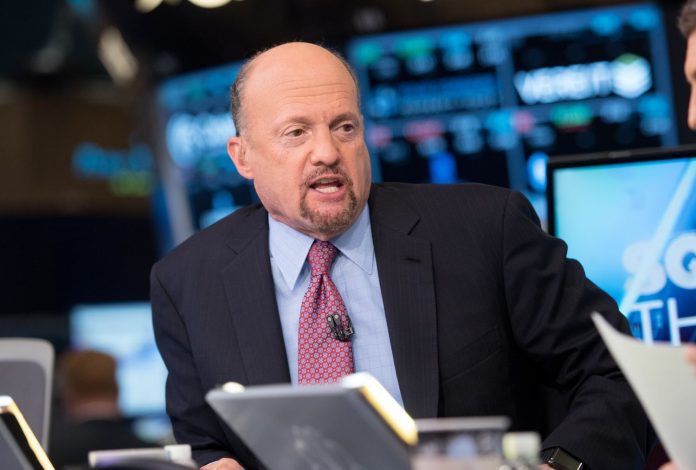
Jim Cramer Warns of Risks in AI Boom, Urges Caution on OpenAI Spending

0

CNBC host Jim Cramer raised fresh warnings about the artificial intelligence sector on Monday, suggesting that some companies may start to underperform after months of easy gains, with OpenAI at the center of concern.

Cramer highlighted the enormous infrastructure commitments OpenAI has undertaken and questioned the company’s ability to finance the billions of dollars it has pledged to spend.

“In this kind of environment, you need to start diversifying into other growth areas, perhaps in time to keep all the king’s horses and all the king’s men sidelined,” Cramer said. “Maybe OpenAI can come public and Humpty-Dumpty won’t have a great fall, but in the meantime, it’s something you need to keep an eye on.”

OpenAI has signed deals with numerous technology companies, cumulatively worth hundreds of billions of dollars, creating potential exposure across the industry. Cramer warned that if OpenAI were forced to borrow money to meet its commitments, the situation could become riskier. He noted that while the AI buildout so far has largely been fueled by cash rather than debt, reliance on borrowing could leave companies vulnerable, particularly in a market that is increasingly scrutinizing valuations and profitability.

Cramer also cited comments from OpenAI CFO Sarah Friar, who recently floated the idea of using government support to fulfill the company’s spending obligations. While Friar later clarified that OpenAI is not currently seeking government funding, the initial suggestion spooked some investors and added to sector concerns.

Drawing historical parallels, Cramer likened the current rush of AI investment to the U.S. railroad boom of the 19th century, when companies borrowed heavily and many ultimately failed.

“I’m not suggesting OpenAI will end up bankrupt, but I wish these guys would just slow down,” he said, highlighting the risk that problems at a central player like OpenAI could ripple across the broader AI ecosystem.

To mitigate potential risks, Cramer recommended that OpenAI consider going public through an IPO, which could raise billions and provide greater transparency into its finances. He also encouraged the sector to shift focus toward profitability: “I’m proclaiming that for the rest of the year it’s the era of investing not as if by magic, but as if by profits,” he said, cautioning that the next phase of AI investing would likely produce far fewer winners and a lot more losers.

Cramer added that he hopes investors will see returns “from the miners and not just from those who make the Nvidia picks and the AMD shovels,” underscoring a need for real earnings rather than speculative gains tied to the AI hype.

The warning comes as AI companies, including OpenAI and chip suppliers like AMD and Nvidia, continue to see extraordinary demand for computing infrastructure. Against this backdrop, these companies are racing to expand their AI infrastructure to contain the demand.

OpenAI’s rapid growth has been supported by massive infrastructure investments across the AI ecosystem. The company is investing tens of billions of dollars in cloud computing, servers, and AI accelerators, partnering with multiple providers, including Microsoft Azure, Nvidia, and chipmakers like AMD.

OpenAI’s Azure partnership is central to scaling ChatGPT and GPT-4 services, with Microsoft reportedly committing over $10 billion in cloud credits and infrastructure resources.

In addition to AMD, OpenAI has acquired hardware and AI acceleration capacity from Nvidia, leveraging H100 GPUs for generative AI workloads.

OpenAI has invested in and contracted other startups and smaller firms providing AI-specific software tools and high-performance computing solutions, reinforcing its reliance on a broad ecosystem.

Collectively, these investments have positioned OpenAI at the center of the AI infrastructure market but also exposed it to substantial financial and operational risk given the scale of its commitments.

While the sector’s growth story remains compelling, Cramer believes that investor caution may be warranted as the pace of spending accelerates and exposure to debt increases.