DD
MM
YYYY

PAGES

DD
MM
YYYY

spot_img

PAGES

Home Blog Page 1683

5 Top New Meme Coins to Join This Week: Explore BTFD’s $4K-to-$150K Forecasts or Invest in $OSAK and $APU

0

Meme coins have turned into the wildcards of crypto, delivering everything from jaw-dropping gains to thriving online communities. Whether it’s nostalgia-fueled mascots or full-fledged utility tokens, these projects are keeping the digital space buzzing. But with so many to choose from, which ones should be on your radar this week?

One coin that’s been shaking up the market is BTFD Coin, whose presale is in its final stages. With over $6.32 million raised and more than 71 billion coins sold, the FOMO is real. Investors are racing to grab their share before the price potentially skyrockets to $0.006 after an initial listing surge to $0.0006.

And with a Play-to-Earn (P2E) game leading the charge, this project has more than just meme power fueling its momentum.

Dive into the top new meme coins to join this week and see why each one is making waves.

1. BTFD Coin – The Meme Coin With a P2E Powerhouse

BTFD Coin isn’t just another hyped-up token; it’s a full-fledged movement. With its P2E game delivering a rewarding gaming experience, this project isn’t just about buying and holding—it’s about playing and earning. Gamers can battle through four immersive levels, collect in-game coins, and swap them for BTFD tokens, making it a utility-driven meme coin that stands out.

Beyond its gaming perks, BTFD Coin boasts an engaged community known as the Bulls Squad, featuring personalities like Raging Bull and Baby Bull. The staking rewards sweeten the deal further, with a high APY, but the current highlight remains its potential for explosive gains. With its presale in Stage 14 and nearly sold out, those who get in now at $0.00016 could see their investments surge if the price hits $0.006.

If someone invests $4,000 now, they’d get 25 million BTFD Coins. At a projected $0.0006, that’s worth $15,000. And if the dream scenario of $0.006 happens? That turns into a life-changing $150,000.

Why this meme coin made it to this list: BTFD Coin is offering one of the most exciting P2E ecosystems in the meme coin space while providing massive ROI potential. Its combination of gaming, staking, and a passionate community makes it a must-watch among the top new meme coins to join this week.

2. Osaka Protocol – The DeFi-Driven Meme Token

Osaka Protocol ($OSAK) fuses meme culture with decentralized finance (DeFi) to create a token that aims to be more than just an internet joke. It features a DAO-driven structure that lets the community guide its development. With a liquidity lock in place and active governance, this meme coin is attracting both investors and DeFi enthusiasts alike.

Why this meme coin made it to this list: Osaka Protocol blends the fun of meme coins with DeFi utility, offering real-world use cases while still embracing internet culture.

3. Apu Apustaja – The Internet’s Favorite Frog Rises

Inspired by the classic Apu Apustaja meme, this token is a tribute to internet culture with a dedicated community backing it. With a limited token supply and a meme-driven marketing strategy, it has been gaining traction fast.

Why this meme coin made it to this list: Apu Apustaja is riding the wave of meme coin popularity with an engaged fanbase, limited supply, and nostalgic appeal.

4. Snek – The Cardano Meme King

Snek ($SNEK) has taken the Cardano community by storm, offering a fair-launched, community-focused token with impressive engagement. With a dedicated roadmap and continuous token burns, it has cemented its place in the meme coin ecosystem.

Why this meme coin made it to this list: Snek brings meme culture to Cardano while maintaining an active burn mechanism and a strong community presence.

5. Cheems – The OG Doge Cousin with a Twist

Cheems capitalizes on the beloved Shiba Inu meme but with its twist. Offering staking rewards and community governance, it’s more than just a meme coin—it’s a project with long-term ambitions.

Why this meme coin made it to this list: Cheems merges meme nostalgia with staking and governance, making it a compelling option for meme coin enthusiasts.

Final Thoughts: Get in on the Top New Meme Coins to Join This Week Before the Next Big Pump

The world of meme coins is evolving, and these five projects are some of the top new meme coins to join this week. From BTFD Coin’s high-stakes P2E gaming to Osaka Protocol’s DeFi appeal, each of these tokens brings something unique to the table.

If you’re looking to capitalize on the next big wave, getting in now could be the move that sets you up for major gains.

Don’t miss out on BTFD Coin’s final presale stages—sign up now and secure your tokens before the price jumps!

Find Out More:

Website: https://www.btfd.io/

X/Twitter: https://x.com/BTFD_COIN

Telegram: https://t.me/btfd_coin


FAQs

1. What makes BTFD Coin different from other meme coins?

BTFD Coin features a Play-to-Earn game that allows players to earn tokens while gaming, alongside staking rewards and a strong community presence.

2. Which meme coin has the most potential for gains?

BTFD Coin shows high potential due to its presale price and predictions of a surge up to $0.006, but all meme coins listed have their unique value.

3. How do I join a meme coin presale?

Each project has its presale process, usually accessible via its official website. BTFD Coin’s presale can be joined directly through its platform before it sells out.

Trading on ETH/BTC Pair Declines to Levels Not Seen Since 2021

0

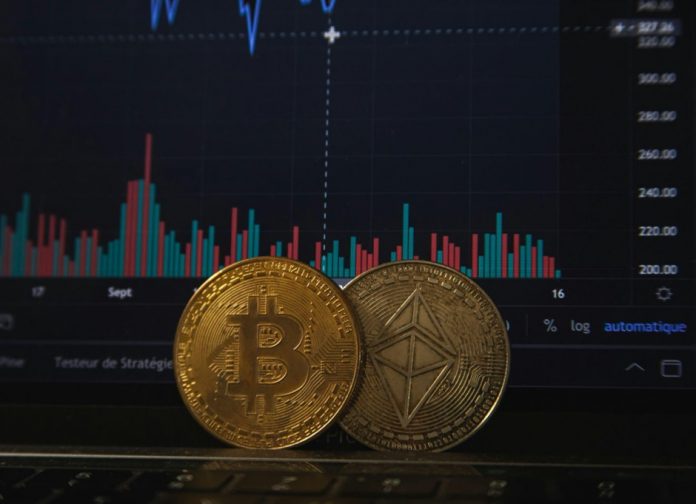
The ETH/BTC trading pair has recently experienced a significant decline, reaching levels not seen since January 2021. This drop reflects Ethereum (ETH) underperforming Bitcoin (BTC) in terms of price, with the ratio indicating how many Bitcoin are needed to purchase one Ethereum. Several factors may be contributing to this trend, including Bitcoin’s stronger institutional adoption, such as interest in Bitcoin spot ETFs, and macroeconomic pressures affecting risk-on assets like Ethereum.

Additionally, Ethereum has faced challenges such as increased competition from other layer-1 blockchains and weaker network activity, as evidenced by declining transaction volumes and new address growth. While historical patterns suggest potential for a rebound, as seen in past cycles, the current market sentiment and technical indicators point to continued downward pressure on the ETH/BTC pair in the near term. In times of economic uncertainty, investors tend to move capital toward safer assets.

Bitcoin, often referred to as “digital gold,” is perceived as a store of value and a hedge against inflation, making it more resilient compared to Ethereum, which is tied to decentralized finance (DeFi), non-fungible tokens (NFTs), and other riskier ecosystems. Rising interest rates, inflation concerns, and geopolitical tensions (e.g., U.S.-China relations, energy crises) have driven risk-off sentiment, disproportionately affecting Ethereum’s price compared to Bitcoin. A shift to a risk-on environment, such as lower interest rates or economic stabilization, could favor altcoins like Ethereum over Bitcoin.

Tightening monetary policy, such as interest rate hikes, reduces liquidity in financial markets, impacting speculative investments like cryptocurrencies. Ethereum, due to its association with high-risk sectors like DeFi and NFTs, tends to suffer more than Bitcoin during such periods. Institutional investors have shown a stronger preference for Bitcoin over Ethereum. For example, the approval and growing interest in Bitcoin spot exchange-traded funds (ETFs) in various jurisdictions have boosted Bitcoin’s adoption as a mainstream asset, while Ethereum-based financial products have seen less enthusiasm.

The internal dynamics of the cryptocurrency market, including network activity, competition, and ecosystem developments, also play a critical role in the ETH/BTC Ethereum has experienced declining network metrics, such as transaction volumes, gas fees, and the number of new addresses created. These metrics are often used as indicators of network demand and user adoption. Lower activity in DeFi and NFTs, two major use cases for Ethereum, has reduced demand for ETH, weakening its performance relative to Bitcoin. For example, the NFT market, which peaked in 2021, has cooled significantly, reducing Ethereum’s utility in this sector.

Bitcoin dominance, which measures Bitcoin’s share of the total cryptocurrency market capitalization, tends to rise during bear markets or periods of uncertainty. This is because investors often “flight to safety” within crypto by holding Bitcoin rather than altcoins like Ethereum. A rising Bitcoin dominance naturally depresses the ETH/BTC pair, as capital flows out of Ethereum and into Bitcoin. Post-Merge, Ethereum’s staking mechanism has locked up a significant portion of ETH supply, reducing liquid supply on the market. While this could theoretically support ETH’s price, the anticipated deflationary pressure (from burning transaction fees via EIP-1559) has been weaker than expected due to low network activity.

The ETH/BTC pair has broken through key support levels, such as the 0.05 BTC mark, and is now testing multi-year lows. These breaches often trigger further selling pressure as stop-loss orders are executed and bearish sentiment grows.
Historically, the ETH/BTC pair has found support around 0.04 BTC in past bear markets, but a failure to hold this level could lead to further declines. Relative the ETH/BTC pair’s RSI on higher timeframes (e.g., weekly) has shown oversold conditions, which could indicate a potential reversal. However, oversold conditions can persist in strong downtrends, and without a fundamental catalyst, a rebound may be delayed.

While the current market factors are bearish for the ETH/BTC pair, certain developments could reverse the trend. Successful adoption of layer-2 scaling solutions (e.g., Arbitrum, Optimism) or the implementation of sharding (part of Ethereum’s long-term roadmap) could boost Ethereum’s network activity and competitiveness, driving demand for ETH. A resurgence in DeFi and NFT activity, potentially triggered by a broader crypto bull market or new use cases, could reignite interest in Ethereum. Positive regulatory developments, such as clear guidelines that do not classify ETH as a security, could boost investor confidence in Ethereum.

The ETH/BTC pair’s decline to multi-year lows reflects a confluence of macroeconomic pressures, crypto-specific challenges, technical bearishness, and negative market sentiment. Bitcoin’s dominance as a “safe haven” within the crypto space, combined with Ethereum’s struggles in network activity and competition, has driven this underperformance. While historical patterns suggest potential for a rebound, particularly during crypto bull markets, the near-term outlook remains bearish unless significant catalysts emerge to shift market dynamics in Ethereum’s favor.

Tekedia Blockchain Weekly Round-Up

0

Recent reports have circulated regarding alleged discussions between representatives of the Trump family and Binance, specifically concerning a potential financial stake in Binance.US, the American arm of the cryptocurrency exchange. These rumors suggested that Binance had approached allies of the Trump family as part of a broader strategy to re-enter the U.S. market following regulatory challenges. It was also speculated that Changpeng Zhao (CZ), Binance’s billionaire founder and former CEO, might have been seeking a presidential pardon in connection with these talks, following his legal troubles in the U.S.

CZ publicly denied any involvement in such discussions, stating on social media that he had not engaged in talks about a Binance.US deal with anyone, including the Trump family. He further criticized the reports as inaccurate and suggested they might be motivated by broader agendas, such as discrediting cryptocurrency or political figures. While the rumors raised concerns about potential conflicts of interest, especially given the Trump family’s growing involvement in the crypto industry, there is no confirmed evidence at this time to substantiate the claims of a deal or CZ’s direct involvement.

On Tuesday, March 11, 2025, Argentine lawyer Gregorio Dalbo?n formally requested an Interpol Red Notice for the arrest and extradition of Hayden Davis, an American citizen and co-creator of the LIBRA cryptocurrency token. This request was submitted to prosecutor Eduardo Taiano and Judge Mari?a Servini, who are investigating the collapse of the memecoin, which resulted in investor losses estimated at $251 million.

Dalbo?n argued that Davis poses a significant flight risk due to his financial resources and foreign residency, potentially enabling him to evade justice. The LIBRA token, which was promoted by Argentine President Javier Milei, rapidly rose to a peak market capitalization of over $4 billion before crashing by more than 90%, prompting allegations of fraud, market manipulation, and a pump-and-dump scheme. If approved, the Interpol Red Notice would alert law enforcement agencies in 195 member countries to locate and provisionally arrest Davis pending extradition

Pudgy Penguins has partnered with Helio and Shopify to enable payments using its native cryptocurrency, $PENGU, marking a significant step in expanding the utility of its ecosystem token. This integration allows $PENGU to be used as a payment method not only on the official Pudgy Penguins store but also across thousands of Shopify stores that utilize Shopify Pay, facilitated by Helio, a Web3 payments platform.

On March 13, 2025, Ripple, a leading blockchain payment provider, secured full regulatory approval from the Dubai Financial Services Authority (DFSA) to offer cryptocurrency payment services in the United Arab Emirates (UAE). This approval marks a significant milestone for Ripple, as it becomes the first blockchain-enabled payments provider licensed to operate within the Dubai International Financial Centre (DIFC), a free economic zone in the UAE with its own regulatory and tax framework.

DeFi Dungeons has released the tokenomics for its $GOLD token in preparation for its upcoming Token Generation Event (TGE), scheduled for Wednesday, March 19, 2025. The $GOLD token is described as the core currency of the in-game economy for DeFi Dungeons, a blockchain-based game that integrates decentralized finance (DeFi) mechanics, allowing players to earn and trade cryptocurrency within the game. The token is intended for in-game activities, such as staking rewards, and is positioned as a collectible rather than an investment product, with disclaimers emphasizing its volatility and lack of investment value.

The future of Solana’s tokenomics is a critical topic for the network’s long-term sustainability, competitiveness, and value proposition within the broader cryptocurrency ecosystem. The rejection of SIMD-0228, which aimed to reduce Solana’s inflation rate, has sparked significant debate and highlighted the need for a balanced approach to token economics that supports network security, decentralization, and economic incentives. Below is a detailed analysis of Solana’s current tokenomics, challenges, potential future directions, and broader implications.

Abu Dhabi’s state-backed investment firm, MGX, recently made a $2 billion investment in Binance, marking it as the largest single investment in a cryptocurrency company to date. This deal also stands out as the largest investment ever paid in cryptocurrency, specifically using stablecoins, though the exact stablecoin used was not disclosed. This move represents Binance’s first institutional investment and highlights MGX’s entry into the cryptocurrency and blockchain sectors, aligning with its broader focus on advanced technologies like AI. The investment underscores the UAE’s ambition to become a global hub for digital assets, with Binance already employing a significant portion of its workforce in the region.

Russia has increasingly utilized cryptocurrencies to facilitate its oil trade with India as a means to bypass Western sanctions. This involves converting payments in Indian rupees into cryptocurrencies such as Bitcoin, Ethereum, and Tether stablecoins, which are then transferred through multiple accounts before being exchanged for Russian rubles. While this method currently accounts for only a small portion of Russia’s oil trade, its use is growing as a workaround to avoid reliance on traditional banking systems and the U.S. dollar. This strategy aligns with similar approaches taken by other sanctioned countries and reflects Russia’s broader efforts to adapt to financial restrictions.

On Friday, March 14, 2025, U.S. Representative Byron Donalds introduced legislation aimed at codifying the executive order signed by President Trump earlier that month, which established a national Strategic Bitcoin Reserve and a U.S. Digital Asset Stockpile. The primary goal of this bill is to prevent future administrations from reversing the executive order, thereby ensuring the continuity of the U.S. government’s cryptocurrency policy. The proposed legislation seeks to solidify the United States’ position as a leader in digital financial strategy by permanently embedding the Strategic Bitcoin Reserve into law. This move is seen as a response to the growing importance of digital assets in the global economy and aims to protect the reserve from potential policy shifts under future administrations.

VanEck Files for Both Avalanche and Solana ETFs with SEC

0

VanEck has indeed taken steps toward launching exchange-traded funds (ETFs) for both Avalanche (AVAX) and Solana (SOL). The asset management firm registered a trust company for an Avalanche ETF in Delaware, signaling potential plans for a spot AVAX ETF, and has also filed for a spot Solana ETF with the U.S. Securities and Exchange Commission (SEC). These moves are part of VanEck’s broader strategy to expand its cryptocurrency investment offerings, following its earlier registrations for Bitcoin and Ethereum ETFs. VanEck’s filings, as a major asset manager with a history of successful crypto ETF launches (e.g., Bitcoin and Ethereum), lend credibility to AVAX and SOL. This could position Avalanche and Solana as leading Layer 1 blockchain.

ETF filings signal growing institutional interest in alternative cryptocurrencies (altcoins) beyond Bitcoin (BTC) and Ethereum (ETH). If approved, these ETFs would provide a regulated, accessible vehicle for institutional investors—such as hedge funds, pension funds, and asset managers—to gain exposure to AVAX and SOL without directly holding the assets. This could lead to significant capital inflows, similar to the $14.4 billion in net inflows seen by U.S. spot Bitcoin ETFs since their launch in January 2024.

Historically, ETF filings have acted as catalysts for price surges in cryptocurrencies, as seen with SOL’s 8% increase following VanEck’s Solana ETF filing in June 2024. While AVAX experienced a price drop post-filing, possibly due to broader market conditions, approval of these ETFs could drive significant price appreciation for both tokens, especially if institutional inflows materialize. Some analysts predict SOL could reach $520 by the end of 2025, driven by ETF-related demand and ecosystem growth, while AVAX could see upside potential to $25 or higher if market sentiment improves.

ETF filings can also increase short-term volatility, as speculative traders react to news and regulatory updates. For instance, AVAX’s price fell over 10% after its ETF filing, reflecting broader market downturns, while SOL has shown resilience, surging past $260 in late 2024. Investors should remain cautious of potential selloffs if regulatory hurdles delay or derail approvals. The SEC’s approval of Bitcoin and Ethereum ETFs has set a precedent, but altcoin ETFs face additional scrutiny. The SEC has previously labeled SOL as an unregistered security in lawsuits against Coinbase and Binance, which could complicate its ETF approval process.

VanEck’s filing argues that SOL should be treated as a commodity, similar to BTC and ETH, but regulatory clarity remains uncertain. AVAX, while not explicitly named in similar lawsuits, may also face challenges due to its classification and the lack of a regulated U.S.-based futures market, a criterion the SEC has historically emphasized for ETF approvals. The prospects for approval may improve under a more crypto-friendly administration, such as the incoming Trump administration in 2025, which has signaled a receptive stance toward cryptocurrencies. However, ongoing litigation and regulatory uncertainties could delay approvals, potentially requiring issuers to withdraw and refile applications.

ETF approvals could accelerate adoption of Avalanche and Solana by legitimizing their platforms in the eyes of traditional finance. Avalanche, known for its high-performance blockchain and partnerships with institutions like JPMorgan and Mastercard, could see increased use in asset tokenization and digital payments. Solana, with its low-cost, high-speed transactions, could further solidify its dominance in decentralized finance (DeFi) and non-fungible token (NFT) markets, especially as its decentralized exchange (DEX) volumes reached $41.2 billion in a single week in late 2024.

Increased institutional interest could attract more developers and users to these ecosystems, driving innovation and network growth. For Solana, this aligns with its growing developer community and high user activity, while Avalanche’s interoperable subnets could gain traction for enterprise applications. The filings highlight the intensifying competition among Layer 1 blockchains, with Avalanche and Solana vying for market share against Ethereum, Cardano, and others. If approved, these ETFs could position AVAX and SOL as top contenders, potentially drawing capital away from other altcoins. However, the race for ETF approvals is crowded, with filings for XRP, Litecoin, Dogecoin, and SUI also underway, which could dilute investor focus.

Nigeria’s Total Trade Exports Surged To $50.4bn In 2024, Driven By FX Rate Depreciation And Fuel Subsidies Removal

0

Nigeria’s foreign trade saw a remarkable turnaround in 2024, with total exports surging to $50.4 billion—an increase largely attributed to the naira’s sharp depreciation and the elimination of fuel subsidies.

The latest data from the National Bureau of Statistics (NBS) reveals that total trade volume reached a record-breaking N138 trillion, marking a staggering 106% rise compared to the previous year. When adjusted for exchange rates, this translates to $89.9 billion in dollar terms, reflecting a 22.1% growth.

This resurgence follows a period of contraction in 2023 when the shift to a market-driven exchange rate caused a 35% decline in total trade. However, businesses appear to have adapted to the new economic reality, with trade rebounding sharply in 2024. Looking further back, Nigeria’s peak trade volume in the last five years occurred in 2022, when total trade was recorded at $113.8 billion. At the time, the official exchange rate was N460 to the dollar, but with the parallel market rate at N736 per dollar, a recalculated trade volume would have stood at just $71.7 billion.

The transition to a flexible exchange rate system in 2023 triggered more than a steep 50% naira devaluation, significantly altering Nigeria’s trade dynamics. This depreciation made exports more competitive, while imports became costlier, contributing to a significant increase in export earnings. Yet, beneath these impressive figures lies the fundamental reality that Nigeria’s economy remains heavily dependent on crude oil.

In 2024, total exports nearly doubled, rising by 96.3% to N60.59 trillion. The primary driver was crude oil production, which reached 1.5 million barrels per day. In dollar terms, total exports stood at $50.5 billion—an improvement from $39.6 billion in 2023 but still lower than the $58.2 billion recorded in 2022. When using the parallel market rate for analysis, 2024 emerges as the most lucrative year for Nigeria’s export earnings.

Crude oil exports alone accounted for $36 billion (N55.2 trillion) in 2024, making up about 71% of total exports. This represents an increase from $31 billion in 2023 but remains below the $45.8 billion recorded in 2022. The oil sector continues to be the backbone of Nigeria’s economy, financing government spending and supporting foreign exchange reserves. However, the industry remains plagued by persistent challenges, including large-scale crude oil theft, underinvestment in upstream production, and environmental conflicts that have disrupted output. Despite government interventions, Nigeria has yet to meet its ambitious production target of 2 million barrels per day.

Beyond crude oil, non-oil exports saw a resurgence, reaching $5.9 billion in 2024—the highest level since 2020 in both naira and dollar terms. These exports, largely comprising agricultural and mineral products, have been bolstered by increased regional trade within Africa. However, their contribution remains marginal compared to oil.

Meanwhile, imports continued their upward trend. In dollar terms, total imports amounted to $39 billion (N60.5 trillion) in 2024, based on an official exchange rate of N1,535 per dollar. This is an increase from $34 billion in 2023 but significantly lower than the $55.6 billion recorded in 2022. The persistent decline in imports over the past few years is tied to naira depreciation, which has made foreign goods more expensive and restricted businesses’ access to foreign exchange for imports.

Despite the impressive foreign trade figures, Nigeria’s trade data does not account for services, which form a significant portion of foreign exchange outflows. The country spends heavily on imported services, particularly in technology, consulting, and technical support. These transactions exert additional pressure on the exchange rate, contributing to continued volatility in the forex market.

Nonetheless, the latest figures from the Central Bank of Nigeria (CBN) suggest that the country’s external accounts are stabilizing. Nigeria recorded a current account balance of $5.14 billion in the third quarter of 2024, signaling a tentative improvement despite ongoing forex-related challenges.

While the sharp rise in total trade offers a promising outlook, the sustainability of this growth is said to depend much on addressing the structural weaknesses in Nigeria’s trade composition. Economists have noted that without reducing overreliance on oil exports and strengthening local production to curb import dependency, the economy remains vulnerable to external shocks—especially fluctuations in global crude oil prices and exchange rate volatility. The government’s challenge now is to build on this momentum by fostering a diversified trade strategy that strengthens non-oil exports and mitigates forex pressures.