DD
MM
YYYY

PAGES

DD
MM
YYYY

spot_img

PAGES

Home Blog Page 1687

Solana’s Bullish Momentum Strengthens & BNB Secures $600—BlockDAG Launches New Ambassador Program

0

The crypto market is bustling with activity, offering significant opportunities for savvy traders. Solana’s bullish momentum is on an upward trend, with expectations of its price potentially hitting $213. Concurrently, Binance Coin (BNB) price prediction is at a critical juncture, holding essential support around the $600 mark, sparking discussions about its potential to maintain this level or risk a drop to $550.

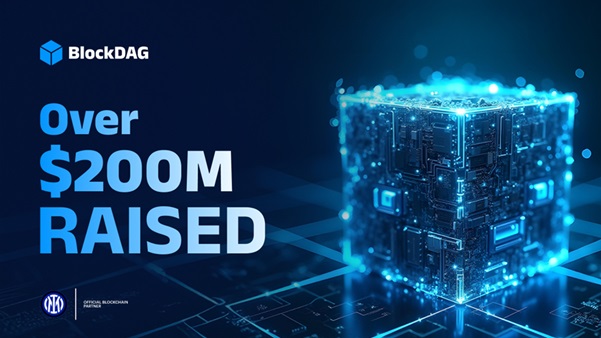
BlockDAG (BDAG) is drawing attention as a notable breakout crypto project, having secured over $202.8 million in its presale and delivering a 2,380% ROI to early backers. Adding an extra layer of engagement, BlockDAG has recently rolled out its Ambassador Program, focusing on exclusive rewards and financial benefits for participants.

Solana’s Bullish Momentum Accelerates

The Solana (SOL) bullish momentum is robust, with analysts indicating a potential rise to $213. The asset has recently broken out from a longstanding downward trend, sparking renewed trader interest and optimism about its prospects.

The renewed vigor in SOL’s bullish momentum, breaking past previous barriers, has fueled positive sentiment. Market watchers suggest this upward trend could sustain, although they advise keeping an eye on external influences such as regulatory changes and significant market comments, which could impact Solana’s ongoing momentum.

Binance Coin Price Prediction Eyes $600: A Closer Look

Discussion around BNB’s price prediction is centered on its capacity to uphold its value above $600. Technical assessments show $597.73 as a nearby support, with potential movement expected between $590 and $620.

Should BNB close below $600, it might pave the way to $550, challenging sellers to intensify their efforts. Despite recent volatility, long-term investors seem undeterred. Speculation about BNB’s price prediction continues, particularly how it might adjust to shifts in market dynamics and trading volumes.

BlockDAG’s New Approach with Ambassador Program

Significant developments are underway at BlockDAG (BDAG), marked by the rollout of its innovative Ambassador Program. This new initiative rewards participants with financial incentives, VIP benefits, and a coveted place within the project—ideal for those who can spot a breakout crypto endeavor.

Currently, BDAG is priced at $0.0248, with the presale amassing over $202.8 million. This demonstrates the overwhelming commitment of the crypto community, with more than 18.7 billion coins already distributed and the presale advancing to its 27th batch. Additionally, early adopters are reaping a remarkable 2,380% ROI.

The program details are compelling—BlockDAG ambassadors receive BDAG coin rewards, privileged access to project updates, and superior networking opportunities. This includes private community interactions, direct dialogue with BlockDAG’s core team, and exclusive entry to both online and physical events hosted by BlockDAG.

However, the benefits extend beyond mere rewards. Ambassadors are integral to BlockDAG’s growth, tasked with expanding its community, disseminating educational materials, and welcoming new members. Their efforts not only bolster trader engagement but also attract further purchases.

Those eager to join can claim a role in a venture that not only promises financial rewards but also provides a deep insight into the project’s strategic direction. Traditionally, early involvement in initiatives like BlockDAG has yielded substantial returns for those who identify and seize early opportunities.
Summing Up!

Solana’s bullish momentum remains a hot topic, with market participants eyeing a potential climb to $213. Meanwhile, Binance Coin price prediction discussions show varying opinions, with some analysts forecasting it will hold above $600, while others foresee a possible dip to $550. Such market dynamics keep traders alert and searching for prime buying opportunities.

For those focused on long-term prospects, BlockDAG’s discontinuation of its ambassador program marks a new phase. This change follows its wildly successful presale, which not only generated significant funds but also established a solid foundation for future growth, making it a breakout crypto in the constantly changing sector.

Presale: https://purchase.blockdag.network

Website: https://blockdag.network

Telegram: https://t.me/blockDAGnetworkOfficial

Discord: https://discord.gg/Q7BxghMVyu

Afreximbank Projects 3.6% Rise for Nigeria’s Economy in 2025, Spurred By Refinery Boom and Policy Reforms

0

Nigeria’s economy is expected to accelerate, with real GDP growth projected to rise from 3.0% in 2024 to 3.6% in 2025, according to new forecasts by Afreximbank Trade Intelligence Solutions.

The expansion is attributed to increased fuel production at the Dangote Petroleum & Petrochemicals Refinery, declining inflation, and financial sector reforms aimed at stabilizing the banking system.

Analysts predict that between 2025 and 2029, Nigeria’s real GDP growth will average 4.0% annually, driven by exchange rate stability and improved household purchasing power. This sustained expansion is expected to trigger a recovery in private consumption and encourage greater investment across multiple sectors, reinforcing Nigeria’s position as Africa’s largest economy.

Nigeria on Track to Become a Net Fuel Exporter

For decades, Nigeria, despite being a leading crude oil producer, has relied heavily on refined petroleum imports due to inadequate refining capacity. This imbalance has strained the economy, as fuel importation consumes a significant share of foreign reserves. However, the operational ramp-up of the Dangote refinery is set to change this narrative.

According to Afreximbank, output from the refinery is likely to exceed domestic fuel demand, positioning Nigeria as a net exporter of refined petroleum products for the first time. This transition could significantly improve the country’s trade balance and ease pressure on foreign exchange reserves by curbing fuel import bills.

The refining sector’s transformation presents a major economic breakthrough, intensifying competition among industry players. The Nigerian National Petroleum Company Limited (NNPCL), which has long dominated the market, now faces a new reality where privately owned refining firms such as Dangote’s refinery are poised to dictate domestic fuel pricing and supply. The competition has prompted NNPCL to expedite its ongoing rehabilitation of the Port Harcourt, Warri, and Kaduna refineries to avoid losing market share to the Dangote facility.

Additionally, international oil companies such as Shell, ExxonMobil, and TotalEnergies, which have traditionally focused on crude exports, may need to reassess their strategies in Nigeria. The shifting landscape raises the question of whether more IOCs will invest in refining or gradually exit Nigeria’s downstream sector, following the trend of divestments in upstream oil blocks.

Reforms Driving Business Confidence and Investment Growth

Afreximbank further noted that Nigeria’s reform momentum has strengthened investor confidence, particularly in the financial and energy sectors. The Central Bank of Nigeria (CBN) has increased capital requirements for banks, a move expected to enhance financial sector resilience, foster industry consolidation, and improve liquidity management. The move signals a broader effort by the government to create a more stable financial environment, thereby boosting both domestic and foreign investor confidence.

Similarly, the removal of fuel subsidies and foreign exchange policy adjustments have begun addressing chronic dollar shortages, making the business climate more predictable. These reforms, while painful in the short term due to inflationary pressures, are viewed as necessary steps to create a more competitive economic environment.

However, not all reforms have yielded immediate relief for businesses, according to the bank. Inflation remains a key concern, as price levels—though slowing—continue to affect consumer spending power. Additionally, the foreign exchange liberalization policy has yet to deliver full stability, with the naira still facing fluctuations. These factors highlight that while Nigeria’s economy is gaining traction, structural weaknesses remain.

Manufacturing and Healthcare Investment Surge

The bank also pointed out that Nigeria’s manufacturing sector is witnessing renewed investor interest, particularly in industrial hubs such as the country’s Export Processing Zones (EPZs). These zones, overseen by the Nigeria Export Processing Zones Authority (NEPZA), offer attractive incentives, including tax exemptions, duty-free imports, and capital repatriation. Investors see these EPZs as a strategic platform for increasing local production, reducing reliance on imports, and enhancing Nigeria’s competitiveness in regional and global trade.

In the healthcare sector, the government’s Presidential Initiative to Unlock the Healthcare Value Chain (PVAC) has spurred a wave of new investments. A landmark $1 billion memorandum of understanding (MoU) with Afreximbank, signed in February 2024, has already facilitated the establishment of over 70 pharmaceutical manufacturing firms. This development is particularly significant as Nigeria seeks to reduce dependence on imported drugs and medical supplies, a problem that was laid bare during the COVID-19 pandemic.

However, while there is growing optimism about economic growth, Afreximbank noted that security concerns, particularly oil theft and vandalism in the Niger Delta, pose challenges, as they continue to disrupt crude production and exports. Additionally, lingering inefficiencies in the power sector pose a constraint on industrial productivity, raising concerns about whether Nigeria can sustain its manufacturing ambitions.

Another critical factor is the geopolitical risk associated with global oil markets. While rising fuel exports will benefit Nigeria’s trade balance, global crude price volatility remains a concern. If oil prices slump, Nigeria’s revenues could take a hit, potentially stalling the economic growth trajectory projected by Afreximbank.

Nonetheless, with structural reforms underway, an expanding manufacturing base, and a refining sector on the brink of transformation, Nigeria’s economy appears poised for significant progress. Analysts have noted that if the government sustains its current reform drive and addresses critical infrastructure gaps, the country could solidify its position as a regional economic powerhouse in the coming years.

The CPI and PPI Data for February 2025 Came Below Economists’ Expectations

0

The U.S. Consumer Price Index (CPI) and Producer Price Index (PPI) for February 2025 both came in below economists’ expectations, signaling a potential easing of inflationary pressures. The CPI, which measures the average change in prices paid by urban consumers for goods and services, rose by 0.2% on a seasonally adjusted basis in February, compared to expectations of a 0.3% increase. Over the past 12 months, the CPI increased by 2.8%, also below consensus estimates. This moderation was driven by factors such as a decline in airline fares and gasoline prices, though shelter costs, which rose by 0.3%, accounted for nearly half of the monthly increase.

Similarly, the PPI, which tracks the average change in prices received by domestic producers, showed no month-over-month increase (0.0%) in February, against expectations of a 0.3% rise. On an annual basis, the PPI increased by 3.2%, slightly below the forecasted 3.3%. This flat monthly performance suggests a cooling of price pressures further up the supply chain, although revisions to past data and rising prices in specific categories, such as food, indicate that inflationary pressures have not fully subsided.

The Federal Reserve’s response to the February 2025 U.S. Consumer Price Index (CPI) and Producer Price Index (PPI) data, which both came in below estimates, is likely to be cautious but nuanced, reflecting a balance between encouraging signs of cooling inflation and ongoing economic uncertainties. The CPI rose by 0.2% month-over-month in February, below the expected 0.3%, and increased by 2.8% year-over-year, also under consensus forecasts. Similarly, the PPI showed no month-over-month increase (0.0%) against expectations of a 0.3% rise, with an annual increase of 3.2%, slightly below the anticipated 3.3%.

The Federal Reserve is widely expected to keep its benchmark federal funds rate unchanged at the 4.25%–4.50% range during its March 18–19, 2025, Federal Open Market Committee (FOMC) meeting. This expectation is driven by the Fed’s need to see sustained progress toward its 2% inflation target before considering further rate cuts, as well as its cautious approach amid uncertainties such as proposed tariffs and government spending cuts. The below-estimate CPI and PPI data reinforce the Fed’s ability to maintain this pause without immediate pressure to tighten policy, but they are not significant enough to prompt an immediate rate cut.

While the CPI and PPI data feed into the Fed’s preferred inflation gauge, the Personal Consumption Expenditures (PCE) price index, the Fed places greater emphasis on core PCE (excluding volatile food and energy prices) for its monetary policy decisions. Economists estimate that the core PCE price index likely increased by 0.3% in February, with a year-over-year rise of 2.7%, up from 2.6% in January. Despite the softer CPI and PPI readings, these core PCE estimates suggest that underlying inflation remains above the Fed’s 2% target, reinforcing the Fed’s cautious stance.

The Fed is likely to acknowledge the encouraging signs of disinflation in its post-meeting statement, noting the moderation in both consumer and producer price pressures. However, it will likely emphasize that inflation remains above the 2% target and that one-off factors, such as declines in airline fares and gasoline prices, do not necessarily indicate a sustainable trend. Shelter costs, which rose by 0.3% and accounted for nearly half of the CPI increase, will also be highlighted as a persistent challenge.

The Fed is expected to remain vigilant about upside risks to inflation, particularly from proposed tariffs by the Trump administration, which could increase consumer goods prices. While tariffs are often viewed as having modest and temporary impacts on inflation, a broader trade war could lead to more sustained price pressures, potentially de-anchoring inflation expectations. The Fed’s response will likely include a wait-and-see approach, assessing how these policies unfold before adjusting its monetary stance.

The Fed will also consider broader economic indicators, such as labor market stability, in its decision-making. Recent data showing a decline in unemployment claims and a stable labor market suggest resilience, reducing the urgency for immediate rate cuts. However, risks such as government spending cuts and their impact on federal employees and contractors could darken the economic outlook, prompting the Fed to signal readiness to act if conditions deteriorate significantly.

Financial markets currently expect the Fed to resume cutting interest rates in June 2025, with a total of 0.75 percentage points in reductions by the end of the year. The softer-than-expected CPI and PPI data may slightly increase market expectations for an earlier cut, potentially in May, but the Fed is unlikely to commit to a specific timeline in its March meeting. Instead, it will likely reiterate its data-dependent approach, emphasizing the need for “real progress” on inflation and vigilance regarding economic conditions.

While the establishment narrative emphasizes the Fed’s data-driven and cautious approach, it’s important to critically examine the broader context. The Fed’s reliance on lagging indicators like CPI and PPI, and its focus on core PCE, may understate real-time inflationary pressures felt by consumers, particularly in categories like food (e.g., egg prices surged 10.4% in February) and shelter, which continue to strain household budgets. Additionally, the Fed’s cautious stance may reflect political and market pressures rather than purely economic considerations, as it navigates the uncertainty of new fiscal and trade policies.

The Federal Reserve is likely to maintain its current interest rate range at the March 2025 FOMC meeting, emphasizing a cautious, data-dependent approach. While acknowledging the encouraging signs of disinflation, the Fed will highlight persistent inflationary pressures, particularly in core PCE estimates and shelter costs, and remain vigilant about tariff-related risks. The Fed’s forward guidance will likely keep markets expecting rate cuts in mid-2025, though it will avoid committing to a specific timeline, prioritizing stability and its 2% inflation target over immediate policy easing.

Exploring the $2B Abu Dhabi’s MGX Investment in Binance

0

The $2 billion investment by Abu Dhabi’s MGX in Binance, being the largest investment in a crypto company and the largest paid in cryptocurrency, has significant implications for the cryptocurrency industry. The involvement of a state-backed institutional investor like MGX, from a financially robust and globally respected jurisdiction like Abu Dhabi, signals strong confidence in the crypto industry. This could encourage other institutional investors, sovereign wealth funds, and traditional financial players to explore or expand their exposure to crypto.

Institutional investments of this magnitude help bridge the gap between traditional finance (TradFi) and decentralized finance (DeFi), accelerating the mainstream adoption of cryptocurrencies and blockchain technology. Binance, already the largest cryptocurrency exchange by trading volume, gains further credibility and financial muscle, reinforcing its dominance in the competitive crypto exchange market. This could help Binance fend off competitors like Coinbase, Kraken, and emerging decentralized exchanges (DEXs).

The investment could provide Binance with additional resources to address ongoing regulatory challenges globally, including compliance with anti-money laundering (AML) and know-your-customer (KYC) regulations, potentially improving its standing with regulators. With the UAE positioning itself as a crypto hub, Binance could leverage this investment to expand its operations in the region, offering new services, partnerships, and infrastructure development. Large institutional investments often stabilize markets by boosting investor confidence, especially during periods of volatility. This deal could counteract some of the negative sentiment stemming from recent crypto market downturns, regulatory crackdowns, and high-profile failures.

The fact that the investment was paid in stablecoins highlights the growing acceptance of stablecoins as a legitimate and efficient medium for large-scale transactions. This could drive further adoption of stablecoins in institutional and corporate settings, potentially influencing the development of central bank digital currencies (CBDCs). The investment aligns with the UAE’s broader strategy to become a global leader in blockchain and digital assets. This could attract more crypto companies, startups, and talent to the region, fostering innovation and infrastructure development.

The UAE’s proactive approach to regulating cryptocurrencies (e.g., through the Dubai Virtual Assets Regulatory Authority, VARA) may serve as a model for other jurisdictions, balancing innovation with investor protection. This could encourage global harmonization of crypto regulations. MGX’s focus on advanced technologies like artificial intelligence (AI) suggests potential synergies between blockchain and AI. This could lead to innovative use cases, such as AI-powered crypto trading, fraud detection, or decentralized data marketplaces, further expanding the utility of blockchain technology.

Binance may use the funds to invest in research and development, potentially leading to new products, services, or blockchain protocols that benefit the broader crypto ecosystem. While the investment legitimizes the crypto industry, it could also draw increased regulatory scrutiny, particularly as governments monitor large state-backed investments in a sector often associated with financial crime risks.
Market Concentration: Binance’s strengthened position might raise concerns about market concentration in the crypto exchange space, potentially stifling competition and innovation.

The use of stablecoins for such a large transaction could amplify concerns about their stability, transparency, and systemic risks, especially if the stablecoin involved lacks sufficient backing or regulatory oversight. The deal could shift the crypto investment landscape, encouraging more equity investments in crypto companies rather than speculative trading of tokens. This could lead to a more mature and sustainable crypto market. The $2 billion investment sets a new benchmark for valuations in the crypto industry, potentially influencing future funding rounds for other crypto firms and increasing competition for institutional capital.

The UAE’s investment in Binance enhances its soft power in the global financial and tech sectors, positioning it as a forward-thinking leader in emerging technologies. This could influence other oil-rich Gulf states to follow suit, diversifying their economies through crypto and blockchain. The deal reflects a growing trend of Middle Eastern countries investing in Western-dominated tech sectors, potentially shifting the balance of influence in the global crypto industry.

The MGX-Binance deal is a landmark event for the cryptocurrency industry, signaling a new era of institutional involvement, regional leadership in crypto hubs, and technological innovation. While it brings significant opportunities for growth, adoption, and legitimacy, it also underscores the need for robust regulatory frameworks and risk management to ensure the long-term sustainability of the crypto ecosystem. The broader impact will depend on how Binance deploys the capital, how regulators respond, and how other market participants adapt to this new reality.

Solana Ecosystem Voted ‘No’ to SIMD-0228 Governance Proposal

0

The Solana ecosystem recently voted on SIMD-0228, a governance proposal to shift the network’s token emission model from a fixed inflation schedule to a dynamic, market-based system tied to staking participation. The goal was to reduce Solana’s inflation rate, potentially by as much as 80%, bringing it down from the current 4.66% to below 1% annually under certain staking conditions. This change was intended to curb unnecessary token issuance, reduce sell pressure, and enhance the network’s long-term economic sustainability.

Despite significant community engagement, the proposal did not achieve the required supermajority of 66.67% approval, garnering only 61.39% of the votes in favor. The vote saw an unprecedented turnout, with 74% of the staked SOL supply participating across 910 validators, marking it as one of the largest governance votes in cryptocurrency history by both participant count and market cap involved.

Key Reasons for Rejection

Over 60% of validators with stakes of 500,000 SOL or less voted against the proposal, primarily due to concerns over profitability. Reducing staking rewards could make it financially unviable for smaller validators to operate, especially those charging little to no commission. This raised fears of reduced network decentralization, as smaller validators might exit, leaving the network more centralized among larger players. Conversely, validators with larger stakes overwhelmingly supported the proposal, as they are less affected by reduced staking rewards due to their scale and profitability margins.

Solana’s current inflation model remains in place, starting at 8% annually and decreasing by 15% each year until it stabilizes at 1.5%. This continues to add new SOL tokens to circulation, potentially exerting sell pressure on the token’s price, especially during periods of low network activity when fewer transaction fees are burned. Critics of the proposal argued that maintaining higher inflation is necessary to incentivize staking, which is crucial for network security under Solana’s Proof of Stake (PoS) model. The rejection reflects a preference among some stakeholders for preserving decentralization over aggressive inflation reduction.

Despite the proposal’s failure, the high voter turnout was widely celebrated as a testament to Solana’s robust governance process. The extensive public debate and participation underscored the community’s engagement and commitment to the network’s future, even amidst differing interests. The debate around SIMD-0228 revealed broader tensions within the Solana ecosystem, particularly regarding the balance between economic incentives, network security, and decentralization.

Proponents, including notable figures like Solana co-founder Anatoly Yakovenko and Multicoin Capital’s Tushar Jain, argued that the current fixed inflation model leads to unnecessary value leakage—estimated at $1–2 billion annually—and that a dynamic model would align Solana’s monetary policy with its economic activity, potentially boosting SOL’s value by reducing dilution. Critics, including Solana Foundation President Lily Liu, cautioned that the proposal was “too half-baked” and could introduce instability, particularly for institutional investors who value predictable yields.

While SIMD-0228 failed, a related proposal, SIMD-0123, passed with nearly 75% approval. This proposal enhances transparency in reward distribution by allowing validators to split a portion of their earnings with stakeholders via an on-chain system, reflecting a community preference for adjusting validator incentives over slashing inflation. The rejection of SIMD-0228 does not mark the end of discussions on Solana’s tokenomics. The significant engagement in the vote suggests that the community remains open to future proposals, potentially with adjustments to address the concerns of smaller validators.

The Solana ecosystem may explore alternative mechanisms, such as revisiting transaction fee burning (altered by the earlier SIMD-0096 update) or introducing hybrid models that balance inflation reduction with validator sustainability. For now, Solana’s inflation rate continues to add new tokens to circulation, and the network’s economic health will depend on factors like transaction activity, DeFi usage, and broader market conditions. The failure of SIMD-0228 highlights the challenges of achieving consensus in decentralized governance, particularly when proposals have uneven impacts across stakeholders, but it also underscores Solana’s capacity for robust community-driven decision-making.