DD
MM
YYYY

PAGES

DD
MM
YYYY

spot_img

PAGES

Home Blog Page 1693

Plan for your Naira As Oil Price Shifts Positions in 2025

0

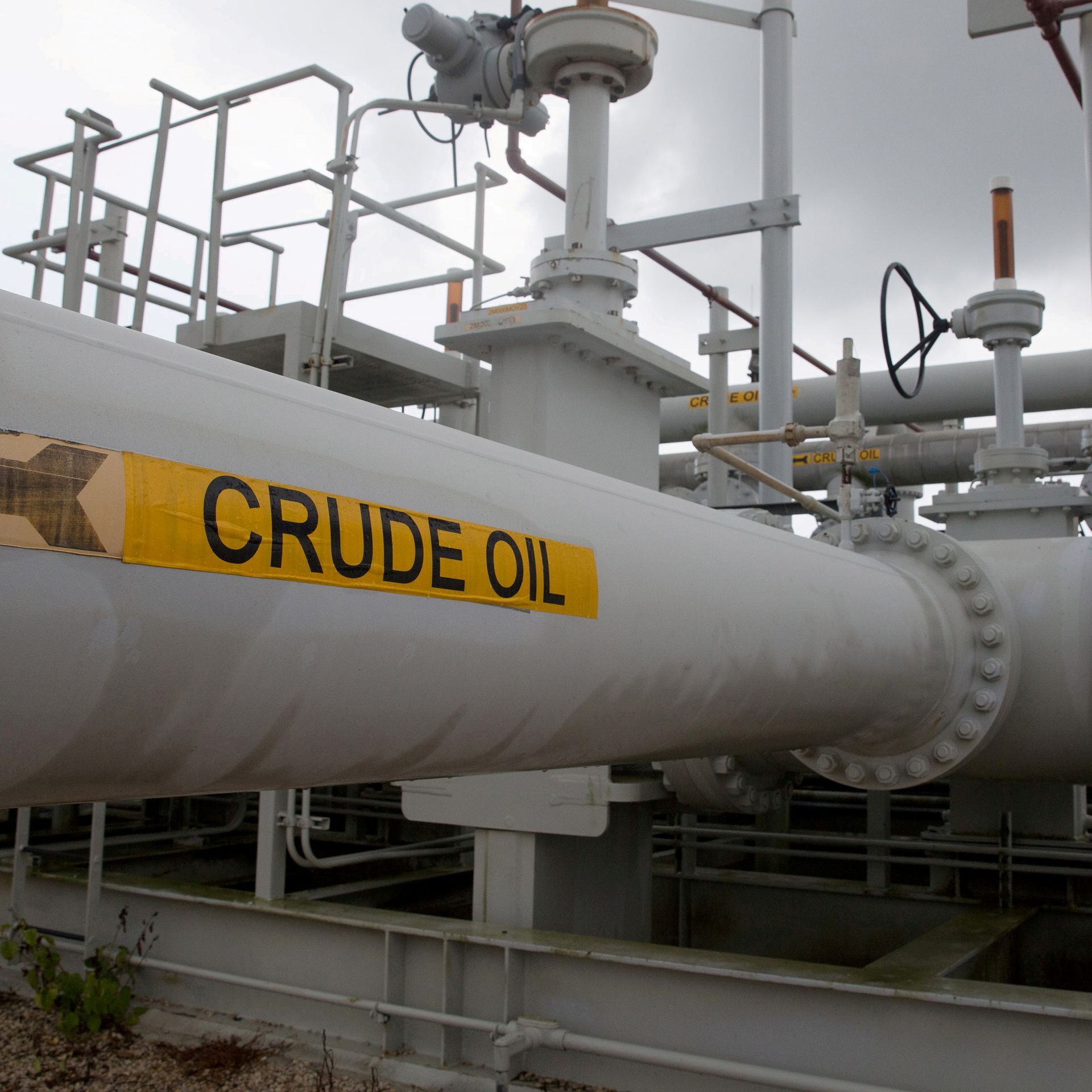
Plan for your Naira: “The International Energy Agency (IEA) has warned that global oil supply may exceed demand by approximately 600,000 barrels per day (bpd) in 2025, posing a serious risk of oversupply in the market…Nigeria’s 2025 budget is built on the assumption of oil production at 2.06 million barrels per day (bpd), an oil price of $75 per barrel, and a revenue target of N36.35 trillion, with 56% expected to come from oil sales”

While diversification efforts in agriculture and manufacturing have been touted as long-term solutions, the short-term reality is that Nigeria’s fiscal stability remains heavily tied to oil prices. Any significant downturn in oil revenue could trigger new austerity measures, adding more strain to an already struggling economy.

With the IEA’s outlook painting a bearish picture for oil markets, analysts are urging Nigeria’s policymakers to closely monitor OPEC+ decisions in the coming months. If crude prices fall far below $75 per barrel, the government may be forced to revise its revenue projections downward and seek alternative funding sources.

Let me ask you, do you have a strategy on how this could impact the Naira? If the global economy enters a recession and they do not need a lot of oil, it will affect everyone in Nigeria. And if Russia is normalized with sanctions removed, enabling it to enter the mainstream oil market, the equilibrium will shift. So, have a plan because 2025 will be interesting!

IEA Warns of Oil Surplus in 2025 as Weaker Demand Puts Pressure on Producers, Nigeria Stands At Risk

Ross Gerber, A Seasoned Investor Who Predicted Tesla Shares Would Fall 50% This Year, Says The EV Giant Isn’t Done Crashing

0

Tesla’s stock has suffered a steep decline, plummeting 48% since reaching its peak in mid-December, yet longtime investor Ross Gerber still isn’t convinced it’s cheap enough to buy back in.

Gerber, a seasoned Tesla investor who had loaded up on the stock before its meteoric rise, predicted earlier this year that shares could fall by as much as 50%. His foresight has proven accurate, as the stock has continued its downward trajectory, losing another 31% since his late-February forecast.

Despite the sharp drop, Gerber is holding back on re-entering the market. In an interview with Business Insider, he reiterated his belief that Tesla lacks a clear recovery path in 2025, citing multiple challenges including CEO Elon Musk’s divided attention between Tesla and his other ventures—Dogecoin (DOGE), SpaceX, xAI, and X (formerly Twitter).

Gerber, who leads Gerber Kawasaki Wealth & Investment Management, a firm overseeing approximately $3 billion in assets, has not hesitated to put his words into action. He cut his firm’s Tesla holdings by 31% in 2024, reducing his position to 262,000 shares, valued at $106 million at the close of last year, according to regulatory filings.

Tesla’s Path to Recovery Remains Unclear

Gerber argues that for Tesla to regain momentum, it must significantly increase its earnings. “If I do $5 in earnings, at 50 times earnings, I can get to $250,” he explained. “But they have no path to that.”

Tesla’s earnings per share (EPS) took a significant hit in 2024, plummeting 52% to $2.04. Analysts estimate earnings will rebound to $2.75 per share in 2025 and $3.65 in 2026, but these projections remain uncertain in the face of economic headwinds and declining global sales.

Political Controversies Weigh on Tesla’s Brand

Gerber also sees Musk’s controversial political stances as a lasting headwind for Tesla. He pointed to Musk’s alleged Nazi salute at the presidential inauguration, the CEO’s divisive political rhetoric, and President Donald Trump’s public promise to buy a Tesla to support the brand.

According to Gerber, such polarizing actions have alienated many customers, further dampening the stock’s appeal. “The decline of a stock trading at 150 times earnings is the farthest thing from surprising in my book,” he noted.

Tesla’s Valuation Remains Expensive

Despite the substantial correction, Gerber insists that Tesla is still overvalued. The stock currently trades at a forward price-to-earnings (P/E) ratio of 65—more than triple the valuation multiple of the S&P 500.

“As a traditional investor, it doesn’t fit any valuation system that makes sense compared to any other stock,” Gerber remarked. He contrasted Tesla’s valuation with Nvidia, which trades at a much lower P/E ratio of around 20 times earnings, has projected earnings growth of 75% this year, and is actively buying back stock.

External Market Pressures and Growth Concerns

Broader macroeconomic conditions also weigh on Tesla’s valuation. Investors are increasingly skeptical about the company’s long-term growth prospects as analysts revise vehicle sales estimates downward for the second consecutive year.

The uncertainty surrounding President Trump’s proposed tariffs has added another challenge, pushing investors to demand a lower earnings multiple for Tesla’s stock.

“If Tesla trades at even 50 times forward earnings—which translates to a $290 per share valuation—giving them $3 per share still only gets you to $150,” Gerber explained. “Yet, the stock is still trading at $225, meaning it could have further to fall.”

The Used Car Market Poses Another Challenge

Another significant issue affecting Tesla is the used-car market. Ironically, the very quality that made Tesla vehicles desirable—durability—is now hurting the company. Gerber likened Tesla’s problem to Apple’s, where product longevity reduces the frequency of upgrades.

“Teslas don’t wear out very quickly, so you don’t have a lot of repeat demand,” he said. “A 5-year-old Tesla is just as good as a 2-year-old Tesla.”

This dynamic, combined with the growing number of Tesla owners selling their cars due to Musk’s political controversies, has led to plummeting resale values. The drop in used Tesla prices is creating a situation where prospective buyers have little incentive to purchase new models directly from the company.

“Unless the hardware is significantly better than previous versions, consumers—especially price-conscious ones in an inflationary environment—have no strong reason to upgrade,” Gerber noted. “This hurts Tesla’s new car sales while also eroding the value of its existing vehicles.”

Tesla’s sharp stock decline has left investors questioning its valuation, growth prospects, and the impact of Musk’s broader ambitions on the company’s future. While Gerber was once a strong Tesla bull, he remains skeptical about the stock’s ability to rebound anytime soon. Gerber’s staying on the sidelines—highlights broader concerns that the stock, even after its sharp correction, still isn’t cheap enough for traditional investors.

Argentine Authorities Request for Arrest and Extradition of Hayden Davis Over LIBRA Dump

0

Argentine lawyer Gregorio Dalbo?n formally requested an Interpol Red Notice for the arrest and extradition of Hayden Davis, an American citizen and co-creator of the LIBRA cryptocurrency token. This request was submitted to prosecutor Eduardo Taiano and Judge Mari?a Servini, who are investigating the collapse of the memecoin, which resulted in investor losses estimated at $251 million. Dalbo?n argued that Davis poses a significant flight risk due to his financial resources and foreign residency, potentially enabling him to evade justice.

LIBRA was a cryptocurrency token, specifically a memecoin, launched on the Solana blockchain. Memecoins are typically speculative assets inspired by internet memes, jokes, or cultural phenomena, often lacking fundamental utility or intrinsic value. LIBRA was marketed as a libertarian-themed token, capitalizing on ideological appeal, particularly in Argentina, where it gained significant traction.
Association with Javier Milei

The LIBRA token, which was promoted by Argentine President Javier Milei, rapidly rose to a peak market capitalization of over $4 billion before crashing by more than 90%, prompting allegations of fraud, market manipulation, and a pump-and-dump scheme. If approved, the Interpol Red Notice would alert law enforcement agencies in 195 member countries to locate and provisionally arrest Davis pending extradition, though compliance depends on each country’s legal framework.

Shortly after reaching its peak, LIBRA’s value plummeted by more than 90%, wiping out hundreds of millions of dollars in investor funds. This dramatic crash left many retail investors with significant losses, sparking widespread outrage and allegations of foul play. Investors and analysts accused the creators of LIBRA, including Hayden Davis, of orchestrating a pump-and-dump scheme. The price of the token is artificially inflated through misleading marketing, celebrity endorsements, and coordinated buying. Insiders or early investors sell off their holdings at peak prices, causing the token’s value to crash and leaving retail investors with worthless assets.

The collapse of LIBRA prompted a criminal investigation in Argentina, led by prosecutor Eduardo Taiano and Judge Mari?a Servini. The investigation focuses on allegations of fraud, market manipulation, and money laundering. Argentine lawyer Gregorio Dalbo?n, representing affected investors, has accused Hayden Davis of being a central figure in the scam and requested an Interpol Red Notice for his arrest and extradition.

Hayden Davis, an American citizen and co-creator of LIBRA, is alleged to have played a key role in designing and promoting the token. Prosecutors claim that Davis was involved in orchestrating the pump-and-dump scheme and profited significantly from the token’s collapse. His foreign residency and financial resources have raised concerns about his potential to evade justice, prompting the Interpol request.

The scam reportedly caused losses of $251 million, with many retail investors losing their life savings. The fallout has fueled public anger in Argentina, particularly given the country’s economic challenges and the involvement of a high-profile political figure like Milei. The LIBRA scam is part of a broader trend of fraudulent memecoin projects in the cryptocurrency space. Memecoins, due to their speculative nature and lack of regulation, are particularly vulnerable to manipulation and scams. High-profile examples, such as the Squid Game token scam, highlight the risks of investing in such projects.

In Argentina, the LIBRA scandal has significant political ramifications. Javier Milei’s association with the token has damaged his credibility, with critics accusing him of either negligence or complicity. The scandal has also intensified debates about cryptocurrency regulation in Argentina, a country where digital assets are increasingly popular as a hedge against inflation. The LIBRA case underscores the challenges of regulating cryptocurrencies, particularly in a globalized and decentralized market. Jurisdictional issues, such as prosecuting individuals like Hayden Davis who reside outside Argentina, complicate efforts to hold perpetrators accountable.

Argentine authorities formally requested an Interpol Red Notice for Hayden Davis, seeking his arrest and extradition. If approved, this notice would alert law enforcement agencies in 195 member countries to locate and detain Davis, though extradition depends on international cooperation and the legal systems of the countries involved. The investigation in Argentina continues, with authorities examining financial records, blockchain transactions, and communications related to LIBRA.

Prosecutors are also exploring whether other individuals, including Milei or additional co-founders, played a role in the scam. Affected investors, represented by lawyers like Dalbo?n, are seeking justice and compensation for their losses. However, recovering funds in cryptocurrency scams is notoriously difficult, as assets are often moved to untraceable wallets or offshore jurisdictions.

Adobe Shares Plunge 13% Despite Beating Earnings, as Investors Express Concerns Over Company’s Competitive Edge in AI Space

0

Adobe’s shares dropped 13% despite reporting earnings that exceeded analysts’ expectations, as investors expressed concerns over the company’s competitive positioning in the rapidly evolving AI space.

A report by CNBC revealed that investors are worried over the company’s long-term growth trajectory and Artificial Intelligence (AI) monetization strategy.

For the most recent quarter, Adobe reported adjusted earnings of $5.08 per share on $5.71 billion in revenue, exceeding analysts’ expectations of $4.97 per share and $5.66 billion in revenue, according to LSEG. Despite the strong performance, the company’s forward guidance of $4.95 to $5.00 in adjusted earnings per share and projected revenue of $5.77 billion to $5.82 billion left investors cautious. Analysts had anticipated $5.00 per share on $5.80 billion in revenue.

Concerns have been mounting that Adobe is struggling to maintain its competitive edge in the Al space. The company disclosed that its annualized recurring revenue from Al products reached $125 million this quarter, with expectations to double by the fiscal year’s end. However, investors remain wary about how effectively Adobe can monetize Al without cannibalizing its existing revenue streams.

While some analysts remain optimistic, others urge patience. Bernstein’s Mark Moerdler reaffirmed confidence in Adobe’s Al potential but noted that investors need to see a longer-term trajectory. Meanwhile, Morgan Stanley analyst Keith Weiss acknowledged the company’s transparency regarding Al contributions but emphasized the need for a clearer strategic roadmap

Adobe CEO Shantanu Narayan has reportedly pushed back criticism against his company’s Al strategy in an interview with CNBC, which many described the company as slow in integrating the technology into its products. He further stated that Adobe is embedding Al into existing products while also unlocking new revenue opportunities.

The company started with free offerings to prioritize adoption that has generated “billions of dollars in revenue in terms of customer acquisition and retention,” he added.

Adobe ended Q1 with “over $125 million in bookings for its new AI standalone, which includes the Acrobat Al Assistant, GenStudio, and Firefly Services. Shantanu remains confident that focus on Artificial Intelligence will continue to drive significant growth for Adobe moving forward.

Adobe 2025 AI Strategy

Adobe finds itself at a pivotal moment in the evolving tech industry. As artificial intelligence (Al) reshapes how businesses operate, the company must not only leverage Al to enhance its products but also ensure that its monetization strategies align with investor expectations. Adobe’s approach to integrating Al offers a glimpse into the challenges and opportunities that come with this technological shift.

Rather than launching standalone Al products, Adobe has chosen to embed Al within its existing offerings, particularly within the Creative Cloud suite. This mirrors a broader trend among major software companies, where Al-powered features are incorporated into higher-tier subscription plans to encourage upgrades. Adobe’s Firefly generative Al models, for example, are now part of Creative Cloud plans, enticing users to opt for premium tiers to access advanced capabilities.

The company is employing a dual-pronged monetization approach. First, Al tools such as Firefly are marketed as premium features, generating direct revenue. At the same time, Adobe uses Al as an incentive for customers to transition to more expensive subscription levels, boosting long-term revenue growth. This strategy aligns with industry norms, where Al-driven functionalities are often bundled into top-tier packages rather than offered separately.

Beyond its standard product offerings, Adobe is expanding its Al capabilities to cater to large enterprises. The company plans to introduce custom Al models tailored to meet the specific needs of business clients. This strategy follows the footsteps of firms like Box, which offers Al-powered tools as premium add-ons in its Enterprise Plus plan. By providing specialized Al solutions, Adobe strengthens its position as a critical player in enterprise software while creating additional revenue streams.

Adobe’s Al strategy underscores the delicate balance between driving innovation and maintaining profitability. By seamlessly integrating Al into existing services, leveraging multiple revenue channels, and prioritizing customer value, the company is positibning itself for long-term success.

Looking ahead

Businesses across the globe are poised for meaningful change in 2025. They’ve aligned priorities and technologies to deliver truly personalized customer experiences powered by advanced tools and smarter use of data, which have unlocked insights that were once out of reach.

Most notably, the adoption of artificial intelligence (Al) is moving beyond the pilot stage and delivering measurable returns as leading organizations redefine how they connect with customers, streamline operations, and drive innovation.

IEA Warns of Oil Surplus in 2025 as Weaker Demand Puts Pressure on Producers, Nigeria Stands At Risk

0

The International Energy Agency (IEA) has warned that global oil supply may exceed demand by approximately 600,000 barrels per day (bpd) in 2025, posing a serious risk of oversupply in the market.

In its latest Oil Markets Report, the agency also downgraded its demand growth estimates for 2025, citing underwhelming consumption data and economic uncertainty.

The report signals trouble for major oil-exporting economies like Nigeria, as the Organization of the Petroleum Exporting Countries (OPEC) may respond by cutting production quotas for member nations in an attempt to stabilize the market.

The IEA cautioned that if OPEC+ proceeds with plans to unwind production cuts beyond April, and if member countries currently exceeding their quotas do not rein in output, an additional 400,000 b/d could be added to the market.

This raises the likelihood of a significant price decline, as global oil demand has not grown as strongly as expected. The situation puts oil-dependent economies like Nigeria at risk, especially since any reduction in crude prices could further strain government revenues.

The IEA also noted that uncertainty surrounding global trade policies and potential tariffs could further distort market expectations. The agency emphasized that the scope and scale of tariffs remain unclear, and with trade negotiations continuing, it is still too early to assess the impact on the market outlook.

The IEA has cut its demand growth projections for the fourth quarter of 2024 and the first quarter of 2025, lowering its estimate to 1.2 million barrels per day (mb/d) due to weaker-than-expected consumption patterns. Despite the downgrade, the agency still projects total oil demand growth in 2025 at just over 1 mb/d, up from 830,000 b/d in 2024, bringing global consumption to 103.9 mb/d. However, this is lower than its February forecast, which predicted 1.1 mb/d growth.

Nigeria Faces Potential Revenue Shortfalls

Nigeria’s 2025 budget is built on the assumption of oil production at 2.06 million barrels per day (bpd), an oil price of $75 per barrel, and a revenue target of N36.35 trillion, with 56% expected to come from oil sales. However, Nigeria is currently struggling to produce even 1.5 mbpd, well below the 2.06 mbpd target. If OPEC decides to cut production quotas further, Nigeria’s ability to meet its revenue expectations will be severely impacted.

Compounding this challenge, the 2025 budget already has a deficit of N14 trillion, meaning that any shortfall in oil revenue will widen the funding gap, potentially forcing the government to resort to more external and domestic borrowing, and additional taxes and levies to cover the revenue shortfall.

Asia Remains the Growth Driver, But With Changing Demand Trends

The IEA predicts that Asia will account for nearly 60% of oil demand growth in 2025, with China leading the charge. However, there is a notable shift in the type of demand driving this growth. Petrochemical feedstocks will dominate oil demand in China, rather than traditional fuels. Demand for gasoline and diesel is plateauing, signaling slower growth in transportation fuel consumption.

This shift could pose additional challenges for Nigeria, as its crude oil blend is more suited for transportation fuels rather than petrochemical production.

What’s Next for Nigeria?

While diversification efforts in agriculture and manufacturing have been touted as long-term solutions, the short-term reality is that Nigeria’s fiscal stability remains heavily tied to oil prices. Any significant downturn in oil revenue could trigger new austerity measures, adding more strain to an already struggling economy.

With the IEA’s outlook painting a bearish picture for oil markets, analysts are urging Nigeria’s policymakers to closely monitor OPEC+ decisions in the coming months. If crude prices fall far below $75 per barrel, the government may be forced to revise its revenue projections downward and seek alternative funding sources.