DD
MM
YYYY

PAGES

DD
MM
YYYY

spot_img

PAGES

Home Blog Page 17

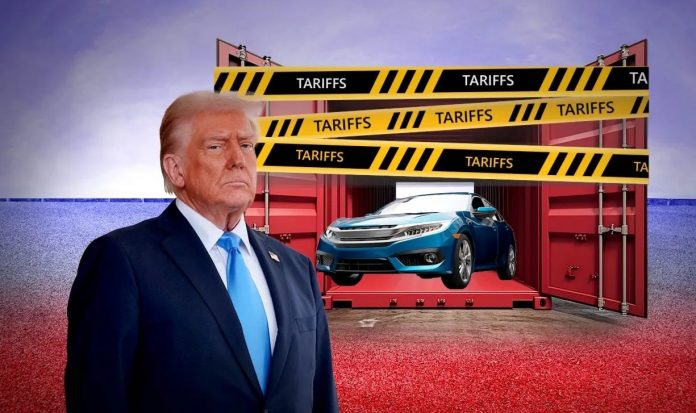
Supreme Court May Enforce Return of $133B of US Tariff Revenue

0

The U.S. Supreme Court is currently considering a major challenge to President Trump’s broad tariffs imposed in 2025 under the International Emergency Economic Powers Act (IEEPA), a 1977 law intended for national emergencies.

These tariffs include “reciprocal” duties on goods from nearly all countries starting at 10-50% from April 2025 and “fentanyl-related” penalties on imports from China, Canada, Mexico, and others starting February/March 2025.

Lower courts ruled these tariffs unlawful, finding that IEEPA does not authorize tariffs the word “tariff” is absent from the statute and that no prior president used it this way for broad revenue-raising measures.

The Supreme Court heard oral arguments on November 5, 2025, where justices from both sides expressed skepticism about the administration’s authority, noting tariffs are traditionally a congressional power.

Potential Refund Amount

As of mid-December 2025, U.S. Customs and Border Protection data shows approximately $133.5 billion in duties collected under these IEEPA-based tariffs are at risk of court-ordered refunds if the Supreme Court rules them invalid. This breaks down roughly as:$81.7 billion from reciprocal duties.

$37.9 billion from China/Hong Kong fentanyl tariffs. Smaller amounts from Mexico, Canada, and punitive duties on countries like Brazil, India, and Japan. Some analyses estimate higher potential refunds up to $168 billion or more depending on the scope and timing.

The Court is expected to issue rulings soon possibly as early as January 10, 2026, based on recent schedules, though no decision has been announced as of January 7. Prediction markets give the administration only a 23-30% chance of prevailing, down from higher odds before arguments.

If the Court sides against the tariffs: They would likely be halted going forward. Refunds could be required for importers who paid them. The Court might limit refunds like prospective only, or to litigants, but historical precedents suggest refunds are the normal remedy for unlawful duties, potentially through administrative processes or protests.

These IEEPA tariffs are separate from other Trump tariffs under Section 232 e.g., 50% on steel/aluminum derivativesor Section 301, which are not part of this case. Tariff revenue in 2025 has been much higher record levels, but only the IEEPA portion is directly challenged here.

This case represents a significant test of executive power versus congressional authority over trade and taxation. The International Emergency Economic Powers Act (IEEPA) was enacted on December 28, 1977, as Title II of Public Law 95-223, signed by President Jimmy Carter.

It emerged from congressional efforts to reform and limit expansive presidential emergency powers under the Trading with the Enemy Act (TWEA) of 1917. TWEA, originally a wartime measure, was amended in the 1930s to allow its use in peacetime emergencies. Presidents invoked it broadly, including President Nixon’s 1971 imposition of a 10% import surcharge during a balance-of-payments crisis.

By the 1970s, a Senate investigation revealed four national emergencies dating back decades still in effect, prompting reforms.In 1976, Congress passed the National Emergencies Act (NEA) to terminate old emergencies, require formal declarations, and enable congressional termination.

In 1977, it enacted IEEPA to restrict TWEA to wartime while providing limited peacetime economic powers for foreign-originated threats. IEEPA authorizes the President, after declaring a national emergency under the NEA, to regulate international economic transactions—including imports—to address “unusual and extraordinary” threats to U.S. national security, foreign policy, or economy with substantial foreign sources.

It deliberately narrowed TWEA by excluding powers like seizing domestic records or vesting assets. The President can investigate, regulate, or prohibit transactions involving foreign property, payments, exports/imports, and more (50 U.S.C. § 1702).

It excludes regulating personal communications, informational materials, humanitarian donations, or purely domestic transactions. Emergencies require annual renewal and congressional reporting. Legislative history emphasized emergencies as “rare and brief,” not for ongoing issues.

Presidents have invoked IEEPA in over 77 national emergencies since 1977, making it central to U.S. sanctions. President Carter in 1979 froze Iranian assets during the hostage crisis—the longest-running emergency.

Blocking assets of foreign governments, terrorists, post-9/11 under Bush, cybercriminals (Obama), and entities in Venezuela or Russia. Initially targeted states; later included non-state actors like terrorists and hackers. Emergencies average over nine years, contrary to “brief” intent.

IEEPA traditionally supported sanctions, not revenue-raising duties. Nixon’s 1971 surcharge used TWEA, not IEEPA. In 2025, President Trump invoked IEEPA unprecedentedly for broad tariffs, February: 25% on Canada/Mexico and 10%+ on China, citing drug trafficking and migration emergencies.

April: “Reciprocal” 10%+ tariffs on nearly all countries, citing trade deficits and non-reciprocity. These collected ~$133 billion by late 2025 but faced challenges. Lower courts ruled IEEPA does not authorize tariffs lacking “tariff” mention; Congress holds trade power.

The Supreme Court heard arguments November 5, 2025; a ruling is pending, potentially invalidating tariffs and triggering refunds. This use tests executive limits, raising separation-of-powers questions amid IEEPA’s evolution into a flexible sanctions tool.

Polymarket Introduced Taker-Only Fees Exclusively on 15-Minute Crypto Prediction Markets 

0

Polymarket has introduced taker-only fees exclusively on its 15-minute crypto prediction markets short-term “up or down” bets on assets like Bitcoin, Ethereum, Solana, and XRP that resolve every 15 minutes.

These fees are not retained by Polymarket as revenue—instead, 100% of the collected fees are redistributed daily in USDC to market makers through the new Maker Rebates Program. This incentivizes deeper liquidity, tighter spreads, and better market efficiency in these high-frequency markets, while discouraging excessive bot activity or wash trading.

Fees apply only to takers those who aggressively fill existing orders. Makers, those posting limit orders that add liquidity receive rebates proportional to their filled volume. The fee structure is dynamic: highest around 50% probability up to ~3%, e.g., ~$1.56 on 100 shares at $0.50, tapering to near-zero at extremes 0% or 100%.

All other markets like political, event-driven, longer-term crypto remain completely fee-free. The change was implemented quietly via updated documentation, without a major public announcement, and has been generally well-received in the community as a sustainability upgrade for these volatile short-duration markets.

The Maker Rebates Program is a liquidity incentive initiative launched by Polymarket in early January 2026, specifically targeting its high-frequency 15-minute crypto prediction markets short-term “up or down” bets on assets like Bitcoin, Ethereum, Solana, and XRP that resolve every 15 minutes.

These fast-moving markets often attract algorithmic traders, bots, and arbitrageurs, leading to volatile liquidity and wider bid-ask spreads. The program aims to encourage market makers to post consistent, competitive limit orders, resulting in deeper order books.

More resilient markets during volatility. Reduced incentives for exploitative bot activity like wash trading or pure taker strategies. 100% of taker fees collected from trades in these 15-minute markets are pooled and redistributed as rebates. Polymarket retains none of the fees as revenue—this is not a traditional platform fee but a redistribution mechanism.

Who Pays: Only takers traders who aggressively fill existing orders, often using market orders pay fees. Who Earns: Makers those who post resting limit orders that add liquidity and get filled receive rebates. Payouts: Calculated and distributed daily in USDC.

Proportional to your share of executed (filled) maker liquidity in eligible markets. You earn based on the actual liquidity you provided that was “taken” by others. Applies only to 15-minute crypto markets. All other Polymarket markets like political, event-driven, longer-term remain completely fee-free.

Fees are dynamic and vary based on:Trade size (scales linearly). Market probability/price: Highest around 50% probability (mid-price), tapering to near-zero at extremes (close to 0% or 100%). Peak rate: Up to ~3.15% at 50/50 odds. This design charges more for trades in competitive, uncertain ranges while minimizing costs for directional bets near certainty.

Positive for makers: Creates sustainable income for liquidity providers, rewarding tight quoting. Discourages pure taker bots: High-frequency strategies relying on market orders become less profitable. Better execution for all traders, reduced bot exploitation, and more efficient markets.

Community feedback from traders and developers has been largely positive, viewing it as a mature step toward sustainability without broad fee imposition. If you’re an API trader or market maker, note that clients may need updates to handle the new structure.

What Is Minimum Viable Demand (MVD)?

0

Market systems are inherently imperfect because information asymmetry makes it difficult for demand and supply to naturally converge at an optimal equilibrium. To correct this imperfection, societies create companies. Companies serve as organizing platforms that bring demand and supply together so that transactions can happen efficiently.

When you are hungry, you do not go from house to house hoping to find someone with food to sell. You go to a restaurant. Likewise, the person who has food to sell does not sit at home waiting for a knock; they bring the food to the restaurant. The company exists to reduce friction and eliminate uncertainty on both sides of the market.

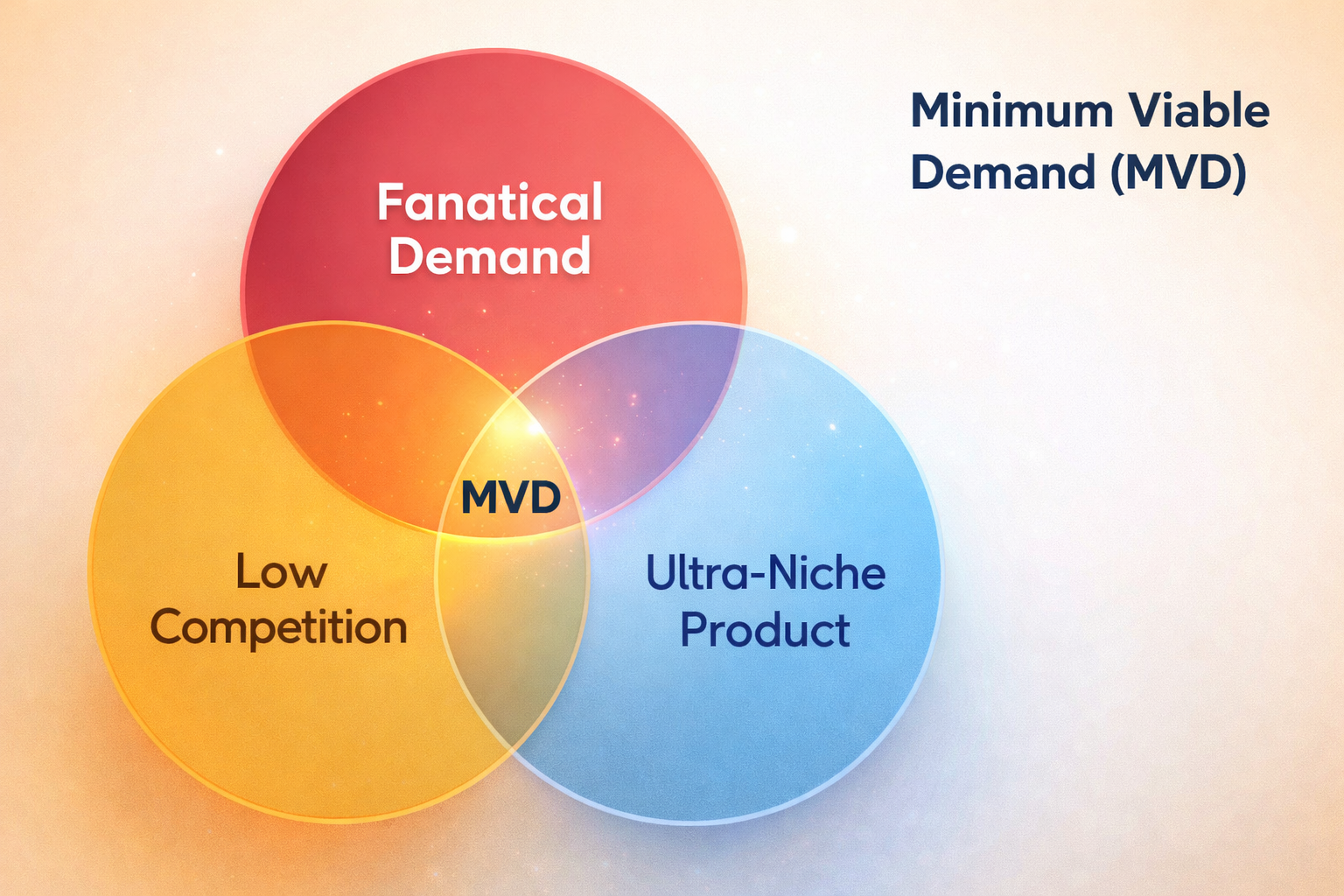
But when you are starting a new venture, the question becomes: where do you begin? Very often, the answer is not by trying to serve everyone. Instead, you focus on creating deeply “passionate” products for a clearly defined, leverageable demand, even if that demand is small at the start. You stand a far better chance of success by winning a small group of believers than by chasing a broad audience and ending up with none.

I describe this approach as Minimum Viable Demand (MVD). MVD is especially powerful in digital markets, where iteration is fast and scaling is relatively frictionless. The demand may be small, but it is real, committed, and capable of being leveraged.

The essence of MVD is not size, but viability. The demand must be strong enough to sustain the business and flexible enough to scale over time. When done right, MVD delivers higher margins, lower competition, and fanatical early adopters.

It is often better to build for the first 1,000 users who genuinely care than for one million who do not. Once you have won those first 1,000, you can then design a deliberate path to scale, expanding the market while preserving differentiation, pricing power, and product identity.

In many markets, this strategy creates a quiet disruption. Incumbents ignore the small niche, assuming it does not matter. By the time they realize what is happening, the innovator has expanded the territory and reshaped the market. This dynamic sits at the heart of what I have previously explained as the startup incentive construct.

Understanding Startup Incentive Construct, a Framework by Ndubuisi Ekekwe

Copper Reaches ATH As K9Strategy Burns 144 BoDoggos

0

Benchmark copper prices on the London Metal Exchange (LME) surged past $13,000 per metric ton for the first time, reaching intraday highs around $13,387–$13,387.50 on January 6, before settling slightly lower.

This extends a massive rally from 2025 up ~42% annually, driven by: Tight global supply from mine disruptions e.g., strikes in Chile, accidents in Indonesia. Strong demand from electrification, EVs, AI data centers, and grid upgrades. US stockpiling ahead of potential import tariffs under the Trump administration, creating regional shortages elsewhere.

Speculative buying amid broader metals bullishness. Prices have pulled back slightly today to around $13,200–$13,300 range, but the ATH is confirmed across sources like Bloomberg.

K9Strategy burns 144 BoDoggos

This appears to refer to activity in the BoDoggos ecosystem—a popular Solana-based NFT collection (8,888 dog-themed PFPs launched in 2023) with associated crypto elements.

K9Strategy or similar, like Bodoggos Strategy token/treasury manages a “treasury company” that buys, relists, and sometimes burns BoDoggos NFTs or related tokens to reduce supply and create scarcity/yield for holders.

Burning 144 specifically isn’t directly confirmed in recent public news or posts no exact match for that number/event today, but the project frequently engages in buy-burn-relist mechanics via DEX fees and treasury actions. Recent X chatter involves BoDoggos community discussions, podcasts, and bets involving individual NFTs—consistent with ongoing burns or supply reduction strategies.

If this is from a specific announcement or transaction, it aligns with their model to boost value. These seem like two unrelated bullish headlines—one macro commodity, one crypto/NFT. The recent surge in copper prices to an all-time high of over $13,000 per metric ton in early January 2026 is poised to raise production costs for electric vehicle (EV) batteries, given copper’s critical role in battery components.

While this could squeeze margins for battery manufacturers and potentially contribute to higher EV prices in the short term, ongoing efficiency improvements and material substitutions are helping mitigate the effects, with EV copper demand still projected to grow substantially.

Copper’s Role in EV Batteries

Copper is essential in lithium-ion batteries, primarily used for: Thin electrolytic copper foils act as the anode’s substrate, enabling electron flow between the anode and cathode. These foils are shifting toward thinner variants (4-6 microns) to improve energy density and reduce material needs.

Other components: Busbars for power distribution and thermal management, wiring harnesses, connectors, motors, and charging cables. An average EV requires about 70 kg (155 lbs) of copper—roughly 4 times more than a traditional internal combustion engine vehicle—dominated by wiring (55.7 lbs) and batteries (50.6 lbs).

The global market for electrolytic copper foils specifically for EV batteries is forecasted to grow significantly, driven by rising EV adoption in regions like China, Europe, and North America.

Cost Increases and Supply Chain Effects

Elevated copper prices—projected to average $10,600–$10,710 per metric ton in the first half of 2026, with volatility due to supply surpluses and deficits—are directly inflating raw material expenses for battery producers.

This stems from:Supply disruptions: Mine strikes in Chile, accidents, reduced output from Chinese smelters, aging mines with falling ore grades ~40% decline since 1991, and a projected global concentrate shortfall leading to structural deficits as early as 2026.

Global copper mine output is expected to increase only 3.3% year-on-year in 2026. Demand pressures: Strong pull from electrification, including EVs, renewable energy grids, AI data centers, and US stockpiling amid potential tariffs at least 25% on refined copper imports by mid-2026, which could accelerate regional shortages.

For EV batteries, this translates to higher input costs, as batteries already account for 30-40% of an EV’s total price. Specific impacts include: Production costs jumping $2,000–$4,000 per EV unit, potentially killing budget models and causing manufacturers to raise prices or cut output.

Squeezed profit margins for manufacturers, especially small and medium enterprises (SMEs) in the supply chain, due to higher expenses for wiring, connectors, chargers, and components, with limited hedging options.

Potential misses in EV adoption targets by 40-50%, as the transition hits bottlenecks from copper shortages more than other metals like lithium or nickel. Raw materials like copper, alongside geopolitical tensions, amplify volatility.

To counter high prices, the industry is pursuing: Material thrifting and substitutions: Replacing copper busbars with aluminum, reducing per-vehicle copper intensity by up to 38 kg by 2030, with busbars seeing a 6% annual reduction.

Thinner foils, better recycling though scaling takes 7-10 years, and design optimizations, as substitution is impossible for ~60% of electrical applications needing copper’s conductivity. Despite these pressures, copper demand from the EV and battery sector is expected to rise 177% by 2030 to 2.5 million tonnes annually, driven by BEV deployment and charging infrastructure, offsetting per-vehicle reductions.

Overall demand could reach 40 million tonnes by 2040, with massive shortfalls unless new projects accelerate, as mined supply growth is capped at 3-4% annually. Prices may ease somewhat in 2026 due to short-term surpluses but are set for long-term upward pressure from structural deficits.

Intel Targets Handheld Gaming With Panther Lake, Testing Its Manufacturing Revival Against AMD’s Grip

0

Intel is preparing a deeper push into gaming hardware, setting its sights on the fast-growing handheld gaming market with a new chip and platform built specifically for portable devices.

The move, unveiled at CES, signals a strategic attempt to enter a segment where rivals, particularly AMD, have already built a commanding lead and where technical margins for error are thin.

Daniel Rogers, Intel’s vice president and general manager of PC products, said on Monday that the company is developing a handheld gaming platform that will combine hardware and software. The platform will be based on Intel’s Core Series 3 processors, known as Panther Lake, which were announced last year and are now being rolled out across a range of PCs.

According to reporting by IGN, later confirmed by TechCrunch, the platform will include a chip designed specifically for handheld gaming devices. While Intel has yet to disclose specifications, performance targets, or launch timelines, the confirmation alone marks a notable shift. Until now, Intel’s presence in portable gaming has been indirect, limited largely to general-purpose mobile CPUs rather than silicon tailored for handheld consoles.

Panther Lake sits at the center of Intel’s broader turnaround strategy. These processors are the company’s first to be built on its 18A manufacturing process, a next-generation node that entered production in 2025. Intel has positioned 18A as a critical milestone in its effort to reclaim leadership in advanced chipmaking after years of execution setbacks that allowed competitors to pull ahead.

Handheld gaming presents a demanding test case for that process. Devices in this category require high graphics performance within tight power and thermal limits, often operating on batteries for extended periods. Efficiency per watt is as important as peak performance, and sustained workloads can quickly expose weaknesses in chip design or manufacturing.

Intel’s gaming credentials are not new. The company has supplied CPUs for gaming PCs since the 1990s, and gaming has long been a pillar of its high-performance computing business. In 2022, Intel made a more aggressive move with the launch of its Arc discrete GPUs, signaling an ambition to challenge Nvidia and AMD in graphics. While Arc has improved over time, it has struggled to gain significant market share, highlighting how difficult it is to break into established gaming ecosystems.

The handheld gaming space raises similar challenges, but with higher stakes. Over the past few years, the category has expanded rapidly as devices blend PC gaming flexibility with console-style portability. That growth has been driven overwhelmingly by AMD, whose custom processors power most leading handheld systems. AMD’s advantage lies in tightly integrated CPU and GPU designs that deliver strong graphics performance at low power levels, an area where Intel has historically lagged.

AMD reinforced that position at CES. The company used its keynote to unveil the Ryzen 7 9850X3D processor for gaming PCs, alongside new ray tracing and graphics technologies. While not a handheld chip, the announcement underscored AMD’s continued focus on gaming performance across form factors and its willingness to push innovation aggressively.

Intel’s decision to bundle hardware and software into a single platform suggests a recognition that silicon alone may not be enough. Intel could reduce complexity for device makers, streamline optimization, and provide closer ties to the Windows PC ecosystem by offering a more integrated solution. For smaller manufacturers, that could be attractive, particularly if Intel can offer strong developer tools, driver stability, and long-term platform support.

There is also a competitive undercurrent tied to the Windows ecosystem itself. Most handheld gaming devices run Windows, and performance optimization at the OS and driver level plays a significant role in user experience. Intel may see an opportunity to leverage its long-standing relationships with PC OEMs and software partners to carve out space, even in a market where AMD currently dominates on hardware merit.

Timing, however, will matter. Rogers said Intel will share more details about its handheld gaming products later this year, implying that commercial devices are still some distance away. By then, AMD is expected to further refresh its mobile gaming lineup, while ARM-based alternatives continue to advance in efficiency, raising the bar Intel must clear.

Beyond gaming, the implications are broader. A successful Panther Lake-based handheld chip would serve as a high-visibility proof point for Intel’s 18A process, showing it can compete in power-sensitive, performance-critical markets. That would strengthen Intel’s credibility not just with gamers, but with customers evaluating its foundry ambitions and future product roadmaps.

Failure would be harder to dismiss. Struggling in handheld gaming would reinforce doubts about Intel’s ability to challenge AMD in mobile and low-power computing, areas that increasingly define consumer and edge devices.

However, for now, Intel is laying down intent rather than execution. By stepping into handheld gaming, it is signaling that it does not plan to concede emerging PC form factors without a fight.