DD
MM
YYYY

PAGES

DD
MM
YYYY

spot_img

PAGES

Home Blog Page 1714

Solana (SOL) Ready to Start a Move to $314, While Ripple’s XRP Aims for $6 and RXS Crypto Price a 38x Explosion

0

With Solana positioned to start a bullish run to $314 and XRP set to set eyes on an astounding $6 objective, a trio of cryptocurrencies garners significant interest. Rexas Finance (RXS) is expected to have a mind-boggling 38x expansion in value, with investors excitedly waiting for possible windfalls.

Solana (SOL) Targets $314 as Market Momentum Builds

Solana, which trades at $134 as of this writing, has shown remarkable resilience and enormous potential for development. Driven by its high-speed blockchain, which can process thousands of Bitcoin transactions per second at low cost, several analysts forecast an upward movement to $314. Among developers creating decentralized apps, NFTs, and DeFi projects, Solana is a choice mainly due to these qualities. The network’s scalability, rising acceptance, and a developing ecosystem set it up for a hefty price swing. Several catalysts must line up if SOL is to reach $314—a 134% rise from its present price. Technical stability has to improve after prior network failures; institutional investment must keep expanding. Solana must also outcompete Ethereum and other recent arrivals—other layer-1 blockchains. Should market conditions remain favorable, Solana may see a significant surge driven partly by retail investor excitement and meme coin activity on its network. Still, the crypto market is erratic; macroeconomic downturns or regulation changes can impede its development.

Ripple (XRP) Eyes a $6 Price Target

With its sights set on $6, a possible 160% gain, Ripple, which presently values $2.31, is XRP’s long-standing involvement in cross-border payments. This makes it a major participant in the financial industry since it provides quick and cheap transfers over more conventional systems like SWIFT. Positive legal developments have further stoked hope due to Ripple’s ongoing struggle with the SEC for atonement. Should Ripple achieve regulatory certainty and increase worldwide acceptance, $6 is a reasonable goal. XRP has enormous promise but also specific difficulties. Regulatory uncertainty still affects investor mood, and rivals in the cross-border payment space—including alternative blockchains and stablecoins—are fast rising. However, XRP’s devoted community and history of dramatic price swings might drive it toward its target. If institutional interest rises and market circumstances improve, XRP might ride a positive wave toward $6.
Rexas Finance (RXS) Poised for a 38x Surge

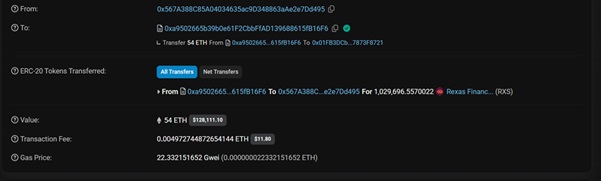
Currently valued at $0.20, Rexas Finance (RXS) is a blockchain initiative to tokenize real-world assets (RWAs). Based on its creative approach, Rexas Finance might achieve $7.60 using a projected 38x explosion, an ambitious but not impossible goal. By allowing users to tokenize assets such as real estate, art, and commodities, unleashing trillions of value from illiquid markets, the initiative intends to link blockchain with traditional finance. Rexas Finance has already shown tremendous impetus by selling over 455.5 million tokens and completing a security examination by CertiK. This confirmation increases investor confidence in the project’s long-term viability. RXS also works with the ERC-20, ERC-721, and ERC-1155 token standards. All blockchain applications can work together, even those that use fungible tokens, non-fungible tokens, or multi-token assets. The forthcoming listings on three Tier 1 exchanges will significantly increase RXS’s global visibility and liquidity so that it will act as one of its leading accelerators. These listings could draw retail and institutional investors, increasing demand and guiding Rexas Finance toward its lofty pricing aim. Rexas Finance could rank among the best crypto investments available in the following months given its solid foundations and forward roadmap. Whales are drawn to Rexas Finance. For instance, data from Etherscan shows a deep-pocketed investor swapped 54 ETH for Rexas Finance.

Combining the Rexas Finance presale presents a fantastic chance to lock in tokens before rates climb. Visit the official Rexas Finance website to ensure a secure transaction and avoid fraud. Link your wallet to the platform, then buy Rexas Finance tokens using suitable cryptocurrencies like USDT or Ethereum. Once your purchase is completed, safely save your tokens in your wallet. Monitor the presale stages to stay aware of price adjustments and advancement.

Conclusion

Solana, Ripple, and Rexas Finance are all setting themselves up for significant returns. While XRP’s path to $6 rests on regulatory clarity and increasing use, SOL’s path to $314 depends on institutional support and market conditions. Meanwhile, Rexas Finance is creating waves in the RWA tokenizing area, and a 38x explosion may be just around the corner. Although these goals are high, the crypto market has a record of impressive gains, so these three assets are worth closely observing.

For more information about Rexas Finance (RXS) visit the links below:

Website: https://rexas.com

Win $1 Million Giveaway: https://bit.ly/Rexas1M

Whitepaper: https://rexas.com/rexas-whitepaper.pdf

Twitter/X: https://x.com/rexasfinance

Telegram: https://t.me/rexasfinance

Impacts of Nigeria’s Energy Federalism Begin As Telcos Demand Region-Based Pricing

0

In 2023, I wrote that if Nigeria removes fuel subsidies, companies which typically use the national uniform pricing model may have to go region-based pricing. In other words, if the petroleum equalization fund which used to make the prices of petrol uniform across Nigeria goes, making it possible that the price of petrol in Sokoto would be different from the price in Lagos, no one should expect companies to offer services like telecom at the same national price point in Lagos and Sokoto.

Today, we are reading that the playbook is loading: “Telecommunications operators in Nigeria are pushing for a shift from the existing uniform national tariff structure to a regional tariff regime, which would allow them to adjust pricing based on operational challenges in different states.”

Later in 2024, I wrote: ‘Good People, Nigeria is attaining Energy Federalism (not fiscal federalism) and the implications are massive. In an upcoming speech titled “Energy Federalism and Reshaping of Nigeria’s Regional Comparative Advantages”,  I will explain how muting the Petroleum Equalisation Funds (PEF) and Petroleum Products Pricing Regulatory Agency (PPPRA) will reshape regions in Nigeria’.

But there is nothing to panic because there is a solution: give the telcos what they want, but make it clear that those in high density cities like Lagos and PHC must pay more, and demand they will use that to compensate in other parts of the country. For example, a 2GB data bill could cost N2,200 in Lagos (extra N100) and that extra enables a telco to sell to someone in Sokoto at N2,000 when optimally both would have been billed each N2,100.

Nigeria’s economy is being redesigned regionally. The challenge is that opportunities are not well distributed regionally, and that is why the reforms would affect some regions in bad ways. Lagos has three seaports with another on the way when no other city has an active one or even a deep seaport.

That is an asymmetric positioning which pushes the importer from Aba to spend an additional N6 million to truck a container from Lagos to Aba. But if we say we have a deep seaport in Akwa Ibom, even someone from Maiduguri will save at least 30% on the trucking fee compared with Lagos’. So, what the telcos are asking may not be fair considering that those which do not even have means to pay may be expected to pay more. Yet, you do not blame private companies for a lack of a national economic development plan that supports all regions uniformly.


DN Cloud Mining Platform: Leading a New Era of Crypto Passive Income

0

With the rapid development of blockchain technology, the cryptocurrency market has ushered in an unprecedented prosperity. As one of the innovators in this field, DN Cloud Mining Platform is gradually becoming the preferred platform for global users seeking passive income with its efficient, secure and transparent services.

Regulated by FCA, safe and reliable

One of the biggest highlights of the DNMIner platform is that it is regulated by the United Kingdom (FCA). This not only proves the legality and compliance of the platform, but also provides users with strong financial security.

How to start: simple and easy to use

The operation process of the DNMIner platform is very simple, even newcomers in the cryptocurrency field can easily get started.

1: Visit DNMIner’s official website and register to get $100 immediately

2: Choose a mining package that suits you and complete the payment

3: You can start your cloud mining journey. The platform provides a variety of flexible solutions to meet the investment needs of different users.

High referral commission

Invite friends to earn up to 7% commission and create additional passive income

Contract Name Contract Term Contract Price Daily Reward        Total Reward (Principal Returned) Daily Return Rate
 Experience Mining 1 day $100 $1 $100 + $1 1%
Classic Miner 2 days $200 $7 $200 + $14 3,5%
Jinbei E-DG1M 3 days $500 $9.4 $500 + $28.2 1.88%
GoldShellMini-DOGE II 10 days $3500 $73.5 $3000 + $735 2.10%
ice Rivera l0 12 days


$5000 $110.5 $5000 + $1326 2.21%


Main advantages: efficiency and transparency

DNMIner stands out with its efficient mining algorithm and transparent operation model. The platform uses cutting-edge technology to ensure maximum mining efficiency, while allowing users to understand their earnings in real time through public data reports. In addition, DNMIner’s customer support team is online 24/7 to provide users with professional answers and support.

How to make money with DNMIner?

There are many ways to make money with the DNMIner platform. Users can not only obtain stable passive income through cloud mining, but also further increase their income by participating in the affiliate program, upgrading their account level, and using the market analysis tools provided by the platform. Whether long-term investors or short-term participants, you can find a profit model that suits you in DNMIner.

Why choose DNMIner?

Among many cloud mining platforms, DNMIner has won unanimous praise from users with the following features:

  1. Legal and compliant: regulated by the FCA to ensure the safety of funds.
  1. Convenient operation: one-stop service, friendly to novices.
  1. Stable income: efficient algorithms guarantee long-term returns.
  1. Generous rewards: the affiliate program expands more sources of income.
  1. Advanced technology: using cutting-edge mining equipment and technology.

About DNMIner

As a leading platform focusing on cloud mining services, DNMIner is committed to providing safe, transparent and efficient cryptocurrency mining solutions to users around the world. The platform team is composed of a group of experienced blockchain technology experts who always focus on user interests and continuously optimize services and improve technical levels.

Conclusion

With the continuous growth of the cryptocurrency market, cloud mining has become a highly regarded investment method. With its excellent services and strong technical support, DN Cloud Mining Platform has created a new way for users to easily obtain passive income. If you are looking for a reliable and efficient cloud mining platform, please join DNMIner and let your digital asset appreciation journey start here!


Company Name: DNMIner

Company Address: info@dnminer.com

Company Website: https://dnminer.com

IMF’s Updated Guidelines Mark a Pragmatic Acknowledgment of Crypto’s Permanence

0

The International Monetary Fund (IMF) has recently updated its guidelines to include provisions for cryptocurrencies, marking a significant step in recognizing digital assets within its global financial framework. On March 20, 2025, the IMF released the seventh edition of its Balance of Payments and International Investment Position Manual (BPM7), which formally incorporates cryptocurrencies like Bitcoin and other digital assets into its statistical standards for tracking economic activity and cross-border transactions. This is the first time the IMF has explicitly addressed crypto.

The updated guidelines classify digital assets based on their characteristics. For instance, cryptocurrencies such as Bitcoin, which have no underlying liabilities or issuer, are categorized as “non-produced, non-financial assets” (akin to capital assets). In contrast, stablecoins or other tokens backed by liabilities are treated as financial instruments. The BPM7 also provides guidance on recording complex crypto-related activities, such as mining and staking, as well as cross-border transfers of digital assets, reflecting their growing role in the global economy.

This move signals the IMF’s acknowledgment of the increasing economic impact of cryptocurrencies and aims to standardize how countries report these assets in their balance of payments statistics. It’s a practical step toward integrating digital assets into macroeconomic monitoring, though it aligns with the IMF’s broader stance that crypto should not be granted official currency or legal tender status, as reiterated in prior policy statements. Instead, the focus is on tracking and managing their implications for financial stability and international transactions.

The inclusion of cryptocurrencies in the IMF’s updated Balance of Payments and International Investment Position Manual (BPM7) carries several significant implications for the global financial system, national economies, and the crypto ecosystem. Countries will now be expected to report crypto-related transactions—such as cross-border transfers, mining rewards, or staking income—in their balance of payments statistics. This increases visibility into how digital assets flow through economies.

Policymakers and regulators gain better data to assess the scale of crypto activity, potentially leading to more informed monetary and fiscal policies. It could also expose previously hidden economic activity, especially in nations with high crypto adoption. By formally recognizing cryptocurrencies in its statistical framework, the IMF is indirectly validating their role in the modern economy, even if it stops short of endorsing them as official currencies. This could encourage governments and financial institutions to take crypto more seriously, potentially accelerating mainstream adoption.

The guidelines provide a blueprint for classifying and reporting crypto assets (e.g., Bitcoin as a non-financial asset, stablecoins as financial instruments), which could push countries toward harmonized regulatory approaches. Nations with lax or no crypto regulations might face pressure to align with IMF standards, especially if they seek IMF assistance or want to maintain credibility in global markets. This could lead to tighter oversight, taxation, or anti-money laundering (AML) measures.

Countries where crypto is widely used (e.g., El Salvador, which adopted Bitcoin as legal tender) will need to reconcile their domestic policies with IMF reporting requirements, despite the IMF’s opposition to crypto as legal tender. This could create tension between national sovereignty and international expectations, potentially affecting IMF loan conditions or economic assessments for such countries. The IMF has long warned about crypto’s potential to destabilize economies—through capital flight, tax evasion, or undermining monetary policy—and these guidelines allow it to monitor those risks more closely.

If significant crypto outflows or volatility are detected, the IMF might push for stricter capital controls or recommend policies to mitigate systemic risks, influencing how nations manage digital assets. Clear classifications and reporting standards reduce uncertainty for banks, payment processors, and other financial institutions dealing with crypto. This could pave the way for greater institutional participation in the crypto market, such as custody services or cross-border payment solutions, driving further growth in the sector.

While the BPM7 focuses on measurement rather than policy, it sets a foundation for future IMF recommendations on crypto governance. Over time, this could shape global norms around crypto regulation, taxation, and integration into traditional finance, potentially influencing debates about central bank digital currencies (CBDCs) versus decentralized cryptocurrencies.

The IMF’s updated guidelines mark a pragmatic acknowledgment of crypto’s permanence in the global economy, but they also signal a push for control and oversight. The implications range from improved economic data to heightened regulatory scrutiny, with ripple effects for governments, businesses, and crypto users worldwide. The tension between innovation and stability will likely define how these changes play out in practice.

Telecom Operators Push for Regional Tariff Regime Amid Rising Costs and State-Level Challenges

0

Telecommunications operators in Nigeria are pushing for a shift from the existing uniform national tariff structure to a regional tariff regime, which would allow them to adjust pricing based on operational challenges in different states.

The proposal, discussed at the 7th edition of the Policy Implementation Assisted Forum (PIAFo) in Lagos, comes amid mounting concerns over high operational costs, multiple taxation, and security threats to telecom infrastructure.

Industry stakeholders note that a regional tariff model would ensure fairer pricing, rewarding states that create a business-friendly environment while making those that impose high costs on telecom operations pay more for services. This move, they believe, will compel some state governments to revise policies that have made telecom operations difficult, particularly in areas such as multiple taxation, Right of Way (RoW) charges, and bureaucratic bottlenecks.

Right of Way Charges: A Major Concern for Telcos

One of the key operational challenges faced by telecom operators is the cost of Right of Way (RoW) charges, which refers to the fee levied by state governments for laying telecom infrastructure such as fiber optic cables. Ideally, these charges are meant to facilitate infrastructure development, but in many states, they have been inflated, becoming a revenue-generating tool rather than a means to support connectivity.

While some states, such as Kaduna, Ekiti, and Katsina, have reduced or eliminated RoW charges to encourage broadband penetration, others continue to impose exorbitant fees. These high costs, coupled with multiple layers of taxation, have significantly increased the cost of expanding telecom networks, especially in underserved rural areas.

The Chairman of the Association of Licensed Telecommunications Operators of Nigeria (ALTON), Engr. Gbenga Adebayo pointed out that some states make it extremely difficult for telecom companies to operate due to excessive taxation and infrastructure challenges. He stated that these issues should be reflected in the pricing of telecom services.

“We may have to reconsider our national tariffs and look at regional tariffs. If you are aware that the cost of doing business is high in a particular state and it’s impossible to negotiate with them, factor the cost of deployment in those areas into the cost of providing services,” Adebayo said.

Multiple Taxation and Security Threats Driving Cost of Operations

Another pressing issue for telcos is the rising cost of maintaining infrastructure due to multiple taxation and security challenges. In several states, telecom operators face levies from various government agencies, leading to an increase in the cost of operations. In some cases, local governments, state agencies, and even non-state actors impose fees on telecom infrastructure, making it expensive to deploy and maintain services.

Beyond taxation, telecom infrastructure is frequently targeted by vandals and criminals, further increasing the cost of service delivery. Operators often have to spend millions of naira to repair damaged sites and secure installations, with no financial compensation from the states where these incidents occur.

At the forum, discussions also focused on the need to safeguard telecom infrastructure. The convener of PIAFo, Mr. Omobayo Azeez, emphasized that the recent passage of the Critical National Information Infrastructure (CNII) Order by President Bola Tinubu was a milestone in strengthening Nigeria’s digital economy.

However, telecom operators insist that without a pricing model that reflects their operational costs, they will continue to struggle with financial losses and service disruptions.

The President of the Association of Telecommunications Companies of Nigeria (ATCON), Mr. Tony Emoekpere, supported the idea of a regional tariff structure, stating that it is unfair for telecom companies to operate under a uniform national tariff when costs vary significantly across states.

“If it costs me extra to haul diesel from one part of the country to another, I should be able to add that cost to the service or you compensate me for that by making your environment attractive for me to operate,” Emoekpere explained.

A Necessary Push for States to Adjust Telecom Policies

While discussions on the feasibility of the proposal continue, many stakeholders believe that a regional tariff system is the right call, as it would put pressure on states that have refused to create a business-friendly environment.

Currently, telecom operators are at the mercy of state policies that often disregard the importance of affordable and accessible telecom services. By introducing a pricing structure that reflects the realities of each state, governments that have been reluctant to lower telecom taxes and RoW charges may be forced to revise their policies to attract better service at lower costs for their residents.

In states where RoW charges remain high, a regional tariff system would mean higher service costs for consumers. This, in turn, could push state governments to rethink their policies and align with the Federal Government’s broadband penetration agenda, which aims to expand connectivity across the country.

NCC’s Role in Approving a Regional Tariff Model

While telecom operators are eager to implement the regional tariff system, its approval lies with the Nigerian Communications Commission (NCC), which regulates pricing in the industry.

The NCC recently approved a 50% tariff increase for telecom operators after years of agitation over rising operational costs. However, the agency still requires telcos to operate under a national tariff regime, ensuring that subscribers pay the same rates regardless of location.

If the NCC approves a regional tariff structure, it would mark a major transformation in Nigeria’s telecom sector. While consumers in business-friendly states may enjoy stable or even reduced pricing, those in states with difficult operational environments could see a rise in telecom costs. However, there is concern that it will impact the affordability of telecom services since some regions fall into underserved areas with low disposable income.