DD
MM
YYYY

PAGES

DD
MM
YYYY

spot_img

PAGES

Home Blog Page 1728

Best Cryptos to Watch in 2025: Qubetics, SEI, and Polkadot – Why These Blockchain Projects Are the Ones to Keep an Eye On

0

The cryptocurrency space is buzzing with innovation and potential, and if you’re trying to get ahead of the curve, you’ve got to know which projects are going to lead the charge in the coming years. If you’ve been paying attention to blockchain trends, you’ve probably already heard of some exciting projects that are making waves. Qubetics, SEI, and Polkadot are three of the best cryptos to watch in 2025, each offering unique features and groundbreaking advancements that could change the future of digital finance.

Many blockchain projects focus on speed, scalability, or security, but Qubetics, SEI, and Polkadot go further, tackling key adoption challenges. Qubetics’ Non-Custodial Multi-Chain Wallet, backed by partnerships with SWFT Blockchain and 1inch, is set to lead in 2025. SEI’s push for decentralized applications and Polkadot’s cross-chain interoperability further strengthen their positions. Here’s why these three are among the top cryptos to watch in 2025.

Qubetics: The Non-Custodial Multi-Chain Wallet Revolutionizing DeFi

Qubetics has been quietly building a foundation that’s set to disrupt the blockchain space. This isn’t just another cryptocurrency project; it’s an ecosystem. At the heart of Qubetics’ offering is its Non-Custodial Multi-Chain Wallet. With the latest technological advancements, Qubetics has made managing assets across multiple blockchains easier than ever.

Unlike many other wallets that are locked into one chain, the Qubetics wallet allows seamless transactions across Ethereum, Binance Smart Chain, Solana, and other major blockchain networks. This cross-chain compatibility isn’t just a nice-to-have feature; it’s a game-changer for both individuals and businesses looking to interact with the blockchain without restrictions.

Qubetics Presale Update

  • Currently in its 24th crypto presale stage, raising over $14.7 million.
  • 497 million tokens sold to 22,500+ holders.
  • Strong partnerships, including with DeFi aggregator 1inch.

Integration with 1inch provides access to DEXs for optimized pricing, liquidity, and trading. Positioned as a top crypto for long-term growth.

Additionally, Qubetics’ wallet solution comes with top-notch security protocols, ensuring that users’ assets are safe while enjoying lightning-fast transactions. This combination of convenience, security, and multi-chain support makes Qubetics a standout contender among the best cryptos to watch in 2025.

SEI: Building a Stronghold for Decentralized Applications (dApps)

Another exciting project in the blockchain space is SEI—a network designed specifically to meet the needs of decentralized applications (dApps). What sets SEI apart is its focus on building a platform that provides both high-speed transaction processing and developer-friendly tools. SEI’s architecture is optimized to support high-performance dApps, offering low-latency and high throughput, making it an ideal choice for developers and enterprises looking to build decentralized solutions at scale.

For anyone who’s considering the best cryptos to watch in 2025, SEI is definitely one to keep an eye on. With its developer-first approach, cutting-edge scalability, and commitment to DeFi innovation, SEI is positioning itself as a strong player in the next wave of decentralized applications. If you’re looking for a blockchain that can handle complex applications without sacrificing performance, SEI is one project that should be at the top of your radar.

Polkadot: The Blockchain Interoperability Pioneer

Polkadot has been one of the most talked-about projects in the blockchain space, and for good reason. At its core, Polkadot’s focus is on interoperability, aiming to connect different blockchains to work together seamlessly. Polkadot allows for cross-chain communication, meaning that data and assets can flow between different blockchains without the need for a centralized intermediary. This feature is crucial for the future of blockchain adoption, as it eliminates silos and enables the broader blockchain ecosystem to function more cohesively.

As one of the best cryptos to watch in 2025, Polkadot is not only enabling the next generation of blockchain interoperability but also pushing forward the idea of a more interconnected digital ecosystem. With the potential to connect a multitude of blockchains, Polkadot is paving the way for the future of decentralized applications and services.

Conclusion: Which is the Best Cryptos to Watch in 2025?

As we look toward 2025, it’s clear that the blockchain space is evolving at a rapid pace. Whether it’s Qubetics’ cross-chain wallet, SEI’s high-speed decentralized applications, or Polkadot’s interoperability, these three projects are pushing the boundaries of what blockchain can do. For anyone looking for the best cryptos to watch, these projects are not just worth keeping an eye on—they’re worth getting involved in.

Qubetics, in particular, offers an innovative solution for managing a diverse portfolio of assets across multiple blockchains. With its recent partnership with 1inch and SWFT Blockchain, Qubetics is positioned to lead the way in decentralized finance. If you’re looking to get ahead of the curve, this is one project that’s definitely on the radar for 2025.

It’s time to look beyond the noise and focus on projects that solve real-world problems and deliver tangible value. Whether you’re a developer, a business, or just a blockchain enthusiast, these three projects have the potential to shape the future of digital finance.

For More Information:

Qubetics: https://qubetics.com

Telegram: https://t.me/qubetics

Twitter: https://x.com/qubetics


FAQs

Why is Qubetics one of the best cryptos to watch in 2025?

Qubetics offers a multi-chain wallet with cross-chain functionality, making it easier than ever to manage multiple digital assets seamlessly and securely.

What makes SEI stand out in the blockchain space?

SEI focuses on high-speed transaction processing and scalable decentralized applications, making it a strong choice for developers and DeFi platforms.

How does Polkadot enable blockchain interoperability?

Polkadot connects multiple blockchains via its parachains, allowing them to communicate and share data seamlessly.

What makes Qubetics’ partnership with 1inch important?

The integration with 1inch allows Qubetics users to access optimized trading and liquidity across multiple decentralized exchanges, enhancing their DeFi experience.

Why are Qubetics, SEI, and Polkadot the best cryptos to watch in 2025?

These projects are innovating in critical areas like interoperability, decentralized finance, and scalability, positioning them for long-term success.


ALT TEXT

  • Best cryptos to watch in 2025
  • Qubetics presale
  • Polkadot interoperability
  • SEI blockchain
  • Decentralized finance
  • Multi-chain wallet
  • Cross-chain functionality
  • 1inch integration
  • High-speed blockchain
  • Blockchain scalability

Solana Price Prediction: Uncertainty Pushes Traders into This Rising Crypto Star

0

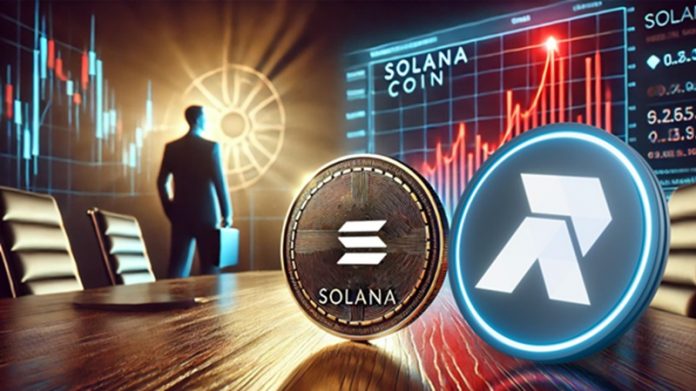
Amidst the volatility and uncertainty surrounding the Solana price, traders are increasingly drawn to emerging opportunities like RCO Finance. With its innovative features and highly successful presale, RCO Finance positions itself as a compelling alternative for investors seeking significant growth potential.

Let’s examine the Solana price movements and the factors that could give RCOF such extraordinary potential.

RCO Finance: Outsmarting the Market with AI

While the Solana price momentum stalls, RCO Finance is leading the way by pioneering the integration of cryptocurrencies with traditional financial assets through its advanced AI trading platform, eliminating the need for human managers or intermediaries.

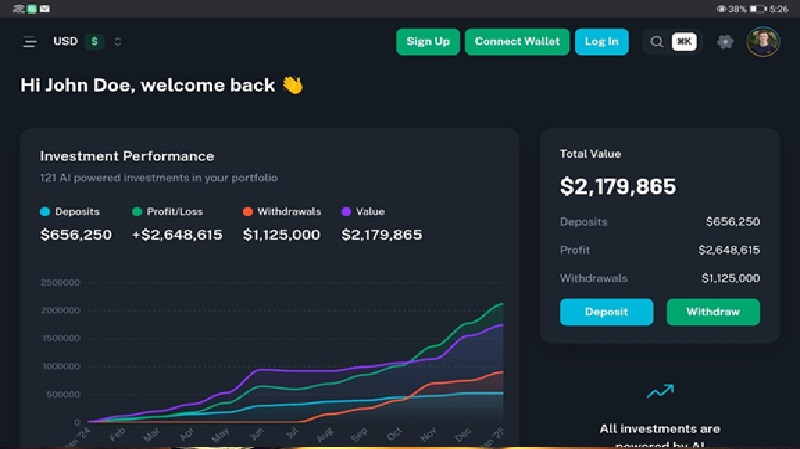
Central to RCO Finance is its AI-powered Robo-advisor, a transformative tool for crypto trading. The tool uses sophisticated algorithms to analyze market trends and develop personalized investment strategies tailored to each user. It serves as a valuable resource for both seasoned traders and newcomers alike.

Whether you’re just starting or have years of experience, the robo advisor learns your trading patterns over time, continuously refining its suggestions to improve your decision-making. Imagine receiving an alert about a token like PNUT, which surged significantly overnight.

Another feature that mainly attracts traders is RCO Finance’s approach to tokenizing tangible assets, such as real estate and commodities, which makes traditionally illiquid markets more accessible. This strategic move broadens investment horizons and enhances liquidity and flexibility within the ecosystem.

With its recent beta platform launch, RCO Finance is introducing a suite of advanced AI trading tools and automated analytics. Thus, it is setting a new standard for intelligent trading. And the best part? The beta platform allows users to experience its predictive capabilities without any KYC requirements.

Security is paramount in the digital realm, particularly in decentralized finance. The DeFi trading platform prioritizes safety by implementing robust security measures through Fireblocks. It also undergoes regular audits by the reputable SolidProof. These initiatives safeguard your investments, fostering confident trading.

Solana Price Rises: Will it hold As FTX deposits SOL to Binance?

The Solana price has recently bounced back to trade around $143.77 after experiencing a sharp decline, reflecting a 6% gain over the past week. Nevertheless, challenges persist, with FTX continuing to liquidate large amounts of SOL into Binance. This volatility follows optimism surrounding the U.S. Crypto Strategic Reserve announcement, which briefly pushed the Solana price to $179 before a tariff-related drop brought it back to $130.

Despite fluctuations, Solana remains a DeFi powerhouse, with its DEXs surpassing Ethereum’s volumes by 24% for five consecutive months, driven by platforms like Raydium and Orca. While technical indicators show bearish momentum for the Solana price, traders are watching its support at $136 and resistance at $150 amid growing competition.

Forget Solana Price Fluctuations: RCOF Presale Shines With Massive Growth Potential

While the Solana price momentum is slowing down, RCO Finance is attracting many investors, having successfully raised over $14 million in its ongoing token presale. Currently, in the fourth stage of its public presale, RCOF tokens are available at just $0.10.

Upon launch, the RCOF token price is projected to fall between $0.40 and $0.60, offering early investors the potential for gains exceeding 500%. Even more exciting, experts forecast an incredible 30,000x surge after its official launch.

On top of that, Users can earn interest rates of up to 20% per year by staking their RCOF tokens on the platform. By simply holding onto their tokens, users can generate additional income. Plus, RCO Finance distributes profits to its stakers every three months, presenting an enticing opportunity for those seeking passive income.

Seize this opportunity and consider purchasing RCOF presale tokens today!


For more information about the RCO Finance (RCOF) Presale:

Visit RCO Finance Presale

Join The RCO Finance Community

Crypto Insiders Say This Altcoin Could Be the Next Big Winner in 2025

1

Crypto insiders are buzzing with excitement as the cryptocurrency market experiences a whirlwind of volatility in early 2025. Major coins are bleeding value, while select altcoins show signs of explosive potential.

Amid this turbulence, a new contender, RCO Finance (RCOF), has caught the attention of savvy traders and analysts. With its innovative features and a presale that’s already delivering massive gains, RCOF is being tipped as the altcoin to watch this year, potentially eclipsing even the most established tokens.

A Shifting Market Fuels Altcoin Fever

The crypto market has been a rollercoaster lately, with Bitcoin (BTC) and Ethereum (ETH) facing significant corrections that have left investors searching for greener pastures.

Crypto insiders argue that this volatility is precisely why emerging altcoins with strong fundamentals and unique value propositions are stealing the spotlight. Unlike established coins burdened by market saturation, altcoins like RCO Finance (RCOF) offer untapped growth opportunities.

The recent surge of the lesser-known altcoins like the “Bluzelle (BLZ)” coin, which has delivered 100x returns for early adopters, is a testament to the potential lying dormant in emerging altcoins.

Similarly, RCO Finance (RCOF), currently in its fifth presale stage, has already seen its price climb 684% from $0.01275 to $0.10, signaling robust growth. With the next stage pushing the price to $0.13 and the final presale targeting $0.2142, crypto insiders predict a listing price between $0.4 and $0.6 on major exchanges.

Post-listing, analysts are even more bullish, forecasting that RCOF could soar past $1 as its platform gains traction, making it a prime candidate for the next big win.

The RCO Finance team isn’t resting on its laurels either. They’ve already launched a beta version of their platform, which attracted over 10,000 sign-ups eager to test its capabilities. Now, they’re putting the finishing touches on the alpha version, slated for release soon.

This rapid development pace underscores their commitment to delivering a game-changing financial ecosystem, further fueling optimism among crypto insiders about RCOF’s trajectory.

RCO Finance’s Standout Features Drive Hype

What sets RCO Finance (RCOF) apart in the crowded altcoin space is its cutting-edge technology and user-centric design. At the heart of the platform is its AI-powered Robo Advisor, a tool that’s revolutionizing how investors approach the market.

By analyzing vast datasets in real time, the Robo Advisor crafts personalized investment strategies tailored to each user’s goals and risk tolerance.

Whether it’s pinpointing the perfect entry for Bitcoin or catching a trending altcoin early, the Robo Advisor empowers novices and experts alike to maximize returns with minimal effort. Notably, crypto insiders have praised its ability to remove indecision and mitigate losses, noting that it’s like having an institutional-grade analyst in your pocket.

Another key draw is RCO Finance’s KYC-free ecosystem, a rarity in today’s heavily regulated financial landscape. This approach prioritizes privacy, allowing users to dive into decentralized finance (DeFi) without cumbersome identity checks.

Coupled with access to over 120,000 assets across 12,500 classes—from stocks and ETFs to tokenized real-world assets (RWAs) and cryptocurrencies—this breadth ensures that users can diversify like never before.

The platform’s smart contract, audited by SolidProof, adds an extra layer of trust, assuring investors that their funds are secure.

The Post-Launch RCOF Boom: A $5 Horizon?

The real fireworks are expected once the alpha version of the RCO Finance platform launches. Crypto insiders are predicting an explosive price surge for RCOF, with some estimating it could climb above $5 within months of the rollout.

This optimism stems from the platform’s ability to deliver on its promises—seamless automation, unparalleled asset access, and AI-driven insights—all of which are poised to attract a flood of new users.

The RCOF presale’s deflationary model, where unsold tokens are burned, further tightens supply, potentially driving value higher as demand spikes. Early investors could see their $1,000 turn into $30,000 at listing, but the post-launch momentum might push those gains even further.

Community governance via RCOF tokens also adds a democratic flair, letting holders shape the platform’s future while staking rewards and trading fee discounts to incentivize long-term engagement.

Crypto insiders see this blend of utility and innovation as a recipe for sustained growth, drawing parallels to early altcoin giants like Binance Coin.

For more information about the RCO Finance Presale:

Visit RCO Finance Presale

Join The RCO Finance Community

Microsoft Expands AI Ambitions by Developing AI Models, as xAI Scales up Data Center Infrastructure

0

Tech giant Microsoft is accelerating its efforts to compete with OpenAI, its longtime collaborator by developing its own advanced AI models and exploring alternative technologies to power its AI-driven products like copilot.

Reports reveal that Microsoft has built its own AI reasoning models comparable to OpenAI’s o1 and o3-mini. Microsoft was once the exclusive provider of data center infrastructure for OpenAI to train and run its AI models, but not any longer. Tensions between both companies escalated after OpenAI reportedly denied Microsoft’s request for technical details about how o1 operates.

OpenAI on the other hand blamed a lack of available compute for delaying its products, and compute capacity that became a source of tension between the AI company and Microsoft, its close collaborator and major investor.

However, in a blog post, Microsoft reiterated that “key elements” of its long-standing partnership with OpenAI remain in place through 2030, including its access to OpenAI’s IP, revenue-sharing arrangements, and exclusivity on OpenAI’s APIs.

To reduce its dependence on OpenAI, Microsoft is also testing AI models from xAI, Meta and Anthropic, and DeepSeek as potential replacements for OpenAI’s technology in Copilot. The tech giant which has invested approximately $14 billion in OpenAI, has taken further steps to diversify its AI strategy by hiring DeepMind and Inflection co-founder Mustafa Suleman to lead its AI initiatives.

Elon Musk-Owned xAI Scales up Data Center Infrastructure

Amidst Microsoft efforts to develop its own advanced AI model, Elon Musk-owned AI company, xAI, is making aggressive move to expand its data center infrastructure. The company has reportedly acquired a 1 million-square foot property in Southwest Memphis to bolster its AI data center infrastructure.

This new facility will complement xAI’s existing Memphis data center, reinforcing the city’s position as key AI hub.

XAl’s acquisition of this property ensures we’ll remain at the forefront of Al innovation, right here in Memphis,” said xAl senior site manager Brent Mayo.

It remains unclear whether this expansion is tied to a previously announced lease on a 522-acre site in Memphis. However, xAl is demonstrating a clear appetite for Al hardware. The company recently built a second data center in Atlanta, investing $700 million in chips and other infrastructure. Additionally, it has struck a $5 billion deal with Dell to purchase GPU-packed servers.

XAl’s data centers are critical for training and running its Al model family, Grok. The company has ambitious plans to upgrade its primary Memphis-based facility, known as Colossus, to house 1 million Nvidia GPUs this year-up from 100,000 in 2024.

However, Al’s rapid expansion in Memphis has sparked concerns among local residents, who argue that the growing data center footprint could strain th energy grid and negatively impact air quality. In response, xAl has sought to mitigate these concerns by supplying the local utility with discounted Tesla-manufactured batteries and building a water recycling plant.

The AI Power Shift

The developments at Microsoft and xAl signal significant shifts in the Al industry, with broad implications for competition, innovation, and infrastructure growth.

With all these developments, the Al industry is no-doubt entering a new phase where reliance on a single provider is diminishing, and competition is driving rapid technological advancements. The power struggle between Microsoft, OpenAl, and xAl will shape the future of Al, influencing everything from infrastructure development to the accessibility of Al-powered solutions for businesses and consumers:

With Microsoft, xAl, and other players building their own Al models, businesses will have access to a wider range of Al solutions. This could result in:

  • More customizable Al applications tailored to specific industry needs.
  • Potential price competition, making Al services more affordable.
  • Faster innovation cycles as companies seek to outperform competitors.

Looking Ahead

These recent developments signal a major shift in the Al landscape, with Al firms intensifying efforts to maintain market dominance.

As competition intensifies, the industry is set for rapid innovation, increased investment, and potential shifts in Al leadership. However, concerns over resource consumption and environmental impact may prompt regulatory scrutiny and push companies to adopt more sustainable practices.

Odds of a U.S. Recession Climbing between 39%-43% in 2025 are Consistent on Kalshi

0

Recent sentiment indicates that Kalshi, a prediction market platform, has raised the odds of a U.S. recession in 2025 to 43% as of early March 2025 from 39% showing a consistent increasing prediction odd. While Kalshi currently indicates a heightened perceived risk of a U.S. recession in 2025, with odds recently climbing to around 40%, these figures should be viewed as speculative and not conclusive. Economic conditions can change rapidly, and such platforms may amplify short-term sentiment rather than provide a reliable long-term forecast. This reflects a sharp uptick from earlier estimates, possibly influenced by recent economic data and policy uncertainty.

The Federal Reserve Bank of New York’s recession probability model, based on the yield spread between 10-year Treasury bonds and three-month bills, estimated a 29% chance of a recession by December 2025 as of early January 2025. This model has historically been a reliable indicator, though its probability has declined from a peak of 70% in mid-2023, indicating a shifting outlook that could now be climbing again toward 39% with new data.

In August 2024, J.P. Morgan raised its recession probability to 35% by the end of 2024 and maintained a 45% chance by the end of 2025. If updated with March 2025 economic signals (e.g., softening labor markets or tariff impacts), a 39% figure could fit within their evolving forecast. Goldman Sachs analysts increased their 2025 recession odds to 25% from 15% in August 2024, citing limited risk but acknowledging rising concerns. A jump to 39% could reflect more recent pessimism, though their latest public stance remains lower.

Bankrate Economist Survey: In January 2025, top economists pegged recession odds at 26% by year-end 2025, a series low. However, this optimism predates potential March 2025 developments, and a climb to 39% could indicate a reaction to newer risks.

Factors Driving the Increase

The unemployment rate rose to 4.2% by late 2024, with job growth slowing to 190,000 per month. If March data shows further deterioration (e.g., unemployment nearing 4.4% or job losses), recession fears would escalate, supporting a 39% probability.

With Trump’s inauguration in January 2025, proposed tariffs (e.g., 10-20% on all imports, 60% on Chinese goods) and immigration restrictions could disrupt trade and raise inflation. The Atlanta Fed’s GDPNow estimate reportedly dropped from a projected 2-3% growth for 2025 to a Q1 decline of 2.8% by early March, per X posts, reflecting tariff-related pessimism.

Consumer Sentiment: The University of Michigan’s Consumer Sentiment Index fell 10% in February 2025, signaling caution that could curb spending, a key driver of GDP. This aligns with a potential uptick in recession odds.

Yield Curve and Fed Policy: The yield curve, previously inverted, normalized by late 2024, reducing some recession signals. However, if the Fed cuts rates too slowly (projected at two cuts in 2025) amid rising inflation from tariffs, economic growth could stall, pushing odds toward 39%.

A 39% probability sits between the more optimistic forecasts (e.g., Bankrate’s 26%, Goldman’s 25%) and the higher-end estimates (e.g., J.P. Morgan’s 45%, Kalshi’s 43% with consistent odd seating at 39%). It suggests a growing but not yet dominant concern, likely reflecting perhaps from a financial institution or market model adjusting for Q1 GDP declines or labor market softening. Betting markets like Kalshi, which react quickly to news, could have nudged odds from 23% post-election (November 2024) to 39-43% as tariff and growth fears mounted.

Recession odds fluctuate with new data. In 2023, some predicted near-100% odds for 2024, yet growth hit 3%. A 39% chance means a recession is possible but not certain. It aligns closely with Kalshi’s 43% and could reflect a conservative midpoint. The odds of a U.S. recession climbing to 39% in 2025 are consistent with a cautious shift in economic outlook. Driven by potential policy shocks (tariffs, immigration), softening fundamentals, and market reactions, this figure suggests heightened risk but not inevitability.