DD
MM
YYYY

PAGES

DD
MM
YYYY

spot_img

PAGES

Home Blog Page 173

Gold Seen Gapping Higher as Markets Price Gulf Escalation, Tokenized Bullion Trades at Premium

1

U.S. and Israeli strikes on Iran have sharpened risk aversion across global markets, with bullion positioned as a primary hedge against geopolitical and inflation shocks when trading resumes.

Spot gold ended Friday up 1.7% at $5,277 per troy ounce, its highest close since January 30. The metal’s record high stands at $5,594.82, reached on January 29. Analysts expect safe-haven inflows to accelerate at Monday’s open, particularly if concerns over oil supply disruption intensify.

Edward Meir, analyst at Marex, said commodities could see an immediate surge. “I think you’re going to see a knee jerk spike up in most commodity markets, including gold and oil. This will be a natural response to the outbreak of hostilities, which was rather unexpected in terms of scale and scope.”

He added that gold could initially jump by as much as $200 per ounce before paring gains. “The markets are rather dispassionate when it comes to military conflicts; the only thing investors are ultimately focused on is whether the oil flows will be interrupted so once the initial spike is over, the initial rally tends to fade,” he said.

The Strait of Hormuz, a conduit for roughly one-fifth of global oil consumption, remains central to pricing expectations. Any sustained restriction on crude flows would reinforce inflation concerns, potentially strengthening the case for bullion as a hedge.

Tokenized gold signals weekend bid

With traditional exchanges closed, digital proxies have offered an early gauge of sentiment. Hugo Pascal, a precious metals trader at InProved, said tokenized gold was trading at a premium over spot benchmarks.

“PAX Gold (PAXG) is currently leading the charge at $5,344/oz (+2.2% since Friday), while Tether Gold (XAUt) has climbed to $5,292/oz (+1.2%),” he said. “With traditional exchanges closed, tokenized gold is currently trading at a premium, signaling a bullish ‘flight to safety’ ahead of the week’s open. Our digital proxies are showing a strong weekend bid.”

Pascal cautioned that weekend premiums can exaggerate the magnitude of any opening gap.

“That weekend proxy premiums often overstate the initial gap but accurately reflect the direction,” he said.

Broader risk-off positioning expected

Tim Waterer, chief market analyst at KCM Trade, said gold would likely attract heightened demand as investors reassess portfolio risk.

“Gold is likely to be in higher demand than usual when markets open on Monday,” he said. “Given the risks regarding how long the conflict may last, which other nations could be dragged in, and inflation fears, gold is expected to assume its mantle as the safe haven asset of choice.”

He added that equities and other risk-sensitive assets could face selling pressure. “Investors will be looking for the best place to park their funds, and gold will likely be atop that list,” he said.

The interplay between bullion and oil will be decisive. A sustained spike in crude could fuel inflation expectations and lift gold through both hedging demand and potential downward pressure on real yields. Conversely, if energy flows remain largely intact, gains may moderate after an initial surge.

Dubai hub faces logistical bottlenecks

Physical supply chains are also under strain. Dubai, one of the world’s largest bullion trading hubs, is facing temporary paralysis as airlines suspend flights amid escalating hostilities.

Three industry sources said physical gold flows to and from Dubai would be severely curtailed in the coming days. The emirate is a key supplier to Switzerland, Hong Kong, and India. Gold is typically transported by air due to its high value-to-weight ratio and associated security and insurance requirements.

“It looks like most if not all airlines have cancelled their flights, so not going to be any gold moving for a couple of days,” one source said.

The extent of global supply disruption will hinge on how long flight cancellations persist. Another source said early-week price action would likely be driven more by financial flows through Shanghai, London, and New York than by immediate physical tightness.

“The major locations – China, India, New York, London and Zurich – are still okay,” a trader said.

The market focus is currently squarely on geopolitics and energy transit risk. If the conflict widens or oil exports from the Gulf are materially affected, bullion’s bid could extend beyond an opening spike, testing levels closer to January’s record peak.

Middle East Conflict Jolts markets, Fueling Inflation Fears: Oil Expected to Hit $100 Per Barrel

0

What had long been treated by investors as a tail risk has abruptly moved to the center of global market calculations after U.S.-Israel strikes killed Iran’s Supreme Leader, Ayatollah Ali Khamenei, triggering retaliatory attacks on Gulf cities and renewed instability across the region.

Airlines halted flights, and tankers carrying crude and refined products suspended transit through the Strait of Hormuz, a maritime chokepoint that handles a significant share of global oil shipments. As noted in a Reuters’ report, the immediate market concern is not only the prospect of sustained military escalation, but the political vacuum in Tehran and the potential fragmentation of authority within the Islamic Republic’s complex power structure.

The uncertainty surrounding succession, the ideological composition of the regime’s support base, and the entrenched influence of the Islamic Revolutionary Guard Corps complicate assessments of what follows. Investors now face the possibility of a prolonged regional conflict rather than a contained exchange.

“Middle East tail risks have increased. Markets will reprice from geopolitical shock to regime risk shock, prolonged conflict, not just retaliation, unless Iran says it wants to negotiate,” Reuters quoted Rong Ren Goh, portfolio manager in the fixed income team at Eastspring Investments in Singapore, as saying.

The evolution from tactical retaliation to structural regime risk marks a shift in market psychology. During previous flare-ups, including last June’s “12-Day War” in Iran and repeated escalations in Ukraine, investors largely treated volatility as temporary. Analysts now warn that pattern recognition itself may be distorting pricing.

Barclays analysts noted that markets have historically sold geopolitical risk premiums once hostilities begin.

“History argues strongly in favor of selling geopolitical risk premium when hostilities start,” they wrote. “What worries us is that investors have now learned this pattern and might be underpricing a scenario where containment fails.”

Oil, inflation, and bond markets under strain

Energy markets are the most direct transmission channel. Brent crude has already risen roughly 20% this year to around $73 a barrel. The trajectory from here depends on whether Gulf oil flows are materially disrupted and how major producers respond.

William Jackson, chief emerging markets economist at Capital Economics, said a prolonged conflict that materially affects supply could push oil toward $100 per barrel. That, he estimates, could add 0.6 to 0.7 percentage points to global inflation — a development that would complicate central bank policy paths.

Higher oil prices would feed into transport, manufacturing, and food costs worldwide, with Europe potentially more exposed given its proximity to Hormuz-linked supply routes following the reduction of Russian energy flows. Tariq Dennison of Zurich-based GFM Asset Management said the inflation impact could be more pronounced in Europe than in the United States for that reason.

The bond market response is less straightforward. U.S. Treasuries and gold have attracted inflows this year as hedges against geopolitical stress and policy unpredictability under President Donald Trump. Gold is up 22% in 2026 after a record run in 2025, while the benchmark S&P 500 index is up just 0.5%.

Yet some fixed-income investors question whether Treasuries remain an unequivocal refuge. Goh pointed to the steady decline in U.S. 10-year yields, now below 4%, and questioned whether buying at those levels makes sense if oil-driven inflation resurfaces. A sustained energy shock could reprice inflation expectations upward and pressure long-duration bonds.

Safe havens tested, equities face repricing risk

Markets are expected to open with heightened volatility. Charles Myers, chairman of Signum Global Advisors, said prior to the strikes that markets were positioned for “a limited surgical strike,” not a decapitation of Iran’s leadership.

The distinction matters. A leadership vacuum introduces regime continuity risk, raising questions about internal factionalism, potential hardline consolidation, and the possibility of spillover across Lebanon, Iraq, Syria, and the Gulf.

Ed Yardeni of Yardeni Research offered a more tempered view, suggesting that any initial selloff in equities could reverse if investors conclude the conflict will be short-lived and oil prices stabilize. He also said gold could retrace gains and bond yields fall if markets begin to price in a post-war decline in energy costs.

Barclays, however, cautioned against buying an immediate dip, arguing that risk-reward dynamics remain unfavorable until the scale and duration of the conflict become clearer. The firm suggested a deeper correction — potentially exceeding 10% in the S&P 500 — might eventually create a more compelling entry point.

Beyond oil, analysts warn of fragilities elsewhere. Elevated valuations tied to the artificial intelligence boom and stress in private credit markets could amplify downside moves if liquidity tightens. In that scenario, geopolitical shock would act as a catalyst rather than the sole cause of repricing.

At the core of the market’s dilemma is a simple but unresolved question: whether the strikes mark the beginning of a contained confrontation or the start of a structural realignment in the Middle East’s political order. The answer will shape oil supply, inflation expectations, bond yields, and global risk appetite in the weeks ahead.

Global Shipping Diverts From Suez and Hormuz as Gulf Conflict Escalates, Tankers Hit, and War Risk Costs Surge

0

Major container lines, including Maersk, Hapag-Lloyd, and CMA CGM are rerouting vessels around the Cape of Good Hope, abandoning the Suez Canal and the Bab el-Mandeb Strait after U.S. and Israeli strikes on Iran and Tehran’s declaration that navigation through the Strait of Hormuz has been closed.

The diversion marks a renewed shock to global supply chains, just months after some carriers began cautiously returning to the Red Sea corridor following two years of disruption linked to attacks by Yemen’s Houthi movement.

In a statement on Sunday, Maersk said it would pause future Trans-Suez sailings through the Bab el-Mandeb Strait “for the time being” due to the deteriorating security situation. The Danish group had last month announced a gradual resumption of some Suez services, describing it as a key step toward normalizing trade routes.

Maersk said it would continue monitoring developments and would prioritize the Trans-Suez route again once security conditions permit. It added that services in the United Arab Emirates, Oman, and Qatar may also face disruption.

Hapag-Lloyd said it was rerouting its India–Middle East–Mediterranean IMX service around southern Africa and would restore the route once safe passage is possible. The company also announced a war risk surcharge for cargo moving to and from the Upper Gulf, Arabian Gulf, and Persian Gulf, effective March 2.

CMA CGM said it would apply an emergency conflict surcharge on shipments linked to Iraq, Bahrain, Kuwait, Yemen, Qatar, Oman, the UAE, Saudi Arabia, Jordan, Djibouti, Sudan, Eritrea, and Egypt’s Red Sea port of Ain Sokhna. It has suspended Suez Canal transits and redirected sailings around Africa.

Mediterranean Shipping Company said it was suspending all cargo bookings to the Middle East until further notice and instructed vessels in or en route to the Gulf to seek safe shelter.

Hormuz closure jolts energy flows

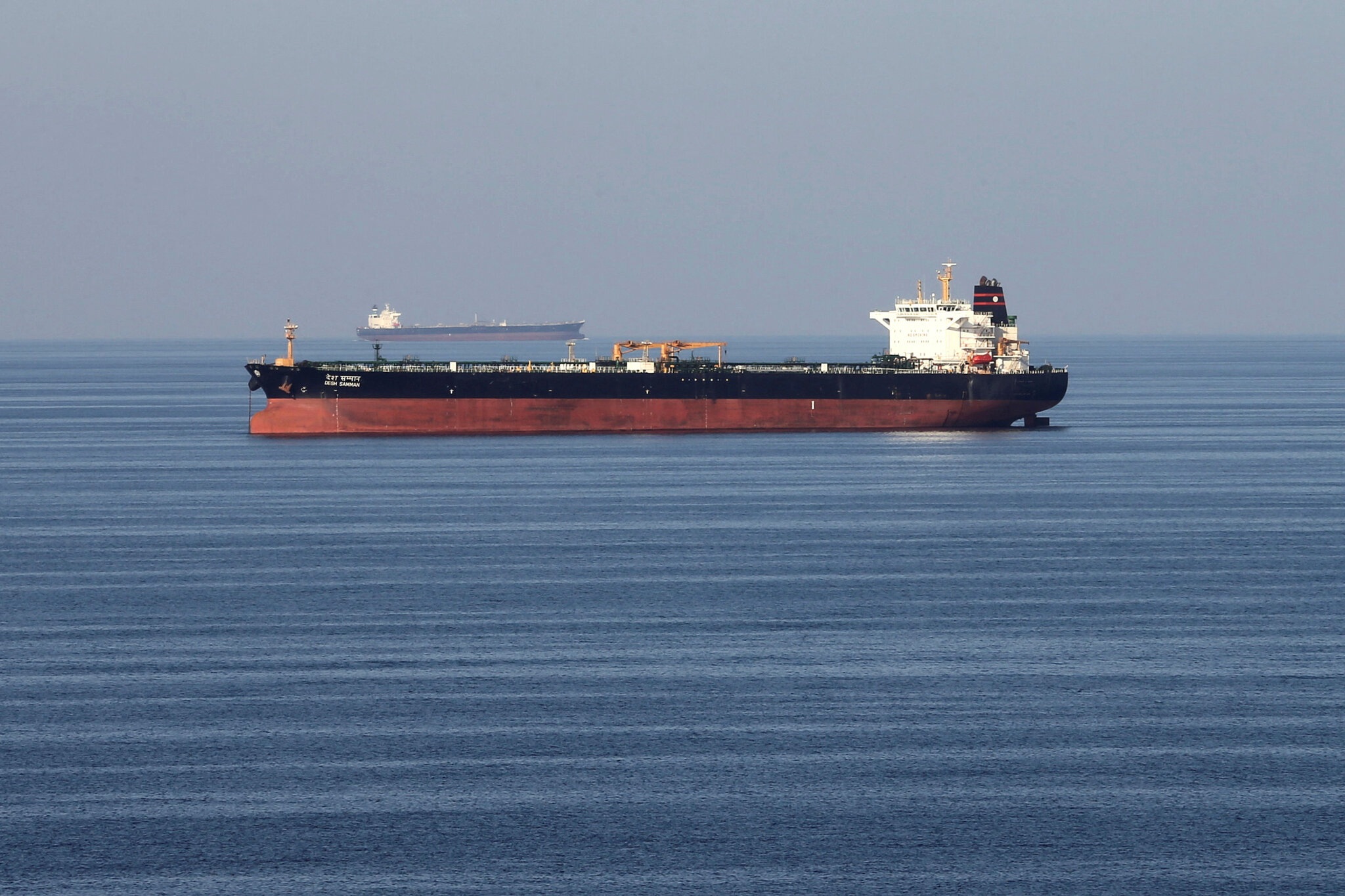
Iran warned that the Strait of Hormuz—through which roughly one-fifth of global oil consumption transits—has been closed. Even partial or temporary restrictions would have immediate implications for crude exports from Saudi Arabia, the UAE, Kuwait, Iraq, and Qatar.

Shipping data on Sunday showed more than 200 vessels, including oil and liquefied natural gas tankers, had dropped anchor around Hormuz and adjacent waters. Asian refiners, among the largest buyers of Gulf crude, are reviewing stockpiles and contingency supply plans.

At least three tankers were reportedly damaged off the Gulf coast. A projectile struck the Marshall Islands–flagged product tanker MKD VYOM off Oman, killing a crew member, according to its manager, V.Ships Asia. A separate Palau-flagged oil tanker under U.S. sanctions was hit near Oman’s Musandam peninsula, injuring four people, local authorities said.

It remains unclear who launched the projectiles and drones involved in Sunday’s incidents. The spike in maritime risk underscores the vulnerability of commercial shipping to spillover from military confrontation.

The International Maritime Organization urged companies to avoid transiting affected waters until security conditions improve.

The rerouting of container ships around the Cape of Good Hope adds roughly 10 to 14 days to Asia–Europe voyages, increasing fuel consumption, vessel operating costs, and equipment imbalances. During the 2023–2024 Red Sea crisis, similar diversions drove container freight rates sharply higher and disrupted delivery schedules worldwide.

War risk insurance premiums are already rising. Underwriters typically price coverage daily in conflict zones, meaning sustained hostilities can multiply per-voyage insurance costs several times over baseline levels. For tankers carrying high-value crude or refined products, the financial exposure is significant.

Hapag-Lloyd’s war risk surcharge and CMA CGM’s emergency conflict surcharge indicate carriers are moving quickly to pass through added security costs to shippers. Those charges may ultimately filter down to importers and consumers, particularly if disruptions extend beyond several weeks.

Jakob Larsen, chief safety and security officer at shipping association BIMCO, said the U.S.–Israeli strikes have “dramatically” increased risks to ships operating in the Gulf and surrounding waters. He warned that vessels with business ties to U.S. or Israeli interests may face heightened exposure, though others could also be struck deliberately or inadvertently.

Impact of straining chokepoints on the oil market

The simultaneous impact of the crisis on two of the world’s most critical maritime chokepoints, the Strait of Hormuz and the Bab el-Mandeb, is expected to exacerbate its impact on energy. Hormuz is central to energy flows; Bab el-Mandeb connects the Red Sea to the Gulf of Aden and is the gateway to the Suez Canal, a vital artery for container trade between Asia and Europe.

When both corridors are compromised, rerouting becomes the default option. The Cape of Good Hope route avoids Middle Eastern conflict zones but increases transit times, fuel usage, and carbon emissions, complicating shipping companies’ decarburization targets.

The Suez Canal Authority had hoped that improving Red Sea security would restore normal traffic levels in 2026. Renewed diversion threatens canal revenues and Egypt’s foreign currency inflows at a time of economic fragility.

Energy markets are closely tied to maritime security in the Gulf. If crude exports are materially disrupted, oil prices could spike further, feeding inflationary pressures globally. Shipping bottlenecks would compound the impact by raising logistics costs for manufactured goods and commodities.

The convergence of military escalation, maritime insecurity, and supply chain rerouting represents a systemic risk to global trade. Unlike previous episodes confined to either the Red Sea or Hormuz, the present situation links containerized trade routes with energy export lanes in a single theatre of conflict.

Currently, carriers are prioritizing crew safety and asset protection. The resumption of normal transits will depend on credible security guarantees and de-escalation in the Gulf. This means the world’s shipping arteries are adjusting to a longer, costlier route around Africa, with ripple effects likely to be felt across energy markets, freight pricing, and consumer supply chains.

$529 million Wagered on Polymarket as Iran Strike Bets Trigger Insider Trading Concerns

0

More than $529 million was traded on Polymarket contracts tied to the timing of U.S. and Israeli military strikes on Iran, according to Bloomberg.

This has turned a geopolitical flashpoint into one of the largest event-driven betting frenzies in the history of crypto-based prediction markets.

The contracts focused heavily on whether the United States would strike Iran by February 28. According to blockchain analytics firm Bubblemaps SA, six newly created accounts collectively generated about $1 million in profits by correctly wagering that a strike would occur within that window. The clustering of gains among a handful of fresh wallets has raised questions about whether the trades were purely speculative or reflected access to non-public information.

Nicolas Vaiman, chief executive of Bubblemaps, said that the circulation of information “involving war or conflict,” combined with Polymarket’s anonymity, “can create incentives for informed participants to act early.” While blockchain records allow analysts to trace wallet activity, they do not necessarily reveal the identity of the individuals behind them, complicating any assessment of intent or access.

No evidence has been publicly presented showing that the accounts were linked to government insiders or military personnel. Still, it is believed to be a pointer to how decentralized markets can rapidly translate geopolitical rumor, intelligence chatter, or strategic signaling into financial positioning.

Information asymmetry in decentralized markets

Prediction markets are often described as efficient aggregators of dispersed information. Traders who believe they have superior insight — whether from policy analysis, open-source intelligence, or informal networks — can express that view financially. In theory, prices converge toward probabilistic forecasts.

In practice, the Iran strike contracts highlight the structural vulnerability of such markets to asymmetric information. In traditional equity or derivatives markets, suspicious trading ahead of major events is subject to regulatory surveillance and insider trading statutes. By contrast, crypto-based prediction platforms operate in a patchwork regulatory environment, particularly when users transact via pseudonymous wallets.

Polymarket itself has faced scrutiny from U.S. regulators in the past over compliance questions, and it currently restricts U.S.-based users. Nonetheless, U.S.-linked geopolitical events continue to drive liquidity on the platform, reflecting its global user base.

The scale of the $529 million figure is significant for another reason: it demonstrates that prediction markets are no longer fringe instruments. Liquidity at that level can shape narratives, as rising implied probabilities may influence media coverage and public perception of the likelihood of military action.

In January, analytics firm Polysights observed an apparent spike in contracts tied to whether Iran’s Supreme Leader, Ayatollah Ali Khamenei, would cease to hold office by the end of March. Following his death in the strikes, those contracts were resolved decisively, reinforcing the perception that some traders had been positioned ahead of seismic political change.

Ethical boundaries and platform safeguards

The controversy has also reignited debate over the ethical perimeter of event contracts. Critics argue that markets tied to war, regime change, or leadership mortality risk create perverse incentives, even if traders have no direct influence over outcomes.

Competing U.S.-regulated prediction exchange Kalshi has sought to draw clearer lines. Chief executive Tarek Mansour said the company does not list markets directly tied to death.

“We don’t list markets directly tied to death. When there are markets where potential outcomes involve death, we design the rules to prevent people from profiting from death,” he said, adding that Kalshi would reimburse all fees collected from related bets.

Polymarket’s model differs in that it lists event contracts based on verifiable public outcomes, regardless of the moral weight attached to them. The Iran strike contracts were structured around the timing of military action rather than personal mortality. Even so, the overlap between regime risk and lethal force has sharpened scrutiny.

The situation raises regulatory questions that extend beyond a single platform. If a small group of traders can accumulate significant positions ahead of a military operation, authorities may examine whether existing market abuse frameworks are sufficient in decentralized contexts. Enforcement challenges are amplified when participants operate across jurisdictions and through self-custodied wallets.

At a broader level, the surge in geopolitical betting reflects the financialization of global risk. Wars, elections, and leadership transitions are increasingly treated not only as political events but as tradable volatility. As liquidity deepens and participation broadens, prediction markets may become both barometers of sentiment and arenas where informational advantages are monetized in real time.

However, the Iran strike contracts have delivered outsized returns to a narrow set of traders and intensified debate over whether decentralized forecasting platforms can balance open participation with safeguards against potential misuse — particularly when the stakes involve matters of national security and armed conflict.

India and the EU Finalize Landmark Trade Deal with MFN Clause, Tariff Cuts on Goods, and Deepened Cooperation

0

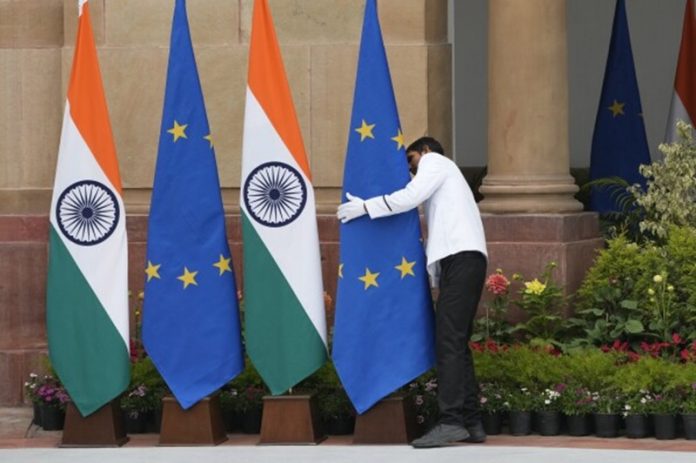
India and the European Union have agreed to grant each other Most Favored Nation (MFN) status for five years after their long-delayed free trade agreement (FTA) takes effect, preventing either side from offering more favorable tariff terms to third countries during that period, according to a draft text released by India’s trade ministry on Friday.

The deal — finalized last month after more than a decade of negotiations — aims to slash tariffs on most goods, double EU exports to India by 2032, and generate annual duty savings of €4 billion ($4.7 billion) for European companies. It covers 96.6% of traded goods by value, eliminating or significantly reducing tariffs on the vast majority of bilateral trade flows.

Key exclusions include agriculture-related items such as soya, beef, sugar, rice, and dairy products, which remain outside the tariff liberalization scope — reflecting sensitivities on both sides regarding farm sectors.

Core Commitments and Implementation Mechanisms

Both sides have locked in commitments to avoid imposing new import or export restrictions beyond existing World Trade Organization (WTO) rules.

The agreement also deepens cooperation on digital trade, customs facilitation, and sustainability:

Customs and Trade Facilitation — Alignment of food safety and plant health measures with WTO standards, streamlined certification and audit procedures, enhanced customs cooperation, and faster clearance of goods. Annual import data exchange will begin one year after entry into force to monitor implementation and tariff preference utilization. Both parties commit to non-discriminatory, accessible appeal procedures for customs decisions affecting imports, exports, or goods in transit.

Digital Trade — Commitments to curb unjustified barriers, promote an open and secure online environment, and recognize electronic contracts, signatures, and authentication. The draft explicitly preserves each side’s authority over personal data protection and cross-border data transfer rules while recognizing privacy as a fundamental right.

Green Transition — The EU will mobilize finance and investment to support India’s greenhouse gas emission reduction efforts, aligning with broader climate cooperation goals.

The agreement is expected to enter into force approximately one year after legislative ratification by both sides.

The Economic Significance

The MFN clause for five years provides mutual assurance against future preferential deals that could undermine the benefits of the agreement. For the EU, the deal opens India’s rapidly growing consumer market — the world’s third-largest economy — while securing better access for European goods in sectors like machinery, pharmaceuticals, automotive components, and chemicals. For India, it offers enhanced export opportunities in textiles, apparel, leather goods, chemicals, and engineering products, while attracting European investment in manufacturing and green technologies.

The exclusion of key agricultural products is believed to underline political realities on both sides: India protects its large farm sector and food security concerns, while the EU safeguards its heavily subsidized agricultural producers.

The India-EU FTA arrives amid heightened global trade tensions, including U.S. tariff actions under President Trump and ongoing disruptions from U.S.-China decoupling. The agreement strengthens India’s position as a “China+1” alternative for European companies seeking diversified supply chains, while giving the EU preferential access to one of the world’s fastest-growing consumer markets.

Both sides have emphasized the deal’s role in promoting economic security and resilience. The digital trade chapter addresses emerging issues like data flows and e-commerce, while the green finance commitment aligns with EU climate goals and India’s net-zero ambitions by 2070.

Implementation and Ratification Outlook

Ratification processes are expected to take 12–18 months. In the EU, the agreement requires approval from the European Parliament and member states. In India, it will need parliamentary endorsement and alignment with domestic regulations. Once in force, annual data exchanges and joint committees will monitor compliance and address implementation issues.

The deal is widely seen as a win-win for both economies: the EU gains market access and supply-chain diversification, while India secures investment, technology transfer, and export growth in non-agricultural sectors. The MFN clause provides a five-year stability window, shielding both sides from third-country preferential deals that could dilute benefits.

Amid accelerating global trade fragmentation, the India-EU FTA stands out as a major counterweight — deepening ties between the world’s largest democracy and the world’s largest single market while promoting rules-based commerce, digital cooperation, and green transition in an increasingly uncertain geopolitical environment. While the exclusion of agriculture underscores the pragmatic limits of liberalization, the agreement’s breadth and ambition signal a new chapter in one of the world’s most consequential economic relationships.