

DD
MM
YYYY

PAGES

DD
MM
YYYY

spot_img

PAGES

Home Blog Page 176

AI Hype Meets Reality as Companies Quietly Rehire Workers They Once Laid Off

0

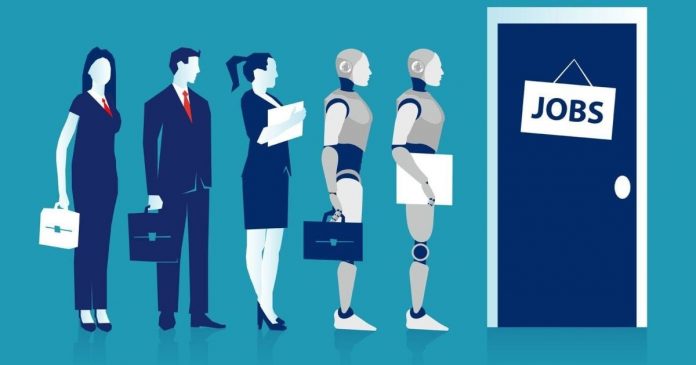
As the global rush to adopt artificial intelligence reshapes corporate priorities, a new trend is emerging: companies that once trimmed staff to cut costs or make room for automation are now bringing many of those workers back.

Fresh data from workplace analytics firm Visier, shared with Axios, shows that organizations are rehiring a rising number of employees they had previously laid off—a reversal that highlights how the practical limits of AI are colliding with boardroom optimism.

Visier analyzed employment data from 2.4 million workers across 142 companies worldwide and found that 5.3 percent of laid-off employees later returned to their former employers. While that rate has been steady for years, it has recently started to tick up—an early sign that automation technologies are not replacing human labor as quickly as many executives once projected.

Andrea Derler, principal at Visier, said the trend reflects a growing realization inside many firms: AI tools are impressive, but they are not yet capable of fully performing or managing complex human work.

She said Artificial Intelligence has been a convenient explanation for layoffs, but not yet an entirely justified one.

That disconnect between promise and performance is now forcing companies to rethink their workforce strategies. While AI-driven agents and digital workflow systems are becoming more common, most have proven to be supplements rather than substitutes for skilled employees. Instead of eliminating positions outright, the technology often automates select tasks—leaving gaps that still require human oversight, judgment, or creativity.

The cost of filling those gaps has been unexpectedly high. Many companies, Derler said, underestimated the true expense of large-scale AI deployment—from acquiring hardware and building secure data infrastructure to training models and ensuring regulatory compliance.

Executives are finding that these investments don’t come cheap, and the timeline for realizing returns is longer than expected, she noted.

According to Techspot, her observation echoes findings from MIT research showing that about 95 percent of organizations have yet to record measurable financial benefits from their AI spending. Steve Sosnick, chief strategist at Interactive Brokers, put it more bluntly, saying: “Maybe all this money is not actually being spent all that wisely.”

This wave of course correction has been amplified by another reality: the hidden costs of layoffs. Data from workforce management firm Orgvue shows that companies spend roughly $1.27 for every $1 saved from workforce reductions, once factors like severance, unemployment benefits, rehiring, and lost productivity are taken into account.

That math is prompting many businesses to rethink the “AI efficiency” narrative that drove mass layoffs in 2023 and early 2024, when companies across sectors—from tech to logistics to finance—shed tens of thousands of jobs citing automation readiness. But as integration challenges mount, some of those same firms are rehiring engineers, analysts, and operations staff to stabilize workflows that AI systems failed to fully replace.

Behind the scenes, many executive teams are discovering that AI projects, far from being plug-and-play solutions, require sustained investment in human capital—data scientists, systems integrators, compliance experts, and experienced staff familiar with the company’s processes. Without that human layer, AI models can underperform, produce inaccurate results, or cause costly disruptions.

Derler said the pattern now confronting many leaders is cyclical: Layoffs bring temporary relief to the balance sheet or appease investors. But as the limits of automation become clear, companies often end up calling back the very people they let go.

That cycle is becoming increasingly visible in industries like customer service, finance, and retail, where firms that replaced human agents with chatbots or AI systems are reinstating staff to handle complex or high-value interactions that automation couldn’t manage effectively.

The message, experts say, is not that AI has failed—but that its economic impact remains uneven and often overestimated in the short term. As organizations race to modernize, the most successful ones may be those that blend automation with human judgment rather than treating the two as substitutes.

In the end, the return of laid-off workers may be less a sign of retreat and more an acknowledgment that the “AI revolution” still needs a distinctly human workforce to run it.

German Exports to the US Rebound Amid Tariff Pressures

0

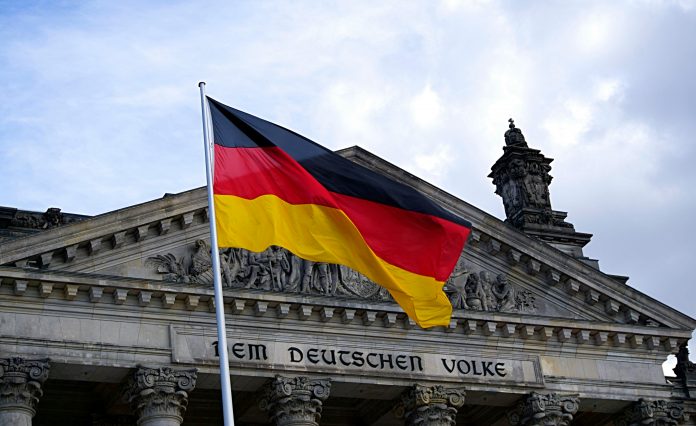
Germany’s export sector showed signs of recovery in September 2025, with overall exports rising 1.4% month-on-month—surpassing economists’ expectations of a modest 0.5% gain. This uptick was largely driven by a sharp 11.9% increase in shipments to the United States, marking the first growth in US-bound exports in six months after five consecutive declines.

The rebound comes against the backdrop of escalating US tariffs imposed by the Trump administration since early 2025, which had previously hammered German trade. Year-over-year, exports to the US remain down 14%, reflecting the ongoing drag from a baseline 15% tariff on EU goods, plus additional levies on key items like steel and aluminum.

Exports to EU countries also climbed 2.5% in September, while shipments to non-EU nations held steady. Despite the monthly gains, Germany’s overall exports are still below pre-tariff levels from March 2025, when President Trump’s “Liberation Day” announcement triggered global market turmoil and retaliatory measures from trading partners.

For context, Germany’s trade surplus with the US hit a record €65 billion ($66.95 billion) in the first 11 months of 2024, underscoring the stakes for its export-dependent economy.

German Government Engages Pharma Sector on US Tariff Challenges

In response to the tariff environment, the German government is preparing to convene representatives from the pharmaceutical industry to strategize on mitigating impacts from US trade policies.

This follows earlier assumptions that a 15% tariff rate would apply to pharmaceuticals and heavy trucks, as stated by government spokespeople in September 2025. While pharma products have largely been exempt from steeper levies—such as the 39% tariffs hitting other Swiss imports—the sector remains vigilant amid ongoing US Section 232 investigations into national security implications for drug supplies.

The discussions align with broader EU efforts, including a July 2025 trade agreement capping tariffs at 15% for EU exports and exemptions for critical sectors like chemicals and pharma. European drugmakers, including German giants, have lobbied US officials to avoid tariffs that could raise costs and disrupt patient access, arguing they contradict Trump’s goals on drug pricing and life expectancy.

Recent deals, such as Pfizer’s October 2025 agreement for tariff relief in exchange for price cuts in Medicaid, highlight how firms are negotiating carve-outs. These moves come as tariffs threaten to stall Germany’s growth for a third year, with Economy Minister Robert Habeck warning of reduced competitiveness.

Finance Minister Lars Klingbeil has called for swift bilateral solutions, noting that high levies on EU imports like German pharma and machinery would also inflate US consumer prices. The pharma sector—Europe’s top export to the US—hopes investments and trade pacts will shield it from further escalation.

The 11.9% surge in German exports to the US in September 2025 signals a tentative stabilization in bilateral trade, potentially easing some immediate pressures on Germany’s export-driven economy after months of tariff-induced contraction.

This uptick contributed to overall exports rising 1.4% month-on-month—exceeding forecasts of 0.5%—and helped narrow the trade surplus to €15.3 billion, the lowest in 11 months, as imports jumped 3.1% due to restocking and a weaker euro.

Economists view this as evidence of a modest post-summer rebound, but the gains are fragile: US-bound shipments remain 7.4-14% below year-ago levels, and total exports are still under pre-tariff March 2025 figures.

Persistent US levies 15% baseline plus sector-specific hikes could delay a fuller recovery, with analysts warning of “rough headwinds” and no quick return to growth. For Germany’s GDP, where US exports account for about 2.5%, this implies a shallow uplift—perhaps adding 0.1-0.2% to Q4 2025 forecasts—but risks stalling if new tariffs materialize, exacerbating structural weaknesses like high energy costs and competition from China.

DeAgentAI ($AIA) Price Surge, 862% Rally Driven by Piverse Partnership

0

DeAgentAI ($AIA), a decentralized AI agent infrastructure platform built on the Sui blockchain, has experienced an explosive 862% price increase over the past 24 hours, peaking at around $16.26 before a slight pullback to approximately $14.22–$15.16 as of November 8, 2025.

This surge has propelled its market cap to roughly $1.85 billion, making it one of the top-performing altcoins amid a broader market dip. The rally decoupled from Bitcoin, showing a negative correlation of -0.60, highlighting speculative momentum independent of BTC’s trends.

The primary catalyst is DeAgentAI’s newly announced partnership with Piverse also referred to as Pieverse in some reports, a blockchain protocol specializing in verifiable on-chain invoices and timestamped receipts.

This collaboration integrates DeAgentAI’s autonomous AI agents into Piverse’s infrastructure, enabling: Automated Invoice Processing: AI agents can now verify, automate, and settle on-chain invoices tamper-proof and auditable manner.

Binance Wallet Integration: Users can make invoice payments directly via Binance Wallet, using $AIA as the settlement medium, which boosts real-world utility for enterprise and Web3 applications.

This partnership aligns with DeAgentAI’s core mission: providing a scalable, multi-chain framework for AI agents to trade, collaborate, and operate autonomously without human intervention.

Backed by investors like Web3.com Ventures, SNZ Capital, KuCoin Ventures, Vertex Capital, and Valkyrie Fund, the project has seen integrations with OKX Wallet and Sui Network, further enhancing its ecosystem.

Trading volume spiked to over $107 million a 2.5x increase, with whales accumulating 1.2 million tokens at $8.50 levels and staking locks rising 12%.The broader AI-crypto narrative has amplified the hype, with over 400,000 daily active users engaging DeAgentAI’s tools like Truesights AI-driven market insights and the upcoming CorrAI no-code strategy builder.

On X (formerly Twitter), discussions emphasize the “AI-Fi infra play” potential, with community sentiment bullish on sustained adoption. $AIA broke key Fibonacci resistance at $3.80–$8.50, with RSI(14) at 75 (overbought on 1H charts) and MACD showing +0.042 bullish divergence.

Stochastic at 88% signals potential short-term exhaustion. Immediate support at $10.00 (R1 pivot), with downside risks to $8.58 or $5.00 on profit-taking. Upside targets: $20+ if momentum holds, per analyst forecasts eyeing $35.80 by 2026.

On-Chain Metrics: TVL up 15% to $45 million post-partnership, but Chaikin Money Flow (CMF) indicates slowing outflows without strong inflows yet—suggesting speculation over deep liquidity.

Supply Dynamics: Total supply: 1 billion tokens; circulating: ~13% (130 million). 87% locked, with unlocks starting September 2026 (44% insider allocation), posing future dilution risks.

While the Piverse tie-up provides tangible utility—positioning $AIA for on-chain enterprise payments—the rally’s speculative nature raises red flags. Limited developer activity, a semi-anonymous team, and low on-chain usage could lead to volatility.

Analysts warn of a correction to $6.50–$9.80 as profit-taking intensifies, especially without sustained inflows or Q4 product launches like Truesights. Continued partnerships and AI adoption could push $AIA toward $20–$35, with staking yields at 893% APY adding appeal.

Bearish case: Overheated indicators and supply overhang may trigger a 50%+ retrace. Traded primarily on Gate.io (AIA/USDT pair, $34M+ volume), $AIA remains a high-risk, high-reward play in the AI agent meta.

The partnership between DeAgentAI ($AIA) and Piverse also stylized as Pieverse marks a pivotal step in bridging autonomous AI agents with real-world blockchain applications, particularly in enterprise-grade financial workflows.

It integrates DeAgentAI’s AI agent framework into Piverse’s Timestamping Alliance, enabling tamper-proof, on-chain invoice processing and settlements using $AIA as the native token. This collaboration has already triggered a 862–900% price surge for $AIA, decoupling it from broader market downturns and highlighting its speculative appeal.

Indonesia Plans Rupiah Redenomination as Prabowo Maintains High Approval Amid Economic Strains

0

Indonesia’s finance ministry is drafting a new bill to redenominate the rupiah, part of efforts to boost economic efficiency, maintain financial stability, and strengthen the credibility of Southeast Asia’s largest economy.

According to a ministry regulation reviewed on Saturday, the Bill on Redenomination is a carryover from earlier proposals and is scheduled for finalization in 2027. The plan, long discussed but repeatedly delayed, would remove several zeroes from the national currency — though officials have not yet disclosed how many digits would be cut this time.

The last attempt to implement such a reform was in 2013, when the government proposed trimming three zeroes from rupiah banknotes. The draft was shelved amid political transitions and concerns about potential confusion in financial systems.

Redenomination does not change the currency’s value but simplifies transactions, accounting, and pricing structures. Economists say it often serves as a signal of macroeconomic confidence — a move to showcase policy discipline rather than a response to hyperinflation.

The new plan comes as President Prabowo Subianto marks one year in office with strong public backing despite a turbulent first year marked by protests and economic challenges. A new survey by Indikator Politik Indonesia showed Prabowo’s approval rating at 78%, only slightly lower than the 80.9% recorded in January.

“Based on our national survey, the variable that makes the public most satisfied is eradicating corruption,” said Burhanuddin Muhtadi, head of the polling organization.

He noted that respondents also praised Prabowo’s social welfare programs, particularly his flagship free-meals initiative for schoolchildren.

However, the programme has faced logistical and health concerns. As of October 29, more than 15,000 children were reported ill after consuming food supplied under the initiative, prompting calls for tighter oversight and improved quality control.

The survey, conducted between October 20 and 27 with 1,220 respondents, found Prabowo scored highest in security at 56.5%, and lowest in political satisfaction, at 31%. About 20.8% of respondents expressed dissatisfaction overall.

Prabowo, a former special forces commander who took office in October 2024 after winning a landslide election, campaigned on promises to eradicate corruption and raise annual GDP growth to 8% from the current 5%. But the economy has proven more resistant than expected.

Indonesia’s GDP grew 5.04% in the third quarter, down from 5.12% in the previous quarter, as household spending — which accounts for more than half of total output — slowed slightly. Despite multiple stimulus packages and interest-rate cuts this year, investor sentiment has remained subdued, and the government’s 5.2% annual growth target appears increasingly difficult to achieve.

“This is an input for Prabowo’s government, that satisfaction has not been contributed by economic factors,” Muhtadi observed.

The president’s broader reform drive, including the planned redenomination, forms part of his bid to project economic strength and streamline public finance. But his administration has also drawn controversy for formalizing the military’s expanded role in civilian governance.

Rights groups have criticized the growing involvement of soldiers in administrative and civilian duties such as managing local departments and producing medicines, warning that the practice risks eroding democratic oversight.

Still, Prabowo’s popularity remains resilient, buoyed by perceptions of firmness and anti-corruption zeal. The redenomination effort, if executed smoothly, could become another symbolic pillar of his economic reform agenda — one aimed at simplifying Indonesia’s monetary system while reassuring investors that the government remains committed to financial stability.

However, the country still stands at a delicate juncture of balancing ambitious reforms with the need to revive confidence in an economy that has yet to meet its growth promise.

Palantir CEO Alex Karp’s AI Rhetoric Draws Scrutiny Over Nationalistic Overtones

0

Palantir Technologies CEO Alex Karp is once again making headlines—not for new software or contracts, but for his increasingly grandiose public statements about his company’s role in America’s future.

In a series of recent media appearances, Karp positioned Palantir not merely as a data analytics firm but as a vital force sustaining U.S. economic growth and national security in the artificial intelligence era.

During an interview on The Axios Show, Karp was asked by host Mike Allen the question that many still struggle to answer: “What the hell is Palantir?” His reply was sweeping.

“We are growing the GDP of the U.S. We are the part of the GDP of the AI economy where things are useful,” he said.

The statement, while vague, echoes similar remarks he made earlier on CNBC’s Squawk Box, where he linked Palantir’s success directly to America’s AI-driven economic expansion.

Karp indicates that he sees Palantir as indispensable to the nation’s progress. “Most of the GDP growth in this country is because of AI,” he told CNBC, adding that investors should back his company as part of that broader transformation.

His tone has mirrored that of other tech leaders who have begun portraying their firms as defenders of Western values against authoritarian rivals.

On CNBC, Karp described Palantir as “one of the greatest businesses in the world” performing “a noble task.” Later, on Axios, he used less formal phrasing—calling it “the most baller, interesting company on the planet,” with a “baller product” and “baller culture.”

In his letter to investors following Palantir’s third-quarter earnings, Karp struck a more serious note, invoking W.B. Yeats’ The Second Coming: “Things fall apart; the center cannot hold.” He adapted it to his worldview, writing, “Today, America is the center, and it must hold.” He went on to argue that “it is and was a mistake to casually proclaim the equality of all cultures and cultural values”—a statement that drew attention for its political undertone coming from a technology executive.

Karp’s rhetoric also reflects a worldview where technology, geopolitics, and patriotism intertwine. When pressed by Allen to discuss potential risks of AI, Karp minimized concerns, saying: “It could go wrong in lots of ways, but again, there I would say we need to absorb a lot of risk there because it’s either going to go right and wrong for us or it’s going to go right and wrong for China.”

Even when asked again to clarify how AI could harm ordinary people, Karp stayed on message. “We are going to be the dominant player, or China is going to be the dominant player,” he said. “There will just be very different rules depending on who wins. You will have far fewer rights if America’s not in the lead.”

That argument—that surveillance, automation, and data control are acceptable trade-offs in the name of national leadership—has become a recurring theme in Karp’s public remarks. It also reflects the dual identity of Palantir itself: a company that works with governments on intelligence and security projects while selling its software to corporations for commercial use.

Karp’s attempt to lighten the discussion occasionally turns strange. When talking about public concerns over surveillance, he joked that most people fear technology might “take away my right to go have a hot dog with a coworker I’m flirting with while being married.” Later, he added that much of the anxiety about AI-driven monitoring comes from “people worried about being caught shagging too many people on the side.”

When the discussion finally turned to existential threats from AI, Karp defined the main risk as “social instability,” warning that it could trigger “pretty crazy populist movements that obviously make no sense, like the government is going to run grocery stores.”

His framing underscores a worldview where state regulation or social backlash—not corporate power—poses the real danger. In Karp’s version of the future, the safeguard against chaos is deeper integration of AI across society, led by companies like his.

Karp believes Palantir’s mission has grown far beyond building software. It’s about preserving America’s dominance in a technological arms race, he believes, that defines the century. Whether his rhetoric inspires confidence or concern, it reinforces one thing: Alex Karp sees Palantir not just as a company, but as a cornerstone of the modern American experiment.