DD
MM
YYYY

PAGES

DD
MM
YYYY

spot_img

PAGES

Home Blog Page 1773

Bavaria’s Conservative Leader Promotes Europe-India Free Trade Zone

0

Markus Söder, the leader of Bavaria’s Christian Social Union, has been advocating for a Europe-India free trade zone as a way to boost economic ties. He’s emphasized this during a trip to India, aiming to strengthen relations not just for Bavaria but for Europe as a whole. Söder’s pitch comes ahead of his meetings in New Delhi and a visit to Karnataka, India’s tech hub, signaling a focus on trade and innovation. He’s framing it as a counter to global trade tensions, calling India’s 1.4 billion-strong market a “huge opportunity.” This aligns with broader EU-India talks, which have been stuck for years but are now targeting a deal by the end of 2025, despite hurdles like agriculture and tariffs.

India protects its agricultural sector with high tariffs and subsidies, fearing EU competition could harm local farmers. The EU, meanwhile, pushes for market access but faces resistance due to India’s domestic sensitivities. India maintains high tariffs on goods like automobiles, wines, and dairy, which the EU wants reduced. India seeks greater access for its textiles and pharmaceuticals in the EU, but faces strict regulatory barriers.

India wants easier visa norms for its professionals in the EU, particularly in IT and services. The EU is cautious, citing immigration concerns and labor market impacts. The EU demands stronger patent protections, especially for pharmaceuticals, while India prioritizes affordable generics, creating tension over IPR standards. The EU’s push for environmental, labor, and human rights clauses, including its Carbon Border Adjustment Mechanism, clashes with India’s concerns about added costs and sovereignty.

The EU seeks access to India’s public procurement markets, but India restricts foreign participation to protect domestic industries. India’s ties with Russia and differing views on global issues complicate trust-building, slowing progress. Negotiations, ongoing since 2007, aim for a deal by late 2025, but these issues require significant compromise. Both sides see strategic value—India as a counterweight to China for the EU, and the EU as a key market for India—but bridging these gaps remains complex.

The EU runs a persistent trade deficit with China, reaching €292 billion in 2023, down from €396 billion in 2022. EU exports to China were €223.6 billion, while imports were €515.9 billion. This contrasts with EU-India trade, where deficits are smaller, and negotiations focus more on tariff reductions than such stark imbalances. China accounts for 21% of EU imports but only 8% of exports, highlighting dependency on Chinese goods like telecommunications equipment and electrical machinery.

The EU seeks reciprocity, as China’s market remains closed in key sectors like procurement and services. European firms face regulatory barriers, forced technology transfers, and weak intellectual property enforcement. This mirrors India’s protective stance on agriculture but differs in scale due to China’s global manufacturing dominance. China’s push for self-sufficiency and import substitution limits EU opportunities, unlike India, where negotiations aim to open markets mutually.

The EU imposed tariffs up to 35.3% on Chinese EVs in 2024, citing unfair subsidies. China retaliated with duties on EU dairy and brandy. Recent talks explore minimum pricing instead, showing pragmatic dialogue absent in stalled EU-India agricultural talks. China dominates supply chains, refining 90% of critical raw materials, creating EU dependency. This contrasts with EU-India discussions, which focus less on tech and more on traditional sectors.

The EU views China as a partner, competitor, and systemic rival since 2019, balancing cooperation with caution. Tensions over China’s Russia ties and human rights issues complicate trade, unlike EU-India talks, where geopolitics play a lesser role. U.S. tariffs under President Trump (up to 125% on Chinese goods) push China to seek closer EU ties, potentially flooding Europe with cheap goods. The EU is wary, unlike its proactive FTA push with India to counter China’s influence.

Chinese FDI in the EU hit €185 billion in 2024, nearly matching EU investments in China. However, the stalled EU-China Comprehensive Agreement on Investment (CAI) since 2021 reflects distrust, unlike the EU-India focus on building a new FTA framework. Despite a 1.6% trade rise in 2024 (€762 billion), EU exports to China dropped 4.5%, signaling vulnerabilities. China’s resilience contrasts with India’s slower integration into global trade.

The EU’s tools—like foreign subsidy regulations and anti-dumping measures—target China’s distortions, a sharper approach than the negotiated tariff reductions sought with India. EU-China trade dwarfs EU-India trade, with China as a systemic challenge due to its economic weight. India’s hurdles are more about domestic protections than global dominance. EU-China tensions center on high-tech and imbalances, while EU-India talks grapple with agriculture, labor mobility, and sustainability standards.

The EU uses defensive measures (tariffs, probes) against China but seeks cooperative deal-making with India, reflecting different strategic priorities. EU-China trade remains robust but strained by imbalances, subsidies, and geopolitics. Recent talks on EVs and trade diversion suggest pragmatic steps, driven by external pressures like U.S. tariffs. Unlike EU-India negotiations, which aim for long-term integration, EU-China dynamics hinge on managing rivalry while preserving economic ties.

What Ad Engagement Patterns Tell Us About Strategic Timing

0

As new technologies and strategies for deploying them for advertising, marketing and promotional activities continue changing, there is a need for businesses to consider attention economy as one of the most sacred emerging concepts. This is premised on the fact that constant innovation on the part of technology developers is impacting average seconds, minutes and hours people need to spend on an advertisement.

The “attention economy” refers to the increasingly competitive marketplace where businesses, particularly those online, strive to capture and maintain the attention of individuals. In essence, it’s an economy where attention is treated as a scarce and valuable resource, with businesses competing to maximize the time and attention users spend on their platforms or products.

As part of our ongoing Understanding Digital Integrated Marketing Communication series, our analyst examined  Facebook, Twitter and LinkedIn users’ engagement patterns with selected foreign and national brands, shedding light on a factor often overlooked: timing. Understanding when audiences are most likely to interact with content can transform advertising strategies from hopeful guesswork into precision-driven campaigns, our analyst points out.

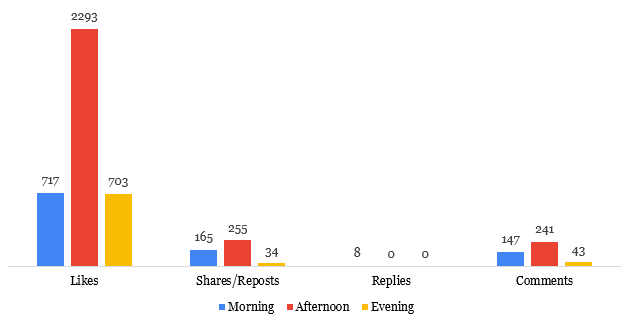
Our analysis focuses on engagement across three critical time windows: morning, afternoon, and evening. It tracks four key metrics, likes, shares/reposts, replies, and comments, offering insight into how audiences respond to promotional messaging throughout the day.

Exhibit 1: Average engagement patterns with ads/promotional messages according to the time of day

Source: Social media handles of brands, 2025; Infoprations Analysis, 2025

Afternoon is King: The Sweet Spot for Engagement

The most striking discovery is the overwhelming dominance of afternoon engagement, particularly in the form of likes and shares. With 2,293 likes and 255 shares recorded in the afternoon, these numbers eclipse the morning (717 likes, 165 shares) and evening (703 likes, 34 shares) windows by a considerable margin. This suggests that the afternoon presents a golden window of opportunity, when users are not only scrolling through content but are most willing to interact with it.

What drives this afternoon peak? One plausible explanation is tied to daily routines. Many audiences experience intense morning commutes and work start times that reduce meaningful online interaction. By afternoon, however, people are more likely to be on breaks or in more relaxed settings, allowing for active scrolling and engagement. Brands that schedule their promotional content around this window can benefit from this behavioural pattern, gaining more visibility and traction with minimal additional effort.

Replies are Scarce: A Red Flag for Conversational Strategy

Interestingly, replies are nearly absent in this dataset. Only eight replies were recorded in the morning, with none in the afternoon or evening. This lack of dialogue could be a symptom of how promotional content is being framed. Are brands speaking to their audiences rather than with them?

Replies typically signal deeper engagement, curiosity, concern, or critique. Their absence may point to a missed opportunity to invite interaction or foster community. While likes and shares indicate passive approval, replies reflect investment and interest. Brands should rethink their calls-to-action (CTAs), shifting from generic messages like “Buy now” or “Check this out” to more engaging prompts such as “What’s your experience?” or “Which one would you choose?”, especially in the morning, when users show at least some readiness to respond.

Comments Reflect Deeper Attention and a Chance to Listen

While replies may be scarce, comments tell another story. The afternoon again leads the way with 241 comments, followed by 147 in the morning and only 43 in the evening. Unlike likes, which are quick and often subconscious, comments require thought and intention. These numbers suggest that not only are users more likely to engage in the afternoon, but they are also more willing to express opinions or feedback.

This is a valuable insight. Brands that monitor and respond to comments during peak hours don’t just increase engagement, they foster trust and brand loyalty. When people feel heard, they’re more likely to advocate for a brand, share its content, and remain connected to it over time. For foreign and national brands alike, comment sections are less about vanity metrics and more about strategic listening.

Evening is Quiet: Know When to Hold Back

The data for the evening is sobering. Every metric drops substantially, with likes (703), shares (34), comments (43), and replies (0) indicating that audiences are largely disengaged during this window. This could reflect fatigue after a long day, competition from other media like television or radio, or a general desire to disconnect.

Rather than fight this trend, brands might consider reallocating resources away from evening campaigns unless targeting very specific demographics, such as entertainment enthusiasts or nighttime shoppers. For most, the evening should be a time to plan, not post.

Going Forward

Our analysis reveals a crucial, often ignored truth: timing matters as much as content. With afternoon engagement soaring, it is the clear priority window for content deployment. Beyond timing, the nature of engagement also signals where brands can improve. Major advertisements or announcements and influencer content should be emphasized during afternoon campaigns.

Before designing content, there is a need to run a mini-survey or create content series that invite discussion. In our experience, we have found that brands hardly reply to comments. This is highly linked to low replies from the audience. Therefore, comment sections should be monitored actively because they offer a real-time focus group for brand perception.

Infoprations’ Understanding Digital Integrated Marketing Communications Team includes Abdulazeez Sikiru Zikirullah, Moshood Sodiq Opeyemi, and Bello Opeyemi Zakariyha

Dive into BlockDAG’s Vesting Transparency That Could Change the Scene – LEO Token Rises 57% & Hedera’s Price Declines

0

Transparency is not just a bonus—it’s a necessity. As the community becomes more cautious about the management and flow of their assets, entities like LEO Token and Hedera showcase unique models and utilities. LEO is all about ecosystem perks linked to Bitfinex, whereas Hedera is celebrated for its efficiency in transactions thanks to its distinct consensus approach.

Yet, BlockDAG (BDAG) elevates transparency to new heights. With its Beta Testnet, BlockDAG introduces the ability for everyone to monitor token vesting in real-time via a live smart contract interface—an option not available with LEO or Hedera. In a marketplace that values clear information, the feature of real-time vesting transparency truly stands out.

LEO Token: Utility and Market Performance

Launched by iFinex, the LEO Token acts as the utility token for the Bitfinex exchange network, providing users with reduced fees and service discounts. Operating on Ethereum and EOS blockchains, LEO offers enhanced transaction flexibility and effectiveness. A standout initiative is Bitfinex’s ongoing buyback and burn strategy, where some profits are used to buy back LEO tokens, aiming to cut supply and boost its value potentially.

As of March 30, 2025, LEO is valued at about $9.75, reaching a market capitalization close to $9 billion. This is a significant rise from its previous $6.19 in March 2024, an increase of about 57.5%. The token also hit a peak of $10.01 on March 5, 2025. This upward trend highlights the token’s strength and the positive effects of strategic actions like the buyback and burn program.

Hedera (HBAR): Mechanism and Market Movements

Hedera Hashgraph leverages a novel consensus method known as Hashgraph, which supports fast, secure, and equitable transactions, bypassing traditional blockchain frameworks. Its native currency, HBAR, is essential for network operations like smart contracts, file storage, and transactions and is crucial for securing the network via staking.

As of March 30, 2025, HBAR is listed at about $0.17, with a market value of roughly $7.35 billion. This shows a dip from its earlier rate of $0.2690 in December 2024. The available supply is around 42 billion HBAR. Despite these swings, its modern technology and strategic alliances keep it a key contender in the crypto arena.

BlockDAG Unveils Instant Smart Contract Updates During Beta Phase

BlockDAG’s Beta Testnet goes beyond a simple trial; it embodies transparency and user control at the heart of its architecture. In the Beta phase, eligible wallet owners are granted 10,000 testnet tokens, dispensed via a smart contract that follows a four-stage vesting plan. The standout feature for BlockDAG is that it lets users check their vesting status in real-time through a specific dApp interface.

This feature of live visibility enables users to precisely monitor the unlocked portion of their tokens and the amount still bound by the vesting agreement. The vesting breakdown is straightforward: 40% of the tokens become available right away, and the remainder is issued in three equal segments over the next three weeks—20% each week. Users don’t have to take any additional steps; the airdrop processes automatically, and all changes are immediately visible on the user dashboard.

This transparency fosters trust and illustrates BlockDAG’s commitment to accountability ahead of its official mainnet release. With robust technical architecture and community-driven incentives, BlockDAG is pioneering expected standards of openness and interaction in the crypto space.

As of today, BlockDAG has secured $213.5 million during its crypto presale. Now in its 27th batch, priced at $0.0248, the project has achieved an ROI of 2,380% from its initial batch. Moreover, over 19.2 billion coins have been purchased, demonstrating robust interest in a project that prioritizes both expansion and clear communication.

How Transparency Drives Trust in Tech

While many projects highlight their tech or user benefits, enduring appeal often stems from operational transparency. LEO Token capitalizes on exchange-related advantages, and Hedera offers quick transactions with a unique consensus model. However, BlockDAG sets itself apart by offering an immediate, transparent view of token vesting that few can match.

By enabling holders to see their token status in real-time—no extra steps required—BlockDAG solidifies trust well before its mainnet is live. When users can observe this process as it happens, it generates a level of confidence built on tangible evidence rather than mere promises. Hence, transparency is not just a perk—it’s the baseline expectation.

Presale: https://purchase.blockdag.network

Website: https://blockdag.network

Telegram: https://t.me/blockDAGnetworkOfficial

Discord: https://discord.gg/Q7BxghMVyu

AVAX Holds $15 Floor, Dogecoin’s ETF Shocks Wall Street – BlockDAG’s 600% Bonus Steals the Show

0

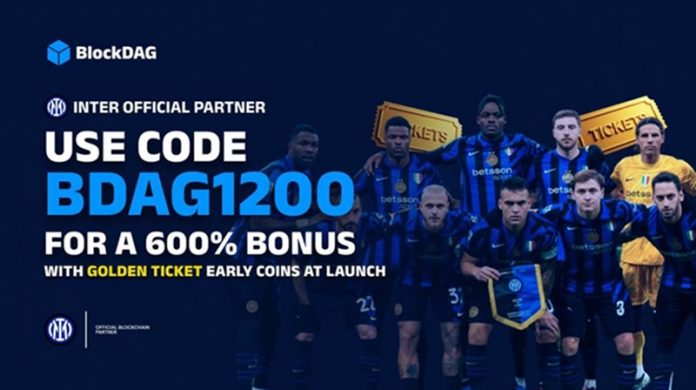
What if the only way to join crypto’s most exclusive event also gave you a 600% bonus? While the Avalanche (AVAX) technical analysis points to a potential price bottom and XRP inches forward after recent SEC clarity, the real buzz is building around a new opportunity – BlockDAG’s Golden Ticket. It’s more than just a presale code. It’s a pass to early coin airdrops, insider perks, and BlockDAG’s first-ever Global Convention, where only Golden Ticket holders are invited. Think front-row access to the team, behind-the-scenes insights, and high-tier networking—right before listings hit.

At a time when traders are tracking every Dogecoin update and debating the next most popular cryptocurrency, BlockDAG is offering something the others aren’t: access. The Golden Ticket, available through the BDAG1200 code, is the only way in. This is for those who want coins, bonuses, and a real seat at the table.

BlockDAG’s 600% Bonus Comes with VIP Access

BlockDAG is shaking up presales with its Golden Ticket bonus, and it’s not just about coins. This offer gives buyers a 600% bonus using the code BDAG1200, but the real kicker is what comes with it—exclusive access to the first-ever BlockDAG Global Convention. Only Golden Ticket users can attend, making it the only insiders-only crypto launch event of its kind in 2025. From early previews of what’s coming to direct access to the leadership team, this isn’t just another presale—it’s a front-row seat to everything BlockDAG has planned.

Alongside event access, Golden Ticket users will also receive early coin airdrops before public listings go live. That means participants not only secure more BDAG upfront but also gain time-based advantages in positioning themselves ahead of market demand. With BDAG set to list on 10 centralized exchanges later this year, this early access is a huge deal for anyone aiming to build serious exposure.

BlockDAG’s presale is currently in batch 27, with the coin priced at $0.0248. So far, the presale has raised over $213.5 million and sold 19.2 billion BDAG coins, with an ROI of 2,380% since batch 1. This is one of the highest-performing presales in crypto right now—drawing serious attention from those tracking the most popular cryptocurrency launches of the year.

With over 1 million users on the X1 Miner App and the Tap Miner game clocking 100,000+ daily players, BlockDAG has already built one of the most active ecosystems. If you’re chasing the next most popular cryptocurrency, the Golden Ticket isn’t just a bonus—it’s your entry to the top.

Avalanche (AVAX) Technical Analysis Points to $15–$17 as Make-or-Break Zone

The latest Avalanche (AVAX) technical analysis suggests the downtrend could be slowing, with the $15–$17 range shaping up as a key support zone. AVAX recently bounced 10.3% following a market-wide lift after Trump’s tariff pause news, but it still briefly dipped to $14.66, testing deeper support. Charts show $15.27 as the most recent strong bounce point, while $14.50 is the level to watch—any drop below could signal another leg down.

Volume profile data puts the Point of Control at $18.70, with strong historical activity between $15.40 and $39.30. If bulls defend current levels and break resistance at $18.24, a push toward $19–$20 is possible. The Avalanche (AVAX) technical analysis also shows a liquidation map leaning toward long positions, hinting at upside volatility. Right now, AVAX looks like it’s in a holding pattern, with the next few weeks set to decide if this support zone leads to recovery or more downside.

Biggest Dogecoin Update Yet: Spot ETF Filing Changes the Game

The biggest Dogecoin update of 2025 just dropped—Swiss-based 21Shares has filed with the SEC for the first-ever U.S. spot Dogecoin ETF. What makes it even more impactful is their exclusive partnership with the Dogecoin Foundation’s corporate arm, the House of Doge. This gives 21Shares a serious edge over other contenders like Grayscale and Bitwise, who’ve also submitted filings. With this move, Dogecoin could finally transition from meme coin to a regulated, tradable Wall Street asset.

Another major win comes from the SEC’s recent clarification that meme coins like Dogecoin are not considered securities. This shift under the Trump administration is helping to clear regulatory roadblocks. According to Jens Wiechers from the Dogecoin Foundation, this new ETF filing creates a pathway for institutions to participate in the Dogecoin economy while preserving community spirit. This Dogecoin update is more than just news—it’s a signal that Dogecoin is entering a new phase, with real potential for mainstream adoption.

Summing Up

The latest Avalanche (AVAX) technical analysis shows price support building in the $15–$17 range, hinting at a possible turnaround if bulls hold their ground. Meanwhile, the Dogecoin update around the 21Shares spot ETF filing and SEC clarity could take DOGE into mainstream finance faster than expected. Both coins are moving through critical phases—but if you’re looking for access beyond charts and filings, BlockDAG is offering something rare.

With its Golden Ticket, BlockDAG isn’t just giving out a 600% bonus—it’s opening the door to its exclusive Global Convention. Only those using the BDAG1200 code can attend, get early coin airdrops, and connect directly with the core team before BDAG lists. In a year full of price action and headlines, BlockDAG is building real community access. If you’re keeping an eye on the most popular cryptocurrency moves right now, this bonus offer might be the one you don’t want to miss.


Presale: https://purchase.blockdag.network

Website: https://blockdag.network

Telegram: https://t.me/blockDAGnetworkOfficial

Discord: https://discord.gg/Q7BxghMVyu

This Crypto Could Become 2025’s Top Performer, and It’s Not Even on Most Watchlists

0

Amid a sea of hype tokens and altcoins flooding the market, shrewd investors are well aware that true opportunities tend to hide in plain sight.

While the spotlight remains on top projects like Bitcoin (BTC) and Ethereum (ETH) this low-profile project is working quietly towards increasing momentum—and analysts say it could be 2025’s top-performing crypto.

That project is RCO Finance (RCOF), and though it has flown beneath the radar of most watchlists, its singular fundamentals, cutting-edge tech, and investor confidence place it on a trajectory for exponential growth this year.

RCO Finance: The Altcoin Ready to Break Out

Worth just $0.100000 in Stage 5 of its ICO, RCOF may be another low-cap altcoin, but the technology and vision behind it tell a different story. With more than $13 million in presale funds raised, RCOF is building a multi-asset platform that bridges the worlds of mainstream finance and decentralized spaces.

Unlike most cryptocurrencies, which are in silos, RCO Finance allows users to buy and sell stocks, bonds, real estate, and crypto all from a single platform. What’s more exciting is that you can do all this without fiat conversion or burdensome KYC procedures.

Such simplicity in blending traditional and digital finance makes it a high-impact diversification instrument.

As investors look for more practical crypto assets in the lead-up to 2025, RCOF’s hybrid approach offers an attractive value proposition, especially because users increasingly look for platforms that prioritize functionality rather than hype.

AI-Powered Trading: Empowering Users with a Decisive Edge

One of RCO Finance’s best features is its AI-driven Robo Advisor—a proprietary technology that can discover nascent market trends and yield actionable trading alerts.

By accessing data from Bloomberg, Reuters, on-chain studies, and sentiment from socials, the AI engine gives the trader a high level of certainty in identifying breakouts.

Think about how Official Trump (TRUMP) surged more than 200% within a few days after its release after President Donald Trump’s inauguration. The Robo Advisor is made to keep pace with bullish opportunities such as this one and give you a chance to make huge profits before other investors.

This tool allows users to maximize gains while minimizing emotional trading errors. This intelligent, data-driven tool places RCOF light years ahead of many speculative tokens that are founded on community buzz alone.

Market Confidence Expressed In Its Presale

Investor confidence in RCO Finance has already been established. Raising over $13 million in presale alone, the project has also launched a Beta platform that enables early adopters to test features like automated staking, multi-asset swaps, and 1000% leverage.

Interestingly, due to the presale’s discounted prices, you can purchase as many RCOF tokens as you need to boost your portfolio to 100%. Currently priced at $0.100000 in Stage 5 of this public ICO, RCOF is the best crypto to buy in Q2 2025.

Analysts See Massive Growth Potential, So Buy RCOF Now!

According to forecasts from top analysts, RCO Finance could experience 1000% gains by the end of 2025. This means an investment as low as $100 could potentially return $100,000.

What makes this projection realistic is the project’s actual use case and scalability. By enabling users to operate in both traditional and decentralized markets, RCO Finance isn’t just another crypto—it’s a financial ecosystem in the making.

As global attention towards DeFi and hybrid finance platforms continues to grow, the RCOF market significance will obviously grow as well, drawing the attention of market leaders who are now bypassing this jewel.

In a world where the loudest crypto projects get the most attention, RCO Finance is doing it differently—letting its tech, strategy, and performance do the talking. It may not be on everyone’s radar screen yet, but the fundamentals are too strong to ignore.

As an RCOF investor, you are also guaranteed the safety of all your investments as the project has undergone a thorough smart contract audit by SolidProof.

So, if you’re searching for a crypto asset with real-world utility, a data-backed trading advantage, and the potential for life-changing returns, RCO Finance is worth a serious look. As 2025 approaches, don’t be surprised if this under-the-radar project becomes the breakout star of the next bull run.

For more information about the RCO Finance Presale:

Visit RCO Finance Presale

Join The RCO Finance Community