DD
MM
YYYY

PAGES

DD
MM
YYYY

spot_img

PAGES

Home Blog Page 18

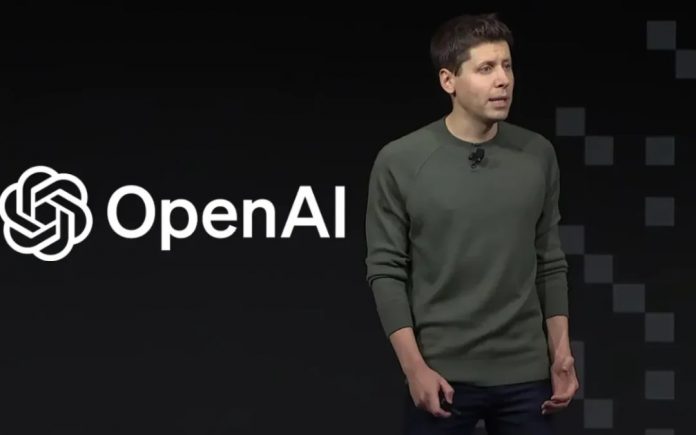
Sam Altman Says AI Won’t Deliver the Four-Day Workweek and AI Data Centers Belong In Remote Deserts

0

The widespread expectation that artificial intelligence would dramatically shorten the workweek is unlikely to become reality, according to Sam Altman, who argues that advances in technology tend to create new forms of work rather than eliminate the need for it.

Speaking on the Relentless podcast hosted by Ti Morse, the OpenAI chief executive said history suggests that productivity gains have consistently led people to pursue new goals instead of working substantially fewer hours.

“Technology, for a long time, has been promising people that they’re going to work less and they’re going to have all this leisure,” Altman said.

“But somehow we never get the promise of the four-hour workweek at mass scale in society. And I don’t expect AI to change that.”

Altman’s comments come as businesses across industries rapidly deploy generative AI to automate routine tasks, assist with coding, analyze data, generate content and improve customer service. While these tools have boosted productivity in many workplaces, they have not yet produced the widespread reduction in working hours that some technology advocates predicted when the AI boom began.

Instead, many companies have used productivity gains to expand output, accelerate product development or reduce labor costs, while workers often find themselves taking on additional responsibilities rather than working fewer hours.

Altman noted that technology has already given people more leisure time and a higher standard of living than previous generations, but said human ambition tends to grow alongside technological progress.

“We always want more. We think of new things to do, to create for each other, to want for ourselves. It’s like a relative game. People are very focused on how they’re doing relative to other people,” he said.

According to Altman, technological breakthroughs increase people’s capacity to create rather than diminishing their desire to work. As AI makes existing tasks easier, individuals and businesses develop new products, services and ambitions that generate fresh demand for labor.

He also suggested that work provides more than income, arguing that many people seek purpose, creativity and a sense of contribution alongside financial rewards.

“I think we’re all going to be much busier than we thought we were supposed to be in a post-superintelligence world. We’re still going to complain about it, but secretly we’re going to be happy,” Altman said.

The remarks add to an ongoing debate over how AI will reshape labor markets. While supporters believe the technology will free workers from repetitive tasks and enable them to focus on higher-value activities, critics contend that the benefits have so far accrued more to employers through higher productivity and lower labor costs than to employees through shorter workweeks or higher wages.

Concerns have also grown over AI’s impact on employment, as companies in technology, finance, media and professional services increasingly automate functions previously performed by humans.

Not everyone shares Altman’s view of how productivity gains should be distributed.

During an appearance on The Joe Rogan Experience last year, Bernie Sanders argued that workers should directly benefit from AI-driven productivity improvements by working fewer hours without a reduction in pay, rather than using the time savings to complete additional work.

Outside the United States, governments and businesses have continued experimenting with reduced working hours. Companies and public-sector organizations in countries including the United Kingdom, France, Japan and Germany have tested four-day workweeks while maintaining full salaries.

Results from several trials have suggested that shorter workweeks do not necessarily reduce business performance. An aggregated international study found participating organizations recorded an average 8% increase in revenue during four-day workweek trials. Workers also reported lower levels of fatigue and stress, while productivity generally remained stable or improved.

One of the most widely cited examples came from Microsoft’s Japan operation, where a four-day workweek pilot reported a roughly 40% increase in productivity alongside reductions in electricity consumption and office-related costs.

However, the differing perspectives have only fueled a broader question confronting businesses and policymakers as AI adoption accelerates: whether the technology’s productivity gains will primarily translate into stronger corporate profits and economic growth, or eventually be shared with workers through shorter hours, higher wages or improved workplace flexibility.

OpenAI’s Altman Says AI Data Centers Belong In Remote Deserts As Industry Faces Growing Local Opposition

OpenAI Chief Executive Sam Altman has suggested that the next generation of artificial intelligence data centers should be built in remote desert locations rather than near residential communities, acknowledging mounting public opposition to the infrastructure underpinning the AI boom.

Speaking on the Invest Like The Best podcast released Tuesday, Altman said he understands why communities are increasingly resistant to hosting AI data centers, even as demand for computing capacity continues to surge, and technological advances are making these facilities cleaner and more efficient.

“I understand emotionally why people don’t want data centers in their backyard in the same way that I don’t really want a nuclear power plant next to my house, even though I know it’s a super safe thing,” Altman said.

Unlike factories, offices or logistics hubs that benefit from proximity to customers or workers, Altman said that AI computing facilities can operate almost anywhere with sufficient power, connectivity and cooling infrastructure.

“We should just go put it off in the desert, around no one where no one wants to be,” he said. “This is fine. The AI system is very happy to be there.”

An OpenAI spokesperson later clarified that Altman’s comments reflected the idea that AI data centers are uniquely location-flexible compared with many other forms of economic activity, provided they have access to adequate electricity, networking infrastructure and other essential utilities.

His remarks come as technology companies embark on one of the largest infrastructure buildouts in modern history. Hyperscalers, including Microsoft, Amazon, Google and Meta, alongside AI developers such as OpenAI and Anthropic, are collectively investing hundreds of billions of dollars to construct massive AI campuses filled with advanced graphics processing units (GPUs) capable of training and running increasingly sophisticated AI models.

Industry analysts expect annual AI-related capital expenditure to approach $1 trillion within the next few years, underscoring the unprecedented scale of the buildout.

That investment wave has transformed data centers into one of the most strategically important assets in the AI economy. Rather than competing solely through software, leading AI companies are increasingly competing based on access to computing power, electricity, and specialized semiconductor infrastructure.

However, the rapid expansion has also triggered growing resistance from local communities across the United States.

Residents and environmental groups have raised concerns over the enormous electricity requirements of AI facilities, increased water consumption for cooling systems, land use, construction impacts, diesel backup generators and persistent noise from cooling equipment. Utilities have also warned that the explosion in AI-related electricity demand could strain regional power grids and increase costs for other consumers if new generation capacity fails to keep pace.

Altman argued that many of these criticisms are becoming less applicable as technology evolves. He pointed to improvements in cooling systems, particularly the industry’s shift toward closed-loop liquid cooling technologies that continuously recycle water instead of relying on large-scale evaporation.

“For example, years ago, we were evaporating water to cool these systems. They did tremendous amounts of water. And now we use these closed-loop systems, and a modern data center uses only as much water as an office building would for the kitchen, the bathrooms, and whatever,” he said.

This comes amid a broader industry effort to counter criticism over AI’s environmental footprint. Data center operators are increasingly deploying direct liquid cooling, advanced heat recovery systems and water-recycling technologies as newer AI chips consume significantly more power than previous generations of processors.

Altman also argued that the industry’s energy mix is becoming cleaner as operators increasingly pair AI infrastructure with renewable energy and nuclear power rather than fossil fuel generation.

“On power, we are moving from energy sources that are burning fossil fuels to systems that are going to be powered by solar, nuclear,” he said.

Securing reliable electricity has become one of the defining challenges of the AI race. Major technology companies have signed long-term power purchase agreements, invested in renewable energy projects and, increasingly, backed nuclear power initiatives to guarantee enough electricity for future AI workloads. Several companies are also exploring small modular reactors (SMRs) as a long-term solution to meet AI’s rapidly growing energy needs.

Altman emphasized the sheer scale of modern AI infrastructure, noting that the electricity flowing through a single advanced data center can rival the power consumption of an entire small city.

“The energy that flows through one data center could power a small city,” he said.

To help the public better understand these facilities, Altman suggested organizing tours of AI data centers.

“It is one thing to say, it is another thing to see a photo or a video of, and then it’s a whole other thing to just stand up and be like, ‘Oh man, this is an unbelievable scale,'” he said.


Apple Launches Lower-Cost iPhone Leasing Program With Klarna as Higher Device Prices Loom

0

Apple customers in the United States will soon be able to lease an iPhone for as little as $17.99 per month, as the technology giant rolls out a new financing program aimed at making its devices more affordable while encouraging users to upgrade more frequently.

The new offering, called Apple Upgrade, is being launched in partnership with Klarna, one of the world’s largest buy now, pay later (BNPL) providers. The program will be available through Apple’s retail stores and online platform, giving customers an alternative to paying the full upfront cost of increasingly expensive devices.

The initiative comes as Apple prepares for another product launch cycle amid expectations that iPhone prices will rise this year because of higher component costs, particularly memory chips, and broader inflationary pressures across the consumer electronics supply chain.

Customers who pass a soft credit check can lease an iPhone for one or two years, while Apple Watches will also be available under similar terms. Macs and iPads can be leased for two or three years, broadening the company’s subscription-like approach beyond its flagship smartphone.

Unlike traditional financing, the program is structured as a lease, meaning customers must return the device after the lease expires unless they choose to purchase it through an additional payment or upgrade to a newer model. Apple said no security deposit will be required. Klarna will not charge late fees, although leases will be terminated after three consecutive months of missed payments.

The launch follows Apple’s decision last month to raise starting prices for Macs and iPads by at least $100, with some premium configurations increasing by more than $1,000, citing a global memory shortage. Industry analysts expect similar pricing pressure to extend to this year’s iPhone lineup, making monthly payment options increasingly attractive for consumers.

Rather than focusing on a higher sticker price, leasing allows Apple to market its devices through lower monthly payments, potentially reducing consumer resistance to premium-priced products.

“Most of Apple’s consumers, especially in the U.S. and other developed markets, are buying devices on installment plans or trade-ins, so we can expect to see much more aggressive offers,” Nabila Popal, senior research director at IDC, told CNBC after Apple signaled price increases in June.

The move is seen as part of Apple’s broader effort to generate more predictable revenue from its hardware business. Investors have long argued that expanding installment and leasing options could smooth Apple’s earnings by reducing the seasonality associated with annual iPhone launches and encouraging customers to upgrade on a more regular schedule.

That has become increasingly important as consumers hold onto their smartphones longer. According to Bernstein estimates, the average iPhone replacement cycle has stretched to nearly four years, reflecting both the durability of recent devices and higher upgrade costs.

Analysts say the new leasing program could shorten that replacement cycle by lowering the financial barrier to owning Apple’s latest hardware, while also creating a recurring stream of returning customers.

Monthly payments will vary depending on the model and lease duration. An unlocked iPhone 17 Pro will cost $31.99 per month on a two-year lease or $45.99 per month on a one-year agreement. Some lower-priced devices, including the iPhone 16 and MacBook Neo, are not included in the initial rollout.

The program also comes as Wall Street increasingly focuses on Apple’s ability to preserve profit margins in the face of rising manufacturing costs. Analysts at Morgan Stanley estimate Apple may need to increase the starting price of the iPhone 18 Pro by roughly $200 to maintain gross margins. Research firm TechInsights estimates that rising memory prices and other component costs could add as much as $300 to the bill of materials for a single iPhone, based on component-level teardown analysis.

At the same time, Apple continues to push its product lineup further into the premium segment. Analysts expect the company to introduce its first foldable iPhone alongside the iPhone 18 Pro lineup later this year, with some estimates placing its retail price at around $2,500, making flexible financing options increasingly important for consumers.

The new initiative also reshapes Apple’s consumer financing strategy. The company said it is discontinuing its long-running iPhone Upgrade Program in the U.S., which was financed through Citizens Bank and bundled with AppleCare coverage. Under that program, customers typically paid more than $42 per month over 24 installments.

Apple Upgrade replaces that model with lower monthly lease payments, though customers will not automatically own the device at the end of the agreement unless they make an additional purchase payment.

The move also intensifies competition with U.S. wireless carriers, which have traditionally relied on device financing, trade-in incentives and multiyear contracts to retain subscribers. Major carriers including AT&T, Verizon and T-Mobile US already offer installment plans that spread smartphone costs over several years.

Apple also continues to offer zero-interest financing through its Apple Card Monthly Installments program, while users checking out with Apple Pay can access short-term financing from Klarna or rival Affirm.

The leasing program arrives just days before Apple reports its fiscal third-quarter earnings on Thursday. Investors are expected to focus on the company’s pricing strategy, demand outlook for the upcoming iPhone lineup, the impact of rising component costs on margins, and whether expanded financing options can support hardware sales.

Hong Kong Pushes Banks Toward Post-Quantum Cryptography by 2030

0

The Hong Kong Monetary Authority has delivered a sobering assessment of the banking sector’s preparedness for one of the next major cybersecurity challenges: quantum computing.

In its latest evaluation, the regulator found that Hong Kong banks scored an average of just 2.3 out of 10 on quantum readiness, highlighting how far the financial industry still has to go before it can defend itself against the risks posed by future quantum computers.

Even more concerning, roughly half of the surveyed banks admitted they have no formal post-quantum migration strategy, leaving critical financial infrastructure vulnerable as quantum technology advances.

Quantum computing promises breakthroughs across science, healthcare, logistics, and artificial intelligence by solving problems that are impossible for today’s computers. The same computational power also threatens modern encryption standards that secure digital banking, payment networks, customer data, and financial communications.

Algorithms such as RSA and Elliptic Curve Cryptography, which underpin much of today’s internet security, could eventually be broken by sufficiently powerful quantum computers. Although experts believe practical cryptographically relevant quantum computers are still several years away, the threat is no longer considered theoretical.

Cybersecurity professionals have increasingly warned of harvest now, decrypt later attacks, in which hackers steal encrypted information today with the intention of decrypting it once quantum technology matures.

Sensitive financial records, customer identities, and confidential transactions could all become targets under such a scenario. Recognizing this growing risk, the HKMA has taken a proactive stance by introducing a comprehensive roadmap for financial institutions.

Rather than simply highlighting weaknesses, the regulator has issued a practical toolkit designed to help banks assess their existing cryptographic infrastructure, identify vulnerable systems, and develop structured migration plans toward post-quantum cryptography (PQC).

The authority has also established a clear objective: banks should reach full quantum readiness by 2030. This long-term deadline reflects the complexity of transitioning an entire financial ecosystem to new cryptographic standards.

Replacing encryption is not as simple as installing a software update.

Banks operate thousands of interconnected systems, ranging from online banking platforms and mobile applications to payment gateways, ATMs, trading infrastructure, cloud services, and third-party integrations. Every component relying on current encryption standards must eventually be upgraded without disrupting financial stability or customer services.

The HKMA’s findings reveal an uneven level of awareness across the industry. While some major institutions have already begun conducting quantum risk assessments and pilot programs, many smaller lenders remain in the early stages of understanding the problem.

The average readiness score of 2.3 out of 10 suggests that most organizations are still focused on identifying risks rather than implementing concrete solutions. Hong Kong’s initiative aligns with a broader global movement among financial regulators.

Governments and cybersecurity agencies worldwide have accelerated efforts to encourage the adoption of post-quantum cryptography following the publication of new quantum-resistant encryption standards.

Financial institutions are increasingly expected to inventory cryptographic assets, prioritize critical systems, and begin gradual migration well before quantum computers become capable of breaking existing encryption.

Strengthening quantum resilience is also a matter of maintaining its reputation as one of the world’s leading international financial centers. As digital finance, tokenized assets, and cross-border payment networks continue to expand, ensuring that banking infrastructure remains secure against emerging technological threats will become increasingly important.

The HKMA’s assessment serves as both a warning and an opportunity. A readiness score of 2.3 out of 10 underscores the magnitude of the work ahead, but the regulator’s structured toolkit and 2030 target provide a clear path forward.

Banks that begin preparing now will be better positioned to safeguard customer trust, comply with future regulations, and remain resilient in the quantum era.

Fanatics Acquires CFTC-Registered Exchange to Expand Prediction Markets Ambitions, as TokenWorks Expands FWA Capabilities

0

Fanatics, the global sports merchandise and digital sports platform, is making a major move into the rapidly growing prediction markets industry by acquiring a Commodity Futures Trading Commission (CFTC)-registered exchange.

The acquisition represents a strategic effort by the company to strengthen its position in event-based trading and build a more comprehensive predictions market product that combines sports, entertainment, and financial-style contracts.

Prediction markets have gained significant attention in recent years as platforms allow users to trade contracts based on the outcomes of real-world events.

These markets enable participants to speculate on questions such as sports results, political outcomes, economic events, and cultural trends.

Unlike traditional betting systems, prediction markets are structured around trading probabilities, with prices reflecting collective expectations about future events. By purchasing a regulated exchange, Fanatics gains access to critical infrastructure needed to operate within the evolving prediction market landscape.

A CFTC-registered exchange provides regulatory recognition, compliance frameworks, and technological capabilities that can help Fanatics develop a more sophisticated and scalable product.

The move comes as competition in prediction markets intensifies. Companies across the financial technology, cryptocurrency, and sports sectors are exploring ways to capitalize on growing consumer interest in interactive forecasting platforms.

Existing prediction market operators have attracted millions of users by offering markets around elections, sports, and major global events, demonstrating demand for alternative forms of engagement beyond traditional entertainment.

The opportunity aligns closely with Fanatics existing sports ecosystem. The company already has a large audience through its sports merchandise business, collectibles marketplace, and digital platforms.

Integrating prediction markets could create a new layer of engagement for sports fans by allowing them to participate in markets related to games, player performances, championships, and other sporting events.

The acquisition highlights the increasing convergence between sports, finance, and digital assets. Modern consumers are becoming more comfortable with platforms that blend entertainment and financial mechanics, particularly among younger demographics.

Prediction markets fit into this trend by transforming opinions and knowledge into tradable positions. Regulation remains one of the most important factors shaping the future of the prediction market sector.

The industry has faced debates over whether event contracts should be classified as financial instruments, gambling products, or a separate category. By acquiring a CFTC-registered exchange, Fanatics appears to be positioning itself within a regulated framework rather than relying solely on emerging or uncertain market structures.

The company’s expansion could intensify competition with established prediction market platforms and financial technology firms entering the space. As more companies explore event-based contracts, differentiation will likely depend on user experience, market variety, liquidity, and regulatory compliance.

Fanatics’ move reflects a broader shift in how consumers interact with information and entertainment. Prediction markets are becoming more than speculative tools; they are evolving into platforms where communities express opinions, analyze data, and participate in real-time economic activity surrounding major events.

The acquisition of a regulated exchange gives Fanatics the foundation to build a stronger prediction market ecosystem. While the long-term success of the initiative will depend on regulatory developments and consumer adoption, the company’s entry signals that prediction markets are moving closer to mainstream adoption.

As sports, technology, and financial innovation continue to merge, Fanatics’ investment could mark a significant step toward creating a new category of interactive entertainment where fans are not only spectators but active participants in predicting the outcomes they care about.

The company’s expansion demonstrates the growing belief that prediction markets could become a major component of the next generation of digital consumer platforms.

TokenWorks Expands FWA Capabilities as Fomo’s Weekly Revenue Reaches a New Record

The digital asset industry continues to evolve at a rapid pace, with infrastructure providers and consumer-facing applications introducing new innovations that broaden blockchain adoption.

Two recent developments underscore this momentum: TokenWorks has added wrapped ERC-20 token support to its Financial Web Assets (FWA) platform, while trading application Fomo has recorded its highest-ever weekly revenue.

These milestones highlight the growing sophistication of blockchain infrastructure and the increasing engagement of retail users across decentralized finance and digital trading platforms.

TokenWorks’ integration of wrapped ERC-20 tokens into its FWA platform represents an important step toward improving interoperability across blockchain ecosystems.

Wrapped tokens allow assets from one blockchain to be represented on another, enabling users to interact with decentralized applications without being restricted by the native network of their holdings.

By supporting wrapped ERC-20 assets, TokenWorks expands the range of financial products and services available through its platform, making it easier for users to access liquidity, lending, trading, and other decentralized financial opportunities.

Interoperability has become one of the defining priorities for the blockchain industry. As multiple Layer 1 and Layer 2 networks compete for users and developers, solutions that seamlessly connect ecosystems are becoming increasingly valuable.

Wrapped assets play a central role in this vision by allowing value to move across networks while preserving compatibility with Ethereum’s widely adopted ERC-20 token standard.

TokenWorks’ latest upgrade therefore strengthens its position as an infrastructure provider focused on enabling cross-chain financial applications. The addition of wrapped ERC-20 support could also attract institutional participants seeking greater flexibility in digital asset management.

Institutions increasingly demand infrastructure capable of supporting multiple token standards while maintaining compliance, security, and operational efficiency. Expanding compatibility with widely used token formats enhances the platform’s appeal to developers, businesses, and financial organizations building next-generation blockchain products.

Trading application Fomo has reached a significant commercial milestone, reporting its highest weekly revenue since launch. The achievement reflects growing activity on the platform as traders continue to engage with digital assets, speculative markets, and emerging on-chain opportunities.

Record revenue often indicates rising transaction volumes, stronger user retention, and increased demand for trading-related services.

Fomo’s performance also highlights the resilience of retail participation in crypto markets.

Even as broader market conditions fluctuate, traders continue to seek platforms that provide intuitive interfaces, fast execution, and access to diverse investment opportunities. Applications capable of delivering engaging user experiences while maintaining reliable infrastructure are increasingly positioned to capture market share in the competitive trading ecosystem.

The combination of expanding infrastructure and growing user activity creates a positive feedback loop for the broader blockchain economy. Platforms such as TokenWorks improve the technological foundation that enables seamless asset movement.

While applications like Fomo demonstrate how enhanced infrastructure can translate into higher user engagement and stronger business performance. These developments reinforce the industry’s transition from experimental technology toward mature financial ecosystems capable of serving both retail and institutional participants.

Continued innovation in interoperability, tokenized assets, and user-focused trading platforms is expected to remain a defining trend for the digital asset sector. As infrastructure providers broaden compatibility across blockchain networks and consumer applications continue attracting larger audiences.

The crypto industry moves closer to delivering a more connected, accessible, and scalable financial system. The latest achievements from TokenWorks and Fomo illustrate how technological progress and commercial success increasingly go hand in hand, reinforcing confidence in the long-term evolution of blockchain-based finance.

SpaceX’s SPCX Shares Hit New All-Time Low of $110 Amid Growing Investor Concerns

0

SpaceX’s publicly traded shares under the ticker SPCX have fallen to a new all-time low of $110, marking another challenging chapter for one of the world’s most closely watched aerospace companies.

The decline reflects mounting investor concerns over broader market conditions, execution risks, and uncertainty surrounding the company’s future growth trajectory.

While SpaceX remains a global leader in commercial space exploration, satellite communications, and reusable rocket technology, the latest share price movement highlights that even industry pioneers are not immune to shifts in market sentiment.

The drop to $110 comes during a period of increased volatility across both technology and aerospace stocks. Investors have become more cautious as higher interest rates, slowing economic growth, and geopolitical tensions continue to weigh on high-growth companies.

Businesses with ambitious long-term investment strategies often experience greater pressure during uncertain market cycles, as investors increasingly prioritize profitability and stable cash flows over future growth potential.

SpaceX has built its reputation by consistently pushing the boundaries of space innovation. Through its Falcon rocket family, Starlink satellite internet constellation, and ongoing Starship development program, the company has transformed expectations for the commercial space industry.

Its reusable rocket technology has significantly reduced launch costs while creating new opportunities for government agencies, private businesses, and international customers.

Despite these achievements, investors remain focused on the substantial capital required to maintain SpaceX’s ambitious roadmap. Projects such as Starship testing.

Starlink expansion, deep-space exploration, and future Mars missions demand billions of dollars in continued investment. While these initiatives could unlock enormous long-term value.

They also increase financial risk, particularly during periods of tighter capital markets. Another factor contributing to the stock’s weakness is uncertainty surrounding revenue growth.

Although Starlink continues expanding globally and launch demand remains healthy, analysts are closely monitoring whether these businesses can generate sufficient profits to justify the company’s long-term valuation.

Competition within satellite internet services, launch providers, and emerging space technology firms is also becoming more intense, placing additional pressure on future earnings expectations.

Investor psychology has played a significant role in the recent decline. Financial markets often react strongly to negative momentum, with declining prices encouraging further selling as traders attempt to minimize losses.

This creates a cycle where weak sentiment can temporarily outweigh the company’s underlying fundamentals. Long-term investors, however, may interpret the current valuation differently, viewing lower prices as an opportunity if they remain confident in SpaceX’s technological leadership.

The broader space industry itself remains positioned for significant expansion over the coming decade.

Governments are increasing investments in national space programs, commercial satellite deployments continue to accelerate, and demand for secure global communications infrastructure is expected to grow.

SpaceX remains one of the few companies with the engineering expertise, operational experience, and launch capacity to capitalize on these long-term trends. Near-term challenges cannot be ignored.

Regulatory approvals, successful Starship milestones, competitive pressures, and macroeconomic conditions will all influence investor confidence in the months ahead.

Markets will closely watch upcoming operational updates to determine whether SpaceX can maintain its pace of innovation while demonstrating stronger financial performance.

SPCX’s fall to a record low of $110 serves as a reminder that market valuations are influenced by both company performance and broader economic sentiment. While the current decline reflects heightened caution among investors.

SpaceX’s long-term outlook will depend on its ability to convert technological leadership into sustainable revenue growth, operational efficiency, and consistent shareholder value.

As history has shown, innovative companies often experience periods of significant volatility before their long-term vision is fully realized.