

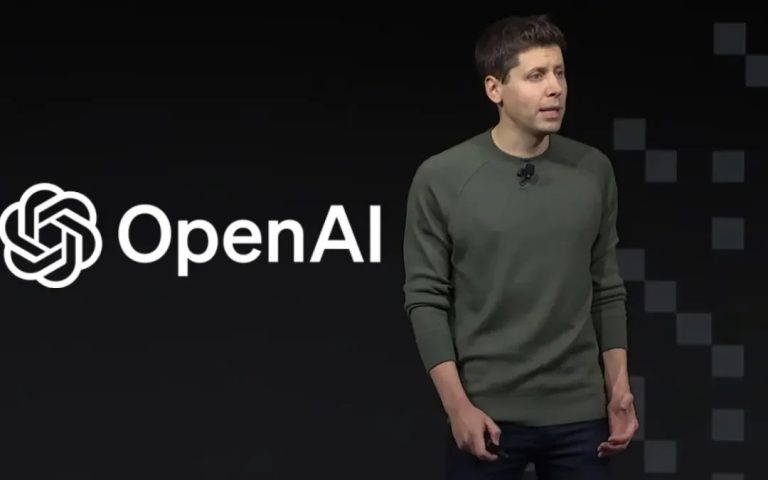
The widespread expectation that artificial intelligence would dramatically shorten the workweek is unlikely to become reality, according to Sam Altman, who argues that advances in technology tend to create new forms of work rather than eliminate the need for it.
Speaking on the Relentless podcast hosted by Ti Morse, the OpenAI chief executive said history suggests that productivity gains have consistently led people to pursue new goals instead of working substantially fewer hours.
“Technology, for a long time, has been promising people that they’re going to work less and they’re going to have all this leisure,” Altman said.
Register for the next Tekedia Mini-MBA.
Register for Tekedia AI in Business Masterclass.
Join Tekedia Capital Syndicate and co-invest in great global startups.
“But somehow we never get the promise of the four-hour workweek at mass scale in society. And I don’t expect AI to change that.”
Altman’s comments come as businesses across industries rapidly deploy generative AI to automate routine tasks, assist with coding, analyze data, generate content and improve customer service. While these tools have boosted productivity in many workplaces, they have not yet produced the widespread reduction in working hours that some technology advocates predicted when the AI boom began.
Instead, many companies have used productivity gains to expand output, accelerate product development or reduce labor costs, while workers often find themselves taking on additional responsibilities rather than working fewer hours.

Altman noted that technology has already given people more leisure time and a higher standard of living than previous generations, but said human ambition tends to grow alongside technological progress.
“We always want more. We think of new things to do, to create for each other, to want for ourselves. It’s like a relative game. People are very focused on how they’re doing relative to other people,” he said.
According to Altman, technological breakthroughs increase people’s capacity to create rather than diminishing their desire to work. As AI makes existing tasks easier, individuals and businesses develop new products, services and ambitions that generate fresh demand for labor.

He also suggested that work provides more than income, arguing that many people seek purpose, creativity and a sense of contribution alongside financial rewards.
“I think we’re all going to be much busier than we thought we were supposed to be in a post-superintelligence world. We’re still going to complain about it, but secretly we’re going to be happy,” Altman said.
The remarks add to an ongoing debate over how AI will reshape labor markets. While supporters believe the technology will free workers from repetitive tasks and enable them to focus on higher-value activities, critics contend that the benefits have so far accrued more to employers through higher productivity and lower labor costs than to employees through shorter workweeks or higher wages.
Concerns have also grown over AI’s impact on employment, as companies in technology, finance, media and professional services increasingly automate functions previously performed by humans.
Not everyone shares Altman’s view of how productivity gains should be distributed.
During an appearance on The Joe Rogan Experience last year, Bernie Sanders argued that workers should directly benefit from AI-driven productivity improvements by working fewer hours without a reduction in pay, rather than using the time savings to complete additional work.
Outside the United States, governments and businesses have continued experimenting with reduced working hours. Companies and public-sector organizations in countries including the United Kingdom, France, Japan and Germany have tested four-day workweeks while maintaining full salaries.
Results from several trials have suggested that shorter workweeks do not necessarily reduce business performance. An aggregated international study found participating organizations recorded an average 8% increase in revenue during four-day workweek trials. Workers also reported lower levels of fatigue and stress, while productivity generally remained stable or improved.
One of the most widely cited examples came from Microsoft’s Japan operation, where a four-day workweek pilot reported a roughly 40% increase in productivity alongside reductions in electricity consumption and office-related costs.
However, the differing perspectives have only fueled a broader question confronting businesses and policymakers as AI adoption accelerates: whether the technology’s productivity gains will primarily translate into stronger corporate profits and economic growth, or eventually be shared with workers through shorter hours, higher wages or improved workplace flexibility.
OpenAI’s Altman Says AI Data Centers Belong In Remote Deserts As Industry Faces Growing Local Opposition
OpenAI Chief Executive Sam Altman has suggested that the next generation of artificial intelligence data centers should be built in remote desert locations rather than near residential communities, acknowledging mounting public opposition to the infrastructure underpinning the AI boom.
Speaking on the Invest Like The Best podcast released Tuesday, Altman said he understands why communities are increasingly resistant to hosting AI data centers, even as demand for computing capacity continues to surge, and technological advances are making these facilities cleaner and more efficient.
“I understand emotionally why people don’t want data centers in their backyard in the same way that I don’t really want a nuclear power plant next to my house, even though I know it’s a super safe thing,” Altman said.
Unlike factories, offices or logistics hubs that benefit from proximity to customers or workers, Altman said that AI computing facilities can operate almost anywhere with sufficient power, connectivity and cooling infrastructure.
“We should just go put it off in the desert, around no one where no one wants to be,” he said. “This is fine. The AI system is very happy to be there.”
An OpenAI spokesperson later clarified that Altman’s comments reflected the idea that AI data centers are uniquely location-flexible compared with many other forms of economic activity, provided they have access to adequate electricity, networking infrastructure and other essential utilities.
His remarks come as technology companies embark on one of the largest infrastructure buildouts in modern history. Hyperscalers, including Microsoft, Amazon, Google and Meta, alongside AI developers such as OpenAI and Anthropic, are collectively investing hundreds of billions of dollars to construct massive AI campuses filled with advanced graphics processing units (GPUs) capable of training and running increasingly sophisticated AI models.
Industry analysts expect annual AI-related capital expenditure to approach $1 trillion within the next few years, underscoring the unprecedented scale of the buildout.
That investment wave has transformed data centers into one of the most strategically important assets in the AI economy. Rather than competing solely through software, leading AI companies are increasingly competing based on access to computing power, electricity, and specialized semiconductor infrastructure.
However, the rapid expansion has also triggered growing resistance from local communities across the United States.
Residents and environmental groups have raised concerns over the enormous electricity requirements of AI facilities, increased water consumption for cooling systems, land use, construction impacts, diesel backup generators and persistent noise from cooling equipment. Utilities have also warned that the explosion in AI-related electricity demand could strain regional power grids and increase costs for other consumers if new generation capacity fails to keep pace.
Altman argued that many of these criticisms are becoming less applicable as technology evolves. He pointed to improvements in cooling systems, particularly the industry’s shift toward closed-loop liquid cooling technologies that continuously recycle water instead of relying on large-scale evaporation.
“For example, years ago, we were evaporating water to cool these systems. They did tremendous amounts of water. And now we use these closed-loop systems, and a modern data center uses only as much water as an office building would for the kitchen, the bathrooms, and whatever,” he said.
This comes amid a broader industry effort to counter criticism over AI’s environmental footprint. Data center operators are increasingly deploying direct liquid cooling, advanced heat recovery systems and water-recycling technologies as newer AI chips consume significantly more power than previous generations of processors.
Altman also argued that the industry’s energy mix is becoming cleaner as operators increasingly pair AI infrastructure with renewable energy and nuclear power rather than fossil fuel generation.
“On power, we are moving from energy sources that are burning fossil fuels to systems that are going to be powered by solar, nuclear,” he said.
Securing reliable electricity has become one of the defining challenges of the AI race. Major technology companies have signed long-term power purchase agreements, invested in renewable energy projects and, increasingly, backed nuclear power initiatives to guarantee enough electricity for future AI workloads. Several companies are also exploring small modular reactors (SMRs) as a long-term solution to meet AI’s rapidly growing energy needs.
Altman emphasized the sheer scale of modern AI infrastructure, noting that the electricity flowing through a single advanced data center can rival the power consumption of an entire small city.
“The energy that flows through one data center could power a small city,” he said.
To help the public better understand these facilities, Altman suggested organizing tours of AI data centers.
“It is one thing to say, it is another thing to see a photo or a video of, and then it’s a whole other thing to just stand up and be like, ‘Oh man, this is an unbelievable scale,'” he said.