DD
MM
YYYY

PAGES

DD
MM
YYYY

spot_img

PAGES

Home Blog Page 18

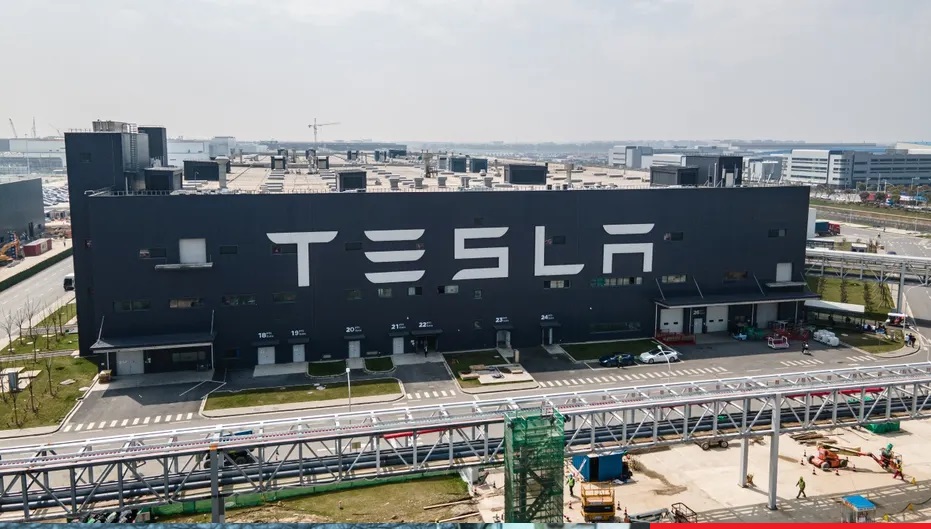
Tesla to Hire 1,000 More Workers at European Gigafactory as EV Demand Surges

0

Tesla’s decision to hire 1,000 additional workers at its only European manufacturing plant marks a significant shift in the electric vehicle (EV) market. The expansion reflects renewed consumer demand, improved production outlook, and the company’s commitment to strengthening its presence in Europe.

After a period of slowing sales and increasing competition, the move signals that Tesla is preparing for higher output while reinforcing its long-term strategy in one of the world’s most important automotive markets.

The hiring initiative will take place at Tesla’s Gigafactory in Grünheide, Germany, the company’s only vehicle manufacturing facility in Europe. Since opening in 2022, the factory has become a critical part of Tesla’s global production network, supplying electric vehicles to customers across the continent.

By increasing its workforce, Tesla aims to boost manufacturing capacity, improve operational efficiency, and reduce delivery times for European buyers. The decision comes as demand for electric vehicles begins to recover after a challenging period marked by inflation, high interest rates, and uncertainty surrounding government incentives.

While many automakers experienced slower EV sales in recent years, market conditions are gradually improving as financing costs stabilize and consumers regain confidence. Tesla appears to be positioning itself to capitalize on this renewed momentum before competitors further strengthen their market positions.

Adding 1,000 employees also demonstrates Tesla’s confidence in the long-term future of the European EV market. Europe continues to pursue ambitious climate goals, with governments encouraging the transition away from internal combustion engine vehicles through emissions regulations and investments in charging infrastructure.

These policies create favorable conditions for EV manufacturers, and Tesla’s expansion suggests the company expects demand to remain strong over the coming years. The hiring initiative is expected to benefit both Tesla and the local German economy. New jobs will support manufacturing, engineering, logistics, quality control, and production operations.

The expansion will also generate indirect employment opportunities for suppliers, transportation companies, construction firms, and service providers that support the factory’s operations. This broader economic impact reinforces the importance of large-scale manufacturing investments in regional development.

Tesla’s decision is particularly notable given the increasingly competitive European EV market. Traditional automakers such as Volkswagen, BMW, Mercedes-Benz, and Renault continue investing heavily in electric mobility, while Chinese manufacturers are expanding aggressively across Europe with competitively priced models.

To maintain its leadership, Tesla must continue improving production efficiency, lowering manufacturing costs, and responding quickly to changing consumer preferences. Expanding its workforce provides additional capacity to meet these strategic objectives.

The Grünheide facility itself has become one of Tesla’s most valuable assets outside the United States. Producing vehicles closer to European customers reduces shipping costs, minimizes delivery delays, and lowers exposure to international trade disruptions.

Local manufacturing also helps Tesla respond more quickly to market demand while supporting sustainability goals by reducing transportation-related emissions. Despite this positive development, Tesla still faces several challenges. Economic uncertainty, evolving government subsidy policies, and fierce competition could influence future demand.

Additionally, labor relations, supply chain management, and battery material availability remain important factors that could affect production targets. However, the company’s willingness to expand its workforce suggests management believes these challenges are manageable and that long-term opportunities outweigh near-term risks.

Tesla’s plan to hire 1,000 additional workers at its only European factory represents more than just an increase in employment. It reflects growing confidence in the recovery of electric vehicle demand, reinforces Tesla’s commitment to the European market, and highlights the company’s determination to remain a leading force in the global transition toward sustainable transportation.

As the EV industry continues to evolve, investments in production capacity and skilled workers will remain essential for meeting future demand and maintaining a competitive advantage.

Merck’s $11.3 Billion Bio-Techne Deal Signals Growth in Precision Medicine

0

German pharmaceutical giant Merck has announced an agreement to acquire U.S.-based biotechnology company Bio-Techne in a deal valued at approximately $11.3 billion, marking one of the largest life sciences acquisitions of the year.

The transaction reflects the growing race among global healthcare companies to strengthen their positions in biotechnology, diagnostics, and advanced research tools. As the pharmaceutical industry increasingly shifts toward precision medicine and biologic therapies, acquisitions such as this have become an important strategy for expanding technological capabilities and accelerating long-term growth.

Merck has long been recognized as one of Europe’s leading science and technology companies, with operations spanning healthcare, life sciences, and electronics. In recent years, the company has invested heavily in expanding its life sciences division, which provides laboratory equipment, chemicals, and technologies that support pharmaceutical research and manufacturing.

By acquiring Bio-Techne, Merck gains access to a highly respected portfolio of research reagents, diagnostic solutions, protein analysis technologies, and genomic tools that are widely used by pharmaceutical companies, biotechnology firms, and academic researchers around the world.

Bio-Techne has established itself as a leader in supplying high-quality products that enable scientists to better understand diseases, discover new drug targets, and develop innovative therapies. Its technologies are particularly valuable in areas such as cancer research, immunology, neuroscience, stem cell biology, and molecular diagnostics.

These fields continue to attract significant investment as healthcare systems increasingly prioritize personalized medicine and treatments tailored to individual patients. The $11.3 billion acquisition is expected to create meaningful synergies between the two companies.

Merck will be able to integrate Bio-Techne’s specialized research tools into its existing life sciences business, offering customers a broader range of products across the entire drug development process. This expanded portfolio could strengthen Merck’s competitive position against major rivals in the global life sciences market while providing customers with more comprehensive laboratory solutions.

Beyond expanding product offerings, the acquisition also provides Merck with opportunities to accelerate innovation. Combining Bio-Techne’s expertise in protein sciences, cell biology, and molecular diagnostics with Merck’s global research, manufacturing, and distribution network could shorten development timelines for new technologies.

Increased collaboration between research teams may also lead to the creation of next-generation laboratory platforms that improve efficiency for scientists working on breakthrough therapies. The timing of the acquisition is significant.

Global demand for biotechnology products continues to grow rapidly, driven by advances in gene therapies, cell therapies, artificial intelligence-assisted drug discovery, and precision diagnostics. Pharmaceutical companies are investing billions of dollars into research programs that require increasingly sophisticated laboratory technologies.

By strengthening its presence in this expanding market, Merck positions itself to benefit from long-term industry trends rather than relying solely on traditional pharmaceutical revenue. Financially, the acquisition represents a substantial commitment, but Merck appears confident that the long-term growth potential justifies the investment.

Analysts generally view life sciences businesses as attractive because they often generate stable revenue through recurring demand from research institutions, pharmaceutical manufacturers, and clinical laboratories.

These businesses also tend to be less vulnerable to the patent expiration cycles that affect traditional drug manufacturers. If regulatory approvals are secured, the transaction will further reshape the competitive landscape of the global biotechnology sector.

It highlights how large pharmaceutical and life sciences companies are increasingly pursuing acquisitions to gain access to innovative technologies instead of developing every capability internally. For Merck, purchasing Bio-Techne represents more than an expansion of its business—it is a strategic investment in the future of biomedical research, precision medicine, and the next generation of healthcare innovation.

A UAE-Linked Investment Vehicle Acquires Major Stake in World Liberty Financial Ahead of Trump’s Return

0

A report that a United Arab Emirates-linked investment vehicle acquired a 49% stake in World Liberty Financial shortly before Donald Trump returned to the White House has drawn widespread attention from both the cryptocurrency industry and political observers.

The investment highlights the growing intersection of digital assets, international capital, and political influence, raising questions about the future direction of cryptocurrency regulation and the role of foreign investors in emerging financial technologies.

World Liberty Financial, a cryptocurrency company backed by members of the Trump family, has positioned itself as a significant player in the decentralized finance (DeFi) sector.

The firm aims to provide blockchain-based financial services that reduce reliance on traditional banking institutions while expanding access to digital financial products. With cryptocurrency continuing to gain mainstream acceptance, companies operating in this space have become attractive targets for institutional investors seeking long-term growth opportunities.

The reported acquisition of a 49% stake by a UAE-linked investment vehicle is particularly noteworthy because it represents a substantial ownership position without granting outright control. Such a structure allows the investor to participate significantly in the company’s future growth while enabling the founding stakeholders to maintain operational influence.

Large minority investments are common in private equity and venture capital, especially when investors seek exposure to high-growth industries without assuming full management responsibilities. Timing has also become a central point of discussion.

The reported transaction occurred shortly before Donald Trump’s return to office, prompting speculation about whether investors anticipated a more favorable regulatory environment for digital assets under the new administration.

Throughout his political career, Trump has demonstrated evolving views on cryptocurrency. While he was initially skeptical of digital currencies, more recent developments suggest a greater willingness to embrace blockchain innovation and encourage the expansion of the U.S. digital asset industry.

For the UAE, the investment aligns with a broader national strategy to become a global leader in financial technology and digital assets. Over the past several years, the country has established regulatory frameworks designed to attract cryptocurrency exchanges, blockchain startups, and institutional investors.

Cities such as Dubai and Abu Dhabi have emerged as important international hubs for digital asset businesses, supported by government initiatives that encourage innovation while maintaining regulatory oversight.

The transaction also reflects increasing global competition for leadership in the blockchain economy. Sovereign wealth funds, family offices, and institutional investors worldwide are actively seeking exposure to companies that could shape the future of decentralized finance.

As blockchain technology expands beyond cryptocurrencies into payments, asset tokenization, identity verification, and smart contracts, strategic investments in leading firms have become increasingly valuable. However, the reported deal is also likely to face heightened scrutiny.

Given the political connections surrounding World Liberty Financial, regulators and ethics experts may examine whether the investment raises concerns regarding transparency, governance, or potential conflicts of interest. Cross-border investments involving politically connected businesses often attract additional attention, particularly when they involve sectors that may be influenced by future government policies.

From an industry perspective, the investment underscores growing confidence in the long-term prospects of cryptocurrency infrastructure despite periods of market volatility. Institutional capital has continued flowing into blockchain companies, reflecting the belief that digital assets will remain an important component of the global financial system.

Rather than focusing solely on speculative cryptocurrencies, investors are increasingly targeting businesses that build the infrastructure supporting decentralized finance. The reported acquisition demonstrates how cryptocurrency has become deeply intertwined with geopolitics, international investment, and public policy.

As governments continue developing regulatory frameworks and institutional adoption accelerates, partnerships between politically connected firms and global investors are likely to become more common.

Whether this particular investment proves transformative will depend on World Liberty Financial’s ability to execute its business strategy while navigating the complex landscape of regulation, governance, and public scrutiny in an increasingly interconnected digital economy.

Uniswap and Spark to Launch Stablecoin FX Infrastructure

0

The decentralized finance ecosystem continues to evolve with new innovations designed to improve the efficiency and accessibility of digital assets. One of the latest developments is the collaboration between Spark and Uniswap to introduce a shared foreign exchange (FX)-style liquidity infrastructure for stablecoins.

This initiative aims to transform how stablecoins are traded by creating a more efficient, liquid, and interconnected marketplace that resembles the mechanisms used in traditional foreign exchange markets.

Stablecoins have become a cornerstone of the cryptocurrency ecosystem because they provide price stability while maintaining the speed and accessibility of blockchain technology.

They are widely used for trading, payments, remittances, and decentralized finance applications. However, liquidity across different stablecoins has often been fragmented, forcing traders and institutions to rely on multiple liquidity pools and incur higher trading costs.

The new infrastructure proposed by Spark and Uniswap seeks to address these inefficiencies by introducing a unified liquidity framework.

Inspired by the global FX market, the shared liquidity model enables multiple stablecoins to interact through a common liquidity layer instead of isolated trading pairs. In traditional currency markets, major currencies benefit from deep liquidity that allows traders to exchange assets with minimal price impact.

Spark and Uniswap aim to replicate this model on-chain, allowing users to swap between various stablecoins more efficiently while reducing slippage and transaction costs. One of the key advantages of this system is capital efficiency.

Liquidity providers currently need to allocate funds across numerous pools to support different stablecoin pairs. Under the shared infrastructure, liquidity can be concentrated within a single framework that serves multiple trading routes simultaneously.

This means the same capital can facilitate a larger volume of transactions, improving returns for liquidity providers while enhancing market depth for traders. The collaboration also strengthens the broader DeFi ecosystem by promoting interoperability.

As more stablecoins enter the market—including those issued by financial institutions, fintech companies, and decentralized protocols—a unified liquidity network can simplify trading between these assets. Instead of creating separate pools for every new stablecoin, projects can integrate into an existing liquidity infrastructure, reducing barriers to adoption and encouraging innovation.

The FX-style approach offers greater predictability and execution quality. Institutions entering the crypto market often require deep liquidity and efficient pricing before committing significant capital. By creating a robust liquidity framework.

Spark and Uniswap may attract more professional traders and financial firms seeking reliable on-chain markets for stablecoin transactions.

The initiative also reflects a broader trend of merging traditional financial concepts with decentralized technologies. Rather than replacing established financial principles, many blockchain projects are adapting proven market structures to decentralized networks.

Applying the FX market model to stablecoins demonstrates how DeFi can leverage decades of financial market experience while maintaining transparency, automation, and permissionless access. The success of the infrastructure will depend on widespread adoption by stablecoin issuers, liquidity providers, and decentralized applications.

Regulatory developments, technological reliability, and market participation will all influence whether the model becomes a new industry standard. Competition from other decentralized exchanges and liquidity protocols could also shape its long-term impact.

The partnership between Spark and Uniswap represents an important milestone in the evolution of decentralized finance. By introducing an FX-inspired shared liquidity infrastructure, the two protocols aim to improve capital efficiency, deepen liquidity, and simplify stablecoin trading across blockchain networks.

If successfully implemented, this innovation could make stablecoin markets more resilient, accessible, and attractive to both retail users and institutional investors, further strengthening the foundation of the rapidly expanding digital asset economy.

Bitcoin Drops to 2024 Lows as Market Volatility Intensifies

0

Bitcoin has fallen to its lowest level since October 2024, marking a significant moment for the cryptocurrency market and sending shockwaves through investors worldwide.

The decline reflects a combination of macroeconomic pressures, shifting investor sentiment, and uncertainty surrounding global financial markets. While Bitcoin has experienced numerous sharp corrections throughout its history, each downturn raises important questions about the future of digital assets and the resilience of the broader crypto ecosystem.

One of the primary factors contributing to Bitcoin’s decline is the changing monetary policy environment. When central banks maintain higher interest rates or signal tighter financial conditions, investors often move away from riskier assets in favor of safer investments such as government bonds and cash.

Cryptocurrencies, including Bitcoin, are generally considered high-risk assets, making them particularly vulnerable during periods of economic uncertainty. Rising borrowing costs also reduce liquidity in financial markets, limiting the capital available for speculative investments.

Another contributor to Bitcoin’s weakness is declining market confidence. Crypto markets are heavily influenced by investor psychology, and negative sentiment can accelerate price declines. As Bitcoin breaks key technical support levels, automated trading systems and panic selling often amplify downward momentum.

Retail investors may also choose to exit their positions to minimize losses, further increasing selling pressure. Regulatory uncertainty continues to weigh on the cryptocurrency industry. Governments across the world are developing new frameworks to oversee digital assets, exchanges, and stablecoins.

While greater regulation may eventually strengthen the industry’s credibility, the transition period often creates uncertainty for investors. Concerns over taxation, compliance requirements, and potential restrictions can reduce demand for cryptocurrencies and contribute to increased market volatility.

Institutional investment also plays a major role in Bitcoin’s price movements. Over the past several years, institutional investors have become increasingly involved in the cryptocurrency market through exchange-traded funds, corporate treasury holdings, and digital asset investment products.

However, institutions often adjust their portfolios based on changing economic conditions. If large investment firms reduce their exposure to cryptocurrencies, Bitcoin prices can experience significant downward pressure due to the scale of these transactions. Global geopolitical developments may also be influencing market behavior.

Economic uncertainty arising from international conflicts, trade tensions, or slowing economic growth often encourages investors to adopt a more defensive investment strategy. Although Bitcoin has sometimes been promoted as digital gold, its recent price performance has shown that it frequently behaves more like a technology stock, reacting negatively during periods of heightened market stress.

Despite the current decline, many long-term Bitcoin supporters remain optimistic. They argue that previous market cycles have featured substantial corrections followed by periods of strong recovery.

Bitcoin’s fixed supply of 21 million coins continues to support the narrative of digital scarcity, while ongoing technological improvements and expanding adoption may strengthen its long-term value proposition. For investors, the recent price drop highlights the importance of risk management and maintaining a long-term perspective.

Cryptocurrency markets remain among the most volatile financial markets in the world, making diversification and disciplined investment strategies essential. Short-term price swings can be dramatic, but experienced investors recognize that volatility has always been a defining characteristic of Bitcoin.

Bitcoin’s fall to its lowest level since October 2024 reflects a complex combination of macroeconomic pressures, regulatory uncertainty, shifting investor sentiment, and broader financial market dynamics. While the correction has unsettled many investors, it also serves as a reminder that cryptocurrency markets operate in cycles.

Whether this downturn represents a temporary setback or the beginning of a longer bear market will depend on future economic conditions, institutional participation, regulatory developments, and the continued evolution of the global digital asset ecosystem.