

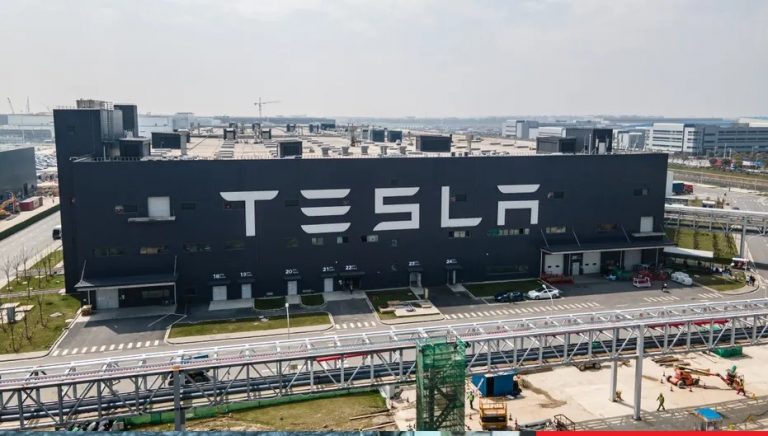
Tesla’s decision to hire 1,000 additional workers at its only European manufacturing plant marks a significant shift in the electric vehicle (EV) market. The expansion reflects renewed consumer demand, improved production outlook, and the company’s commitment to strengthening its presence in Europe.
After a period of slowing sales and increasing competition, the move signals that Tesla is preparing for higher output while reinforcing its long-term strategy in one of the world’s most important automotive markets.
The hiring initiative will take place at Tesla’s Gigafactory in Grünheide, Germany, the company’s only vehicle manufacturing facility in Europe. Since opening in 2022, the factory has become a critical part of Tesla’s global production network, supplying electric vehicles to customers across the continent.
By increasing its workforce, Tesla aims to boost manufacturing capacity, improve operational efficiency, and reduce delivery times for European buyers. The decision comes as demand for electric vehicles begins to recover after a challenging period marked by inflation, high interest rates, and uncertainty surrounding government incentives.
Register for the next Tekedia Mini-MBA.
Register for Tekedia AI in Business Masterclass.
Join Tekedia Capital Syndicate and co-invest in great global startups.
While many automakers experienced slower EV sales in recent years, market conditions are gradually improving as financing costs stabilize and consumers regain confidence. Tesla appears to be positioning itself to capitalize on this renewed momentum before competitors further strengthen their market positions.
Adding 1,000 employees also demonstrates Tesla’s confidence in the long-term future of the European EV market. Europe continues to pursue ambitious climate goals, with governments encouraging the transition away from internal combustion engine vehicles through emissions regulations and investments in charging infrastructure.
These policies create favorable conditions for EV manufacturers, and Tesla’s expansion suggests the company expects demand to remain strong over the coming years. The hiring initiative is expected to benefit both Tesla and the local German economy. New jobs will support manufacturing, engineering, logistics, quality control, and production operations.

The expansion will also generate indirect employment opportunities for suppliers, transportation companies, construction firms, and service providers that support the factory’s operations. This broader economic impact reinforces the importance of large-scale manufacturing investments in regional development.
Tesla’s decision is particularly notable given the increasingly competitive European EV market. Traditional automakers such as Volkswagen, BMW, Mercedes-Benz, and Renault continue investing heavily in electric mobility, while Chinese manufacturers are expanding aggressively across Europe with competitively priced models.
To maintain its leadership, Tesla must continue improving production efficiency, lowering manufacturing costs, and responding quickly to changing consumer preferences. Expanding its workforce provides additional capacity to meet these strategic objectives.
The Grünheide facility itself has become one of Tesla’s most valuable assets outside the United States. Producing vehicles closer to European customers reduces shipping costs, minimizes delivery delays, and lowers exposure to international trade disruptions.

Local manufacturing also helps Tesla respond more quickly to market demand while supporting sustainability goals by reducing transportation-related emissions. Despite this positive development, Tesla still faces several challenges. Economic uncertainty, evolving government subsidy policies, and fierce competition could influence future demand.
Additionally, labor relations, supply chain management, and battery material availability remain important factors that could affect production targets. However, the company’s willingness to expand its workforce suggests management believes these challenges are manageable and that long-term opportunities outweigh near-term risks.
Tesla’s plan to hire 1,000 additional workers at its only European factory represents more than just an increase in employment. It reflects growing confidence in the recovery of electric vehicle demand, reinforces Tesla’s commitment to the European market, and highlights the company’s determination to remain a leading force in the global transition toward sustainable transportation.
As the EV industry continues to evolve, investments in production capacity and skilled workers will remain essential for meeting future demand and maintaining a competitive advantage.