DD
MM
YYYY

PAGES

DD
MM
YYYY

spot_img

PAGES

Home Blog Page 18

Best Crypto for the Future With Up to 10,000x ROI Potential in 2026

0

Not all presales are equal, and in 2026, the gap between token supply and long-term ROI is widening fast. While hype cycles come and go, some projects are building for scale, speed, and price multiples that still fit inside a 100x to 10,000x window. The best crypto for the future isn’t about branding or influencer charts, it’s about structure, access, and timing.

With utilities already live in some cases and insider-free auction models in others, early buyers still have a window before liquidity hits. But that window is closing daily and once it’s priced in, it’s priced out.

Zero Knowledge Proof: No VCs, No Discounts

Zero Knowledge Proof (ZKP) starts this list because of how it’s structured, not just what it builds. The 450-day presale auction is already underway. But here’s the difference: no VC pre-sales, no insider rounds, no early discounts. Just public-only entries, one fixed cap per buyer, and a target raise of $1.7 billion. Price discovery resets daily, so every 24-hour window matters.

This setup eliminates backdoor entries that dilute ROI later. Everyone enters on equal terms, which means the only way to access the 100x to 10,000x window is by participating early, not by waiting for listings or private unlocks. It’s a structure that rewards public positioning over private access.

ZKP’s infrastructure, built on Substrate with Proof-of-Intelligence and zk-SNARKs for verifiable AI comput,e is already functional. But the clock is the real pressure here. The auction doesn’t pause. Supply shrinks every day. In a presale world shaped by dilution and vesting cliffs, ZKP flips the formula. If ROI is based on scarcity and fairness, ZKP is priced for those who understand time, not hype.

2. DeepSnitch AI ($DSNT): Tools First, Token Second

DeepSnitch AI is one of the best crypto for the future because its products came before its listings. The project already has live utilities, including a dashboard, staking mechanics, and on-chain monitoring well ahead of its full token launch.

That approach stands out in a presale environment often built on nothing but a landing page. Demand is growing from users who want early access to working tools and structured incentives, and funding traction reflects that. DSNT’s active ecosystem gives early buyers something to interact with while they wait for exchange exposure, which strengthens its case for real-world use and ROI durability post-launch.

3. Bitcoin Hyper ($HYPER): Layer-2 for the Original Chain

Bitcoin Hyper positions itself as a scaling solution for Bitcoin. It’s not trying to replace BTC, it’s trying to improve it. By bringing smart contract functionality and faster transaction capabilities through a dedicated Layer-2 architecture, HYPER aligns with infrastructure-focused buyers who care more about performance upgrades than meme cycles.

Early presale rounds are pricing upward, and the model leans into BTC’s security base while expanding DeFi access. For buyers asking what’s the best long-term crypto buy, Bitcoin Hyper offers a functional thesis that taps into Bitcoin’s large user base while addressing one of its most persistent limitations: scalability.

4. Nexchain ($NEX): Interoperable AI Chain With Capital Inflow

Nexchain is gaining visibility as an AI Layer-1 project focused on interoperability, a core theme in infrastructure narratives for 2026. With growing capital allocation across its presale rounds, it’s clear NEX is drawing attention from those who want cross-chain flexibility without compromising AI specialization.

The presale doesn’t lean on hype cycles. Instead, it highlights roadmap clarity, technical specs, and liquidity planning. By designing a chain that speaks to other protocols and prioritizes developer compatibility, Nexchain checks multiple utility boxes. If the next crypto to explode is defined by where funds are flowing early NEX fits.

5. Dodgeball Token: Meme Meets GameFi Infrastructure

Dodgeball Token blends community-driven gaming mechanics with Layer-2 tech, placing it in the GameFi category but with more structure than most meme-based entries. Its presale is structured in multiple phases, and early players can access the gaming environment ahead of the full listing.

What’s different here is the hybrid approach. It’s not just community momentum; it’s paired with infrastructure for in-game transactions and rewards, giving it multiple pathways to stay relevant beyond just branding. Analysts mention it as one of the more active gaming presales worth tracking.
Timing vs Access

When evaluating the best crypto for the future, the differentiator is no longer narrative alone, but its structure. ZKP’s public-only, clock-driven raise is designed to concentrate ROI among early buyers instead of unlocking discounts later. Projects like DSNT, NEX, and HYPER offer functional value ahead of launch, while others like Pepeto and APEMARS operate in pricing cycles tied to timing.

For those filtering between hype and substance, the combination of funding structure, delivery speed, and token utility will define which presale coins actually hold value after listings go live.
Maruti Suzuki Bets Big on Gujarat With $3.9bn Plant as India’s Auto Demand Surges

0

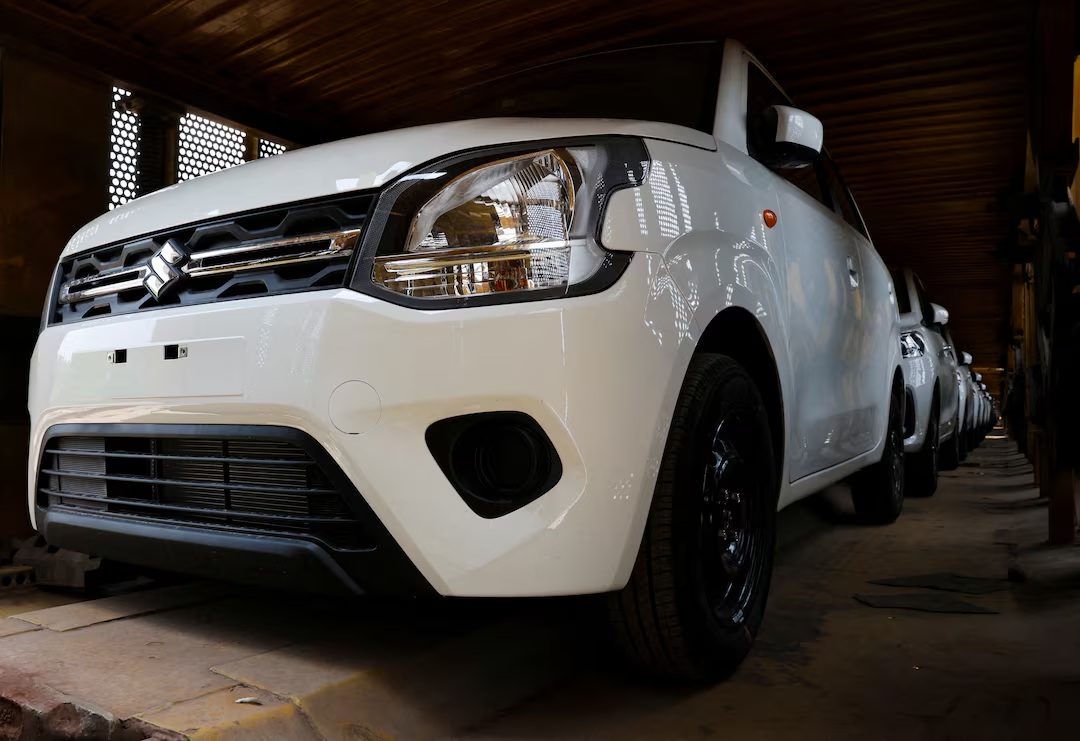
Maruti Suzuki will invest 350 billion rupees ($3.9 billion) to build a new manufacturing plant in Gujarat, deepening its footprint in western India as it moves to meet rising domestic demand and strengthen its export base in the world’s third-largest car market.

The decision marks one of the most significant capacity expansion moves by an Indian automaker in recent years, underscoring both the strength of domestic demand and the company’s ambitions beyond India’s borders.

According to the Gujarat state government, the proposed plant will add production capacity of up to 1 million vehicles annually, with manufacturing expected to begin in the 2029 financial year. Once operational, the facility will lift Maruti Suzuki’s total annual production capacity to about 3.4 million vehicles, up from roughly 2.4 million today.

The investment comes at a time when India’s passenger vehicle market continues to show strong momentum. India is now the world’s third-largest car market, and demand has been supported by rising household incomes, easier access to vehicle financing, expanding road infrastructure, and a growing preference for personal mobility. For Maruti, which dominates the entry-level and compact segments, these structural trends remain central to its growth story.

Near-term indicators already point to tight supply conditions. The company currently has an order backlog of about one and a half months for its entry-level models, according to its marketing and sales head, Partho Banerjee. In December, Maruti said sales to domestic dealers surged 37% year on year to a record 178,646 units, highlighting how quickly demand is absorbing existing capacity.

The board has approved an initial investment of 49.6 billion rupees to acquire land for the Gujarat plant, signaling that the project is moving beyond the planning stage. Gujarat has increasingly become Maruti’s manufacturing base of choice, complementing its older facilities in Haryana. The state offers logistical advantages, including access to ports that support exports, as well as a policy environment that has consistently attracted large industrial investments.

Exports are an important part of the expansion logic. Maruti has steadily increased shipments to markets in Africa, Latin America, and parts of Asia, positioning India as a global production hub for Suzuki’s small and compact vehicles. Additional capacity in Gujarat strengthens Maruti’s ability to scale exports without compromising supply to the domestic market.

The long timeline to start production, with output expected only from 2029, also reflects the capital-intensive nature of modern auto plants and the company’s measured approach to expansion. Rather than chasing short-term spikes in demand, Maruti appears to be planning capacity that aligns with its medium- to long-term outlook for India’s auto market, which it expects to keep expanding steadily rather than explosively.

The investment also comes against the backdrop of a changing automotive landscape. While Maruti remains heavily focused on petrol and compressed natural gas vehicles, it is gradually preparing for a future shaped by tighter emission norms and growing electrification. Having additional manufacturing capacity gives the company flexibility to adjust its product mix over time, whether that means scaling up hybrids, introducing more electric models, or responding to regulatory shifts.

For Suzuki Motor, which owns a majority stake in Maruti, the project reinforces India’s central role in its global strategy. India is not only Suzuki’s largest market by volume, but also a critical export base, and large-scale investments such as the Gujarat plant underline the parent company’s long-term commitment.

At the state level, the project strengthens Gujarat’s standing as a key manufacturing hub and is likely to generate significant employment and ancillary industry growth over time. Maruti Suzuki is thus pushing that capacity constraints should not be what limit its growth in a market where demand remains strong, competition is intensifying, and scale continues to matter.

Taken together, the Gujarat investment is less about responding to a single strong sales year and more about positioning for the next phase of India’s automotive growth cycle—one in which Maruti Suzuki intends to remain firmly in the driver’s seat.

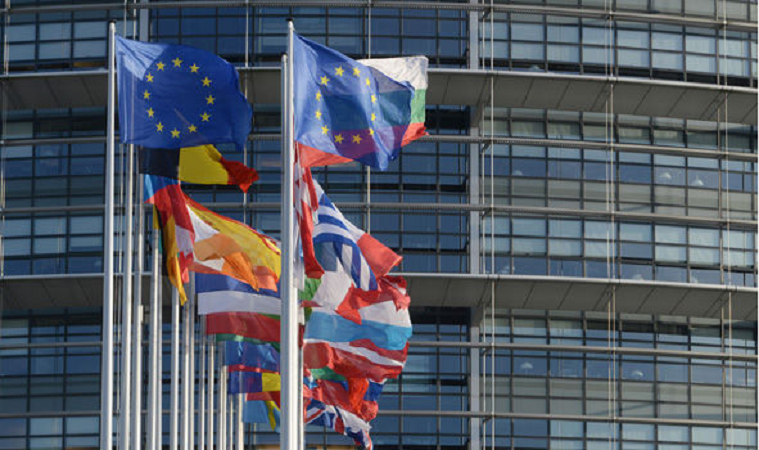
EU Weighs Rare Anti-Coercion Measures as Trump Escalates Tariff Threats Over Greenland

0

The European Union faced mounting pressure on Sunday to deploy its most powerful and never-before-used trade defense tool after U.S. President Donald Trump threatened sweeping tariffs on European allies in a bid to force the sale of Greenland, sharply escalating an already tense transatlantic dispute.

The situation is fast becoming a stress test of Europe’s economic sovereignty, alliance politics, and willingness to deploy hard trade power against its closest security partner.

Trump’s declaration on Saturday that he would impose escalating tariffs on a group of European countries until the United States is allowed to buy Greenland marked a sharp departure from conventional trade disputes. By explicitly linking punitive economic measures to a territorial demand involving a NATO ally, Washington has pushed the disagreement beyond commerce into the realm of strategic coercion, prompting alarm across European capitals.

At the heart of the EU’s deliberations is whether this moment warrants the first-ever use of the bloc’s Anti-Coercion Instrument, a legal framework designed precisely for situations where a third country seeks to force policy changes through economic pressure. Adopted after years of debate and shaped by earlier disputes with China, the tool was intended as a deterrent. Its possible activation against the United States underscores how dramatically transatlantic relations have shifted.

Diplomats say Sunday’s emergency meeting in Brussels, convened by Cyprus as holder of the EU’s rotating presidency, reflected both urgency and unease. While there is broad agreement that Trump’s approach crosses a line, consensus on how to respond remains elusive. Some governments argue that failure to react forcefully would weaken the EU’s credibility and invite further demands. Others fear that retaliation could spiral into a trade confrontation that Europe, given its export dependence, would struggle to contain.

France has emerged as a leading voice for a robust response. Officials close to President Emmanuel Macron argue that the Greenland episode strikes at the core of European autonomy, not only in trade but in foreign policy. In Paris, the concern is that allowing tariffs to be used as leverage over territorial or security issues would normalize a practice that could later be turned inward against EU decision-making on defense, technology, or industrial policy.

Germany’s industrial lobby has reinforced that view, framing the dispute as a precedent-setting moment. Export-oriented manufacturers, already under pressure from weak global demand and lingering trade barriers, warn that acquiescence would expose European companies to chronic uncertainty. Business leaders stress that the issue is no longer about tariff levels but about whether economic rules can be bent to serve unrelated political goals.

Yet divisions within Europe are real. Italy’s more cautious stance reflects a broader calculation shared by some southern and eastern member states: that keeping channels open to Washington, even in a crisis, may yield better long-term outcomes than immediate retaliation. Prime Minister Giorgia Meloni’s direct call with Trump highlights an alternative strategy centered on personal diplomacy and de-escalation, though its effectiveness remains uncertain.

Britain’s position adds another layer of challenge. While no longer an EU member, London is directly targeted by the tariff threat and has its own limited trade deal with Washington at stake. UK officials have signaled reluctance to escalate, mindful of their dependence on the U.S. relationship in trade, security, and intelligence. That restraint, however, risks leaving Britain isolated if the EU chooses a harder line.

The economic implications are potentially significant. Trump’s threat calls into question the viability of the trade agreements struck last year with both the EU and Britain, deals that were already politically fragile. In Brussels, there is growing skepticism that the European Parliament can proceed with planned tariff reductions for U.S. goods while Washington is openly threatening new duties. Suspending or shelving the agreement would deal a blow to efforts to stabilize transatlantic trade ties after years of friction.

Beyond immediate trade flows, the dispute feeds into a larger debate about Europe’s place in a more transactional global order. The Anti-Coercion Instrument was conceived as part of a broader strategy to equip the EU with tools comparable to those wielded by major powers. Using it against the United States would be a dramatic statement that Europe is prepared to defend its interests regardless of the partner involved, but it would also mark a psychological break in the post-war assumption that transatlantic disputes can always be managed quietly.

The timing has sharpened the contrast in Europe’s external strategy. As Trump’s tariff threat reverberated, the EU was finalizing its free trade agreement with Mercosur, its largest ever. European Commission President Ursula von der Leyen has framed that deal as evidence that Europe remains committed to open, rules-based trade even as others turn to tariffs and pressure. For some policymakers, that makes standing firm against Washington all the more important to preserve the EU’s credibility on the global stage.

However, the bloc is trying to balance deterrence and diplomacy for now. EU officials say no decision has been taken on activating the Anti-Coercion Instrument, but the fact that it is being openly discussed signals how seriously the threat is being taken.

It is not clear whether Europe will ultimately choose retaliation or restraint. What is clear is that the Greenland dispute has already altered the tone of transatlantic relations, exposing fault lines that extend far beyond tariffs and into the future shape of the alliance itself.

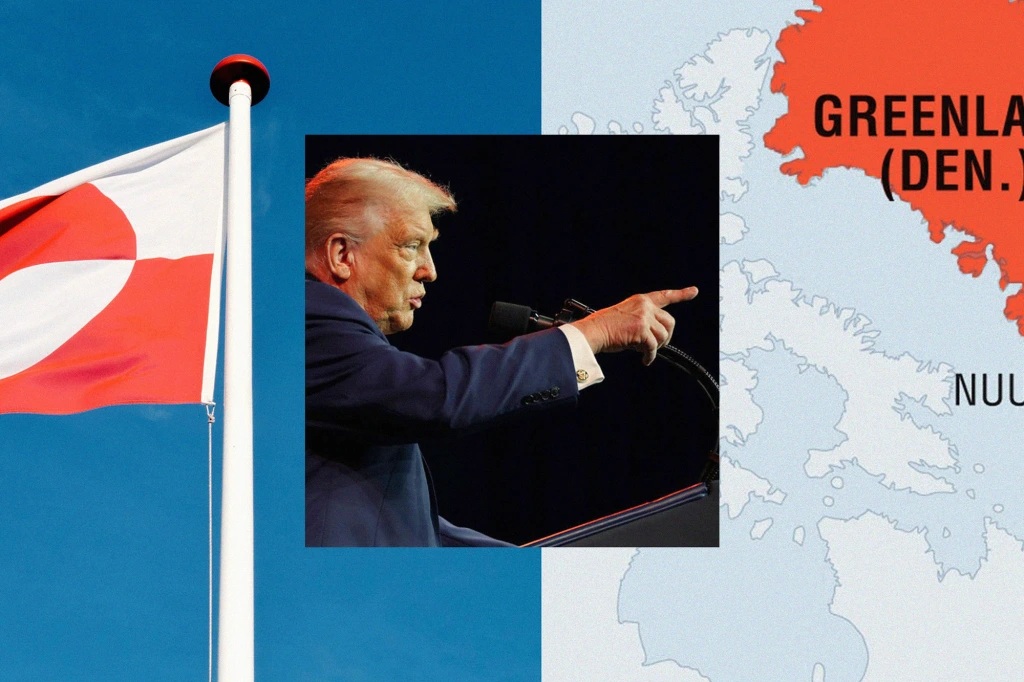
Trump Escalates Greenland Standoff With Tariff Threats Against European Allies

1

President Donald Trump has sharply raised the stakes in his long-running push to acquire Greenland, vowing to impose a rolling wave of tariffs on key European allies until the United States is allowed to buy the Arctic island, a move that has alarmed European capitals and injected new tension into transatlantic relations.

In a post on his Truth Social platform on Saturday, Trump said the United States would slap an additional 10% import tariff from February 1 on goods from Denmark, Norway, Sweden, France, Germany, the Netherlands, Finland, and Great Britain. Those levies, which would be applied on top of existing tariffs, would rise to 25% by June 1 and remain in place until Washington secures a deal to purchase Greenland.

Trump framed the move as a response to what he called a “dangerous game” being played by European governments.

“These Countries … have put a level of risk in play that is not tenable or sustainable,” he wrote, without elaborating on the specific actions that prompted the warning.

Greenland, an autonomous territory within the Kingdom of Denmark, has repeatedly rejected the idea of being sold. Danish officials and Greenland’s leadership have insisted the territory is not for sale and that its future should be determined by its own people. Public opinion in the United States also appears lukewarm. A Reuters/Ipsos poll conducted this week found that fewer than one in five Americans support the idea of acquiring Greenland.

Trump’s threat immediately triggered pushback across Europe. Denmark’s Foreign Minister Lars Lokke Rasmussen said the announcement was unexpected and reiterated Copenhagen’s position that trade measures should not be linked to Greenland. British Prime Minister Keir Starmer took the unusually direct step of condemning the move publicly, writing on X that applying tariffs on allies acting within NATO’s collective security framework was “completely wrong” and promising to raise the issue directly with Washington.

European Commission President Ursula von der Leyen and European Council President Antonio Costa said the European Union stood in “full solidarity” with Denmark and Greenland, warning that tariffs would damage transatlantic ties and risk a downward spiral in relations. Norway, Sweden, France, and Germany echoed those sentiments, while Cyprus, which currently holds the EU presidency, called an emergency meeting of ambassadors from the bloc’s 27 member states.

Protests also broke out in Denmark and Greenland on Saturday, with demonstrators calling for the territory’s right to determine its own future and rejecting Trump’s demands.

The confrontation threatens to unravel tentative trade arrangements reached last year between the United States, the European Union, and Great Britain, which set baseline tariffs of 15% on most European imports and 10% on British goods. William Reinsch, a trade expert at the Center for Strategic and International Studies, warned that singling out specific EU countries could harden opposition within Europe.

“It may well convince the European Parliament that it is pointless to approve the trade agreement with the U.S., since Trump is already bypassing it,” he said.

Trump has not cited a clear legal basis for linking tariffs to the Greenland issue, but the tactic fits a broader pattern. Tariffs have become a central tool in his foreign policy, used to pressure both allies and adversaries. This week, he said he would impose 25% tariffs on any country trading with Iran over Tehran’s crackdown on protests, even though no formal policy documentation has yet appeared on the White House website. The U.S. Supreme Court has already heard arguments on the legality of Trump’s sweeping use of tariffs, a case that could have wide implications for presidential authority and global trade.

At the heart of the dispute lies Greenland’s strategic value, which Trump has repeatedly highlighted. The island occupies a critical position between North America and Europe, straddling key air and sea routes in the North Atlantic and Arctic. As melting ice opens new shipping lanes and access to previously unreachable resources, Greenland has become more central to global competition in the far north.

The territory is rich in minerals considered essential for modern technologies, including rare earth elements used in electric vehicles, wind turbines, and advanced electronics. Reducing reliance on China for these materials has become a priority for Washington, and Greenland’s deposits are seen as a potential alternative source.

There are also security considerations. Greenland hosts the Pituffik Space Base, formerly known as Thule Air Base, a cornerstone of U.S. missile warning and space surveillance systems. About 200 U.S. personnel are already stationed there, and a 1951 agreement with Denmark allows Washington to deploy additional forces as it sees fit. The island is also covered by NATO’s collective defense pact, a point European officials have stressed in rebutting Trump’s claims that U.S. ownership is necessary for security.

Trump has argued that growing activity by China and Russia in the Arctic makes Greenland indispensable to American defense. European leaders counter that existing NATO arrangements already address those concerns. EU foreign policy chief Kaja Kallas warned that the dispute risks benefiting Washington’s rivals.

“China and Russia must be having a field day. They are the ones who benefit from divisions among allies,” she said on X.

Even within the United States, the president’s approach has drawn concern. Senators Jeanne Shaheen and Thom Tillis, bipartisan co-chairs of the Senate NATO Observer Group, said in a joint statement that pressing allies through tariffs over Greenland was “bad for America, bad for American businesses and bad for America’s allies.”

Some analysts urged restraint. Carsten Brzeski, global head of macro at ING Research, said Europe should avoid rushing into countermeasures.

“Just ignore it and wait and see,” he told Reuters, arguing that past experience suggested Trump’s threats do not always translate into sustained policy.

Greenland, once a remote geopolitical afterthought, has become a flashpoint in global politics. What began as an unconventional idea has evolved into a serious diplomatic rift, with trade, security, and alliance cohesion all now tied to the future of a vast Arctic island that insists it does not want to be bought.

The 9-Day Countdown is On! Grab BlockDAG at $0.001 Before the Guaranteed 50x Launch Explosion!

0

Sometimes, crypto hands savvy investors an absolute gift of a moment, where the profit is carved in stone, not hype. BlockDAG represents that legendary move. For the first and final time since day one, Stage 1 rates are back at $0.001, while the confirmed debut price stays at $0.05. That is a massive 50x profit gap, and with the sale ending in only 9 days, the clock is now your biggest rival. Act right now to secure this win.

This is no longer some future dream. BlockDAG (BDAG) has already secured its launch rules, picked top-tier market experts, and funded liquidity for public trading. The move from presale to the open market is no longer a guess, but a certainty. For buyers watching from the sidelines, the window is closing fast.

BlockDAG is Primed for a Massive Debut, Not a Slow Crash After Listing

Most tokens launch with zero support. They crawl onto tiny exchanges and pray for interest to show up eventually. BlockDAG is moving in the total opposite direction. Everything is getting finalized before the coin hits public markets, from the locked $0.05 debut price to deep liquidity and expert market-making power. BlockDAG is already a top-tier EVM-ready Layer 1 network, handling a massive 1,400 transactions every single second for every user.

This provides instant trust for tech builders and big firms hunting for fast systems without waiting for upgrades. But speed alone isn’t the win. Execution is.

With over $445 million already raised, BlockDAG enters the market with a huge war chest. That cash is now being used to fuel listings, deep liquidity, and massive global hype, the exact ingredients needed to prevent the usual post-launch dip.

Why the $0.001 Reset Changes Your Future

The truly insane part of this moment isn’t just the gain, it’s the pricing. Bringing Stage 1 rates back to $0.001 this late in the game is unheard of. Most projects pump prices as they get closer to launch. BlockDAG flipped the script, giving the market one final shot at ground-floor rates. This creates a massive mismatch. The tech is built. The path is set. Big traders are active right now.

Yet the entry cost still looks like the project’s first days. That gap is where life-changing wealth is born. At $0.001, you aren’t gambling on a launch. You’re taking a temporary pricing deal that ends no matter what. Once the sale shuts, the public takes over, and that price reset happens today in full.

The Final Alert: Only 9 Days at $0.001

Time is now the most vital factor. The presale shuts down in 9 days, and when it goes, Stage 1 rates vanish forever. From that second forward, you can only buy on public exchanges at the $0.05 launch price, a level that is already locked into the launch plan. That means today’s buyers aren’t just early. They are front-running a massive scheduled wealth event. This isn’t about chasing rumors. It is about entering before the public pricing starts.

With volume goals pointing toward a huge debut and a potential Top 100 CoinMarketCap rank, the chance of seeing $0.001 access again is zero. Once trading starts, price discovery replaces the rules, and latecomers pay whatever the market demands.

Grab Your Ground Floor Now

BlockDAG is providing something most crypto coins never can: a finished network, a clear launch map, and a firm entry window. At $0.001, with a locked $0.05 debut price and only 9 days left, the math is simply impossible to ignore.

This is the final return to Stage 1 pricing before BlockDAG goes live. After that, early access becomes history, and your role shifts from preparing to reacting. For investors who want to be positioned before the market catches up, the choice is clear. The window is open, but not for long.

Presale: https://purchase.blockdag.network

Website: https://blockdag.network

Telegram: https://t.me/blockDAGnetworkOfficial

Discord: https://discord.gg/Q7BxghMVyu